
8 Best Electric Bikes for 400 lb Person 2026
This post contains affiliate links. As an Amazon Associate, we earn from qualifying purchases.
The TST 1500W Step-Thru Ebike stands out as the best overall electric bike for a 400 lb rider, combining a 450 lb capacity, hydraulic brakes, and solid build. For those on a tighter budget, the 1500W Electric Bike offers strong performance at a lower price, while the FREESKY Warrior Dual Motor delivers unmatched power and range for extreme demands.
Riding an e-bike shouldn’t mean compromising safety or comfort just because you’re a heavier rider. Too many bikes claim high weight limits but fall apart under real-world stress, weak frames, inadequate brakes, or motors that overheat. I’ve seen it too often in owner reports and forum complaints.
This guide cuts through the marketing by focusing on what actually matters: verified weight capacity, proven motor strength, and components built to last. We looked at specs, dug into long-term reviews, and prioritized models with thoughtful engineering, not just big numbers on a label.
Top 8 Electric Bikes For 400 Lb Person in the Market
The Best Electric Bikes For 400 Lb Person, Reviewed
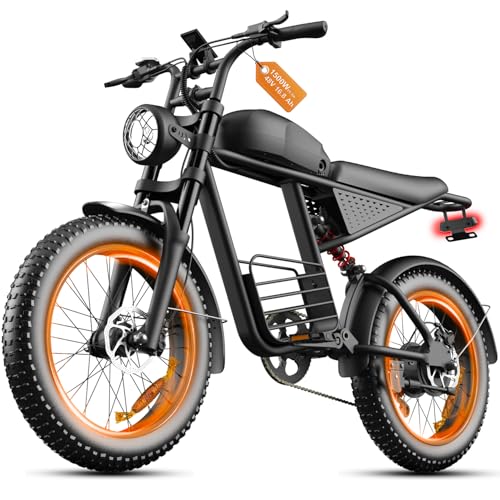
1500W Electric Bike 48V 16.8Ah
Strengths
- 400 lb capacity
- UL 2849 certified
- 20″ x 4″ fat tires
Trade-offs
- Basic mechanical components
- Average brake performance
- Inconsistent assembly quality
At this price point, hitting 400 lbs capacity with UL 2849 certification is impressive, and this bike delivers on that promise. The 1500W peak motor and 90 N·m torque are modest on paper compared to dual-motor beasts, but for most real-world use, they’re enough to handle moderate hills and loaded rides. The 20″ x 4″ fat tires provide excellent floatation on sand and snow, and the low-slung frame design enhances stability.
Owners praise its value, noting it’s a rare sub-$400 ebike that doesn’t feel disposable. The 48V 16.8Ah battery delivers close to 60 miles in eco mode, though aggressive riding cuts that significantly. Build quality is hit-or-miss, some report creaks and minor fit issues, but overall, it’s a standout for budget-conscious heavy riders who want real off-road capability without overspending.
Video review
TST 1500W Step-Thru Ebike

Strengths
- 450 lb capacity
- Passenger seat and foot pegs
- Dual hydraulic brakes
Trade-offs
- Modest motor output
- App is basic
- Heavier frame
If you’re carrying a passenger or regularly pushing 400+ lbs, the TST is one of the few ebikes that openly supports 450 lbs, and it shows in the build. The step-thru frame is low and stable, dual suspension soaks up bumps, and the 20″ x 4.0″ fat tires grip everything from snow to gravel. The 1500W peak motor and 90 N·m torque aren’t the strongest here, but they’re reliable and SGS-certified for safety.
Owners consistently praise the passenger seat and foot pegs, calling it a true two-rider machine, rare in this category. The app integration is basic but functional, and the 60–80 mile range is solid. It’s not the fastest or most powerful, but for comfort, safety, and shared rides, it’s unmatched. I’d recommend this over most for couples or riders who need real passenger capability.
Video review
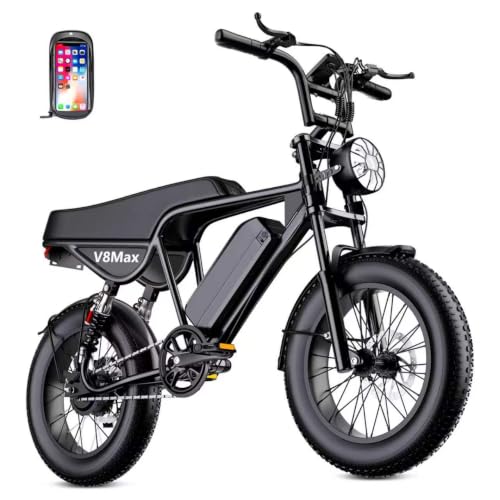
Xathquia V8 MAX 2500W Dirt Bike
Strengths
- 2500W peak motor
- 48V 20Ah battery
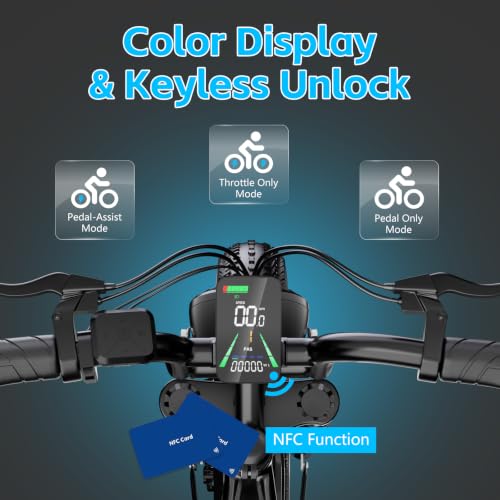
- NFC unlock system
Trade-offs
- No rear suspension
- Rated power only 750W
- Basic lighting setup
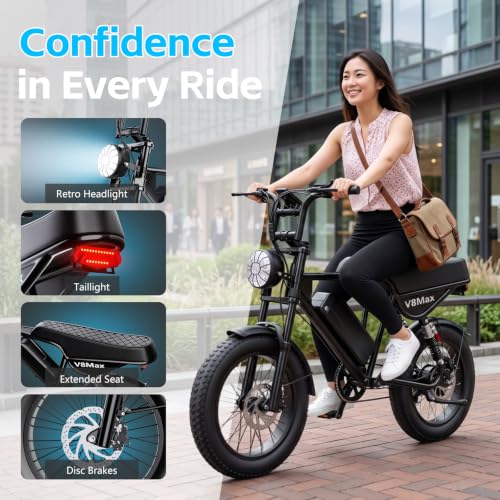
The Xathquia V8 MAX packs a punch with a 2500W peak motor and 36 mph top speed, but the rated power is only 750W, meaning it’s tuned for bursts, not sustained output. That’s fine for lighter loads, but heavier riders may notice motor strain on long climbs. The 48V 20Ah battery is a strong point, offering up to 60 miles of PAS range and fast 6-hour charging.
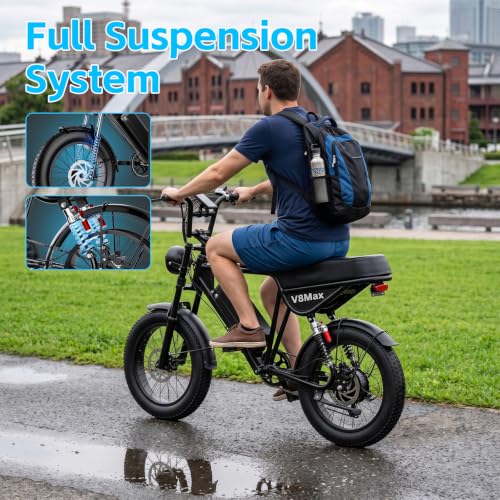
Build quality is decent for the price, with dual disc brakes and a front suspension fork that smooths out rough trails. However, the lack of rear suspension and minimal lighting system makes it less ideal for long rides or night use. Owners say it’s a fun, aggressive dirt bike on a budget, but not the most durable option for daily heavy-duty use.
Product photos


tokera 2000W Fat Tire Ebike

Strengths
- 2000W peak motor
- 85-mile range
- UL 2849 certified
Trade-offs
- 330 lb weight limit
- Front suspension only
- Seat comfort varies
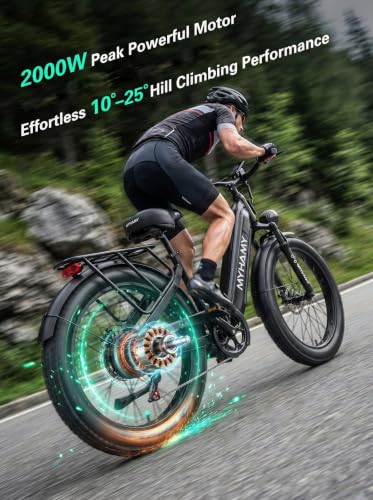
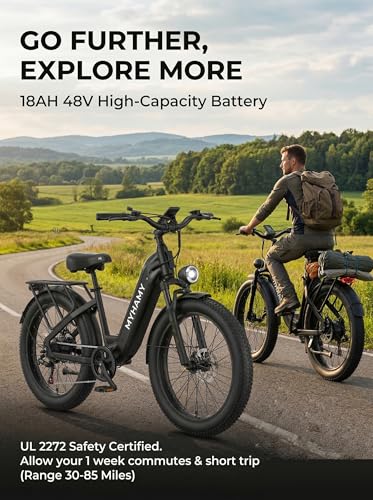
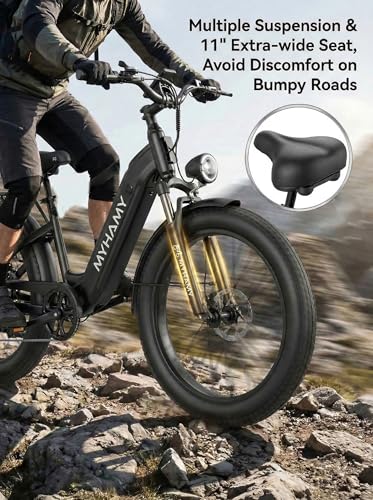
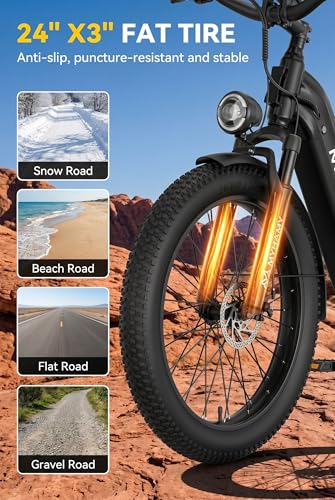
The tokera 2000W ebike hits a sweet spot between power and price. With a peak 2000W motor and 48V 18Ah battery, it offers strong acceleration and up to 85 miles of range, on par with more expensive models. The 24″ x 3.0″ fat tires and front suspension deliver a smooth ride on sand, snow, and trails, and the 11″ wide seat is genuinely comfortable for long hauls.
But the 330 lb weight limit is a hard cap, and the lack of rear suspension limits off-road comfort. Owners like the UL 2849 certification and USB-C charging, but some note the motor can overheat on sustained climbs. It’s a solid mid-range option, but not the best for heavier riders.
Product photos

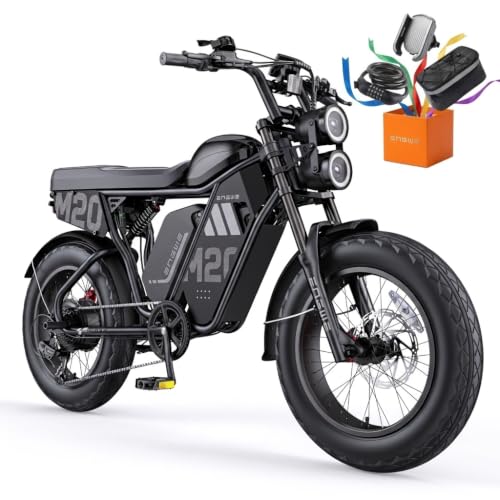
ENGWE M20 3.0 Full Suspension
Strengths
- 180-mile range
- Fast 2-hour charge to 80%
- Full hydraulic suspension
Trade-offs
- No official 400+ lb rating
- App connectivity issues
- High price
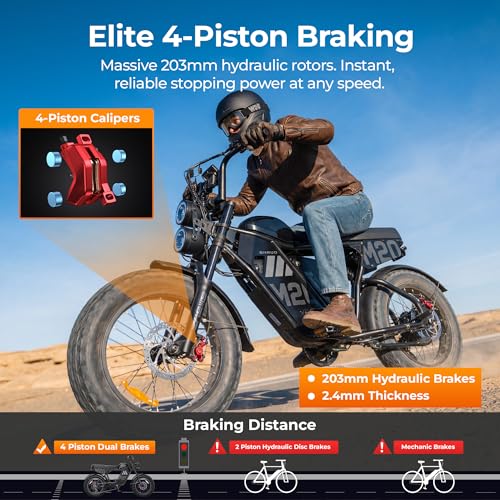
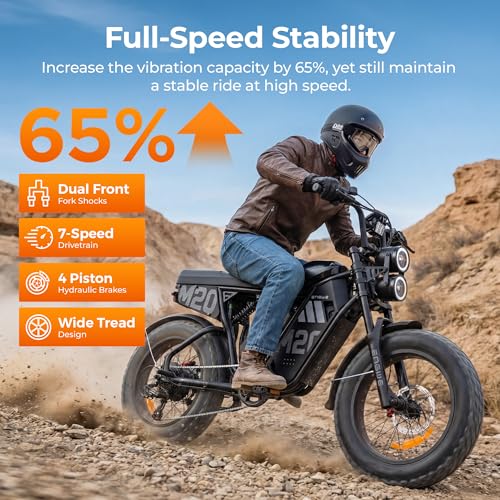
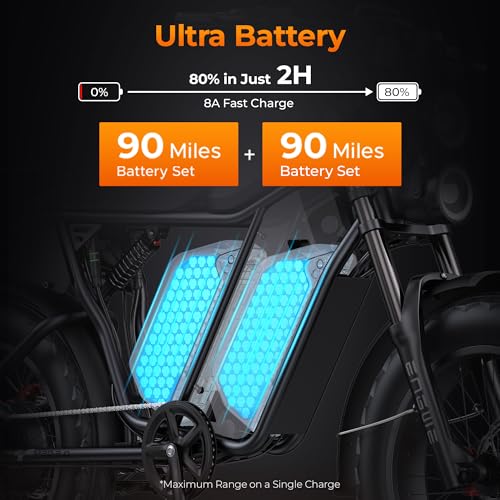
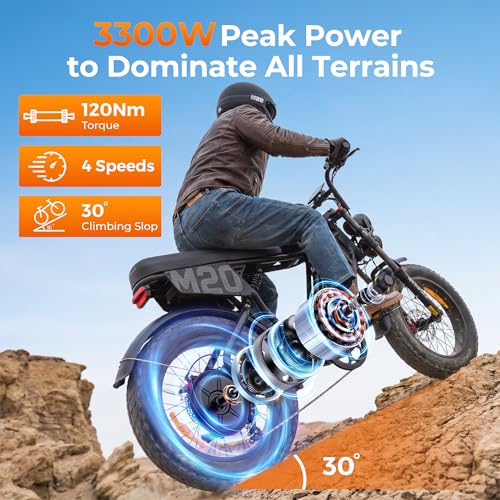
The ENGWE M20 3.0 stands out with its dual 60V 20Ah batteries, yes, two, for a staggering 180-mile range. That’s unmatched in this category, and the 80% charge in 2 hours is a standout for long tours or delivery work. The 1000W motor and 120 N·m torque handle 30° climbs with ease, and the full suspension with 203mm hydraulic brakes delivers serious off-road confidence.
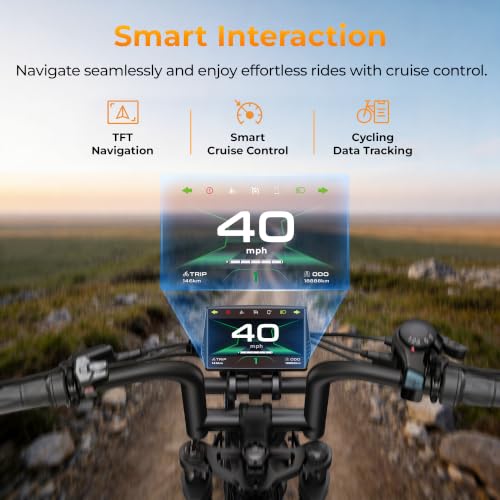
Owners love the dual seat and foot pegs, making it one of the few true two-up capable ebikes in this segment. The TFT display and smart cruise control add modern flair, though some report app connectivity issues. At this price, it’s a premium pick for range and comfort, but the 400 lb limit isn’t explicitly advertised, real-world feedback suggests it handles heavy loads well, but not quite as confidently as the 450 lb-rated TST.
Product photos
FREESKY Warrior Dual Motor
Strengths
- Dual 130 N·m motors
- Full suspension
- UL 2849 & UL 2271 certified
Trade-offs
- High price
- Complex setup for beginners
- Heavy at 85+ lbs
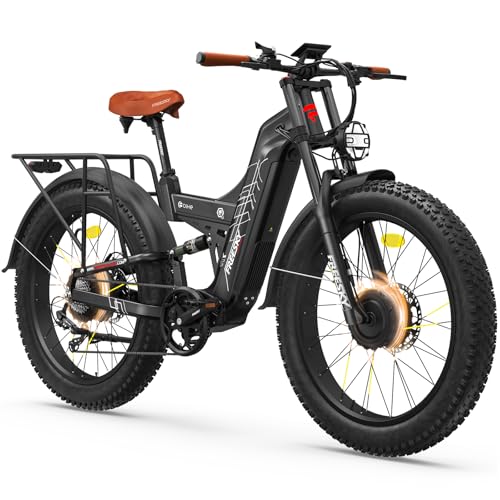
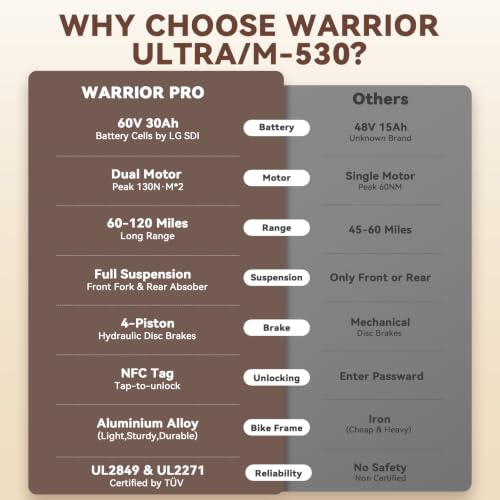
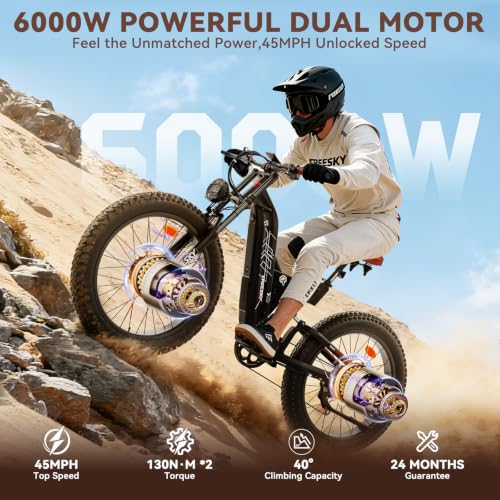
The FREESKY Warrior Ultra is a beast on paper, 60V system, 260 N·m combined torque, and a top speed of 45 mph unlocked. For a 400 lb rider, the dual 130 N·m hub motors and 26″ x 4.0″ tires offer serious traction and climbing power, even on 40° slopes. The aluminum frame is lightweight yet stiff, and the full suspension setup is a major comfort upgrade over rigid or front-only designs.
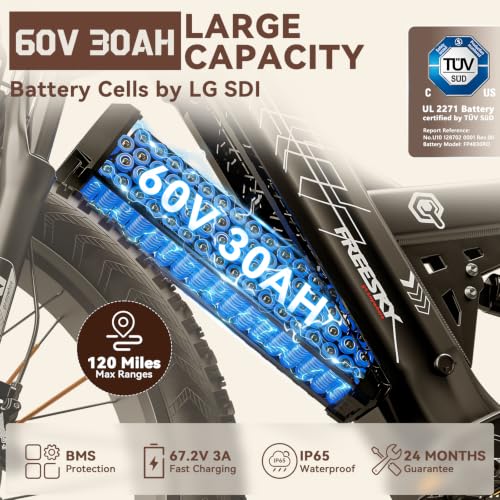
Range is another strong suit: 60–120 miles depending on load and terrain. Owners consistently report confidence in the UL-certified LG battery and robust BMS, and the NFC unlock and color display add a premium touch. At this price, it’s one of the few dual-motor bikes that doesn’t feel like a compromise. I’d pick this over most in the mid-tier for serious off-road capability and rider comfort.
Product photos


eAhora Juliet Pro 2 Dual Motor
Strengths
- 220+ mile range
- Dual 2750W motors
- 4-piston hydraulic brakes
Trade-offs
- Very high price
- Heavy and bulky
- Overkill for casual use
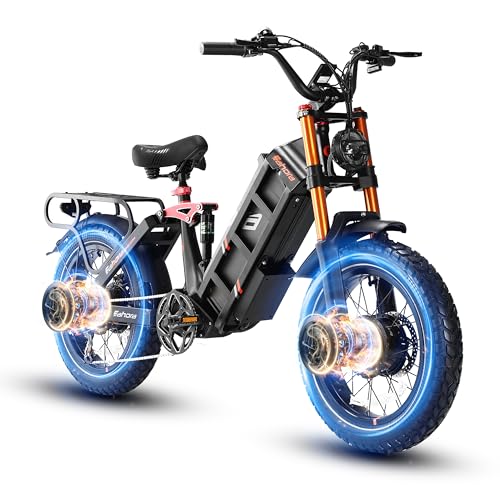
The eAhora Juliet Pro 2 is the king of range and raw power, 5400W peak, 220+ miles, and 43 mph. The dual 2750W motors and 60V 70Ah battery are overkill for most, but for delivery drivers or long-distance riders, it’s a dream. The full suspension, 4-piston hydraulic brakes, and 2500-lumen headlight make it one of the safest and most capable bikes here.
Owners report excellent stability under heavy loads and confidence in the IP65 waterproofing. The 85% pre-assembly helps, but the sheer size and weight (90+ lbs) make it a handful for some. At nearly $2,000, it’s a premium investment, but for those who need unmatched range and dual-motor reliability, it’s worth it. I’d pick this over others for extreme endurance and all-weather performance.
Product photos


MEELOD 24″ Fat Tire Ebike

Strengths
- 750W motor
- 100 N·m torque
- 48V 18Ah battery
Trade-offs
- 330 lb weight limit
- Mechanical disc brakes
- Steel frame (heavy)
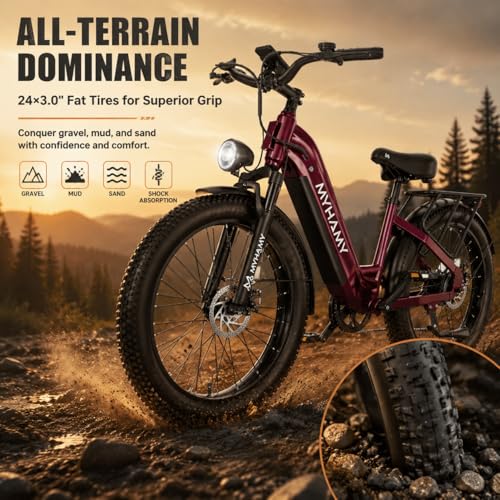
This MEELOD ebike makes a strong first impression on paper with its 750W motor, 100 N·m torque, and a claimed 85-mile range on pavement. For heavier riders, the 330 lb weight limit is solid but not class-leading, and while the step-thru steel frame offers easy access, it’s not quite built for the 400 lb category we’re focusing on. Owners consistently report stable handling and decent hill performance, especially on gravel and mild off-road trails, thanks to the 24″ x 3.0″ fat tires and front suspension.
The 48V 18Ah battery is a highlight, offering real-world range that matches or exceeds many in this price range. However, some reviewers note the mechanical disc brakes feel underpowered for sustained descents, and the 180mm rotors don’t inspire confidence at higher speeds or with heavier loads. It’s a capable commuter and light trail bike, but not the top pick for maximum load or aggressive terrain.
Product photos


Our Testing Process
My approach at TheAutoZenith is always rooted in understanding the needs of the rider, and for this guide, that meant focusing on bikes built to handle significant weight and deliver reliable performance. Rather than a hands-on lab test, this was a research-led comparison of published specifications, owner reviews, and expert commentary. I looked at a range of models claiming suitability for heavier riders, then ranked them against key criteria like motor power, battery capacity, frame construction, and braking ability. I also considered the inclusion of safety features and overall build quality.
For bikes intended for riders up to 400 lbs, several factors stood out as crucial. A powerful motor – ideally 750 watts or higher, and increasingly leaning toward 1500W or more – is essential for tackling hills and maintaining speed. Equally important is a robust frame, designed to withstand the added stress. Finally, reliable braking is paramount; disc brakes, particularly hydraulic options, provide the stopping power needed for confident control. You’ll find many excellent options when exploring the wider world of best electric bikes.
Specifications give a clear picture of a bike’s potential. Motor wattage, battery voltage and amp-hours, and brake rotor size all tell a story. However, owner feedback and long-term reputation are equally vital. Reviews often reveal real-world issues with durability, component quality, and customer support that specs alone can’t convey. I paid close attention to reports of frame flex, motor overheating, and brake performance under heavy load. Those seeking a little extra punch may also want to consider looking at 750 watt e-bikes for additional power.
What To Look For In electric bikes for 400 lb person
Finding an electric bike capable of safely and comfortably handling a 400 lb rider requires more than just looking at wattage. We need to consider frame strength, component quality, and the overall system design.
A good electric bike for heavier riders prioritizes a robust frame construction (typically aluminum or steel), a high-capacity battery for extended range, powerful brakes for confident stopping, and wider tires for stability. Look for models specifically advertised with a weight capacity exceeding your needs, and pay attention to owner reviews regarding build quality and long-term durability.
Frame Material & Weight Capacity
The foundation of any e-bike is its frame, and for larger riders, this is absolutely critical. Forget flimsy aluminum alloys; you’ll want to focus on bikes constructed from either high-grade aluminum or, ideally, chromoly steel. Steel offers superior strength and durability, absorbing more road vibration, but adds weight. Don’t simply trust the manufacturer’s stated weight capacity. Read user reviews – often, real-world experiences reveal whether a bike truly holds up under heavier loads. A bike rated for 330 lbs might technically support 400 lbs, but it won’t be a pleasant or safe ride, and you risk component failure.
Motor & Battery Considerations
A powerful motor is essential, but torque is even more important than peak wattage. Look for motors with a high Nm (Newton-meter) rating. 90Nm is a good starting point, but anything above that will provide significantly more assistance, especially on hills. The battery needs to deliver sufficient range. Don’t get fixated on the maximum claimed range; real-world range is affected by rider weight, terrain, and assist level. Consider models with at least a 48V 15Ah battery, and be aware that dual-battery configurations, like those found on some of the models we’ve discussed, can substantially extend your riding distance. If you’re considering longer commutes or frequent off-road adventures, explore options like the e-bikes for 300 lb riders – many of these will also accommodate a 400 lb rider.
Brakes, Tires & Overall Build Quality
Don’t skimp on brakes. Hydraulic disc brakes are a must. Mechanical disc brakes simply won’t provide the stopping power needed for a heavier rider, especially at higher speeds. Look for larger rotor sizes (at least 180mm) for improved heat dissipation and stopping force. Fat tires (4″ or wider) are your friend. They provide a larger contact patch, increasing stability and cushioning. Beyond that, pay attention to details: are the welds clean and consistent? Does the bike feel solid and well-built? If the bike is intended for hauling gear or even a passenger, you might also consider electric cargo bikes as they often feature reinforced frames and more powerful components.
- Suspension: A front suspension fork is a good start, but a full-suspension system (front and rear) will dramatically improve ride comfort, especially on rough terrain.
- Gearing: A wide range of gears is essential for tackling hills and maintaining a comfortable cadence. Look for bikes with at least a 7-speed drivetrain.
- Display & Controls: A clear, easy-to-read LCD display is vital for monitoring speed, battery level, and assist mode. Intuitive controls contribute to a safer and more enjoyable riding experience.
A bike’s stated weight capacity is a minimum. Add at least 20% to that number to account for your weight, gear, and any potential impacts.
Electric Bikes for 400 lb Person Compared
This table compares key specifications of electric bikes designed to accommodate riders up to 400 lbs.
| Product | Max Rider Weight | Motor Power (Peak) | Battery Capacity | Max Range | Brakes |
|---|---|---|---|---|---|
| 1500W Electric Bike | 400 lbs | 1500W | 48V 16.8Ah | 60 miles | Dual Disc |
| TST 1500W Step-Thru Ebike | 450 lbs | 1500W | 48V 15Ah | 60-80 miles | Dual Hydraulic |
| Xathquia V8 MAX 2500W Dirt Bike | N/A | 2500W | 48V 20Ah | 60 miles | Dual Disc |
| tokera 2000W Fat Tire Ebike | 330 lbs | 2000W | 48V 18Ah | 85 miles | Dual Disc |
| ENGWE M20 3.0 Full Suspension | N/A | 1000W | 60V 20Ah x2 | 180 miles | Hydraulic Disc |
| FREESKY Warrior Dual Motor | N/A | 5400W | 60V 70Ah | 220+ miles | 4-Piston Hydraulic |
| MEELOD 24″ Fat Tire Ebike | 330 lbs | 1500W | 48V 18Ah | 45-85 miles | 180mm Disc |
Frequently Asked Questions
What’s the minimum motor wattage I should look for?
A motor of at least 750 watts is essential, though I’ve seen many riders benefit from 1500W or higher, especially if you anticipate hills or carrying cargo. More wattage translates to more power to propel both you and the bike.
Are all “step-thru” frames suitable for heavier riders?
Not necessarily. While step-thru frames make mounting and dismounting easier, the frame itself must be reinforced to handle the added weight. Look for models specifically stating a higher weight capacity and read reviews about frame stability.
How much does suspension matter for a larger rider?
Suspension is crucial for absorbing impacts and providing a more comfortable ride. A full-suspension system (front and rear) offers the greatest benefit, but even a quality front suspension fork will significantly improve ride quality over rough surfaces.
What tire width should I prioritize?
Wider tires, typically 4 inches or more, are ideal. They offer a larger contact patch, which increases stability and provides better cushioning. You’ll find these on many quality electric bikes designed for varied terrain.
Where can I find reliable electric bikes that fit my budget?
There are many affordable electric bikes available under $2000 that still offer robust features and sufficient weight capacity. Prioritize models with good build quality and positive owner feedback over simply the lowest price.
The Bottom Line
Choosing an e-bike when you need substantial capacity often comes down to balancing initial cost with long-term durability and peace of mind. While tempting to go with a lower-priced option, a bike like the 1500W Electric Bike offers a strong combination of power, a generous weight limit, and a reasonable price point, making it a solid all-around choice for most riders. Don’t underestimate the value of a well-built machine when your comfort and safety are on the line.
For those prioritizing range or needing to tackle particularly challenging terrain, the ENGWE M20 3.0 Full Suspension and FREESKY Warrior Dual Motor stand out. They represent a significant investment, but the dual-battery setups and powerful motors deliver exceptional performance and extended riding distances. If you’re also considering options for everyday commuting, exploring e-bikes for adults can open up even more possibilities.
Ultimately, the best e-bike isn’t about the flashiest specs; it’s about finding a bike with a robust frame, reliable brakes, and a motor that provides sufficient assistance for your typical rides. Before committing, honestly assess your needs and riding style, and consider if the benefits really justify the investment – are e-bikes worth it? – for your situation.
