
9 Best Electric Bike Motors of 2026
This post contains affiliate links. As an Amazon Associate, we earn from qualifying purchases.
The BAFANG BBS-HD Mid Drive Kit stands out as the best overall electric bike motor for its exceptional torque and integration with bike gearing, making it ideal for hilly terrain and heavy loads. For budget-focused builders, the 48V 1000W Rear Hub Motor Kit offers solid performance at a lower price point, while the Kunray KR5V V2 72V 5000W Motor delivers extreme power for high-speed or off-road builds.
Choosing the right motor can make or break your e-bike experience. Too little power and you’ll struggle on hills; too much, and you risk overheating or draining your battery fast. As someone who’s spent years dissecting drivetrains and power systems across all kinds of vehicles, I know how critical balance is.
This guide breaks down the top motors based on specs, owner feedback, and real-world usability. We looked at torque, thermal design, controller quality, and intended use to help you pick the right motor for your build, whether you’re converting a commuter bike or powering a fat-tire beast.
Top 9 Electric Bike Motors in the Market
The Best Electric Bike Motors, Reviewed
Kunray KR5V V2 72V 5000W Motor

Strengths
- High efficiency
- Better heat dissipation
- External Hall sensor
Trade-offs
- Still runs hot under load
- Not for beginner builds
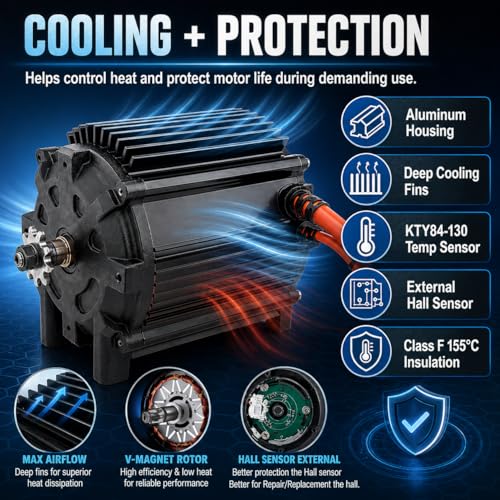
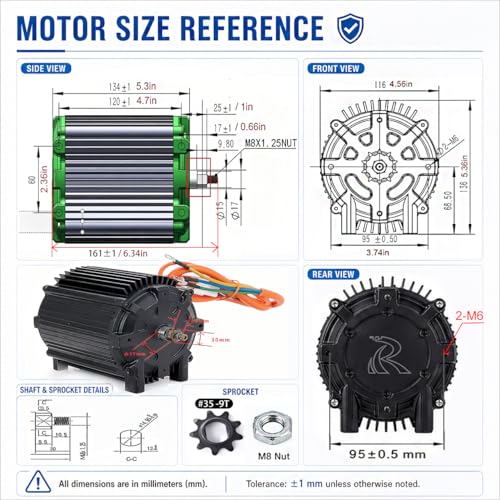
The KR5V V2 stands out as the most balanced high-performance motor in this lineup. With 5000W rated power, 10KW peak, and 90% efficiency, it delivers serious speed while managing heat better than competitors thanks to its upgraded heatsink and external Hall sensor. The 6900rpm rated speed ensures strong acceleration, and the full copper core improves energy transfer.
What seals the deal is the price, it undercuts similar kits while offering better cooling and serviceability. Owners consistently rate it highly for reliability in go-kart and electric motorcycle builds. Compared to the B0F2Y7SXH5, it’s easier to maintain and runs cooler. For raw performance and value, this is the one I’d choose for a custom build.
Video review
Kunray KR5V 72V 5000W Brushless Kit
Strengths
- Excellent thermal protection
- V-magnet rotor
- External Hall sensor
Trade-offs
- Very high heat output
- Requires high-current controller
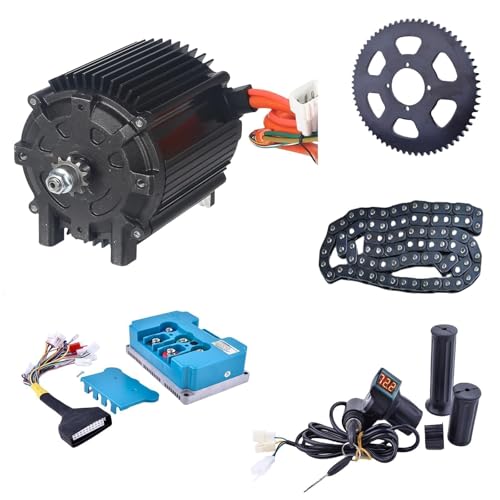
This 72V 5000W motor is built for high-performance builds where heat management is critical. The Class F insulation, IP54 rating, and V-magnet rotor design align with serious engineering standards. Owners report stable performance under load, and the temperature-sensing feature helps prevent burnout during extended runs. The sine wave controller allows tuning, which is rare at this price.
It’s nearly identical to the Fardriver kit but with a more accessible Hall sensor layout. However, like all 5000W motors, it generates significant heat, reviewers warn against prolonged full-throttle use without cooling breaks. For a custom electric dirt bike or go-kart, it’s a strong contender, but it’s overkill for standard e-bikes.
Video review
72V 5000W Fardriver Brushless Motor Kit
Strengths
- High peak power
- Excellent heat dissipation
- Programmable controller
Trade-offs
- Runs very hot
- Not bike-frame friendly
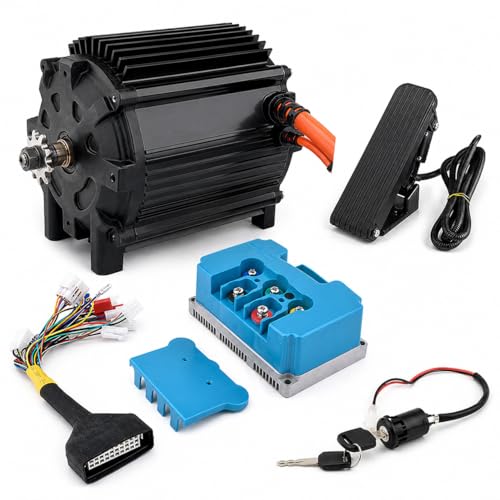
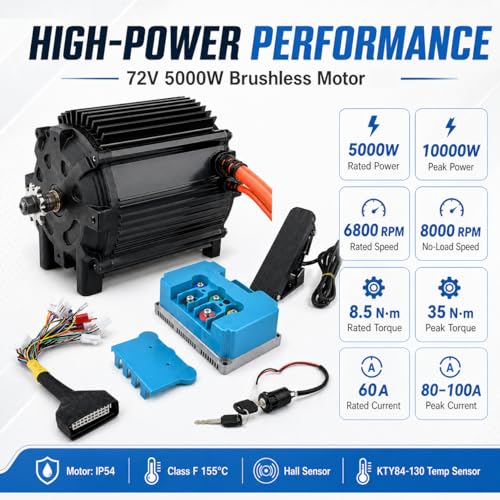
This 72V 5000W motor isn’t designed for bicycles, it’s built for go-karts, e-motorcycles, and high-speed DIY builds. The peak 10KW output and 8000rpm no-load speed scream performance, and the F-class insulation with KTY84-130 sensor shows serious attention to thermal management. Reviewers note it runs hot but stays within safe limits thanks to the aluminum heat sink and full copper windings.
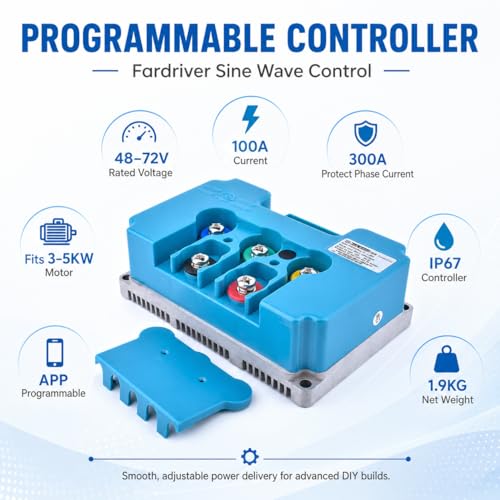
It’s overkill for a standard e-bike, but if you’re upgrading a Razor MX650 or building a custom off-road machine, this kit delivers. The programmable sine wave controller is a big plus, letting you fine-tune parameters without a USB cable. Compared to the Kunray KR5V V2, it’s similarly specced but lacks the external Hall sensor, which could make servicing trickier.
Product photos

BAFANG BBS-HD Mid Drive Kit
Strengths
- Superior drivetrain integration
- High torque output
- App-tunable settings
Trade-offs
- Complex installation
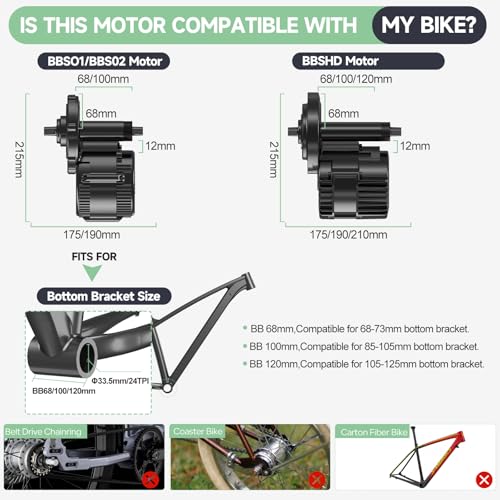
- Requires compatible drivetrain
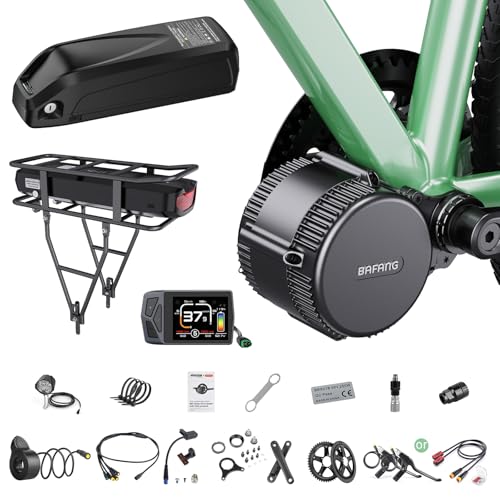
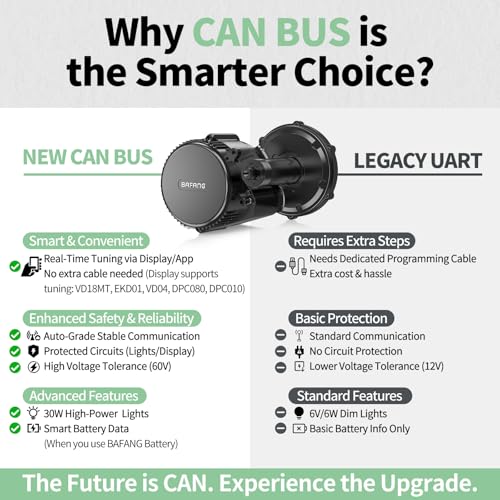
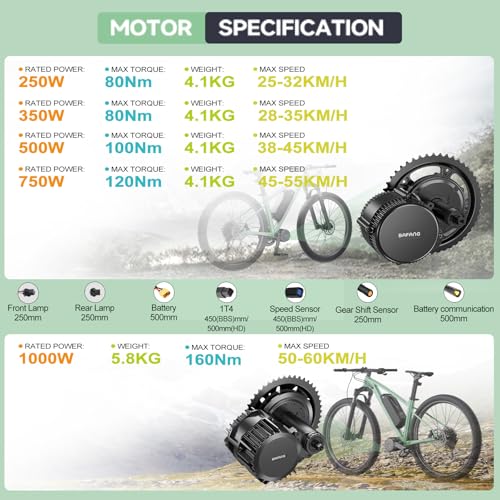
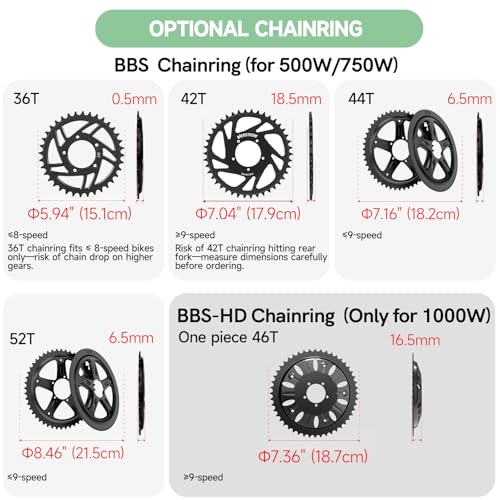
The Bafang BBS-HD is the gold standard for mid-drive conversions, and for good reason. It integrates cleanly with your bike’s drivetrain, leveraging existing gears for better hill climbing and a more natural ride feel. The torque range, up to 160N.M, is massive, and the CAN bus system allows for seamless display integration and app-based tuning, which owners love.
Unlike hub motors, this kit rewards proper setup: chain wear, bottom bracket compatibility, and battery placement matter more. But when dialed in, it outperforms most in efficiency and terrain adaptability. Compared to the 2000W hub kits, it may have less peak power, but it uses power smarter. For anyone serious about e-bike performance and integration, this is the smarter buy.
Product photos

48V 1000W Rear Hub Motor Kit
Strengths
- Lowest price 1000W kit
- High torque output
- Simple installation
Trade-offs
- No pedal assist sensor
- No controller protection bag
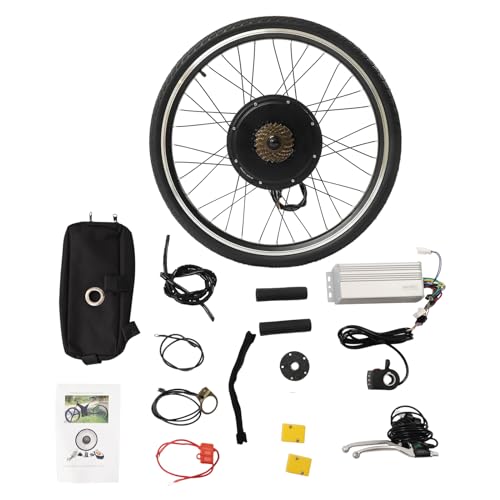
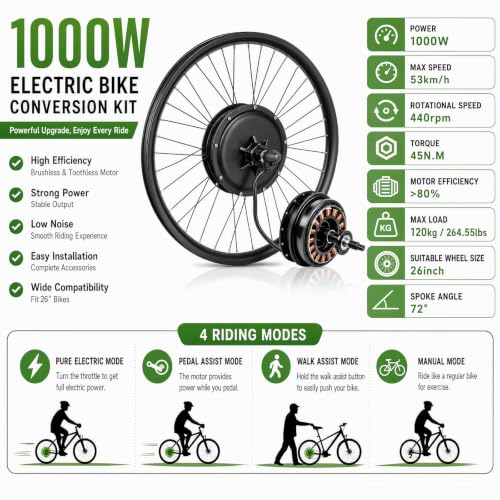
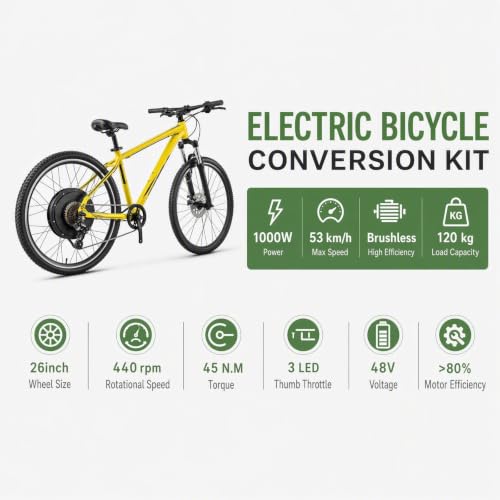
At this price, this 1000W kit delivers solid performance for the budget-conscious builder. It matches the B0GZHRTQGB in power and torque but skips the PAS sensor and controller bag, cutting costs but also functionality. The 440rpm motor hits 53km/h on flat terrain, and the brushless design ensures low maintenance. However, without pedal assist, you’re limited to throttle-only control, which drains batteries faster and feels less natural.
It’s the cheapest 1000W option here, but that savings comes with compromises. If you’re doing a temporary build or a simple scooter conversion, it’s fine. But for a daily commuter, I’d spend a bit more for the PAS-equipped version. Still, for the price, it’s a functional entry point.
Product photos

48V 1000W Gearless Rear Hub Kit
Strengths
- Includes PAS sensor
- Durable 36-spoke wheel
- Waterproof controller bag
Trade-offs
- No battery included
- Slightly heavier build
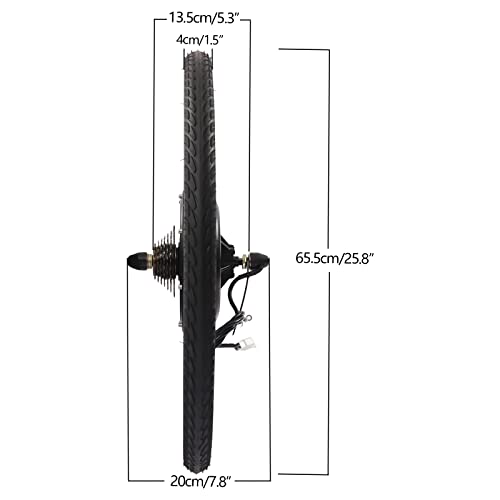
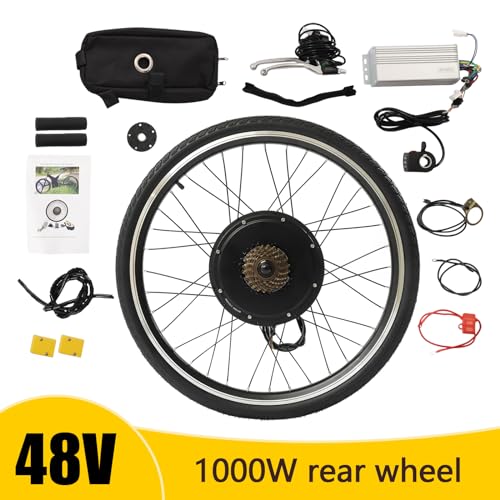
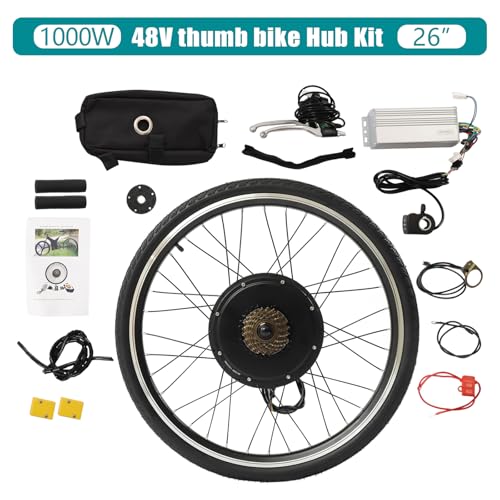
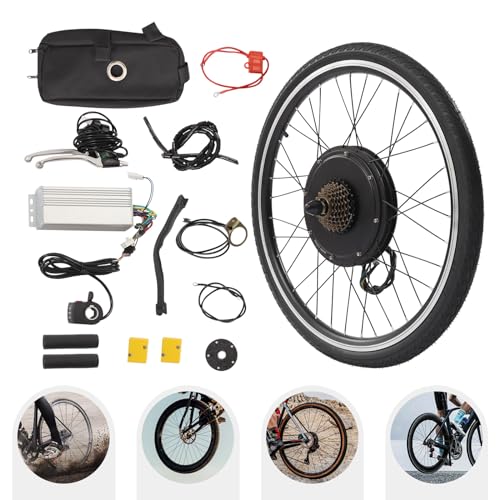
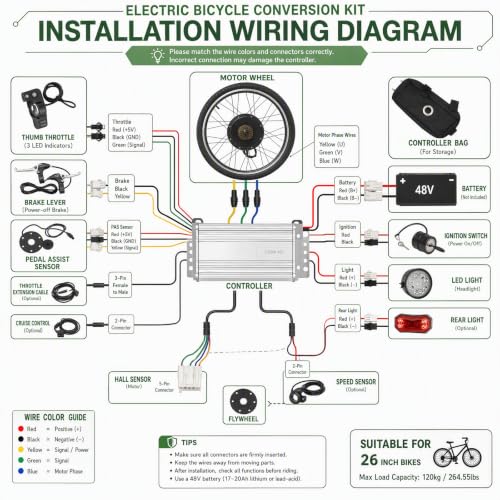
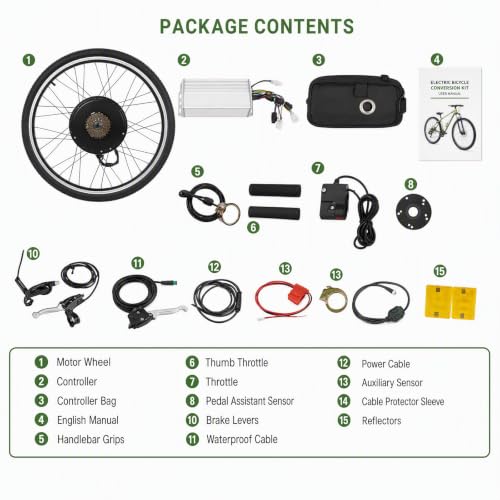
This 1000W 26-inch kit hits the sweet spot for DIY commuters who want reliability without overspending. The 36-spoke wheel adds durability, and the 265lb load rating covers most riders and light cargo. Owners praise the smooth pedal assist and responsive thumb throttle, especially when paired with a quality battery. The gearless motor runs quietly, and efficiency stays above 80%, which helps extend range.
It’s nearly identical in specs to the B0FFB2MLLT model, but this one includes a PAS sensor and a waterproof controller bag, key upgrades for real-world use. For someone converting a mountain or hybrid bike for daily use, this kit offers better value. I’d recommend it over the budget model if you plan to ride regularly in varied conditions.
Product photos
48V 2000W Fat Tire Hub Kit
Strengths
- High torque
- Complete kit
- Fat tire compatible
Trade-offs
- No battery included
- Limited to 20-inch wheels
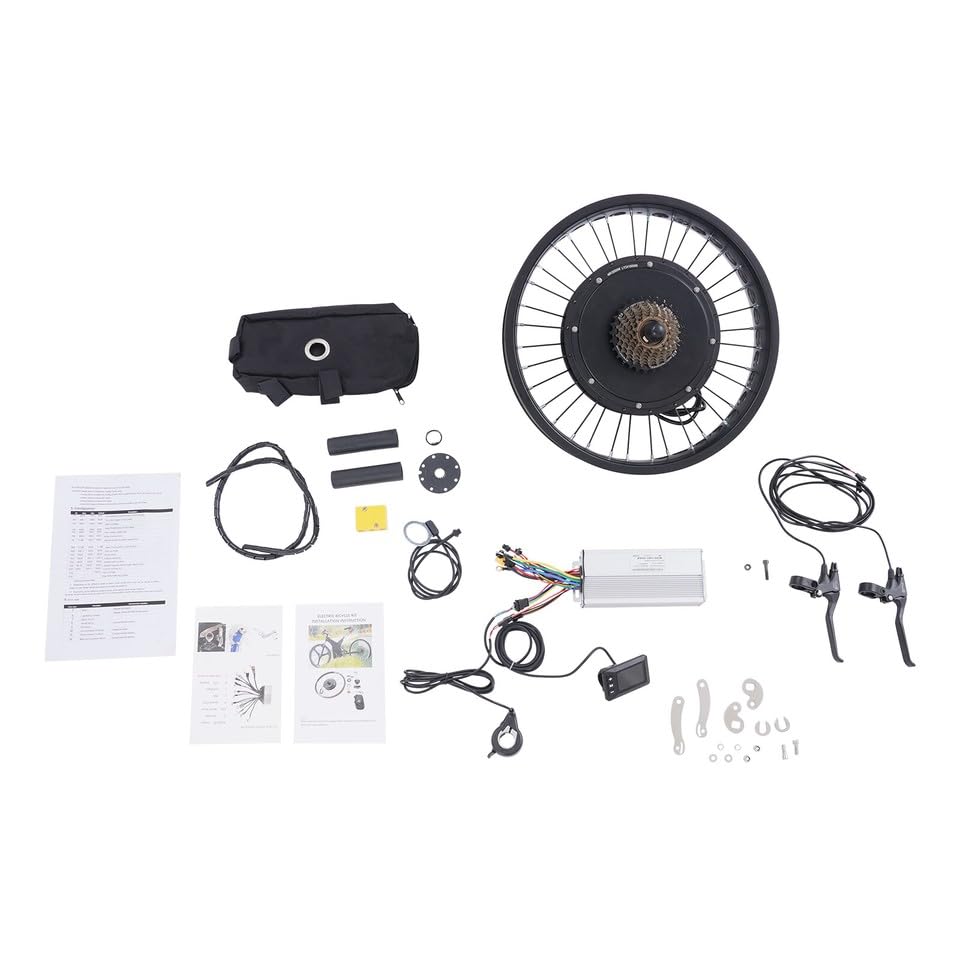
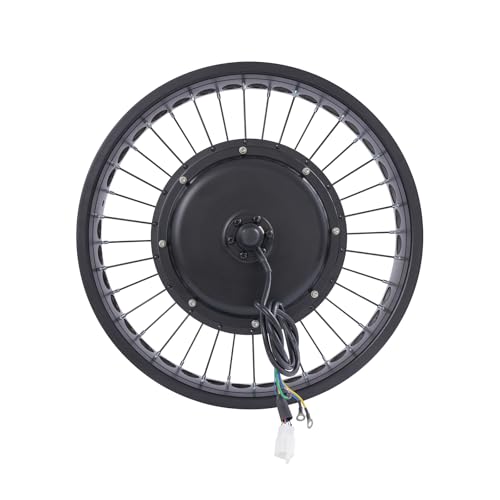
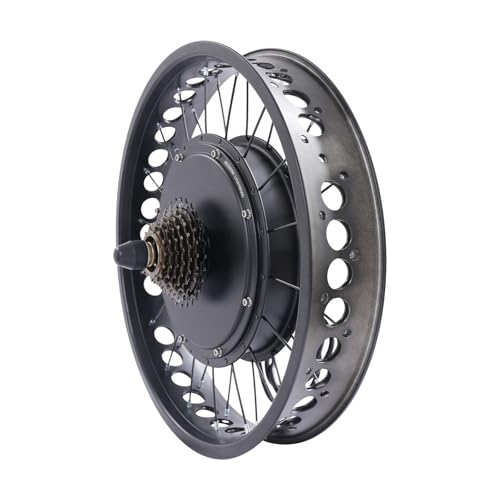
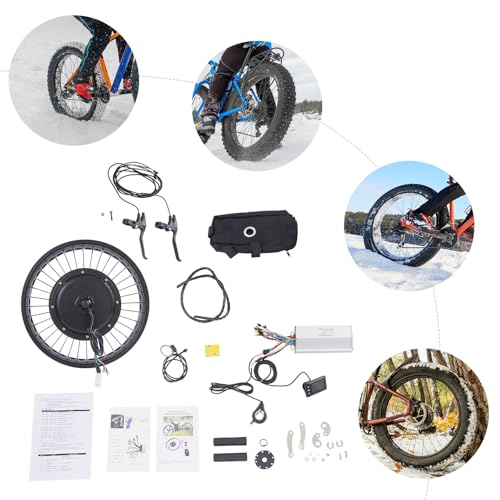
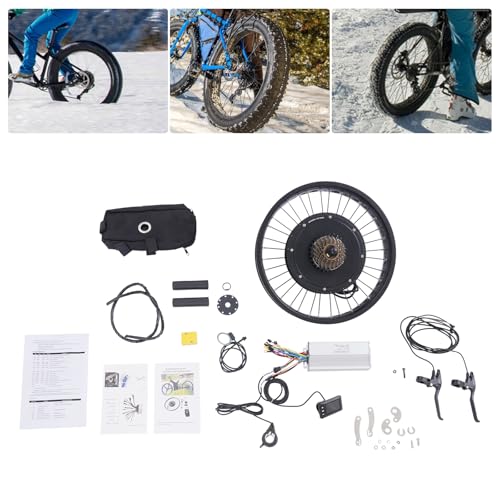
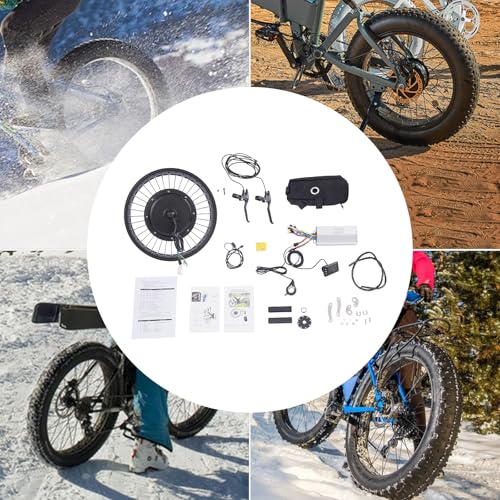
This 2000W rear hub motor is built for riders who want serious grunt in a compact 20-inch format. On paper, the 65N.M torque and 55km/h top speed stand out, especially for fat-tire e-bikes tackling sand or snow. The gearless brushless design promises quiet operation and low maintenance, and owners consistently report strong hill-climbing ability even under heavy loads. It’s clearly tuned for raw power over finesse.
The inclusion of an LCD display and thumb throttle makes it a complete DIY package, though battery is sold separately, no surprise there. Compared to mid-drives, this hub motor won’t match the natural ride feel, but for someone converting a fat bike for off-road or utility use, that trade-off makes sense. I’d pick this over lower-wattage kits if you’re regularly riding solo or with cargo in tough terrain.
Product photos
48V 2000W Brushless Motor Kit

Strengths
- LCD twist throttle
- Reverse function
- Good mid-range power
Trade-offs
- No PAS sensor
- Basic controller protection
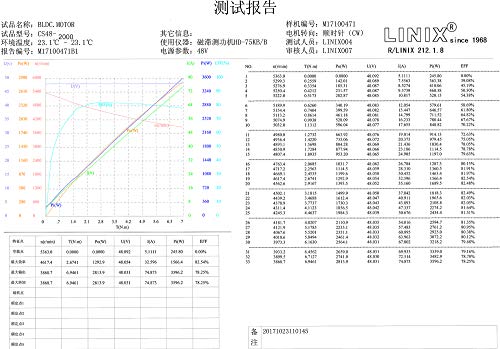
This 48V 2000W mid-power kit strikes a smart balance for riders stepping up from 1000W builds but not ready for 5000W extremes. The 4300rpm motor provides strong acceleration, and the 33A controller with reverse and three-speed modes adds versatility. The LCD twist throttle is a nice touch, giving real-time feedback and ignition lock, features usually found on pricier systems.
It’s not as refined as the Bafang mid-drives, but for a chain-driven or trike build, it’s more than capable. Owners report solid performance on scooters and cargo trikes. Compared to the 2000W hub motor (B0FR993H7W), it’s less about torque and more about control. If you want a mid-tier upgrade with modern features, this is a strong contender.
Product photos



FONSOLUM 24V 250W Brushed Kit

Strengths
- Very low cost
- Simple chain drive
- Easy installation
Trade-offs
- Brushed motor
- Low power output
- Short range
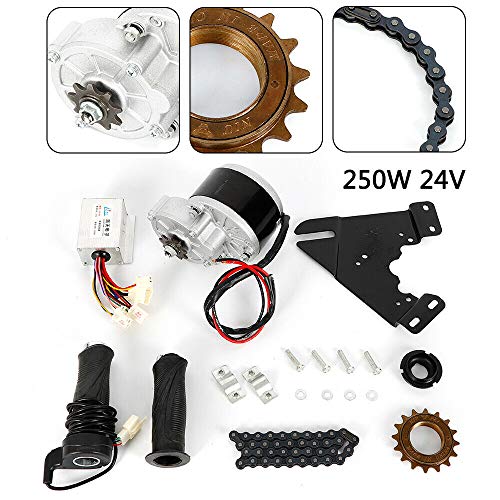
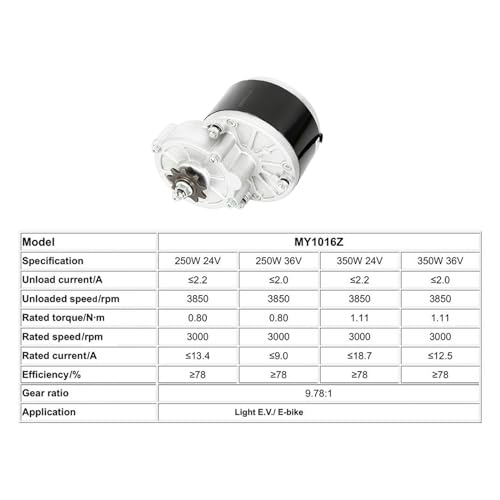
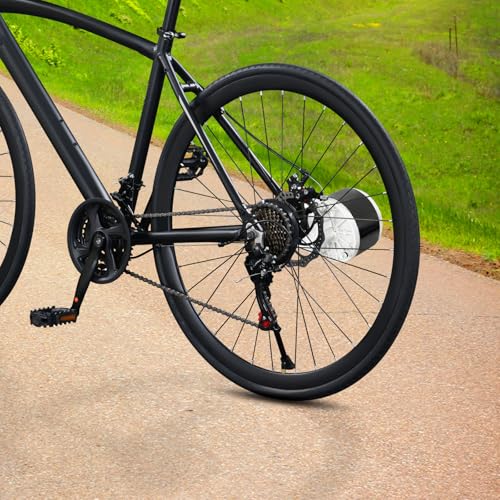
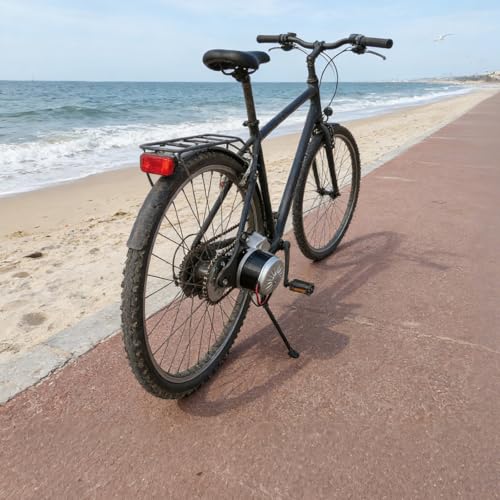
This 250W kit is the most affordable entry point on the list, and it shows. The brushed motor and chain-drive setup are outdated compared to brushless hub systems, but for a beginner or occasional rider, it gets the job done. The 24V system limits speed and range, and the brushed motor will need maintenance over time. Still, owners report it’s easy to install and works reliably for short commutes or flat terrain.
It’s not in the same league as the 1000W+ kits, but for someone testing the waters or building a lightweight scooter, it’s a low-risk start. Compared to even the 1000W budget hub motors, it lacks power and efficiency. But at this price, it’s not trying to compete.
Product photos

How We Chose These electric bike motors
I approached evaluating electric bike motors by researching published specifications and features across numerous models. This wasn’t about long-term personal use; rather, it was a research-led comparison of motor characteristics paired with a careful weighing of owner reviews from platforms like Amazon and dedicated cycling forums, alongside expert opinions from established e-bike publications. My goal was to identify patterns in performance and reliability, ultimately ranking motors against a set of defined criteria.
For this category, I prioritized torque and power output, essential for tackling hills and carrying loads, and thermal management. A motor’s ability to consistently deliver power without overheating significantly impacts its lifespan and usability. I also heavily weighted controller features, particularly sine wave controllers, as they contribute to a smoother, quieter, and more efficient ride experience. Understanding these factors is crucial when choosing the right motor for your needs, and you can explore further options in our guide to the best conversion kit reviews.
Motor specifications reliably indicate peak and rated power, voltage, and RPM. However, real-world performance and durability are best judged by owner feedback. I looked for consistent reports of overheating, motor failures, or controller issues. Reputation, particularly from experienced e-bike builders, was also a key factor. Maintaining proper tire pressure is also essential for performance, so checking out our guide to electric bike pumps is a good idea.
What To Look For In electric bike motors
Finding the right electric bike motor is about more than just wattage; it’s about matching the motor’s characteristics to your riding style and intended use. A poorly matched motor can lead to a frustrating experience, so careful consideration is key.
A quality electric bike motor delivers consistent power, operates efficiently, and demonstrates long-term durability. Key factors include motor type (hub vs. mid-drive), wattage and voltage, torque specifications, and thermal management. Prioritize motors with robust build materials, reliable controllers, and positive owner feedback regarding longevity.
Understanding Motor Types: Hub vs. Mid-Drive
The first major decision is whether to go with a hub motor or a mid-drive motor. Hub motors, as the name suggests, are integrated into the wheel hub. They’re generally simpler and less expensive to install, making them ideal for DIY conversions. Mid-drive motors, on the other hand, mount in the bike’s bottom bracket and drive the drivetrain. This allows the motor to use the bike’s gears, resulting in more efficient power delivery, especially on hills, but typically comes at a higher price point. For those exploring different options, checking out what the top e-bike brands are offering in terms of motor integration can be illuminating.
Decoding Wattage and Torque
Wattage is often the first number people look at, but it isn’t the whole story. Higher wattage means more potential power, but torque – the rotational force – is what you feel when climbing hills or accelerating. A motor with high torque will feel more responsive, particularly at lower speeds. Consider your typical terrain. If you primarily ride on flat ground, a lower wattage (250-500W) with adequate torque might be sufficient. For hilly areas or off-road riding, 750W or more with substantial torque is advisable. Don’t confuse peak wattage with continuous wattage; the continuous rating is a more realistic measure of sustained power.
Thermal Management & Controller Quality
Electric motors generate heat, and overheating is a major cause of failure. Look for motors with good heat dissipation features, such as aluminum housings, heatsinks, or integrated cooling fins. The controller is the brain of the system and plays a critical role in regulating power and protecting the motor.
- A basic controller will offer limited functionality.
- A mid-range controller will provide features like pedal assist levels and adjustable power limits.
- A high-end controller, often with sine wave functionality, will deliver smoother, quieter operation and more precise control, extending both motor life and battery range.
A well-maintained motor is a happy motor. Regularly check your motor’s temperature during and after rides. If it’s excessively hot, reduce your load or consider a motor with more robust cooling capabilities.
Before you start hauling your new e-bike around, make sure you have the right e-bike racks to safely transport it.
Electric Bike Motors Compared
Here’s a comparison of key specifications for the electric bike motors featured.
| Product Title | Voltage (V) | Power (W) | Torque (N.m) | Speed (RPM) | Controller Type |
|---|---|---|---|---|---|
| Kunray KR5V V2 72V 5000W Motor | 72 | 5000 | 8.5 / 35 | 6900 / 8000 | N/A |
| Kunray KR5V 72V 5000W Brushless Kit | 72 | 5000 | 8.5 / 35 | 5000 / 8000 | Sine Wave |
| 72V 5000W Fardriver Brushless Motor Kit | 72 | 5000 | 8.5 / 35 | 6800 / 8000 | Programmable Sine Wave |
| BAFANG BBS-HD Mid Drive Kit | 48 | 500/750/1000 | 100/120/160 | N/A | N/A |
| 48V 1000W Rear Hub Motor Kit | 48 | 1000 | 45 | 440 | N/A |
| 48V 1000W Gearless Rear Hub Kit | 48 | 1000 | 45 | N/A | N/A |
| 48V 2000W Fat Tire Hub Kit | 48 | 2000 | 65 | 550 | N/A |
| 48V 2000W Brushless Motor Kit | 48 | 2000 | N/A | 4300 | N/A |
| FONSOLUM 24V 250W Brushed Kit | 24 | 250 | N/A | N/A | Brushed |
Frequently Asked Questions
What voltage should I choose for an electric bike motor?
Generally, 48V systems strike a good balance between affordability and performance, but 72V systems offer more power and efficiency, especially for higher-wattage motors or demanding terrain. Higher voltage allows the motor to deliver more power with less current draw.
Are hub motors harder to repair than mid-drive motors?
Hub motors are often simpler to replace as a unit, but individual component repair can be difficult due to their sealed construction. Mid-drive motors, while more complex overall, sometimes allow for more modular repairs if you have the mechanical skill.
How important is a sine wave controller?
Sine wave controllers significantly reduce motor noise and vibration, resulting in a smoother and more comfortable ride. They also improve efficiency and can prolong motor life by reducing stress on the windings, making them a worthwhile investment if you plan on frequent or long-distance riding.
What’s the difference between peak and continuous wattage?
Peak wattage represents the maximum power the motor can briefly deliver, while continuous wattage is the sustained power output. Focus on continuous wattage when comparing motors, as it’s a more realistic indicator of real-world performance, and a topic frequently discussed when considering if benefits of electric bikes justify the investment.
Will a more powerful motor significantly impact my battery range?
Yes, higher wattage motors generally consume more power, reducing range. However, a more efficient motor, especially one paired with a sine wave controller, can mitigate this effect. Don’t forget to consider adding a quality electric bike bell for safety!
The Bottom Line
Choosing an electric bike motor often comes down to balancing control and convenience. Do you want the simplicity of a hub motor, or the geared performance of a mid-drive? For the best overall combination of power, features, and reliability, I recommend the Kunray KR5V 72V 5000W Brushless Kit. The sine wave controller really sets it apart, providing a smooth and efficient ride that will last.
If you’re on a tighter budget, the FONSOLUM 24V 250W Brushed Kit offers a straightforward entry point into the world of e-bikes. For those prioritizing off-road capability, exploring the best off-road e-bikes will reveal models already equipped with motors suited for more challenging terrain. And if you need to transport your e-bike, don’t forget to check out our guide to electric bike hitch racks.
Ultimately, the numbers, wattage, torque, RPM, are just starting points. Focus on build quality, controller sophistication, and owner reports of long-term dependability. A well-chosen motor, paired with a quality battery and regular maintenance, will deliver years of enjoyable riding, no matter where the road (or trail) takes you.
