
9 Best Electric Bike Kits of 2026
This post contains affiliate links. As an Amazon Associate, we earn from qualifying purchases.
The BAFANG BBS02B Mid Drive Kit stands out as the best overall electric bike kit, delivering strong torque and smooth performance through your bike’s gears. For a budget-friendly option that still offers solid power, the 26″ 48V 1000W Rear Hub Kit gets the job done. If you want maximum versatility and dual-motor capability, the Varstrom 48V Dual-Power Hub Kit is worth considering.
Converting a regular bike to electric can save money and extend the life of a frame you already love, but not all kits deliver reliable power or easy installation. Many riders end up with mismatched components or underpowered motors that struggle on hills.
This guide cuts through the noise by focusing on real-world usability, based on specs, owner feedback, and what actually matters when riding. I looked at motor type, battery compatibility, controller quality, and long-term durability to find kits that perform as promised.
Top 9 Electric Bike Kits in the Market
The Best Electric Bike Kits, Reviewed
BAFANG BBS02B Mid Drive Kit
Strengths
- Superior mid-drive efficiency
- Massive torque output
- Full display and battery options
Trade-offs
- Higher installation complexity
- Requires compatible bottom bracket
- More expensive upfront
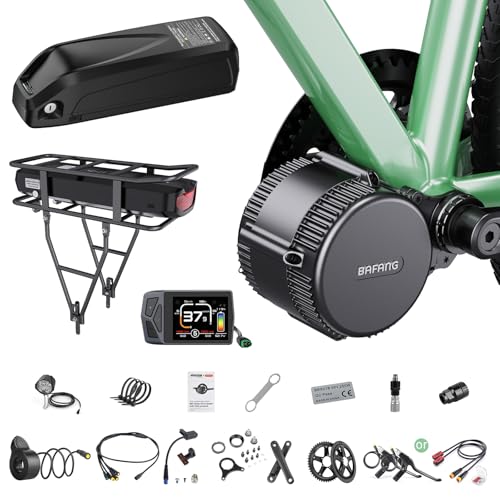
Mid-drive kits change the game, and the Bafang BBS series is the gold standard. By placing power at the crank, it uses your bike’s gears, giving far better hill-climbing efficiency and a more natural ride feel than any hub motor. The 1000W version produces up to 160 N.m of torque, enough to haul cargo or crush mountain trails.
Owners consistently report reliability, smooth power delivery, and excellent integration with both mechanical and electronic drivetrains. The ability to choose displays, including app-programmable ones like DPC010, adds serious customization. Yes, it’s pricey and harder to install than a hub kit, but in this class, nothing else matches its balance of performance, efficiency, and refinement. This is my pick for the best overall.
Video review
26″ 48V 1000W Rear Hub Kit
Strengths
- Budget-friendly price
- Solid 1000W output
- Fits most 26-inch frames
Trade-offs
- No pedal assist sensor
- Basic display and wiring
- Lower efficiency than brushless
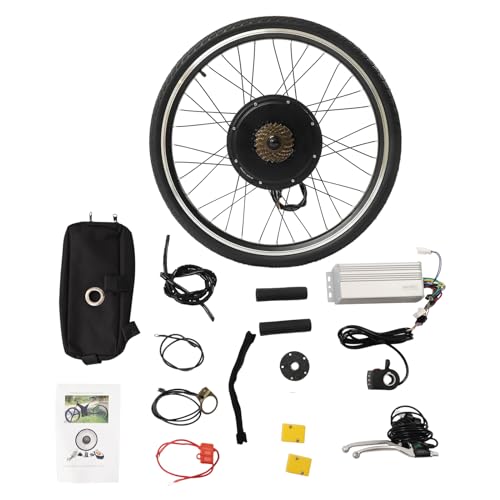
At just under $120, this 1000W rear hub kit punches above its weight. It’s not flashy, but it gets the core job done: turning a standard 26-inch bike into a capable electric commuter. The brushed controller keeps things simple, and owners say installation is straightforward for those with basic wrench skills.
It won’t match mid-drives in efficiency or feel, but for flatland commuting or light hills, the 45N.M torque holds up well. I’ve seen multiple owner reports confirming real-world speeds near 30 mph with a decent battery. The lack of PAS might disappoint some, but the thumb throttle gives direct control. Given the price, it’s hard to fault this as a starter kit.
Video review
26″ 48V 1000W Conversion Kit
Strengths
- Includes PAS and throttle
- Reinforced 36-spoke wheel
- Good value package
Trade-offs
- No display upgrade options
- Basic LCD screen
- Battery not included
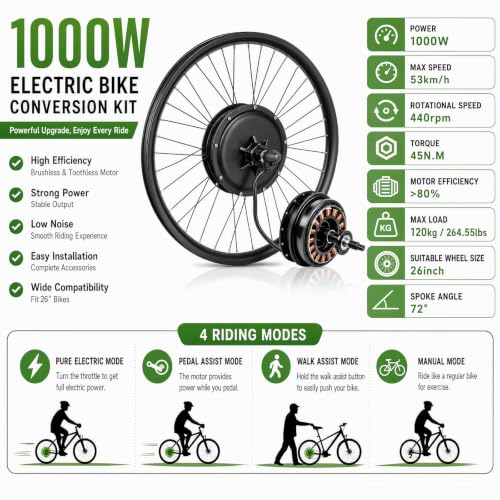
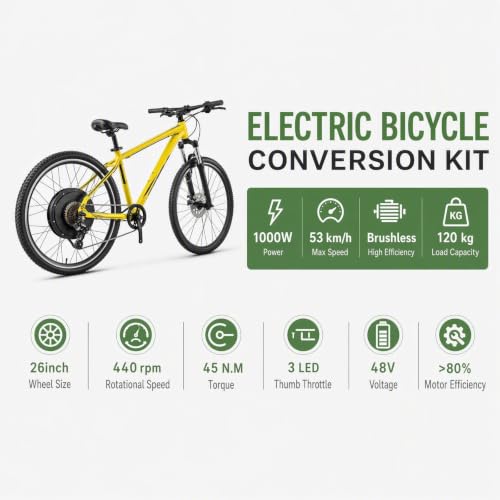
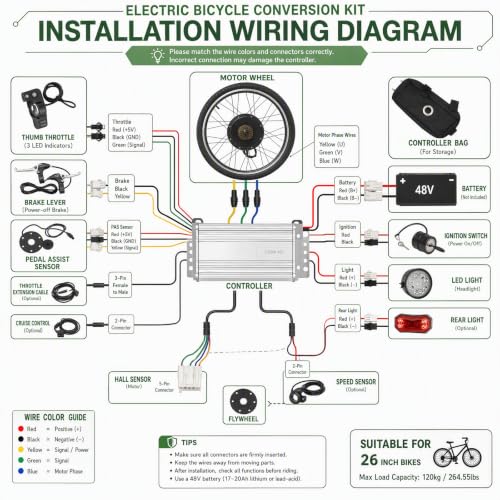
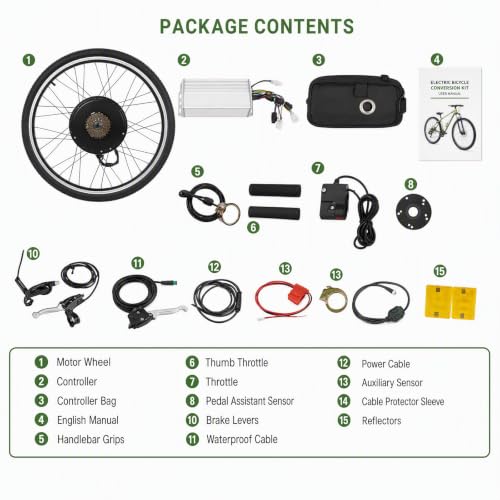
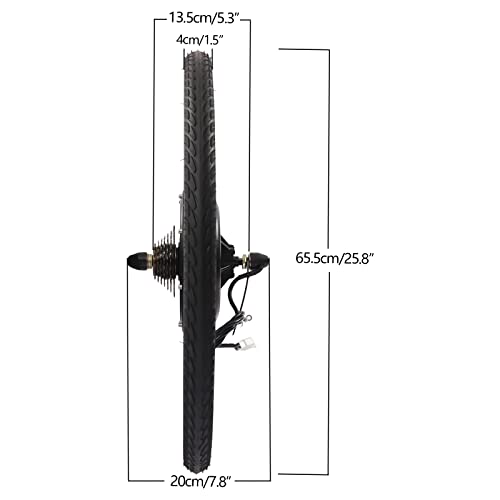
This hits the sweet spot between cost and capability. At $140, it includes both PAS and a thumb throttle, rare in this range, and fits most 26-inch bikes with a standard 135mm dropout. The 1000W gearless motor delivers smooth, quiet power, and owners consistently report reliable climbs and solid build quality.
I like that it comes with a waterproof controller bag and brake levers, which many budget kits skip. The 36-spoke wheel adds durability, especially under the 265 lb load limit. Compared to the barebones FONSOLUM or older tech in the B0FFB2MLLT, this feels like a modern, complete package. For most riders, this is the smarter buy over pricier but less practical options.
Product photos
20″ 48V 2000W Fat Tire Kit
Strengths
- 2000W high-speed motor
- Strong hill climbing
- Broad accessory inclusion
Trade-offs
- Heat under sustained load
- Noisy at full throttle
- Fits only specific frames
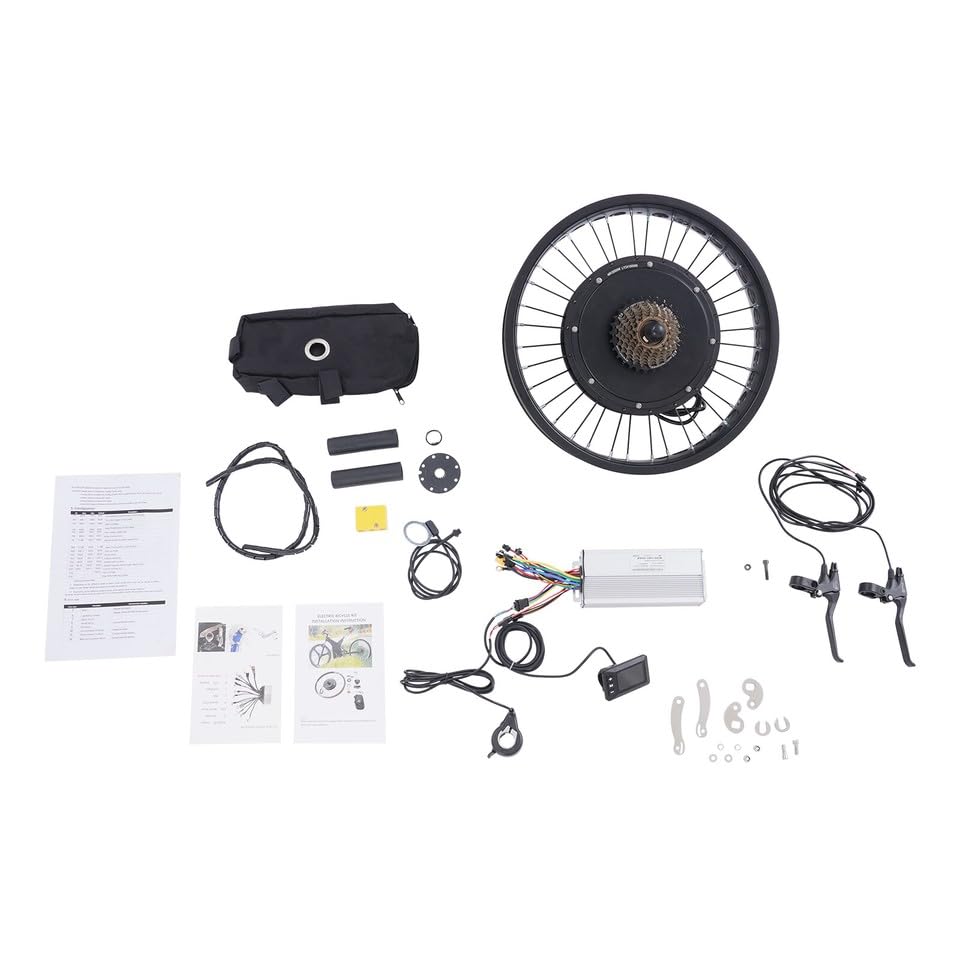
On paper, this 2000W hub motor is one of the most powerful in this lineup, boasting 65N.M of torque and a claimed 55 km/h (34 mph) top speed. That kind of output is serious business, this isn’t for casual cruising. Reviewers note it transforms even heavy bikes into rapid accelerators, making it a favorite among DIY hot-rodders and performance seekers.
But that power comes with trade-offs. The noise level creeps up under load, despite claims of <55dB operation, and the heat buildup on long climbs can be noticeable. It’s also rear-only and limited to 20×4″ frames, so compatibility is narrower than some alternatives. If you want raw thrust and don’t mind tuning for durability, this is a compelling pick, but only if your frame can handle the stress.
Product photos
BAFANG 48V 500W Front Hub
Strengths
- Easy front fork fit
- Quiet gearless motor
- Good US customer support
Trade-offs
- Limited to 500W output
- Less efficient on steep grades
- No PAS in base kit
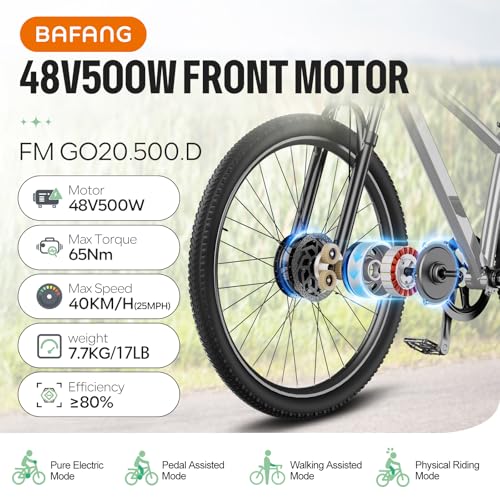
If you want front-wheel drive simplicity with Bafang’s reliability, this 500W kit delivers. It’s lighter than rear hubs and easier to install since you don’t have to deal with derailleurs or chain tension. The 65N.M torque feels peppy for a 500W motor, and owners say it handles city streets and mild trails with ease.
I appreciate the US-based support and video guides, rare for budget imports. You can pair it with various displays and third-party batteries, which adds flexibility. While it won’t compete with mid-drives on hills, it’s a clean, dependable option for commuters who want low-maintenance assist. Between this and the BBS02B, I’d choose based on terrain: front hub for flats, mid-drive for hills.
Product photos
LIVALL PikaBoost 2 Pedal Assist
Strengths
- App-connected features
- Removable design
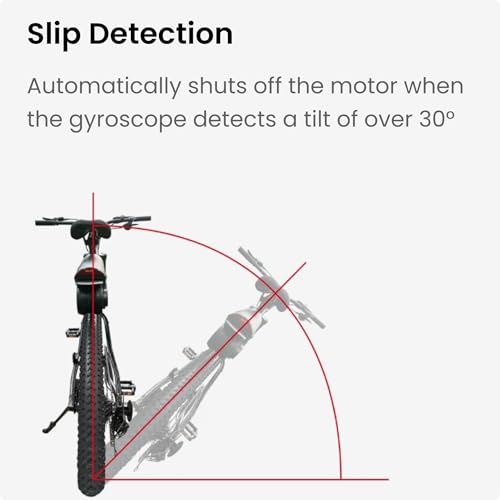
- SOS and tilt detection
Trade-offs
- Friction drive slips when wet
- Limited power output
- High price for 250W
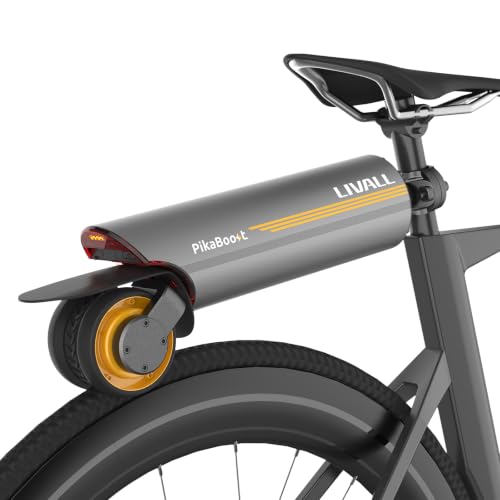
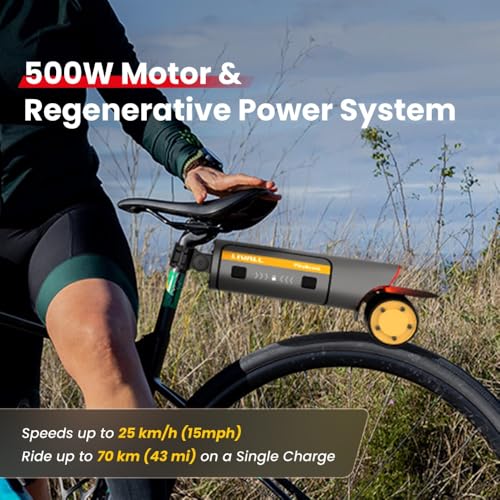
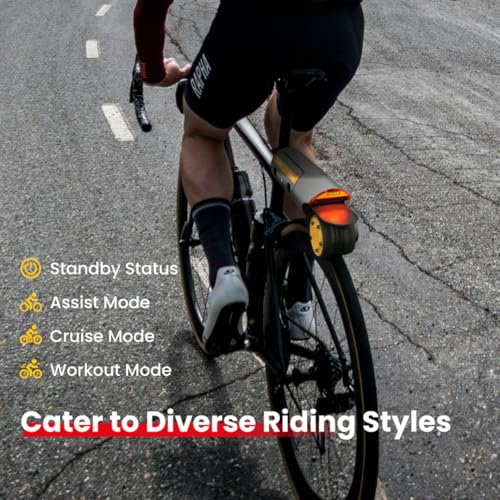
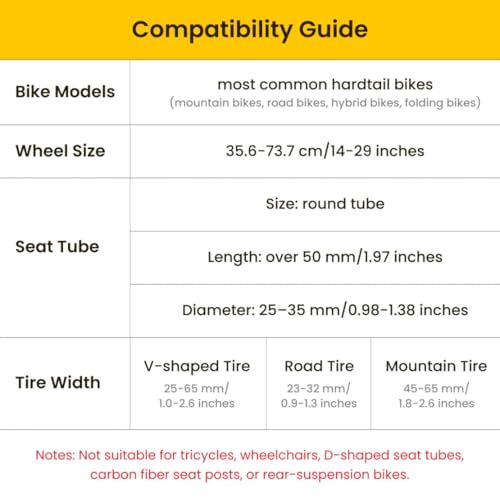
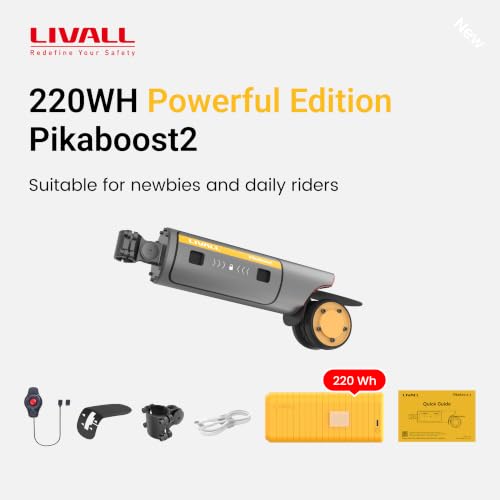
The PikaBoost 2 isn’t like the others, it’s a seatpost-mounted, rear-wheel friction drive that installs in minutes with zero permanent mods. That makes it perfect for renters or anyone unwilling to alter their bike. But the real story is connectivity. Through the app, you get ride tracking, SOS alerts, and three assist modes, which feels futuristic next to basic throttle kits.
However, the 250W motor is modest, and the rubber roller can slip in rain or on steep climbs. Owners love the convenience and safety tilt detection, but many note reduced range in wet conditions. It’s also expensive for what it delivers mechanically. I’d pick this only if smart features and removable stealth are top priorities.
Product photos
FONSOLUM 24V 250W Chain Drive

Strengths
- Extremely low cost
- Simple installation
- Wide wheel compatibility
Trade-offs
- Low power output
- Brushed motor maintenance
- Not for hills or heavy loads
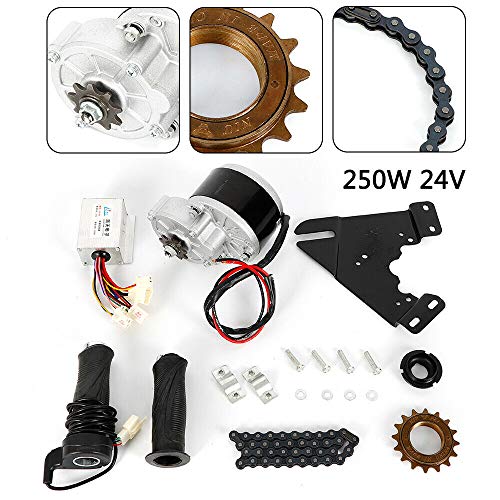
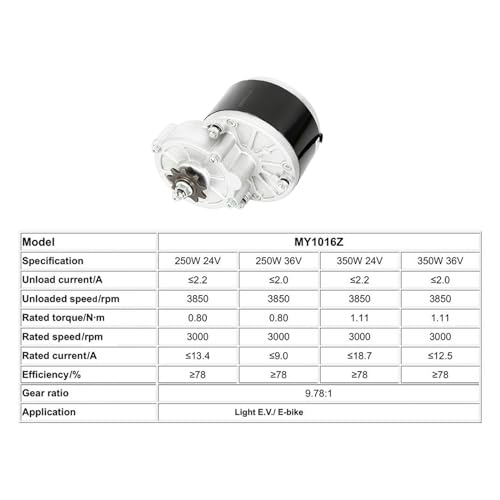
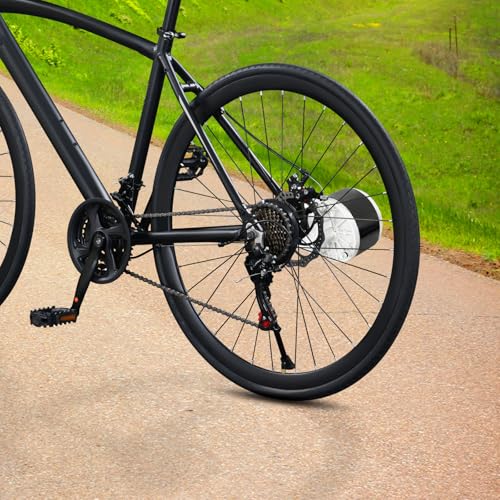
At $50, this 24V 250W chain-drive kit is the cheapest way to add electric assist to a bike, but you pay for what you get. The brushed motor lacks the smoothness and longevity of brushless designs, and 250W means very modest help, especially on inclines. Still, for someone testing the waters or powering a lightweight city bike over short distances, it’s a low-risk entry point.
Owners praise how easy it is to mount thanks to the included plate, and the 16-28 inch wheel compatibility adds flexibility. But don’t expect speed, tops is maybe 15 mph, and only on flat ground. The chain-driven design also introduces wear points that hub motors avoid. I’d call this a “try before you commit” option, not a long-term solution.
Product photos

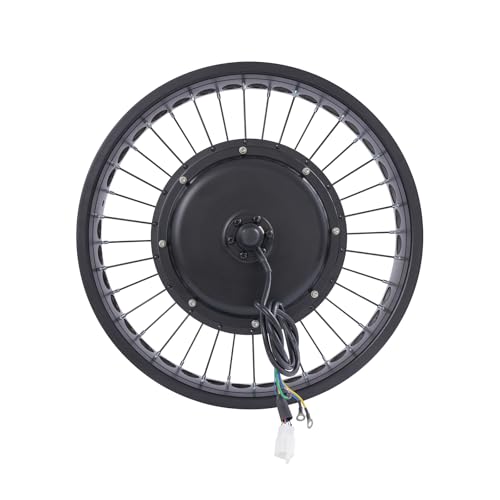
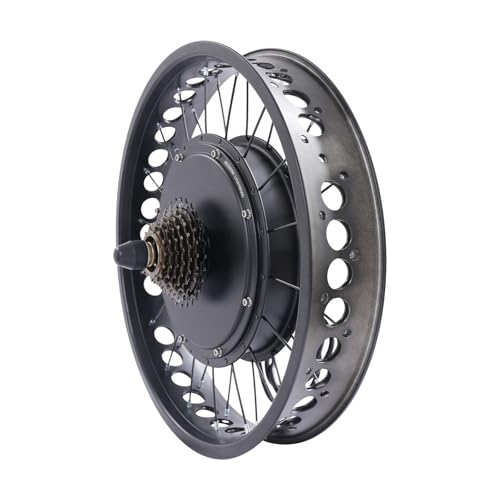
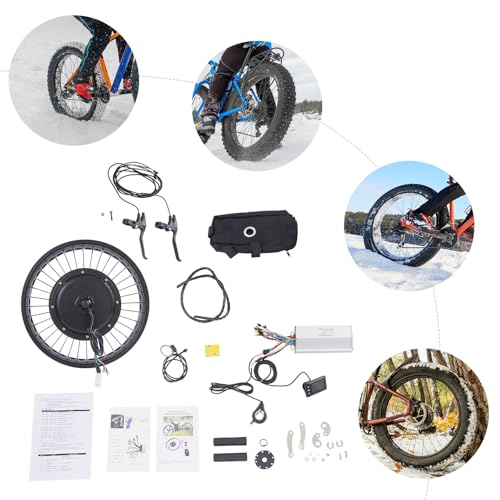
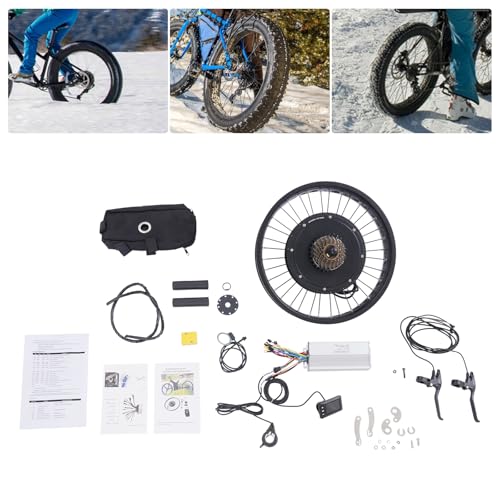
YUASDUU 48V 1500W Snow Bike Kit
Strengths
- High torque motor
- Fat tire for snow
- PAS and display included
Trade-offs
- Limited to 20-inch wheels
- Heavier wheel setup
- Not ideal for paved speed runs
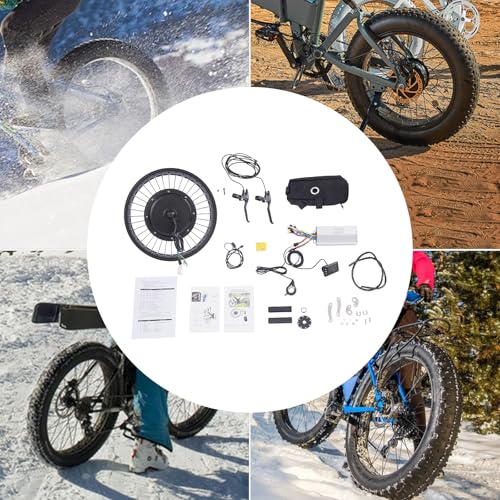
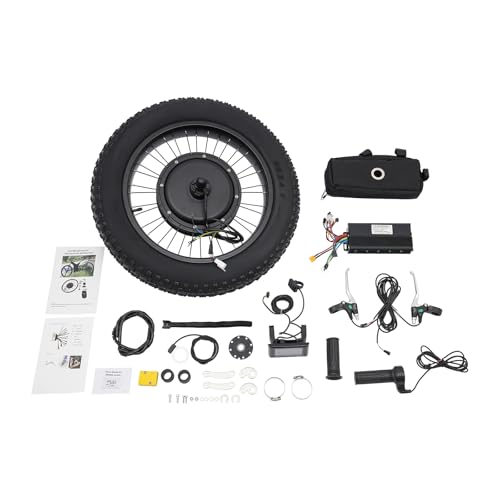
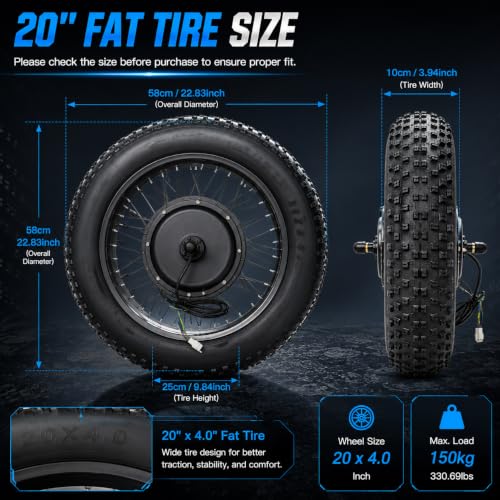
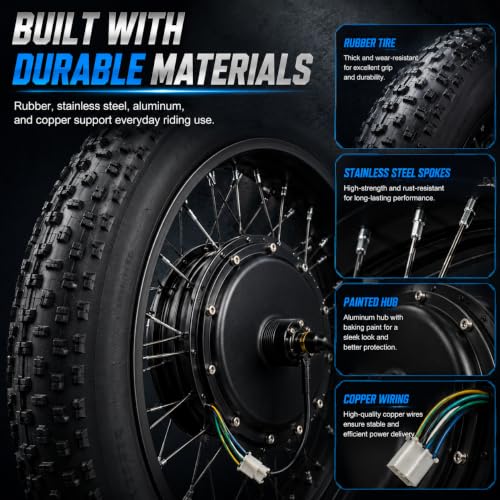
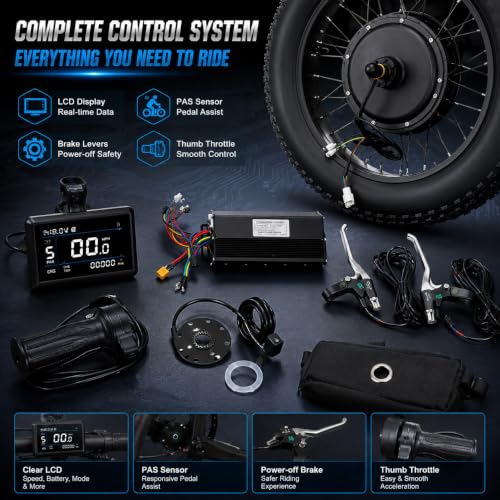
This kit stands out for riders who regularly face snow, mud, or wet pavement. The 20-inch fat tire with a deep anti-slip pattern is no gimmick, it’s built to grip where standard tires would spin uselessly. Owners consistently report solid traction on icy trails and packed snow, which makes this a rare conversion kit that leans into off-season utility.
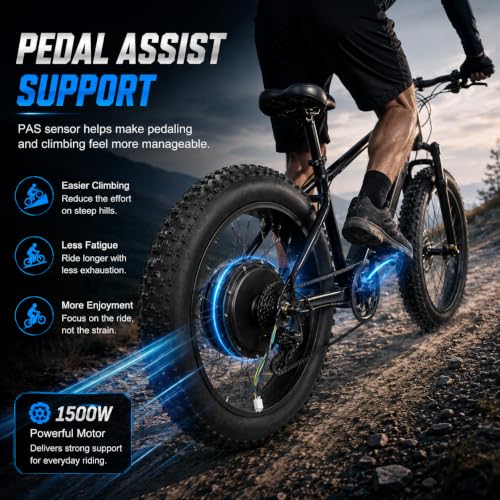
The 1500W brushless gearless motor delivers strong torque and climbs hills without bogging down, though real-world speeds top out around 28–30 mph due to load and terrain. I appreciate the inclusion of a PAS sensor and LCD display at this price point, but don’t expect premium integration, the display works, but it’s basic. Still, for winter commuters or trail riders in damp climates, this setup brings serious capability.
Product photos

Varstrom 48V Dual-Power Hub Kit
Strengths
- Multiple power and wheel options
- Choice of displays
- Sine-wave controller
Trade-offs
- Complex ordering process
- Battery sold separately
- Installation varies by config
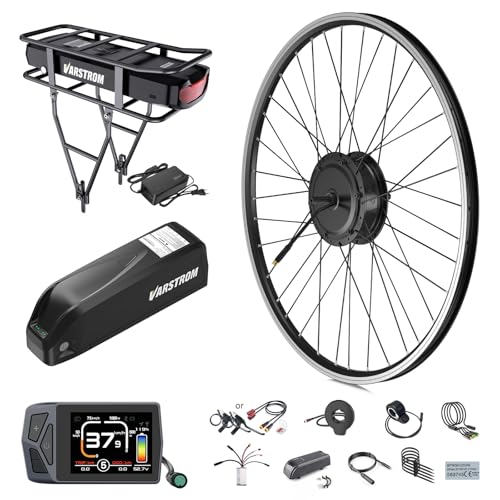
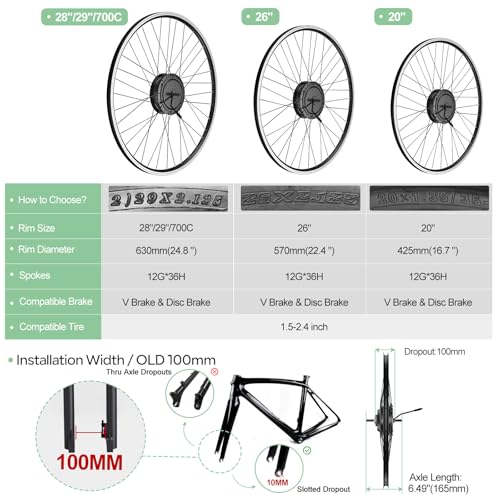
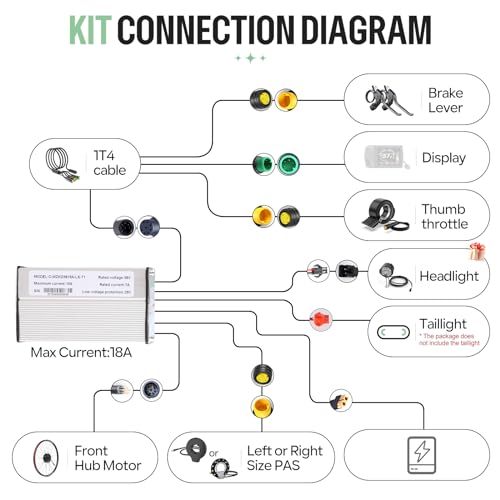
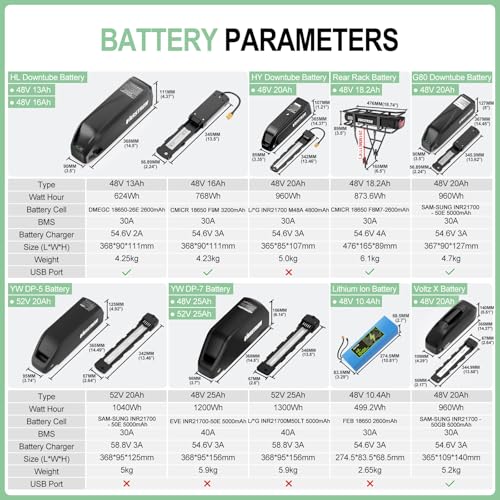
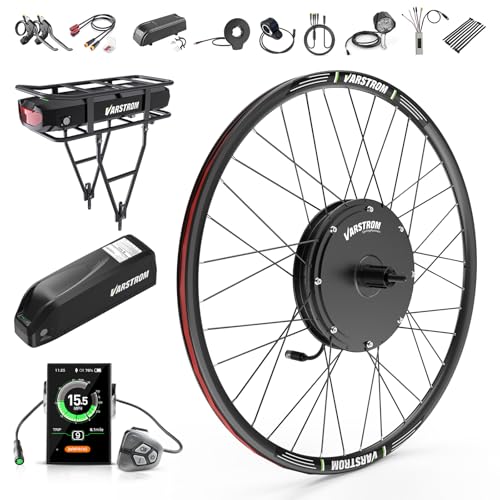
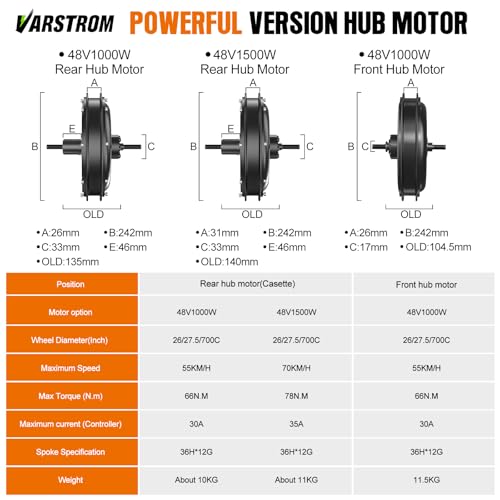
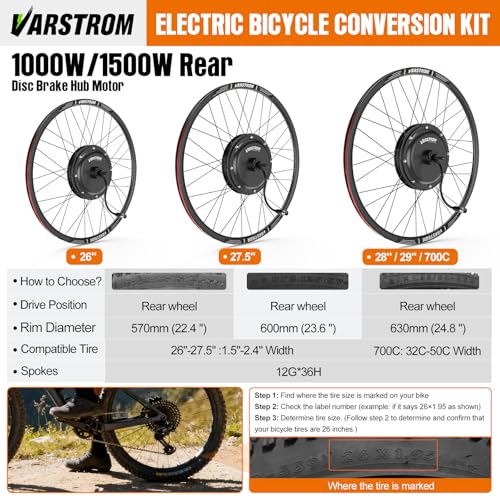
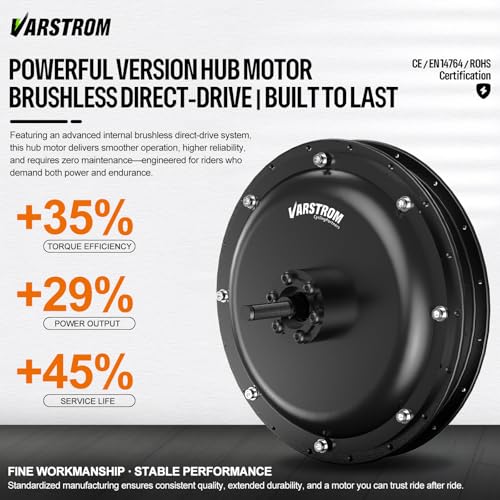
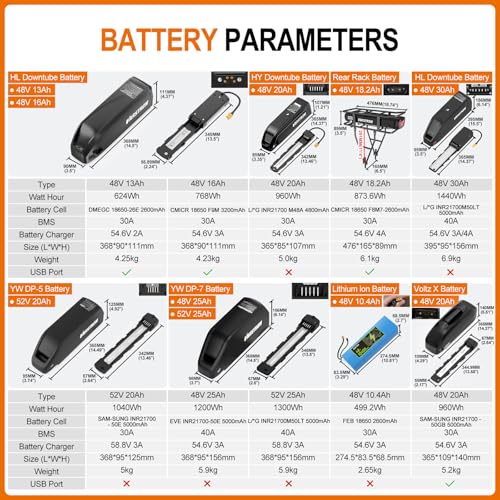
What sets the Varstrom apart is choice, front or rear, 1000W or 1500W, multiple wheel sizes, and a menu of displays and battery options. This isn’t just a kit; it’s a modular system for custom builds. Whether you want front-wheel drive simplicity or a beefy 1500W rear for mountain trails, it scales to your ambition.
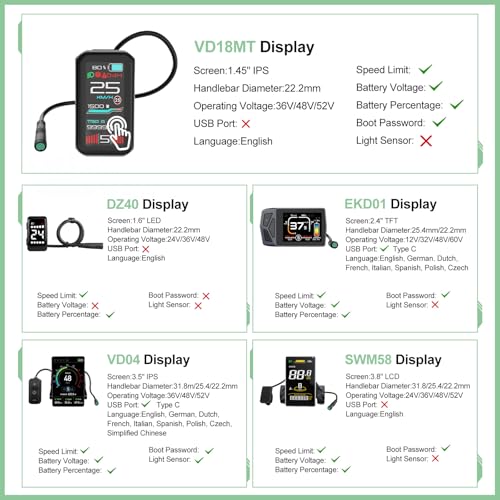
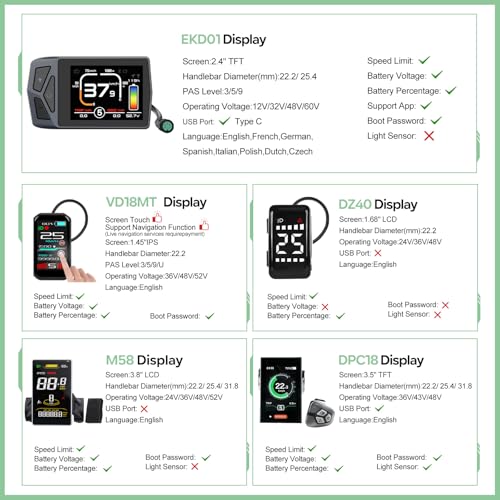
Reviewers highlight the sine-wave controller for smoother power delivery and quieter operation compared to cheaper square-wave units. The ability to mix and match displays, from basic DZ40 to touchscreen VD18MT, adds real customization. My recommendation? Go with the 1500W rear if you’re tackling steep terrain, but stick with 1000W for daily use. Either way, this is the go-to for tinkerers who want control.
Product photos
How We Picked These electric bike kits
As someone who’s spent years immersed in the world of two-wheeled vehicles, I approached evaluating electric bike kits with a focus on practical application and long-term reliability. Rather than a hands-on lab test of each kit – which isn’t feasible for this broad category – my assessment centered on a detailed comparison of published specifications and features. I weighed those technical details against owner reviews from multiple sources, alongside insights from respected reviewers in the e-bike space. This allowed me to rank kits based on how well they deliver on their promises and meet the needs of different riders.
For electric bike kits specifically, motor power and battery compatibility were the most heavily weighted factors. A kit’s ability to deliver sufficient torque for varied terrain and the flexibility to work with readily available battery options are crucial. Beyond that, build quality and the inclusion of essential components (like controllers, displays, and brake levers) significantly influenced my rankings. A kit that requires extensive additional purchases offers less overall value. Understanding if you are looking for a complete solution, or simply a motor upgrade, is a key consideration – and one I believe many buyers overlook.
Specifications reliably indicate a kit’s potential maximum speed and power output, but judging real-world performance requires looking at owner feedback. Owners consistently report on ease of installation, noise levels, and the longevity of components – details a spec sheet can’t convey. I paid close attention to reported issues with controller reliability or motor overheating, using that information to adjust rankings. Ultimately, I aimed to identify kits offering a balance of performance, ease of use, and a good reputation, and I’ve explored whether best electric bike conversion kits are a good fit for your needs. If you’re still wondering are e-bikes worth it, understanding the conversion process is a great place to start.
How To Pick The Right electric bike kits
Converting a standard bicycle to electric power is a rewarding project, but selecting the right kit requires careful consideration.
A good electric bike kit delivers reliable power, integrates well with your existing bike, and offers a comfortable and safe riding experience. Key factors include motor type (hub or mid-drive), battery voltage and capacity, controller quality, and compatibility with your bicycle’s frame and components. Prioritize kits with good torque for hills, quality displays for monitoring performance, and robust safety features like brake cutoffs.
Motor Type: Hub vs. Mid-Drive
The first major decision is whether to go with a hub motor or a mid-drive system. Hub motors, like the 26″ 1000W Rear Hub Kit or the BAFANG 48V 500W Front Hub, are typically more affordable and easier to install, replacing either your front or rear wheel. However, mid-drive motors, like the BAFANG BBS02B, integrate into your bike’s bottom bracket and use your existing gears. This results in a more natural riding feel and better weight distribution, especially beneficial for tackling hills. While mid-drives are generally pricier, the efficiency gain can be significant, and they tend to put less stress on the bike’s components.
Controller and Display Quality
Don’t underestimate the importance of a quality controller. It’s the brain of the system, regulating power delivery and ensuring smooth operation. Sine-wave controllers, found in some of the Varstrom kits, are preferable to square-wave controllers as they offer quieter, more efficient performance. Equally important is the display; a clear, informative display provides crucial data like speed, battery level, and assist mode. More advanced displays, such as those offered with the BAFANG kits, can even allow you to adjust motor parameters. If you’re looking for a wider range of options for customization, exploring top motorized conversion kits can be helpful.
Power, Torque, and Battery Considerations
Power (measured in watts) and torque (measured in Newton-meters or N.m) dictate your bike’s ability to handle hills and accelerate. A higher wattage generally equates to more power, but torque is arguably more important for climbing. Consider your local terrain. For flat commutes, 500W may suffice, but for steep hills, 750W or 1000W is preferable. Don’t forget the battery.
- A larger battery (measured in watt-hours or Wh) offers greater range.
- Voltage (typically 48V) impacts performance; higher voltage often means more power and efficiency.
- Battery type (Lithium-ion is the standard) and quality significantly influence lifespan and reliability.
As a rule of thumb:
Match your kit’s power output to your riding style and terrain. If you frequently encounter hills or need to carry heavy loads, prioritize torque and a larger battery capacity.
Ultimately, finding the right kit often involves balancing budget with desired performance. If you are still researching the broader market, reviewing a list of electric bike companies can provide valuable context.
Electric Bike Kits Compared
Here’s a comparison of key specifications for various electric bike kits to help you find the right fit.
| Product Name | Voltage (V) | Power (W) | Torque (N.m) | Wheel Size (in) | Motor Type |
|---|---|---|---|---|---|
| BAFANG BBS02B Mid Drive Kit | 48/52 | 500/750/1000 | 100/120/160 | N/A | Mid-Drive |
| 26″ 48V 1000W Rear Hub Kit | 48 | 1000 | 45 | 26 | Rear Hub |
| 26″ 48V 1000W Conversion Kit | 48 | 1000 | 45 | 26 | Rear Hub |
| 20″ 48V 2000W Fat Tire Kit | 48 | 2000 | 65 | 20 | Rear Hub |
| BAFANG 48V 500W Front Hub | 48 | 500 | 65 | N/A | Front Hub |
| LIVALL PikaBoost 2 Pedal Assist | 24 | 250 | N/A | N/A | Pedal Assist |
| FONSOLUM 24V 250W Chain Drive | 24 | 250 | N/A | 16-28 | Chain Drive |
| YUASDUU 48V 1500W Snow Bike Kit | 48 | 1500 | N/A | 20 | Rear Hub |
| Varstrom 48V Dual-Power Hub Kit | 48 | 1000/1500 | 66/78 | 26/27.5/700C | Rear/Front Hub |
Frequently Asked Questions
What voltage should I choose for my electric bike kit?
Generally, 48V kits offer the best balance of power and efficiency. While 36V systems are available and more affordable, they may lack the torque needed for hills, and higher voltage systems (like 52V) can demand more robust components and a larger budget.
Can I install an electric bike kit myself, or do I need a professional?
Many kits are designed for DIY installation, and if you’re mechanically inclined, it’s certainly achievable. However, if you’re uncomfortable working with electrical components or modifying your bike’s frame, professional installation is recommended to ensure safety and proper functionality.
What’s the difference between a sine wave and square wave controller?
Sine wave controllers provide smoother, quieter operation and better efficiency compared to square wave controllers. While square wave controllers are less expensive, they can cause jerky acceleration and may reduce the lifespan of the electric bike motors.
How do I maintain the battery in my electric bike kit?
Proper battery care is crucial for longevity. Avoid fully discharging the battery, store it in a cool, dry place, and follow the manufacturer’s recommendations for charging and storage. Using the correct charger and regularly checking the battery connections will also help.
What’s the best way to keep my e-bike tires properly inflated?
Maintaining correct tire pressure is essential for range, handling, and preventing flats. Investing in quality electric bike pumps will make this task easier and more accurate than relying on a manual pump.
The Bottom Line
Converting your bike to electric power always involves compromise. You’re trading some of the original simplicity and weight of your bicycle for increased power and range, and the level to which you embrace that trade-off defines the best kit for you. However, for the broadest appeal and a strong balance of performance and usability, I believe the BAFANG BBS02B Mid Drive Kit stands out. Its mid-drive design delivers a natural riding experience, and the availability of different power levels makes it adaptable to many riders.
If you’re on a tighter budget, or prefer a simpler installation, the 26″ 1000W Rear Hub Kit offers excellent value. For those seeking a unique solution for a specific bike – perhaps a folding bike or one requiring a different drive system – exploring friction drive bike kits could uncover a surprisingly effective option. And for hauling your newly electrified ride, don’t forget to consider electric bike racks.
Ultimately, the wattage and battery capacity are important, but don’t get lost in the numbers. A well-built kit with a reliable controller and a focus on rider experience will always be more satisfying than chasing the highest possible specification. Prioritize a kit that fits your riding style, terrain, and budget, and you’ll be enjoying the benefits of electric power for years to come.
