
5 Best ELDS for Trucks 2026
This post contains affiliate links. As an Amazon Associate, we earn from qualifying purchases.
The best ELD for trucks is the Garmin eLog ELD, thanks to its no-subscription model and solid reliability. For budget-focused drivers, the My20 ELD offers a lower entry point, while the TEMEDA PT30 ELD stands out if you need broad port compatibility across different truck models.
Trucks aren’t one-size-fits-all, and neither are ELDs. I’ve seen too many drivers get stuck with a device that doesn’t match their rig’s diagnostic port or end up paying more in subscriptions than they expected. After comparing the field and digging into owner feedback, it’s clear that compatibility, long-term cost, and real-world reliability matter most. This guide cuts through the noise to highlight the ELDs that actually deliver for truckers, based on specs, verified user experiences, and the kind of practical details you only notice when you’ve spent time around these machines.
Top 5 Elds For Trucks in the Market
The Best Elds For Trucks, Reviewed
Garmin eLog ELD

Strengths
- No subscription fees
- FMCSA compliant
- Secure data storage
Trade-offs
- No OBD-II support
- Volvo cables sold separately
- App required for full function
The Garmin eLog makes a strong case as the most straightforward buy-it-once-and-forget-it ELD in the game. No subscription fees is a huge differentiator, it’s a rare find in this category, and that alone gives it serious weight with independent truckers tired of nickel-and-dime services. The device stores logs directly on your phone via USB or Bluetooth, and reviewers note the app integration is clean and stable.
It’s not perfect: no OBD-II support limits its use in some newer or lighter-duty vehicles, and Volvo owners will need an extra cable not included in the box. But for standard Class 8 trucks with J1939 or J1708 ports, it’s a rock-solid choice. When compared to subscription-based units, the long-term savings are undeniable. My recommendation? If you’re looking for reliability without recurring costs, this is the smarter buy.
Video review
My20 ELD
Strengths
- Lowest upfront cost
- Bluetooth pairing
- Works with smartphone app
Trade-offs
- Mandatory subscription
- Limited hardware support
- No onboard display
For owner-operators watching every dollar, the My20 ELD stands out as the most budget-conscious entry on the market. On paper, it delivers what’s required for FMCSA compliance, plug into the 9-pin J1939 port, pair via Bluetooth with the free app, and you’re logging. The fact that it uses your existing smartphone cuts hardware costs, and owners consistently report it works reliably when set up correctly.
But that ‘subscription required’ note is a big one, it’s pre-paid annually, which masks ongoing cost in the sticker price. Over time, that recurring fee adds up, making it less of a bargain than it first appears. Compared to no-subscription models like the Garmin eLog, this one feels more like a lease than a purchase. I’d still consider it if you’re short on upfront cash, but only with eyes open about long-term value.
Video review
TEMEDA PT30 ELD

Strengths
- Triple-port support
- Large offline storage
- US-based support
Trade-offs
- Higher initial cost
- No onboard screen
- App not included
If you’re running a diverse fleet with a mix of J1939, J1708, and OBD-II equipped trucks, the TEMEDA PT30 ELD is engineered for that chaos. Its triple-protocol support makes it one of the most adaptable units available, and the integrated antenna improves signal consistency where other dongles struggle. The BLE wireless interface helps with battery draw, and owners report fewer dropouts during long hauls.
What seals the deal is the offline storage capacity, useful in dead zones where constant connectivity isn’t guaranteed. It’s essentially a beefed-up PT30 with better firmware flexibility and US-based customer support. While it costs more than basic models, the added reliability and compatibility justify it for multi-truck operations. Among jack-of-all-trades ELDs, this one masters most.
Product photos
PT30+Cable Bundle ELD
Strengths
- Supports Volvo OBD-II
- Multi-protocol compatibility
- Works with all major apps
Trade-offs
- App not included
- Cable quality varies
- No built-in GPS
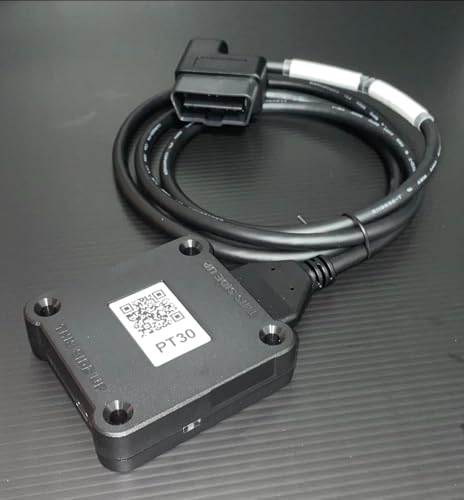
This bundle speaks directly to Volvo-heavy fleets and owner-operators wrestling with compatibility headaches. The inclusion of OBD-II support for heavy-duty Volvos is critical, many ELDs fail here, but this unit bridges the gap. It pulls engine diagnostics cleanly and pairs over Bluetooth with nearly any HOS app, giving users flexibility. Owners praise its plug-and-play behavior across mixed fleets, especially when switching between brands.
Being part of the PT30 family means solid build quality and broad protocol support, J1939, J1708, and OBD-II are all handled. However, it doesn’t include the actual app, so you’ll need to source your own compatible software. That’s not a flaw, just a heads-up. Against other Volvo-compatible options, this one stands out for versatility. I’d pick it over generic models if your rig runs a Volvo powertrain.
Product photos
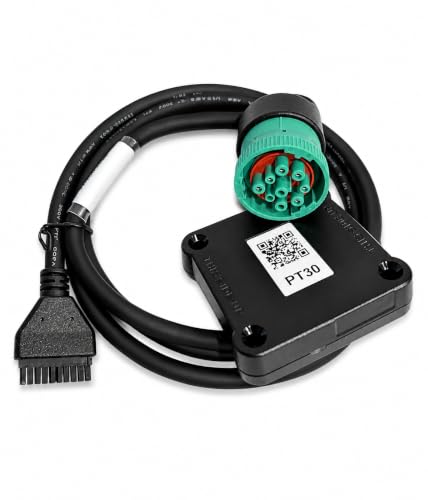
PT30 ELD with 9-Pin Cable
Strengths
- Easy installation
- Solid Bluetooth range
- Broad app compatibility
Trade-offs
- 9-pin only
- Basic feature set
- No advanced diagnostics
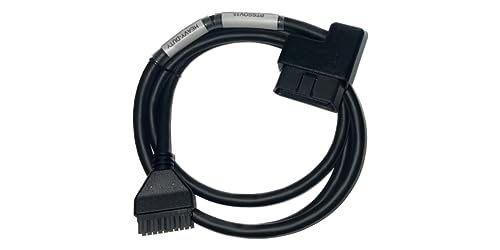
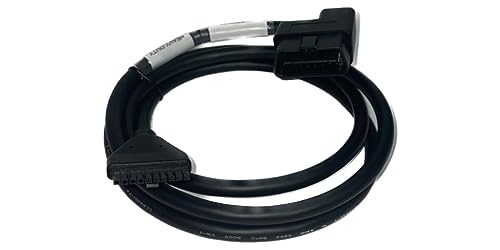
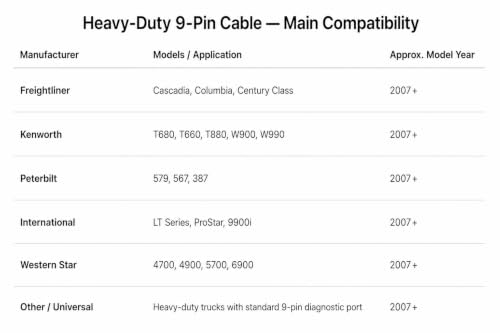
This barebones PT30 kit delivers exactly what it promises: simple installation and solid Bluetooth connectivity for standard J1939-equipped trucks. It’s not flashy, but for drivers who just need to plug in and log hours without fuss, that’s a win. The engine data feed is consistent, and since it’s based on the widely adopted PT30 platform, it plays well with almost every major ELD app on the market.
Where it falls short is in flexibility, only supports 9-pin connections, so no help for OBD-II or older 6-pin rigs. And while it’s priced competitively, it doesn’t offer extras like enhanced storage or diagnostics seen in pricier variants. Still, for a straightforward upgrade path on a typical semi, this is a dependable workhorse. I’d call it the sensible middle ground between cost and reliability.
Product photos
How We Picked These elds for trucks
As someone who’s spent years understanding the mechanics of vehicles, from everyday drivers to serious work trucks, I approached evaluating electronic logging devices (ELDs) by focusing on what truly matters for professional drivers. Rather than a hands-on test of each unit in a cab, this was a research-led comparison of published specifications, features, and, most importantly, extensive owner and expert reviews. I weighed compatibility, long-term cost, and ease of use to determine which ELDs provide the most value.
For trucks, reliability and broad compatibility are paramount. I gave significant weight to ELDs supporting multiple diagnostic ports (J1939, J1708, and OBD-II) to minimize frustration, and those with robust data storage. Subscription costs also factored heavily; a low upfront price is misleading if it’s followed by expensive monthly fees. Understanding the need for protection of your investment, I also considered options that complement other truck accessories like tonneau covers .
Specifications clearly indicate port compatibility and data storage capacity. However, real-world usability, how easily the app integrates with a driver’s workflow and how reliably it connects via Bluetooth, comes through in owner feedback. I prioritized ELDs with consistently positive reports regarding customer support and minimal technical issues. For those facing challenging conditions, choosing the right off-road tires can be as important as ensuring compliance.
How To Choose The elds for trucks
As someone who’s spent years under the hoods of various vehicles, I understand that modern trucking demands more than just mechanical know-how. Compliance is a huge part of the equation now, and that’s where Electronic Logging Devices (ELDs) come in. Choosing the right one can save you headaches and keep you on the road legally.
An effective ELD isn’t just about ticking a regulatory box. It’s about selecting a system that integrates with your vehicle’s existing diagnostics, offers reliable data recording, prioritizes data security, and presents information in a clear, easily auditable format. Consider port compatibility, ongoing costs, and app usability when evaluating options.
Understanding Your Vehicle’s Diagnostic Port
The first, and often most frustrating, hurdle is compatibility. Not all ELDs play nicely with all trucks. Many rely on the 9-pin J1939 or 6-pin J1708 connectors, which are standard for many commercial vehicles. However, if you’re running a newer vehicle with an OBD-II (SAE J1979) port, or – specifically – a Volvo engine with a 16-pin J1962, you’ll need to verify compatibility before you buy. Some, like the Garmin eLog ELD, require a separate (and potentially costly) cable for Volvo engines. Don’t assume universal fit – it’s a common mistake.
Subscription vs. One-Time Purchase
The cost structure of ELDs varies significantly. Some, like the My20 ELD, operate on a subscription model, which can seem appealing upfront due to a lower initial price. However, those annual fees add up over time. Others, such as the Garmin eLog ELD, offer a simple one-time purchase with no ongoing subscription. Here’s a breakdown of what to consider:
- Short-term needs: A subscription might be okay if you only need an ELD for a limited time.
- Long-haul operation: If you’re in the business for the long run, a one-time purchase often proves more economical.
- Total Cost of Ownership: Don’t just look at the initial price. Factor in years of subscription fees versus the upfront investment.
Port Flexibility and Data Access
Beyond basic compatibility, consider how adaptable an ELD is. The TEMEDA PT30 ELD stands out here, supporting J1939, J1708/J1587, and OBD-II connections. This is especially beneficial if you manage a mixed fleet. Equally important is how you access the data. Bluetooth connectivity is common, but ensure the ELD allows for easy data transfer via USB for inspections, as required by the FMCSA. If you’re also looking to upgrade other aspects of your truck, like suspension, you might also want to explore options for best lift kits to improve overall performance.
A good rule of thumb: prioritize ELDs that offer both Bluetooth and USB data export options. This provides redundancy and ensures you can always comply with roadside inspections, regardless of Bluetooth connectivity issues.
Ultimately, finding the right ELD means understanding your specific needs. If you’re still unsure, taking a look at recommended ELD devices and comparing features can help narrow down your choices. And remember, even the best ELD is only as good as the driver using it – proper training is essential.
ELDs for Trucks Compared
Here’s a specification comparison of several ELDs to help you find the best fit for your trucking needs.
| Product Name | Connectivity | Port Compatibility | Subscription | Data Storage | Best For |
|---|---|---|---|---|---|
| Garmin eLog ELD | Bluetooth | 9-pin J1939, 6-pin J1708 | No | Smartphone | Best Overall |
| My20 ELD | Bluetooth | 9-pin J1939 | Yes | Smartphone | Best Budget Friendly |
| TEMEDA PT30 ELD | Bluetooth | J1939, J1708/J1587, OBD-II | N/A | Internal | Multiple Ports |
| PT30+Cable Bundle ELD | Bluetooth | J1939, J1708/J1587, OBD-II | N/A | N/A | Volvo Trucks |
| PT30 ELD with 9-Pin Cable | Bluetooth | 9-pin | N/A | N/A | Value Installation |
Frequently Asked Questions
What ELD is best for a fleet with mixed truck ages?
The TEMEDA PT30 ELD is a strong choice, as it supports J1939, J1708/J1587, and OBD-II connections. This broad compatibility minimizes the need for different devices across your fleet, simplifying management and reducing costs.
Are there ELDs that don’t require a monthly subscription?
Yes, the Garmin eLog ELD offers a one-time purchase option without ongoing subscription fees. While subscription models can appear cheaper initially, a single purchase often proves more economical for long-term trucking operations.
What should I do if my truck has a Volvo engine?
Some ELDs, like the Garmin eLog ELD, require a separate cable for compatibility with Volvo engines using the J1962 connector. The PT30+Cable Bundle ELD is designed specifically for Volvo trucks and includes the necessary cable.
Beyond logging hours, can an ELD help with vehicle maintenance?
Many ELDs store diagnostic trouble codes (DTCs) retrieved from the engine, offering insight into potential maintenance needs. Regularly checking these codes, alongside routine inspections of your protective floor mats, can help prevent larger issues down the road.
What’s the biggest mistake people make when buying an ELD?
Assuming universal compatibility is the most common error. It’s crucial to confirm an ELD supports your truck’s specific diagnostic port (J1939, J1708, or OBD-II) before purchasing, especially if you plan on switching to best truck snow tires for winter driving.
The Bottom Line
Choosing an ELD often comes down to balancing initial cost with long-term value. While subscription models can appear attractive at first, the Garmin eLog ELD stands out as the strongest overall pick due to its one-time purchase and reliable performance, avoiding those recurring fees. It’s a straightforward solution that prioritizes ease of use and long-term savings, which, in my experience, is what professional drivers truly appreciate.
For those operating on a tighter budget, the My20 ELD provides a functional entry point into ELD compliance. If you manage a diverse fleet, the TEMEDA PT30 ELD is an excellent choice thanks to its impressive port compatibility, supporting J1939, J1708/J1587, and OBD-II. And don’t forget to consider protecting your truck bed with quality truck bed liners alongside your ELD investment.
Ultimately, the specifications of an ELD are important, but they shouldn’t overshadow the fundamentals. Reliable connectivity, clear data presentation, and readily available support are far more critical than any single feature. Prioritizing these core elements, along with equipping your vehicle with the right high-performance truck tires, will keep you compliant, safe, and focused on the road ahead.
