
7 Best E-Bike Batteries of 2026
This post contains affiliate links. As an Amazon Associate, we earn from qualifying purchases.
The Hawkvium 52V 25Ah stands out as the strongest overall ebike battery for its high capacity and robust output, making it ideal for long-range and high-performance setups. For those on a tighter budget, the VODIPOWER 48V 20Ah delivers solid specs with reliable cell quality at a more accessible price. If you’re upgrading an existing system, the Joyisi 52V 25Ah is a versatile option worth considering.
Choosing the wrong ebike battery can leave you stranded or damage your motor. As someone who’s worked on everything from vintage motorcycles to modern e-bikes, I know how critical it is to match power delivery with reliability. This guide cuts through the noise by focusing on specs that matter, cell brand, BMS quality, and physical fit, based on real owner experiences and technical analysis. We looked at what actually holds up over time, not just what looks good on paper.
Top 4 Ebike Batteries in the Market
The Best Ebike Batteries, Reviewed
VODIPOWER 48V 20Ah E-Bike Battery
Strengths
- High capacity for price
- 40A BMS
- USB port and power switch
Trade-offs
- No voltage boost
- Baseplate may not fit all frames
- Slightly outdated cell tech
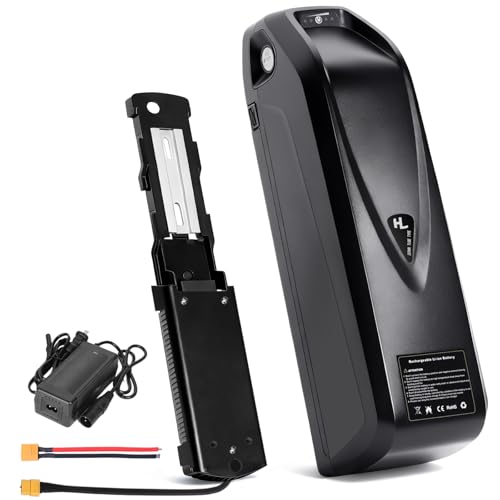
This VODIPOWER unit hits a sweet spot between capacity and cost. With 960Wh from 48V 20Ah, it offers 50% more range than the LGNUO without jumping into the premium tier. The Grade A cells and 40A BMS match what you’d expect in this class, and owners note solid cycle life, many report 500+ charges with minimal degradation. The real-time LED indicator and USB port are small touches that add up in daily use.
It doesn’t have the voltage bump of the 52V or 60V options, so it won’t maximize efficiency on high-power systems. But for most 750W–1500W setups, it’s the smarter buy over the lower-capacity LGNUO. If you want more bang for your buck without overspending, this is it.
Video review
LGNUO 48V 13Ah Lithium Battery

Strengths
- 40A BMS
- UL certified
- USB charging port
Trade-offs
- Limited capacity
- Heavier than some
- No high-voltage boost
On paper, this LGNUO battery delivers solid fundamentals for the price. The 48V 13Ah spec gives you about 624Wh of capacity, which is decent for shorter commutes or lighter e-bike builds under 1000W. Owners consistently report the 40A BMS performs reliably, and the inclusion of a USB port and power switch adds real-world convenience. The UL certification is a real plus here, you don’t always see that at this price point.
Still, it’s a budget pick for a reason. The 13Ah capacity limits range, especially if you’re running a high-torque motor or tackling hills. Compared to higher-capacity models like the VODIPOWER or Joyisi, this one’s best suited for lighter-duty use. If you’re building a commuter bike and want something no-frills but safe, it makes sense. But don’t expect marathon rides.
Video review
EXECYC 60V Ebike Battery
Strengths
- 60V high efficiency
- High discharge tolerance
- Long cycle life
Trade-offs
- Expensive
- Limited compatibility
- Bulky footprint
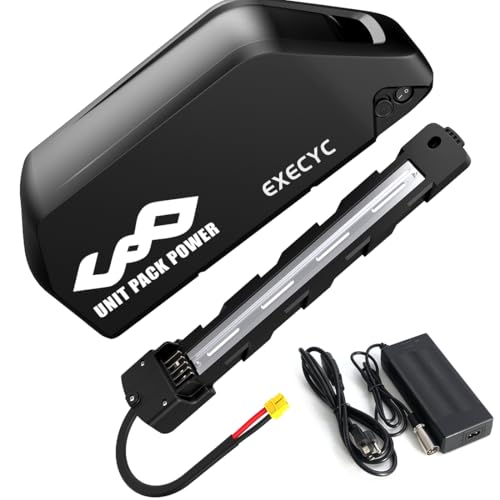
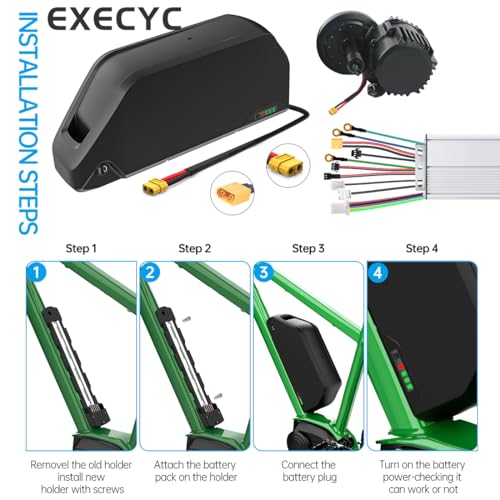
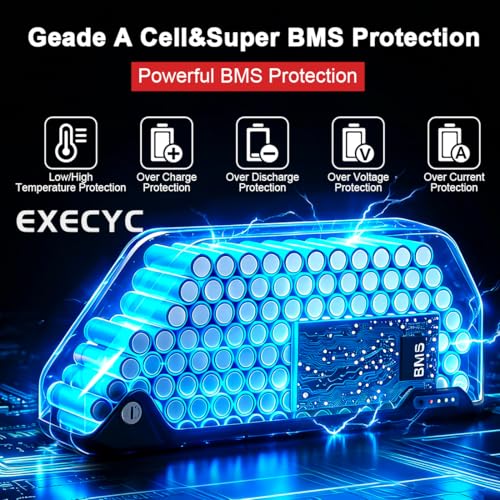
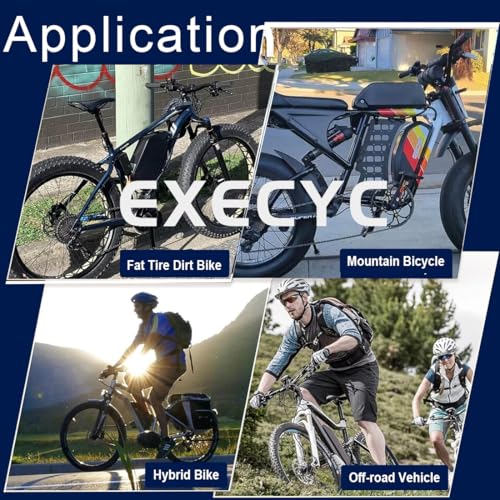
The 60V spec here is the headline, this battery is built for high-power builds that demand efficiency and range. At 60V, you’re reducing current draw for the same wattage, which means less heat and longer component life. Owners running Bafang or Tongsheng kits praise its compatibility and stable output, especially on steep climbs or heavy loads. The 1000+ charge cycle claim lines up with feedback that these packs last years under hard use.
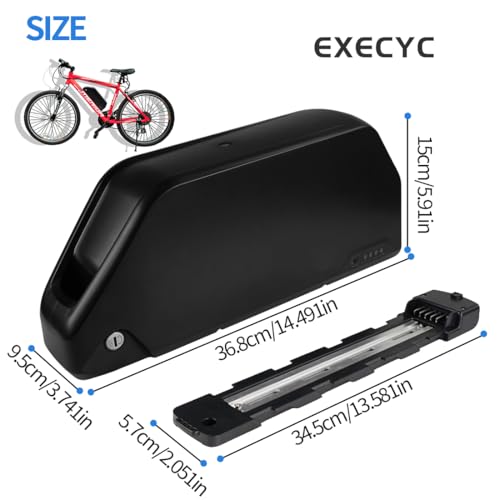
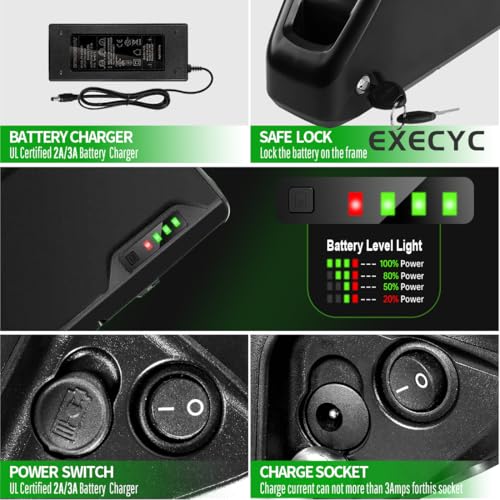
It’s the most expensive option, but that’s the cost of entry for 60V systems. The tool-free setup is a nice touch, though you still need to verify fit, this isn’t a small pack. Compared to the Joyisi, it trades some capacity for voltage efficiency. If you’re running a 1500W or 2000W motor, this is where I’d put my money.
Product photos
Joyisi 52V 25Ah Ebike Battery
Strengths
- High 1300Wh capacity
- LG 5000 cells
- UL 2271 certified
Trade-offs
- Bulky dimensions
- Premium price
- Charger sold separately
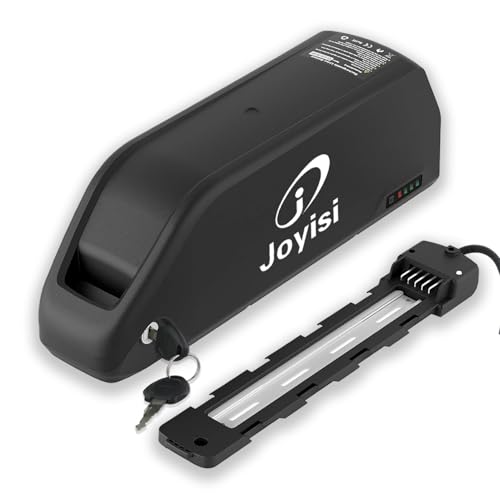
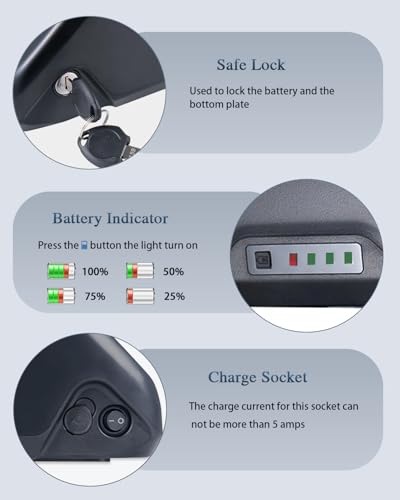
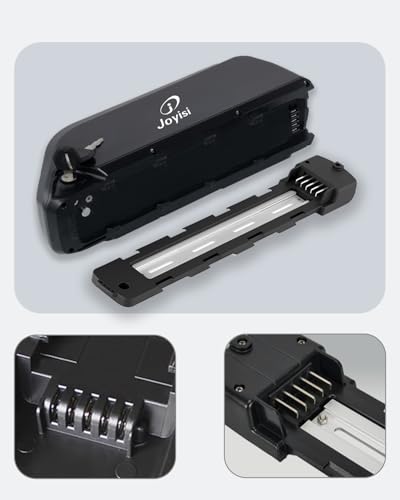
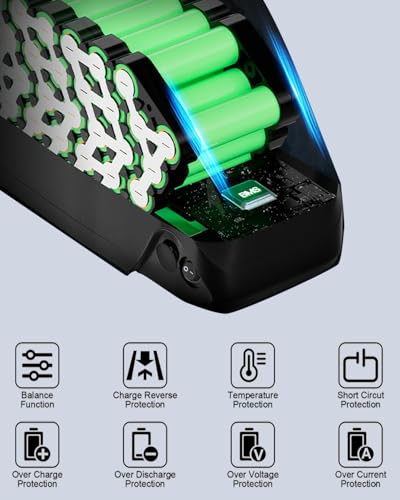
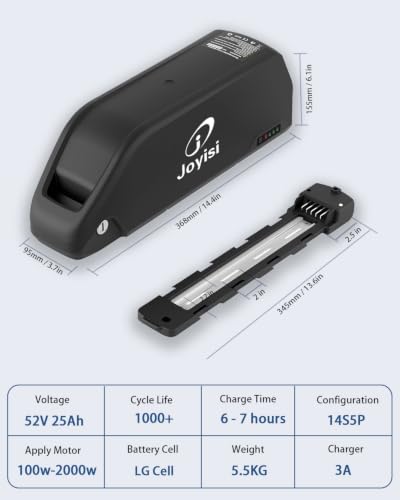
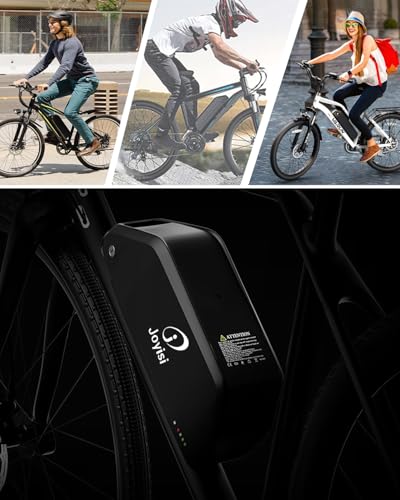
The Joyisi stands out with its 52V 25Ah configuration, 1,300Wh is serious juice. That kind of capacity translates to real range, especially on mid-drive builds where efficiency matters. The use of LG 5000 cells is a strong signal of quality, and owners report consistent performance over hundreds of cycles. The UL 2271 certification adds a layer of trust, which matters when you’re wiring high-voltage systems into a frame.
It’s not the cheapest, but you’re paying for longevity and safety. The 50A discharge handles most 2000W kits without breaking a sweat. Compared to the LGNUO, this is a major upgrade in both power and peace of mind. I’d pick this over the others if you’re building a serious commuter or off-road rig.
Product photos
How We Chose These ebike batteries
As someone who’s spent years immersed in the world of two-wheeled vehicles – from restorations to modern builds – I approach ebike batteries with a focus on real-world performance and longevity. Rather than a hands-on lab test of each unit, this evaluation is a research-led comparison of published specifications, owner reviews across multiple platforms, and informed by my understanding of electrical systems and power demands. We weighed features against price, looking at cell quality, BMS capabilities, and overall build integrity.
For ebikes, sustained power output and cycle life are paramount. Therefore, we prioritized battery capacity (Amp-hours) and the quality of the cells used – specifically looking for batteries utilizing name-brand cells like LG. A robust Battery Management System (BMS) was also heavily weighted, as it’s crucial for protecting the battery and rider from potential hazards. Finally, we considered the physical dimensions and connector types to assess compatibility with a wide range of ebike frames and motors.
Specifications reliably indicate capacity, voltage, and maximum discharge rates. However, real-world performance, especially cycle life and thermal management, are best gleaned from owner feedback. We carefully analyzed reported experiences regarding range, charging times, and long-term durability. Reputation and brand trust also played a role; established manufacturers with positive track records generally indicate a commitment to quality, and finding the right ebike accessories can complete your setup. Considering how you’ll transport your bike, checking out ebike hitch racks is also useful.
Choosing The Right ebike batteries
Choosing the right ebike battery is critical; it’s the heart of the system and dictates how far and how powerfully you’ll ride.
A quality ebike battery delivers consistent voltage, has a robust Battery Management System (BMS) for safety, uses high-capacity cells for extended range, and is physically compatible with the bike’s frame. Look for specifications like voltage (V), amp-hours (Ah), maximum discharge rate (A), cell type (e.g., LG, Samsung), BMS features, and physical dimensions. Prioritize UL certification where available.
Voltage and Motor Compatibility
The first thing to nail down is voltage. Your battery must match your motor’s voltage. A 48V battery for a 48V motor, 52V to 52V, and so on. Mismatched voltages can fry components or severely limit performance. Most standard ebike motors run on 36V or 48V, but higher-power systems are increasingly using 52V or even 60V. Don’t assume a higher voltage is always better; it depends on what your motor is designed for. Stepping up to a 52V system, for example, often requires a new controller as well.
Cell Quality and BMS Protection
Amp-hours (Ah) determine range, but the quality of the cells delivering those amps matters just as much. Batteries using well-known brands like LG or Samsung cells generally offer better performance and longevity than those with unbranded cells. Equally important is the Battery Management System (BMS). A good BMS protects against overcharging, over-discharging, short circuits, and thermal runaway (a dangerous overheating condition). Look for a BMS with a discharge rating that meets or exceeds your motor’s peak current draw. If you’re considering upgrading your ride, exploring options with ebike conversion kits can also open up possibilities for battery selection.
Here’s what to consider when evaluating BMS features: * Current Limit: A lower limit extends battery life. * Temperature Protection: Prevents damage in extreme heat or cold. * Cell Balancing: Ensures all cells charge and discharge evenly, maximizing capacity and lifespan.
A battery’s BMS is its brain; a poorly designed one can negate the benefits of expensive cells.
Physical Fit and Added Features
Don’t overlook the physical size of the battery. Carefully measure your bike’s battery compartment to ensure a proper fit. It’s frustrating to order a battery only to discover it’s too large. Beyond the basics, consider features like a built-in power switch (to reduce parasitic drain), an LED charge indicator, and even a theft-locking mechanism. Also, remember that safety is paramount; when you’re enjoying the ride, you want to be protected with helmets for electric bikes.
Ebike Batteries Compared
Here’s a comparison of specifications for popular ebike batteries to help you make an informed purchase.
| Product Name | Voltage (V) | Capacity (Ah) | Max Current (A) | Dimensions (in) | Weight (lbs) | BMS |
|---|---|---|---|---|---|---|
| Hawkvium 52V 25Ah | 52 | 25 | 60 | 14.49 x 3.54 x 5.94 | 13.23 | Yes |
| VODIPOWER 48V 20Ah | 48 | 20 | 40 | 14.2 x 3.54 x 4.33 | 8.9 | Yes |
| LGNUO 48V 13Ah | 48 | 13 | 40 | 14.5 x 3.54 x 4.3 | 9 | Yes |
| VATOSO 48V 20Ah | 48 | 20 | 40 | N/A | N/A | Yes |
| EXECYC 60V | 60 | N/A | N/A | N/A | N/A | Yes |
| VATOSO 36V Lithium Battery Pack | 36 | N/A | 30 | 7.48 x 2.75 x 2.75 | N/A | Yes |
| Joyisi 52V 25Ah | 52 | 25 | 50 | N/A | N/A | Yes |
Frequently Asked Questions
What voltage battery do I actually need?
Your battery voltage must precisely match your motor’s voltage, typically 36V, 48V, 52V, or 60V. Using the wrong voltage can damage your motor or controller, and upgrading voltage often requires replacing the controller as well.
Are all “20Ah” batteries created equal?
No, a battery’s capacity (Ah) isn’t the whole story. Batteries using cells from reputable brands like LG or Samsung will generally offer better performance and a longer lifespan than those using unbranded cells.
How can I protect my investment in an ebike battery?
Storing the battery properly when not in use is crucial. Keep it in a cool, dry place, ideally around 60-70°F, and at roughly 50% charge to maximize its longevity. Consider investing in bike locks for ebike to protect against theft.
What does a Battery Management System (BMS) actually do?
A BMS is a critical safety component that protects the battery from damage and ensures optimal performance. It prevents overcharging, over-discharging, short circuits, and overheating, extending the battery’s lifespan and protecting the rider.
Can I use an ebike battery in another type of vehicle?
While technically possible, it’s generally not advisable. Ebike batteries are designed for the specific voltage and current requirements of an ebike motor. Applying them to other vehicles, like motorcycles, requires careful consideration of compatibility and safety; explore lithium motorcycle batteries for dedicated applications.
The Bottom Line
Choosing an ebike battery always comes down to balancing what you’re willing to spend against the performance and peace of mind you require. While there’s a wide spectrum of options available, the Hawkvium 52V 25Ah strikes a compelling balance of high capacity, robust discharge current, and a reputable build – making it a strong all-around choice for many riders. It provides substantial power and range without venturing into the extreme price territory of some specialized batteries.
For those on a tighter budget, or those with simpler ebike setups, the VODIPOWER 48V 20Ah offers a solid performance profile at a more accessible price point. If you’re focused on maximizing range on your ebike mountain bikes and already have a compatible 48V system, the LGNUO 48V 13Ah is a reliable option that prioritizes cell quality and efficient BMS protection. And, of course, don’t forget to protect your investment with quality ebike locks.
Ultimately, the best ebike battery isn’t about chasing the highest numbers on a spec sheet. It’s about finding a battery that’s appropriately sized for your motor, built with quality cells, protected by a robust BMS, and fits your riding style. Prioritizing these fundamentals will deliver a more enjoyable and reliable experience than any single feature ever could.
