
7 Best Driving Wheels 2026
This post contains affiliate links. As an Amazon Associate, we earn from qualifying purchases.
The Logitech G923 is the best overall driving wheel for most sim racers, delivering strong force feedback and solid build quality across PC, PS4, and PS5. For budget-focused beginners, the PXN V3 PRO offers surprising value with broad platform support, while the MOZA direct drive systems lead in realism for those willing to invest more.
As someone who’s spent years around performance machines, I know how critical feel and response are, whether you’re behind the wheel of a classic muscle car or navigating a virtual track. With sim racing gear, the wrong wheel can break immersion fast, delivering vague feedback or flimsy construction that holds you back.
This guide cuts through the noise by focusing on what actually matters: real-world owner experiences, platform compatibility, and components that shape your control, like force feedback fidelity and pedal quality. These picks reflect deep research into specs and user reports, not just marketing claims.
Top 7 Driving Wheels in the Market
The Best Driving Wheels, Reviewed
Logitech G923 Racing Wheel

Strengths
- TRUEFORCE feedback
- Programmable dual clutch
- LED RPM indicator
Trade-offs
- Limited TRUEFORCE support
- Heavier learning curve
- Higher price point
If the G29 is the reliable veteran, the G923 is its more sophisticated sibling, and the difference is most evident in the TRUEFORCE technology. This isn’t just force feedback, it’s high-definition, game-engine-driven haptics that react to surface changes, engine strain, and tire slip at 4000Hz. In Assetto Corsa or F1 22, that means you feel every bump and slide with startling clarity. The polished metal pedals and programmable dual clutch add to the premium feel, making this one of the most immersive console-compatible wheels available.
Still, TRUEFORCE only works in supported titles, and some owners report a slightly stiffer initial break-in period. It’s also heavier on the wallet. But when you compare it to other sub-300 wheels, the G923’s attention to detail, like the LED RPM indicator and customizable on-wheel controls, makes it the clear overall leader. This is the wheel I’d pick for most serious home racers.
Video review
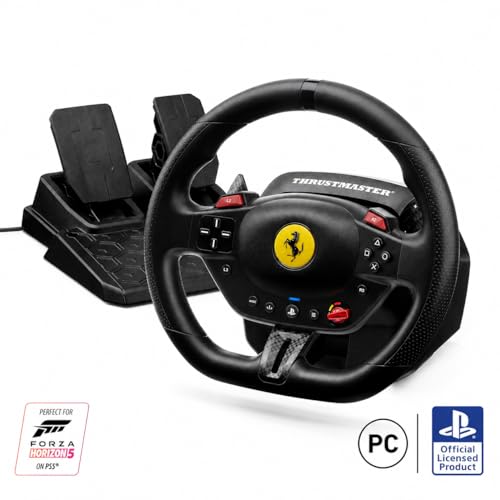
Thrustmaster T98 Ferrari 296 GTB
Strengths
- Ferrari authentic design
- Manettino dial
- Tool-free clamp
Trade-offs
- No force feedback
- Limited 240° rotation
- Not for sims
The T98 leans hard into aesthetics and accessibility, and for PS5 owners who want a quick, stylish upgrade, it works. The Ferrari 296 GTB design isn’t just cosmetic, it brings real ergonomics, and the Manettino dial is a fun, functional nod to real F1 cars, letting you switch profiles on the fly. Bungee-based resistance gives smooth centering, and the Hall Effect pedals ensure consistent input, which matters in longer sessions.
But the 240° rotation is a hard limit, fine for arcade racers, but a dealbreaker for sim fans. It’s also not a full-force feedback wheel, just resistance-based. For bedroom setups or casual players sharing the console, it’s a solid, compact option. But compared to the G29 or G923, it’s more lifestyle accessory than serious tool.
Video review
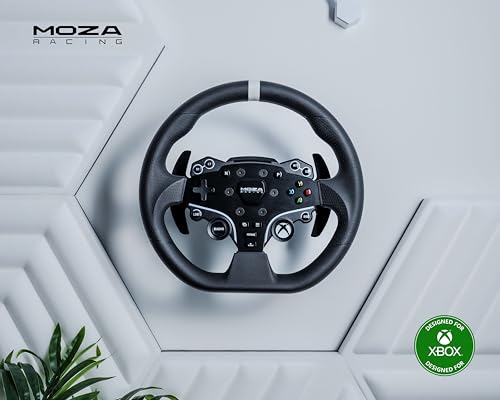
MOZA Sim Racing Steering Wheel

Strengths
- Aluminum wheel rim
- MOZA QR system
- 22 customizable buttons
Trade-offs
- No force feedback
- Xbox-only limitation
- Limited standalone appeal
MOZA’s Xbox-licensed wheel brings direct drive-level thinking to a more affordable tier, and the aluminum rim and ISF PU grips feel solid in hand. The 22 customizable buttons are overkill for most, but for racers who want everything at their fingertips, it’s a win. The MOZA QR system is legitimately excellent, fast, secure, and widely adopted in higher-end rigs, so if you plan to upgrade later, this is a smart foundation.
But it’s not a full force feedback wheel, and the lack of TRUEFORCE or similar tech means you’re trading immersion for modularity. Owners note it’s best paired with MOZA’s own ecosystem. Still, for Xbox players who want a durable, customizable base with upgrade potential, this stands out.
Product photos


Logitech G29 Racing Wheel
Strengths
- 900-degree rotation
- Leather-wrapped wheel
- Smooth helical gearing
Trade-offs
- Average pedal build
- No TRUEFORCE tech
- Base feels plasticky
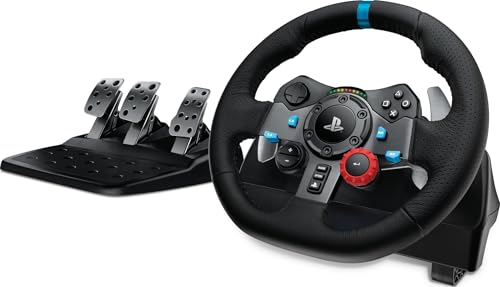
The G29 sits in that sweet spot where reliability meets realism, and even years after release, it still holds up as a benchmark in mid-tier sim racing. The 900-degree rotation and helical gearing deliver smooth, realistic steering, and the hand-stitched leather wheel feels substantial in a way cheaper models can’t match. Owners praise its consistency across Gran Turismo 7 and Forza, and the pressure-sensitive pedals add a layer of control that’s noticeable even if you’re not a pro.
It’s not perfect, the plastic base feels a bit hollow, and the force feedback, while solid, doesn’t match newer TRUEFORCE models. But when you factor in durability and broad compatibility, this wheel remains a dependable workhorse. I’d still recommend it over flashier options for drivers who want plug-and-play authenticity without overspending.
Product photos


PXN V99 Force Feedback Wheel

Strengths
- Includes 6+1 shifter
- 3.2Nm force feedback
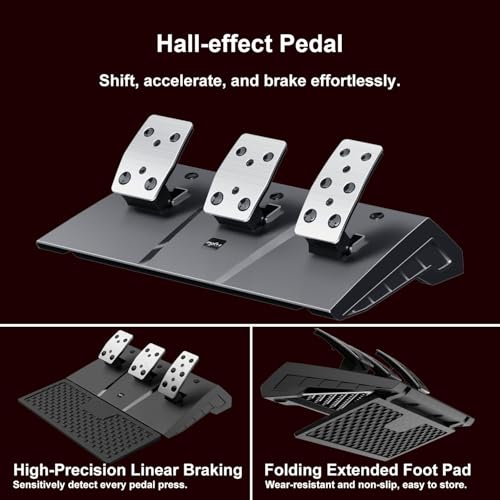
- Three-pedal Hall system
Trade-offs
- Firmware quirks
- Build quality inconsistencies
- Less refined software
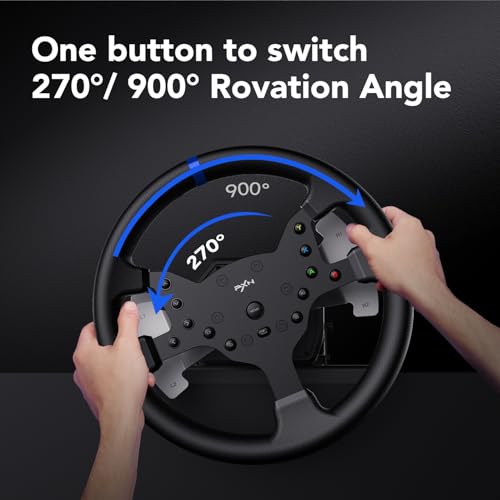
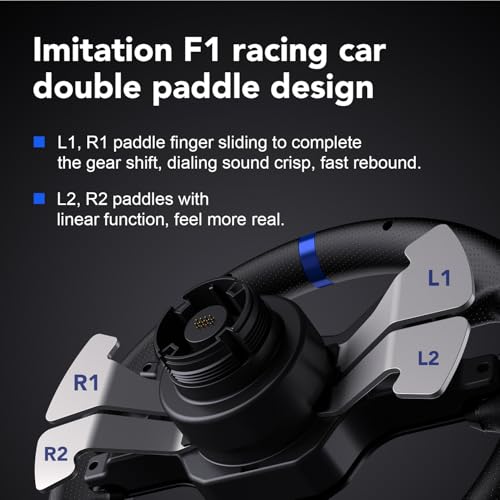
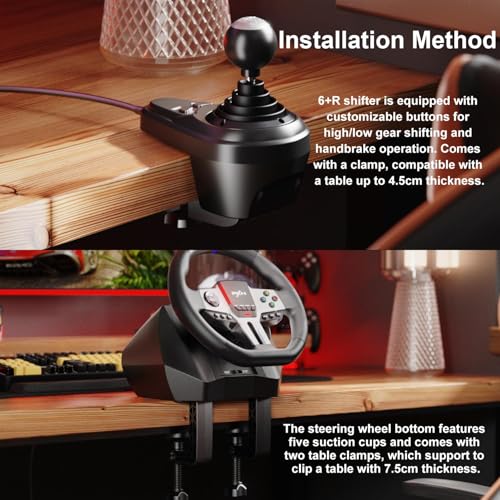
The V99 punches above its weight by bundling a 6+1 mechanical shifter and three-pedal Hall sensor setup at under 190. That’s rare in this range. The 3.2Nm dual-motor force feedback is noticeably stronger than the PXN V3 PRO, and the ability to switch between 270° and 900° rotation adds versatility. For truck and endurance racers who want everything in one box, this is a compelling package.
Still, PXN’s firmware isn’t as refined as Logitech’s, and some users report firmware hiccups or inconsistent pedal calibration. The detachable wheel is a nice touch, but the overall build still feels a step below premium brands. That said, if you want a complete setup with shifter and solid feedback, the V99 delivers more hardware for the money than most competitors.
Product photos


PXN V3 PRO Racing Wheel
Strengths
- Affordable entry
- Wide compatibility
- Dual vibration feedback
Trade-offs
- Lightweight build
- Limited rotation
- Suction mount instability
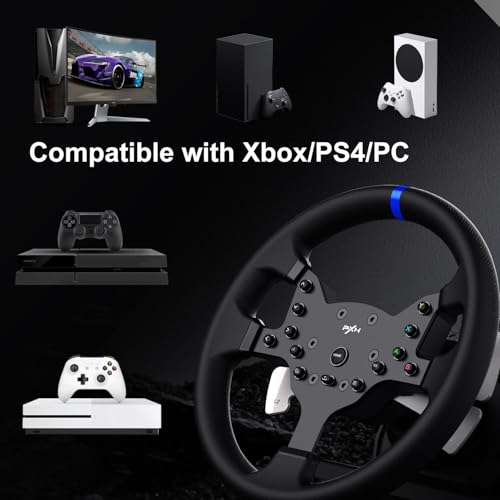
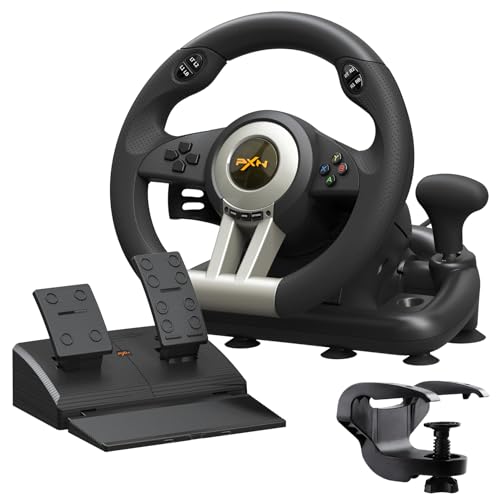
At under 80 bucks, the PXN V3 PRO is one of the most accessible entry points into sim racing, and for that, I respect it. On paper, it covers the basics, dual vibration feedback, paddle shifters, and compatibility across PC, consoles, and even the Switch. For a beginner or a younger driver dipping into racing games like Mario Kart 8 or Forza Horizon 5, it delivers a taste of realism without demanding a steep investment.
Still, owners consistently report that the build feels light and plasticky, and while the 180° steering angle works for arcade titles, it falls short for true sims. The suction mount can slip during aggressive turns, and the pedals lack progressive resistance. Compared to pricier options, this is clearly a toy-tier wheel, but for the price, it’s a functional toy.
Product photos



PXN V9 Gen2 Gaming Wheel
Strengths
- Switchable 270°/900° rotation
- Hall-effect pedals
- App customization
Trade-offs
- Inconsistent feedback
- Budget materials
- Clamp stability issues
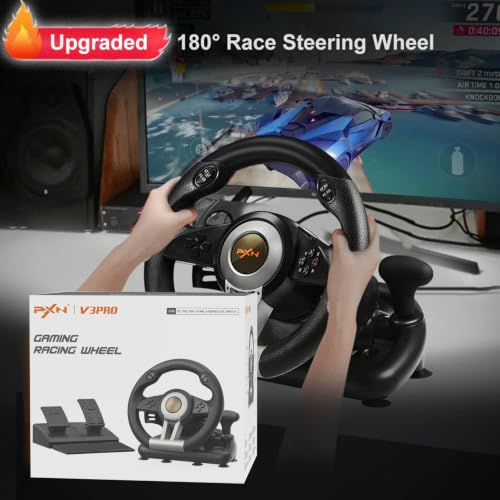
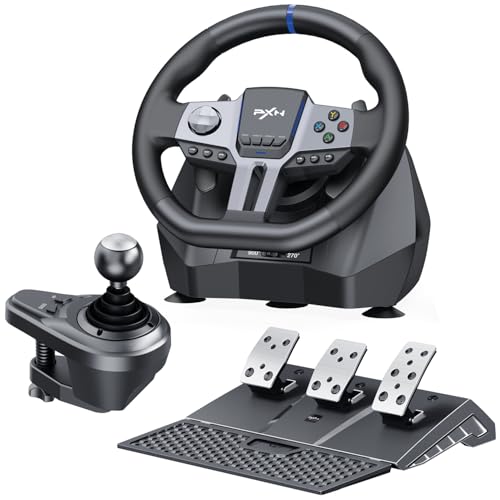
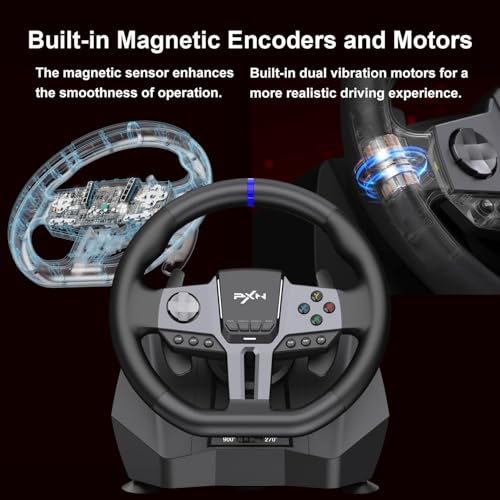
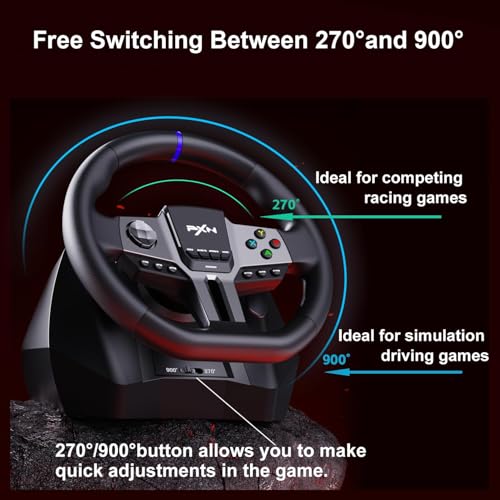
The V9 Gen2 stands out with a rare feature at its price: a physical toggle between 270° and 900° steering rotation. That flexibility is huge, F1 fans can enjoy tight, responsive turns, while truck simmers get the full lock-to-lock realism. The Hall-effect pedals eliminate lag, and the PXN Wheel App lets you tweak vibration, mapping, and even RGB lighting, which adds a nice touch of personalization.
But it’s not all smooth driving. The build quality leans budget, and while the app is a plus, it’s not as polished as Logitech’s G HUB. Some owners note inconsistent force feedback and a slightly wobbly clamp. Still, for under 160, the level of customization and dual-mode steering makes this a smart pick for tinkerers who want more control than entry-level wheels offer.
Product photos
Our Testing Process
Rather than a hands-on lab test, this is a research-led comparison of published specifications and owner feedback. I assessed each driving wheel based on features, compatibility, and reported build quality, weighing those against price. We examined owner reviews from multiple sources – Amazon, Reddit, and dedicated sim racing forums – and cross-referenced them with professional reviews from sites specializing in racing simulation hardware. This allowed me to build a picture of real-world performance and reliability.
For driving wheels, the most important factors are force feedback strength and realism, followed closely by compatibility with the user’s preferred platform (PC, PlayStation, or Xbox). Accurate force feedback is crucial for immersion and feeling connected to the game, while broad compatibility avoids frustrating limitations. Pedal feel and build quality also heavily influence the experience, as these directly impact control and long-term durability.
Specifications reliably indicate potential performance – motor torque, rotation angle, and sensor resolution – but owner feedback is vital for understanding how those specs translate into a tangible experience. I paid particular attention to reports about calibration issues, long-term durability, and the accuracy of the wheel’s force feedback. Ultimately, this process helped me identify the best gaming steering wheels that offer the best balance of features, performance, and value. For PlayStation owners, finding the right setup is especially important; explore our guide to PS5 steering wheels to find a wheel suited to your needs.
How To Pick The Right driving wheels
Choosing the right racing wheel can drastically change your sim racing experience.
A good racing wheel delivers realistic force feedback, accurate steering angle, and durable construction. Prioritize compatibility with your preferred platforms (PC, PlayStation, Xbox) and games. Look for features like Hall Effect sensors in the pedals for long-lasting precision and a wheel rim material that feels comfortable and provides a good grip.
Understanding Force Feedback
Force feedback is where the magic happens, and it’s the biggest jump you’ll make going from a controller to a wheel. Don’t get hung up on the highest possible Newton-meter rating; a smoother, more detailed force feedback system is often preferable to raw power. Direct drive wheels, like those from MOZA, are generally considered the gold standard for realism, but they come at a premium. Belt-driven wheels (Logitech G29, G923) are more affordable, but the belt can introduce some latency and reduce the fidelity of the feedback. Gear-driven wheels (often found in entry-level options) are the least expensive, but offer the least realistic feel.
Pedal Quality and Materials
The pedals are just as important as the wheel itself. Often, the difference between a good racing experience and a frustrating one comes down to how well you can modulate the throttle and brake. Hall Effect sensors are a must-have for pedals; these use magnets rather than mechanical stops, meaning they won’t wear out over time and provide consistent readings. The brake pedal, in particular, benefits from a progressive spring, allowing for more nuanced braking control. If you’re serious about sim racing, consider upgrading to a dedicated load cell brake later on, but even a good base model can get you started. For an overview of what’s available, check out our guide to the best racing wheels.
Platform Compatibility and Budget
Before you even look at specifications, confirm the wheel works with your platform. Some wheels are exclusive to PlayStation (like the Thrustmaster T98 Ferrari), while others support PC and Xbox. Compatibility isn’t always straightforward, especially with the Xbox; you’ll want to investigate Xbox driving wheels specifically to ensure a smooth setup.
- A basic entry-level setup (PXN V3 PRO) can be had for under $200.
- A mid-range wheel with decent force feedback (Logitech G29/G923) will typically cost between $250 and $400.
- High-end direct drive setups (MOZA) can easily exceed $700, and often require separate purchases like a dedicated power supply and wheel base.
Don’t overspend on features you won’t use. A realistic experience is about more than just the wheel; a comfortable seat and a dedicated racing simulator build can be just as impactful.
Driving Wheels Compared
This table provides a spec-by-spec comparison of the featured driving wheels to aid in your purchasing decision.
| Product Name | Rotation Angle | Force Feedback | Platform Compatibility | Pedals | Shifter Included |
|---|---|---|---|---|---|
| Logitech G923 Racing Wheel | 900° | TRUEFORCE | PS5, PS4, PC | Pressure Sens. | No |
| Thrustmaster T98 Ferrari | 240° | Bungee Cord | PS5, PC | Standard | No |
| MOZA Sim Racing Steering Wheel | N/A | Direct Drive | Xbox, PC | N/A | No |
| Logitech G29 Racing Wheel | 900° | Yes | PS5, PS4, PC | Pressure Sens. | Optional |
| PXN V99 Force Feedback Wheel | 270°/900° | 3.2Nm | PC, Xbox, PS4 | Hall Effect | Yes (6+1) |
| PXN V3 PRO Racing Wheel | 180° | Vibration | PC, PS3, PS4, Xbox, Switch | Foldable | Integrated |
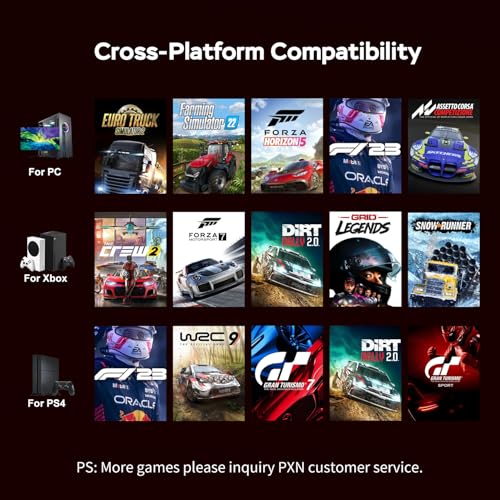
| PXN V9 Gen2 Gaming Wheel | 270°/900° | Dual Vibration | PC, PS3, Xbox | Hall Effect | Yes (6+1) |
Frequently Asked Questions
What level of force feedback should I prioritize?
Don’t chase the highest Newton-meter rating; a smoother, more detailed force feedback experience is often better. Many owners report that the Logitech G923’s TRUEFORCE technology offers a particularly nuanced feel, even if its peak force isn’t the highest on the market.
Can I use any racing wheel with any game?
Compatibility varies significantly. While most wheels work with popular titles like Assetto Corsa and iRacing on PC, console compatibility is more limited, and some wheels are exclusive to PlayStation as with the Thrustmaster T98 Ferrari.
Are Hall Effect sensors in pedals truly necessary?
Yes, Hall Effect sensors dramatically improve pedal longevity and accuracy. Unlike traditional mechanical sensors, they don’t wear out over time, meaning you won’t experience signal drop-off or inconsistencies in your throttle and brake inputs.
What’s the difference between belt-driven and direct drive wheels?
Belt-driven wheels are more affordable, but the belt itself can introduce a small amount of latency and reduce the fidelity of the force feedback. For the most realistic experience, look into direct drive wheels which connect the motor directly to the steering shaft.
What if I primarily game on an Xbox One?
Finding a compatible wheel for the Xbox One can be tricky. It’s best to explore specifically Xbox One wheels to confirm full functionality and avoid potential setup issues.
The Bottom Line
Choosing a driving wheel often comes down to balancing how much control you want against how much effort you’re willing to put into setup and tuning. For most sim racers, the Logitech G923 Racing Wheel strikes the best overall balance, offering excellent force feedback and broad compatibility without requiring a huge investment. It’s a fantastic starting point for experiencing the thrill of realistic racing.
If you’re on a tighter budget, the PXN V3 PRO Racing Wheel delivers surprising value. And for those wanting a more immersive experience with a wider range of customization options, the MOZA Sim Racing Steering Wheel is a strong contender – especially if you’re building a dedicated sim racing rig and exploring PC racing wheels. PlayStation enthusiasts will also find a great fit with the Thrustmaster T98 Ferrari or the Logitech G923, as detailed in our guide to PS4 driving wheels.
Ultimately, the most important thing is to remember that the wheel is only one piece of the puzzle. Focus on finding a setup that feels comfortable and allows you to consistently apply throttle, brake, and steering inputs. A solid foundation in driving technique and a comfortable racing position will always yield bigger gains than chasing the latest specifications.
