
4 Best DJI Cameras for Motorcycle (2026 Guide)
This post contains affiliate links. As an Amazon Associate, we earn from qualifying purchases.
The DJI Osmo Action 4 Standard is the best overall pick for motorcycle filming, thanks to its excellent stabilization, rugged build, and dual screens. For budget-focused riders, the Action 4 Essential delivers nearly the same performance at a lower cost, while the Osmo 360 stands out if you want immersive 360-degree coverage.
Riding a motorcycle is about freedom, but capturing that experience demands gear that can keep up with vibration, weather, and unpredictable conditions. Most riders don’t realize how much mount quality and stabilization matter until they review shaky, unusable footage.
This guide cuts through the specs to focus on what actually works on two wheels. I compared DJI’s lineup based on real-world durability, stabilization performance, battery life, and how easily each model integrates with motorcycle-specific mounts, drawing from owner experiences, technical reviews, and years of studying action camera use in motion-heavy environments.
Top 4 Dji Cameras For Motorcycle in the Market
The Best Dji Cameras For Motorcycle, Reviewed
DJI Osmo 360 Motorcycle Camera
Strengths
- True 360° coverage with 8K
- Excellent post-reframing capability
- Heavy-duty motorcycle mounts included
- Magnetic modular design
- 120MP 360° photos
Trade-offs
- Highest price point
- Larger profile increases wind resistance
- Requires more post-processing skill
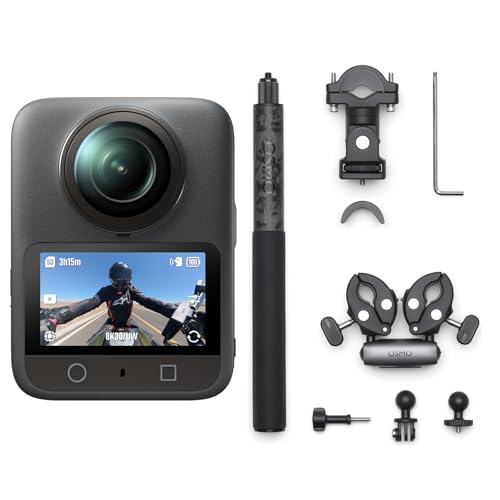
If you want to capture everything around you while riding, the scenery flying past, your reaction mid-corner, even what’s behind you, this 360 setup is hard to beat. The 1-inch sensor across dual lenses delivers 8K 360° video with impressive clarity, and owners praise how usable the reframed 4K extracts are, even at speed. You’re not just locked into one POV anymore; you can pick angles in post, which is huge for storytelling.
It’s also clearly built with motorcyclists in mind, the included heavy-duty clamp and carbon fiber stick suggest DJI gets how vibration and wind load matter. Battery life under 8K load is decent, and the magnetic snap-on design makes swapping configurations fast. Yes, it’s the most expensive option here, but for content creators who want maximum editorial freedom, this combo earns its place. I’d call it the most future-proof pick.
Video review
DJI Osmo Action 4 Standard

Strengths
- Includes curved adhesive base
- Same core imaging as higher combos
- Good battery life in cold weather
- Supports DJI Mic 2 wireless audio
- User-friendly stabilization modes
Trade-offs
- No additional batteries in box
- Bulkier than Nano
- Limited to single-lens perspective
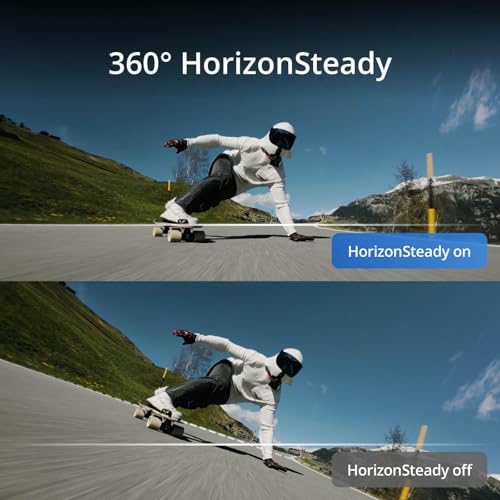
At first glance, this looks nearly identical to the Essential Combo, and technically, it is. Same 1/1.3-inch sensor, same 10-bit color science, same three-axis stabilization that keeps highway wobbles from ruining your shot. The key difference? This version includes the curved adhesive base, which matters if you plan to shift mounts frequently between bikes, helmets, or tripods.
Owners appreciate having that extra mounting flexibility right in the box. While the Adventure Combo gives you more batteries and an extension rod, this Standard version strikes a balance, enough accessories to get started without paying for extras you might not use. Compared to the Nano, it’s less subtle; compared to the 360, it’s far simpler to edit. My recommendation for most riders: start here unless you know you need something more specialized.
Video review
DJI Osmo Nano Cycling Camera
Strengths
- Ultra-compact wearable design
- Strong dynamic range
- Fast 20-minute charge to 80%
- Stereo built-in mics
- Waterproof to 10m
Trade-offs
- No external microphone support
- Limited mounting ecosystem
- Smaller touchscreen
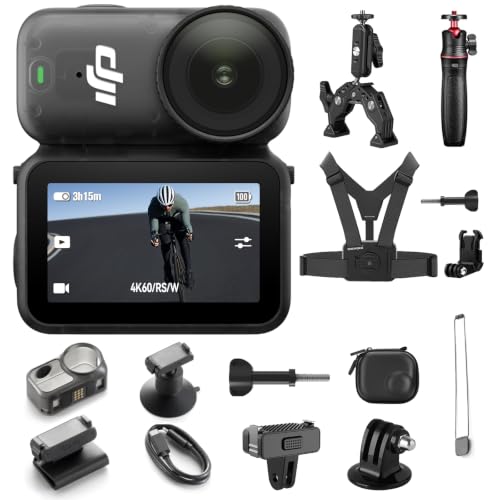
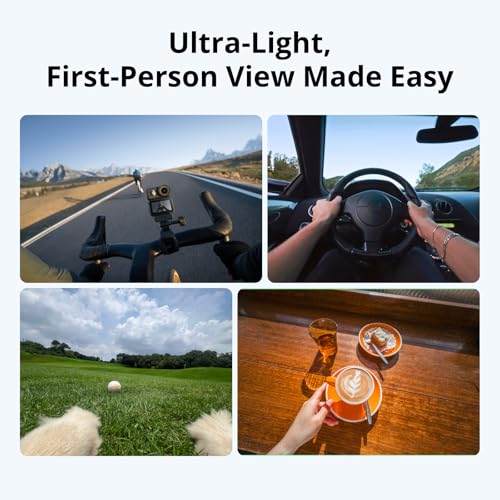
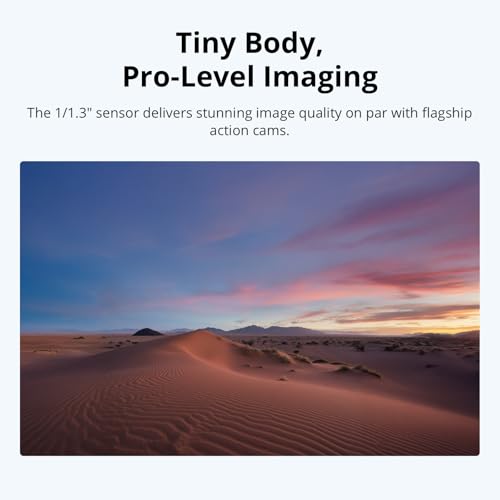
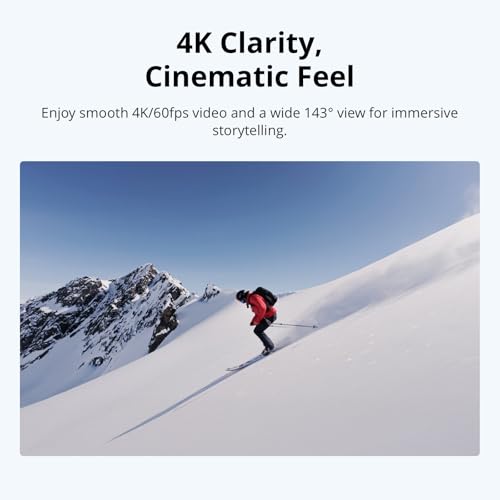
This thing is tiny, but don’t let the size fool you. The Osmo Nano packs a 1/1.3-inch sensor just like the Action 4, but in a body small enough to clip almost anywhere on a bike or helmet. On paper, that 13.5 stops of dynamic range should handle harsh midday sun and shadowy forest trails with ease, and reviewers note how naturally it renders contrast without blowing out highlights. The 143° FOV is slightly narrower than others here, but still wide enough for solid context.
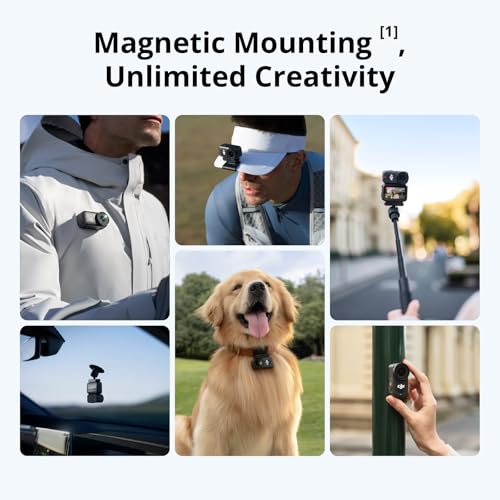
What stands out is wearability. It’s built to be clipped, not mounted, so if you’re going for a chest rig, handlebar tab, or even jacket lapel shot, this disappears into the scene. Fast charging is a plus for back-to-back rides, though the lack of an external mic option limits pro audio work. I’d recommend this for riders prioritizing stealth and mobility over full modularity.
Product photos
DJI Osmo Action 4 Essential
Strengths
- Large 1/1.3-inch sensor
- 10-bit D-Log M color
- Magnetic quick-release mount
- Cold-resistant battery
- Dual touchscreens
Trade-offs
- Slightly bulky design
- No external mic input
- Not as compact as Nano
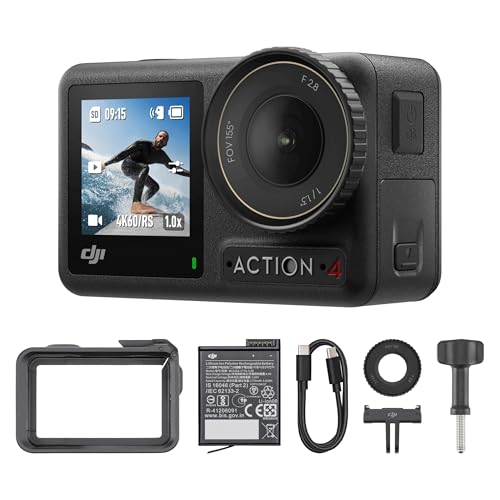
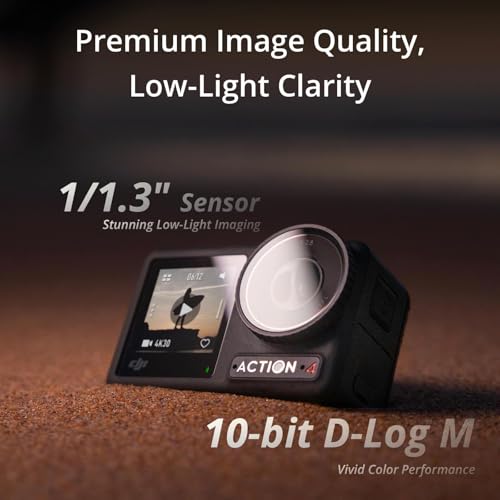
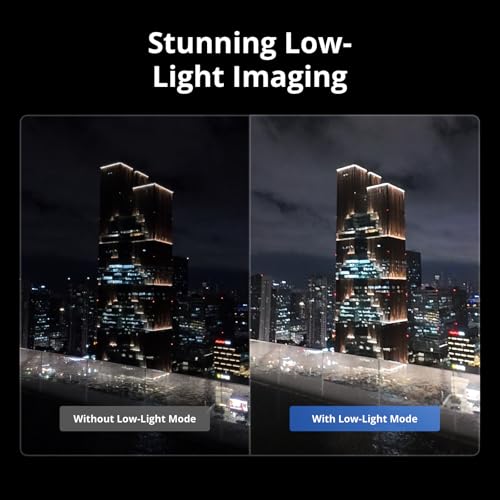
The Osmo Action 4 brings a lot of pro-level imaging to the motorcycle vlogging game without asking for a pro-level budget. That 1/1.3-inch sensor with 2.4μm pixels makes a real difference in low light, owners consistently report cleaner footage at dawn or dusk rides, where other action cams start to get noisy. The 155° ultra-wide FOV captures enough of the scene to feel immersive, and when paired with solid stabilization, it holds up well on bumpy backroads.
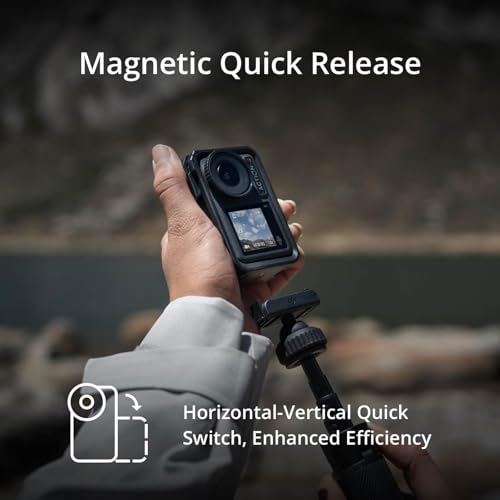
It’s not the smallest unit out there, but it’s rugged, cold-resistant down to -20°C, and the magnetic mount system is genuinely quick for repositioning on the fly. I’d pick this over older models any day for its 10-bit color and D-Log M support, which give serious flexibility if you’re tweaking footage later. For most riders who want great video without overcomplicating their setup, this hits the sweet spot.
Product photos

How We Evaluated dji cameras for motorcycle
As someone who’s spent years exploring the intersection of machines and motion at TheAutoZenith, I approached evaluating DJI cameras for motorcycle use with a focus on real-world application. Rather than a hands-on lab test, this was a research-led comparison of published specifications, features marketed toward action sports, and – crucially – extensive owner and expert reviews. I weighed factors across models to determine which best suit the unique demands of motorcycle filming.
For this category, image stabilization and durability were paramount. A shaky or damaged camera is useless, no matter how high the resolution. I also heavily considered battery life, as convenient access to power isn’t always available on the road. These elements directly impact the usability and reliability a rider needs, and ultimately decided a camera’s ranking. You’ll find excellent travel cameras elsewhere, but these are tailored for two-wheeled adventures.
Published specs reliably indicate sensor size, resolution, and frame rates – these are measurable and directly correlate to image quality. However, real-world performance, particularly stabilization effectiveness and mount security, came from analyzing owner feedback. I also looked to reputable tech reviewers for assessments of color science and low-light capabilities, recognizing those assessments often go beyond what a datasheet can convey. If you’re also considering other brands, you might find our guide to motorcycle GoPro options helpful.
Choosing The Right dji cameras for motorcycle
Finding the right action camera to document your rides isn’t just about megapixels. It’s about building a system that matches your riding style and how you plan to share the experience.
A truly useful motorcycle camera prioritizes stabilization, ruggedness, and ease of mounting. Image quality is key, but a camera that can’t withstand vibration or is a pain to operate isn’t going to get much use. Look for models with good low-light performance, wide dynamic range, and options for external microphones to combat wind noise. Consider battery life and whether accessories like extended batteries or weatherproof housings are available.
Mounting and Form Factor
The biggest difference between a general action camera and one suited for motorcycles is how easily it integrates with your bike. Forget about flimsy suction cups; you want a secure, vibration-dampened mount. The DJI Osmo 360, for example, comes with a dedicated motorcycle mount in its standard combo, which is a huge plus. Consider where you’ll place the camera. A helmet mount offers a rider’s-eye view, but can be shaky. A fairing or handlebar mount provides a more stable perspective, but may require more careful framing. Think about the camera’s profile, too. A bulkier unit might snag on branches or be more susceptible to damage in a fall.
Image Quality and Features
While all these DJI cameras deliver impressive footage, they cater to different needs. The Osmo Nano excels in low-light conditions thanks to its next-gen sensor, making it great for dawn or dusk rides. If you’re focused on editing, the 10-bit color depth of the Nano and Action 4 gives you more latitude in post-production. For sheer versatility, the Osmo 360’s ability to capture everything around you in 8K is hard to beat. If you are looking for a wider range of options, check out our guide to best action cameras for bikes.
- Budget is a factor: The Osmo Action 4 Essential offers a great balance of features for the price.
- Battery life matters: Longer rides demand longer runtimes. The Action 4’s 1770mAh battery is a significant advantage.
- Audio is often overlooked: Wind noise can ruin otherwise fantastic footage. Consider investing in an external microphone, and the Osmo Action 4’s compatibility with DJI mics is a big benefit.
Vlogging and Content Creation
If your goal is to create engaging motorcycle vlogs, the DJI Osmo Action 4 truly shines. Its dual touchscreens make framing shots and adjusting settings on the fly much easier, and the magnetic quick-release system is a lifesaver when you need to switch between mounting locations. Many riders are looking for the best vlogging cameras for riders and the Action 4 is a strong contender.
A good rule of thumb: don’t skimp on the mount. A $50 camera with a $100 mount will outperform a $200 camera with a $20 mount on a motorcycle. Vibration is the enemy of smooth footage.
DJI Cameras for Motorcycle Compared
Here’s a comparison of key specifications for DJI cameras suitable for motorcycle use.
| Product | Max Video Resolution | Sensor Size | Waterproof Depth | Battery Life (Max) | Field of View | Stabilization |
|---|---|---|---|---|---|---|
| DJI Osmo 360 | 8K | 1-inch | N/A | 100 min | 360° | N/A |
| DJI Osmo Action 4 Standard | 4K/120fps | 1/1.3-inch | 18m | 150 min | 155° | 3-Axis |
| DJI Osmo Nano Cycling Camera | 1080p/24fps | 1/1.3-inch | 10m | 200 min | 143° | N/A |
| DJI Osmo Action 4 Essential | 4K/120fps | 1/1.3-inch | 18m | 150 min | 155° | 3-Axis |
Frequently Asked Questions
What’s the biggest advantage of using a 360 camera like the Osmo 360 for motorcycle filming?
A 360 camera eliminates the need to perfectly frame your shots; you capture everything around you and can reframe the footage in post-production, ensuring you never miss an exciting moment during your ride. This is especially useful when navigating unpredictable roads.
Beyond stabilization, what feature should I prioritize for a helmet-mounted camera?
Consider a camera with a low profile and minimal weight. A bulkier camera on a helmet can create wind resistance and discomfort, and potentially affect balance, so smaller options like the Osmo Nano are worth considering.
Are longer battery life claims accurate in real-world motorcycle use?
Battery life is typically tested in ideal conditions, so expect it to be shorter when using GPS, stabilization, and recording at higher resolutions. Investing in extra batteries or a USB power bank is a practical step for extended rides, and something I often see discussed among riders.
Can I effectively reduce wind noise without an external microphone?
Some cameras offer wind noise reduction settings, but their effectiveness is limited. For truly clear audio, especially at higher speeds, an external microphone designed for motorcycle use is key; you might also want to explore best motorcycle dash cameras that include high-quality audio recording.
How important is the waterproof rating when choosing a camera?
While many action cameras are waterproof, consider the type of riding you do. If you frequently ride in heavy rain or plan on filming near water, a higher waterproof rating (like the Action 4’s 18m) provides added peace of mind, especially when paired with a quality set of recommended riding helmets.
The Bottom Line
Choosing a DJI camera for motorcycle use often comes down to balancing your desire for ultimate control over footage with how much fuss you’re willing to endure with setup and editing. For a rider who wants a fantastic all-around experience with minimal hassle, the DJI Osmo Action 4 Standard stands out. It provides a superb combination of image quality, stabilization, and user-friendly features that make it ideal for capturing adventures without getting bogged down in technical details.
If you have specific needs, DJI offers excellent alternatives. For riders prioritizing a low budget, the Osmo Action 4 Essential delivers impressive performance for the price. Those wanting to explore immersive perspectives should investigate motorcycle 360 cameras, and the Osmo 360 is a standout choice. And, for riders who want to integrate smartphone navigation or music control, investing in secure phone mounts for riding is a smart move.
Ultimately, the best camera isn’t about the highest resolution or the most advanced features. It’s about capturing the feeling of the ride, and that relies on a solid mount, reliable stabilization, and the ability to quickly and easily document the moments that matter. Don’t get lost in the specs; focus on building a system that lets you enjoy the road.
