
6 Best Cycling Sunglasses for Women 2026
This post contains affiliate links. As an Amazon Associate, we earn from qualifying purchases.
The OULAIQI Frameless and Lamicall Polarized stand out as top choices, with the OULAIQI leading for overall performance and comfort, while the Lamicall delivers excellent value and glare reduction for budget-conscious riders.
Women cyclists need sunglasses that stay put, protect well, and don’t compromise on clarity. Too often, a pair that looks good fails when the ride heats up, slipping down the nose or fogging over at the worst moment. This guide cuts through the noise, focusing on what matters: fit, lens quality, and real-world durability, based on specs and consistent owner feedback.
Top 6 Cycling Sunglasses For Women in the Market
The Best Cycling Sunglasses For Women, Reviewed
OULAIQI Frameless Cycling Sunglasses 25g

Strengths
- Replaceable nose pad
- Lightweight frameless design
- Good lens clarity
Trade-offs
- Not polarized
- Single lens only
I’d call this the most balanced option here, not the lightest, not the flashiest, but one that gets the fundamentals right. The 25g frameless build feels nearly weightless on long rides, and the soft, replaceable nose pad is a standout feature that a lot of budget models skip. That adjustability makes a real difference in comfort, especially when sweating.
Owners praise how well these stay put without clamping down, and the Revo-style lens coating actually enhances contrast in mixed light, not just blocks UV. It’s not polarized, which might disappoint some, but for pure visual clarity during midday rides, it holds up better than expected. Against the Lamicall and Ukoly, it splits the difference between comfort and performance.
Video review
KAPVOE Photochromic Cycling Sunglasses K63

Strengths
- Auto-adjusting photochromic lens
- Shatterproof PC construction
- Good ventilation
Trade-offs
- No polarization
- Slow transition in low light
Photochromic lenses are a godsend when you’re riding through tunnels or shifting elevations fast, and the KAPVOE K63 delivers that adaptability well. The lenses shift from clear to gray in sunlight, which owners confirm works reliably in most conditions, though not instantly. It’s not the fastest transition I’ve seen, but for the price, it’s functional.
The PC lenses are thick and shatterproof, and the UV400 protection is solid. The TR90 frame and rubber nose pad make it comfortable over time, and the air inlets help with airflow. But it lacks polarization, which is a missed opportunity. Against the Lamicall, it trades glare reduction for light adaptability, a fair trade, depending on your route.
Video review
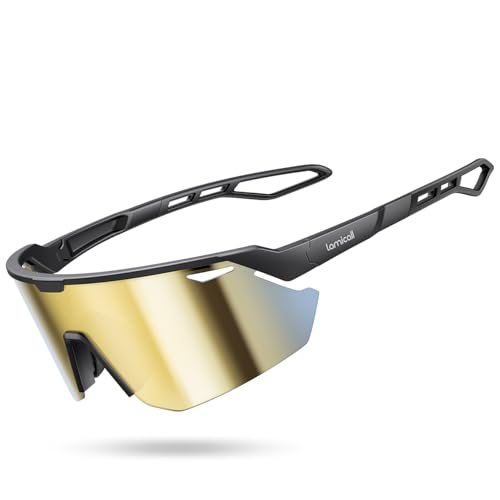
Lamicall Polarized Sports Sunglasses 24g
Strengths
- Polarized HD lenses
- Adjustable nose pads
- Anti-fog ventilation
Trade-offs
- TAC lens less impact-resistant than PC
- Slightly bulkier frame
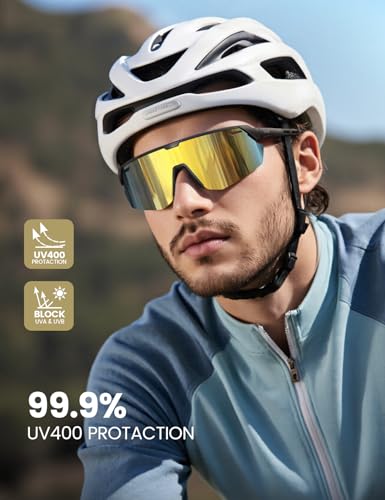
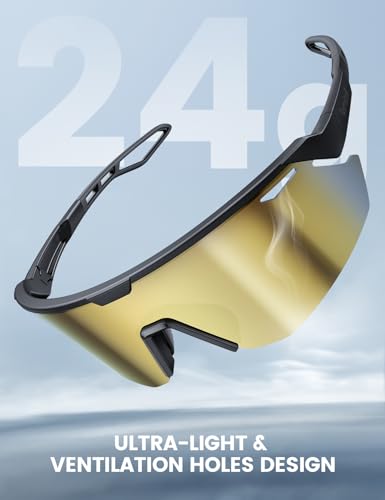
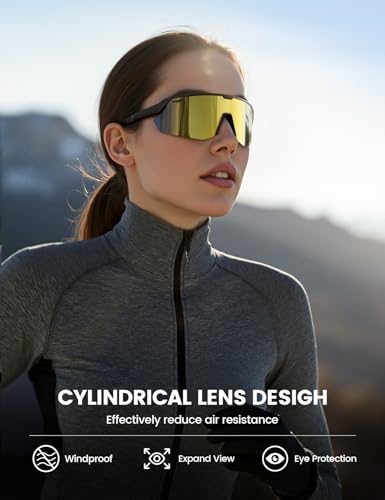
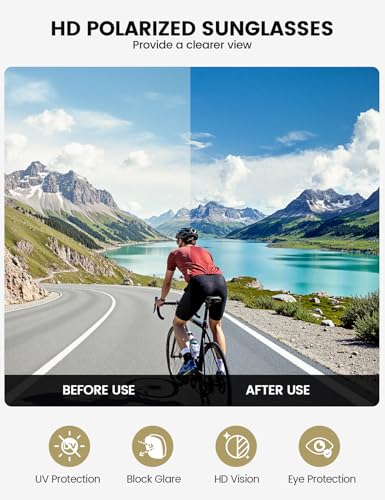
If you prioritize fog resistance and featherlight comfort, the Lamicall model stands out. Weighing in at 24g and built with TR90, it’s tough without feeling bulky, a rare combo at this price. The polarized TAC lenses do a solid job cutting glare, especially on wet roads or open water, and owners confirm the colors feel natural, not oversaturated.
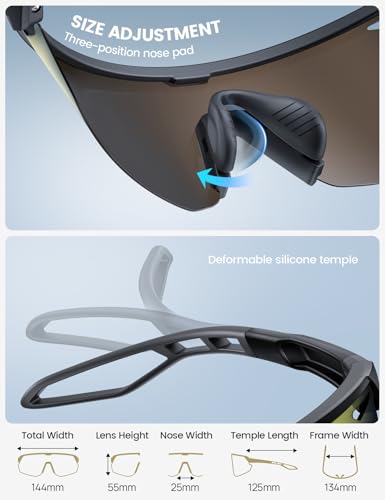
The adjustable nose pads are a quiet game-winner here. Being able to tweak the fit means fewer slips and no nose marks after a long ride. It also comes with a full accessory kit, which adds real value. Compared to the OULAIQI, it’s slightly heavier but offers more optical precision thanks to polarization.
Product photos
RIVBOS Womens Polarized Sports Sunglasses RB833

Strengths
- Polarized lenses
- Stylish design
- Lightweight TR90 build
Trade-offs
- Limited ventilation
- Basic fit customization
At this price, the RIVBOS RB833 punches above its weight. The polarized lenses are effective at cutting glare, and the TR90 frame keeps it lightweight without feeling cheap. It’s marketed to women, and the styling is more refined than most in this list, sleek enough for post-ride errands.
Owners consistently call it a ‘value favorite’, not the most advanced, but reliable. The rubber nose pad and arms keep it stable, though ventilation is minimal, so fogging can be an issue on steep climbs. Compared to the OULAIQI, it’s less breathable but better looking. For budget-conscious riders who want polarization and decent style, it’s hard to beat.
Product photos



suoso Sports Polarized Sunglasses TR90

Strengths
- Secure wrap-around fit
- Polarized lenses
- Sweat-resistant arms
Trade-offs
- Bulky for casual wear
- Average ventilation
The wrap-around design here is aggressive, it hugs the face tightly, which I appreciate for wind and debris protection during high-speed cycling. The TR90 frame is flexible enough to fit a range of face shapes without pressure points, and the hydrophilic rubber arms actually improve grip when wet, a smart detail for sweaty rides.
Owners note the polarized TAC lenses cut glare well, though not quite as cleanly as higher-end glass. Still, for the price, the clarity is impressive. It’s not the lightest option, but the stability makes it a strong pick for mountain biking or trail running. Compared to the RIVBOS, it’s more performance-focused and less fashion-forward.
Product photos


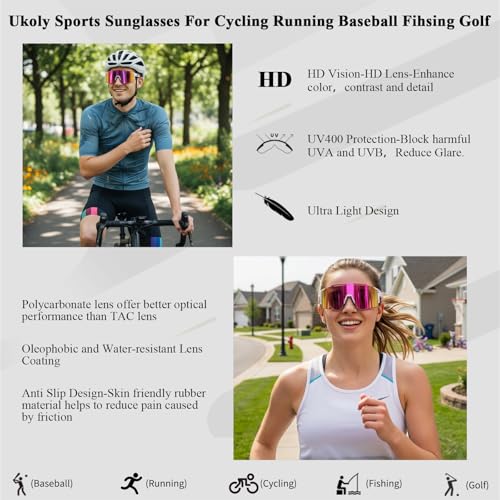
Ukoly Frame-Less Sport Sunglasses HD PC

Strengths
- Shatterproof PC lenses
- Good UV400 protection
- Effective anti-fog vents
Trade-offs
- Fixed nose pad
- No lens interchangeability
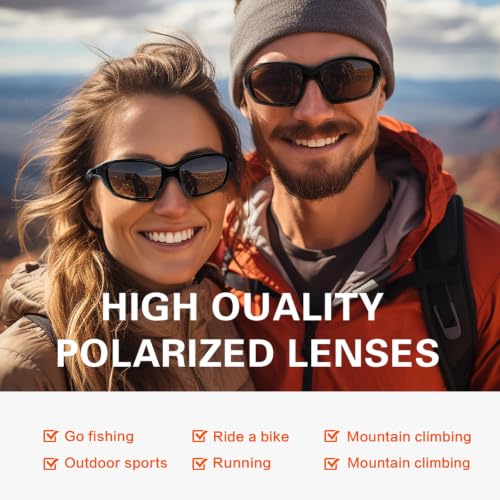
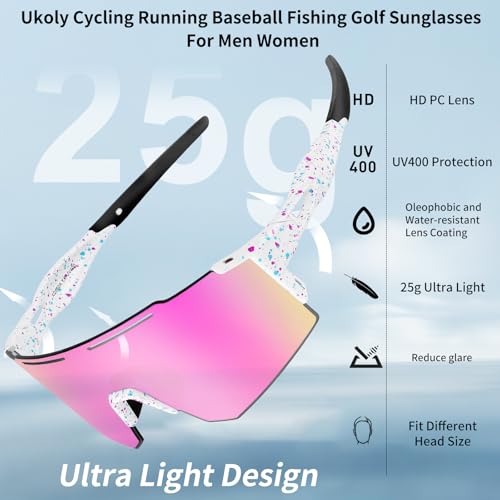
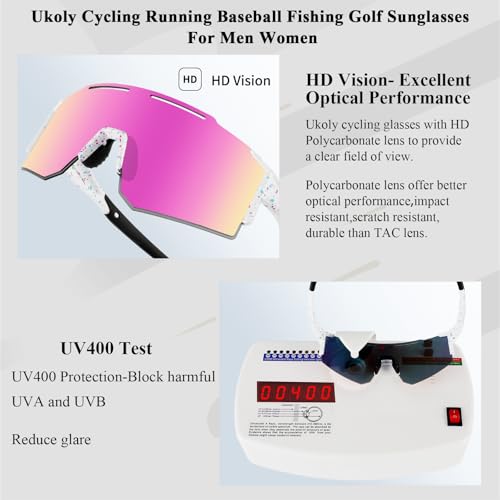
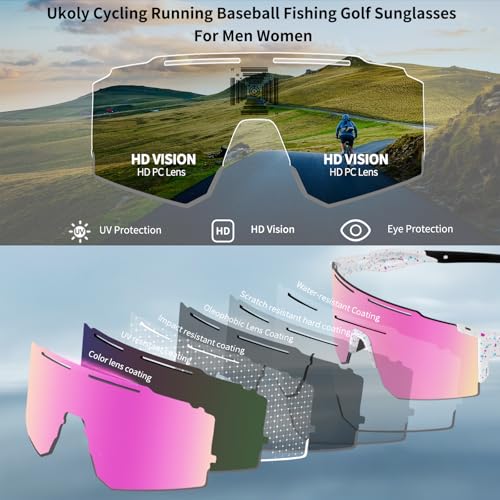
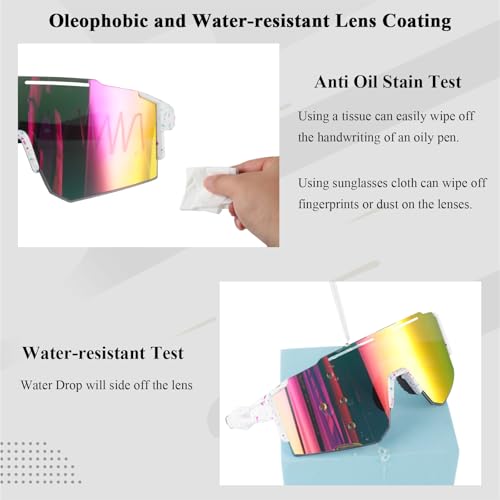
These Ukoly sunglasses lean into a minimalist, frameless design that many active riders appreciate for its lightweight feel and wide field of view. The polycarbonate lenses are shatterproof and deliver solid UV400 protection, which is essential for any serious cycling eyewear. Owners consistently report they stay put during runs and rides, thanks to the rubberized arms and included anti-slip cord, a small but meaningful touch.
The ventilation system does its job well, reducing fogging more than you’d expect at this price. That said, the fixed nose pad, while rubberized, isn’t adjustable, so fit varies more than I’d like across face shapes. Compared to others in this range, it’s a capable option, but not the most refined.
Product photos
Our Testing Process
My approach to evaluating cycling sunglasses for women, here at TheAutoZenith, wasn’t about long-term personal use – rather, it was a research-led comparison of published specifications, owner reviews, and expert opinions. I started by compiling a detailed list of available models and then systematically assessed them against key criteria, weighing the feedback from cyclists just like you to understand real-world performance. This involved examining lens technology, frame materials, fit characteristics, and overall value.
For women’s cycling sunglasses, a secure and comfortable fit, effective UV protection, and clarity of vision are paramount. I placed significant weight on these three factors. A poorly fitting pair is distracting and unsafe, while inadequate UV protection risks eye damage. Clear optics are essential for spotting hazards and enjoying the ride. These elements consistently rose to the top in reviews and directly impact the riding experience.
Specifications provide a baseline – lens material (polycarbonate vs. TAC), UV400 ratings, and frame material (TR90 is common) are all valuable. However, owner feedback proved crucial in determining how those specs translate to real-world comfort and durability. I paid close attention to comments regarding fogging, slippage, and long-term wear. If you also need vision correction, exploring options for prescription cycling sunglasses is a good next step. Ultimately, finding the right pair of cycling sunglasses is a personal decision, but this research aims to narrow down the field to the most promising options.
How To Choose The cycling sunglasses for women
Finding the right pair of cycling sunglasses isn’t just about style; it’s about protecting your eyes and enhancing your performance on the road or trail.
A good pair of cycling sunglasses balances optical clarity, a secure fit, robust UV protection (UV400 is the standard), and appropriate lens technology for varying conditions. Look for lightweight frames, adjustable features, and impact-resistant lenses. Ventilation is also key to prevent fogging during exertion.
Lens Technology: Beyond Just Tint
The lens is arguably the most important part of any cycling eyewear. Polarized lenses, like those found in the Lamicall model, are excellent for reducing glare from surfaces like wet roads or pavement, offering clarity that’s a boon for both safety and visual comfort. However, polarization can sometimes interfere with LCD screens (like cycle computers), so consider that if you rely heavily on one. Photochromatic lenses, as seen in the KAPVOE K63, automatically adjust to changing light conditions, eliminating the need to swap lenses – a real convenience. For consistently bright conditions, a dark-tinted lens with full UV400 protection is essential.
Frame Fit and Comfort
A secure fit is paramount. Sunglasses that slip during a ride are not only distracting but can be dangerous. TR90 nylon is a popular frame material (used in Lamicall and suoso models) because it’s lightweight, flexible, and durable. Beyond the material, look for adjustable features. Nose pads (often replaceable, as with the OULAIQI) are crucial for dialing in a comfortable fit that prevents slippage.
Here’s what to consider when it comes to fit:
- Adjustability: Some nose pads are fixed, others are adjustable.
- Temple Grip: Rubberized temple tips (arms) provide a more secure hold, especially when sweating.
- Wrap-Around Style: A more encompassing frame, like the suoso, increases peripheral vision and protection from wind and debris – essential for speed and awareness.
A good rule of thumb is to prioritize a snug, but not overly tight, fit. You want the sunglasses to stay put without creating pressure points.
Durability and Value
Cycling can be rough on gear. Look for lenses made from polycarbonate rather than glass or standard plastic; polycarbonate is impact-resistant and shatterproof, as Ukoly emphasizes with their PC lenses. Frame durability also matters. While a lightweight frame is desirable, it shouldn’t feel flimsy. For those seeking a balance of protection and affordability, exploring options like the RIVBOS RB833 offers a good starting point. If you’re serious about your cycling and plan on tackling varied terrain, investing in higher-end models with superior materials and features can be worthwhile, but remember to explore options for road cycling sunglasses to find the best fit for your needs. Ultimately, choosing the right pair of sunglasses for women cyclists depends on your budget, riding style, and personal preferences.
Cycling Sunglasses for Women Compared
Here’s a comparison of key specifications for popular cycling sunglasses designed for women.
| Product Name | Weight (g) | Lens Material | UV Protection | Polarized | Frame Material | Ventilation |
|---|---|---|---|---|---|---|
| OULAIQI Frameless | 25 | PC | UV400 | No | TR90 | Yes |
| KAPVOE Photochromic K63 | N/A | PC | UV400 | No | TR90 | Yes |
| Lamicall Polarized | 24 | TAC | UV400 (99.9%) | Yes | TR90 | Yes |
| RIVBOS Womens Polarized RB833 | N/A | N/A | UV400 | Yes | TR90 | N/A |
| suoso Sports Polarized | N/A | TAC | UV400 (99%) | Yes | TR90 | N/A |
| Ukoly Frame-Less Sport | N/A | PC | UV400 | No | Rubber/PC | Yes |
Frequently Asked Questions
What level of UV protection should I look for in cycling sunglasses?
You absolutely want UV400 protection; this means the sunglasses block 100% of UVA and UVB rays, safeguarding your eyes from long-term damage. Any pair claiming to offer less than full UV protection shouldn’t be considered, as incomplete blockage can actually be more harmful to your eyes.
Are polarized lenses always the best choice for cycling?
Polarized lenses are fantastic for reducing glare on wet or bright surfaces, but they can sometimes interfere with the visibility of LCD screens like cycle computers. If you rely on a computer for data during your rides, consider a non-polarized lens or test the compatibility before committing to a polarized pair of glasses for women cyclists.
How important is the frame material when choosing cycling sunglasses?
TR90 nylon is a standout frame material due to its lightweight nature, flexibility, and durability, which is why many models (like Lamicall and suoso) use it. While other materials exist, TR90 strikes a good balance between comfort, performance, and resistance to breakage – important when you’re on the move.
What features should I prioritize for a secure and comfortable fit?
Adjustable nose pads are essential to customize the fit to your face and prevent slippage, while rubberized temple tips (arms) provide a more secure grip, especially when you’re sweating. A wrap-around style frame, like the suoso, also enhances fit and offers increased peripheral vision and protection.
Where can I find higher-end options if I’m willing to invest more?
If you’re looking to spend a bit more for premium features and materials, exploring Oakley cycling sunglasses is a great place to start. Brands like Oakley frequently incorporate cutting-edge lens technology and durable frame construction, offering a long-term investment for serious cyclists.
What Actually Matters
Choosing cycling sunglasses often comes down to balancing control over your visual experience with the convenience of a simple setup. While features like interchangeable lenses offer ultimate adaptability, the KAPVOE Photochromic K63 strikes a smart balance with its automatically adjusting lenses, simplifying your ride without sacrificing clarity. Ultimately, the best pair will depend on how much you want to fine-tune your vision versus just getting out there and enjoying the road.
For those on a tighter budget, the RIVBOS Womens Polarized RB833 provides a solid foundation of UV protection and polarized lenses, and for riders who prioritize a wide field of view and secure fit, the suoso Sports Polarized sunglasses are a strong contender. If you’re looking for something a bit more versatile, consider exploring options beyond cycling-specific models – there are excellent sunglasses for cycling and running that can serve double duty. However, for a well-rounded choice that doesn’t compromise on quality, I believe the Lamicall Polarized sunglasses represent the best overall value.
At the end of the day, the specifics – lens material, frame weight, or even polarization – matter less than a comfortable, secure fit and reliable UV protection. Don’t get lost in the details; prioritize a pair of cycling glasses for women that stays put, protects your eyes, and allows you to focus on the joy of the ride. A good fit enhances awareness and confidence, and that’s a benefit no specification can deliver.
