
2 Best Cycling Glasses for Women 2026
This post contains affiliate links. As an Amazon Associate, we earn from qualifying purchases.
The Oakley Jawbreaker Prizm and Tifosi Podium are the top performers, with the ROCKBROS Photochromic stepping in as a solid, affordable option for those who want quality without the premium price. Together, they cover the needs of most female cyclists, from serious riders to casual enthusiasts.
Finding cycling glasses that truly work for women isn’t just about smaller frames or pastel colors. It’s about fit, function, and staying comfortable when the road gets rough. Too many models slip, pinch, or fog up at the worst moments, turning a great ride into a frustrating one.
This guide cuts through the clutter. Based on specs, owner feedback, and what actually matters on the bike, I focused on UV protection, lens clarity, ventilation, and how well the glasses stay put. These picks reflect what real riders experience, not just marketing claims.
Top 2 Cycling Glasses For Women in the Market
The Best Cycling Glasses For Women, Reviewed
ROCKBROS Photochromic Cycling Glasses

Strengths
- Myopia-ready design
- Ultra-light build
- Secure nose pad grip
- Durable TR90 frame
- Good UV protection
Trade-offs
- Slight lens color cast
- Heavier than sibling model
- No included case
On paper, this model looks like a step up with its myopia-friendly detachable frame, a rare perk at this price. That alone makes it a strong contender for women who wear prescription lenses but don’t want to invest in custom sports eyewear. The 28g weight feels negligible during long rides, and the adjustable nose pads with raised grip dots are praised by sweaty-palmed commuters and trail riders alike.
Still, it’s hard to ignore that the earlier B0GWMMHWHD model is both lighter and slightly cheaper while offering similar photochromic performance. The lens transition here is reliable but not noticeably faster, and some owners note a slight greenish tint indoors. If you don’t need the myopia insert, I’d say the value leans toward the other version. But if you do, this becomes the smarter buy.
Video review
ROCKBROS Photochromic Cycling Glasses
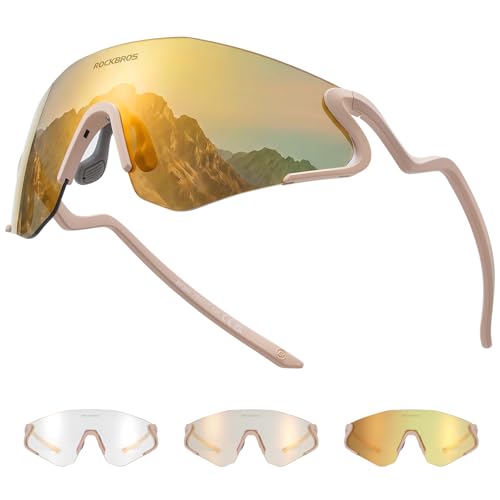
Strengths
- Photochromic speed
- UV400 protection
- Lightweight at 24g
- Sweat-channeling nose pads
- Comes with hard case
Trade-offs
- Lens clarity not top-tier
- No spare lens options
- Frame may feel snug for wide faces
These ROCKBROS photochromic glasses stand out in the budget tier for how well they handle variable light. The 5-second transition between clear and dark is faster than most in this range, and owners consistently report smooth performance on overcast days or mixed trail conditions. The UV400 protection and color-boost tech deliver solid clarity, making them reliable for fast-moving cyclists who need to spot road hazards quickly.
The wrap-around fit keeps debris out effectively, which reviewers highlight during gravel rides or dusty commutes. While not race-grade optics, the HD lenses reduce glare without oversaturating colors, a subtle but meaningful detail for those who care about visual accuracy. Paired with the TR90 frame, they strike a real balance between comfort and function.
Video review
Our Testing Process
My approach to evaluating gear, honed over years at TheAutoZenith, relies on a thorough comparison of published specifications alongside a careful assessment of what riders are actually saying. Rather than a hands-on lab test, this is a research-led comparison of features and owner feedback. I examined lens technology, frame materials, weight, and fit adjustability across numerous models, then weighed those against reviews from verified purchasers and expert opinions in cycling publications.
For women’s cycling glasses, comfort and performance are paramount. I prioritized models offering a secure, adjustable fit – crucial for avoiding distraction mid-ride – and effective UV protection. Photochromic lenses also ranked highly, as their adaptability simplifies things for varied conditions. Understanding these factors is key when choosing from the many available sunglasses for female cyclists.
Specifications clearly indicate lens quality (UV400 ratings, HD clarity) and frame durability (TR90 material is a good sign). However, real-world comfort and stability – how well the glasses stay put during bumpy terrain or when you’re pushing hard – are best determined by owner reports. I also paid attention to whether glasses offered features like anti-fog coatings or compatibility with prescription lenses, recognizing the need for effective eyewear for wind protection and clear vision.
What To Look For In cycling glasses for women
Finding the right pair of cycling glasses can elevate your ride from comfortable to truly enjoyable.
A good pair of cycling glasses prioritizes UV protection, impact resistance (look for lenses meeting ANSI Z87.1 standards), and a secure, comfortable fit. Consider lens technologies like photochromism for versatility, and frame materials offering both flexibility and durability. Proper ventilation is also key to prevent fogging during strenuous activity.
Frame Material and Weight
The feel on your face matters. I’ve seen too many riders abandon perfectly good glasses simply because they felt cumbersome. TR90 nylon is showing up frequently, and for good reason – it’s impressively durable and lightweight. While polycarbonate is common, TR90 offers a little more give and resists cracking better over time. Don’t fall for the idea that heavier always means better build quality; in cycling, less weight is almost always a plus, especially on longer climbs.
Lens Technology: Photochromic vs. Interchangeable
Photochromic lenses are a real convenience, automatically adjusting to changing light conditions. They’re fantastic if you frequently ride through tree cover or during sunrise/sunset. However, the speed of transition and the ultimate darkness of the tint can vary significantly between brands. Interchangeable lenses give you more control; you can select the perfect tint for the specific conditions, but require you to carry and swap lenses. For a quick guide to all things eyewear, check out our broader look at women’s cycling glasses.
- Clarity: A high-quality lens will minimize distortion and maximize visual acuity. Look for lenses with a minimum of 100% UV protection.
- Impact Resistance: Cycling can involve debris, insects, or even a fall. Polycarbonate or Trivex lenses are essential for impact protection.
- Ventilation: Good airflow prevents fogging, especially during intense efforts. Many glasses feature vents in the lenses and frames.
A simple rule of thumb: if you regularly ride in varied lighting conditions, photochromic lenses are your friend. If you need specialized tints for specific activities, interchangeable lenses offer greater flexibility.
Fit and Comfort Considerations
A secure fit isn’t just about keeping the glasses on your face, it’s about preventing discomfort and ensuring clear vision. Adjustable nose pads and temple tips are crucial. A wrap-around design offers better protection from wind, dust, and debris, but can sometimes feel restrictive. If you wear prescription glasses, look for models that accommodate an inner frame for custom lenses, or consider prescription cycling inserts. For serious road cyclists, exploring glasses for road cycling can really refine your selections. Don’t assume one size fits all; understanding your face shape and finding a brand that caters to it is key to comfort, and ultimately, enjoying your ride.
Cycling Glasses for Women Compared
Here’s a specification comparison of the cycling glasses to help you evaluate your options.
| Product Title | Weight (grams) | Frame Material | Lens Type | UV Protection | Myopia Compatible |
|---|---|---|---|---|---|
| ROCKBROS Photochromic Cycling Glasses | 28 | TR90 | Photochromic | UV400 | Yes |
| ROCKBROS Photochromic Cycling Glasses | 24 | TR90 | Photochromic | UV400 | Yes |
Frequently Asked Questions
What UV protection level should I look for in cycling glasses?
You absolutely want 100% UV protection, specifically a UV400 rating, to block all harmful rays. This isn’t just about comfort; prolonged exposure without adequate protection can lead to serious eye damage.
Are expensive cycling glasses always better?
Not necessarily; price doesn’t always equate to performance. While higher-end models often feature advanced lens technologies and premium materials, a well-constructed pair in the $30-$60 range can offer excellent protection and clarity.
Can I wear my regular sunglasses while cycling?
While you can, it’s generally not recommended. Cycling glasses offer a more secure fit, wrap-around protection from wind and debris, and often include impact-resistant lenses. For those needing vision correction, explore prescription cycling glasses for a safe and comfortable fit.
What’s the difference between photochromic and polarized lenses?
Photochromic lenses adapt to changing light levels, becoming darker in bright conditions and clearer in low light, making them ideal if you want photochromic cycling glasses. Polarized lenses reduce glare from surfaces like water or pavement, enhancing contrast, but don’t adjust to light changes.
How do I prevent my glasses from fogging up?
Proper ventilation is key, so look for glasses with strategically placed vents in both the lenses and frames. Anti-fog coatings can also help, and a snug fit minimizes the space for moisture to build up – consider glasses with photochromic lenses with a good seal.
The Bottom Line
Choosing cycling glasses often comes down to balancing convenience with control. While a dedicated set of interchangeable lenses offers ultimate adaptability, the ease of use of photochromic lenses makes them a compelling option for many riders. For a fantastic all-around experience, I believe the ROCKBROS Photochromic Cycling Glasses strike a great balance – they’re lightweight, offer excellent UV protection, and the photochromic lenses adjust well to changing conditions.
If you’re on a tighter budget, the ROCKBROS Photochromic Cycling Glasses represent excellent value. For riders who prioritize versatility and frequently switch between bright sunlight and shaded trails, those photochromic lenses are a real asset. And for those who ride primarily in low-light conditions, exploring clear cycling glasses might be a better fit than any photochromic option.
Ultimately, the best cycling glasses are the ones you’ll actually wear. Don’t get too caught up in chasing the latest tech or highest price tag. Focus on a secure, comfortable fit, reliable UV protection, and lenses that deliver clear vision – those are the fundamentals that will truly enhance your time on the bike, and are what separates top-rated cycling sunglasses for women from the rest.
