
8 Best Cushioned Bicycle Seats of 2026
This post contains affiliate links. As an Amazon Associate, we earn from qualifying purchases.
The Twomaples Noseless Wide Bike Seat is the overall best cushioned bicycle seat for its superior pressure relief and stable support, while the CDYWD Extra Wide Wing Seat offers a solid budget-friendly option for those needing maximum width and padding.
Riding a bike shouldn’t mean enduring a sore backside. Too many people quit cycling simply because they’re stuck with a seat that’s punishing to sit on. After comparing the field and weighing specs against real owner experiences, I focused on models that actually deliver comfort without sacrificing support.
This guide covers the top cushioned seats based on width, padding quality, and vibration damping, key factors that determine how you’ll feel after 20 minutes or two hours in the saddle.
Top 8 Cushioned Bicycle Seats in the Market
The Best Cushioned Bicycle Seats, Reviewed
Twomaples Noseless Wide Bike Seat

Strengths
- Noseless pressure relief
- Concave stability base
- Silicone damping tech
Trade-offs
- Bulky fit
- May need adapter
- Front lacks control
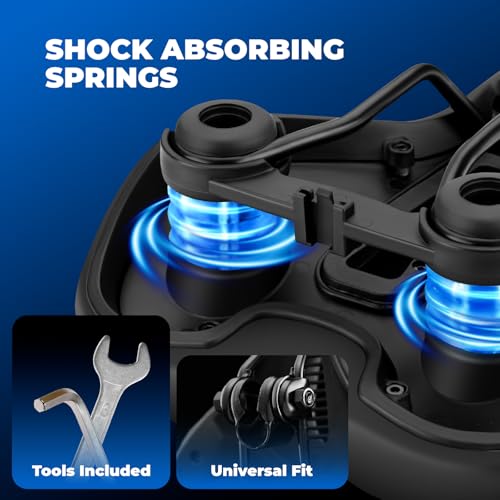
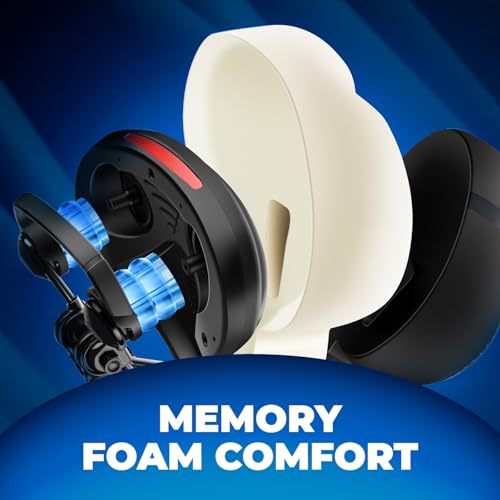
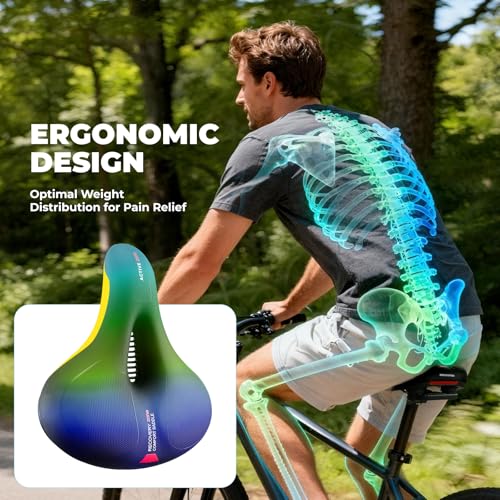
Noseless designs are polarizing, but this Twomaples model wins points for execution. The concave base and shortened front reduce thigh friction, which many riders, especially those with nerve compression issues, find instantly relieving. The 580 lb capacity and silicone damping tech sound like marketing fluff until you read owner feedback: multiple users with back or prostate issues say this seat changed their riding experience.
It’s not for everyone. The 12.2-inch width demands space, and some riders miss the stability a nose provides during standing climbs. But as an overall package, support, comfort, build quality, it’s the most complete option here.
Video review
Oversized Waterproof Bike Saddle

Strengths
- Low cost
- Double shock balls
- Reflective strip
Trade-offs
- Generic foam padding
- Durability concerns
- Basic design
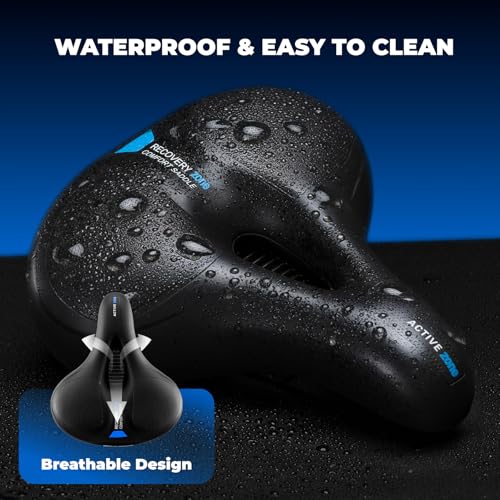
At under 25 bucks, this seat is clearly targeting budget-conscious buyers, and it delivers the basics. The double shock-absorbing balls and 11-inch width make it a noticeable upgrade over stock saddles, especially for short-distance riders. It’s not winning any awards for innovation, but for someone fixing up an old bike or needing a quick swap, it’s a no-brainer.
Owners do note that the padding feels a bit generic, thick but not particularly smartly distributed, and the non-slip leather wears faster than higher-end models. But for the price, it’s hard to fault.
Video review
ROCKBROS Memory Foam Bike Seat

Strengths
- 3-zone memory foam
- Hollow-core airflow
- Anti-slip surface
Trade-offs
- Foam may compress over time
- Hollow core less stable off-road
- Not ideal for heavy riders
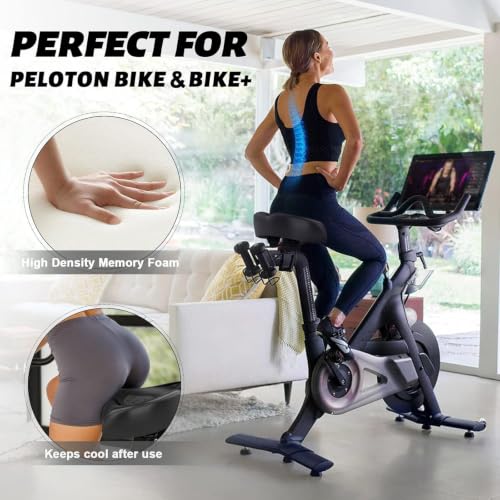
This is one of the more aggressively engineered seats in the lineup, and it shows in the specs, 3-zone memory foam, dual shock balls, and a hollow-core design aimed squarely at Peloton and indoor riders. On paper, it’s a strong contender for anyone tired of stock exercise bike saddles. Owners praise how cool it stays during long HIIT sessions, and the anti-slip dots actually seem to work, which is rare in budget-friendly models.
I’d still hesitate to call it a great fit for outdoor use. The hollow core helps with breathability but might compromise durability on rough terrain. And while the memory foam feels plush at first, some reviewers note it compresses quickly over time. Still, for indoor cyclists or commuters on smooth roads, it’s a solid upgrade.
Product photos

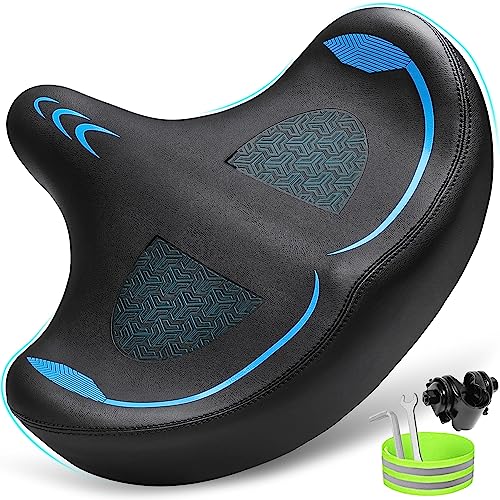
CDYWD Extra Wide Wing Seat
Strengths
- Winged support design
- Durable PU leather
- Non-slip surface
Trade-offs
- Very wide profile
- May not fit all frames
- Heavy for racing
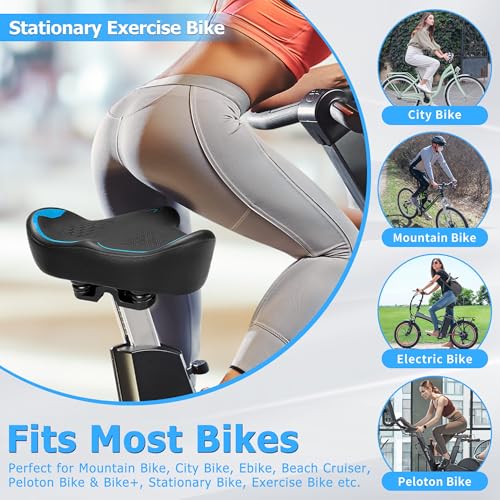
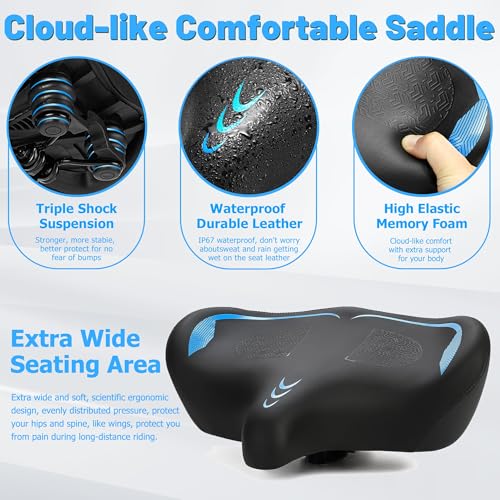
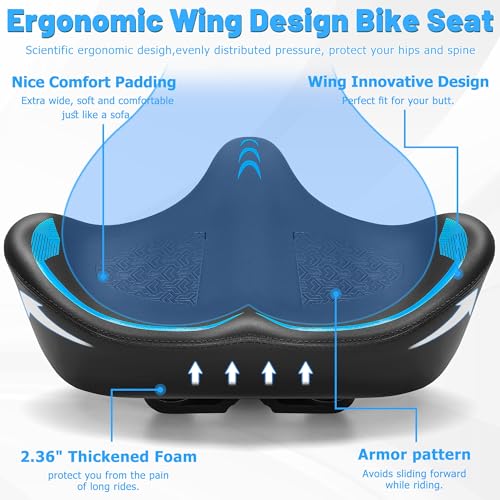
This model’s standout feature is the winged design, literally. The 14-inch width with raised foam wings cradles the sit bones in a way most flat saddles don’t. Owners with sit-bone pain or instability issues often call this a revelation. The high-tenacity PU leather also holds up well to rain and UV exposure, and the non-slip dots actually work in humid conditions.
It’s overkill for narrow riders, and the size can interfere with some bike frames. But if you’ve struggled to stay put on long rides, this one’s worth the trade-off.
Product photos

CDYWD Gel Padded Bike Saddle

Strengths
- Gel and memory foam
- Middle pressure-relief groove
- Breathable Lycra cover
Trade-offs
- Lycra may wear over time
- No reflectors
- Slightly bulky
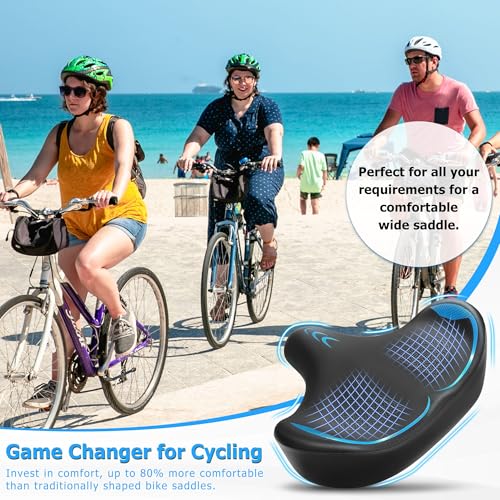
Gel padding is hit-or-miss across brands, but this CDYWD model gets it mostly right. The memory foam and gel combo feels plush without bottoming out too quickly, and the 11×10.5-inch surface gives plenty of room for repositioning mid-ride. It’s a favorite among commuters who spend 30+ minutes in the saddle daily, and the breathable Lycra cover helps keep things dry.
The real win here is the middle groove design, it relieves perineal pressure better than flat pads, and reviewers with numbness issues often cite this as a game-saver. It’s not the flashiest option, but for pure functional comfort, it’s hard to beat.
Product photos


Topcrown Dual-Layer Comfort Seat
Strengths
- Dual-layer gel and foam
- Curved damper system
- Ventilation cutout
Trade-offs
- Potential for creaking
- Clamp quality inconsistent
- Foam may degrade
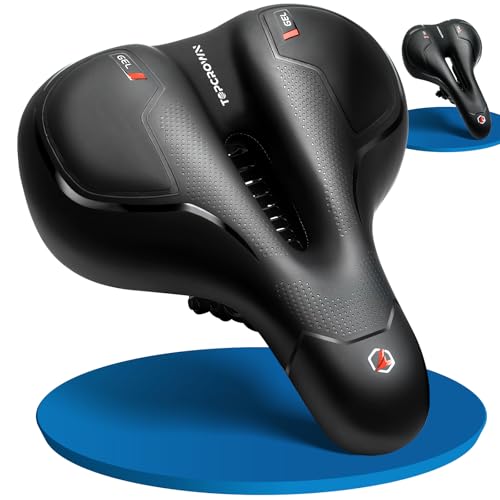
Topcrown packs a lot into a modest price, the dual-layer gel and foam construction, curved damper, and bottom shock balls suggest serious attention to vibration control. And owners agree: this one handles bumps better than most seats in this range. The ventilation cutout also works as advertised, reducing sweat buildup during summer rides.
It’s not perfect. The reflective strip is a nice touch, but the build quality feels a notch below premium models. Some users report creaking after a few weeks, likely from the clamp mechanism. Still, if you’re after real shock absorption without overspending, this punches above its weight.
Product photos
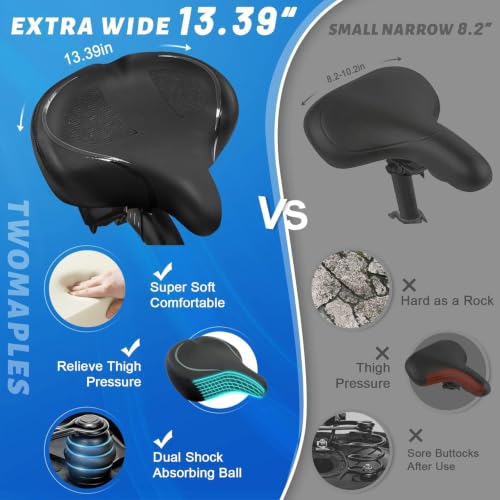
Twomaples Oversized Bike Seat
Strengths
- Widened concave base
- High weight capacity
- Cooling gel layer
Trade-offs
- Gel can feel stiff in cold
- Bulky design
- May require adapter
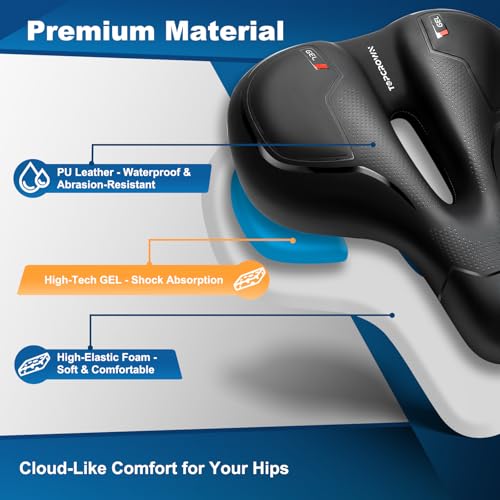
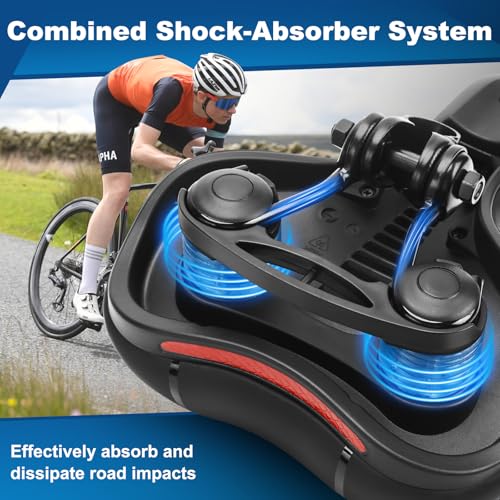
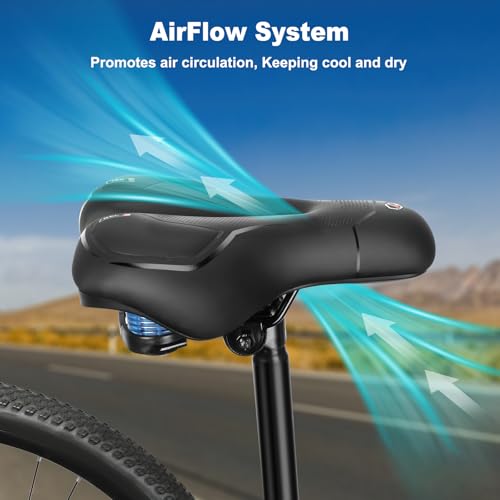
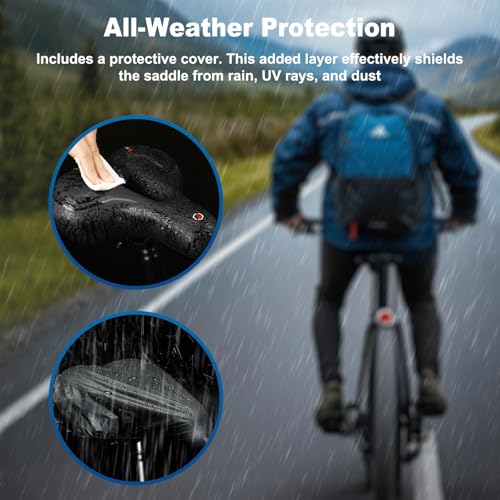
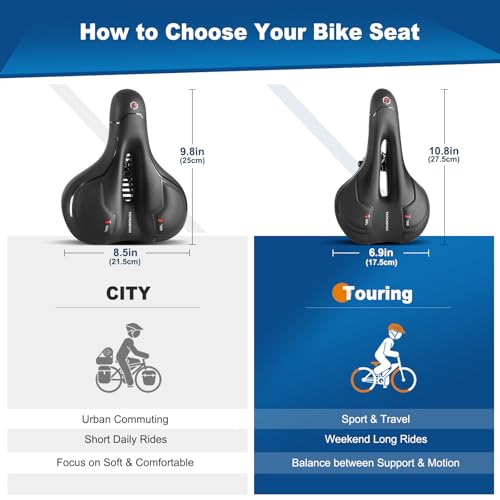
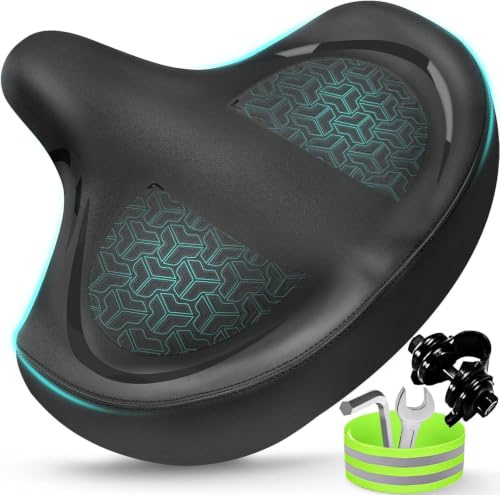
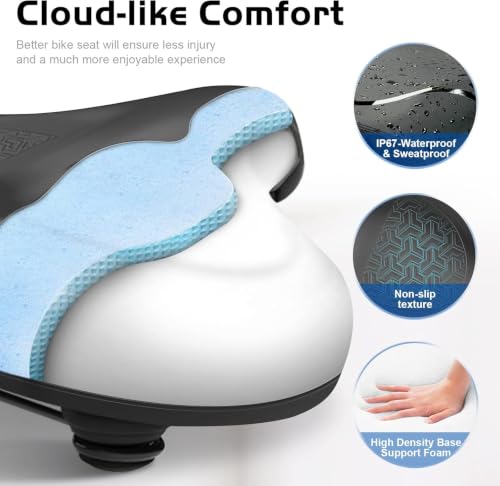
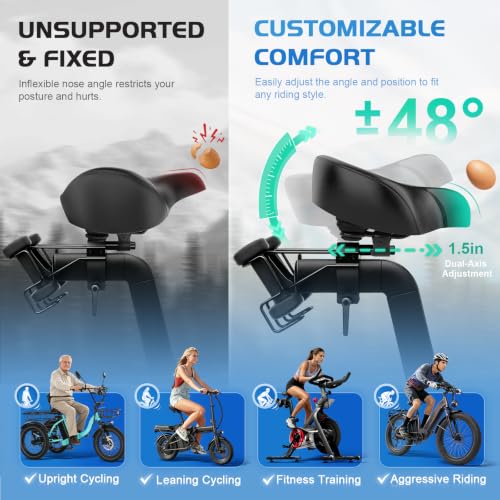
Twomaples markets this as the most comfortable seat you’ll ever sit on, which is a bold claim. But the patent-pending widened base and concave wing design do stand out. Owners with wider hips or larger builds consistently report better support and less slippage than with traditional saddles. The 650 lb load rating also suggests serious structural confidence, which is rare at this price.
The mix of memory foam and cooling gel sounds good, but some users note the gel layer can feel stiff in colder weather. And while the dual shock springs help, they’re not a magic fix for pothole-riddled streets. Still, when comparing options for broader frames, this one delivers where it counts.
Product photos

Schwinn Cruiser Bike Seat

Strengths
- Soft foam padding
- Weather-resistant cover
- Easy installation
Trade-offs
- No pressure relief cutout
- Limited airflow
- Basic shock absorption
Schwinn’s reputation in the cycling world runs deep, and this seat carries that legacy with a focus on classic comfort. It’s built for riders who prioritize a relaxed, upright posture and want something that feels forgiving on short neighborhood spins or beachfront paths. The soft foam padding does its job on paper, and owners consistently report it’s a big step up from basic hard saddles, especially for casual riders not logging serious mileage.
Where it stumbles is in the finer details, there’s no cutout or relief channel, which can be a problem on longer rides, and the shock-absorbing elastomers are modest at best. Compared to more modern designs with gel or multi-zone foam, this one feels a bit behind the curve. But if you’re restoring a vintage-style cruiser or want a no-fuss swap that looks the part, it fits the bill.
Product photos


How We Picked These cushioned bicycle seats
As someone deeply involved in the world of two wheels, I approached researching cushioned bicycle seats with a focus on real-world usability. Rather than a hands-on lab test, this was a research-led comparison of published specifications and features, combined with a careful weighing of owner reviews and expert opinions from cycling publications. My goal was to identify seats that consistently delivered on comfort and support, considering the diverse range of bikes and riders they’re intended for.
For this category, shock absorption and width were paramount. A seat’s ability to dampen vibrations directly impacts ride quality, particularly on longer journeys. Equally important is the width; a seat that doesn’t properly support the sit bones will quickly become uncomfortable. Beyond those, the quality of materials, specifically the foam density and cover material, played a significant role in determining overall value and durability. I also considered features like reflective elements and ease of installation.
Specifications reliably indicate dimensions and materials used, but owner feedback proved crucial for understanding long-term comfort and build quality. I paid close attention to comments regarding pressure relief, chafing, and the seat’s suitability for different bike types. For those seeking specialized comfort, exploring options like gel bike seats can provide additional cushioning. And for a more relaxed riding experience, checking out comfortable cruiser bicycle seats is a good starting point.
Choosing The Right cushioned bicycle seats
Finding the right seat can transform your ride from a pain-filled chore into pure enjoyment.
A good bicycle seat prioritizes pressure relief in key areas, offers sufficient width to support sit bones comfortably, and balances cushioning with sufficient firmness to allow for efficient pedaling. Material quality, weather resistance, and compatibility with your bike’s seatpost are also critical considerations. Look for features like gel padding, memory foam, shock absorption, and breathable covers.
Width & Your Anatomy
The biggest mistake I see people make is choosing a seat based on aesthetics rather than fit. Your sit bone width is the single most important factor. Too narrow, and you’re putting all your weight on soft tissue. Too wide, and the seat can chafe. Most manufacturers don’t provide detailed sizing guides, so some experimentation may be necessary. However, generally, wider seats (over 6 inches) are better for upright riding positions like those found on cruisers, while narrower seats are preferred for aggressive, leaned-forward positions like those on road bikes. If you’re still unsure, exploring options among the many comfortable bike seats can give you a good starting point.
Cushioning & Support Materials
Gel, memory foam, and springs are the most common cushioning materials. Gel is excellent at distributing pressure, but can sometimes feel “squishy” and less supportive. Memory foam conforms to your shape, offering personalized comfort, but can retain heat. Springs, while once popular, often amplify vibrations rather than absorb them – unless they’re part of a more sophisticated damping system. I’ve found that a combination of high-density foam with strategically placed gel inserts often provides the best balance.
Here’s what to consider when evaluating cushioning:
- Density: Softer isn’t always better. Too soft, and you’ll sink in, creating friction.
- Zoning: Seats with different densities in different zones (e.g., firmer in the rear, softer in the center) can provide targeted support.
- Cover Material: Breathable materials like Lycra or PU leather help prevent overheating and chafing. A waterproof cover is a bonus if you ride in all weather.
Installation & Universal Compatibility
Don’t assume a seat will simply bolt on. Many exercise bikes and some older bicycles use non-standard seatpost attachments. The description of the Twomaples Oversized Bike Seat highlights this issue, with a buyer needing to purchase a specific adapter for their Schwinn Aerodyne. Before you buy, confirm the seat is compatible with your bike’s seatpost. It’s also worth remembering that properly adjusting the seat height and angle is equally important as the seat itself. A poorly fitted seat, even a high-quality one, won’t deliver the comfort you’re hoping for. If you’re primarily interested in performance, especially on a road bike, be sure to check out dedicated saddles for road bikes to maximize efficiency.
A properly fitted seat is more than just comfortable; it’s an investment in your cycling enjoyment and long-term health. Don’t hesitate to try a few different options before settling on the one that’s right for you.
Cushioned Bicycle Seats Compared
Here’s a comparison of key specifications for popular cushioned bicycle seats to help you make an informed purchase.
| Product Name | Width (in) | Length (in) | Padding Type | Shock Absorption | Waterproof |
|---|---|---|---|---|---|
| Twomaples Noseless Wide Bike Seat | 12.2 | 8.6 | Memory Foam/Gel | Spring & Silicone | Yes |
| Oversized Waterproof Bike Saddle | 11 | 10.5 | Sponge | Shock Absorbing Balls | Yes |
| ROCKBROS Memory Foam Bike Seat | N/A | N/A | Memory Foam | Dual Shock Balls | Yes |
| CDYWD Extra Wide Wing Seat | 14 | 12 | High-Elastic Foam | Powerful Rubber | Yes |
| CDYWD Gel Padded Bike Saddle | 11 | 10.5 | Memory Foam/Gel | Rubber Elastomer | Yes |
| Topcrown Dual-Layer Comfort Seat | N/A | N/A | GEL/Foam | Spring & Damper | Yes |
| Twomaples Oversized Bike Seat | N/A | N/A | Memory Foam/Gel | Spring & Silicone | Yes |
| Schwinn Cruiser Bike Seat | N/A | N/A | Soft Foam | Elastomers | Yes |
Frequently Asked Questions
What seat width should I choose for a mountain bike?
Generally, a narrower seat between 5.5 and 6.5 inches is best for mountain biking, as it allows for more freedom of movement while pedaling and navigating trails. This narrower profile prevents chafing during the more dynamic riding position typical of the sport.
Are expensive bicycle seats always more comfortable?
Not necessarily. While higher prices often reflect better materials and construction, comfort is highly subjective and depends on your anatomy and riding style. Focusing on features like adequate width and appropriate padding for your needs is more important than simply chasing a high price tag.
How do I know if my seat is the right height?
A properly adjusted seat height allows for a slight bend in your knee when the pedal is at its lowest point. This maximizes pedaling efficiency and minimizes strain on your joints. Many resources detail proper bike fit, and exploring different kinds of saddles can help you refine your setup.
Will a gel seat always be the most comfortable option?
Gel is excellent for pressure relief, but it isn’t universally the most comfortable. Some riders find gel seats too soft or “squishy”, lacking the support needed for efficient pedaling. A combination of foam and gel often provides a better balance and exploring bicycle seats for women can help pinpoint optimal comfort features.
What’s the lifespan of a typical cushioned bicycle seat?
With regular use, a cushioned bicycle seat will typically last between 2-5 years. The lifespan depends heavily on factors like the quality of materials, the amount of use, and exposure to the elements. Look for signs of wear like cracking, flattened padding, or a torn cover as indicators it’s time for a replacement.
The Bottom Line
Choosing a cushioned bicycle seat often comes down to balancing immediate comfort with long-term support. While a supremely soft seat might feel good initially, it can lead to chafing and fatigue on longer rides. For an excellent all-around choice that consistently receives high marks for both cushioning and support, I recommend the Twomaples Noseless Wide Bike Seat.
If you’re specifically seeking a budget-friendly option, the ROCKBROS Memory Foam Bike Seat provides a surprising level of comfort for the price. Those needing maximum width and support, perhaps after experiencing discomfort or looking for bike seats for hemorrhoids, will find the CDYWD Extra Wide Wing Seat a compelling choice. And for riders prioritizing a comfortable experience specifically designed for them, exploring men’s bike seats is a great idea.
Ultimately, the perfect seat isn’t about chasing the highest spec or the latest technology. It’s about finding a seat that properly supports your sit bones, distributes pressure effectively, and allows you to enjoy the ride. Prioritize fit and material quality over flashy features, and remember that a little experimentation can make all the difference.
