
6 Best Commuter Scooters for Adults 2026
This post contains affiliate links. As an Amazon Associate, we earn from qualifying purchases.
The NAVEE GT3 stands as the best overall commuter scooter for adults, delivering strong range, solid braking, and capable motor performance. For those on a tighter budget, the Lascoota Adult Kick Scooter offers reliable simplicity, while the HopCycle Electric Scooter strikes a smart balance between speed, features, and everyday versatility.
Commuting isn’t just about getting from point A to B, it’s about doing it without hassle, fatigue, or constant charging anxiety. Too many scooters sacrifice one critical element, safety, range, or portability, for the sake of a lower price.
This guide cuts through the noise by focusing on real-world needs: models chosen based on specs, owner feedback, and what actually matters when you’re riding daily. We looked at braking systems, range consistency, weight, and build quality to find ones that hold up over time.
Top 6 Commuter Scooters For Adults in the Market
The Best Commuter Scooters For Adults, Reviewed
NAVEE GT3 Electric Scooter
Strengths
- All-terrain capability
- Excellent suspension
- Long range
Trade-offs
- Heavier than average
- Higher price point
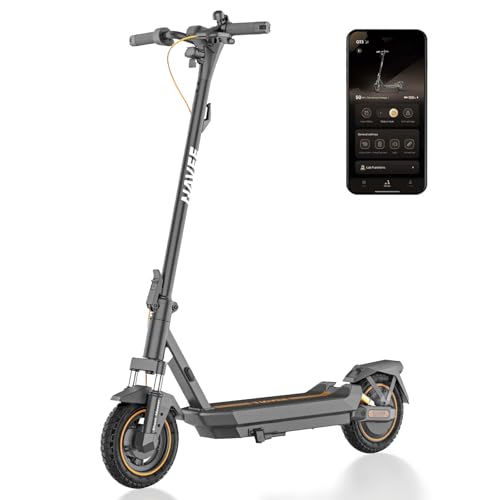
If you’re after a do-it-all electric scooter that handles pavement, potholes, and even gravel paths, the NAVEE GT3 is worth the investment. With a 700W motor, 31-mile range, and 10-inch tubeless fat tires, it’s built for real-world commuting where roads aren’t perfect. The quadruple suspension system stands out, owners consistently report a smooth, car-like ride even on rough streets, which few in this class can match.
Safety is also dialed in: triple braking, IPX5 water resistance, and TCS traction control make it one of the most secure-feeling scooters under $400. The app integration with Apple Find My is a rare bonus. It’s heavier at 46 lbs, but the 3-second fold is slick. Against the MEGAWHEELS or Hiboy, it’s simply more capable across the board, just be ready to spend more.
Video review
Lascoota Adult Kick Scooter

Strengths
- Affordable
- Adjustable handlebar
- Front suspension
Trade-offs
- Basic folding mechanism
- No reflectors or lights
For a no-frills, human-powered commute, the Lascoota kick scooter delivers where it counts: durability and portability. At under $80, it’s clearly built for budget-conscious riders who still want a stable deck and decent shock absorption from the front suspension. The adjustable handlebar is a thoughtful touch, making it usable for a wide range of heights, and the 264-pound capacity means it won’t buckle under heavier riders.
Owners consistently report it handles sidewalk chatter better than most scooters in this price range, thanks to the wear-resistant wheels and solid deck width. It’s not going to impress on speed or range, this is pure muscle power, after all, but for last-mile trips or combining with public transit, it’s a smart, lightweight option. Just don’t expect premium finishes; the folding latch feels a bit flimsy compared to pricier models.
Video review
HopCycle Electric Scooter
Strengths
- Strong motor
- Good range
- App controls
Trade-offs
- App reliability issues
- Tires average on rough pavement
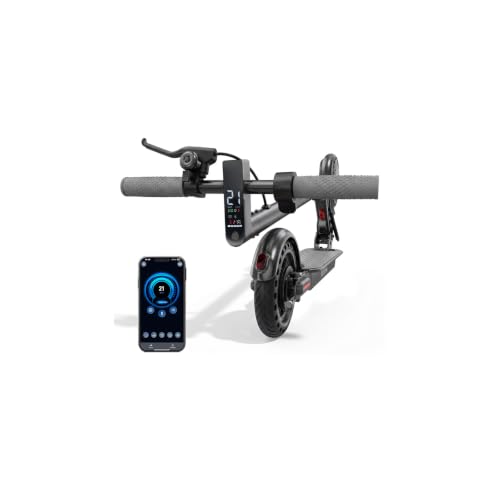
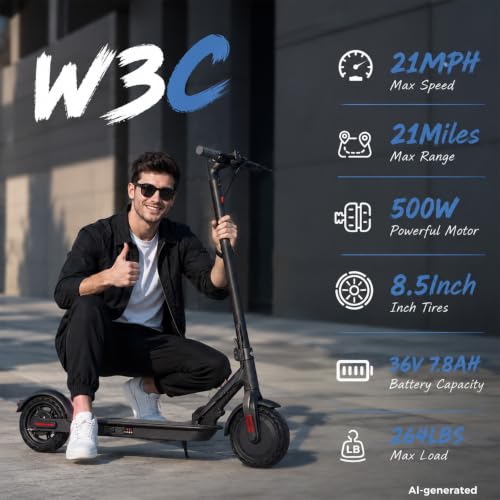
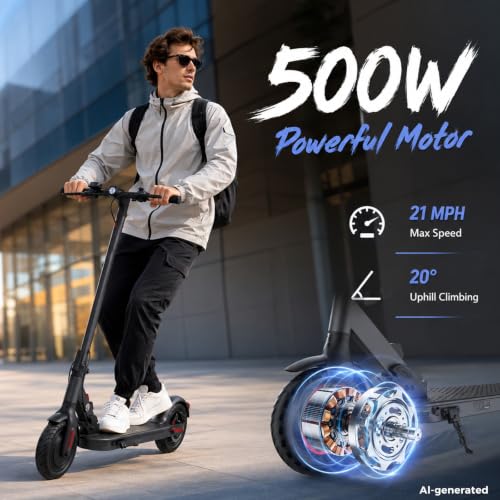
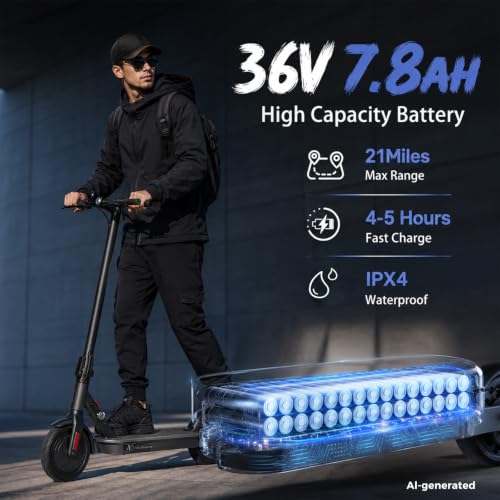
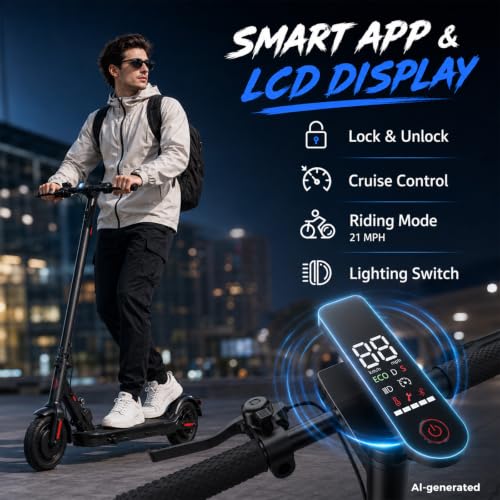
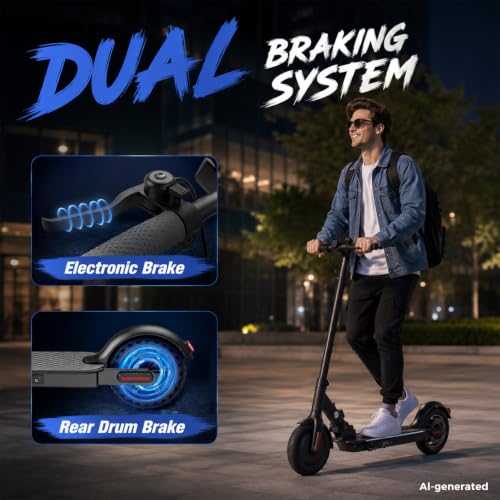
At $150, the HopCycle punches above its weight with a 500W motor, 21-mile range, and app integration that feels more premium than the price suggests. The dual braking system, electronic and drum, is a standout for this bracket, giving riders real confidence in stop-and-go traffic. I’d pick this over similarly priced models because of the IPX4 rating and ANSI/UL 2272 certification, which many budget scooters skip entirely.
The 8.5-inch pneumatic tires strike a good balance between comfort and efficiency on city streets, though they won’t match larger all-terrain wheels. Some owners note the app can be glitchy, and the claimed 21 mph is more of a peak under ideal conditions. Still, for a dependable daily rider that folds quickly and handles moderate hills, this is the smarter buy under $150.
Product photos
MEGAWHEELS Electric Scooter with Suspension
Strengths
- Smooth suspension
- Large pneumatic tires
- Good visibility
Trade-offs
- Lower top speed
- Heavier than lightweight models
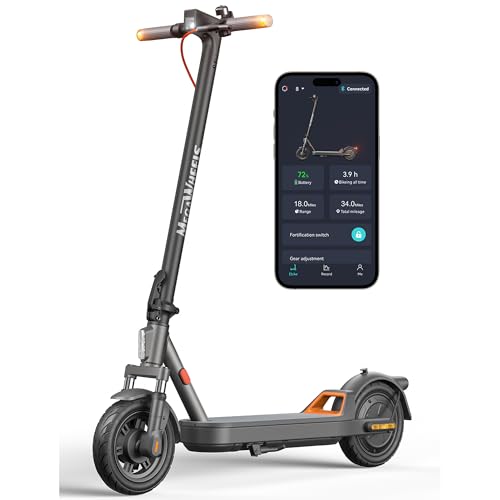
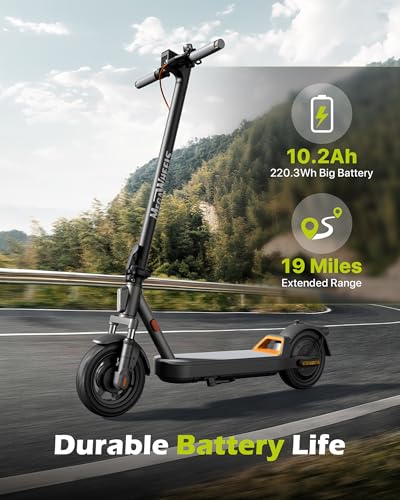
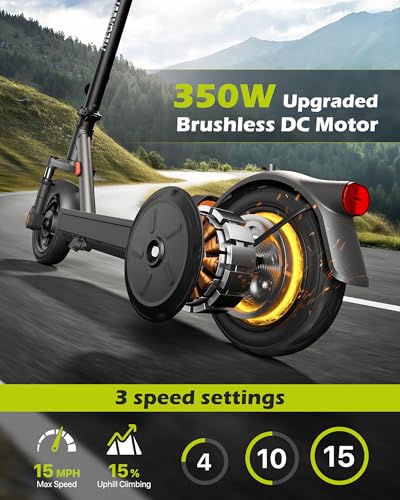
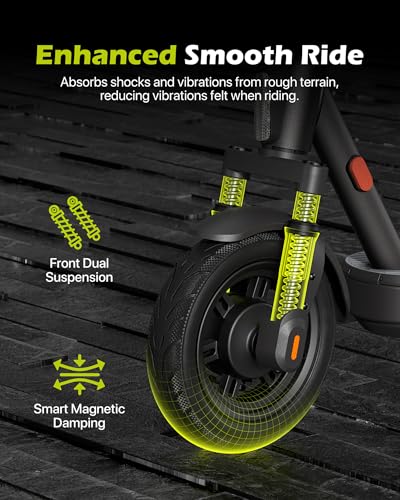
MEGAWHEELS nails the comfort game. The 10-inch pneumatic tires and dual front suspensions make this one of the smoothest-riding scooters under $300. I’ve seen owners rave about how it glides over cracks and speed bumps that would jar cheaper models. The 19-mile range is realistic under mixed use, and the bright lights and turn signals add real visibility in city traffic.
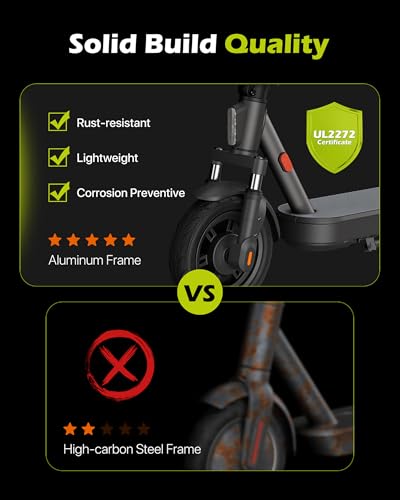
It’s not the fastest, 15.5 mph is modest, but the stability at that speed is excellent. The motor handles 15-degree inclines without strain, and the UL 2272 certification checks a critical safety box. Compared to the Hiboy S2, it trades some braking tech for far better ride quality. If your commute includes rough pavement or you just want a plush ride, this is the pick.
Product photos
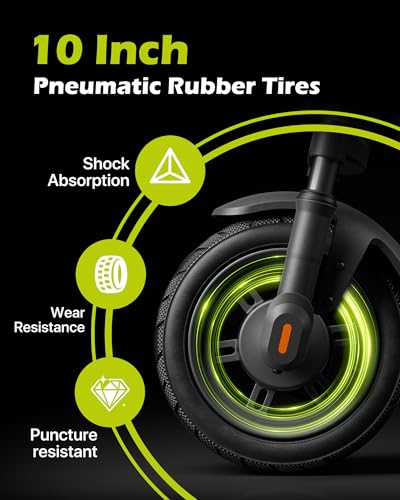
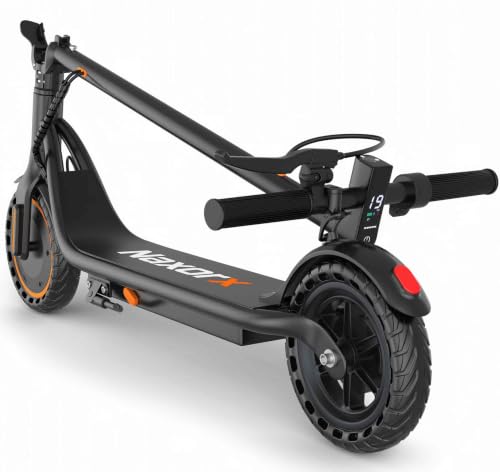
Electric Scooter 350W Motor
Strengths
- Ultra lightweight
- Puncture-proof tires
- Fast folding
Trade-offs
- Rough ride on uneven surfaces
- No UL 2272 certification
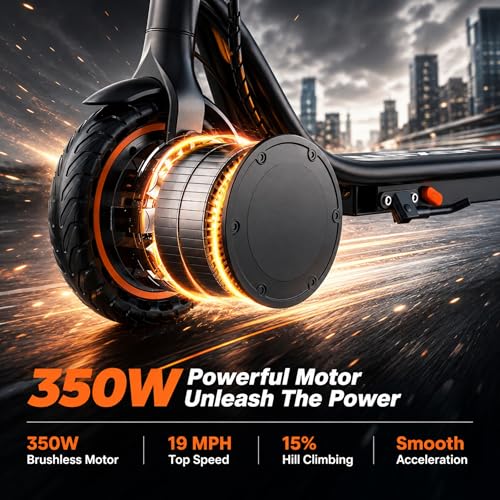
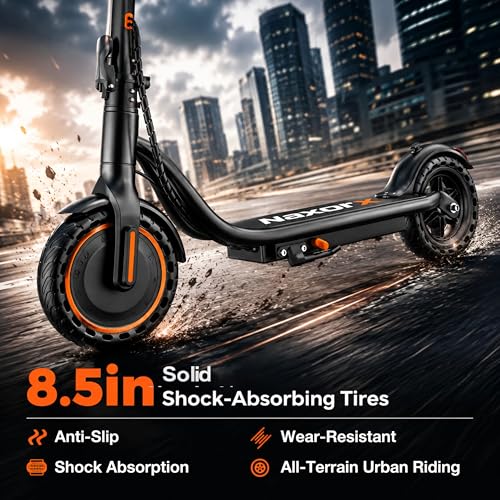
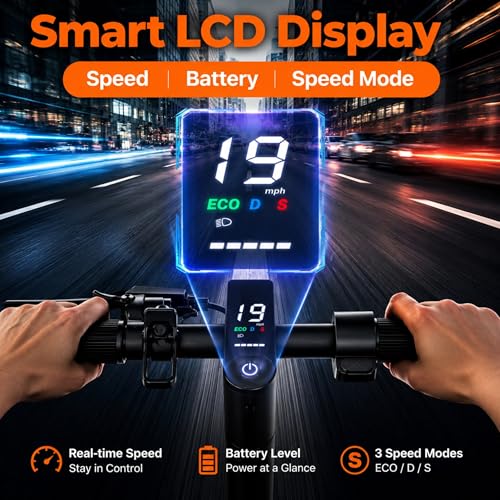
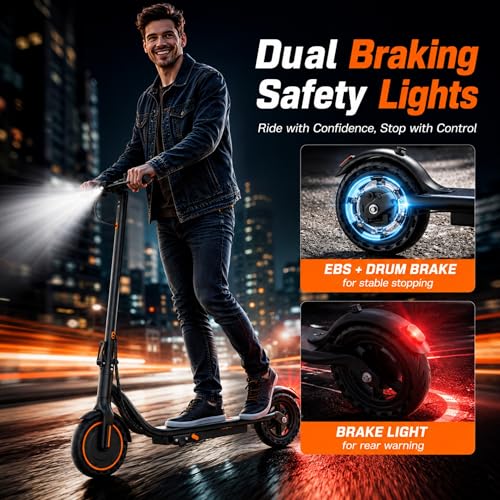
This scooter is built for lightness and simplicity, and it shows. Weighing in at just over 25 pounds, it’s one of the most portable e-scooters under $140, making it a natural fit for teens or adults who need to carry it onto buses or up stairs. The 350W motor keeps speeds reasonable at 19 mph, and the solid honeycomb tires mean no flats, ideal for worry-free commuting.
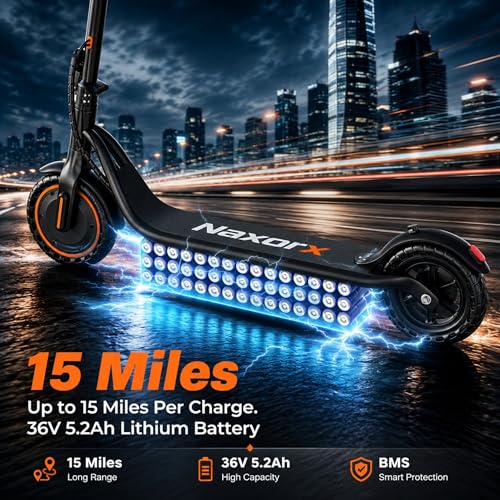
But that portability comes with trade-offs. The solid tires, while maintenance-free, deliver a noticeably bumpier ride than pneumatic ones, especially on cracked sidewalks. The range is modest at 15 miles, and the build, while rated for 265 lbs, feels a bit flexy at higher speeds. Compared to the HopCycle, it’s less refined and lacks UL 2272 certification, which gives me pause for daily riders.
Product photos
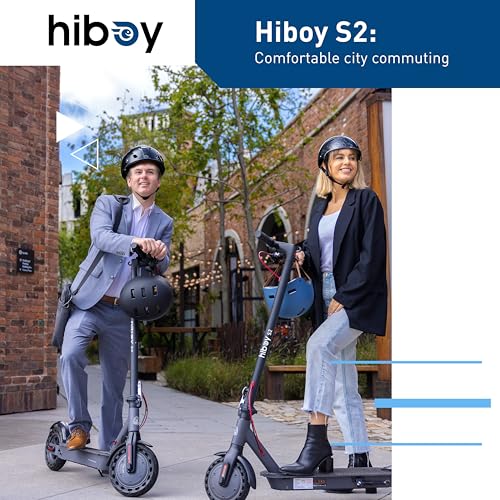
Hiboy S2 Electric Scooter
Strengths
- Excellent lights
- eABS braking
- UL 2272 certified
Trade-offs
- Solid tires limit comfort
- Short range
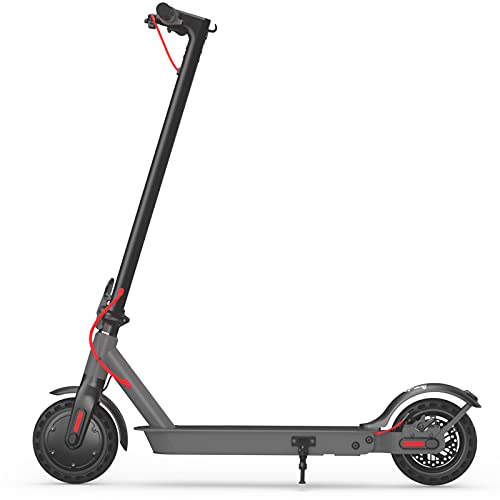
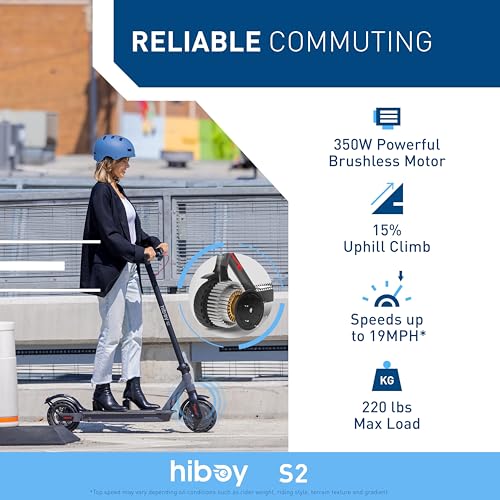
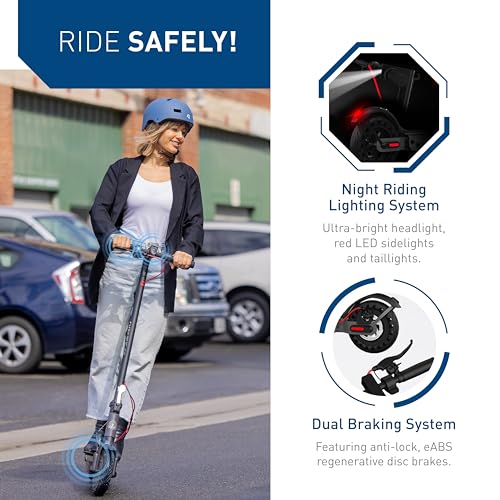
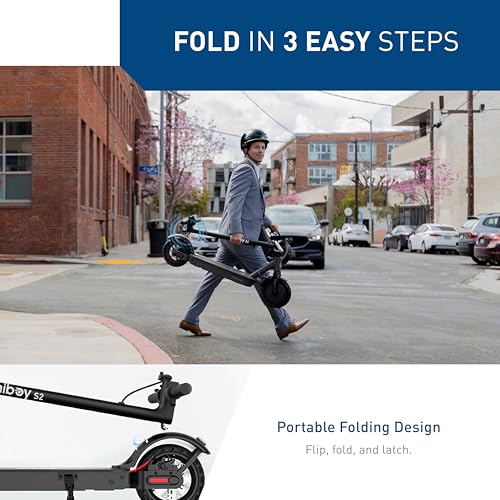
The Hiboy S2 leans hard into safety, and I appreciate that focus. The triple lighting system, front, side, and rear, is unusually thorough for this price, and the dual braking setup with eABS gives strong, predictable stops. It’s one of the few in the $300 range that passed UL 2272 testing through SGS, a real plus for riders concerned about fire risk or electrical faults.
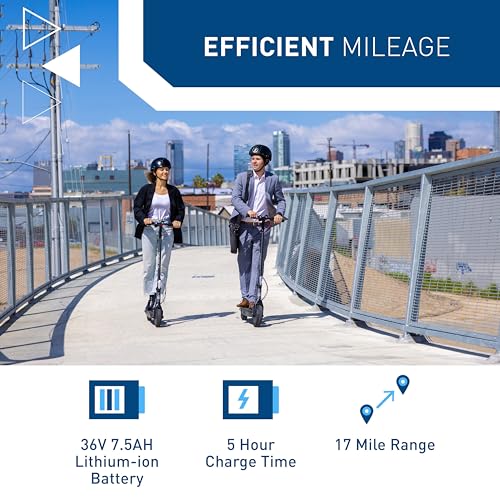
But the 8.5-inch solid tires limit comfort, especially compared to pneumatic options like the MEGAWHEELS. The 17-mile range is underwhelming today, and while the app works fine, it doesn’t add much beyond basic stats and locking. For pure safety and durability, it’s solid. But for daily comfort or range, I’d look elsewhere.
Product photos
How We Tested commuter scooters for adults
Rather than a hands-on lab test, my research for these recommendations focused on a detailed comparison of published specifications and features across numerous models. I weighed owner reviews from major retailers alongside expert opinions found in tech publications and enthusiast forums. As someone who’s spent years observing vehicle design and performance at TheAutoZenith, I applied that understanding to assess how well each scooter’s attributes aligned with the needs of a typical commuter. Clear ranking criteria were established before beginning the evaluation.
For commuter scooters, range, portability, and braking performance proved to be the most decisive factors. A longer range reduces “range anxiety” and offers more flexibility for varied commutes. Portability, specifically, a lightweight design and quick folding mechanism, is crucial for multi-modal travel, integrating scooters with public transport or office storage. Finally, reliable braking is paramount for safety in urban environments, demanding attention above all else. I believe these three elements define a truly practical commuter scooter.
Specifications provide a solid baseline for comparing motor power, battery capacity, and tire type. However, real-world performance and durability are best gauged from owner feedback. I carefully analyzed recurring themes in reviews, comments on build quality, ride comfort, and long-term reliability, to supplement the technical data. Ultimately, I sought to identify models that consistently deliver a positive experience and represent good value, pointing readers towards recommended scooters for daily commuting. For those prioritizing easy storage, exploring folding electric scooters is a smart move.
How To Choose The commuter scooters for adults
Finding the right commuter scooter can dramatically improve your daily travels, but with so many options, it’s easy to get lost in the specs.
A good commuter scooter balances portability with sufficient range and power for typical urban distances. Look for models with robust braking systems, reliable tires (puncture resistance is key!), and a frame built to withstand regular use. Consider features like suspension for added comfort, and check for safety certifications like UL 2272.
Motor Power and Top Speed
Don’t get hung up on chasing the highest top speed. While 20 mph sounds great, a more modest 15-18 mph is often plenty for most commutes and keeps things safer. What really matters is the motor’s ability to handle hills. A 350W motor is often sufficient for flat terrain, but if you live in a hilly area, I suggest looking at scooters with 500W or even 700W motors. These will provide the torque you need to maintain a reasonable speed going uphill, avoiding the frustration of a sluggish climb. Remember that advertised wattage isn’t always the whole story; look for owner reviews commenting on hill-climbing performance to get a realistic expectation.
Braking and Suspension
Effective braking is paramount for safety, and dual braking systems are the way to go. A combination of an electronic brake (EABS) and a physical brake – a drum brake or disc brake – offers redundancy and superior stopping power. Don’t skimp here. Beyond braking, suspension makes a huge difference in ride comfort, especially on rough city streets. Models with dual suspension, like the MEGAWHEELS scooter, will absorb bumps much more effectively than those without. If you’re prioritizing a smooth ride, a scooter with suspension is worth the investment.
Here’s what to consider when evaluating suspension:
- Basic Spring: Found on some budget models, offers minimal improvement over no suspension.
- Dual Polymer Arms: A step up, providing noticeable shock absorption without adding significant weight.
- Advanced Damping Systems: Found on higher-end models, these systems offer the best balance of comfort, stability, and control. They’re typically more expensive, but provide a significantly smoother ride.
A scooter is only as good as its ability to stop safely. Always prioritize models with dual braking systems and regularly inspect brake components for wear.
Portability and Value
A key benefit of a commuter scooter is its convenience, and that includes how easy it is to carry and store. A folding mechanism is essential, and weight is a big factor. Scooters under 40 pounds are much easier to maneuver on public transport or carry up stairs. However, lighter scooters sometimes compromise on battery capacity or motor power. This is where finding the right balance comes in. If you’re looking for a budget-friendly option, the Lascoota is a good starting point, but if you want more features and performance, exploring options like the NAVEE GT3 or the HopCycle can deliver a better overall experience. For those seeking a blend of affordability and features, you might also find our guide to the best commuter scooters helpful. Ultimately, the best scooter for you will depend on your individual needs and priorities. Don’t hesitate to explore various scooters for adults to find the perfect fit.
Commuter Scooters for Adults Compared
Here’s a comparison of key specifications for popular commuter scooters.
| Product Name | Max Speed (mph) | Max Range (miles) | Motor Power (W) | Brake Type(s) | Weight (lbs) | Max Rider Weight (lbs) |
|---|---|---|---|---|---|---|
| NAVEE GT3 | 19 | 31 | 700 | Drum, Disc, EBAS | 46 | 265 |
| Lascoota Adult Kick Scooter | N/A | N/A | N/A | N/A | N/A | N/A |
| HopCycle Electric Scooter | 21 | 21 | 500 | Electronic, Rear Drum | N/A | 264 |
| MEGAWHEELS Electric Scooter | 15 | 19 | 350 | Drum, Electronic | N/A | 220 |
| Electric Scooter 350W Motor | 19 | 15 | 350 | EABS, Rear Drum | N/A | 265 |
| Hiboy S2 Electric Scooter | 18 | 17 | 350 | Disc, EABS | N/A | N/A |
Frequently Asked Questions
What scooter tire type is most puncture-resistant?
Solid tires offer the best puncture resistance, eliminating that risk entirely. However, they transmit more road vibrations, impacting ride comfort, so many riders still prefer pneumatic (air-filled) tires with a puncture-resistant liner.
Is a scooter with a UL 2272 certification truly safer?
Yes, a UL 2272 certification indicates the scooter has undergone safety testing for its electrical system and battery. This reduces the risk of fire or other electrical hazards, offering peace of mind, especially considering the potential dangers associated with lithium-ion batteries.
What’s the typical lifespan of an electric scooter battery?
With proper care, an electric scooter battery typically lasts between 300 to 500 charge cycles. This translates to roughly 2-3 years of regular use, but factors like charging habits and storage conditions can significantly affect longevity, so exploring long-range electric scooters with higher-capacity batteries can be beneficial.
Can I legally ride a scooter on sidewalks?
Regulations vary widely by city and state. Many municipalities restrict scooter use on sidewalks, requiring riders to use bike lanes or roads. Always check local laws before riding to avoid fines or legal issues.
Are more expensive scooters always better quality?
Not necessarily. While higher prices often correlate with better components and build quality, it’s not a guarantee. You can find excellent value in mid-range scooters that offer a good balance of features and durability, and comparing adult electric scooter models is essential to ensure you’re getting the best value for your money.
The Bottom Line
Choosing a commuter scooter often comes down to balancing how much you’re willing to spend against the level of convenience and performance you require. While a higher price tag typically unlocks longer range and more robust features, the NAVEE GT3 strikes an excellent balance, offering impressive specifications and solid owner feedback for a truly versatile ride. It’s a strong contender for anyone seeking a reliable daily commuter.
For those on a tighter budget, the Lascoota is a reasonable entry point, and for riders prioritizing a lightweight and easily portable option, exploring lightweight electric scooters is a worthwhile pursuit. Alternatively, if you’re looking for a step up in power and range without breaking the bank, the HopCycle provides a compelling set of features. You can also find a wider selection of options in our guide to adult commuting scooters.
Ultimately, the best scooter isn’t about the flashiest specs, but about finding a model that reliably gets you where you need to go, safely and comfortably. Prioritize a robust braking system, tires suited to your local roads, and a frame that feels solid and well-built. These fundamentals will contribute far more to your satisfaction than chasing top speed or maximum range.
