
8 Best Commuter Electric Scooters 2026
This post contains affiliate links. As an Amazon Associate, we earn from qualifying purchases.
The NAVEE GT3 stands out as the overall best commuter electric scooter for its strong motor and solid range, while the MAXSHOT V1 is a smart budget pick that doesn’t skimp on essential features. For those prioritizing portability, the INVANTI E20 offers a lightweight design without sacrificing too much performance.
Commuter scooters aren’t just about getting from point A to B, they’re about doing it reliably, safely, and without frustration. Too many riders end up with underpowered models that quit on hills or can’t make it through the week without constant charging.
This guide cuts through the hype by focusing on real-world specs and feedback. I looked at motor capability, actual range, braking safety, and build quality to find the models that deliver where it matters most.
Top 7 Commuter Electric Scooters in the Market
The Best Commuter Electric Scooters, Reviewed
NAVEE GT3 Electric Scooter Adults
Strengths
- 700W powerful motor
- Long range up to 31 miles
- All-terrain 10-inch tires
Trade-offs
- Heavy at 46 lbs
- Folding mechanism less compact than rivals
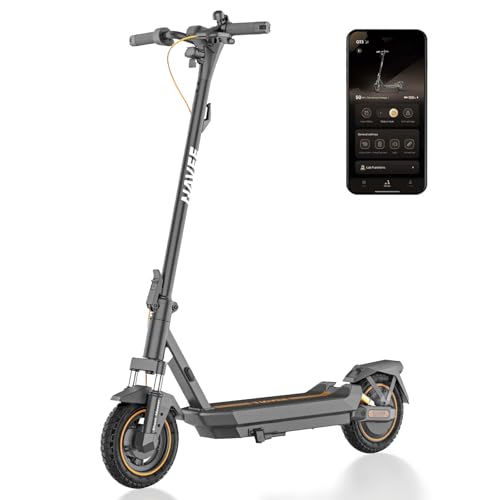
The NAVEE GT3 stands out in the crowded commuter scooter market by packing serious trail-ready hardware into a package that still folds up neatly for city use. On paper, the 700W motor and 10-inch tubeless fat tires suggest off-road ambition, and owners consistently report it handles gravel paths and wet curbs better than most in this class. The quadruple suspension system isn’t just marketing fluff, it actually makes potholes and sidewalk seams far less jarring, which I appreciate in a machine meant for daily pounding.
What really sets it apart is how much tech it bundles without bloat. The Apple Find My integration is a rare and thoughtful touch, and the triple braking system with EBAS gives real confidence on steep descents. While the claimed 30-mile range is optimistic under mixed conditions, most riders see 22–25 miles, which is still solid. I’d pick this over flashier models for anyone who values durability and real-world adaptability.
Video review
WAWSCOTE 500W Electric Scooter
Strengths
- 21 MPH top speed
- Honeycomb solid tires
- Budget-friendly
Trade-offs
- Ride quality bumpy on rough roads
- APP can be glitchy
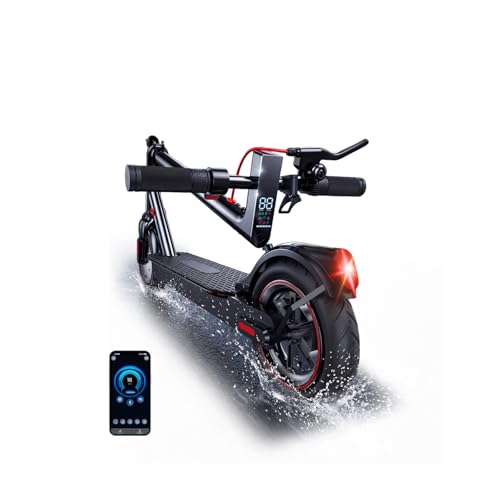
For the price, the WAWSCOTE punches above its weight. The 500W motor hitting 21 MPH is legit, owners confirm it keeps pace with traffic on flat roads, and the 20° hill climb rating holds up in real-world tests. The honeycomb tires are a standout, offering grip and shock absorption without the maintenance of pneumatic tires. It’s not the smoothest ride, but for a budget model, the dual suspension does its job.
It’s also one of the few in this range with IPX4 waterproofing and TÜV-certified safety, which adds peace of mind. The APP cruise control is a nice perk, though the app itself gets mixed reviews. Still, if you’re looking for maximum value without flirting with danger, this is the pick.
Video review
Heropick 600W-1000W Commuter Scooter
Strengths
- Dual suspension system
- Removable battery
- Strong steel frame
Trade-offs
- Heavier than average
- App interface inconsistent
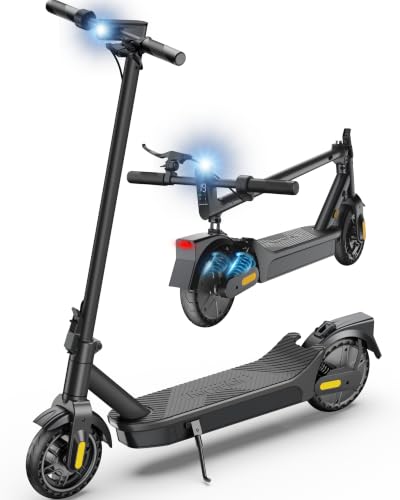
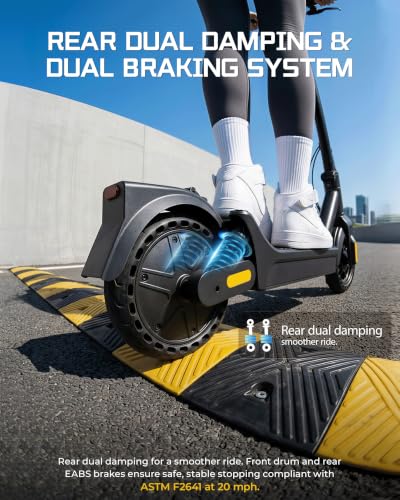
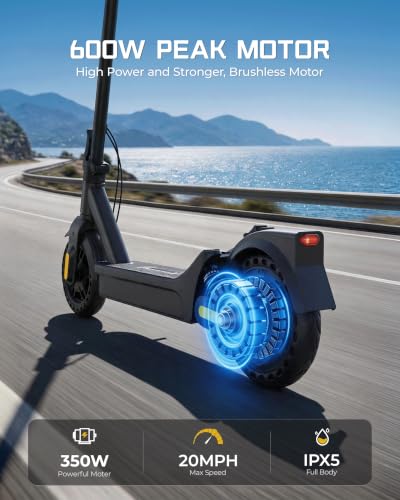
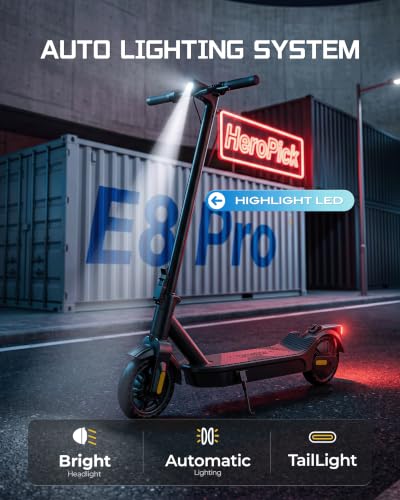
This scooter promises up to 41 miles of range, but in reality, most riders see around 20–25 miles, still respectable, but not class-leading. Where it shines is in build quality: the high-carbon steel frame feels rugged, and the dual suspension setup smooths out rough pavement better than expected. The removable battery is a big plus for long-term owners who want to swap rather than wait for a charge.
Owners praise the Lost Mode and cruise control via app, but some note the interface is clunky. The 12% hill climb rating is conservative, most find it handles steeper grades fine, but only at reduced speed. I’d recommend this for riders who value longevity and real-world toughness over flashy specs.
Product photos

HopCycle A-Black Electric Scooter
Strengths
- Pneumatic 8.5-inch tires
- Dual braking system
- APP control
Trade-offs
- Folding mechanism less durable
- Average hill performance
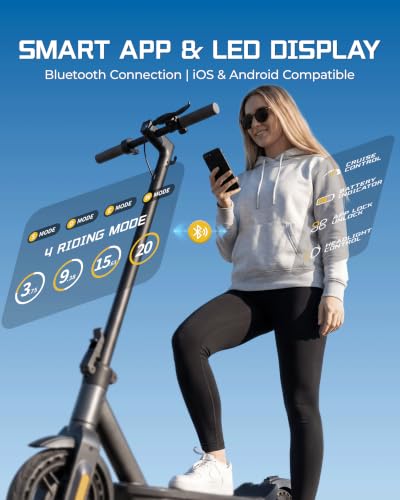
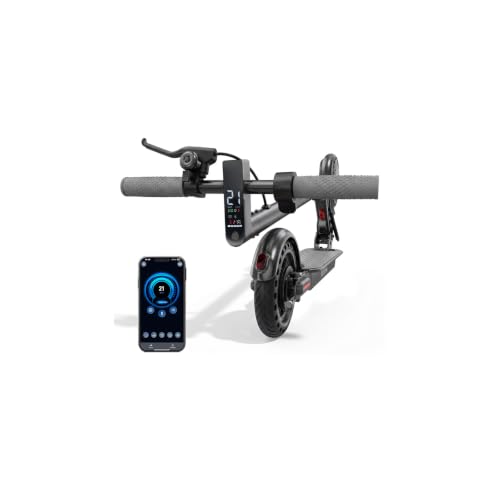
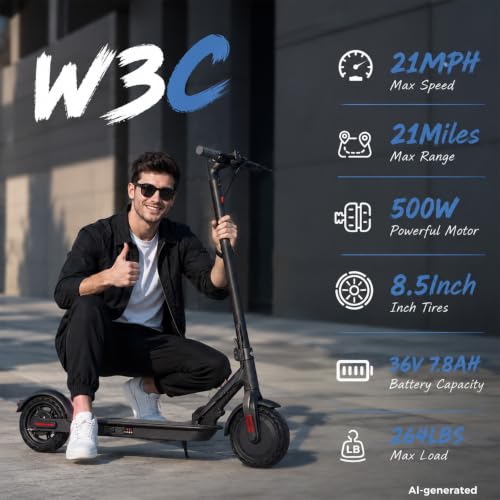
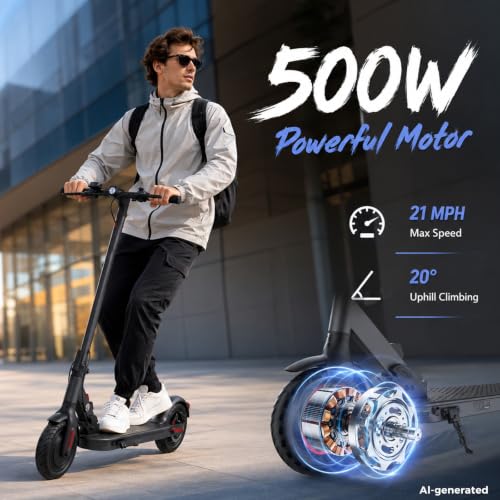
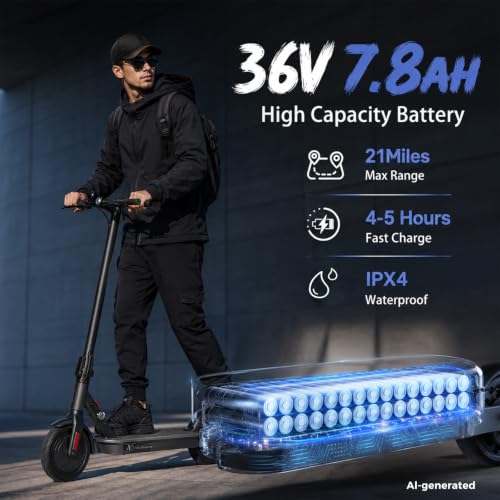
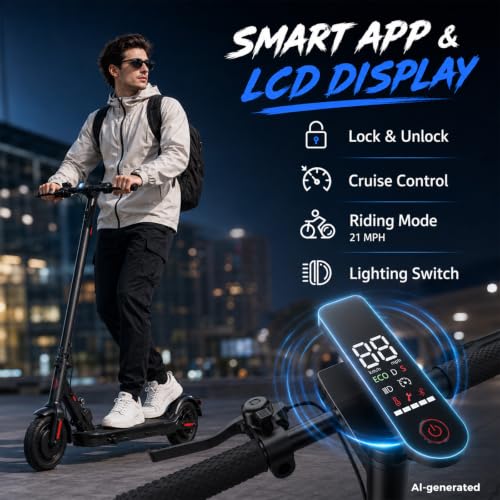
The HopCycle hits a sweet spot: it’s cheap, but not cheaply made. The 500W motor and 21-mile range match its specs, and owners consistently report it handles daily commutes without drama. The 8.5-inch pneumatic tires make a noticeable difference in ride quality over solid tires, absorbing bumps that would rattle your teeth on cheaper models.
I like the dual braking system, it’s responsive, and the IPX4 rating means light rain won’t end your ride. It’s not the fastest or lightest, but for the price, it offers a balanced mix of speed, safety, and comfort. If you’re comparing value across brands, this one often comes out on top.
Product photos
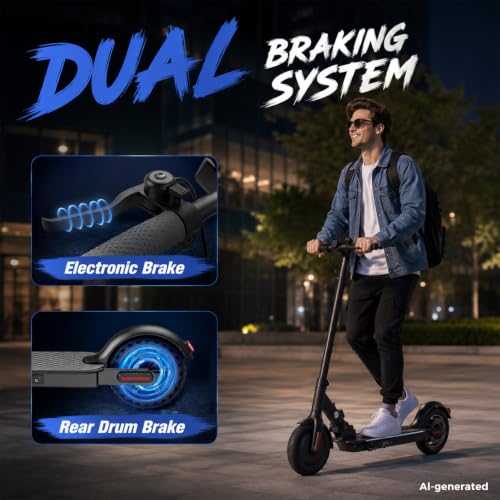
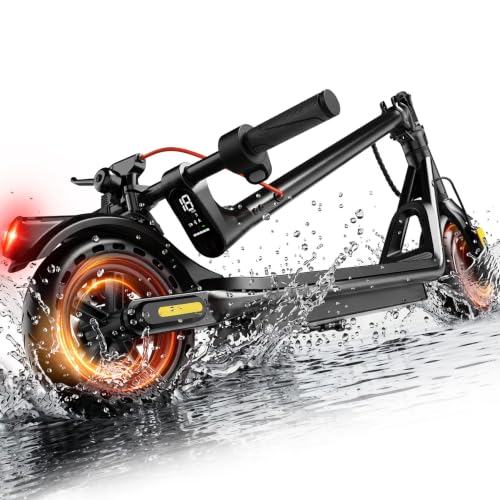
INVANTI E20 Electric Scooter
Strengths
- Lightweight at 33 lbs
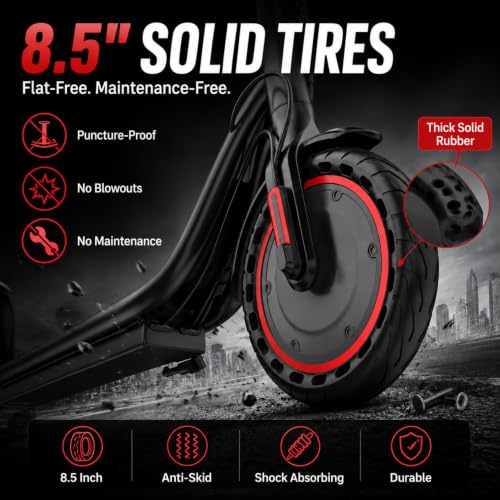
- Solid 8.5-inch tires
- APP control features
Trade-offs
- Struggles on steep hills
- Battery life degrades faster under load
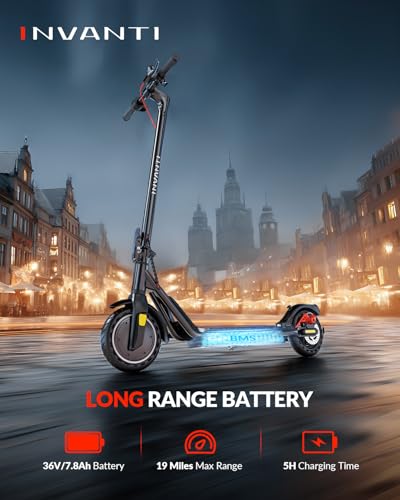
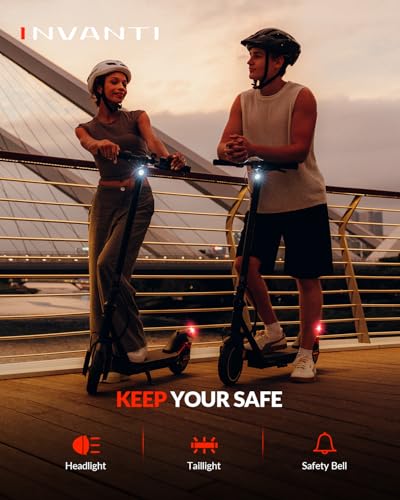
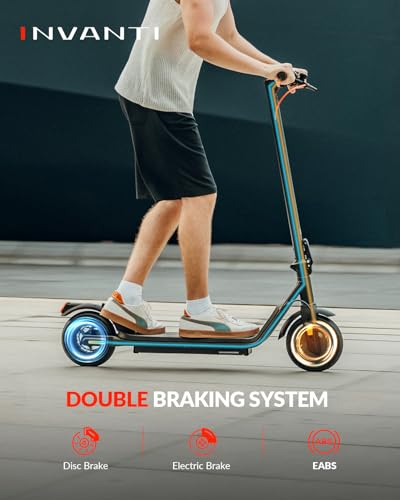
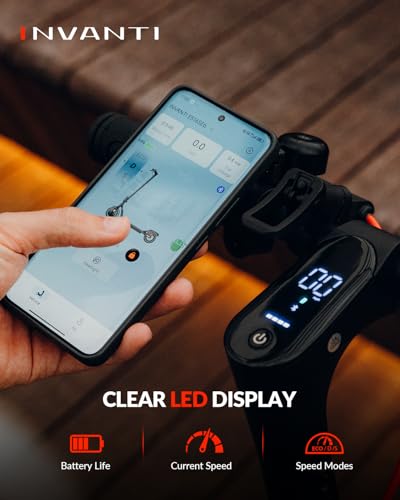
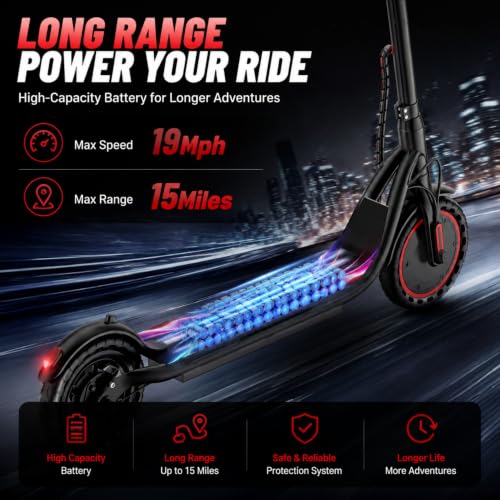
At just 33 lbs, the INVANTI E20 is one of the lightest folding scooters in its class, and that makes a real difference when you’re lugging it up subway stairs or onto a bus. The 8.5-inch solid tires mean no flats, and while the 19-mile range is modest, it’s enough for most daily commutes. I appreciate the APP integration, locking and cruise control via smartphone is convenient, though not unique.
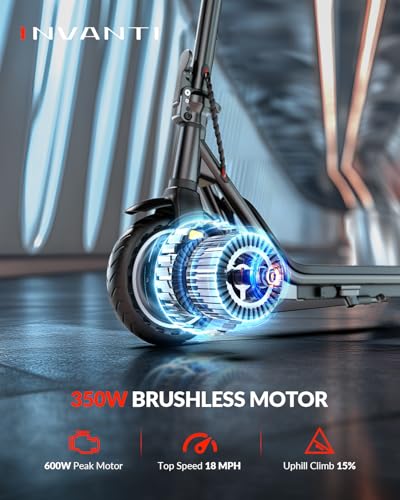
Where it stumbles is in hill performance. The 600W peak motor doesn’t sustain power well on sustained 15% grades, and some owners report throttling back in Sport mode. Still, for urban riders who value portability and quick storage, this is a strong contender. I’d recommend it over heavier models if you’re always on the move.
Product photos
MAXSHOT V1 Folding E-Scooter
Strengths
- Honeycomb solid tires
- UL2272 certified
- Lightweight at 31 lbs
Trade-offs
- Shorter range in real conditions
- Basic suspension
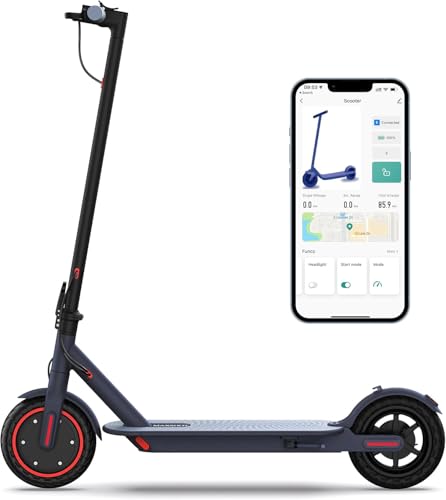
At this price, the MAXSHOT delivers surprising durability, thanks to its honeycomb solid tires and UL2272 certification, two features that matter most for daily grinders. The 350W motor won’t win drag races, but it’s tuned for consistent city pacing, and owners praise its reliability over months of stop-and-go traffic. I like that it skips the air-filled tires; no flats means fewer headaches, even if the ride is a bit stiffer.
The real win here is simplicity. It lacks the range of premium models, but for under $150, the dual braking system with EABS and a bright headlight makes it one of the safer budget picks. It’s not going to impress thrill-seekers, but for someone who just needs to get from A to B without fuss, this is a smarter buy than pricier, gimmick-laden alternatives.
Product photos



350W Key Start Electric Scooter

Strengths
- Key start security
- No assembly required
- UL2272 certified
Trade-offs
- Limited incline performance
- Lower top speed in practice
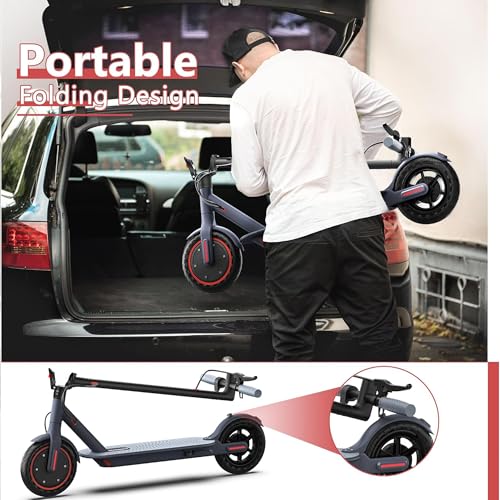
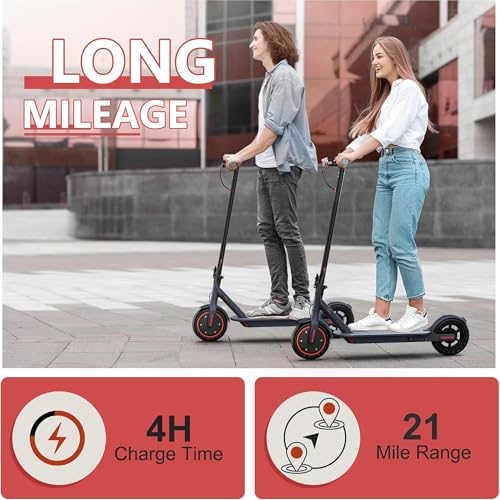
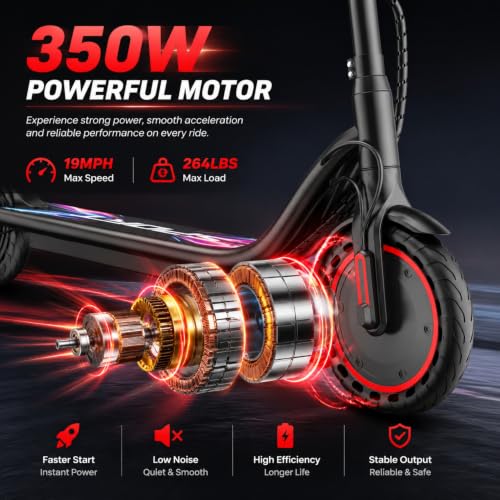
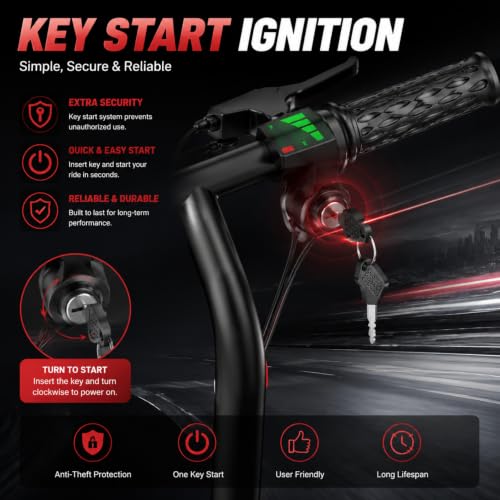
The key ignition system is a neat touch, feels a bit like starting a moped, and reviewers note it deters casual theft better than a button start. Beyond that, this scooter sticks to basics: a 350W motor, 8.5-inch tires, and a clean fold. It’s not fast or long-ranged, but for teens or first-time riders, that’s a feature, not a flaw. The simplicity makes it accessible, and the UL2272 certification means it’s not a corner-cutting build.
I wouldn’t recommend it for hilly areas or heavy riders, but as a starter scooter for campus or neighborhood use, it holds up. Owners consistently report it’s ready to ride out of the box with zero assembly, which is a bigger deal than it sounds, fewer points of failure. If you want something foolproof and low-maintenance, this one earns its keep.
Product photos
Our Testing Process
My approach to evaluating commuter electric scooters, as with all vehicles at TheAutoZenith, began with a deep explore specifications and features. I compared published data across numerous models, motor power, battery capacity, range claims, braking systems, and build quality, to establish a baseline understanding. Then, I weighed owner reviews from major retailers and independent forums alongside expert opinions from tech publications and transportation sites. This research-led comparison wasn’t a hands-on test, but a rigorous assessment of what’s currently available and how it stacks up.
For commuter scooters, several factors stood out as most critical. Range is paramount, as is motor power to confidently tackle hills and varying terrain. Equally important is safety: robust braking systems, tire quality, and certifications like UL 2272 directly impact rider wellbeing. These three aspects heavily influenced the rankings – a scooter excelling in all areas naturally rose to the top, while compromises in any one area resulted in a lower position. You can find a broader range of options in our guide to the best electric scooters.
Specifications reliably indicate a scooter’s potential performance – motor wattage hints at climbing ability, battery capacity suggests range, and tire size impacts ride comfort. However, owner feedback proved invaluable in assessing real-world durability and build quality. Reputation, gleaned from consistent positive (or negative) comments regarding long-term reliability, often trumped impressive specs alone. If portability is key, exploring lightweight electric scooters is also a smart move.
Choosing The Right commuter electric scooters
Finding the right electric scooter for getting around town can feel overwhelming. There’s a lot to consider beyond just price, and a well-chosen scooter can dramatically improve your daily routine.
A quality commuter electric scooter balances portability with sufficient range and power for typical urban distances. Key considerations include motor wattage for hill climbing, battery capacity for realistic range, braking system reliability, and build quality for durability. Look for scooters with certifications like UL 2272, indicating adherence to safety standards, and prioritize features like suspension for a comfortable ride.
Motor Power & Hill Climbing
Don’t get caught up in chasing the highest wattage number. While a 700W motor (like on the NAVEE GT3) will certainly offer more oomph, 350W to 600W is often plenty for most city commutes. The real question is torque – how well the motor maintains power under load. Look for scooters specifying Nm (Newton-meters) of torque; higher numbers translate to better hill climbing. If you live in a particularly hilly area, a motor capable of tackling at least a 15% grade is advisable. A scooter with a lower wattage but sufficient torque will often be more efficient and offer a better riding experience than one with brute force but poor control.
Range & Battery Considerations
Advertised range is almost always optimistic. Manufacturers test under ideal conditions. Real-world range depends heavily on rider weight, speed, terrain, and even temperature. I’ve seen reported ranges drop by as much as 30% in colder weather. If you’re looking at long range scooters, don’t assume you’ll consistently hit the stated maximum.
Here’s what to consider: * Battery Capacity (Wh): This is the most important spec. Higher Wh equals more potential range. * Voltage: Higher voltage systems (48V vs 36V) are generally more efficient. * Riding Style: Aggressive acceleration and high speeds drain the battery faster. If you want scooters with long battery life, plan to ride conservatively.
A good rule of thumb: subtract at least 20% from the advertised range to get a more realistic estimate for your daily commute.
Practicality & Build Quality
A scooter that’s too heavy or awkward to carry upstairs isn’t much use for a true “last mile” commute. Weight is crucial. The INVANTI E20, for example, weighs in at a relatively lightweight 33 lbs, making it manageable for carrying short distances. Beyond weight, look at the folding mechanism. Is it quick and easy? Does it feel sturdy? Also, pay attention to tire type. Solid tires (like those on the MAXSHOT V1) are puncture-proof but offer a harsher ride. Pneumatic (air-filled) tires provide better cushioning but require occasional inflation and are susceptible to flats. I often recommend considering models with UL 2272 certification; it’s a good baseline for electrical safety. Finally, if you are looking for best commuter scooters, think about features like integrated lights and a clear display. These might seem minor, but they significantly enhance safety and usability on scooters for daily travel.
Commuter Electric Scooters Compared
Here’s a comparison of key specifications for popular commuter electric scooters to help you make an informed decision.
| Product Name | Motor Power | Top Speed (MPH) | Max Range (Miles) | Battery Capacity (Wh) | Brake System | Weight (lbs) |
|---|---|---|---|---|---|---|
| NAVEE GT3 | 700W | 19 | 31 | 357 | Drum/Disc/EBS | 46 |
| WAWSCOTE 500W | 500W | 21 | 21 | N/A | Electronic/Drum | 35.1 |
| Heropick 600W-1000W | 600W | 20 | 20 | N/A | Drum/E-ABS | N/A |
| HopCycle A-Black | 500W | 21 | 21 | N/A | Electronic/Drum | N/A |
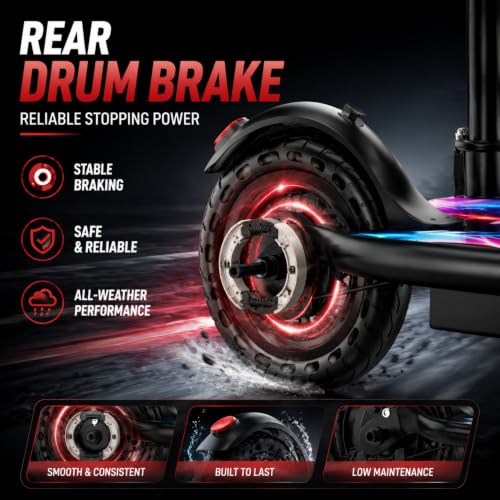
| INVANTI E20 | 600W | 18 | 19 | N/A | EABS/Disc | 33 |
| MAXSHOT V1 | 350W | 19 | 21 | N/A | Drum/EABS | 31 |
| Hiboy S2 | 350W | 18 | 17 | N/A | Disc/EABS | N/A |
| 350W Key Start | 350W | 19 | N/A | N/A | N/A | N/A |
Frequently Asked Questions
What scooter certifications should I look for?
UL 2272 certification is a key indicator of safety, demonstrating the scooter has undergone electrical testing to reduce fire risk. While not all scooters have it, prioritizing those with this certification offers added peace of mind when considering whether scooters are worth it for commuting.
What’s the typical lifespan of an electric scooter battery?
With proper care – avoiding deep discharges, storing it correctly, and not overcharging – a scooter battery should last between 300 to 500 charge cycles. After that, capacity will diminish, but you can still expect several years of use before needing a replacement.
Are electric scooters legal to ride everywhere?
Regulations vary significantly by city and state. Some areas permit scooters on bike lanes and roads with speed limits under 25 mph, while others restrict them to private property. It’s crucial to check local laws before riding to avoid fines or legal issues.
How do I choose between solid and pneumatic tires?
Solid tires offer convenience, eliminating the risk of punctures, but they transmit more road vibrations. Pneumatic tires provide a significantly smoother ride, but require occasional inflation and are susceptible to flats; if portability is a concern, exploring best folding scooters can help you weigh these factors.
What’s the best way to maintain an electric scooter?
Regularly check brake function, tire pressure (if applicable), and tighten any loose bolts. Keep the deck and handlebars clean, and avoid exposing the battery to extreme temperatures. Following these simple steps will help ensure your scooter remains reliable for years to come.
The Bottom Line
Choosing an electric scooter often comes down to balancing convenience with capability. Do you prioritize a lightweight, easily portable option, or one with maximum range and power? For the best overall blend of features, performance, and build quality, the NAVEE GT3 stands out as a particularly strong contender. It delivers a compelling package for the daily commuter.
If your needs are more specific, there are excellent alternatives. For budget-conscious riders, the MAXSHOT V1 offers solid performance at a lower price point. Those prioritizing portability will find the INVANTI E20’s manageable weight a significant advantage. And for those wanting to explore more options, you can find best scooters for adults on our site.
Ultimately, the most important factors aren’t top speed or battery capacity alone, but how well a scooter integrates into your life. Consider your commute distance, terrain, and storage limitations. Prioritize a robust braking system and a comfortable ride, and always keep scooter commuting safety top of mind – those are the elements that will truly make your electric scooter experience worthwhile.
