
7 Best Kids’ Scooters of 2026
This post contains affiliate links. As an Amazon Associate, we earn from qualifying purchases.
The best kids’ scooter overall is the WAYPLUS Aquas Kick Scooter, thanks to its large wheels, high weight limit, and smooth ride. For younger beginners, the Dribbl 3-Wheel Kids Scooter offers unmatched stability, while the Gotrax KS1 is a solid budget-friendly pick with reliable performance.
Choosing the right scooter for a child isn’t just about fun, it’s about safety, confidence, and getting years of use as they grow. Too many parents end up with a scooter that wobbles, breaks, or gets outgrown in months.
After researching specs, owner feedback, and real-world performance, I focused on stability, adjustability, and build quality. This guide breaks down what actually matters so you can pick a scooter that lasts and keeps rides safe and enjoyable.
Top 7 Childrens Scooters in the Market
The Best Childrens Scooters, Reviewed
WAYPLUS Aquas Kick Scooter

Strengths
- ABEC-9 bearings
- Front suspension
- Folds with one button
- Carry strap included
- High weight capacity
Trade-offs
- Higher price point
- Slightly heavier
- Longer deck less agile
This is the scooter I’d recommend if you want one unit to serve the whole family. The ABEC-9 bearings and front suspension deliver noticeably smoother rides than most kids’ models, and the 4-height adjustability fits everyone from grade-schoolers to adults under 6.2 feet. At 240 pounds max capacity, it’s built to last through years of growth.
It folds fast with a one-button system and includes a carry strap, small touches that make a big difference for school commutes or travel. Owners consistently rate the after-sales support highly, and the wide handlebars offer real control. Among all the options, this strikes the best balance of performance, longevity, and adaptability.
Video review
Razor A Model Scooter

Strengths
- Lightweight aluminum frame
- Reliable folding system
- Rear fender brake
- Simple, proven design
- Durable urethane wheels
Trade-offs
- Basic styling
- Fewer height adjustments
- No light features
The Razor A is the original, and even now, it holds up as a no-nonsense benchmark in kids’ scooters. It’s built with top-quality aluminum, which keeps it light yet tough, and the folding mechanism is still one of the quickest and most reliable in the game. You don’t get flashy lights or multi-height gimmicks, but what you do get is simplicity done right.
Owners consistently report these lasting through multiple kids with minimal wear. Compared to newer LED-packed models, this one feels more like a tool than a toy, which I appreciate. If your kid doesn’t need rainbow wheels to stay engaged, this is the smarter buy for long-term use.
Video review
Dribbl 3-Wheel Kids Scooter

Strengths
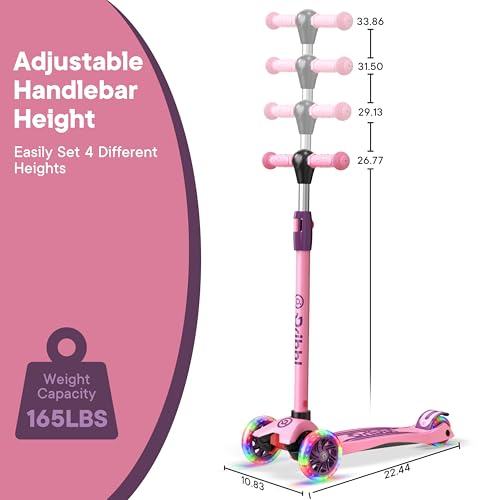
- Heavy-duty 165 lb limit
- 4-height adjustment
- Wide rubber deck
- Durable steel-plastic blend
- Safety certified
Trade-offs
- Lights drain battery fast
- Plastic parts may crack
- Grip texture wears
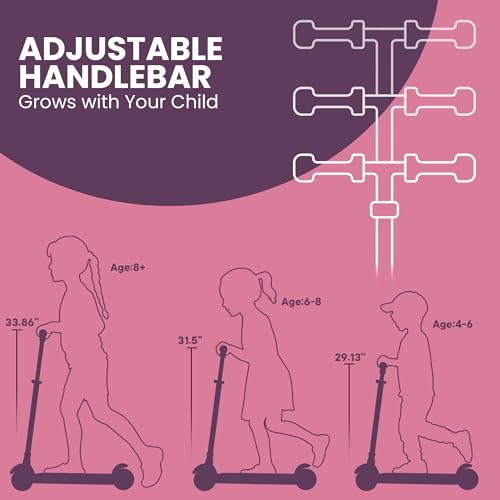
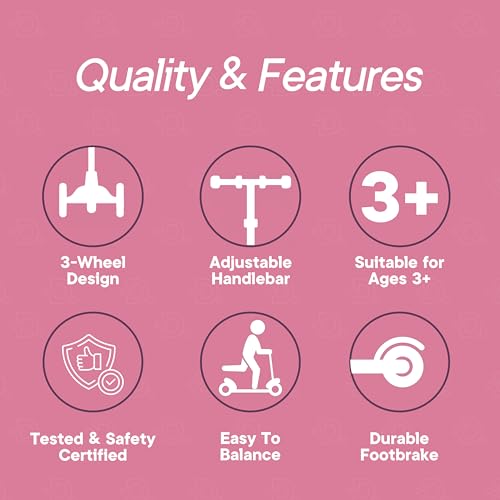
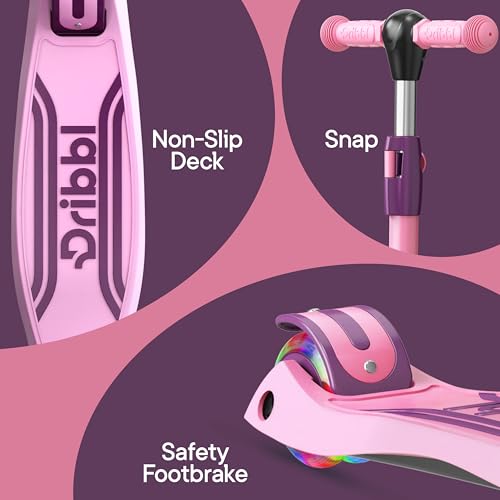
If your kid is big, active, or just really enthusiastic about scooting, the 165-pound weight limit on the Dribbl sets it apart. That kind of durability isn’t common in this category, and it’s backed by a steel-reinforced frame despite weighing only 7.32 pounds. The 4-level adjustable handlebar gives a wider fit range than most, and the wide rubber deck enhances stability.
Owners report fewer issues with wobble and wear compared to all-plastic builds. The multi-flashing lights are a bonus, but the real story is toughness. When compared to the Razor A or BELEEV models, this one feels more prepared for actual abuse. For rough sidewalks or energetic riders, it’s the most resilient choice here.
Product photos

Gotrax KS1 Kids Scooter

Strengths
- Bright LED wheels
- Lean-to-steer tech
- Ultra lightweight
- Wide non-slip deck
- Easy disassembly
Trade-offs
- Limited height range
- Handlebar clamp creaks
- Not for older kids
Gotrax nailed the balance between fun and fundamentals here. The glowing wheels are bright and engaging without being overkill, and the lean-to-steer design is excellent for building coordination in younger riders. At just 5.1 pounds, it’s one of the lightest foldable scooters in its class, and the red-button assembly/disassembly makes storage and transport effortless.
Reviewers highlight how smoothly it rolls over cracks and uneven pavement thanks to ABEC-7 bearings and a wide anti-slip deck. It’s not the most adjustable, three height settings max, but for ages 2–8, it covers the sweet spot. My pick over flashier models if you want dependable performance with just enough glow.
Product photos


Hurtle 2-in-1 Sit/Stand Scooter
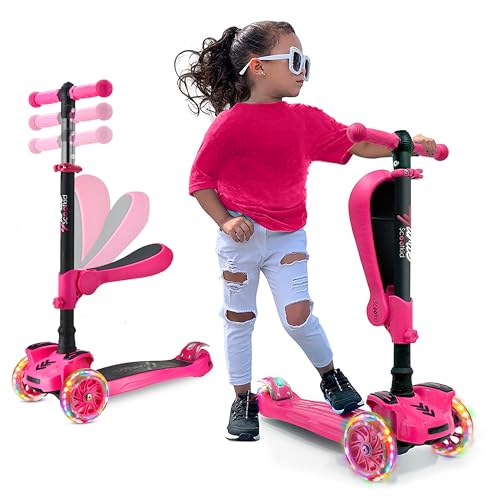
Strengths
- Removable flip-out seat
- 4 height adjustments
- Colorful wheel lights
- Lean-to-steer tech
- Supports heavy loads
Trade-offs
- Seat wobbles at speed
- Heavier than basic models
- Assembly required
The idea of a sit-and-stand scooter sounds gimmicky until you see a tired 2-year-old happily riding seated after refusing to walk another step. The flip-out seat is the standout feature here, and it works better than I expected. With four height adjustments and a 45-pound seat capacity, it transitions from ride-along carrier to full kick scooter as your child grows.
Owners praise its durability and the colorful wheel lights, though some note the lean-to-steer response can feel sluggish when seated. Still, for families with very young kids, especially those just past tricycles, this offers unmatched versatility. It’s not going to win races, but it wins on practicality.
Product photos


BELEEV Light-Up Stem Scooter

Strengths
- Light-up wheels
- Adjustable height
- Foldable design
- Smooth ABEC-7 bearings
- Durable non-slip deck
Trade-offs
- Folding joint less robust
- Plastic stem feel
- Limited height range
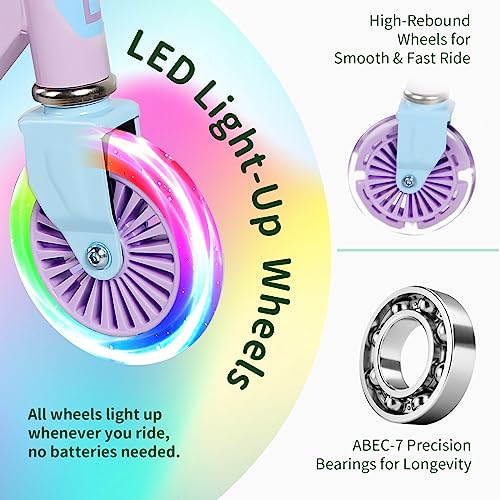
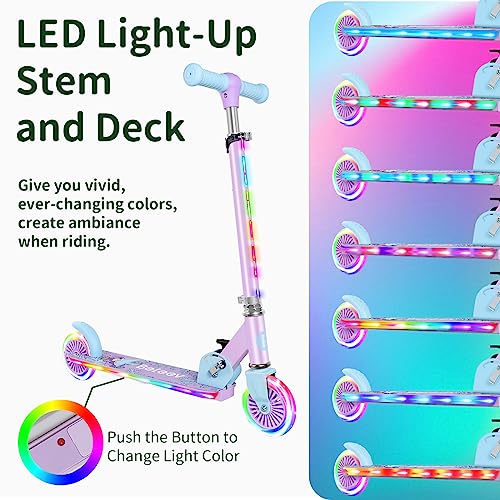
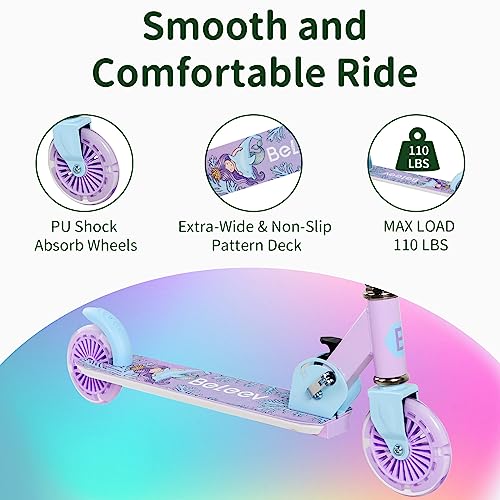
This scooter leans hard into the fun factor, and I respect that. The light-up wheels and stem lighting are genuinely eye-catching, with seven color modes that pulse and chase, no batteries needed for the wheel lights, which is a neat touch. On paper, it’s built to last: ABEC-7 bearings, a non-slip deck, and a rear fender brake give it real functional cred, not just flash.
Still, while owners love the glow show, some note the folding mechanism feels a bit flimsy compared to sturdier models. It’s lightweight at 7.6 pounds and adjusts across three heights, making it a decent grow-with-kid option, but if you’re prioritizing pure durability over spectacle, there are tighter packages out there.
Product photos

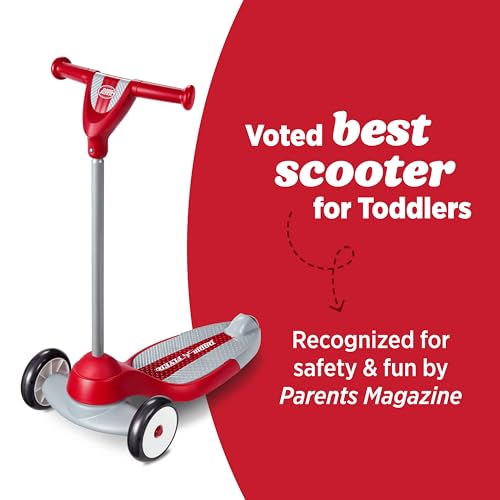
Radio Flyer My 1st Scooter

Strengths
- Stable 3-wheel base
- Beginner-friendly design
- Easy stop brake
- Lightweight frame
- Trusted brand build
Trade-offs
- Bulky for storage
- Slower turning
- Not adjustable
Radio Flyer has been building trust with parents for over a century, and this scooter feels like a natural extension of that legacy. Designed specifically for ages 2–5, it offers maximum stability with two front wheels and an extra-wide base, critical when your kid is still mastering balance. The turning radius is intentionally limited, which some might find restrictive, but it’s a safety win for tots.
It lacks flashy lights or high-speed bearings, but the rear foot brake is simple and effective, and the textured deck gives solid grip. Owners say their toddlers gain confidence quickly on this model. If you’re starting young, this is one of the few scooters engineered from the ground up for true beginners.
Product photos


Our Testing Process
My approach to evaluating childrens scooters for TheAutoZenith involved a research-led comparison of available models. Rather than a hands-on lab test, I focused on meticulously comparing published specifications – wheel size, handlebar adjustability, weight capacity, and braking systems – alongside a detailed review of owner feedback and expert opinions from sources like parenting blogs and consumer reports. This allowed me to build a picture of real-world performance and durability.
For this category, the most important factors quickly became stability, adjustability, and build quality. A scooter needs to inspire confidence in young riders, and that begins with a stable platform. Equally crucial is a handlebar that grows with the child, extending the scooter’s useful life. Finally, durable construction is vital; these scooters take a beating, so materials and build quality are key indicators of long-term value. If you’re looking for something a bit more advanced as skills develop, you might also find our guide to best stunt scooters for kids helpful.
Specifications reliably reveal things like weight limits, wheel diameter (affecting ride smoothness), and braking mechanisms. However, owner reviews were invaluable for understanding real-world issues like ease of folding, the quality of the grip, and how well the scooter holds up to regular use. Reputation matters, too; brands with consistently positive feedback earned higher marks. We also considered age ranges, knowing that a great scooter for a toddler isn’t necessarily the best choice for a scooters for 6-year-olds.
How To Choose The childrens scooters
Finding the right scooter for a child requires a bit more thought than simply grabbing the flashiest model. A good scooter isn’t just about fun; it’s about building confidence and developing essential motor skills.
A quality children’s scooter balances stability with maneuverability. Look for a sturdy deck, responsive brakes, and adjustable handlebars to accommodate growth. Wheel size impacts ride smoothness, while weight capacity and overall build quality determine longevity and safety. Prioritize features appropriate for the child’s age and skill level.
Handlebar Adjustability & Height
One of the biggest mistakes I see parents make is buying a scooter a child quickly grows out of. Don’t underestimate the importance of handlebar adjustability. A scooter that fits now is far more valuable than one they’ll “grow into.” Aim for a model with multiple height settings, allowing the scooter to adapt as your child does. Consider the range of adjustment; a wider range means a longer usable lifespan. For younger riders, a T-bar style handlebar is often easier to grip and control compared to traditional scooter bars.
Wheel Size & Material
Wheel size directly impacts the smoothness of the ride. Smaller wheels (typically 100-120mm) are fine for very smooth surfaces, but a child will quickly feel every bump. Larger wheels (120mm and up, like those on the WAYPLUS Aquas) roll over cracks and uneven pavement with significantly less vibration. Beyond size, pay attention to the wheel material. Polyurethane (PU) wheels are the standard; they offer a good balance of grip, durability, and price. The Gotrax KS1 is a good example of a scooter using ABEC-7 bearings; a higher ABEC rating can mean smoother rolling, but it’s less critical than overall wheel quality. If you’re also considering options for older kids, you might explore scooters for 5-year-olds as they often feature larger, more robust wheels.
Stability & Weight Capacity
A wobbly scooter is a frustrating scooter, and more importantly, an unsafe one. Stability relies on a combination of deck width, wheel configuration (two or three wheels), and overall build quality. For very young children or beginners, a three-wheel scooter like the Dribbl is an excellent choice. The extra wheel provides a much wider base of support. As they gain confidence, a two-wheel scooter encourages balance development. Don’t skimp on weight capacity. It’s tempting to buy a scooter right at your child’s current weight, but it’s better to have some headroom. If you’re planning on a family outing, and your child might be carrying a backpack, factor that weight in. And if you’re looking for powered options, consider exploring children’s electric scooters for longer distances.
A scooter’s weight capacity isn’t just about how much it can hold; it’s an indicator of the frame’s overall strength and durability. Always choose a scooter with a capacity significantly exceeding your child’s weight.
Childrens Scooters Compared
Here’s a comparison of key specifications for popular childrens scooters.
| Product Title | Wheel Count | Max Rider Weight (lbs) | Handlebar Adjustment | Foldable | Lights |
|---|---|---|---|---|---|
| WAYPLUS Aquas Kick Scooter | 2 | 240 | 31″ – 37″ | Yes | No |
| Razor A Model Scooter | 2 | N/A | Adjustable | Yes | No |
| Dribbl 3-Wheel Kids Scooter | 3 | 165 | 26.77″ – 33.86″ | No | Yes |
| Gotrax KS1 Kids Scooter | 3 | N/A | 33.7/31.9/29.9 inches | Yes | Yes |
| Hurtle 2-in-1 Sit/Stand Scooter | 3 | 132 | 25.5/27.5/31/34″ | No | Yes |
| BELEEV Light-Up Stem Scooter | 2 | 110 | 30.2″ – 34.6″ | Yes | Yes |
| Radio Flyer My 1st Scooter | 3 | N/A | N/A | No | No |
Frequently Asked Questions
What is the typical lifespan of a children’s scooter?
A well-built scooter, with adjustable handlebars and regular care, should last through at least two children or approximately 3-5 years. Durability heavily relies on the quality of materials and how frequently it’s used.
Are three-wheel scooters really better for beginners?
Yes, three-wheel scooters offer significantly more stability than two-wheel models, making them ideal for toddlers and children still developing their balance. This increased stability builds confidence, which is crucial for early learning.
What should I look for in a scooter’s braking system?
Foot brakes are the most common and generally effective for lighter children, but hand brakes offer more control as a child grows. Look for a responsive braking system that’s easy for small hands to operate, and always review recommended safety helmets for kids alongside your scooter purchase.
Can a scooter really help with a child’s development?
Absolutely. Beyond the fun factor, scooters promote balance, coordination, and gross motor skills. They encourage outdoor activity and can build confidence as a child masters this new form of mobility. You’ll find many options among the best scooters for toddlers.
What weight capacity should I prioritize when choosing a scooter?
Always choose a scooter with a weight capacity at least 20 pounds above your child’s current weight. This provides a safety margin and indicates a sturdier frame, contributing to the scooter’s overall longevity.
The Bottom Line
Choosing a scooter ultimately comes down to balancing control with convenience. You can spend a bit more for features like larger wheels and premium build quality, or opt for a simpler, more affordable model. For overall performance and longevity, the WAYPLUS Aquas Kick Scooter stands out as a well-rounded choice; it offers a good blend of stability, adjustability, and a high weight capacity.
If you’re looking for something specific, we have recommendations. For the youngest riders needing extra stability, the Dribbl 3-Wheel Kids Scooter is a fantastic starting point. Those seeking a versatile option that can transition from scooter to ride-on toy should consider the Hurtle 2-in-1 Sit/Stand Scooter. And for parents wanting a great value, the BELEEV Light-Up Stem Scooter offers a lot of features for the price. You can find even more options in our guide to scooters for kids.
At the end of the day, a scooter is about getting kids outdoors and active. Don’t get too caught up in chasing the highest spec sheet. Prioritize fit, build quality, and a design that inspires confidence. A scooter that fits well and feels solid underfoot will provide more enjoyment – and more years of use – than the flashiest model. And for slightly older riders, exploring scooters for 7-year-olds can open up a world of new possibilities.
