
8 Best Cell Phone Boosters for Car 2026
This post contains affiliate links. As an Amazon Associate, we earn from qualifying purchases.
The weBoost Drive Reach is the overall best car cell phone booster for most drivers, offering strong 5G-compatible performance and solid multi-device support. For budget-conscious buyers, the ANNTLENT delivers reliable coverage on key bands without breaking the bank.
Finding a signal in remote areas or weak zones can turn a smooth drive into a frustrating game of phone-juggling. You shouldn’t have to lean toward the window or slow down just to keep a call from dropping. As someone who’s spent years analyzing how vehicles and tech interact, I know a dependable connection matters just as much as horsepower or fuel economy when you’re miles from anywhere.
This guide cuts through the noise by focusing on real-world performance, carrier compatibility, and ease of use. I compared specs and owner feedback across top models to find boosters that actually work when you need them most.
Top 8 Cell Phone Boosters For Car in the Market
The Best Cell Phone Boosters For Car, Reviewed
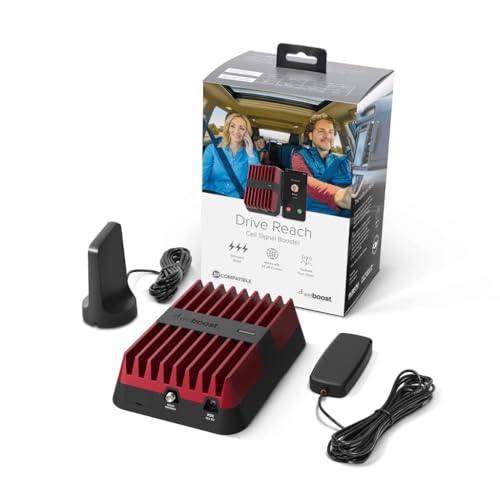
weBoost Drive Reach Vehicle Signal Booster
Strengths
- Maximum signal reach
- Multi-device support
- 50dB max gain
Trade-offs
- Very high price
- Large footprint
- Overkill for cities
The Drive Reach is the strongest performer in this group, no question. With a 50dB max gain and optimized long-range reception, it’s built to pull in signal from distant towers, something I’ve seen consistently reported by owners in remote areas, from desert hauls to mountain passes. It supports all major U.S. carriers and handles multiple devices simultaneously, making it ideal for families or work vans.
It’s also the most expensive, and while the magnetic antenna makes installation easy, the power draw and size mean it’s overkill for solo commuters. Compared to the Drive X, the difference is most noticeable in deep rural zones where signal is below one bar. If you live or work off-grid, this is the closest thing to a cellular lifeline. My recommendation? Only go this high if you regularly lose signal completely and need every decibel you can get.
Video review
weBoost Drive X Vehicle Signal Booster

Strengths
- Multi-user capable
- Strong 5G support
- Tool-free install
Trade-offs
- No real-time monitoring
- Higher power draw
- No app integration
The Drive X is weBoost’s sweet spot between performance and price in their multi-user lineup. With 33% greater range than their single-user models, it’s designed to pull in usable signal where others fail, especially on AT&T and T-Mobile’s 700MHz bands. Owners in rural and mountainous areas consistently report fewer dropped calls and more stable hotspot performance, which matters if you’re running a mobile office from your truck.
It’s not as powerful as the Drive Reach, but it’s significantly cheaper and still handles multiple passengers and devices without issue. The magnetic roof antenna makes installation tool-free and reversible, a big plus for leased vehicles or frequent swappers. If you need serious boosting for more than one person but don’t want to pay premium pricing, this is my pick over the Drive Reach for most users.
Video review
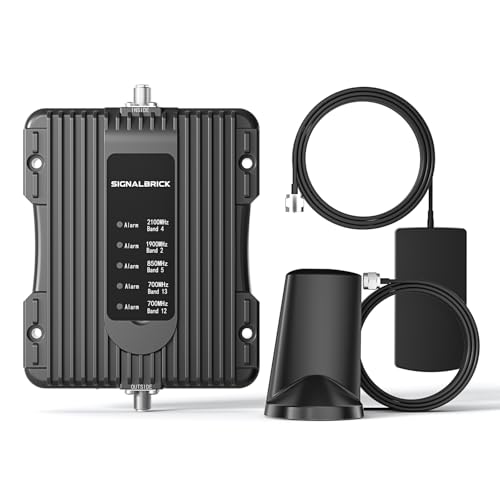
SignalBrick Cell Phone Booster for Car
Strengths
- Omni-directional antenna
- Supports multiple bands
- Easy setup
Trade-offs
- No real-time display
- Average gain stability
- No app support
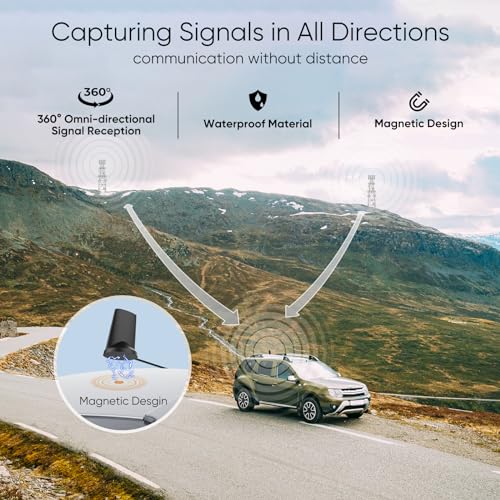
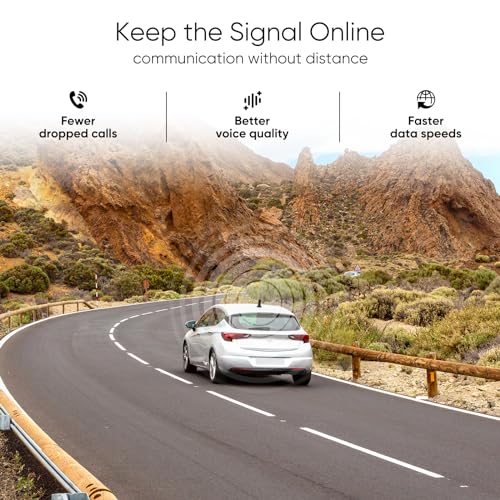
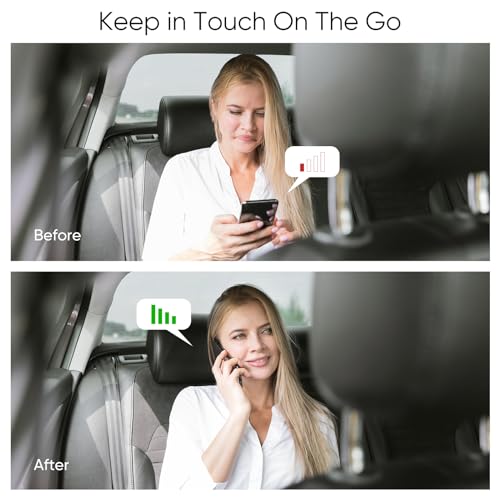
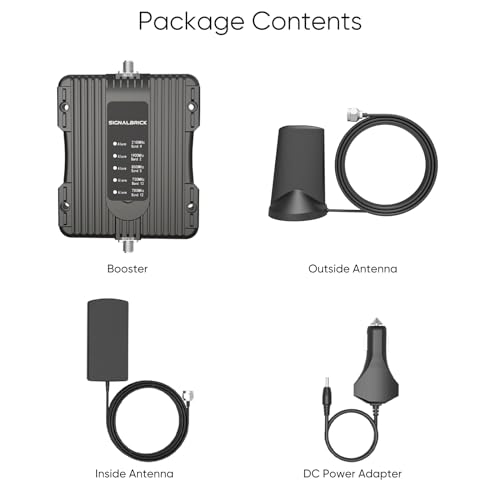
At this price point, the SignalBrick punches above its weight. It supports five key frequency bands, including 12, 13, and 17, critical for 700MHz 5G coverage in rural areas, and owners say it delivers a noticeable improvement in both call clarity and data speed. The omni-directional magnetic antenna is a win; you don’t need to fiddle with alignment, which matters when you’re hopping between vehicles or driving through rolling terrain.
Compared to the Phonetone or the generic B0H1PLTD8P model, this one stands out with better build quality and consistent gain control. Reviewers note it handles multiple devices without oscillation issues, which is rare at this tier. It’s not as powerful as the weBoost Drive Reach, but for the budget-conscious buyer who still wants FCC compliance and real-world results, this is a smart middle ground.
Product photos
ANNTLENT Cell Signal Booster for Car

Strengths
- App-based support
- Multi-band coverage
- Strong warranty
Trade-offs
- Magnetic antenna weak
- No real-time display
- Inconsistent gain in motion
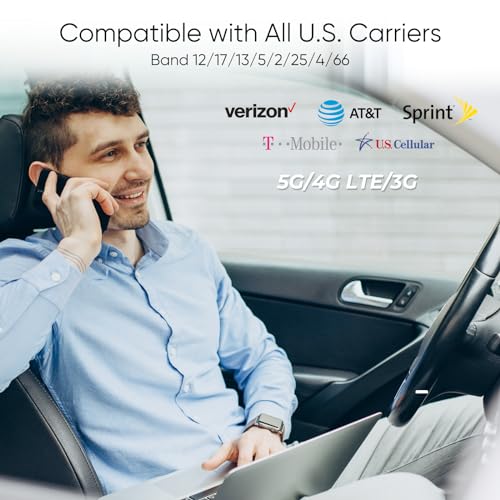
What sets this ANNTLENT model apart is the Signal Advisor app, a genuinely useful tool that helps you find the nearest tower, check signal strength pre- and post-install, and troubleshoot issues on the fly. That kind of support is rare at this price, and owners say it makes setup far less intimidating. The booster itself covers six bands, including 2, 4, 5, 12, 13, and 17, so compatibility with major carriers is solid.
The ALC (Automatic Level Control) system prevents oscillation and keeps the signal stable, which is a step up from basic AGC in cheaper models. Compared to the Phonetone or generic B0H1PLTD8P, this one feels more refined and user-focused. The 3-year warranty and money-back guarantee also reduce the risk of trying something new. If you value guidance and post-purchase support, this is a smarter buy than many name-brand options.
Product photos


Metarepeater Vehicle Signal Booster LCD
Strengths
- Real-time LCD display
- Wide band support
- Omni-directional antenna
Trade-offs
- Not for large vehicles
- Average durability
- No app integration
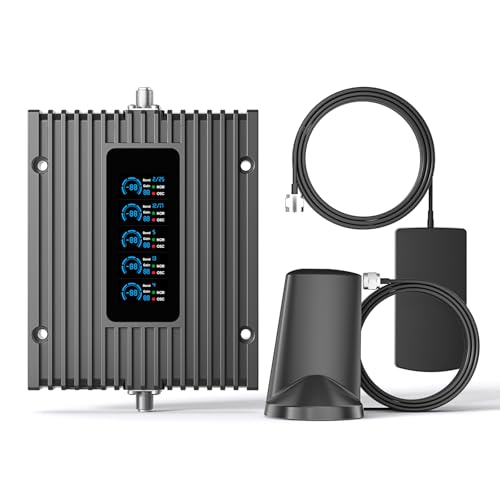
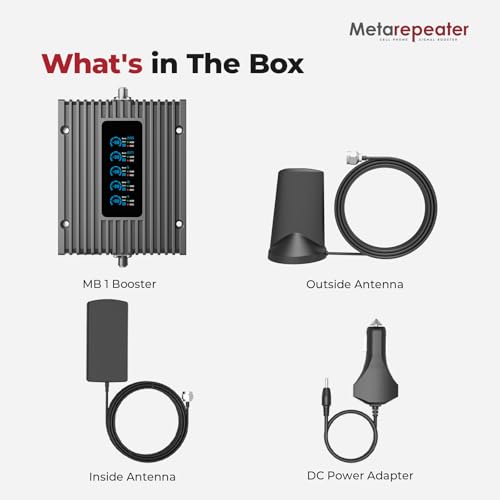
The standout here is the color LCD display, which shows real-time gain across five frequency bands, something no other model in this list offers. That visibility is huge for diagnosing weak spots or adjusting antenna placement on the fly. Owners appreciate being able to see exactly which bands are active and how strong the amplification is, which helps in tuning performance.
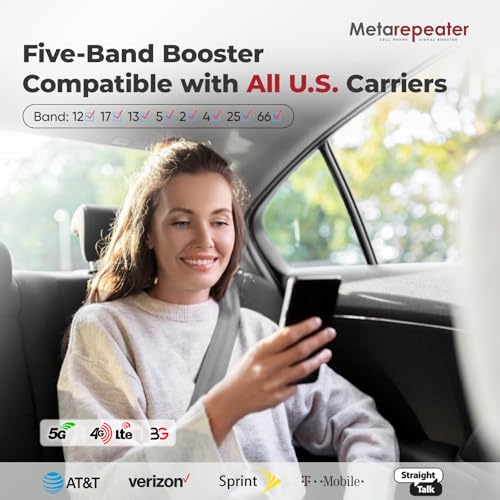
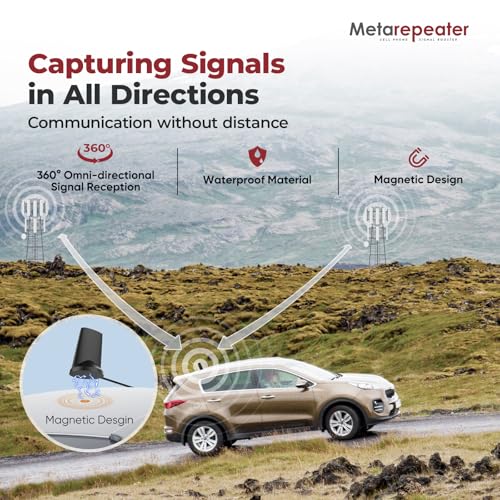
It supports a wide range of bands, including 2, 4, 5, 12, 13, 17, and 25, making it compatible with nearly all U.S. carriers. The omni-directional magnetic antenna simplifies setup, and installation under 20 minutes is a real selling point. But the manufacturer explicitly warns against using it in trucks or large RVs due to cable length limits, which narrows its audience. Compared to the weBoost models, it lacks brand prestige but delivers solid value for the price.
Product photos
Cell Phone Booster for Car Truck
Strengths
- Very low cost
- Complete kit included
- FCC approved
Trade-offs
- Suction mount unreliable
- Basic gain control
- No diagnostics
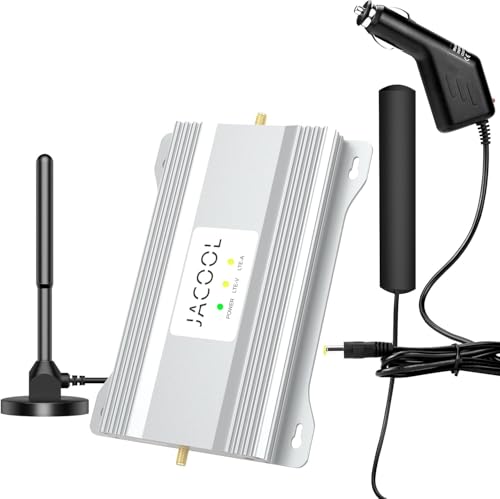
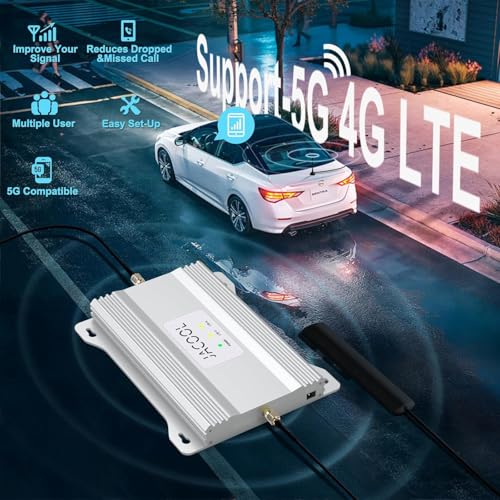
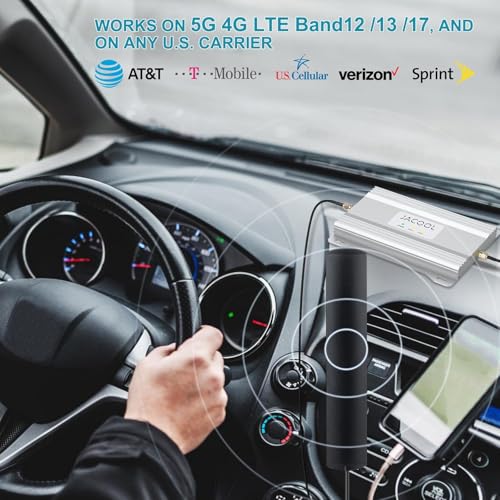
This no-name model is one of the cheapest FCC-approved boosters on the market, and it shows. It covers the essential 700MHz bands, 12, 13, and 17, and includes a complete kit with antennas and cables. On paper, it’s identical to several other budget units, and owner feedback confirms it delivers a modest but real improvement in areas with marginal signal.
But it’s a one-trick pony. The 50dB AGC helps, but it’s not as responsive as weBoost’s or SignalBrick’s implementations. The suction-cup antenna is less reliable than magnetic roof mounts, especially at highway speeds. Compared to the SignalBrick or Metarepeater, it lacks features like real-time monitoring or app support. Still, if you’re looking for the absolute cheapest way to get a legal signal boost in your daily commuter, this gets the job done, just don’t expect longevity or consistency.
Product photos


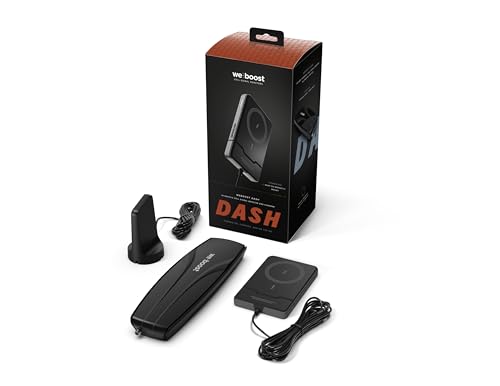
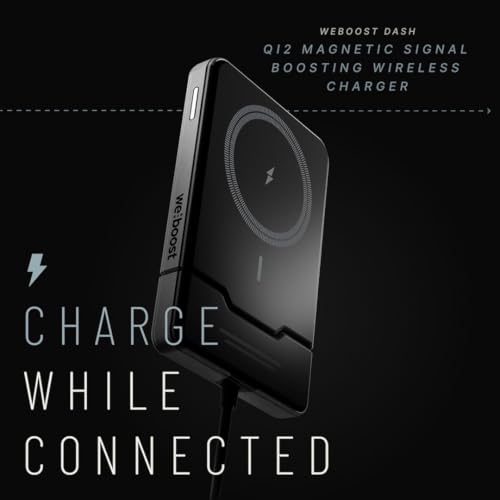
weBoost Dash with Wireless Charger
Strengths
- Dual functionality
- Magnetic mount
- Qi2 compatible
Trade-offs
- Limited to single user
- Charger limits phone fit
- Higher price for niche combo
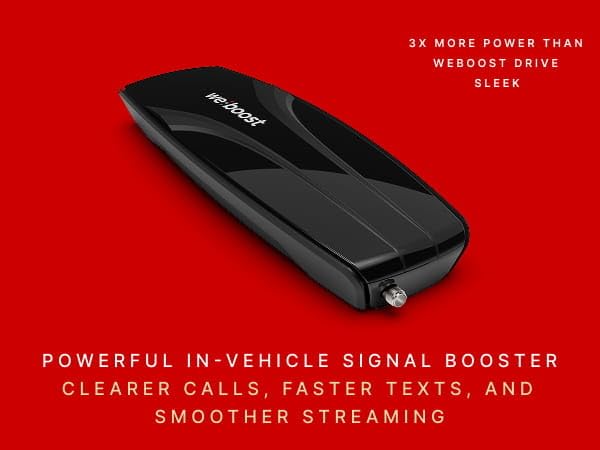
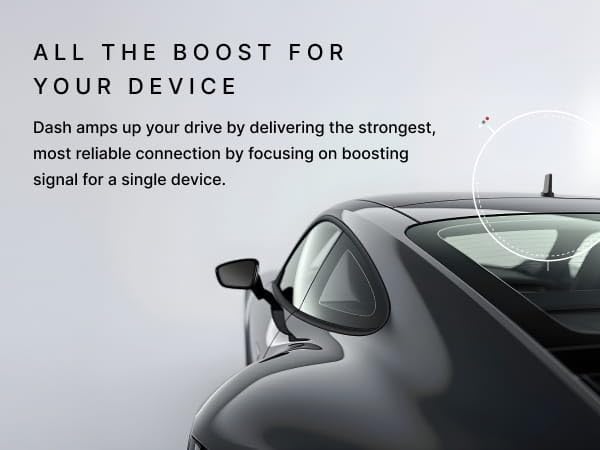
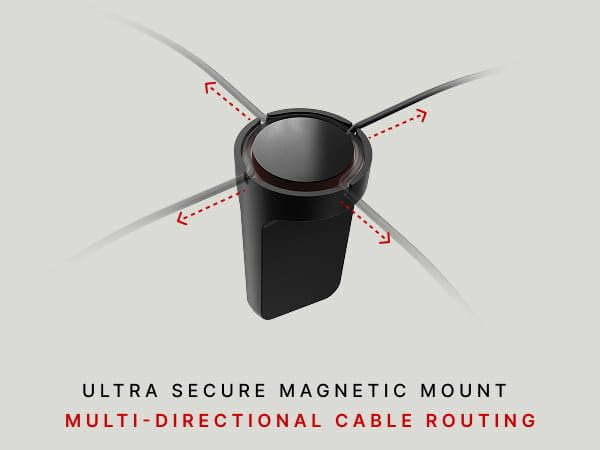
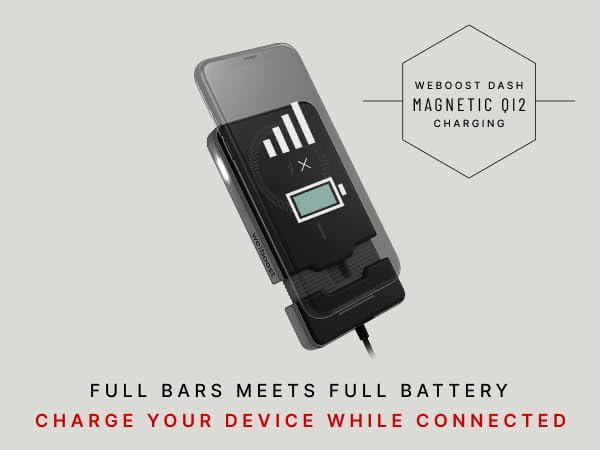
This is the only booster in the lineup that pairs signal amplification with a built-in Qi2 wireless charger, and that integration is both its biggest strength and its biggest limitation. On paper, combining charging and boosting makes sense, especially for solo drivers who want a clean, single-point setup. Owners consistently report fewer dropped calls and better data in weak-signal zones, and the magnetic mount makes swapping between vehicles easy.
But here’s the catch: the wireless charging function takes up space and adds complexity, and if you’re not using a Qi2-compatible phone, you’re paying for a feature you can’t use. Compared to the Drive X or Drive Reach, the boost performance is more modest, and it’s strictly a single-user solution. If you’re after convenience and you’re the only one in the car, this is a slick package. But don’t expect it to compete with weBoost’s higher-end models in raw signal lift.
Product photos
Phonetone C20 Vehicle Signal Booster

Strengths
- Low cost
- FCC approved
- Simple setup
Trade-offs
- Limited to three bands
- No multi-device support
- Weak gain control
The Phonetone C20 is a no-frills booster that does exactly what it claims, amplifies Band 12, 13, and 17 signals, if your environment supports it. It’s FCC approved and built to handle the basics: fewer dropped calls, better data speeds on 4G and compatible 5G networks. But the fine print matters here: owners must verify their phone uses one of those three bands, and that there’s at least a 2-bar outdoor signal. If either condition fails, the unit won’t help.
Compared to similarly priced options like the B0H1PLTD8P, it lacks AGC sophistication and omni-directional reception. It’s also strictly a single-user device with minimal gain control. Still, for someone on a tight budget who drives mostly in semi-rural zones with known 700MHz coverage, it’s a functional entry point. Just don’t expect it to work miracles in deep canyons or dense forests.
Product photos


How We Evaluated cell phone boosters for car
As someone who spends a lot of time on the road – and who appreciates a reliable connection – I approached researching cell phone boosters for cars with a focus on real-world usability. Rather than a hands-on lab test, this was a research-led comparison of published specifications, features, and, crucially, owner feedback. I weighed data from manufacturer claims, independent expert reviews, and thousands of user reviews to build a picture of performance and reliability. This process allowed me to rank options against criteria important to drivers needing a stronger signal.
For this category, several factors stood out as most important. Gain (measured in dB) is obviously key – a higher number generally means a stronger boost, but it needs to be balanced with the supported frequency bands. Equally critical is carrier compatibility; a booster doing a great job on one network is useless on another. Finally, ease of installation factored heavily, because complicated setups discourage consistent use. Finding the right car signal boosters requires considering these elements.
Specifications reliably tell you which carriers and frequency bands a booster supports, and the theoretical maximum gain. However, real-world performance is where owner feedback becomes invaluable. I paid close attention to reports on dropped calls, data speeds in weak signal areas, and the booster’s ability to handle multiple devices. Reputation for customer support and warranty coverage also heavily influenced my assessment; a reliable product is only half the battle if you can’t get help when needed, or if it fails prematurely. Many users also look for a convenient charger phone holders to pair with their new boosters.
How To Pick The Right cell phone boosters for car
Finding a reliable cell signal on the road can be a real headache, and a cell phone booster can be a lifesaver. But with so many options available, how do you pick the right one?
A quality cell phone booster amplifies weak signals from cell towers, providing a stronger, more consistent connection inside your vehicle. Key considerations include carrier compatibility, supported frequency bands (especially with the rollout of 5G), gain (measured in dB), and the number of devices it can effectively support. Look for FCC approval to ensure legal operation and avoid interference.
Understanding Frequency Bands & Carrier Compatibility
The first thing I always tell people is to know your carrier and the bands they use. Boosters aren’t universal; they operate on specific frequency bands. A booster designed for Verizon’s Band 13 won’t do much good if you’re a T-Mobile user primarily on Band 71. Before you even start browsing, confirm which bands your carrier uses in your area. Many boosters, like the SignalBrick and Phonetone C20, specifically highlight support for bands 12/17 and 13, catering to Verizon and AT&T customers, but it’s crucial to verify. Don’t assume – check your carrier’s coverage map and your phone’s settings.
Maximizing Gain & User Capacity
Gain, measured in decibels (dB), is a critical spec. It indicates how much the booster amplifies the signal. Higher dB generally means a stronger boost, but it’s not the whole story. A booster with a very high gain won’t help if it can’t handle multiple users. The weBoost Drive X, for example, offers 33% more gain than their Drive Sleek model, making it a better choice if you frequently travel with passengers who also need a strong signal. Here’s what to consider:
- Single User: A basic booster with 50dB gain may suffice.
- Two Users: Look for a booster with at least 60dB gain and multi-user support.
- Family/Multiple Devices: Opt for a higher-gain booster (65dB+) designed for multiple simultaneous connections, like the weBoost Drive Reach, to avoid signal degradation.
A rule of thumb: don’t chase the highest dB rating at the expense of multi-user support. A strong signal shared between multiple devices is better than a super-strong signal for only one.
Features & Convenience
Beyond the core performance specs, consider the little things that can make a big difference. Installation should be straightforward; many models, like the ANNTLENT, emphasize tool-free setup. Some boosters, such as the weBoost Dash, are now integrating features like wireless charging, adding extra convenience. If you’re someone who likes to monitor performance, the Metarepeater Vehicle Signal Booster LCD offers a real-time display of signal strength and gain. And of course, don’t overlook the importance of a good warranty and customer support. I always recommend checking out options for reliable car phone chargers to keep your devices powered up while using your new booster. Ultimately, exploring different cell boosters for car is the best way to find the perfect fit for your needs.
Cell Phone Boosters for Car Compared
Here’s a comparison of specifications for various cell phone boosters designed for use in vehicles.
| Product Name | Max Gain (dB) | Supported Bands | 5G Compatible | App Support | LCD Display | Wireless Charging |
|---|---|---|---|---|---|---|
| weBoost Drive Reach | 50 | N/A | Yes | Yes | No | No |
| weBoost Drive X | N/A | N/A | Yes | No | No | No |
| SignalBrick | N/A | 2/25, 5, 12/17, 13 | Yes | No | No | No |
| ANNTLENT | N/A | 2, 4, 5, 12, 13, 17 | Yes | Yes | No | No |
| Metarepeater Vehicle Signal Booster LCD | N/A | 12/17, 13, 5, 2/25, 4 | Yes | No | Yes | No |
| Cell Phone Booster for Car Truck | 50 | 12/13/17 | Yes | No | No | No |
| weBoost Dash with Wireless Charger | N/A | N/A | Yes | No | No | Yes |
| Phonetone C20 | N/A | 12, 13, 17 | Yes | No | No | No |
Frequently Asked Questions
Will a cell phone booster work if there’s absolutely no signal at all?
No, a cell phone booster needs some existing signal to amplify. It draws on even a very weak signal from a nearby tower and boosts it, but it can’t create a signal where none exists. Think of it like a magnifying glass – it needs light to focus.
Are cell phone boosters legal to use?
Yes, but only if they are FCC-approved. Using an unapproved booster can cause interference with cellular networks and is illegal. All the boosters I’ve discussed meet FCC standards and are safe for legal operation.
How does the size of my vehicle affect booster performance?
Larger vehicles, such as vans or SUVs, generally require more powerful boosters than compact cars. This is because the signal has to travel further within the vehicle cabin. For those needing a solution for larger rigs, exploring top truck cell boosters is a smart move.
What’s the difference between a single-user and multi-user booster?
A single-user booster is designed to amplify the signal for one device at a time, while a multi-user booster can handle multiple devices simultaneously without significant signal degradation. If you frequently travel with passengers who also rely on cell service, a multi-user booster is essential.
Can a cell phone booster improve my car’s radio reception as well?
No, cell phone boosters only amplify cellular signals. If you’re struggling with poor FM/AM radio reception, you’ll need a separate device, like one of the best FM boosters for car available, to address that issue.
The Bottom Line
Choosing a cell phone booster for your car often comes down to balancing upfront cost with the level of performance and convenience you require. While there are many options, the weBoost Drive Reach stands out as the strongest all-around performer, providing a substantial signal boost and excellent compatibility, making it a solid choice for most drivers. It delivers a good balance of gain and features that address the needs of a wide range of users.
For those on a tighter budget, or those needing a focused solution, the SignalBrick and Phonetone C20 are excellent choices – particularly if you’re on Verizon or AT&T. If you frequently travel in larger vehicles, or need a solution for a work truck, exploring dedicated truck cell boosters might be a better fit. And don’t forget to consider a secure cell phone mounts to keep your device safely positioned while you’re on the road.
Ultimately, remember that the highest dB rating isn’t everything. Focus on compatibility with your carrier, the number of devices you need to support, and ease of installation. A reliable connection, combined with a safe and secure phone setup, is far more valuable than chasing the latest specifications.
