
6 Best Car Stereos for Subwoofers 2026
This post contains affiliate links. As an Amazon Associate, we earn from qualifying purchases.
The best car stereo for subwoofers is the Kissound 10.1″ QLED Double Din, thanks to its strong 4V pre-amp outputs, built-in DSP, and clean power delivery. For a more budget-friendly option, the LSLYA Single Din Car Stereo offers solid performance with 240W output and dual subwoofer pre-outs. If you want maximum tuning control, the LSLYA with DSP and 240W Output stands out for its versatility.
Choosing the right head unit for a subwoofer setup isn’t just about flashy screens or Bluetooth streaming, it’s about sending a clean, powerful signal to your amplifier. Too many people overlook pre-amp voltage and DSP, only to end up with muddy bass or mismatched sound.
In this guide, I break down the models that actually deliver where it matters: power specs, real-world user feedback, and critical features like 4V pre-outs and digital signal processing. These picks are based on deep research into performance, not just marketing claims.
Top 3 Car Stereos For Subwoofers in the Market
The Best Car Stereos For Subwoofers, Reviewed
HZEX Single Din Car Radio

Strengths
- Bluetooth hands-free
- 6 RCA outputs
- AM/FM tuner
Trade-offs
- No CarPlay or Android Auto
- Basic display
- Low internal power
This unit sticks to the basics, which is both its strength and limitation. It delivers a clean AM/FM tuner and solid Bluetooth streaming with hands-free calling, making it a no-frills upgrade for older vehicles still relying on factory radios. The inclusion of six RCA outputs, front, rear, and dedicated subwoofer, is rare at this level and gives you real flexibility when building out a bass-heavy system.
Still, it lacks modern smart integration like CarPlay or Android Auto, and the single-DIN form factor means limited display real estate. Owners report the RGB lighting is fun but gimmicky, and while the subwoofer output is present, the internal amplifier is underpowered for anything beyond mild bass enhancement. I’d see this as a stopgap for budget-conscious riders who want better audio control without rewiring their entire setup.
Video review
LSLYA with DSP and 240W Output

Strengths
- Wireless CarPlay & Android Auto
- Dual subwoofer outputs
- DSP with 10-band EQ
Trade-offs
- Single DIN fitment limits screen size
- No backup camera included
- Touchscreen can ghost-touch
At under $100, this LSLYA unit punches above its weight. It supports both wireless CarPlay and Android Auto, which is rare in single-DIN units at this price, and the 7-inch touchscreen feels responsive thanks to the 5G Wi-Fi and Bluetooth 5.3 hardware. The built-in DSP and 10-band EQ offer real tuning flexibility, and having two independent subwoofer outputs means you can drive multiple low-frequency amps without extra processors.
The 240W peak output is theoretical, but in practice, owners find it stable when paired with external amplifiers. The heat sinks help, though sustained high-volume use can still stress the unit. Compared to the Kissound model, it lacks the large QLED display and ambient lighting, but if your priority is connectivity and subwoofer control without overspending, this is my recommendation.
Video review
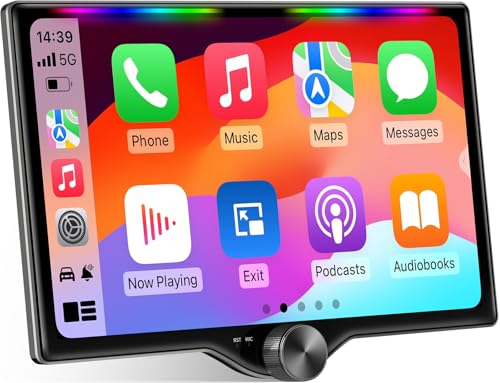
Kissound 10.1″ QLED Double Din
Strengths
- Built-in DSP
- Dual subwoofer outputs
- Wireless CarPlay/Android Auto
Trade-offs
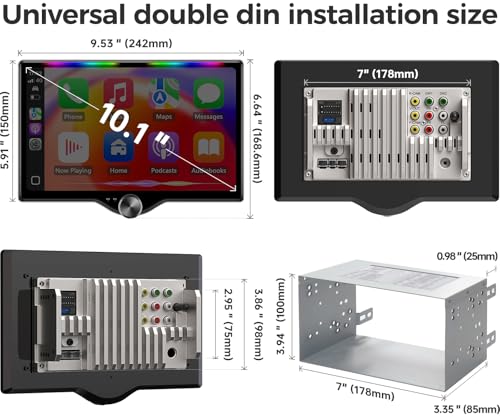
- Requires dash kit in some vehicles
- Navigation may lag
- Luminous bar not for everyone
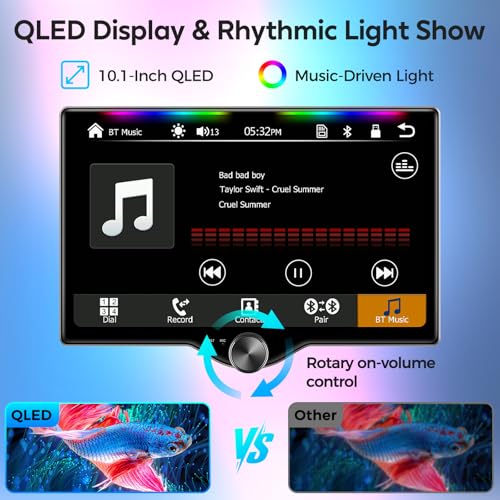
This is where mid-range car audio starts to feel premium. The 10.1-inch QLED screen is bright and sharp, even in direct sun, and the full support for wireless CarPlay and Android Auto means daily usability is excellent. What sets it apart is the built-in DSP and 10-band EQ, this isn’t just about volume, it’s about shaping your soundstage. Dual subwoofer outputs with 240W peak power give serious headroom for bassheads, and owners consistently report clean, punchy low-end when paired with quality amps.
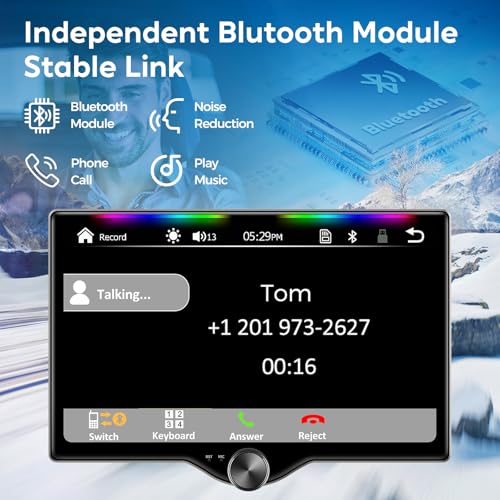
I appreciate the music-syncing ambient lighting, it’s flashy, yes, but it adds to the experience without distracting from driving. The independent Bluetooth module helps maintain stable connections, and steering wheel control compatibility keeps things safe and intuitive. It’s not audiophile-grade, but for most enthusiasts, this strikes the sweet spot between performance and price.
Product photos


How We Chose These car stereos for subwoofers
As someone who’s spent years immersed in the world of automotive audio, I approached this guide by focusing on a research-led comparison of specifications, owner reviews, and established expert opinions. Rather than a hands-on lab test with each unit, I examined published features, power output, connectivity options, and crucially, how real users rate their experience. This involved weighing feedback from a wide range of sources to get a clear picture of performance and reliability.
For car stereos intended to drive subwoofers, a few factors stood out as most important. Subwoofer pre-amp outputs, and their voltage, are critical – more voltage means a cleaner signal to the amplifier. Equally vital is the built-in Digital Signal Processing (DSP), as this allows for precise tuning to match the subwoofer and vehicle cabin. Finally, raw power output (watts) dictates how well the head unit can handle the demands of a sub, and I gave significant weight to models offering higher peak power and multiple subwoofer outputs.
Specifications provide a solid foundation – wattage, preamp voltage, screen resolution – but owner feedback often reveals the real-world usability. I focused on comments regarding Bluetooth connectivity, CarPlay/Android Auto integration, and the accuracy of advertised features. Ultimately, a stereo’s ability to deliver clear, powerful sound and smoothly integrate with a vehicle’s existing systems, as discussed in our guide to upgraded car stereos, determined its ranking. I also referenced reviews of sound quality stereos to understand the nuances of audio performance.
How To Pick The Right car stereos for subwoofers
Finding the right head unit for your vehicle, especially when you’re planning to add a subwoofer, can dramatically improve your driving experience. It’s a deceptively complex process, though, requiring more than just picking the one with the biggest screen.
A quality car stereo for subwoofer setups prioritizes clean power output, pre-amp voltage for a strong signal to the amplifier, and robust digital signal processing (DSP) capabilities. Look for units with at least 4x50W RMS power, a pre-amp voltage of 4V or higher, and a built-in EQ with multiple bands. Compatibility with modern smartphone integration features is also key, but shouldn’t overshadow core audio performance.
Power and Pre-Amp Voltage
The biggest mistake I see people make is underestimating the power requirements of their system. A subwoofer needs a strong, clean signal from the head unit to perform its best. Don’t get hung up on “peak power” ratings; focus on RMS (Root Mean Square) power. Look for a head unit with at least 4x50W RMS. More importantly, pay attention to the pre-amp voltage. This is the voltage sent to your amplifier, and a higher voltage (4V or above is ideal) results in a cleaner, stronger signal with less noise. Lower voltage means the amp has to work harder, potentially introducing distortion. If you’re serious about achieving truly impressive sound, consider investing in a head unit with adjustable pre-amp voltage.
Smartphone Integration and Features
These days, almost everyone wants Apple CarPlay or Android Auto, and for good reason. The convenience of having navigation, music, and communication at your fingertips is hard to beat. However, don’t let features become the only deciding factor. Wireless connectivity is a nice perk, but a stable wired connection is often more reliable. Consider what you actually use on your phone while driving. If you primarily stream music, a unit with a strong Bluetooth connection and support for high-quality codecs like aptX is important. But if you’re after a truly immersive experience, exploring options like the Kissound models with music-sync lighting could be a fun addition. You can learn more about other excellent options in our guide to the best car stereos.
Sound Customization and DSP
This is where things get really interesting, and where a head unit can truly shine when paired with a subwoofer. A built-in digital signal processor (DSP) allows you to fine-tune the audio to your exact preferences and the acoustics of your vehicle. Features to look for include a multi-band equalizer (10-band or higher is ideal), time alignment (which adjusts the sound to reach your ears simultaneously), and crossover settings (to direct frequencies to the appropriate speakers, including your subwoofer).
- A basic 5-band EQ is a good start, offering some control over the sound.
- A 10-band EQ provides significantly more granular control, allowing you to sculpt the sound to your liking.
- A DSP with time alignment and crossover settings is essential for achieving a truly professional-sounding setup, ensuring the subwoofer blends smoothly with the rest of your system. This is particularly important when matching the head unit to powerful bass subwoofers.
A good rule of thumb: Spend at least as much on your head unit as you do on your amplifier, especially if you’re building a system around a subwoofer.
Car Stereos for Subwoofers Compared
Here’s a comparison of key specifications for car stereos designed to pair with subwoofers.
| Product Name | Display Size | Subwoofer Outputs | DSP | Wireless CarPlay/Android Auto | Peak Power (Watts) |
|---|---|---|---|---|---|
| Kissound 10.1″ QLED Double Din | 10.1″ | Dual | Yes | Yes | 60×4 |
| LSLYA Single Din Car Stereo | 7″ | Dual | Yes | Yes | 240 |
| HZEX Single Din Car Radio | N/A | Yes | No | No | N/A |
| Kissound QLED with Dual Sub Outputs | 10.1″ | Dual | Yes | Yes | 60×4 |
| LSLYA with DSP and 240W Output | 7″ | Dual | Yes | Yes | 240 |
| Kissound with Music Sync Lighting | 10.1″ | Dual | Yes | Yes | 60×4 |
Frequently Asked Questions
What pre-amp voltage is sufficient for a good subwoofer setup?
A pre-amp voltage of 4V or higher is ideal, as it delivers a cleaner, stronger signal to the amplifier and reduces the potential for distortion. Lower voltages force the amplifier to work harder, compromising sound quality.
Can a single-DIN head unit provide enough power for a subwoofer?
While possible, single-DIN units typically require an external amplifier to adequately power a subwoofer; they often lack the necessary RMS wattage and pre-amp voltage for optimal performance. Consider pairing with one of the powered subwoofers to simplify installation.
Is wireless CarPlay/Android Auto crucial for a subwoofer-focused system?
No, while convenient, wireless smartphone integration isn’t essential. A stable wired connection generally offers more reliability, and the core focus should be on the head unit’s audio processing capabilities and output power.
What’s the benefit of a DSP in a car stereo for a subwoofer?
A DSP (Digital Signal Processor) lets you precisely tune the audio, including time alignment and crossover settings, to perfectly match your subwoofer and vehicle’s acoustics. This ensures a balanced and immersive sound experience and allows you to get the most from your best car subwoofers.
How important is RMS power compared to peak power when choosing a stereo?
RMS (Root Mean Square) power is far more important than peak power. RMS represents the continuous power output, which directly impacts the subwoofer’s performance, while peak power is a short-burst rating that isn’t as indicative of real-world capability.
The Bottom Line
Choosing a car stereo for a subwoofer setup often comes down to balancing control with convenience. You can chase the highest specs and most intricate DSP settings, or prioritize a user-friendly interface and seamless smartphone integration. For the best overall experience, delivering both powerful sound and modern features, I believe the Kissound 10.1″ QLED Double Din stands out – its dual subwoofer outputs and robust DSP give you the foundation for a truly impressive system.
If you’re on a tighter budget, the LSLYA Single Din Car Stereo still provides excellent value, boasting dual subwoofer outputs and a DSP for sound customization. For those prioritizing versatility and a blend of features, the LSLYA with DSP and 240W Output is a strong contender. And if you’re already set on a specific amplifier and subwoofer, exploring subwoofer and amp combos can streamline your setup.
Ultimately, remember that specifications are just one piece of the puzzle. A powerful stereo is only as good as the quality of your car audio amplifiers and speakers. Focus on building a well-rounded system with components that complement each other, and you’ll be rewarded with a driving experience that’s as enjoyable as it is immersive. Don’t simply chase the most expensive premium car audio units – find the right blend of power, features, and tuning capability for your needs.
