
8 Best Car Stereo Batteries of 2026
This post contains affiliate links. As an Amazon Associate, we earn from qualifying purchases.
The best car stereo battery for most setups is the XS Power D3400, delivering massive capacity and reliable power under load. For budget-focused builds, the XS Power XP600 offers solid performance, while the DOWN4SOUND D4S LTO 6.0 stands out as the top lightweight lithium option for serious systems.
Enthusiasts know that a weak battery kills more than just volume, it can ruin sound quality and stress your entire audio system. Voltage drops, clipping, and shutdowns aren’t just annoying, they’re preventable with the right power source.
This guide cuts through the hype, focusing on real-world specs and owner feedback to highlight batteries that deliver stable, sustained power. I looked at amperage, reserve capacity, build quality, and fitment to find the best options across different types of builds, from daily drivers to competition rigs.
Top 7 Car Stereo Batteries in the Market
The Best Car Stereo Batteries, Reviewed
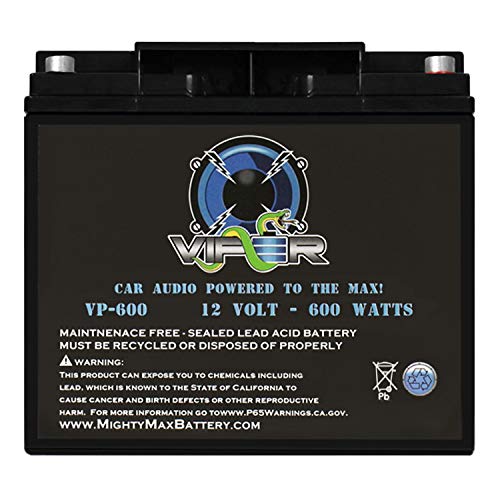
Mighty Max Viper VP-600 18Ah
Strengths
- Very affordable
- Lightweight
- Sealed AGM design
Trade-offs
- Only for low-watt systems
- Not for high current
- Limited audio performance
At under $50, the Mighty Max Viper VP-600 is the most accessible AGM power cell here. It’s rated for 600 watts and 18Ah, making it a decent starter or auxiliary battery for small audio systems. The sealed AGM design handles vibration well, and owners say it outlasts some cheaper lead-acid batteries in motorcycles and sound bars.
But it’s not a true high-current power cell. Compared to the DS18 INF-18 or XS models, it lacks the burst capacity for serious audio work. It’s better suited as a backup or lightweight starter battery. For pure car audio, it’s underpowered. I’d only recommend it if you’re on a shoestring and need something basic.
Video review
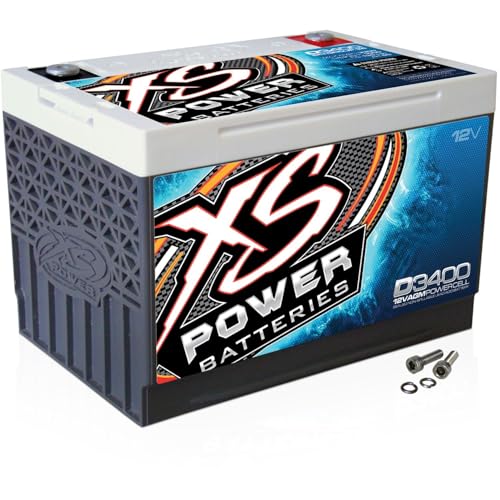
XS Power D3400 3,300A AGM Battery
Strengths
- 65Ah capacity
- 3,300A cranking amps
- Dual-purpose (start + audio)
- Ultra-low resistance
Trade-offs
- Large footprint
- Heavy
- Overkill for small systems
The XS Power D3400 is a beast, 65Ah and 3,300 amps of cranking power. This isn’t just a power cell; it can double as a starting battery even in high-demand vehicles. The ultra-low internal resistance means lightning-fast discharge, which owners love for keeping amplifiers fed during deep bass hits. It’s one of the few AGMs that can legitimately power both engine and audio in one unit.
Size and weight are the trade-offs. It’s big and heavy, so it won’t fit in compact trunks or custom enclosures. But if you want a single battery that does it all, this is the closest thing to a one-stop solution. I’d pick it over the PS925L if I needed dual-role performance.
Video review
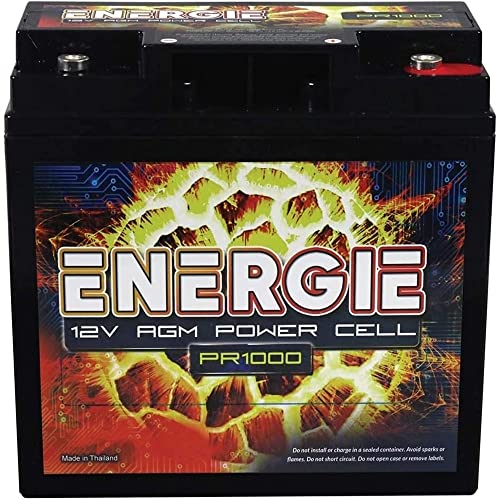
Reikken PR1000 1000W Power Cell

Strengths
- Low cost
- 1000W rated
- 18Ah capacity
Trade-offs
- Basic terminal design
- Noticeable voltage sag
- Shorter lifespan
The Reikken PR1000 is a no-frills, budget-oriented power cell for 1000W systems. At 18Ah, it’s spec-wise similar to the DS18 INF-18 but lacks the refined terminal design or voltage stability. It uses basic AGM tech and gets the job done for entry-level setups, but owners report faster voltage drop under load compared to DS18 or XS Power units.
It’s one of the cheapest 1000W-rated cells out there, which is its main appeal. But it doesn’t offer the longevity or thermal performance of pricier models. If you’re on a tight budget and running a modest system, it works. But I’d spend a little more for better durability.
Product photos
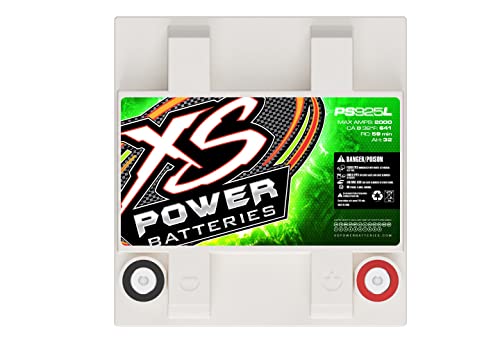
XS Power PS925L 2000A Power Cell

Strengths
- 2000A max amps
- I-BAR terminal system
- Excellent vibration resistance
- Pure lead construction
Trade-offs
- Heavy at 33 lbs
- Expensive
The PS925L is built like a race-spec power cell, because it is. With a 2000A max discharge and 28Ah capacity, it’s engineered for 2000W systems, and the ultra-thin lead plates deliver insane burst current, which reviewers say keeps amplifiers from sagging. The pure virgin lead and patented I-BAR terminal system make it a favorite among installers who hate makeshift busbar hacks.
It’s heavy at 33 pounds, but that’s the trade-off for durability and performance. Compared to the Kinetik HC1200-BLU, it’s a clear upgrade in current delivery and heat resistance. For anyone serious about clean, high-watt audio, this is the gold standard in AGM. I’d choose it over any other AGM for a permanent high-power install.
Product photos


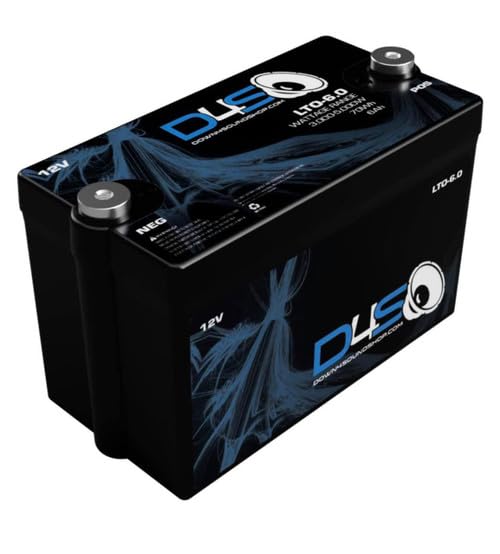
DOWN4SOUND D4S LTO 6.0 Lithium
Strengths
- Ultra lightweight
- LTO chemistry (safe)
- Handles up to 5000W
- M6 terminals included
Trade-offs
- High price
- Requires strong alternator
Lithium in car audio still feels like the future, and the DOWN4SOUND D4S LTO 6.0 is one of the few that actually delivers on the promise. At just 4 pounds and using Lithium Titanate Oxide (LTO), it’s the safest lithium option out there, no thermal runaway risks, and it works directly with stock charging systems. The 3000–5000W handling depends on your alternator, but owners confirm it pairs beautifully with high-output setups when supported properly.
Its real magic is in burst response. The built-in cell balancing handles rapid charge/discharge cycles better than AGMs, and the M6 terminals are a pro touch. It’s expensive, yes, but when you need lightweight, high-efficiency power and don’t want to mod your charging system, this is the one. I’d take it over any AGM for a show car or competition build.
Product photos
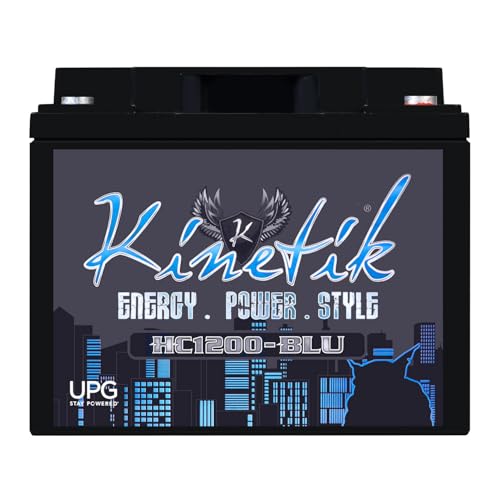
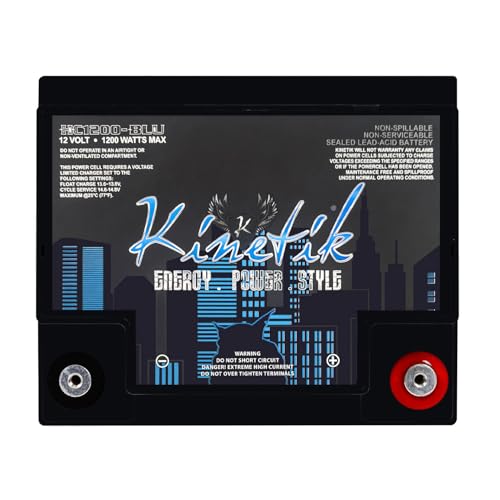
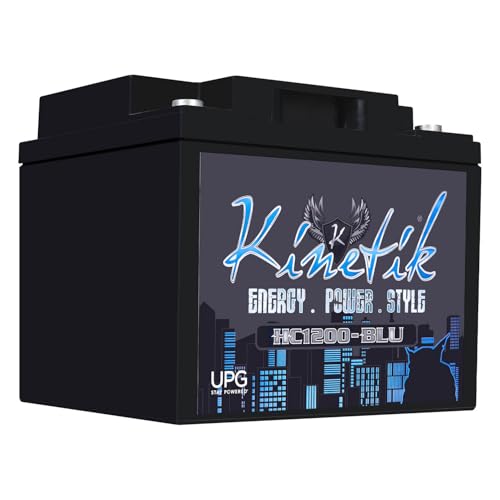
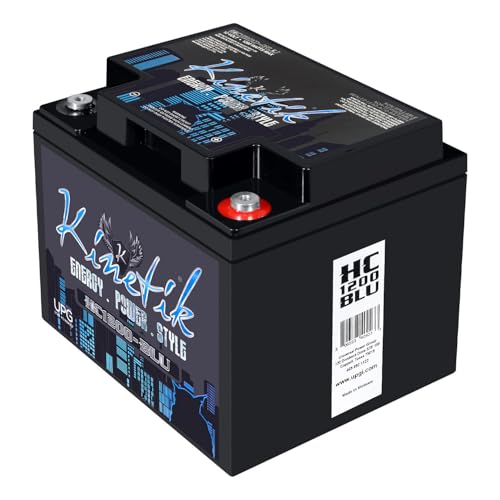
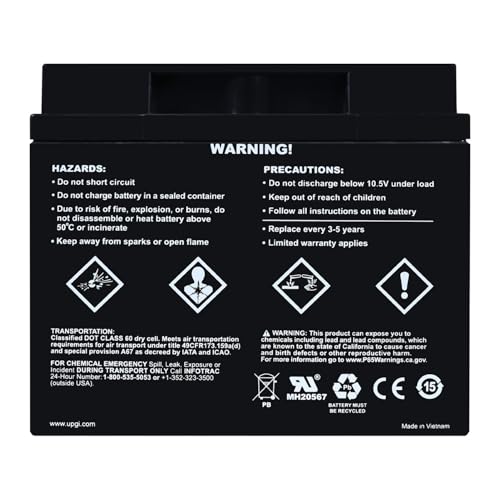
Kinetik HC1200-BLU 1200W Battery
Strengths
- 1200W handling
- AGM sealed design
- Mountable in any position
Trade-offs
- Runs warm under load
- Not for systems over 1200W
On paper, the Kinetik HC1200-BLU looks like a solid middle-ground pick for car audio setups pushing up to 1200 watts. It uses AGM technology with a design that adds more plates for better energy density, which owners say translates to stable voltage under load, critical when your subwoofers hit hard. The sealed, non-spillable build means you can mount it sideways or upside down, a real plus in tight or custom installs.
Still, when stacked against top-tier AGMs like the XS Power models, it doesn’t quite match the instantaneous current delivery. Reviewers note it performs well but can run warm in sustained high-draw situations. For those not chasing extreme output, it’s reliable. But if you’re stacking amps, I’d look higher.
Product photos

DS18 INF-18 18Ah AGM Battery

Strengths
- Compact size
- M5 bolt terminals
- Good voltage stability
- Versatile mounting
Trade-offs
- Limited to mid-power systems
- Not for high-watt audio
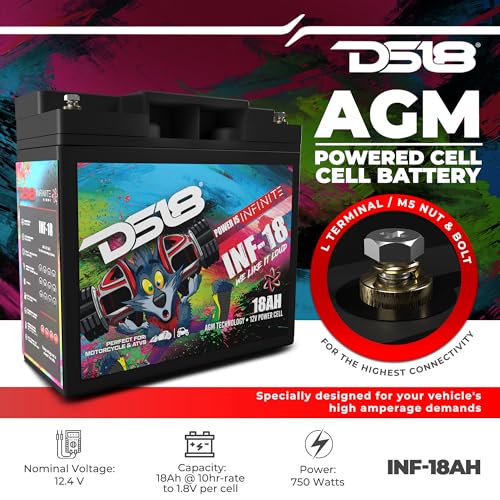
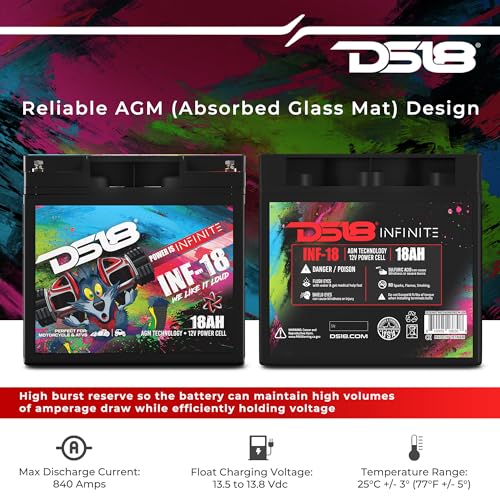
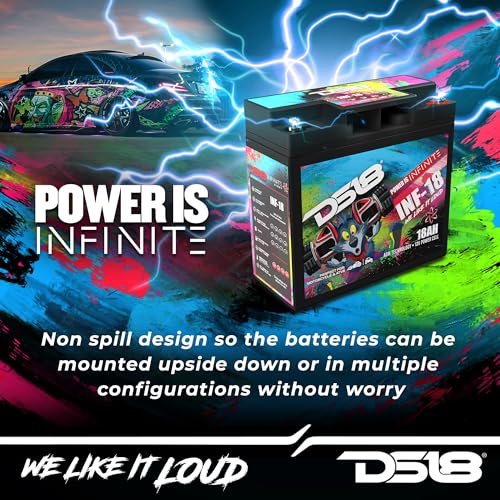
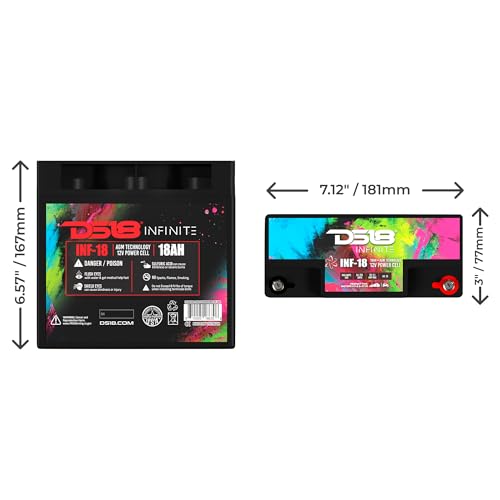
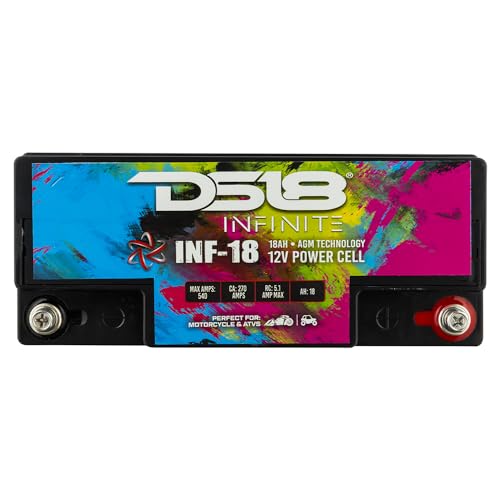
The DS18 INF-18 surprises with its versatility. At 18Ah and 750 watts, it’s compact but punchy, and the M5 bolt terminals give it serious connectivity options, something I appreciate in builds where busbars and clean routing matter. AGM tech here means low maintenance and solid resistance to vibration, which owners consistently report holds up well in motorcycles, ATVs, and daily-driven audio cars alike.
What stands out is the high float charge behavior. Reviewers note their headlight brightness stays consistent even during heavy bass hits, a sign of good voltage stability. It won’t power a 3000W setup, but for a do-it-all auxiliary cell, it’s hard to beat. I’d pick this over the Reikken or Mighty Max for real-world flexibility.
Product photos
How We Evaluated car stereo batteries
My approach at TheAutoZenith is always to cut through the marketing and get to what truly matters for enthusiasts. Rather than a hands-on lab test of each battery – which would be impractical – I focused on a detailed comparison of published specifications and features. This was heavily weighted against owner reviews from across the web and expert analysis from respected car audio sources. Ultimately, I ranked these batteries based on their ability to deliver consistent, reliable power for demanding audio setups.
For car stereo batteries, sustained amperage output, reserve capacity, and physical size are paramount. A battery needs to handle the peaks of your audio system without voltage drop, and it needs to hold that power for extended listening. Weight is also a consideration, especially for those looking to optimize vehicle handling or simply make installation easier. I prioritized these factors because they directly impact sound quality and system stability, and are frequently mentioned as critical in owner feedback.
Specifications give a good starting point – particularly cold cranking amps (CCA) and amp-hour (Ah) ratings. However, real-world performance often differs. I relied on owner feedback to gauge how well these batteries held up under heavy loads and how consistently they delivered power over time. Reputation within the car audio community also played a significant role, particularly when assessing long-term reliability. For even more information on selecting the right power source, check out our guide to the best battery for car audio. You might also need to consider upgrading your car stereo to fully use the capabilities of these batteries.
What To Look For In car stereo batteries
Finding the right car stereo battery is about more than just keeping the tunes going; it’s about providing a stable power source for increasingly demanding systems. A weak battery can lead to distorted sound, system shutdowns, and even damage to your components.
A quality car stereo battery prioritizes stable power delivery under heavy loads. Look for AGM (Absorbent Glass Mat) construction for durability and spill-proofing, along with sufficient amp output (measured in Cranking Amps and Max Amps) and reserve capacity (RC) to handle prolonged use while the engine is off. Consider physical dimensions for fitment and weight if concerned with vehicle handling.
Understanding Ampere Output
The first thing I tell anyone building a system is to truly understand their power needs. Don’t just look at the RMS wattage of your amplifier(s); factor in the Class D efficiency, and add a comfortable headroom. Many folks underestimate this, and end up with a battery that struggles. The XS Power XP600, for example, boasts 600 Max Amps, which is a solid starting point for a moderate system, but a high-output build might easily exceed that. Think long-term – are you planning upgrades? If so, lean towards more capacity now to avoid replacing the battery again later. You might also want to check out our guide to the best batteries for stereo for a broader perspective.
AGM vs. Lithium: Weighing the Tech
AGM batteries are the workhorse of the car audio world, and for good reason. They’re sealed, vibration-resistant, and relatively affordable. However, lithium options, like the DOWN4SOUND D4S LTO 6.0, are gaining traction, particularly for serious builds. Lithium offers a significant weight reduction, which can be noticeable, and often delivers superior sustained power output.
Here’s a breakdown of when each excels:
- AGM: Best for budget-conscious builds, where weight isn’t a primary concern.
- AGM: Offers a good balance of performance and reliability for most systems.
- Lithium: Ideal for competition-level setups or anyone prioritizing weight savings and maximum power delivery, but be sure your charging system is compatible.
Keep in mind the potential need for a voltage booster with some lithium chemistries, while LTO (Lithium Titanate Oxide) like the DOWN4SOUND model avoids this complication.
Size, Mounting and Overall Value
Don’t overlook the physical dimensions of the battery. A high-performance unit like the XS Power D3400, with its 65Ah capacity, is fantastic, but won’t do you much good if it doesn’t fit in your designated battery location. Also, consider the terminal configuration. Some batteries, like the DS18 INF-18, offer multiple connection points for easier wiring and expansion.
A practical rule of thumb: always overestimate your power needs. It’s far better to have a battery with excess capacity than one constantly running at its limit.
Finally, don’t get caught up in chasing the highest numbers. A well-chosen, moderately-priced AGM battery from a reputable brand (and potentially even exploring Optima audio batteries) will often outperform a cheaply made, over-spec’d alternative. I always advocate for quality and reliability over sheer numbers on a spec sheet.
Car Stereo Batteries Compared
Here’s a comparison of key specifications for the car stereo batteries described.
| Product Name | Max Amps | Capacity (Ah) | Wattage | Weight (lbs) | Dimensions (L x W x H in) |
|---|---|---|---|---|---|
| XS Power XP600 | 600 | 20 | 600 | 14.5 | 7.13 x 3.03 x 6.57 |
| Mighty Max Viper VP-600 | 600 | 18 | 600 | N/A | N/A |
| XS Power D3400 | 3,300 | 65 | N/A | N/A | N/A |
| Reikken PR1000 | N/A | 18 | 1000 | N/A | N/A |
| XS Power PS925L | 2,000 | 28 | 1000/2000 | 33.29 | 6.50 x 6.93 x 4.92 |
| DOWN4SOUND D4S LTO 6.0 | N/A | 6 | 3000-5000 | 4 | 7 x 4.75 x 3.5 |
| Kinetik HC1200-BLU | 1200 | N/A | 1200 | N/A | N/A |
| DS18 INF-18 | N/A | 18 | N/A | N/A | N/A |
Frequently Asked Questions
What battery type is best for a very loud system?
Lithium batteries, specifically Lithium Titanate Oxide (LTO) like the DOWN4SOUND D4S LTO 6.0, are generally best for extremely loud systems due to their superior sustained power output and lighter weight. However, remember to check for charging system compatibility before switching.
How long should a car stereo battery last?
A well-maintained car stereo battery should last between three to five years, but this heavily depends on usage and the quality of the battery itself. Frequent deep discharges and extreme temperatures will shorten its lifespan.
Will a higher CCA rating always improve sound quality?
Not necessarily. While a higher CCA is useful for starting, it doesn’t directly equate to better sound quality; sustained amperage output is more critical for powering a car stereo without distortion. You’ll want to review lithium car audio batteries if you’re looking for a more consistent power supply.
Can I use a standard car battery for a powerful stereo?
You can, but I don’t recommend it. Standard batteries aren’t designed for the sustained high current draw of a powerful stereo system and may struggle to deliver clean power, leading to distortion or damage. Investing in a dedicated car stereo battery is a worthwhile upgrade.
Do I really need to consider car audio capacitors with a new battery?
Adding car audio capacitors can further stabilize the power supply, especially with very powerful systems, by handling sudden spikes in current demand from your amplifier. They work in tandem with a good battery to provide consistently clean power.
The Bottom Line
Building a truly powerful car stereo system is a balancing act between delivering incredible sound and ensuring reliability. While top-tier performance is tempting, the best overall choice for most enthusiasts remains the XS Power D3400. It strikes a fantastic balance between capacity, amperage, and a reputation for lasting quality – a battery you can depend on for years to come.
For those on a tighter budget, or building a more modest system, the Mighty Max Viper VP-600 is a surprisingly capable option. If you’re pushing the limits with a competition-grade setup, and weight is paramount, the DOWN4SOUND D4S LTO 6.0 offers unmatched power-to-weight ratio, and doesn’t require a voltage booster. Don’t forget to explore our guide to the best car stereo amplifiers to ensure your system is properly matched.
Ultimately, the specifications on a battery are only part of the story. Focus on building a system with clean power distribution, quality wiring, and a battery that’s appropriately sized for your needs. A well-planned and executed system, even with a moderately-priced battery like those found in our guide to AGM batteries for stereo, will always outperform an over-ambitious build with a weak power foundation.
