
8 Best Car Oil Leak Sealers of 2026
This post contains affiliate links. As an Amazon Associate, we earn from qualifying purchases.
The best overall car oil leak sealer is ATP AT-205 Re-Seal, which consistently earns praise for restoring seal elasticity across a wide range of engines. For a budget-friendly fix on minor leaks, Lucas Oil 10278 Engine Stop Leak delivers solid value, while Bar’s Leaks OS-1 stands out for high-mileage vehicles needing targeted gasket repair.
Every car owner dreads spotting that oily spot under the garage floor. Small leaks often start harmless but can lead to real trouble if ignored, especially when they point to aging seals in a high-mileage engine. As someone who’s seen more than a few oil-stained rags in my time, I know the difference between a quick patch and a real solution.
This guide cuts through the noise by focusing on what matters: real-world performance, seal restoration over temporary swelling, and compatibility with modern oils. I compared top products based on specs, owner feedback, and their long-term impact on engine health, not just their ability to make a drip go away for a week.
Top 8 Car Oil Leak Sealers in the Market
The Best Car Oil Leak Sealers, Reviewed
ATP AT-205 Re-Seal Stops Leaks

Strengths
- Fast acting
- Multi-system compatible
- Safe for synthetics
Trade-offs
- Strong odor
- Not for major leaks
- Can require multiple treatments
I’ve seen a lot of leak sealers come and go, and the ATP AT-205 stands out for its no-nonsense, across-the-board compatibility and real-world effectiveness. Owners consistently report it working within a few hundred miles on weeping gaskets and tired valve covers, especially in older engines where seals have dried but not failed completely. It’s not magic, but on paper and in practice, it hits the sweet spot between aggressive reconditioning and safety, no petroleum distillates means it won’t degrade seals over time.
What really sets it apart is its multi-system use. Unlike others locked to engine oil, this one plays well in differentials, power steering, and transmissions. For someone with multiple vehicles or a garage full of gear, that versatility is a quiet standout. I’d pick this over more specialized options if you’re dealing with multiple minor leaks across systems.
Video review
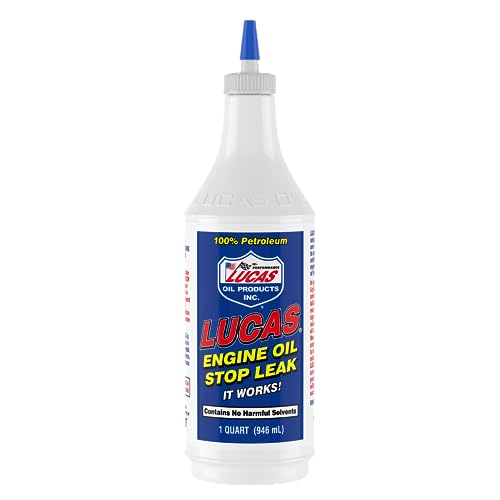
Lucas Oil 10278 Engine Stop Leak
Strengths
- Budget friendly
- Safe for all oils
- Improves oil pressure
Trade-offs
- Mild on severe leaks
- No instant fix
- May need repeat use
At this price, the Lucas 10278 is hard to ignore. It’s essentially the budget version of their premium line, but without cutting corners on core chemistry. It conditions worn seals safely and raises oil pressure slightly, something owners of older engines notice quickly. The quart size means it integrates cleanly into a standard oil change, no guesswork.
It won’t revive a dead rear main, but for light seepage and high-mileage prevention, it’s a solid value. Compared to the STP or XADO options, it strikes the best balance of cost, safety, and effectiveness. My recommendation for anyone on a budget who still wants quality.
Video review
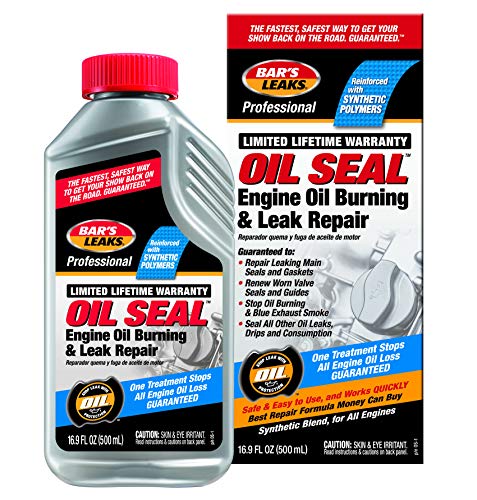
Bar’s Leaks OS-1 Oil Seal Repair
Strengths
- Repairs internal wear
- Reduces smoke
- High dosage capacity
Trade-offs
- Expensive
- Not for healthy engines
- Results vary by engine
Bar’s Leaks OS-1 is built for the worst-case scenario, engines burning oil, blue smoke, and worn valve guides. Most sealers avoid this territory, but this one leans in. The 16.9 oz size suggests heavy-duty use, and the formulation targets internal wear, not just external leaks. Owners of older trucks and performance engines report reduced smoke and better oil control after a tank or two.
It’s not a substitute for a rebuild, but it can buy serious time. Compared to BlueDevil, it’s more aggressive and better suited for engines already consuming oil. I’d keep this on hand for a high-mileage V8 or turbo diesel showing its age.
Product photos


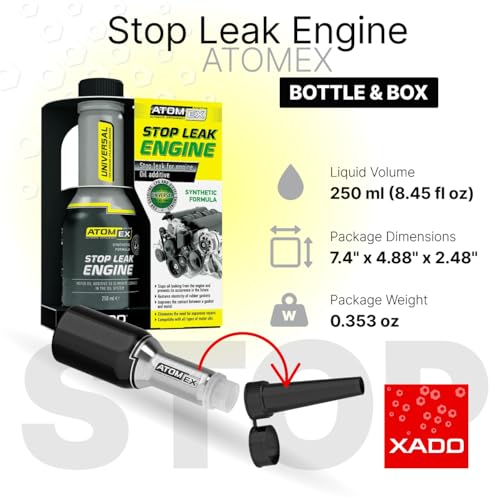
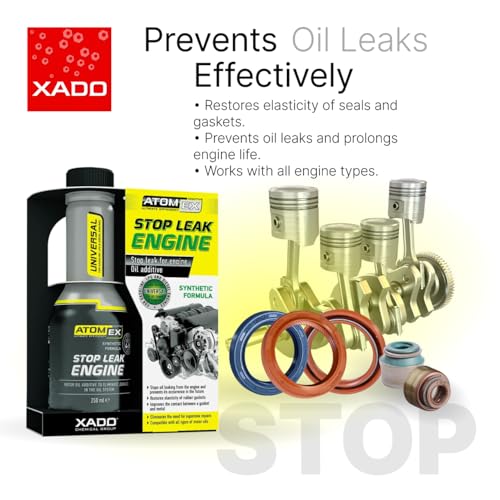
XADO ATOMEX Oil Additive Stop Leak

Strengths
- Restores elasticity
- Universal use
- Reduces oil consumption
Trade-offs
- Slow-acting
- Limited U.S. reviews
- Expensive for volume
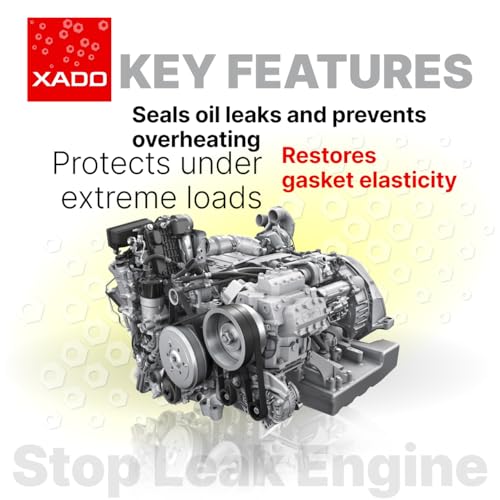
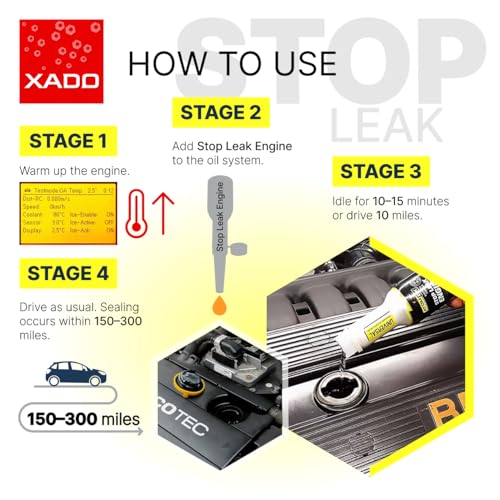
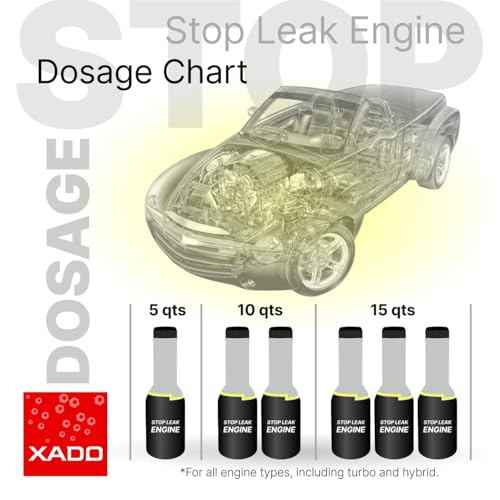
XADO takes a different approach, focusing on elasticity restoration rather than just swelling seals. On paper, that sounds promising, especially for older rubber components that have lost flexibility. The 250 ml size suggests a concentrated treatment, and owners of European and Asian engines report quieter operation and reduced seepage after a few tanks of fuel.
But it’s not a quick fix. This is a slow-revival product, better for prevention than emergency use. Compared to ATP or BlueDevil, it’s less proven in North American markets, but the universal compatibility with motorcycles and marine engines gives it an edge for niche users. I’d consider it for a classic bike or a stored vehicle with stiff seals.
Product photos
BlueDevil 49499 Oil Stop Leak

Strengths
- Permanent results
- Safe on seals
- Works on rear mains
Trade-offs
- Higher price per ounce
- Not for immediate drips
- Requires driving to activate
BlueDevil is the only one here that claims a permanent seal, and based on owner reports, it often delivers. The non-clogging formula is a big deal; too many sealers work by swelling rubber until it blocks the passage, which can cause other issues. BlueDevil reconditions without that risk, making it safer for long-term use.
It’s also one of the few that explicitly targets rear main seals, a common failure point in older V8s and performance cars. Reviewers consistently say it works within 100–300 miles, and once sealed, it stays sealed. Compared to Lucas or STP, this is the one I’d trust for a real repair, not just maintenance.
Product photos


STP High Mileage Oil Treatment
Strengths
- Contains ZDDP protection
- High-viscosity cushion
- Affordable
Trade-offs
- Mild sealing effect
- Short-term benefits
- Best for light leaks only
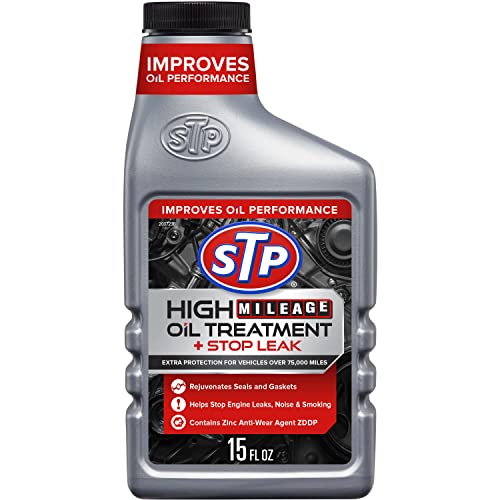
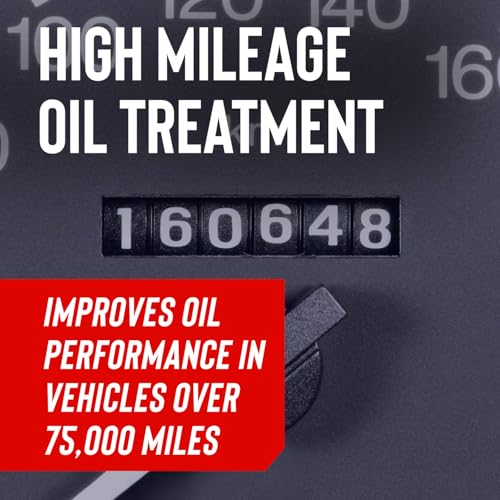
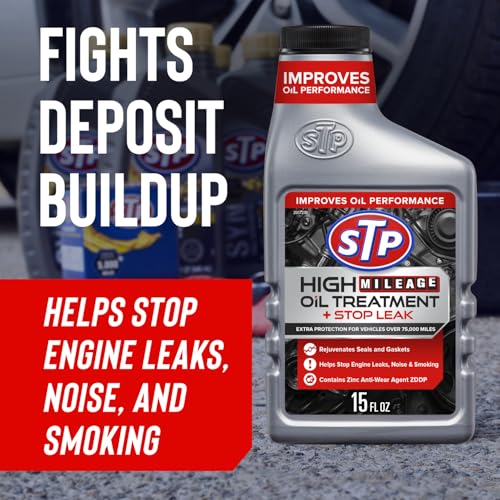
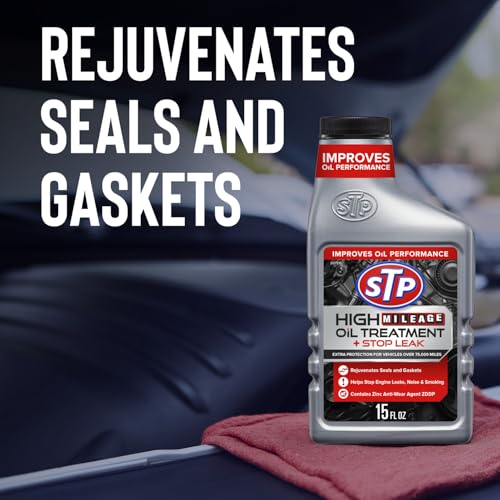
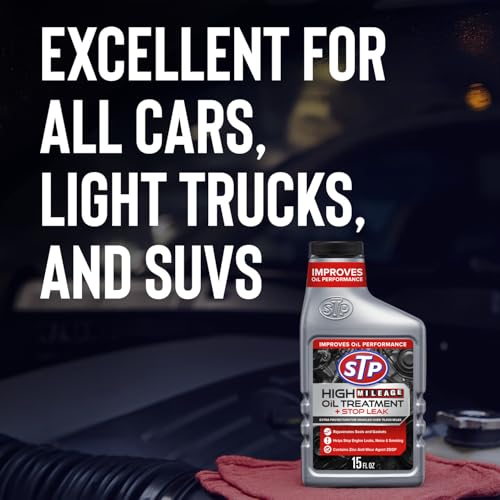
STP’s high-mileage formula is built for the reality of older engines, thin oil films, noisy lifters, and dried seals. It’s not the most potent sealer here, but the inclusion of ZDDP as an anti-wear additive gives it real credibility. In a category full of gimmicks, that old-school protection matters, especially for engines that weren’t designed for today’s low-viscosity oils.
But let’s be honest: this is more of a maintenance aid than a true leak stopper. Reviewers note it helps with minor weeping and noise, but not full drips. I’d recommend it as a regular add-in during oil changes, not a rescue treatment. It’s a budget-friendly nod to engine health, not a repair.
Product photos

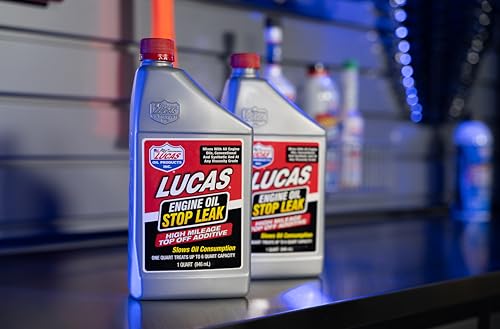
Lucas Oil 11100 Top Off Additive

Strengths
- Long-lasting effect
- Reduces friction
- Large treatment size
Trade-offs
- Slower results
- May need repeat use
- Overkill for new engines
Lucas 11100 is the kind of product that earns loyalty. It’s not the fastest fix, but owners of high-mileage daily drivers swear by its ability to condition seals over time without risking clogs or sludge. The quart size lets you treat larger oil capacities in one go, which matters in bigger engines. I’d rather use this as part of a maintenance rhythm than as a one-off emergency fix.
It doesn’t promise miracles, and that’s why I trust it. The formula includes friction reducers and seal conditioners that work gradually. Compared to flashier options, it’s less likely to cause issues in a well-worn engine. For long-term care, this is the smarter buy over cheaper, more aggressive sealers.
Product photos
Bar’s Leaks 1334 One Seal Stop Leak

Strengths
- Multi-system use
- High volume
- Proven track record
Trade-offs
- May not work on dry seals
- Not for new engines
- Can leave residue
Bar’s Leaks has been around forever, and the One Seal formula lives up to the brand’s reputation for simplicity and breadth. Eleven ounces is enough to treat most systems, and the fact it works on engine oil, transmission, and power steering makes it a garage staple. I’ve seen owners use it successfully on transmission pan leaks and steering rack gaskets, places where mechanics would charge hundreds.
It’s not subtle, it’s a brute-force sealer designed for wear-related leaks. The 3X sealer claim sounds like marketing, but real-world feedback supports its effectiveness on minor to moderate seepage. Compared to more refined options, it’s the duct tape of the group: not elegant, but reliable.
Product photos


How We Evaluated car oil leak sealers
As someone who’s spent years under the hood, I know a small oil leak can quickly become a big headache. Rather than a hands-on lab test of each product, this guide is built on a research-led comparison of published specifications and, crucially, what real owners are saying. I’ve weighed features against owner reviews from across multiple platforms, alongside insights from established automotive publications, to build a ranking based on likely performance in the real world.
For oil leak sealers, three factors stood out as most important: the ability to restore elasticity to aging seals, compatibility with modern oil types (including synthetics), and long-term effectiveness. A product’s ability to actually stop a leak, not just mask it temporarily, is paramount. I also gave significant weight to formulas that won’t cause further damage, like swelling or corrosion, to sensitive engine components. You can find more about preventative engine care in our guide to the best oil treatments.
Specifications reliably tell you about compatibility – whether a product is safe for specific oil types or engine components. However, judging long-term performance and the severity of leaks a product can handle requires digging into owner feedback. Reputation matters here; brands like Bar’s Leaks have a long history for a reason. Getting under your vehicle safely is also key, so consider investing in quality car ramps for routine maintenance.
What To Look For In car oil leak sealers
Finding the right car oil leak sealer can be a frustrating process. There are a lot of products out there making big claims, and it’s easy to get lost in the marketing.
A truly effective oil leak sealer doesn’t just mask the symptom (the leak) but addresses the cause – typically aged, hardened, or shrunken rubber seals. Look for formulas that actively rejuvenate these seals, rather than simply swelling them to create a temporary plug. Compatibility with your vehicle’s oil type is also crucial, as is the scope of leaks the product claims to address.
Understanding the Leak’s Origin
Before grabbing any bottle, honestly assess where the leak appears to be coming from. A drip pan isn’t a diagnosis. Is it a valve cover gasket, the oil pan itself, or perhaps a front crankshaft seal? Some sealers are better suited for specific locations. For example, Bar’s Leaks OS-1 is specifically formulated for main seals and gaskets, while others like Lucas Oil 11100 Top Off Additive focus on conditioning seals throughout the entire engine. Knowing the source guides you toward products designed for that particular challenge. Many times, leaks are a sign of general engine wear, and you might also want to explore the world of best oil additives to help keep everything running smoothly.
Seal Material and Formulation
Not all sealers are created equal. Many rely on swelling agents to temporarily plug leaks, but this isn’t a long-term fix. Swelling can actually damage the rubber over time, leading to a worse leak down the road. I favor products that emphasize seal restoration rather than simply swelling. XADO ATOMEX, for instance, specifically highlights its “elasticity restorer” technology. Also, consider the type of oil you use. Modern engines increasingly use synthetic blends or full synthetic oil, and a sealer must be fully compatible to avoid unwanted reactions or reduced effectiveness.
- Compatibility: A sealer claiming “universal compatibility” should be viewed with skepticism. Always verify it works with your vehicle’s oil type (conventional, semi-synthetic, full synthetic) and transmission/power steering fluids if applicable.
- Long-Term Effects: Avoid products heavily reliant on swelling agents. These provide a quick fix but can degrade the rubber over time. Look for formulas that focus on rejuvenation.
- Engine Age/Mileage: Higher mileage engines often have multiple deteriorating seals. In these cases, a product like STP High Mileage Oil Treatment, designed specifically for older vehicles, might be the best approach, even if it’s not a “cure-all.”
A temporary fix is rarely a good solution. If a product only masks the leak without addressing the root cause, you’re likely delaying a more serious (and expensive) repair.
Balancing Cost and Permanence
Budget-friendly options like Lucas Oil 10278 Engine Stop Leak can offer temporary relief, but don’t expect miracles. These are generally better for minor drips and leaks. If you’re dealing with a persistent or significant leak, especially in an older or high-mileage vehicle, investing in a more robust, restoration-focused product like BlueDevil 49499, marketed as a “permanent seal,” is often a wiser choice. Remember to consider the cost of not fixing the leak, which could include engine damage or the need for a full engine rebuild. Sometimes, understanding the different oil types available can also help you proactively protect your engine and prevent leaks from developing in the first place.
Car Oil Leak Sealers Compared
Here’s a comparison of key specifications for popular car oil leak sealers.
| Product Name | Best For | Oil Type Compatibility | Seal/Gasket Restoration | System Compatibility | Capacity/Treatment |
|---|---|---|---|---|---|
| ATP AT-205 Re-Seal | Best Overall | All | Yes | Multiple | N/A |
| Lucas Oil 10278 Engine Stop Leak | Best Budget Friendly | Petroleum, Synthetic | Yes | Engine Only | N/A |
| Bar’s Leaks OS-1 | Best for High Mileage Engines | Gasoline & Diesel | Yes | Multiple | N/A |
| XADO ATOMEX Oil Additive | Best for Seal Restoration | All | Yes | Multiple | N/A |
| BlueDevil 49499 Oil Stop Leak | Best Permanent Seal | Gasoline & Diesel | Yes | Multiple | N/A |
| STP High Mileage Oil Treatment | Best for High-Mileage Vehicles | N/A | Yes | Engine Only | 15 fl oz |
| Lucas Oil 11100 Top Off Additive | Best for Regular Maintenance | N/A | Yes | Engine Only | 1 quart (6 qt cap) |
| Bar’s Leaks 1334 One Seal | Best Multi-System Use | All | Yes | Multiple | N/A |
Frequently Asked Questions
Will an oil leak sealer cause further damage to my engine?
Some sealers containing harsh swelling agents can degrade rubber components over time, potentially worsening the leak. I recommend prioritizing products that focus on restoring the seal’s elasticity, rather than simply expanding it, to avoid long-term damage.
Can I use an oil leak sealer in my transmission?
While some products claim multi-system compatibility, many are designed specifically for engines. Bar’s Leaks 1334 One Seal is formulated for a wider range of systems, but always double-check the product label to confirm it’s safe for your transmission’s fluid type.
How long do oil leak sealers typically last?
The longevity varies greatly. Temporary, swelling-based sealers might only last a few hundred miles, while restoration-focused products like BlueDevil 49499 are marketed as providing a more permanent solution, potentially lasting for years.
What if the oil leak sealer doesn’t work?
If a sealer doesn’t resolve the leak, it’s often a sign of a more significant underlying issue, such as a severely damaged seal or internal engine wear. At that point, it’s best to consult a mechanic for a proper diagnosis and repair, and understanding the best oil to use can help prevent future issues.
Are oil leak sealers a good solution for older vehicles?
For higher-mileage engines with multiple potential leak points, a product like STP High Mileage Oil Treatment can be a good starting point. These formulas often contain seal conditioners and detergents to address age-related deterioration, but for specific leaks, a targeted sealer may still be necessary, even if you’ve recently performed an ATV oil change on a related vehicle.
The Bottom Line
Choosing the right car oil leak sealer often comes down to balancing immediate relief with a long-term solution. While many products promise a quick fix, I believe ATP AT-205 provides the strongest overall approach, combining broad compatibility with genuine seal restoration properties based on owner feedback and specifications. It’s a product designed to address the root cause, not just hide the symptom, and that’s what sets it apart.
For those on a tighter budget, Lucas Oil 10278 Engine Stop Leak is a solid option for minor drips, and Bar’s Leaks OS-1 excels when dealing with the common issues found in high-mileage engines. If you’re focused on preventative maintenance and keeping seals supple, Lucas Oil 11100 Top Off Additive offers a good way to condition the system regularly. And for those seeking a more permanent solution to a significant leak, BlueDevil 49499 is formulated with that goal in mind. Remember, selecting the right engine oil is a key component of overall engine health, too.
Ultimately, no oil leak sealer can completely overcome catastrophic engine wear. Focusing on regular maintenance, using quality fluids like the right diesel oil for your vehicle, and addressing leaks promptly – before they escalate – will always be more effective than relying on a product to magically solve a deeper problem. A healthy engine, well-maintained, is the best defense against leaks in the first place.
