
8 Best Car OBD2 Scanners of 2026
This post contains affiliate links. As an Amazon Associate, we earn from qualifying purchases.
The FOXWELL NT614 Elite stands out as the best overall car OBD scanner for its deep system coverage and essential reset functions, while the Innova 5210 is a smart budget pick with solid battery testing and live data. For those who want smartphone integration, the V011 OBD2 Scanner offers strong versatility.
Most drivers don’t realize how limited basic code readers are until they’re stranded with a vague check engine light and no real answers. A good OBD scanner should do more than just read codes, it should help you understand what’s actually wrong and let you perform common resets at home. This guide covers the top car OBD scanners based on real-world usability, feature depth, and owner feedback, focusing on what matters most: accurate diagnostics, practical resets, and clear, accessible data.
Top 7 Car Obd Scanners in the Market
The Best Car Obd Scanners, Reviewed
FOXWELL NT614 Elite OBD2 Scanner
Strengths
- 4-system coverage
- Supports 5 resets
- Lifetime updates
- Fast VIN detection
- Wide vehicle support
Trade-offs
- Higher price point
- Some functions not supported on all models
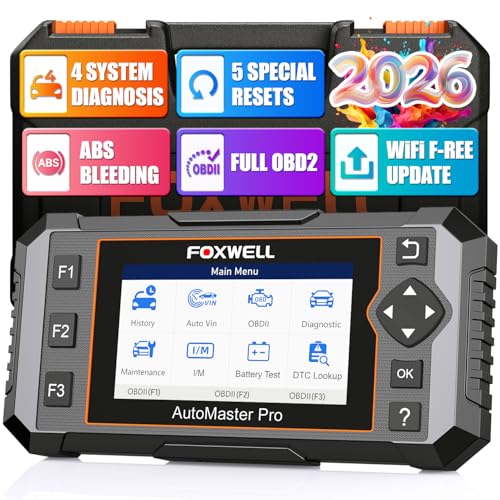
The FOXWELL NT614 Elite stands out in a crowded field by doing something most budget scanners won’t touch, supporting 5 advanced resets like EPB, SAS, and ABS bleeding. That’s a big deal because shops charge up to $100 or more just for an electronic parking brake reset after pad replacement. On paper, this brings pro-level service capabilities into the driveway, which is exactly what intermediate DIYers and home mechanics need. Owners consistently report using the ABS bleeding function successfully after brake jobs, restoring pedal firmness without a trip to the shop.
It covers Engine, ABS, SRS, and Transmission systems across 10,000+ vehicles, which beats the basic engine-only tools here. The lifetime WiFi updates mean it won’t become obsolete quickly, and the built-in DTC library saves time compared to Googling codes. Compared to the ANCEL AD410, it’s far more capable, but you pay for that breadth. Still, if you own multiple vehicles or do regular maintenance, the long-term value makes sense. I’d pick this over the Innova 5210 for its deeper system access and reset functions.
Video review
Innova 5210 OBD2 Scanner & Battery Tester
Strengths
- RepairSolutions2 app
- Oil reset feature
- Battery testing
- Free repair guidance
- Good live data
Trade-offs
- App needed for full features
- ABS coverage varies
- No advanced resets
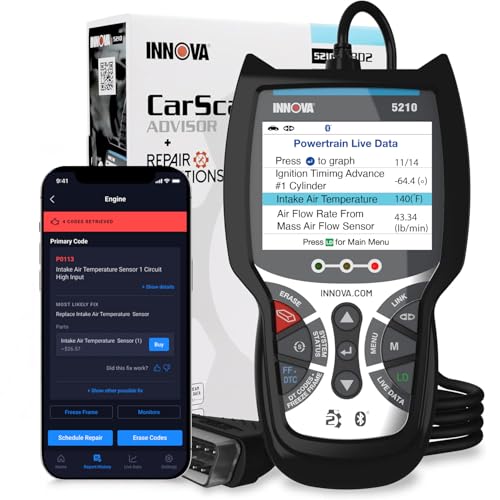
The Innova 5210 carves its niche with the RepairSolutions2 app, which pulls real-world fixes from ASE-certified technicians, not just generic code lists. That’s rare. Most scanners tell you what the code is; this one helps explain why it happened and how to fix it, including part suggestions and labor estimates. That alone makes it valuable for DIYers unsure of next steps after reading a P0171. It also includes oil reset functionality, which the base ANCEL models lack, and supports battery and charging system tests.
However, its hardware is middle-of-the-road: decent live data, I/M readiness, and engine/ABS code reading (coverage varies), but no SAS calibration or EPB reset like the Foxwell. The Bluetooth connection works reliably with the app, but you must use it to unlock the full repair guidance. Compared to the AD410 PRO, it offers similar battery insights but with stronger repair intelligence. For someone who wants to learn while fixing, this is a strong contender.
Video review
ANCEL AD410 PRO OBD2 & Battery Tester
Strengths
- Integrated battery tester
- Cranking & charging tests
- Live data graphs
- No phone needed
- Lifetime updates
Trade-offs
- No ABS/SRS support
- Limited to engine-related codes
- Not for hybrids or EVs
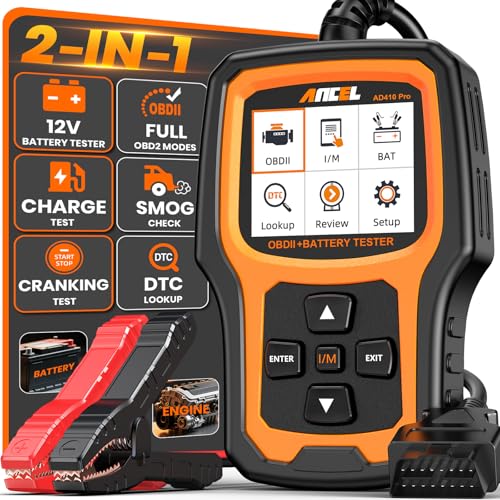
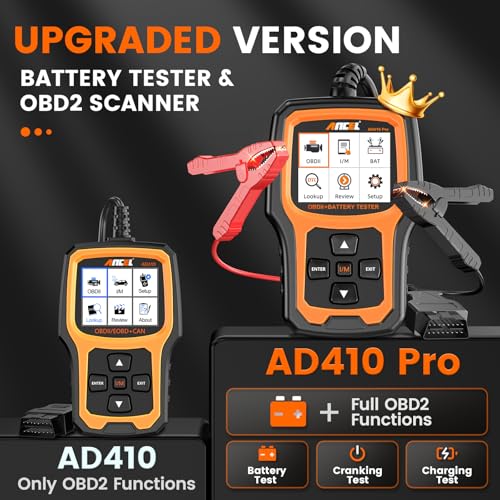
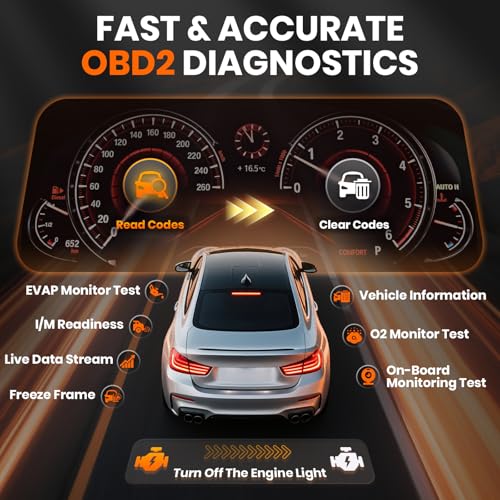
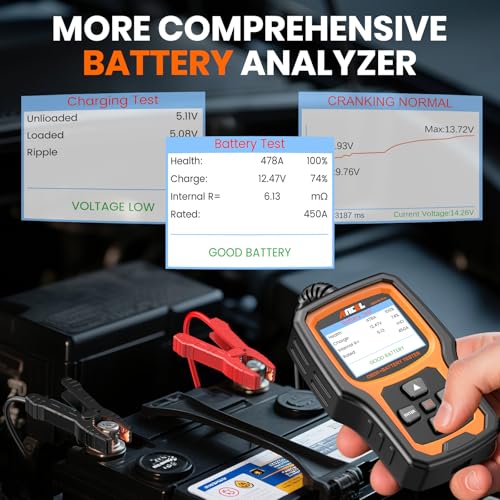
Merging engine diagnostics with battery, starter, and charging system analysis, the AD410 PRO eliminates the need for a separate multimeter or load tester. That’s a real win for owners tired of chasing no-start issues blindly. On paper, its ability to run cranking voltage tests and alternator checks gives it an edge over the base AD410 and even the Innova 5210. Owners appreciate being able to confirm whether a weak start is due to the battery or the charging circuit, information that prevents costly misdiagnoses.
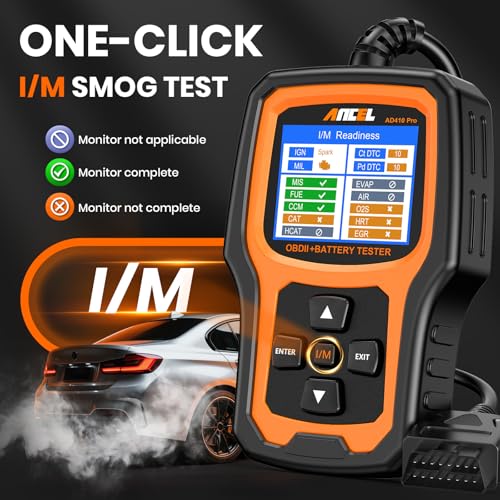
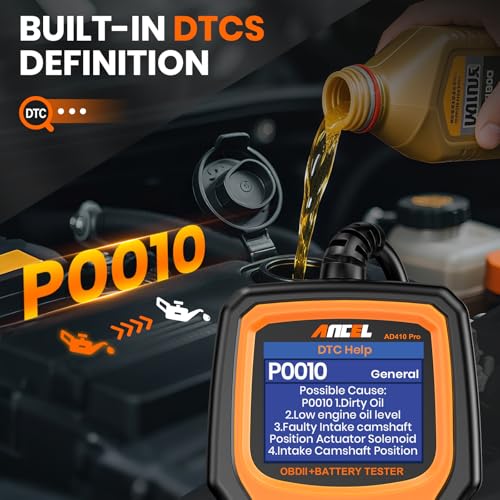
It retains all the useful features of the AD410, live data, freeze frame, I/M readiness, but adds meaningful depth in electrical system evaluation. The 2.4-inch HD screen displays waveforms and dashboards clearly, helping users spot trends over time. While it still doesn’t support ABS or SRS systems, its dual-role functionality makes it one of the most practical picks under $70. Compared to the OBD2 scanner with Bluetooth 5.4, this is far more self-contained and usable without a phone.
Product photos
ANCEL AD410 Enhanced OBD2 Scanner
Strengths
- No app required
- Clear code definitions
- Solid live data
- I/M readiness check
- Easy multilingual setup
Trade-offs
- Engine-only diagnostics
- No service resets
- No battery test
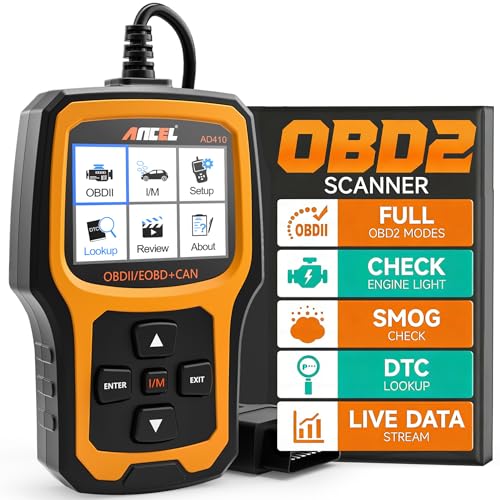
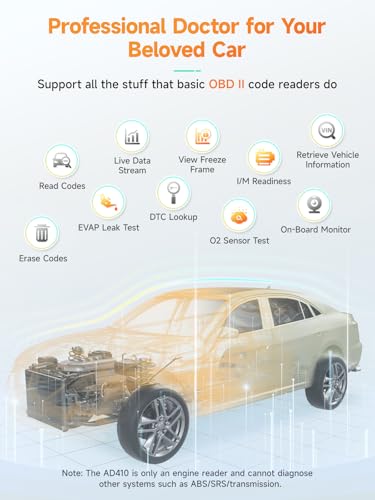
For pure simplicity and solid core diagnostics, the ANCEL AD410 hits the sweet spot between capability and cost. It doesn’t pretend to do more than it can, this is strictly an engine and emissions code reader, with no ABS, SRS, or transmission access. But within that lane, it excels. The 42,000+ built-in DTC definitions mean you’re not left guessing what a P0420 means, and reviewers note how helpful the I/M readiness screen is before smog tests. It’s also completely standalone, no phone, battery, or app needed, which keeps things fast and reliable.
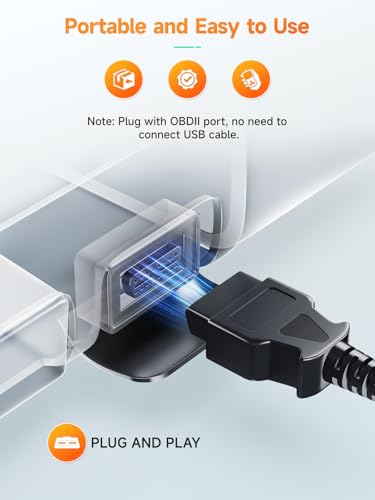
It lacks the battery testing of the AD410 PRO or the resets of the Foxwell, but at this price, it delivers where it counts. The 2.4-inch color display is bright and legible, and the plug-and-play design works instantly. Compared to the VDIAGTOOL VD10, it offers richer data and better screen clarity. My recommendation? If you only need engine diagnostics and want something dependable without smartphone reliance, this is the smarter buy.
Product photos



VDIAGTOOL VD10 OBD2 Scanner
Strengths
- 5-year warranty
- Plug-and-play
- VIN and CVN retrieval
- Low cost
- Multilingual support
Trade-offs
- Basic 2-line display
- No battery test
- Smaller DTC library
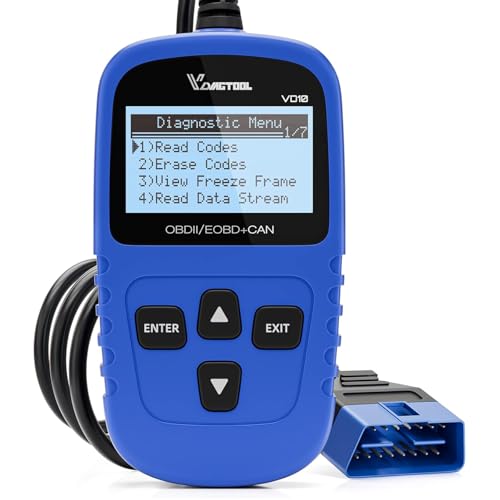
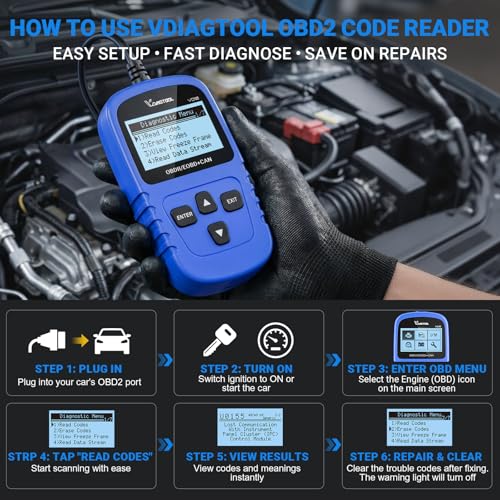
The VDIAGTOOL VD10 is about as bare-bones as you can get while still being useful. At $15.99, it handles the essentials: reading and clearing engine codes, showing freeze frame, checking I/M readiness, and pulling VIN and CVN data, handy when inspecting a used car. Its 2-line LCD is small but functional, and the plug-and-play design means no setup hassles. Owners praise its reliability for simple tasks, especially turning off the check engine light after a gas cap fix.
But “basic” is the operative word. It has no color screen, no battery test, no live graphs, and only 3,000 built-in codes, less than half the AD410’s library. It doesn’t even support EVAP testing like the cheaper B0G6XWFLT1 model. Where it wins is the 5-year warranty, which exceeds most rivals. Still, for just $5 more, the B0G6XWFLT1 offers a better screen and more testing features. I wouldn’t recommend this unless you truly need the longest warranty on a minimal tool.
Product photos


OBD2 Scanner with Bluetooth 5.4
Strengths
- Bluetooth 5.4 connectivity
- App-based guidance
- Real-time data charts
- Low price
- Multi-language support
Trade-offs
- Requires smartphone
- App dependency
- No standalone use
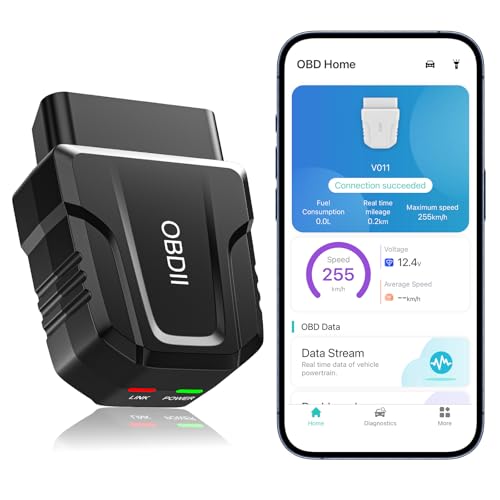
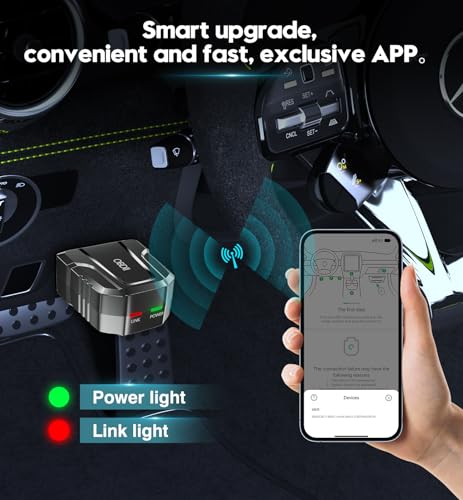
This ultra-affordable Bluetooth OBD2 dongle leans entirely on your smartphone, turning your phone into a rolling diagnostic center. With Bluetooth 5.4, pairing is fast and stable, and the included app delivers clean charts and plain-language explanations of trouble codes. It supports full live data streaming, freeze frame, and even sensor monitoring, which is impressive at this price. However, everything hinges on the app experience, some users report glitches with older Android versions or inconsistent data refresh rates.
It covers 96% of modern vehicles and supports multiple languages, making it globally accessible. But unlike the ANCEL or Foxwell tools, you’re locked into using your phone every time. There’s no standalone screen, so if your phone dies, you’re stuck. Still, for tech-savvy users who already rely on their phones for car tracking or fuel economy apps, this integrates well. I’d recommend it over the VDIAGTOOL VD10 only if you’re committed to mobile-based diagnostics.
Product photos


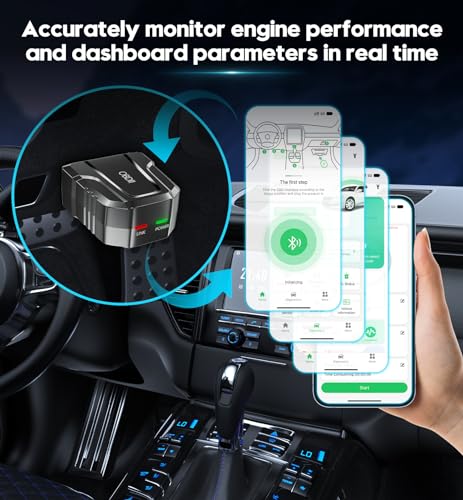
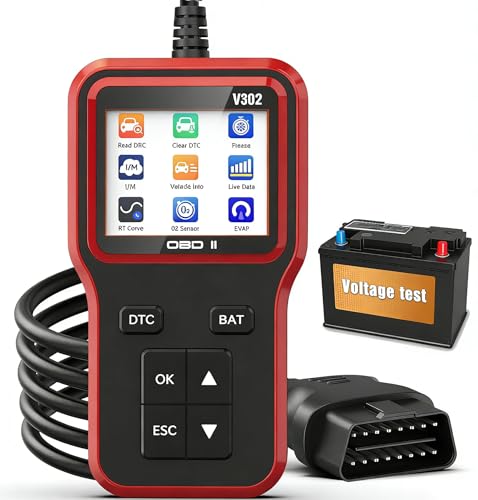
OBD2 Scanner and Battery Tester
Strengths
- One-click battery check
- EVAP and O2 tests
- Large color screen
- Freeze frame data
- I/M readiness
Trade-offs
- Limited DTC database
- Engine codes only
- No service resets
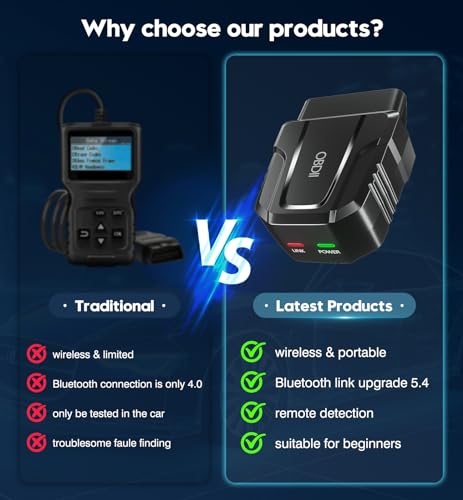
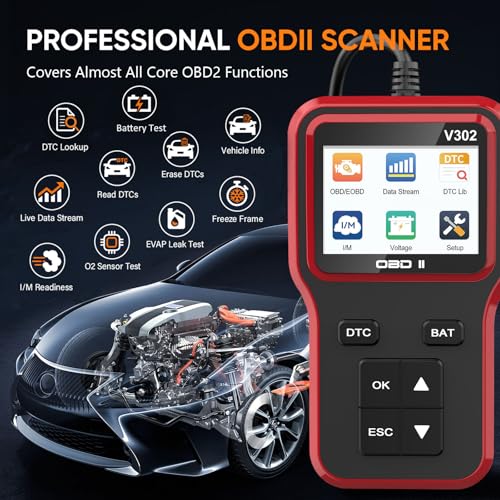
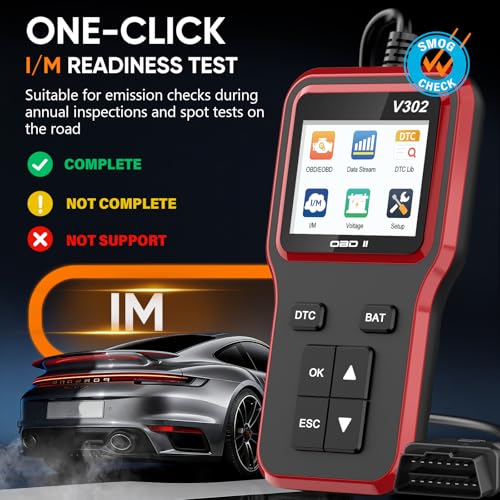
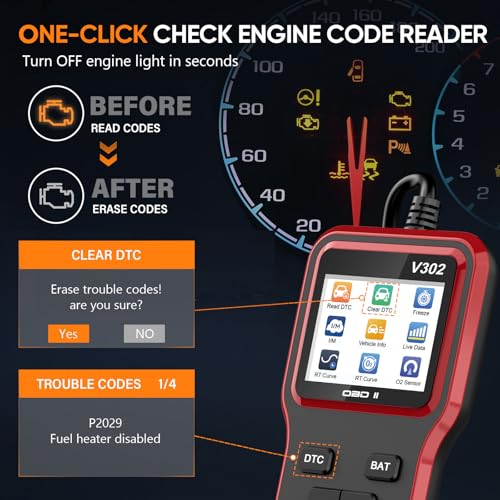
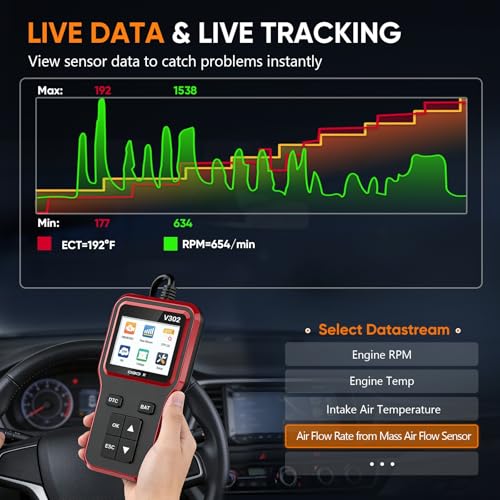
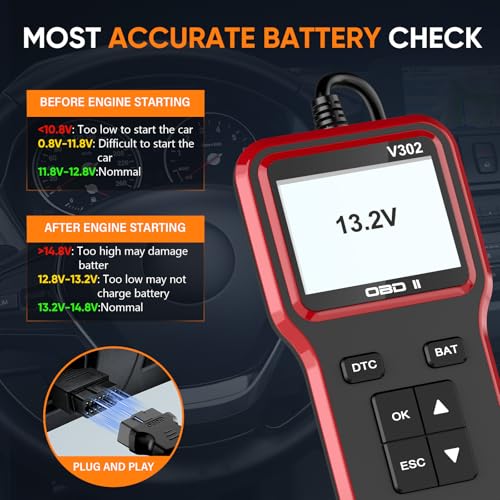
At just over $15, this compact scanner punches above its weight with real-time battery voltage monitoring and EVAP/O2 sensor testing, features usually seen on pricier units. The one-click BAT check gives instant feedback on charging system health, which owners find useful for catching slow drain issues before they leave you stranded. It also shows freeze frame data and I/M readiness, making it a solid helper for smog prep.
But let’s be clear: this isn’t a deep diagnostic tool. It reads engine codes only, no ABS or SRS, and the database covers around 4,000 codes, far fewer than ANCEL’s 42,000+. The 2.8-inch color screen is surprisingly readable, and it powers directly from the OBD2 port. Compared to the VDIAGTOOL VD10, it offers better battery insight and EVAP testing, though both are similarly priced. If you’re on a tight budget but still want basic electrical checks, this delivers.
Product photos
How We Chose These car obd scanners
As someone who’s spent years immersed in the world of automotive diagnostics at TheAutoZenith, I approach tools like OBD scanners with a focus on practical application and long-term value. Rather than a hands-on lab test of each unit, this selection is a research-led comparison of published specifications, owner reviews from multiple sources, and reputable expert analyses. I weighed this information against my understanding of what truly matters when diagnosing vehicle issues, aiming to identify scanners offering the best blend of features and reliability.
For car OBD scanners, the ability to accurately read and clear diagnostic trouble codes (DTCs) is fundamental, but I placed the heaviest weight on broader system coverage and the inclusion of useful maintenance functions. Scanners that go beyond simply reading a check engine light – offering features like ABS bleeding, oil resets, or battery testing – provide significantly more utility for the average owner. Beyond that, clear data presentation and ease of use were key; a scanner’s power is diminished if the information is difficult to interpret.
Specifications reliably indicate a scanner’s basic compatibility with vehicle protocols and the types of codes it can read. However, real-world performance and usability are best judged by owner feedback. I paid close attention to reviews detailing ease of use, accuracy of data, and the scanner’s ability to connect to various vehicle makes and models. I also considered input from established automotive publications when assessing the reputation and long-term reliability of each unit. If you’re looking for more general information, you might find our guide to the best code readers helpful. For those specifically working on Bavarian vehicles, exploring dedicated BMW scanners can provide specialized diagnostics.
What To Look For In car obd scanners
Finding the right OBD2 scanner can feel overwhelming. There are a lot of options, ranging from simple code readers to professional-level diagnostic hubs. A good scanner quickly identifies the problem, provides useful data, and doesn’t leave you needing a mechanic just to understand the results.
A truly useful OBD2 scanner doesn’t just pull codes; it provides access to live data streams, offers vehicle-specific diagnostics, and ideally, includes functions like battery testing or specialized resets. Prioritize scanners with a clear display, intuitive interface, and broad vehicle compatibility to maximize usability.
Understanding Diagnostic Depth
Many scanners claim to do it all, but the level of diagnostic detail varies wildly. The cheapest units only read and clear trouble codes, which is helpful for simple issues, but leaves you in the dark about the root cause. If you’re comfortable with a little digging, look for a scanner that gives you access to live data streams. Being able to monitor parameters like engine temperature, oxygen sensor readings, and fuel trims in real-time can pinpoint intermittent problems a simple code reading might miss. For Toyota owners, specialized Toyota scanners can unlock even more vehicle-specific diagnostic information.
Reset Capabilities: Beyond Just Clearing Codes
Don’t underestimate the value of reset functions. Many modern vehicles require specific resets after maintenance, like an oil life reset or an electronic parking brake (EPB) reset. Paying a shop $100+ for a simple reset is frustrating when a scanner can handle it for you. Scanners like the FOXWELL NT614 Elite offer multiple reset options, including ABS bleeding and throttle body relearn, providing substantial value. However, be realistic. A basic, budget-friendly scanner will likely only read and clear codes.
- A scanner with bi-directional control is a significant step up, allowing you to actively command components for testing (rare in this price bracket).
- Look for scanners that support the specific resets you anticipate needing, based on the vehicles you own. Don’t pay for features you won’t use.
- Consider that some advanced reset functions require a degree of mechanical knowledge to perform correctly – you’ll still need to understand what you’re doing.
Balancing Features and Usability
A scanner packed with features is useless if you can’t understand it. A clear, well-lit display is crucial, as is an intuitive menu system. Some scanners connect to your smartphone via Bluetooth, offering a larger screen and more advanced data visualization through a dedicated app. The V011 OBD2 Scanner is a good example of this. However, a dedicated screen on the scanner itself is often preferable for quick, in-the-bay diagnostics. Ultimately, the best scanner is the one you’ll actually use. If you’re overwhelmed by complexity, a simpler, more focused device might be a better choice than a feature-rich but confusing unit. For a broader overview of available options, check out our guide to the best diagnostic scanners.
Don’t buy a scanner with features you don’t understand. A simple, well-executed scanner is often more useful than a complex one you can’t operate effectively.
Car OBD Scanners Compared
Here’s a comparison of key specifications for several popular car OBD scanners to help you choose the right tool.
| Product Name | Protocols Supported | Battery Test | Live Data Graphing | Reset Functions | Screen Size | Bluetooth |
|---|---|---|---|---|---|---|
| FOXWELL NT614 Elite | CAN, ISO9141, KWP2000 | No | Yes | ABS, SRS, Oil, SAS, EPB | 2.8″ Color | No |
| Innova 5210 | OBD2 | Yes | Yes | Oil | N/A | No |
| ANCEL AD410 PRO | CAN, ISO9141, KWP2000 | Yes | Yes | None | 2.4″ Color | No |
| FOXWELL NT301 | CAN, ISO9141, KWP2000 | No | Yes | None | 2.8″ Color | No |
| ANCEL AD410 | CAN, ISO9141, KWP2000 | No | Yes | None | 2.4″ Color | No |
| VDIAGTOOL VD10 | CAN, ISO9141, KWP2000 | No | Yes | None | 2-Line LCD | Yes (5.4) |
| OBD2 Scanner with Bluetooth 5.4 | OBD2 | Yes | Yes | None | N/A | Yes (5.4) |
| OBD2 Scanner and Battery Tester | CAN, ISO9141, KWP2000 | Yes | Yes | None | 2.8″ Color | No |
Frequently Asked Questions
What level of technical expertise is needed to use a car OBD scanner?
Basic code reading and clearing requires minimal technical skill. However, interpreting live data streams or performing advanced reset functions demands a solid understanding of automotive systems, and you should consult a repair manual if unsure.
Do all OBD2 scanners work on all vehicles?
Most scanners support vehicles manufactured after 1996 (due to the standardized OBD2 port), but full functionality varies. Older vehicles or those outside of North America may require a scanner supporting older protocols, and some manufacturers need specific adapters.
Can an OBD2 scanner diagnose every car problem?
No, an OBD2 scanner primarily focuses on emissions-related systems and some common mechanical faults. Issues like worn brakes, suspension problems, or body damage won’t be detected; for a truly thorough inspection, you’ll still want a professional mechanic.
Are Bluetooth OBD2 scanners as reliable as those with a dedicated screen?
Bluetooth scanners rely on a connection to your smartphone or tablet, which can sometimes be unstable. While convenient, a scanner with a dedicated screen generally offers a more reliable and direct diagnostic experience, especially for quick checks. If you’re looking for other tools to keep your car clean, consider checking out our guide to the car vacuums.
What’s the difference between an OBD2 reader and a full diagnostic tool?
An OBD2 reader simply displays and clears trouble codes. A full diagnostic tool, like the FOXWELL NT614 Elite, provides access to live data, bi-directional controls, and specialized reset functions, offering a much more in-depth analysis and is among the best diagnostic tools available.
The Bottom Line
Choosing an OBD scanner often comes down to balancing how much you want to spend against how deeply you want to get into diagnostics. While a simple code reader can address basic check engine light issues, the FOXWELL NT614 Elite offers the most thorough feature set for the money, providing access to a wide range of systems and reset functions for a variety of vehicles. It’s a worthwhile investment if you plan to do more than just clear codes.
For those on a tighter budget, the ANCEL AD410 PRO still delivers solid code reading and live data capabilities, and includes a battery test function. If you primarily need a Bluetooth-connected scanner to work with a smartphone app, the OBD2 Scanner with Bluetooth 5.4 is a reasonable choice, though it sacrifices some of the dedicated functionality of the standalone units. For Volkswagen owners specifically, exploring dedicated Volkswagen scanners unlocks specialized diagnostics.
Ultimately, the most expensive scanner isn’t always the best. Focus on getting a tool that supports your vehicle’s systems, provides clear and understandable data, and fits comfortably within your budget. A scanner is only as good as your ability to interpret the information it provides; a solid understanding of basic automotive principles will always be more valuable than any advanced feature. Consider broadening your knowledge with our guide to diagnostic scanners.
