
8 Best Car Code Scanners of 2026
This post contains affiliate links. As an Amazon Associate, we earn from qualifying purchases.
The Autel AutoLink AL519 is the best overall car code scanner for its deep diagnostics, broad compatibility, and reliable live data, while the ANCEL AD310 offers solid performance at a budget-friendly price. For those needing advanced features without pro-level cost, the Innova 5610 strikes a smart balance.
Most drivers only think about a code scanner when that dreaded check engine light comes on. But not all scanners are built to help you actually understand what’s wrong, many just spit out cryptic codes and call it a day. After comparing the field based on specs, owner experiences, and real-world usability, I focused on tools that deliver clear insights, accurate readings, and features that match different skill levels.
This guide breaks down what matters in a car code scanner, from live data and vehicle coverage to ease of use and long-term value, so you can pick one that works for your garage, not just the marketing hype.
Top 7 Car Code Scanners in the Market
The Best Car Code Scanners, Reviewed
BLCKTEC 460T All-System Diagnostic Scanner

Strengths
- Full system coverage
- 12+ service resets
- Free lifetime updates
Trade-offs
- Higher price point
- Some features vehicle-dependent
- App required for full potential
If you’re serious about understanding your car beyond the check engine light, the BLCKTEC 460T is where I’d put my money. It’s one of the few handheld scanners at this level that supports full-system diagnostics, engine, ABS, SRS, transmission, and backs it up with 12+ service resets like DPF, EPB, and TPMS relearn. That kind of functionality used to require a dealership visit.
Reviewers note how fast and intuitive it feels, thanks to AutoVIN and AutoScan, plug it in and it starts pulling data immediately. The integration with the free RepairSolutions2 app adds real value, giving access to repair guides and OEM-level data. And since it gets lifetime updates, it won’t become obsolete next year. Compared to the FOXWELL NT604 Elite, it offers more reset functions and better software support.
Video review
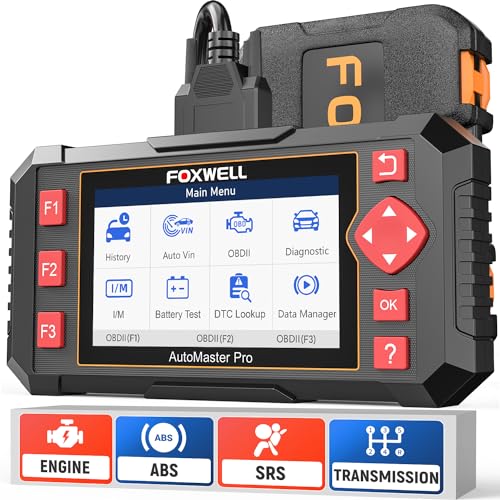
FOXWELL NT604 Elite ABS SRS Scanner
Strengths
- Multi-system diagnostics
- Solid protective case
- No subscription fees
Trade-offs
- No service reset functions
- No battery testing
- Limited live data tools
When you start seeing ABS or airbag lights flash, that’s when basic code readers fall short. The FOXWELL NT604 Elite steps up with diagnostics for engine, ABS, SRS, and transmission, a rare combo at this price. It won’t reset services, but it will tell you why your brake pedal feels soft or why the SRS light won’t go off after a battery change.
Its plug-and-play design means no software downloads, and the included protective case is a small but meaningful upgrade over flimsy plastic bags. AUTOVIN speeds up identification, though it doesn’t work on every older model. Compared to the BLCKTEC 460T, it lacks reset functions, but for pure diagnosis across critical systems, it’s a strong contender.
Video review
ANCEL AD410 Enhanced OBD2 Scanner

Strengths
- Good live data range
- EVAP and O2 testing
- Easy plug-and-play use
Trade-offs
- Engine-only system support
- No service resets
- No battery diagnostics
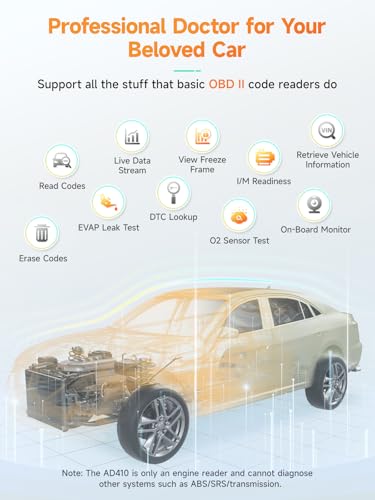
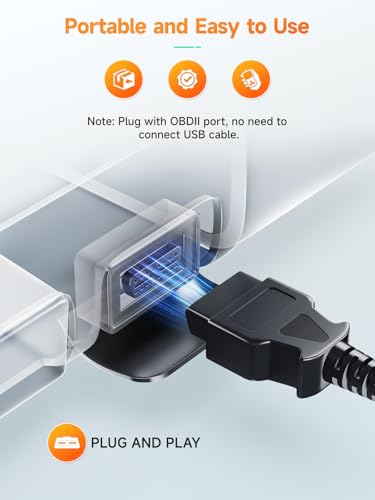
The ANCEL AD410 hits that sweet spot between capability and cost. It goes well beyond basic code reading with live data, EVAP testing, O2 sensor checks, and I/M readiness monitoring, all wrapped in a user-friendly interface. The 2.4-inch color screen is bright, menus are intuitive, and it powers directly from the OBD2 port.
For mid-range buyers, it offers the most balanced package: better than the AD310 with added diagnostic depth, yet far more affordable than pro-tier tools. Owners consistently report success using it to verify repairs and avoid failed smog tests. Where it falls short is system coverage, it only reads engine codes, not ABS or transmission. Against the CGSULIT SC103, it has better software polish and broader support.
Product photos



FOXWELL NT301 Professional OBD2 Scanner

Strengths
- Live data graphing
- EVAP and O2 testing
- Smog check helper
Trade-offs
- Engine-only diagnostics
- No color screen
- No service resets
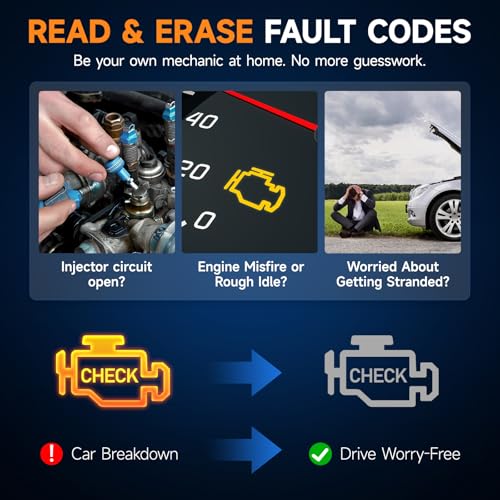
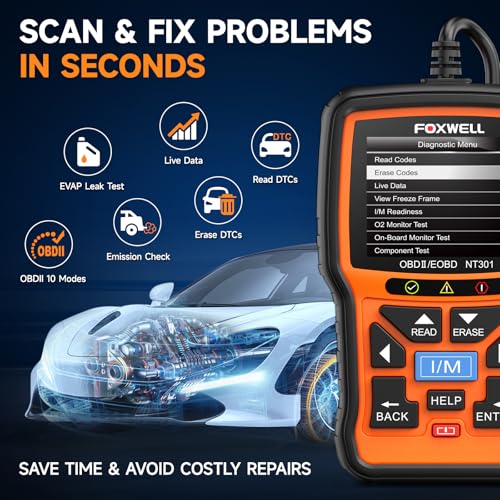
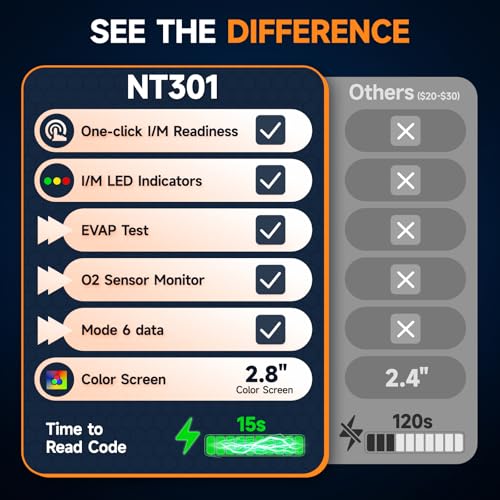
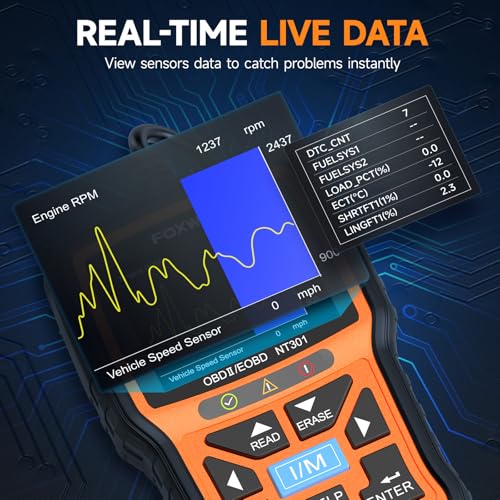
The FOXWELL NT301 stands out for one standout feature: live data graphing. While most budget scanners show numbers, this one lets you visualize sensor behavior over time, watch oxygen trims fluctuate or coolant temps climb. That’s invaluable for catching intermittent issues that codes alone won’t reveal.
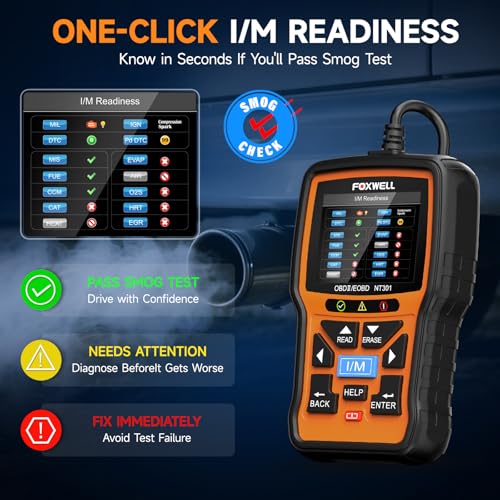
It handles all standard OBD2 tasks with ease, reading/clearing codes, I/M readiness checks, EVAP and O2 sensor testing, and the red-yellow-green indicator makes smog prep stress-free. The speaker gives audible feedback, which is handy when you’re under the hood. Compared to the ANCEL AD310, it offers deeper insight despite a similar form factor. Owners praise its reliability and daylight-readable screen.
Product photos
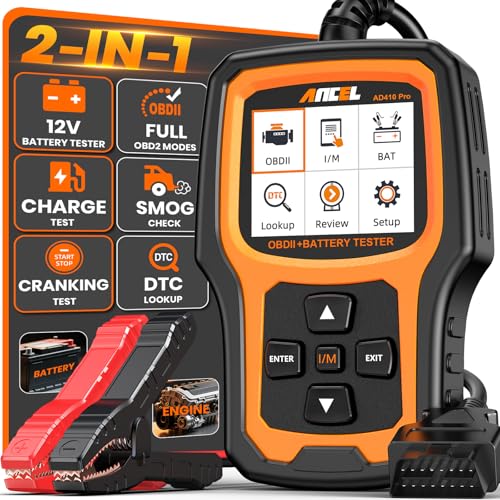
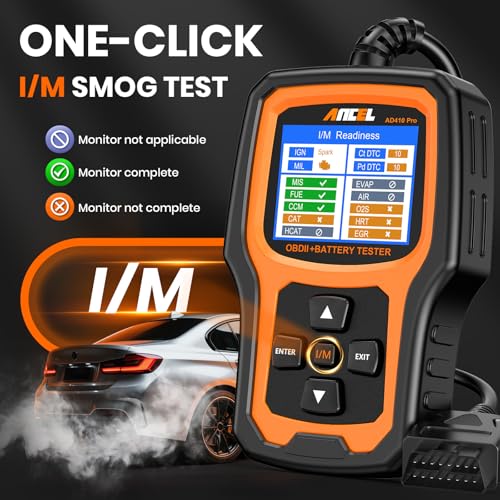
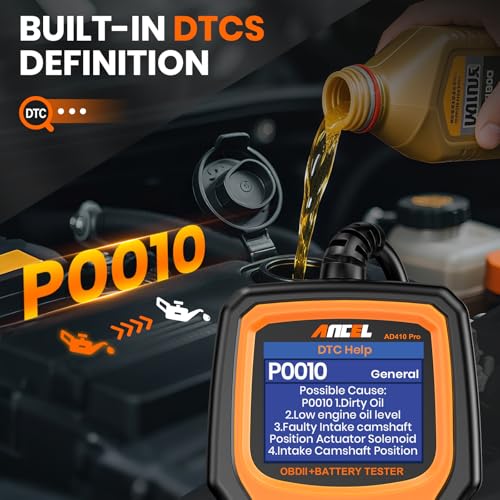
ANCEL AD410 PRO 2-in-1 Scanner
Strengths
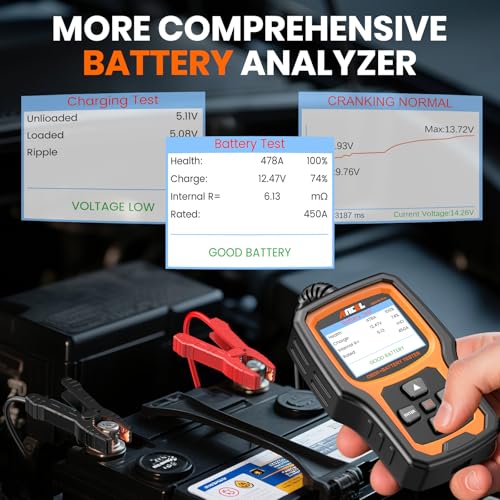
- Integrated battery tester
- Charging system analysis
- Clear code definitions
Trade-offs
- No ABS/SRS support
- No service resets
- Battery test limited to 12V systems
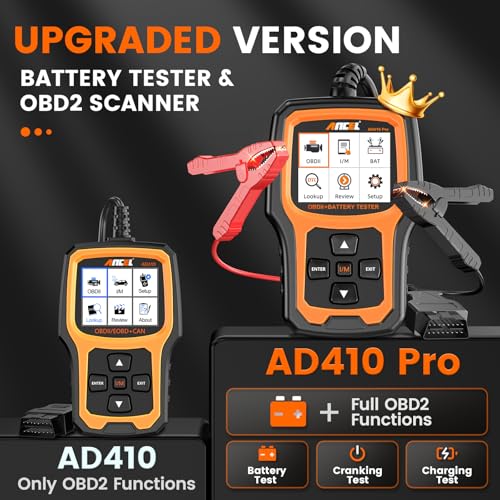
The AD410 PRO solves a real-world problem: battery issues masquerading as engine faults. By combining OBD2 diagnostics with battery, cranking, and charging system tests, it helps you rule out whether a dead cell or weak alternator is behind that check engine light. That dual functionality makes it a smarter buy than buying two separate tools.
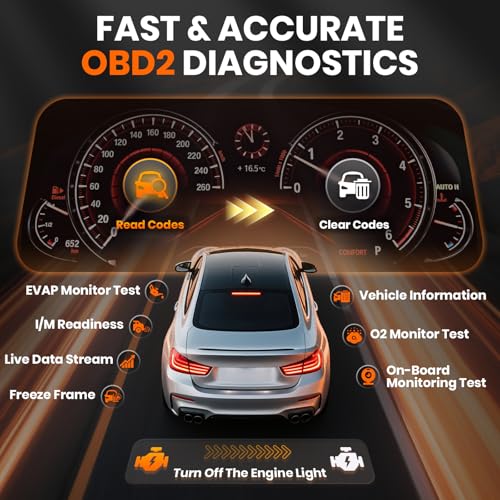
Owners appreciate the clarity of the HD screen and the ability to run both engine and electrical health checks in one go. It covers all standard OBD2 functions, live data, freeze frame, I/M readiness, and presents everything in plain language. However, like other ANCEL models, it doesn’t touch ABS, SRS, or transmission systems. Against the FOXWELL NT301, it trades graphing for battery analysis, a fair trade depending on your needs.
Product photos
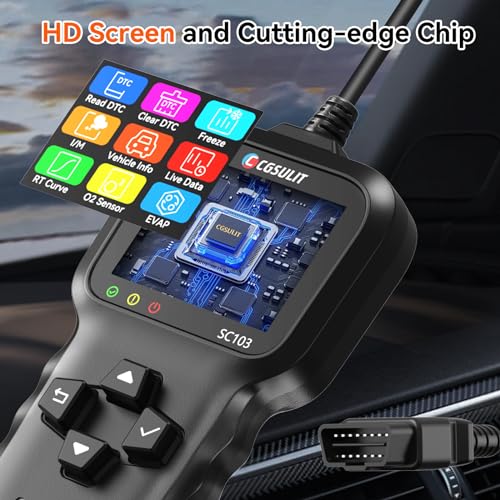
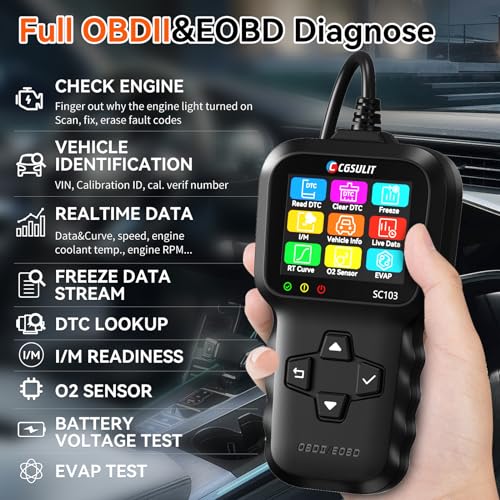
CGSULIT SC103 Car Code Reader

Strengths
- Color display
- Affordable price
- Built-in DTC lookup
Trade-offs
- Basic diagnostic scope
- No service resets
- Shorter software support window
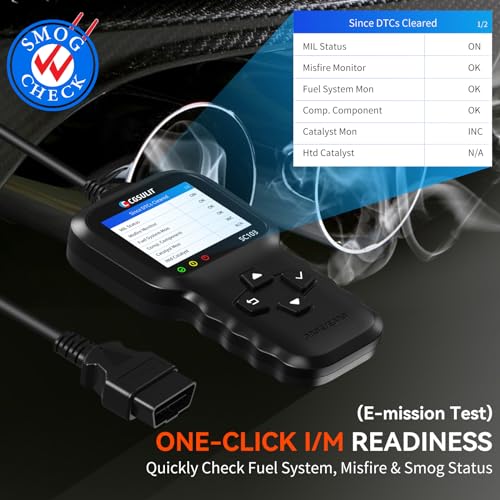
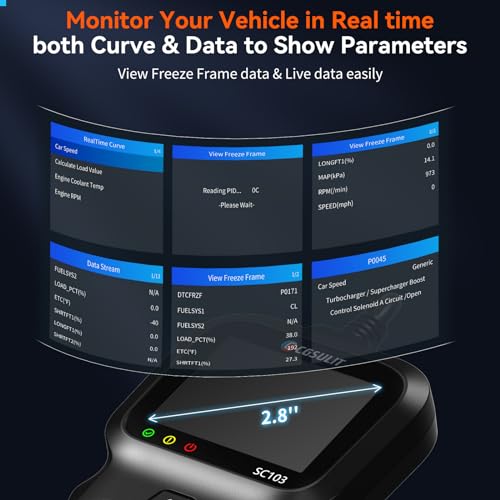
At under $20, the CGSULIT SC103 punches above its weight with a color TFT screen and real-time data streaming, features usually reserved for more expensive models. It reads and clears standard OBD2 codes, shows freeze frame data, and includes a built-in DTC library so you don’t need your phone nearby. For first-time users, that simplicity is a win.
It supports all major OBD2 protocols and works across U.S., European, and Asian vehicles from the last two decades. The industrial-grade chip reportedly delivers stable performance, and owners say it boots fast and stays responsive. Still, it lacks advanced functions like service resets or multi-system scanning. When stacked against the ANCEL AD410, it’s cheaper but less polished in interface and support.
Product photos

ANCEL AD310 Classic OBD2 Scanner

Strengths
- Compact design
- No battery required
- Clear error code display
Trade-offs
- Emissions-only diagnostics
- No live data graphing
- Limited to OBD2 systems
The ANCEL AD310 is the bare-bones hero for drivers who just want to silence a check engine light and move on. It’s not flashy, but it does what it promises, read and clear emission-related codes quickly and reliably. Owners consistently report that it works right out of the box, no setup or charging needed, which makes it ideal for someone who doesn’t want to wrestle with apps or Bluetooth pairing.
On paper, its compatibility is solid across 1996+ OBD2 vehicles, and the build quality stands out in this price range, the cable is thick, the buttons are responsive, and the screen is legible. But be aware: it only handles engine and emissions systems. If your ABS or transmission throws a code, this tool won’t see it. For basic diagnostics and peace of mind before a smog check, it’s hard to beat.
Product photos


How We Chose These car code scanners
As someone who’s spent years turning wrenches and digging into automotive systems, I approach diagnostic tools with a critical eye. Rather than a hands-on lab test of each unit – which would be a monumental undertaking – my assessment of car code scanners focused on a research-led comparison of published specifications and features, combined with careful consideration of owner reviews and insights from reputable automotive experts. I weighed this information against my understanding of what truly matters when diagnosing vehicle issues.
For this category, the most important factors boiled down to diagnostic depth and usability. A scanner that can read and clear basic codes is a starting point, but the ability to access live data streams – and interpret them effectively – is crucial for pinpointing the root cause of problems. Similarly, a scanner that’s clunky or difficult to navigate is far less valuable, even if it’s packed with features. I prioritized scanners offering thorough OBD2 functionality and a user-friendly interface. Knowing where your vehicle stands with its electrical system is also important, so I also considered units that test car batteries.
Specifications reliably tell you which OBDII protocols a scanner supports and the breadth of vehicle compatibility. However, real-world performance and the accuracy of those features often come down to owner feedback. I paid close attention to reports of consistent readings, ease of use, and the scanner’s ability to accurately identify and diagnose issues. Expert reviews helped validate these findings and highlighted the strengths and weaknesses of each model, helping me select the best code readers for different needs and budgets. I also looked for scanners that were frequently recommended as reliable OBD2 code readers.
How To Choose The car code scanners
Finding the right car code scanner can feel overwhelming. There are models ranging from basic, budget-friendly readers to professional-grade tools with bidirectional controls. But knowing what you actually need is the key to avoiding overspending and getting a scanner that will genuinely help you maintain your vehicle.
A truly useful car code scanner doesn’t just read a code; it provides context. Look for units offering live data streaming, freeze frame capture, and access to a thorough DTC (Diagnostic Trouble Code) library. Consider compatibility with your specific vehicle’s make, model, and year, and prioritize scanners with a clear, easy-to-read display and intuitive interface.
Decoding the Features You Need
The first step is to honestly assess your mechanical skill and what you hope to accomplish. Are you a DIY enthusiast wanting to diagnose simple issues before a shop visit, or do you need a tool that can handle advanced diagnostics and repairs? A basic scanner will read and clear codes, but won’t give you the deeper insights offered by more advanced units. Don’t pay for features you won’t use, but be realistic about potential future needs. For many, starting with a mid-range scanner is a good balance.
Understanding Live Data Capabilities
Live data is where a code scanner transitions from being a simple code reader to a genuinely useful diagnostic tool. The ability to view real-time sensor readings (like engine temperature, oxygen sensor output, and fuel trim) allows you to spot anomalies and pinpoint intermittent problems that a simple code alone won’t reveal. Not all live data is created equal, though. Look for scanners that offer graphing capabilities – seeing data trends visually is far more insightful than just looking at numbers. If you’re serious about diagnostics, explore options like the Innova 5610, which provides enhanced data streams.
Balancing Functionality and Value
Price and features inevitably go hand-in-hand, but it’s easy to get caught up in marketing hype. A $20 scanner might read basic codes, but it’s unlikely to have the breadth of coverage or accuracy of a more expensive unit. Here’s a quick guide to what you can expect at different price points:
- Under $50: Basic code reading and clearing. Limited vehicle coverage.
- $50 – $150: Enhanced code reading, I/M readiness testing, and basic live data. A good starting point for most vehicle owners. Consider the ANCEL AD310, a popular choice for its value.
- $150+: Advanced features like bidirectional control, special functions (ABS bleeding, battery registration), and extensive live data graphing. These are generally aimed at professional mechanics or serious DIYers.
A scanner is only as good as its ability to communicate with your vehicle. Always check compatibility before purchasing, even if the product claims broad coverage.
Ultimately, the “best” car code scanner is the one that meets your needs and budget. If you’re overwhelmed by the options, exploring a range of car scanners will help you narrow down your choices. Remember, a good scanner is an investment in your vehicle’s health and can save you money in the long run.
For those seeking a reliable and versatile option, looking into OBD scanners is a great starting point.
Car Code Scanners Compared
This table provides a specification comparison of various car code scanners to help you choose the right tool for your needs.
| Product Name | OBD2 Protocols Supported | Display Size | Battery Test | Reset Functions | Live Data Graphing | Vehicle Compatibility |
|---|---|---|---|---|---|---|
| BLCKTEC 460T | N/A | N/A | No | 12+ | Yes | 1996+ USA/Canada |
| FOXWELL NT604 Elite | N/A | N/A | No | No | No | 60+ Brands |
| Innova 5610 | N/A | N/A | No | Yes | Yes | Select Vehicles |
| ANCEL AD410 Enhanced | CAN, ISO9141, KWP2000 etc. | 2.4″ | Yes | No | Yes | 1996+ (US), 2000+ (EU) |
| FOXWELL NT301 | KWP2000, J1850 etc. | 2.8″ | No | No | Yes | 1996+ |
| ANCEL AD410 PRO | N/A | 2.4″ | Yes | No | Yes | 1996+ (US), 2001+(EU) |
| CGSULIT SC103 | All 5 OBD II | 2.8″ | Yes | No | Yes | 1996+ |
| ANCEL AD310 Classic | KWP2000, J1850 etc. | 2.5″ | No | No | No | 1996+ |
Frequently Asked Questions
What level of technical skill is needed to use a car code scanner?
A basic understanding of car systems is helpful, but many scanners are designed for ease of use. Even a beginner can read and clear codes, although interpreting the data and performing repairs often requires more in-depth knowledge.
Are more expensive scanners always better?
Not necessarily. While higher-priced scanners offer advanced features like bidirectional control and more extensive live data, a mid-range option often provides the best balance of functionality and value for most owners looking for reliable OBD2 scanners.
Can a code scanner fix my car?
A code scanner diagnoses the problem by reading error codes, but it typically doesn’t fix the issue. It points you towards the failing component, but you’ll still need to perform the repair yourself or take the vehicle to a mechanic.
What does “OBDII protocol” mean when comparing scanners?
OBDII protocols are the communication languages used by your car’s computer. Scanners need to support the protocols your vehicle uses to establish a connection and read data; broader protocol support means wider vehicle compatibility, and a good auto scanner will cover many of the common ones.
Will a scanner work with my car, regardless of its age?
Generally, scanners are designed for vehicles manufactured after 1996 in the US, but compatibility varies. Older vehicles might require a different type of scanner or adapter. It’s always best to confirm compatibility with your specific make, model, and year before purchasing, and consider a secure phone mount for easy access to diagnostic apps.
The Bottom Line
Choosing a car code scanner often comes down to how much control you want versus how much fuss you’re willing to deal with. A basic reader is simple, but the depth of insight offered by something like the BLCKTEC 460T, with its live data graphing, can be invaluable when tracking down elusive problems. Ultimately, for most owners, that blend of capability and usability is what makes a scanner truly worthwhile.
If you’re on a tighter budget, the ANCEL AD310 Classic remains a fantastic entry point. For those needing broader coverage and a bit more capability, the ANCEL AD410 Enhanced is a strong contender; it strikes a good balance between price and features. And for serious enthusiasts or those who want a tool capable of advanced functions, exploring professional diagnostic scanners is a smart move.
At the end of the day, a scanner is just a tool. The real value comes from understanding how your vehicle’s systems should operate and knowing what the data means. Don’t get lost in the specifications; focus on acquiring a working knowledge of automotive diagnostics, and consider complementing your toolkit with essentials like car vacuums to keep things tidy while you work.
