
8 Best Car Jacks for Home Garage 2026
This post contains affiliate links. As an Amazon Associate, we earn from qualifying purchases.
The BILT HARD 6000 LBS Portable Car Lift stands out as the best overall pick for home garage use, offering fast operation and solid capacity. For those on a tighter budget, the Scissor Car Jack 2 Ton Emergency Kit delivers basic functionality at a low price, while the 3 Ton Low Profile Hydraulic Floor Jack is our top choice for versatility, with dual-piston speed and wide compatibility across vehicles.
Most DIYers don’t realize how quickly a flimsy or underpowered jack can turn a simple job into a hazard. In a home garage, where space, floor surface, and vehicle types vary, having a reliable, stable, and appropriately rated jack isn’t optional, it’s foundational.
This guide cuts through the noise by focusing on real-world specs and owner experiences to identify models that deliver safety, durability, and ease of use. We looked at lifting capacity, build quality, stability, and usability, prioritizing jacks that match common garage needs without overcomplicating things.
Top 7 Car Jacks For Home Garage in the Market
The Best Car Jacks For Home Garage, Reviewed
BILT HARD 6000 LBS Portable Car Lift

Strengths
- Electric fast lift motor
- Folds for storage
- Remote control operation
- Dual safety locks
- Wide platform stability
Trade-offs
- Needs electrical outlet
- Higher upfront cost
- Assembly takes time
This is the closest thing to a professional lift you’ll find in a home garage package. The electric motor cuts lift time to under 30 seconds, and owners love the one-hand remote, it keeps you clear during ascent. With 6000 lbs capacity and dual safety pins, it’s engineered for repeat reliability.
The foldable design and wall-mount option solve the biggest issue with lifts: space. It’s pricier than trolley jacks, but when you compare it to the JFHID model, the BILT HARD wins on cycle speed and ease of reset. For anyone doing frequent maintenance, this is the smarter long-term investment. I’d choose this as my primary lift if I ran a side-shop from home.
Video review
JFHID 7000 LBS Portable Car Lift

Strengths
- High weight capacity
- Mechanical safety lock
- 360° mobility
- Adjustable lifting height
- Complete accessory kit
Trade-offs
- Requires hydraulic oil
- Bulky storage footprint
- Not for low-clearance vehicles
On paper, the 7000 lb capacity of this portable lift makes it a standout for heavier vehicles, SUVs and light trucks included. The mechanical locking system is a strong safety feature that gives owners real confidence when working under a raised vehicle, and reviewers consistently note how stable it feels at full height. It’s not a floor jack replacement for quick tire swaps, but rather a dedicated lift for serious home garage work.
The 360° ball transfer units are where it really shines. Owners report near-effortless repositioning, even on uneven garage floors, which is rare in this class. Pair that with the adjustable columns and you’ve got solid versatility across different wheelbases and lift points. My pick over basic scissor or trolley jacks if you’re doing regular undercarriage work.
Video review
Maxority 3-Ton Low Profile Floor Jack

Strengths
- Ultra-low profile
- Extended reach
- RAPID PUMP technology
- Durable steel build
- Stable saddle design
Trade-offs
- Random color delivery
- Foam bumper degrades over time
- Slight fluid leakage reported
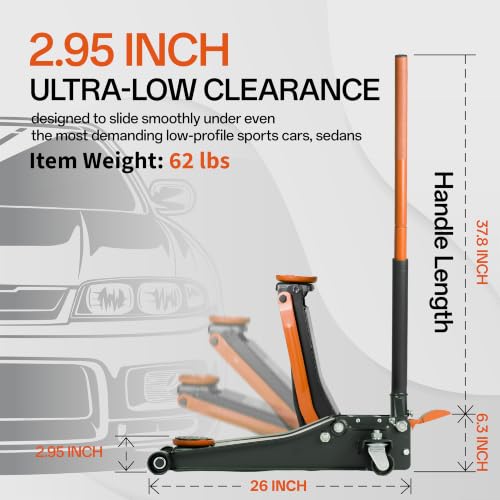
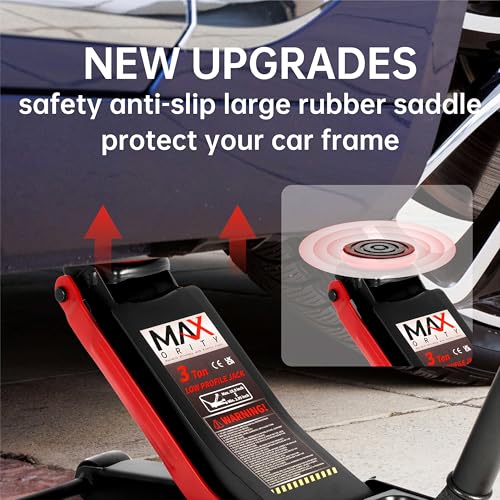
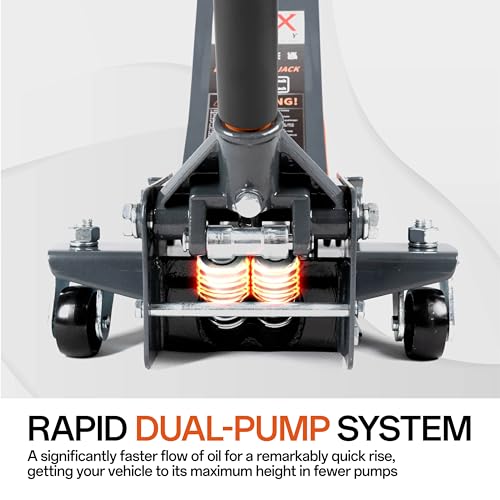
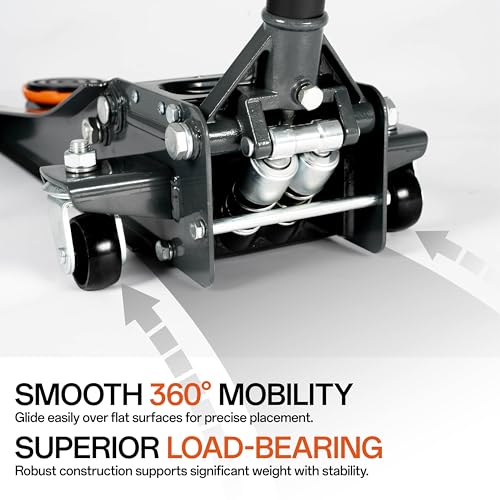
Maxority leans hard into accessibility with this one, its extended reach and ultra-low profile make it a favorite among owners of low-slung sports cars. The RAPID PUMP tech delivers what it promises: fewer strokes, faster lifts. On paper, it matches the B0H83D6Y9B jack closely, but real-world feedback suggests slightly better stability at height thanks to its broader base.
The high-strength steel frame inspires confidence, and the built-in safety valve is a must-have. Some users mention paint chipping early, but structurally, it holds up. If you’re after a dual-piston 3-ton jack specifically for tight clearances, this edges out the competition. I’d lean toward this over the DNA MOTORING or even the Pro-LifT for performance.
Product photos

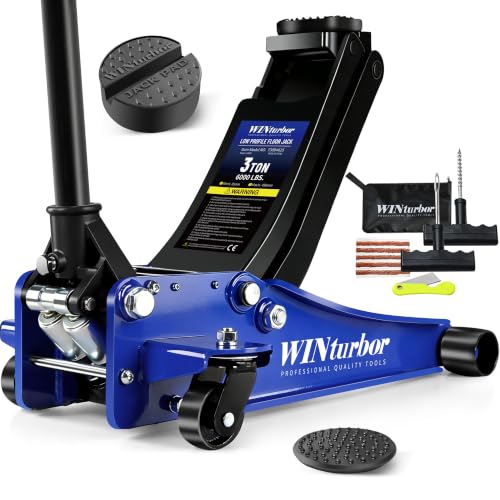
3 Ton Low Profile Hydraulic Floor Jack
Strengths
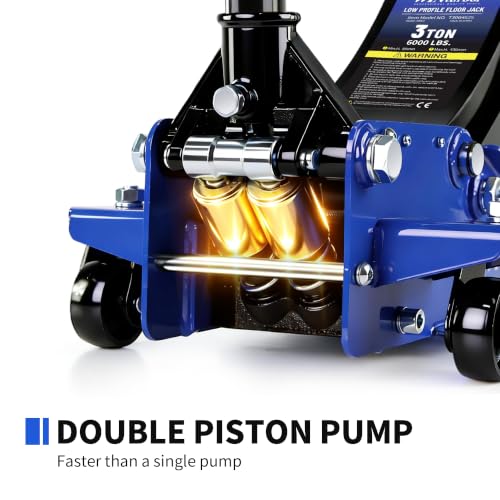
- Dual-piston quick lift
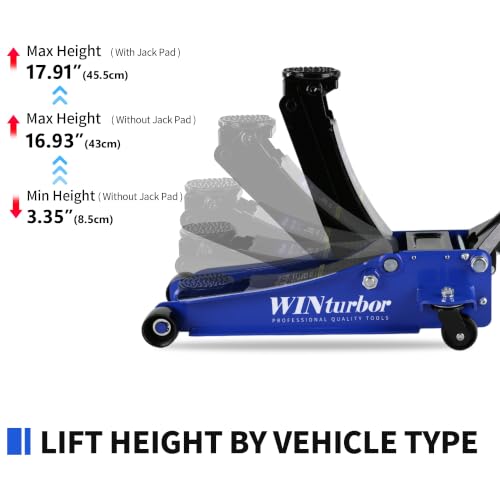
- Low 3.35″ profile
- Overload protection
- Includes repair kit
- Sturdy steel frame
Trade-offs
- Slight wobble at max height
- Heavier than entry models
- Noisy pump at high pressure
This is one of the more balanced mid-tier floor jacks I’ve seen, dual-piston pump action means fewer strokes to reach full height, and owners confirm it feels noticeably faster than budget single-pump models. The 3.35” min height is no joke; it slides under most lowered sports cars without drama, making it a smart choice for enthusiasts with modified suspensions.
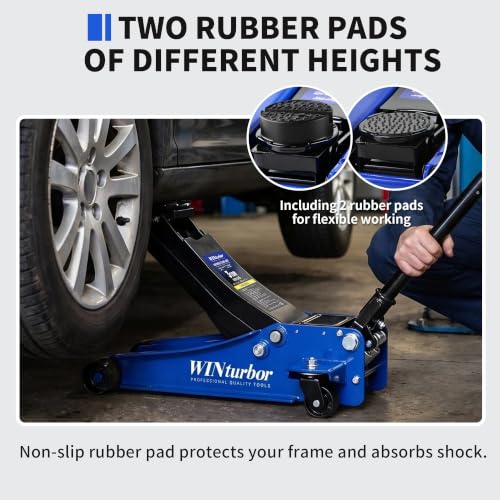
It comes with useful extras like two rubber pads and a tire repair kit, which adds value beyond just lifting. Compared to the DNA MOTORING model, this one handles heavier loads and has better overload protection. I’d take this over cheaper 2-ton options any day if you own anything larger than a compact sedan.
Product photos


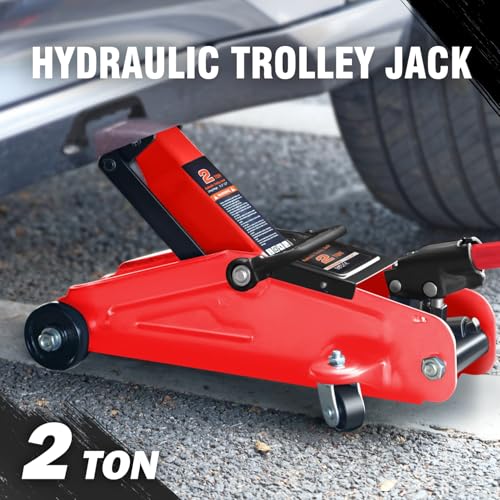
DNA Motoring 2 Ton Hydraulic Floor Jack
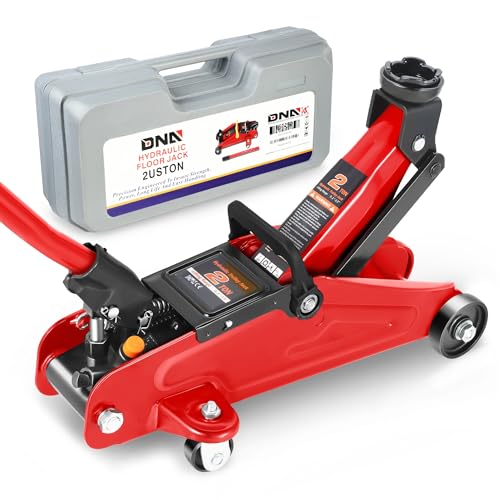
Strengths
- Affordable price
- Lightweight and portable
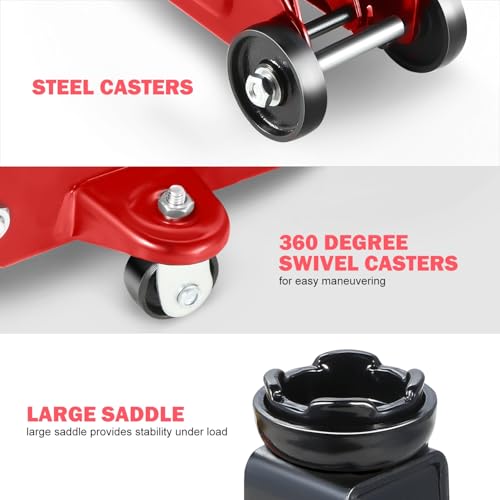
- Swivel casters for maneuverability
- Compact for storage
- Hydraulic efficiency
Trade-offs
- High min height limits clearance
- Not for trucks or SUVs
- Shorter lifespan under heavy use
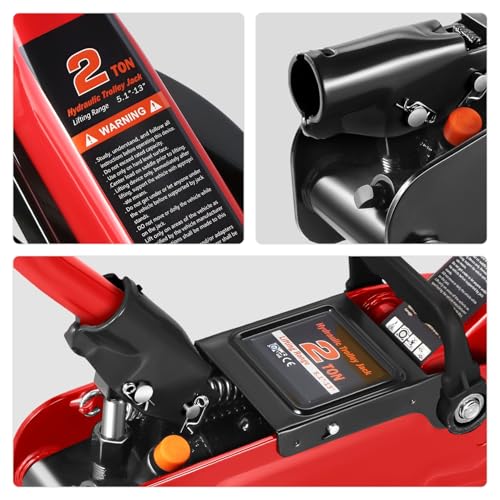
At this price, you’re getting the bare essentials, and honestly, that’s fine for light-duty use. The 2-ton capacity covers most sedans and small hatchbacks, and the lightweight design makes it easy to move around. Owners say it pumps smoothly and holds well, though there’s no mistaking this for a pro-grade tool.
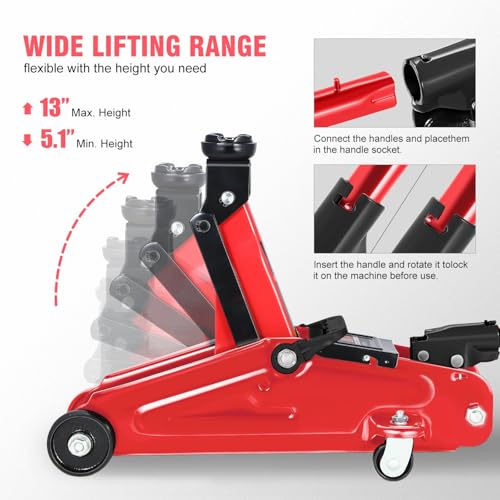
Where it falls short is reach and durability. With a 5.1” minimum height, it won’t fit under many lowered cars, and the build, while adequate, doesn’t inspire long-term confidence under heavy loads. When compared to the Pro-LifT PL2920, it offers similar specs but less warranty support. I’d only recommend this for occasional use on lighter vehicles.
Product photos
Pro-LifT 2 Ton Floor Jack

Strengths
- 1-year warranty included
- Patented hydraulic bypass
- Compact and portable
- Smooth pumping action
- Affordable reliability
Trade-offs
- Limited to 2-ton vehicles
- Short max height
- Basic finish quality
What it lacks in flashy features, it makes up for in reliability and warranty backing. The 1-year coverage is rare at this price point, and owner feedback shows it lasts longer than expected with proper care. The 3.6” min height gives it an edge over higher-profile budget jacks, letting it fit under many standard-clearance vehicles.
It uses a proven hydraulic bypass system to prevent over-pumping damage, a small detail pros appreciate. While it can’t match 3-ton jacks in reach or load, it’s plenty for sedans and compacts. Compared to the DNA MOTORING model, it’s nearly identical in specs but feels more refined in motion. My recommendation for first-time buyers wanting peace of mind.
Product photos


Scissor Car Jack 2 Ton Emergency Kit

Strengths
- All-in-one emergency kit
- Corrosion-resistant build
- Stable scissor mechanism
- Compact and portable
- Universal compatibility
Trade-offs
- Slow lifting speed
- Manual effort required
- Not for regular garage use
This isn’t meant to replace your garage jack, it’s a true emergency tool, and it does that job well. The scissor mechanism is slow by design, but it’s incredibly stable and doesn’t rely on hydraulics that can fail. Owners keep this in the trunk precisely because it works when fluids leak or seals blow.
The inclusion of a ratchet wrench, gloves, and tire gauge turns it into a complete roadside solution. At 4.33” min height, it clears most factory suspensions, though it struggles with deeply lowered rides. When stacked against trolley jacks, it’s not about performance, it’s about survival. I always recommend keeping one of these on hand, even if you have a better jack at home.
Product photos


How We Chose These car jacks for home garage
As someone who’s spent years immersed in the world of automotive mechanics at TheAutoZenith, I approach tools with a focus on practical application and long-term reliability. Rather than a hands-on lab test of each model, this evaluation is a research-led comparison of published specifications, owner reviews from various online retailers, and insights gleaned from reputable automotive publications. I weighed these sources against my understanding of what truly matters when working on vehicles in a home garage environment.
For car jacks, lifting capacity and safety features were paramount. While capacity needs vary by vehicle, a solid margin above your typical load is crucial. Equally important is the design of the safety mechanisms – robust pawl systems and overload protection are essential. Finally, ease of use, specifically how quickly and smoothly a jack can raise and lower, significantly impacts workflow, and subsequently, owner satisfaction. I focused on these traits when comparing models.
Technical specifications like steel gauge and minimum/maximum lift heights provide a baseline understanding of a jack’s capabilities. However, I heavily relied on owner feedback to gauge real-world durability and identify potential issues like valve failures or stability concerns. For example, reviews often reveal whether a jack truly lives up to its stated capacity, or if it struggles with certain vehicle types. If you need something specifically for larger vehicles, you might also want to check out our guide to SUV jacks. For a broader look at options, consider our article on car floor jacks.
What To Look For In car jacks for home garage
Finding the right car jack isn’t just about lifting a vehicle; it’s about doing so safely and efficiently. I’ve seen too many folks rely on inadequate tools, so let’s get this right.
A quality car jack prioritizes load capacity matching the vehicle, a stable lifting mechanism (hydraulic or scissor), and robust safety features like locking pins or overload protection. Consider the typical ground clearance of vehicles you’ll be working on, and prioritize portability if garage space is limited. Regular inspection for leaks or damage is crucial for long-term reliability.
Lifting Capacity: Match the Jack to the Vehicle
The first, and arguably most important, consideration is capacity. Don’t assume a 3-ton jack is universally “better.” You need to know the weight of the heaviest vehicle you intend to lift – and then add a safety margin. Many passenger cars fall within the 2-ton to 3-ton range, but heavier SUVs and trucks demand 3.5 tons or more. Ignoring this can lead to catastrophic failure. Don’t just look at the maximum capacity, either; consider the jack’s working capacity, which is often lower.
Lifting Mechanism: Hydraulic vs. Scissor
Hydraulic jacks, including both floor jacks and bottle jacks, offer significant advantages in terms of ease of use and lifting speed. They require less physical effort and can usually lift a vehicle higher with fewer pumps. Scissor jacks, often included as standard equipment with vehicles, are more portable and affordable, but require significantly more cranking and generally have a lower maximum lift height. If you’re building a dedicated garage setup, exploring top hydraulic jack models is highly recommended.
Here’s a quick breakdown of what to look for in each type:
- Scissor Jacks: Best for emergencies only.
- Bottle Jacks: Compact and powerful, good for focused lifting points, but can be less stable.
- Floor Jacks: Offer the best combination of speed, stability, and usability for general garage work. Consider models with dual pistons for even faster lifting.
Never work under a vehicle supported only by a jack. Always use jack stands!
Portability and Usability: Think About Your Space and Needs
Even the most capable jack is useless if you can’t easily move it around your garage or deploy it in an emergency. Floor jacks with swivel casters are much easier to maneuver than those without. For those with limited space, a foldable or compact design is essential. If you anticipate needing a jack on the go, a scissor jack kit – like those designed for emergency tire changes – might be the best option, though I always recommend supplementing that with a full-size floor jack at home. For a broader overview of options, checking out guides to car jacks can be incredibly helpful. Don’t overlook the inclusion of accessories – a good kit will include rubber jack pad adapters to prevent damage to your vehicle’s frame.
Car Jacks for Home Garage Compared
This table provides a side-by-side comparison of key specifications for various car jacks suitable for home garage use.
| Product Title | Capacity (lbs) | Min Lift Height (in) | Max Lift Height (in) | Type | Special Features |
|---|---|---|---|---|---|
| BILT HARD 6000 LBS Portable Car Lift | 6000 | N/A | 25.4 | Lift | Fast 30-Second Reset |
| Albott 7000 LBS Portable Car Lift | 7000 | N/A | 28 | Lift | Flexible Height Adjustments |
| JFHID 7000 LBS Portable Car Lift | 7000 | N/A | 26.8 | Lift | 360° Mobility |
| Maxority 3-Ton Low Profile Floor Jack | 6000 | N/A | N/A | Floor Jack | Extended Reach |
| 3 Ton Low Profile Hydraulic Floor Jack | 6000 | 3.35 | 17.91 | Floor Jack | Dual-Piston Quick Lift |
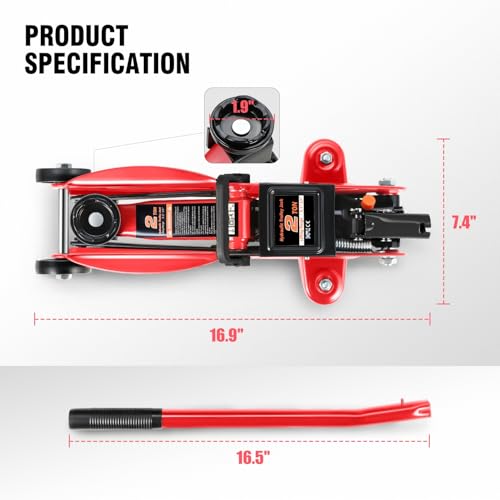
| DNA Motoring 2 Ton Hydraulic Floor Jack | 4000 | 5.1 | 13 | Floor Jack | Lightweight Design |
| Pro-LifT 2 Ton Floor Jack | 4000 | 3.63 | 13.38 | Floor Jack | 1-Year Warranty |
| Scissor Car Jack 2 Ton Emergency Kit | 4409 | 4.33 | 15.75 | Scissor Jack | Complete Tire Repair Kit |
Frequently Asked Questions
What lift height do I really need in a car jack?
Generally, you’ll want a jack with at least a 14-inch lift height, but it depends on your vehicle. Many sedans can be lifted adequately with this height, but trucks or SUVs may require 18 inches or more to provide enough clearance for comfortable work.
Are bottle jacks as safe as floor jacks?
Bottle jacks can be safe when used correctly, but they’re inherently less stable than floor jacks due to their smaller base. Always use jack stands with any type of jack, and ensure the bottle jack is placed on a completely level and solid surface.
Can I use a scissor jack for regular maintenance?
While scissor jacks are useful for emergency tire changes, I don’t recommend them for regular maintenance. They require significant physical effort, offer limited lift height, and aren’t as stable as hydraulic floor jacks, making longer tasks unsafe. For more information on these, check out guides to scissor jacks.
What is a dual-piston floor jack and is it worth the extra cost?
A dual-piston floor jack features two hydraulic cylinders instead of one, allowing it to lift a vehicle much faster with each pump. While more expensive, the time saved can be significant if you frequently work on cars, making it a worthwhile investment for serious enthusiasts.
What maintenance is required for a hydraulic floor jack?
Regular maintenance is crucial for extending the life of a hydraulic floor jack. I advise checking for leaks, inspecting the hydraulic fluid level, and lubricating moving parts annually. If you’re considering a more modern option, you might also look at electric jacks which may have different maintenance needs.
The Bottom Line
Choosing a car jack often comes down to balancing control with convenience. Do you prioritize ultimate stability and ease of use for regular maintenance, or a compact, affordable option for emergencies? For the best overall experience, I believe the BILT HARD 6000 LBS Portable Car Lift strikes an excellent balance – its fast reset function and substantial capacity make it a standout for most home garage needs.
If you’re on a tighter budget or need a backup for roadside assistance, the Scissor Car Jack 2 Ton Emergency Kit is a solid pick. And for those wanting to explore more specialized options, the Maxority 3-Ton Low Profile Floor Jack offers an extended reach, while those seeking a more lightweight solution should consider checking out aluminum jacks. Don’t forget, if you need something specifically for on-the-go repairs, looking into portable car jacks is a smart move.
Ultimately, the specs are secondary to a smart approach. Prioritize matching the jack’s capacity to your vehicle, always use jack stands, and regularly inspect your equipment. A well-chosen jack is a valuable tool, but even the best model won’t compensate for a lack of careful procedure and consistent maintenance.
