
7 Best Car Floor Jacks of 2026
This post contains affiliate links. As an Amazon Associate, we earn from qualifying purchases.
The AV Steel 3 Ton Low Profile is the best overall car floor jack for most people, combining a low starting height with strong lift capacity and solid build quality. For those on a tighter budget, the VEVOR 2.5 Ton Low Profile Steel delivers reliable performance at a lower price, while the Jack Boss 3 Ton Aluminum Racing offers a lightweight, high-end option ideal for frequent use in a well-equipped garage.
If you’ve ever crawled under your car only to realize your jack won’t reach the pickup point, you know how frustrating the wrong tool can be. A floor jack isn’t just about lifting, it’s about doing it safely, smoothly, and without surprises.
This guide cuts through the noise by focusing on real-world specs and owner experiences. I compared lift ranges, materials, pump types, and safety standards to find jacks that perform consistently, whether you’re changing oil or swapping suspension parts. These picks are built for actual use, not just showroom specs.
Top 7 Car Floor Jacks in the Market
The Best Car Floor Jacks, Reviewed
AV Steel 3 Ton Low Profile Floor Jack

Strengths
- Lowest min height
- Dual piston pump
- 19-7/8″ max lift
Trade-offs
- Heavy at 65+ lbs
- Handle storage could be better
- Some report slow bleed-down
If you’re looking for the most balanced 3-ton jack in this lineup, the AV Steel dual-piston model is the one to beat. It combines a 3-1/8-inch minimum height, the lowest here, with a 19-7/8-inch max lift, giving it the broadest range of compatibility across sports cars, sedans, and midsize SUVs. The dual-piston pump delivers fast initial lift, and owners praise its smooth operation and solid steel build.
It also meets ANSI/ASME safety standards and comes with a 12-month warranty and 24/7 support, which adds real value. Compared to the Jack Boss, it lifts higher; versus the Maxority, it feels more refined. For most buyers, this is the easy pick when you want one jack that does everything well.
Video review
Jack Boss 3 Ton Aluminum Racing Floor Jack

Strengths
- Aluminum body
- Dual piston pump
- 360° rotatable saddle
Trade-offs
- Max height only 18-5/16″
- Saddle could be larger
- Occasional oil seepage
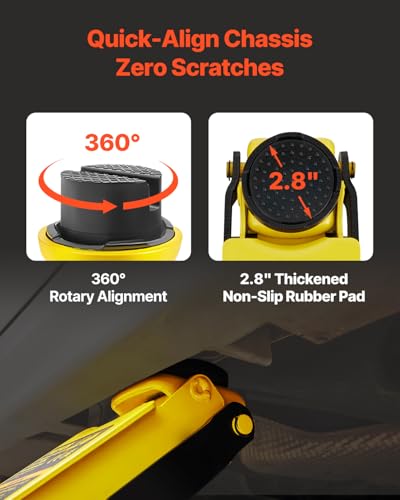
The Jack Boss hits a sweet spot for owners of low-clearance vehicles who want a blend of aluminum lightness and steel strength. At 3-15/16 inches minimum height, it clears most lowered sedans and sport compacts, and the dual-piston pump makes lifting feel effortless. The hybrid aluminum-steel body keeps weight down to 58.5 lbs, lighter than all-steel rivals, while maintaining rigidity.
Owners report smooth rolling on the swivel casters and solid saddle grip. It doesn’t lift as high as the AV Steel model, but for most cars, it’s plenty. I’d pick this over the Maxority if you value weight savings and a more refined feel. It’s not the cheapest, but it’s one of the most car-enthusiast-friendly in this group.
Video review
AUTOWN 3 Ton Hydraulic Car Floor Jack
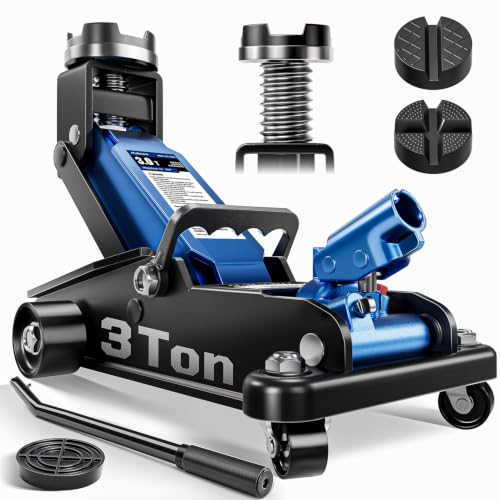
Strengths
- 20.9″ max lift
- Cross-shape rubber pad
- Folds flat for storage
Trade-offs
- High 7.1″ min height
- Not for low cars
- Some report handle wobble
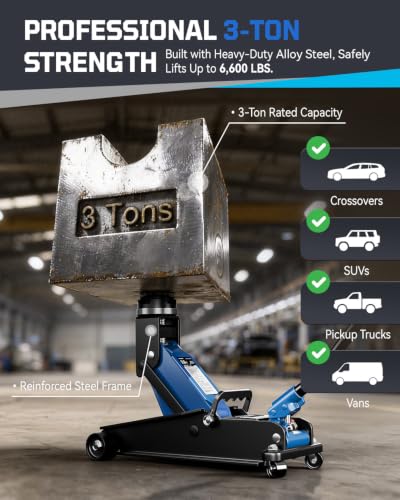
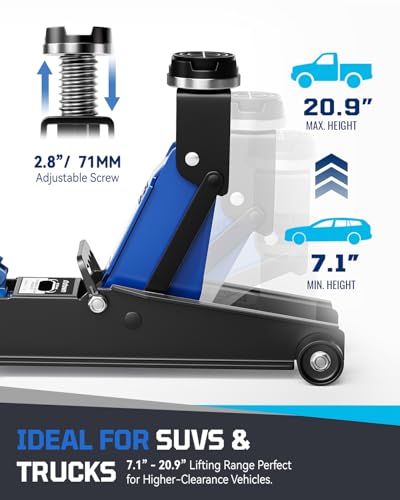
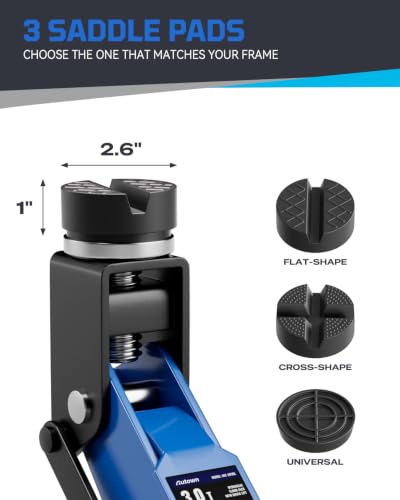
The AUTOWN 3-ton jack is built for larger vehicles, and it shows in the numbers: a 7.1-inch minimum height and 20.9-inch max lift make it perfect for full-size pickups and SUVs. It’s not a low-profile jack, but that’s by design. The cross-shape rubber pad is a standout feature, owners say it grips frame rails better than flat saddles, reducing slippage on uneven lift points.
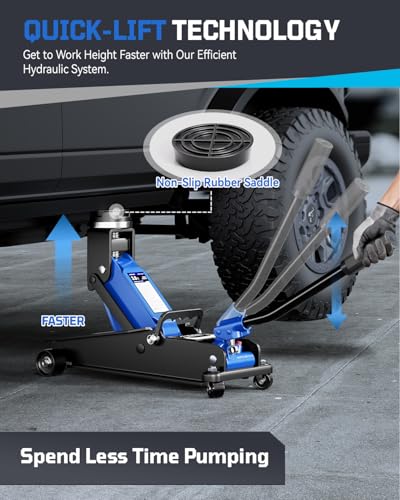
It uses a quick-lift hydraulic system that reduces initial strokes, and the fold-flat design is great for tight storage. Weighing in at around 60 lbs, it’s not light, but manageable. Compared to the BIG RED, it lifts higher and has better control. For truck-focused buyers on a budget, this is the smarter buy.
Product photos
Maxority 3-Ton Low Profile Hydraulic Floor Jack

Strengths
- Dual piston pump
- 3-ton capacity
- Low 3.35″ min height
Trade-offs
- Heavy steel frame
- Random color option
- Nozzle can leak over time
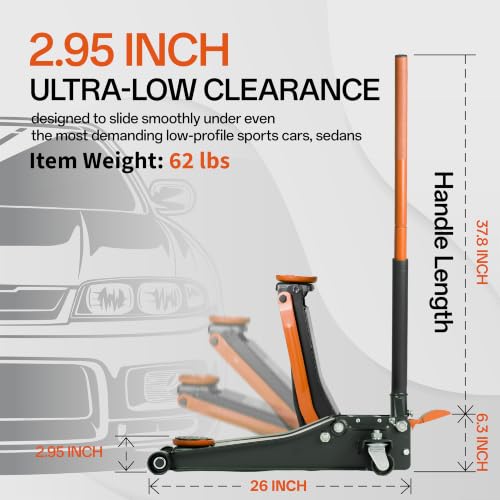
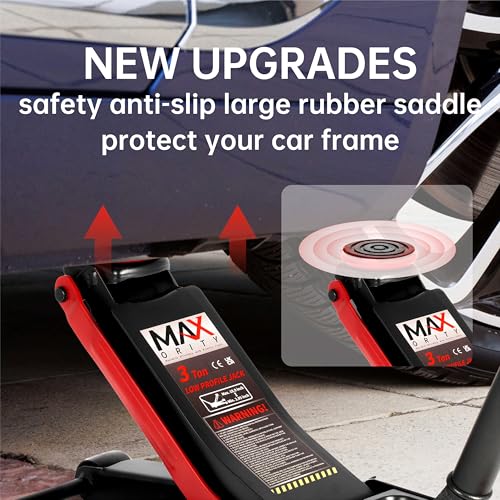
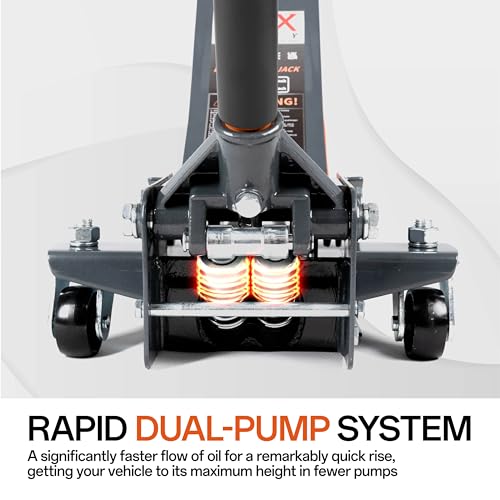
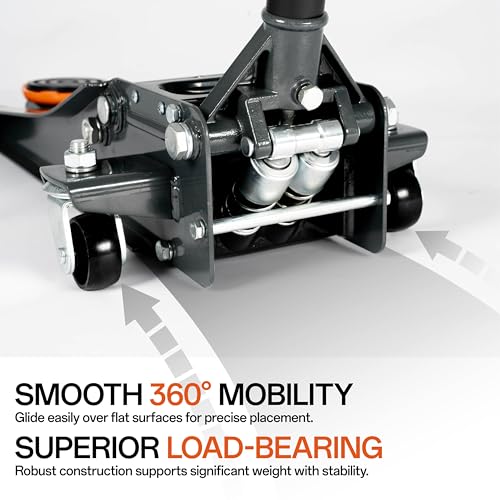
The Maxority 3-ton jack stands out in the mid-range thanks to its dual-piston RAPID PUMP system, which owners say cuts lift time noticeably compared to single-piston jacks. With a 3.35-inch minimum height, it slides under most lowered or low-clearance vehicles without issue, making it a smart alternative to pricier brands. The steel construction feels rugged, and feedback suggests it holds up well in home garages with moderate use.
It’s not as sleek as aluminum-bodied jacks, and the color is random, which might irk some. But when you factor in the performance-to-price ratio, it’s hard to ignore. I’d pick this over the VEVOR if you’re doing more than just oil changes and want faster, less strenuous lifting.
Product photos

BIG RED T83006 Hydraulic Trolley Floor Jack

Strengths
- 20-7/8″ max lift
- Rugged steel build
- Smooth-rolling casters
Trade-offs
- High 5-7/8″ min height
- Short handle
- Single piston pump
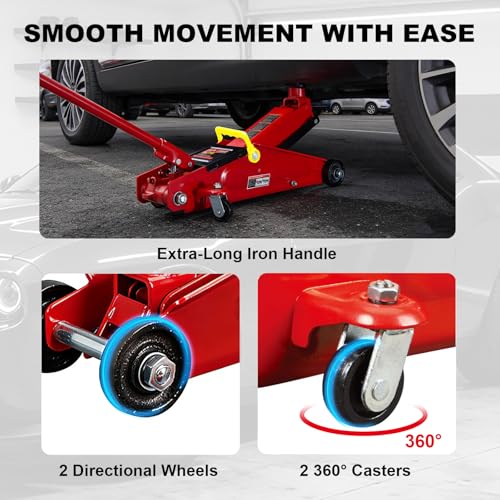
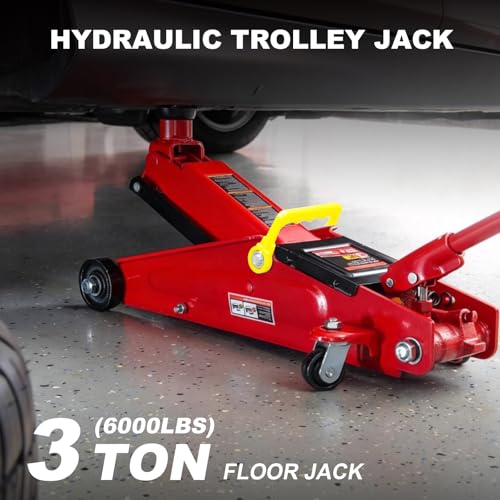
BIG RED has been a staple in garages for years, and the T83006 delivers where it counts: lift height and rugged simplicity. With a 20-7/8-inch max lift, it’s ideal for SUVs and trucks that sit higher off the ground. The 5-7/8-inch minimum height means it won’t work for lowered cars, but that’s not its job.
It uses a single piston, so lifting takes more effort, and the handle is shorter than some, 24.5 inches, which can be a strain for taller users. But the build is industrial, the casters roll smoothly, and it’s been a trusted name for decades. Compared to the AUTOWN, it’s less refined but just as durable. For truck owners, it’s a no-nonsense, high-lift workhorse.
Product photos


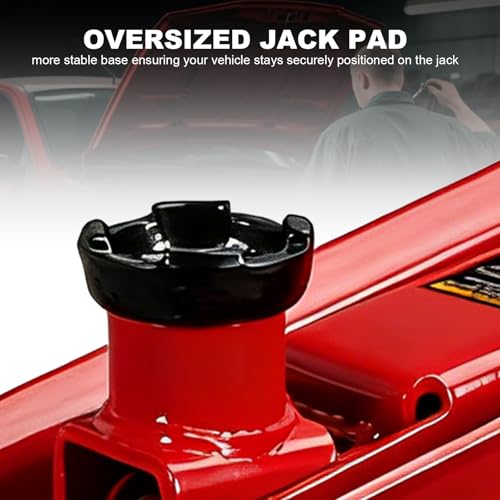
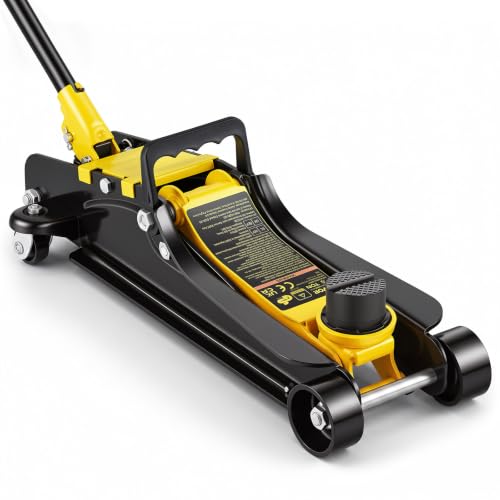
VEVOR 2.5 Ton Low Profile Steel Floor Jack
Strengths
- 2.5-ton capacity
- Low 3.35″ min height
- Durable steel build
Trade-offs
- Single piston pump
- Heavier than aluminum models
- Not for large trucks
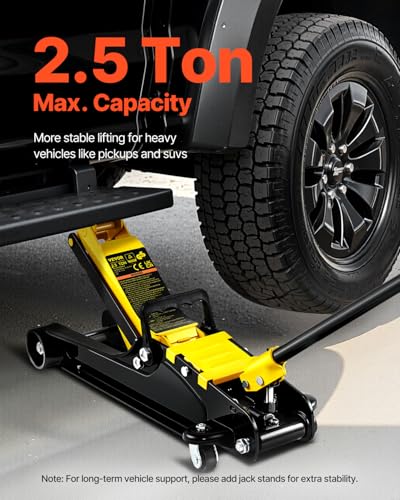
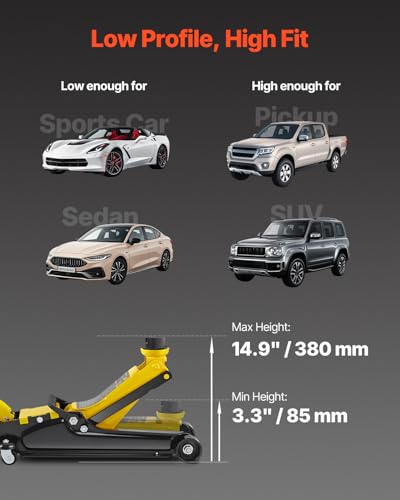
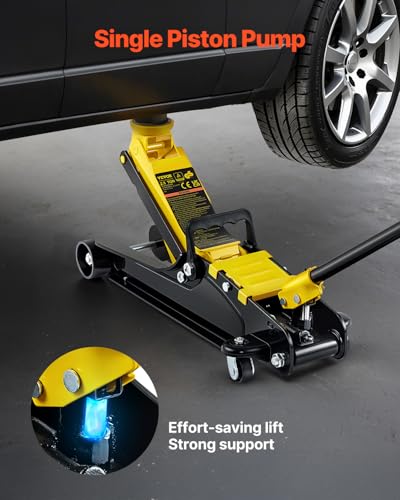
For buyers on a tight budget who still want a low-profile jack, the VEVOR 2.5-ton model makes a compelling first impression. On paper, it delivers what matters most: a minimum height of just 3.35 inches and a 5,500-pound capacity that covers most sedans and smaller SUVs. Owners consistently report it works reliably for oil changes and tire swaps, especially when paired with jack stands.
That said, it’s built entirely from steel, which makes it heavier than some dual-piston competitors, and it lacks the rapid lift tech that reduces pump strokes. It’s not going to keep up with high-frequency use in a shop, but for occasional DIYers, it’s a solid entry-level pick. Compared to pricier dual-piston models, it trades speed for savings.
Product photos
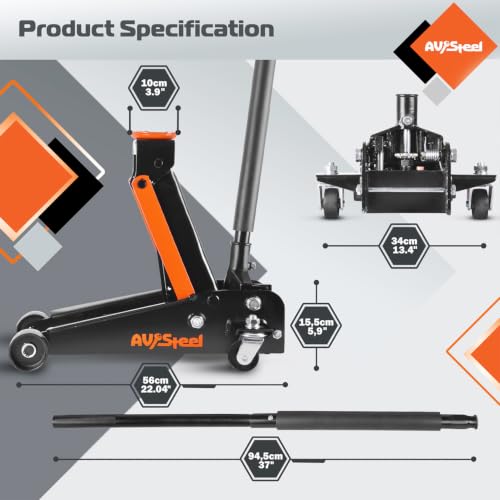
AV Steel 3 Ton Single Piston Floor Jack

Strengths
- Sturdy steel build
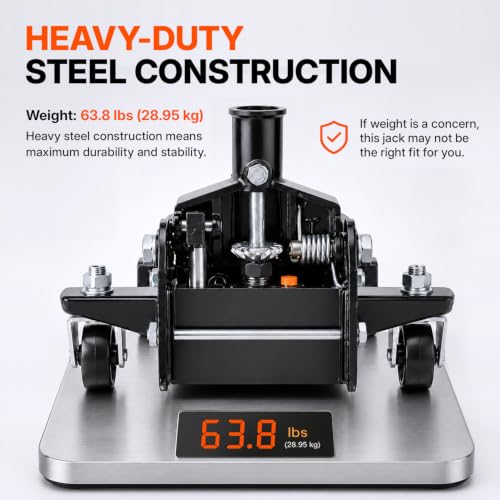
- 63.8 lb durability
- ANSI/ASME certified
Trade-offs
- Higher 5.5″ min height
- Single piston pump
- Heavy to move
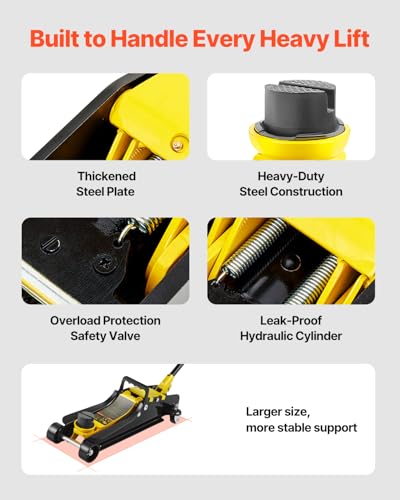
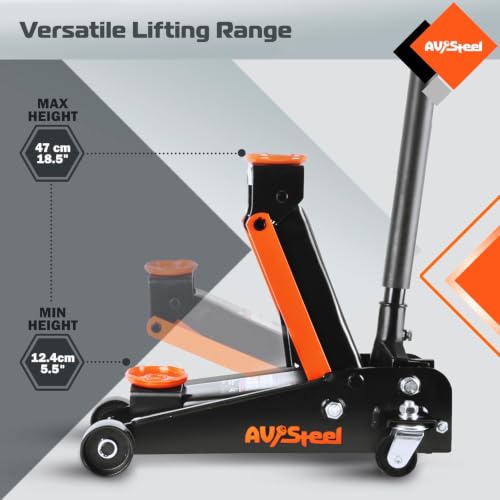
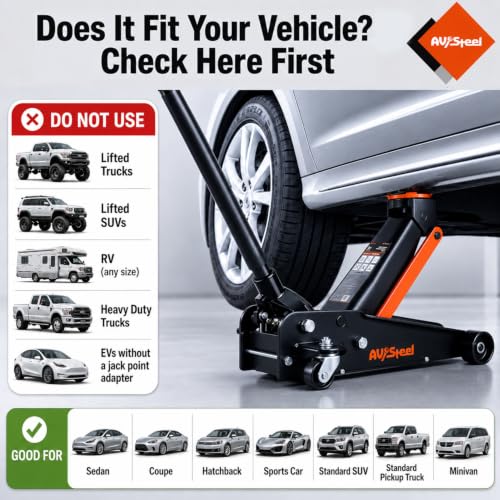
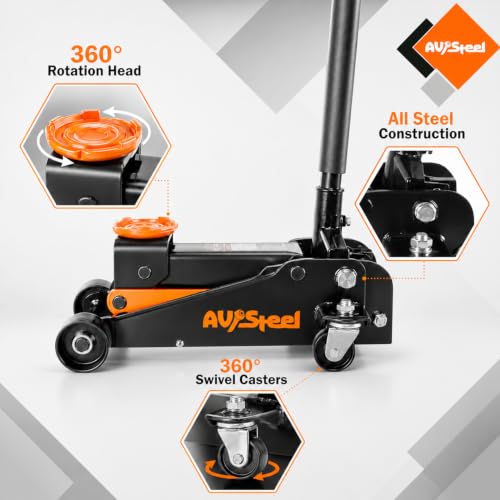
This AV Steel single-piston jack is a no-frills workhorse built for standard vehicles, nothing more, nothing less. With a 5.5-inch minimum height, it won’t fit under lowered cars, but it handles most sedans, SUVs, and pickup trucks just fine. The 6,000-pound capacity is slightly below the 6,600-lb norm, but that’s unlikely to matter unless you’re pushing limits.
Owners note it’s overbuilt and tank-like, which is great for durability but a pain if you move it often. It’s heavier than the dual-piston AV model, and without the quick lift, it takes more strokes. But if you’re on a budget and don’t need low clearance, it’s a dependable, safe option. I’d recommend it over the BIG RED if you want better build quality at a similar price.
Product photos
How We Evaluated car floor jacks
As someone who’s spent years exploring the mechanics of vehicles at TheAutoZenith, I approach tools like floor jacks with a critical eye. Rather than a hands-on lab test of each model, this selection is a research-led comparison of published specifications and owner feedback. I looked at dozens of models, then weighed features, capacity, lift range, and safety certifications against what real users are saying about durability and ease of use. This allowed me to create a ranking based on practical performance, not just theoretical capability.
For car floor jacks, a few factors stood out as most important. Lifting capacity is obvious – you need a jack rated for your vehicle’s weight. But equally crucial is the lift range; a jack that can’t physically reach the vehicle’s jacking points is useless. Finally, build quality and safety features, like overload protection, are paramount. A stable, reliable jack is essential when you’re working underneath a vehicle, and that’s where owner reviews truly became invaluable.
Specifications reliably indicate capacity and dimensions. However, owner feedback provided insight into real-world usability – how easily the jack rolls, how smoothly the pump operates, and whether it holds up over time. Reputation also played a role; established brands with a history of quality generally fared better. If you’re looking for something more mobile, you may also want to explore our guide to the best portable car jacks. Ultimately, the best choice depends on your specific needs, but these jacks represent a strong starting point for anyone outfitting a jacks for home garage.
What To Look For In car floor jacks
Finding the right floor jack isn’t just about lifting a vehicle; it’s about doing so safely and efficiently. A good floor jack is an investment in your ability to perform routine maintenance and even more complex repairs.
A quality car floor jack prioritizes a robust lifting capacity matched to the vehicles it will serve. Key considerations include lift range (minimum and maximum height), stability under load, build quality (steel vs. aluminum), and safety features like overload protection. Dual-piston pumps are preferable for faster lift times, while low-profile designs are crucial for vehicles with limited ground clearance.
Capacity and Vehicle Weight
First, understand your needs. Don’t simply buy the biggest jack available. While a 3-ton jack (6,000 lbs) is common, it’s overkill for many compact cars. Over-specifying adds weight and cost. Conversely, underestimating your vehicle’s weight – especially with trucks or SUVs – is a dangerous mistake. Always check your vehicle’s GVWR (Gross Vehicle Weight Rating) and select a jack with a capacity exceeding at least half that weight. Remember, you’re lifting a portion of the vehicle, not the entire thing, but a safety margin is essential. Many modern SUVs require a dedicated floor jacks for SUVs to ensure proper lifting.
Lift Range and Vehicle Type
Lift range is frequently overlooked. A jack with a low minimum height is critical for vehicles with low ground clearance – sports cars and many newer sedans are prime examples. However, a low minimum height isn’t useful if the maximum height is insufficient for your needs. If you frequently work on larger vehicles like trucks or SUVs, you’ll need a jack that can reach a higher lifting point. I’ve seen too many folks purchase a jack only to discover it can’t lift their vehicle high enough to comfortably change a tire.
- A low-profile jack (under 3.5” minimum height) is ideal for lowered vehicles.
- A standard-profile jack (around 5-6” minimum height) works for most passenger cars and light trucks.
- For larger trucks and SUVs, or if you need extra clearance for other work, a high-lift jack (over 7” minimum height) is necessary, and often paired with jack stands for safety.
Build Quality and Additional Features
The construction material matters. Steel jacks are generally more durable and affordable, but also heavier. Aluminum jacks are lighter and easier to maneuver, but often come with a higher price tag. Look for jacks constructed from heavy-gauge steel, and those that meet ANSI/ASME PASE safety standards. A dual-piston pump significantly reduces the number of strokes required to reach the desired height, saving time and effort. Don’t skimp on these details when looking at car jacks.
A jack’s build quality is a direct reflection of its longevity and, more importantly, its safety. Don’t be tempted by the cheapest option; invest in a jack that’s built to last and will provide reliable service for years to come.
Car Floor Jacks Compared
Here’s a comparison of key specifications for the car floor jacks described.
| Product Title | Capacity (Tons) | Min. Lift Height (in) | Max. Lift Height (in) | Piston Type | Material |
|---|---|---|---|---|---|
| AV Steel 3 Ton Low Profile | 3 | 3-1/8 | 19-7/8 | Dual | Steel |
| Jack Boss 3 Ton Aluminum Racing | 3 | 3-15/16 | 18-5/16 | Dual | Aluminum/Steel |
| AUTOWN 3 Ton Hydraulic | 3 | 7.1 | 20.9 | Single | Alloy Steel |
| Maxority 3-Ton Low Profile Hydraulic | 3 | N/A | N/A | Rapid Pump | Steel |
| BIG RED T83006 Hydraulic Trolley | 3 | 5-7/8 | 20-7/8 | Single | Steel |
| VEVOR 2.5 Ton Low Profile Steel | 2.5 | 3.35 | 14.96 | Single | Steel |
| AV Steel 3 Ton Single Piston | 3 | 5.5 | 18.5 | Single | Steel |
Frequently Asked Questions
What’s the difference between a single and dual-piston jack?
A dual-piston jack lifts faster because it moves twice the volume of hydraulic fluid with each pump stroke, significantly reducing the time it takes to raise a vehicle. Single-piston jacks are typically more affordable, but require more pumping effort to reach the same height.
Are aluminum floor jacks as strong as steel ones?
Generally, no. While high-quality aluminum jacks can match the capacity of steel jacks, they typically cost more and may not offer the same level of long-term durability under heavy, frequent use. Steel remains the preferred material for those prioritizing ruggedness.
Do I really need a low-profile jack?
Yes, if you own a vehicle with limited ground clearance. Cars with sporty suspensions or those that are modified often sit lower to the ground, requiring a jack with a minimum lift height of 3.5 inches or less to safely access the jack points. If you work on a variety of vehicles, it’s a worthwhile investment.
What safety precautions should I always take when using a floor jack?
Always use jack stands in conjunction with a floor jack. Never work under a vehicle supported only by a jack, as jacks can fail(and do). Ensure the vehicle is on a level surface and the parking brake is engaged before lifting. For more advanced lifting, consider looking into hydraulic car jacks.
Are there floor jacks designed specifically for electric vehicles?
Yes, there are models designed with the unique requirements of EVs in mind, often focusing on lighter weight and features to accommodate the high-voltage components. Many also explore options like electric car jacks for added convenience and safety.
The Bottom Line
Choosing a floor jack often comes down to balancing control with convenience. While a higher price point generally buys you features like faster lifting and lighter materials, a solid, reliable jack doesn’t have to break the bank. For the best overall combination of capability and value, I believe the AV Steel 3 Ton Low Profile jack hits the sweet spot – it’s well-built, has a dual-piston pump, and is priced competitively.
If you have specific needs, several options stand out. Those seeking a lightweight and robust option should look to the Jack Boss 3 Ton Aluminum Racing jack. For those needing to lift a heavier vehicle, or who want to explore options for floor jacks for trucks, the BIG RED T83006 Hydraulic Trolley provides ample capacity. And if you’re working with a modified suspension, consider looking at options designed for those applications, such as high-lift floor jacks.
Ultimately, the specs matter, but they aren’t everything. Focus on a jack with a capacity that exceeds your vehicle’s weight, a lift range appropriate for your needs, and – most importantly – a reputation for safety and durability. A well-chosen floor jack is a long-term investment in your ability to maintain and enjoy your vehicle.
