
8 Best Car Gauges of 2026
This post contains affiliate links. As an Amazon Associate, we earn from qualifying purchases.
The Edge 84130-3 Insight CTS3 stands out as the overall best car gauge for most drivers, delivering rich data with simple OBDII plug-and-play setup. For classic car fans who love the analog look, the Bosch Triple Gauge Kit in black or chrome offers reliable mechanical readings, while the ZHSYMX 4-in-1 Digital Gauge is a solid budget-friendly pick with versatile monitoring.
Most drivers don’t realize how little their factory dash tells them until something goes wrong. As someone who’s rebuilt more than a few engines, I can tell you that real-time data from quality gauges isn’t just for racers, it’s for anyone who wants to protect their investment and understand what’s really happening under the hood. This guide covers the top-performing car gauges based on specs, owner feedback, and practical use, so you can choose the right one for your ride and skill level.
Top 8 Car Gauges in the Market
The Best Car Gauges, Reviewed
Edge 84130-3 Insight CTS3
Strengths
- Full-color 5” touch screen
- Deep parameter support
- Customizable layouts
- OBD2 plug-and-play install
Trade-offs
- High price point
- Overkill for casual drivers
- Large footprint on dash
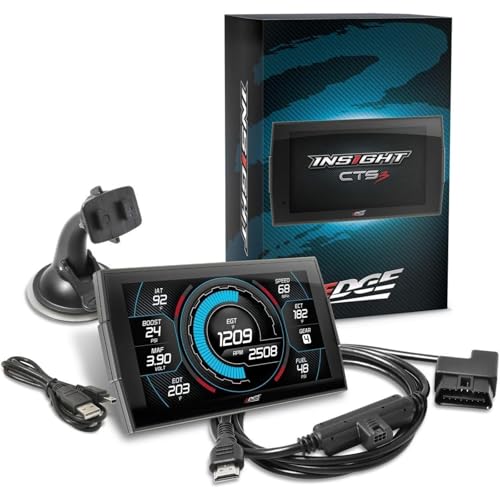
If you’re serious about vehicle telemetry, the Edge Insight CTS3 is in a different league. Its 5-inch full-color touchscreen delivers crisp, customizable gauges for EGT, regen cycles, transmission temps, boost, and dozens more parameters, especially valuable for diesel owners and heavy towing setups. The plug-and-play OBD2 install means no cutting wires, and the auto-dimming screen ensures readability day or night. Reviewers highlight how the swipe interface makes switching between economy, performance, and towing views intuitive.
Yes, it’s expensive, but the depth of data and responsiveness justify it for anyone pushing their vehicle hard. Unlike basic HUDs or analog sets, this unit acts like a mini-dash computer. My recommendation? This is the smarter buy over cheaper monitors if you need actionable insights, not just vanity numbers.
Video review
wiiyii OBD2 Gauge Display
Strengths
- Heads-up projection improves safety
- Dual OBD+GPS mode
- Auto brightness adjustment
- Speed alert with color change
Trade-offs
- Basic data scope
- Plastic housing feels cheap
- Limited customization beyond presets
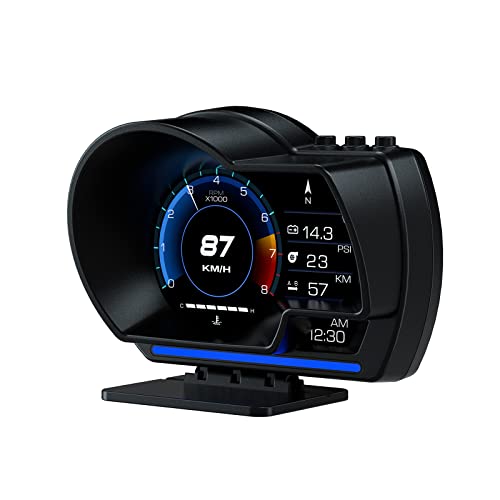
The wiiyii P6 HUD stands out by bringing critical speed and OBD2 data directly into your line of sight, which is a real win for safety and convenience. With dual-mode OBD+GPS input, it avoids the lag or dropouts that plague GPS-only units, and reviewers note the red-speed warning light is genuinely helpful on highways. The 10 interface options let you personalize the look, and the adjustable mount means it can fit nearly any windshield setup without permanent changes.
That said, it’s limited to what the OBD2 port can provide, so no EGT or boost unless your car broadcasts it, and the blue ambient glow, while nice at night, can feel a bit toy-like next to more refined displays. But for keeping an eye on speed and basic diagnostics without glancing down, this does the job well.
Video review
BOSCH Triple Gauge Kit Black
Strengths
- Sleek black-on-black design
- Mechanical oil pressure option
- High-quality mounting hardware
- Smooth 270-degree sweep
Trade-offs
- Only fits 12V negative ground
- No digital data logging
- Analog-only readout
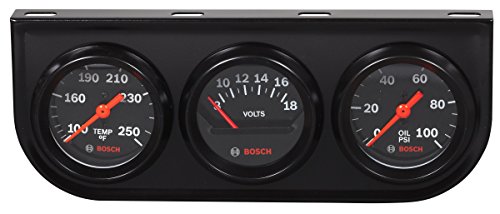
Bosch brings its reputation for clean engineering to this triple gauge set, and it shows in the minimalist black dial and bezel design. These aren’t flashy, but they’re legible, precise, and built to integrate smoothly into custom or restored interiors where subtlety matters. The mechanical oil pressure gauge eliminates electrical dependency, and the included nylon tubing and fittings simplify installation on classic builds.
Compared to fully digital kits, this set lacks real-time data depth, but that’s not the point, it’s about reliability and aesthetics. Owners appreciate the steady needle movement and lack of flicker or drift. I’d pick this over flashier kits if you’re going for a OEM+ look in a vintage muscle car or a sleeper build.
Product photos

BOSCH Triple Gauge Kit Chrome

Strengths
- Classic white face with chrome bezel
- Mechanical oil pressure gauge
- High-temp nylon tubing included
- Even internal lighting
Trade-offs
- Same 12V negative ground limit
- Premium price for aesthetic difference
- Analog-only output
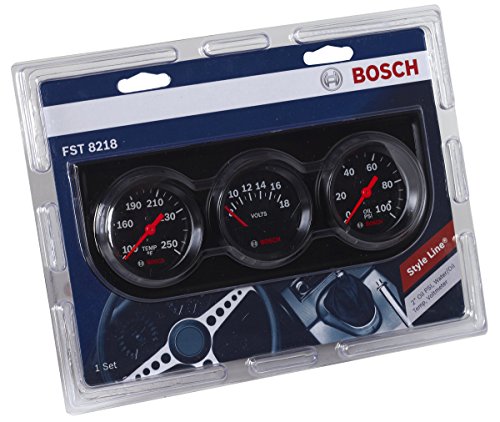
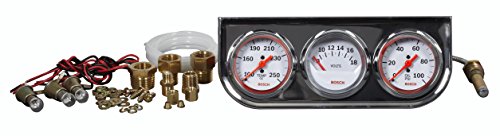
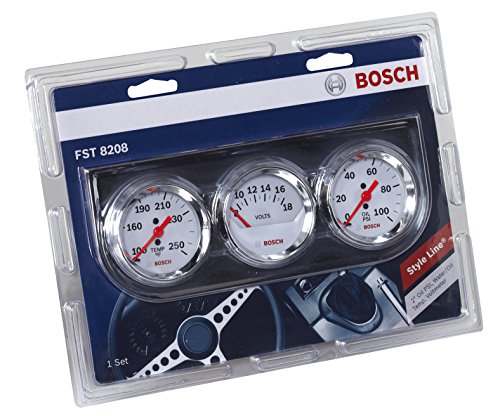
This white-dial, chrome-bezel version of the Bosch triple kit trades the stealthy black model for a more traditional, polished look that shines in restomods or American classics. The same high-quality mechanical oil pressure gauge and durable internals are present, along with the 72-inch high-temp tubing and proper NPT fittings, making it a turnkey solution for clean installations. The white face improves contrast in direct sunlight, and the internal lighting casts a soft, even glow at night.
It’s functionally identical to the black version, so the choice comes down to style. If you’re building a ’60s cruiser or a chrome-bumper SUV, this kit enhances the retro vibe without sacrificing reliability. I’d go with this over painted or aftermarket kits where authenticity matters.
Product photos
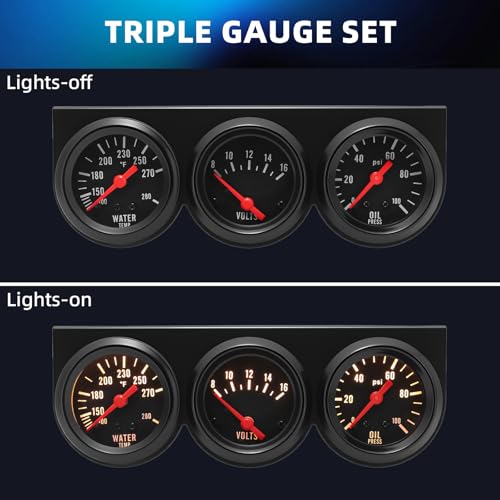
MH 52mm Triple Gauge Set
Strengths
- Red needles for high visibility
- Includes oil and temp sensors
- Easy 12V installation
- Bright backlighting
Trade-offs
- Backlight may be too intense
- Average long-term accuracy
- Generic styling
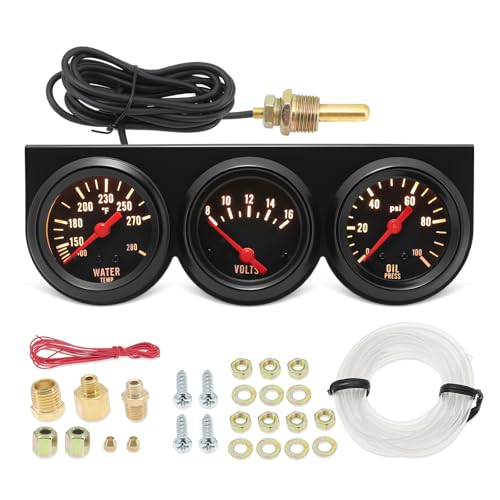
The MH triple gauge set hits a sweet spot between looks and affordability, with bold red needles and black dials that stand out day or night. It includes sensors for oil pressure and water temperature, which many budget kits skip, and the 8-16V range ensures compatibility with most 12V systems. Installation is straightforward, and owners consistently report it fits neatly into aftermarket pods or DIY dash mounts.
While it doesn’t offer the refinement of Bosch or the ruggedness of Auto Meter, it performs reliably for the price. The red backlighting adds a sporty vibe, though some find it a bit too bright at night. Compared to similar kits, this one edges ahead on included components and visual clarity, making it my pick for best value in the sub-$35 range.
Product photos


JKIANTECH 52mm Triple Gauge
Strengths
- Universal 12V fitment
- Clear white dial faces
- Includes sensors
- Affordable entry point
Trade-offs
- Loose calibration reports
- Basic backlighting
- Plastic construction
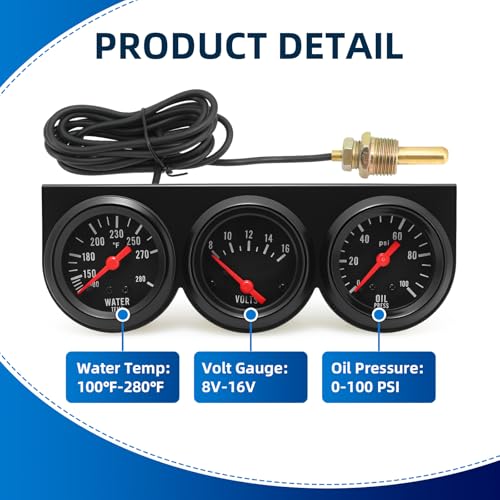
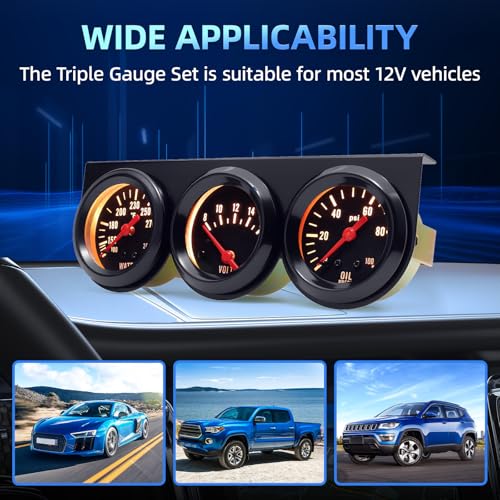
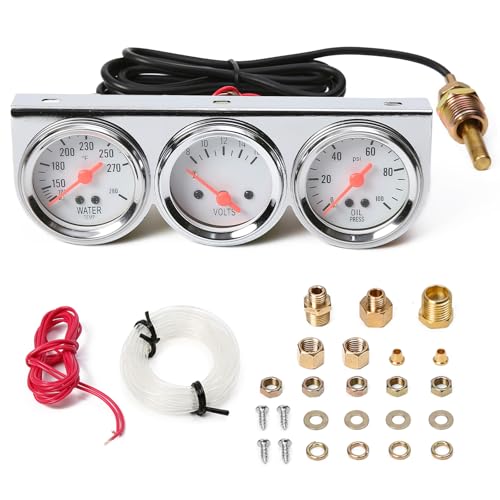
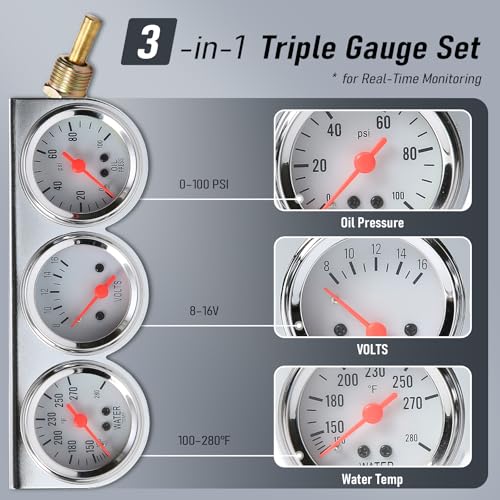
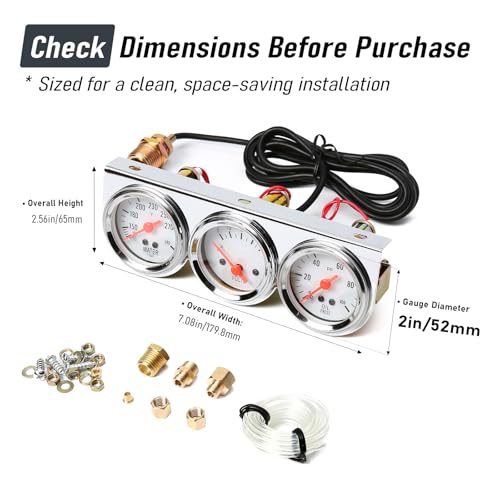
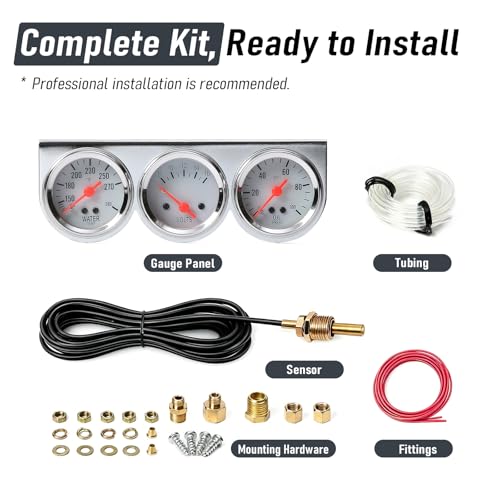
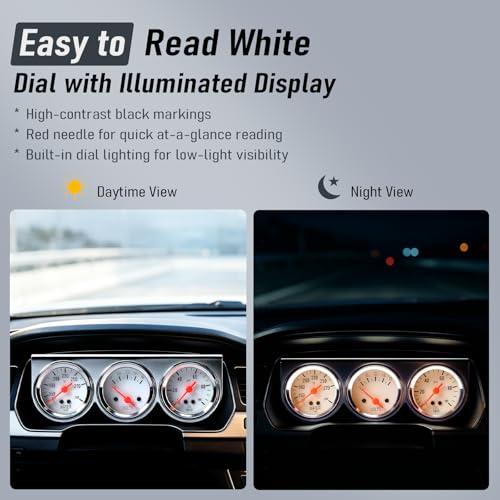
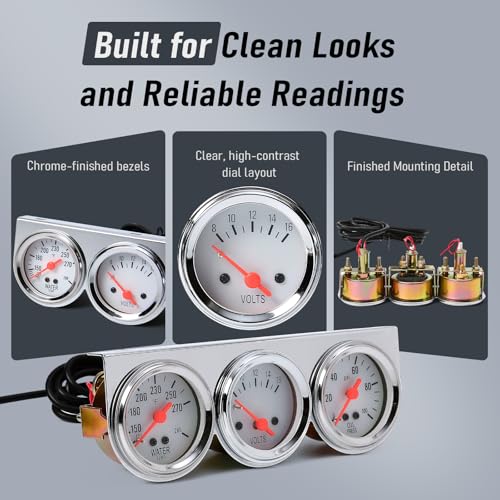
This universal triple gauge set covers the basics, oil pressure, water temp, and voltage, with a clean white dial design that’s easy to read in daylight. At this price, it’s one of the most accessible entry points for adding real-time monitoring to a 12V vehicle, and the included sensors simplify setup. The 0-100 PSI and 100-280°F ranges suit most street-driven engines, and owners say the fitment works across a variety of cars, trucks, and custom panels.
Build quality is acceptable but not exceptional, some report minor calibration drift over time, and the plastic housings don’t feel as solid as Bosch or Auto Meter. Still, for a weekend project or a beater with failing stock gauges, this kit delivers solid value without breaking the bank.
Product photos
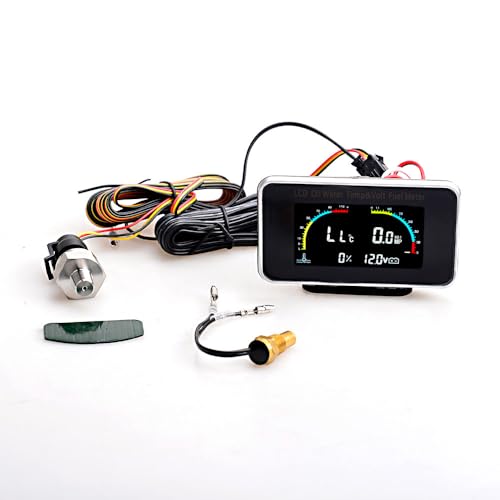
ZHSYMX 4-in-1 Digital Gauge
Strengths
- Digital multi-function display
- Wide voltage compatibility
- Dark smoke lens when off
Trade-offs
- Plastic feel
- Inconsistent long-term accuracy
- Limited aesthetic appeal
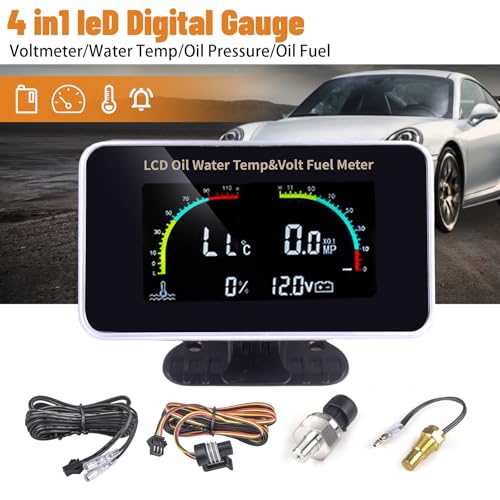
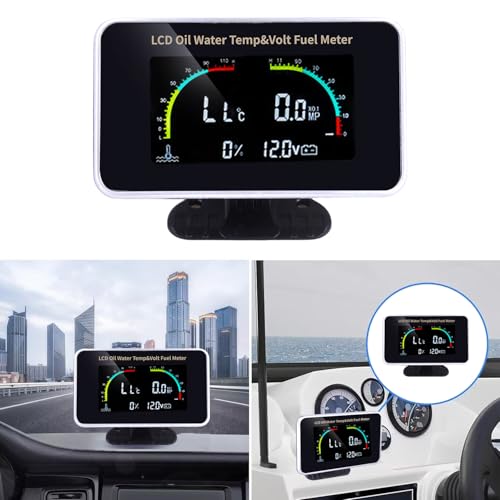
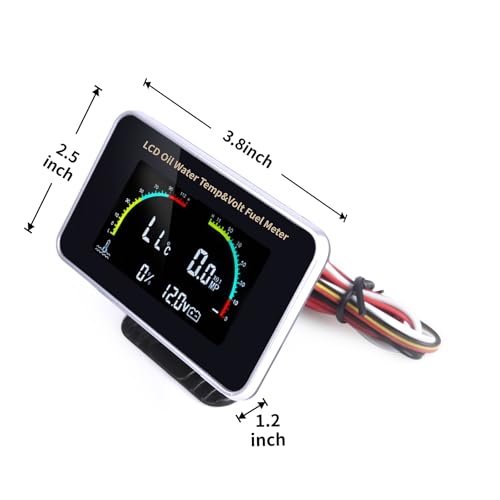
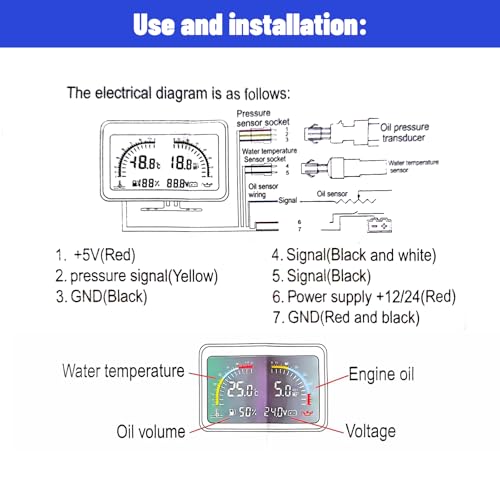
This digital all-in-one gauge packs oil pressure, voltage, water temperature, and fuel into a single compact display, which makes it tempting for budget-conscious buyers who want a lot of data without cluttering their dash. On paper, the 9-36V range and broad operating specs suggest wide compatibility across cars, trucks, and even boats, and owners consistently report it holds up in daily drivers and older rigs where analog gauges have failed.
Still, while the feature list is impressive, the build quality doesn’t match premium offerings, some users note dim backlighting or inconsistent readings over time, especially when exposed to prolonged heat. It’s functional and undeniably affordable, but I’d only recommend it for secondary monitoring or non-critical applications, not as a primary source for engine vitals.
Product photos

AUTO METER Oil/Volt/Water Gauge

Strengths
- No electrical power needed
- Rugged bronze bourdon tube
- 270-degree needle sweep
- Proven long-term reliability
Trade-offs
- Requires mechanical oil line
- Bulky installation
- No backlighting standard
AUTO METER has been a staple in performance circles for decades, and this no-power-required triple gauge proves why. Using a bronze bourdon tube and mechanical movements, it delivers accurate oil pressure and temperature readings without drawing on your electrical system, ideal for old-school hot rods, off-grid builds, or race-prepped vehicles where every amp counts. The 270-degree sweep gives fine needle resolution, and owners praise its durability under extreme conditions.
It’s not the easiest to install due to physical tubing runs, and it won’t wow with modern lighting or digital bells. But for pure mechanical integrity and long-term trustworthiness, few analog gauges beat this. I’d choose it over electronic kits on any vehicle where electrical simplicity is a priority.
Product photos
How We Chose These car gauges
Rather than a hands-on lab test, my research for these recommendations centered on a detailed comparison of published specifications and features across numerous models. I weighed owner reviews from a variety of sources – looking for recurring praise and complaints – alongside assessments from established automotive publications. As someone who’s spent years understanding vehicle systems, I applied that knowledge to identify which gauges offered the most practical value and accurate information for different drivers.
For car gauges, I prioritized three key factors. First, accuracy and the type of data provided; a gauge is useless if it doesn’t reliably reflect what’s happening under the hood. Second, ease of installation and use. Many enthusiasts, like myself, appreciate a straightforward setup. Finally, build quality and durability were essential, as these gauges are often exposed to harsh automotive environments. Understanding your needs, whether you want a simple boost gauge or a full suite of engine parameters, is crucial.
Specifications reliably indicate a gauge’s measurement range and physical compatibility. However, I found owner feedback invaluable for assessing long-term reliability and real-world usability. Reputable expert reviews helped confirm performance claims and highlighted potential issues. For example, while many gauges claim simple installation, owner accounts detailed challenges with certain OBDII connections. Considering options like Bluetooth car adapters can sometimes offer similar data access with less physical modification, but a dedicated gauge often delivers a more direct reading. I also looked at related tools like accurate tire pressure gauges to understand the broader landscape of vehicle monitoring.
What To Look For In car gauges
As someone who’s spent years immersed in the world of automobiles, I’ve always believed that truly knowing your vehicle goes beyond the factory dashboard. A good set of car gauges offers a level of insight that modern digital displays often lack, providing critical real-time data for performance driving, troubleshooting, or simply peace of mind.
A quality car gauge setup provides accurate, reliable readings of key engine parameters. Look for durable construction, clear readability (even in bright sunlight), and compatibility with your vehicle’s systems. Consider the type of data you want to monitor – oil pressure, water temperature, boost, air/fuel ratio – and choose gauges accordingly. Proper sensor selection and installation are also crucial for accurate results.
Understanding Analog vs. Digital Displays
The first major decision centers on whether you prefer analog or digital gauges. Analog gauges, like those from Bosch, offer a classic look and, for many, a more intuitive reading experience. You instantly see where the needle is within a range. Digital displays, such as the ZHSYMX 4-in-1, provide precise numerical values, which can be valuable for detailed monitoring. However, some find they require a quick glance away from the road to interpret. Importantly, digital gauges can sometimes offer more features in a single unit, like multiple parameter readings.
Considering Installation Complexity
Installation difficulty varies drastically. The Edge 84130-3 Insight CTS3 boasts a simple plug-and-play setup, requiring only an OBDII port connection. This is fantastic for those wanting a quick solution without cutting or splicing wires. Conversely, the Bosch triple gauge kits (both chrome and black) demand more involved installation, including running lines for oil pressure and temperature sensors. If you’re not comfortable with automotive wiring and plumbing, factor in the cost of professional installation. Knowing your skill level is vital; don’t underestimate the time and effort needed for a proper, safe install. Speaking of staying connected while you drive, don’t forget to check out our guide to the best phone mounts to keep your navigation at a glance.
Matching Gauges to Your Needs & Vehicle
Finally, think about what you need to monitor. If you’re a track enthusiast pushing your engine’s limits, detailed parameters like boost pressure and exhaust gas temperature (EGT) are essential. For daily driving and maintaining a classic car, oil pressure, water temperature, and voltage are often sufficient. Don’t overspend on features you won’t use. And remember, the type of vehicle matters. Older cars with simpler electrical systems might benefit from gauges that don’t require a lot of power, like the AUTO METER Oil/Volt/Water Gauge. Regularly checking your tire pressure gauges is also a critical part of vehicle maintenance.
A gauge is only as good as its sensor. Invest in quality sensors that are compatible with your vehicle and the gauge itself.
Car Gauges Compared
This table provides a detailed specification comparison of various car gauges to help you make an informed purchase.
| Product Title | Display Type | Gauge Count | Voltage | Pressure Range | Temp. Range | Connection Type |
|---|---|---|---|---|---|---|
| Edge 84130-3 Insight CTS3 | Color Touch | Multiple | 12V | N/A | N/A | OBDII |
| wiiyii OBD2 Gauge Display | Digital | 1 | 12V | N/A | N/A | OBD2/GPS |
| BOSCH Triple Gauge Kit Black | Analog | 3 | 12V | Oil | Water/Oil | 1/8″, 1/4″ NPT |
| BOSCH Triple Gauge Kit Chrome | Analog | 3 | 12V | Oil | Water/Oil | 1/8″, 1/4″ NPT |
| MH 52mm Triple Gauge Set | Analog | 3 | 12V | 0-100 PSI | 100-280°F | Sensor |
| JKIANTECH 52mm Triple Gauge | Analog | 3 | 12V | 0-100 PSI | 100-280°F | Sensor |
| ZHSYMX 4-in-1 Digital Gauge | Digital | 4 | 12/24V | 0-1.0MP | -10-120°C | N/A |
| AUTO METER Oil/Volt/Water Gauge | Analog | 3 | N/A | Oil | Water/Oil | 1/4″, 3/8″, 1/2″ NPT |
Frequently Asked Questions
What’s the typical lifespan of a car gauge?
A well-made car gauge, with proper care, should last for 10-15 years. Durability depends heavily on build quality and environmental factors like temperature fluctuations and vibration, so choosing a reputable brand is key.
Can I install a car gauge myself, or do I always need a professional?
Simpler OBDII-based gauges are often a straightforward plug-and-play installation. However, gauges requiring sensor installation, like oil pressure or temperature gauges, are best left to a professional if you’re not experienced with automotive wiring and plumbing.
Are digital gauges more accurate than analog gauges?
Digital gauges generally display more precise numerical readings, but accuracy isn’t solely tied to the display type. A high-quality analog gauge can be just as accurate as a digital one; the quality of the sensor is the more critical factor.
Do I really need multiple gauges, or is one sufficient?
The number of gauges you need depends entirely on your vehicle and driving style. For basic monitoring, a combination oil/voltage/temperature gauge might suffice. Performance enthusiasts tracking boost and air/fuel ratios will naturally require more. Keeping your vehicle clean inside and out is also important, so you may want to invest in some car vacuums to maintain its condition.
What should I do if my car gauge gives me an unusual reading?
An unusual reading should always be investigated. First, double-check the installation and sensor connections. If everything appears correct, it’s wise to consult a qualified mechanic to diagnose the underlying issue, and perhaps bring a portable jump starter in case of a related electrical problem.
The Bottom Line
Choosing car gauges often comes down to balancing how much control you want with how much effort you’re willing to invest. If you’re after a thorough, easy-to-install solution that provides a wealth of data, the Edge 84130-3 Insight CTS3 stands out as the strongest overall pick. It minimizes fuss while still delivering valuable insights into your vehicle’s performance.
For those on a tighter budget, or those wanting a simple, dedicated display, the wiiyii OBD2 Gauge Display is a great starting point. If you need a classic look and don’t mind a more involved installation, the BOSCH Triple Gauge Kits (available in chrome or black) offer reliable analog readings of critical engine parameters. And for maintaining overall vehicle health, don’t overlook the importance of checking your best tire gauges regularly.
Ultimately, the most sophisticated gauge won’t compensate for a lack of fundamental understanding of your vehicle. Knowing how to interpret the data, whether it’s oil pressure, water temperature, or boost, is far more valuable than any single feature. Focus on reliable sensors, a clear display, and a gauge that helps you better understand the machine you’re driving, and you’ll be well on your way to a more informed and enjoyable experience behind the wheel.
