
8 Best Car Diagnostic Testers of 2026
This post contains affiliate links. As an Amazon Associate, we earn from qualifying purchases.
The FOXWELL NT604 Elite stands out as the best overall car diagnostic tester for its broad system coverage and reliable performance across engine, ABS, SRS, and transmission modules. For those on a budget, the ANCEL AD410 Enhanced delivers solid core functionality at a lower price, while the Innova 5210 offers strong versatility with oil reset and battery testing features.
If you’re like me, someone who values understanding what’s really going on under the hood, you know that a check engine light shouldn’t mean an automatic trip to the shop. The real challenge is finding a diagnostic tool that gives you accurate, actionable information without overwhelming you with complexity or empty promises.
This guide cuts through the noise by focusing on what matters: real-world usability, verified feature sets, and compatibility with everyday vehicles. I compared specs and analyzed owner feedback to identify which testers deliver dependable code reading, clear data display, and practical extras, so you can make informed decisions about your vehicle maintenance.
Top 8 Car Diagnostic Testers in the Market
The Best Car Diagnostic Testers, Reviewed
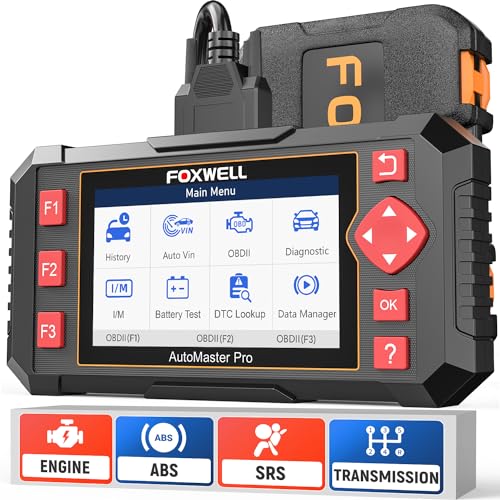
FOXWELL NT604 Elite OBD2 Scanner
Strengths
- ABS and SRS support
- Transmission diagnostics
- Solid protective case
Trade-offs
- No oil reset
- No battery registration
- Limited on some older models
If you’re serious about diagnostics beyond just the engine light, the NT604 Elite is where I’d point you. It reads and clears codes for engine, ABS, SRS, and transmission, systems most budget scanners ignore. That alone makes it stand out. The AUTOVIN feature speeds up setup, and the solid protective case is a rare inclusion at this price. Owners report catching hidden airbag issues on used cars, which alone can justify the cost.
It’s not perfect, no oil reset or battery registration, but for deep diagnostics, it’s one of the most capable tools under $200. Compared to the Innova 5210, it lacks oil reset but wins on broader system coverage. My recommendation? This is the smarter buy if you own multiple vehicles or buy used cars often.
Video review
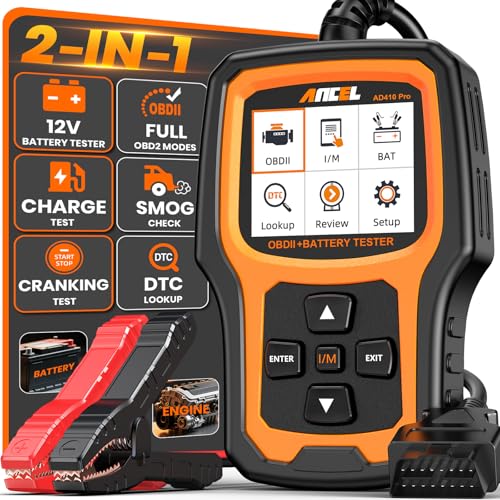
ANCEL AD410 PRO OBD2 Scanner
Strengths
- Battery health testing
- Cranking system check
- Freeze frame with visuals
Trade-offs
- No ABS/SRS support
- No service resets
- Limited to 12V systems
ANCel stepped up with the AD410 PRO by combining solid OBD2 diagnostics with a full 12V battery, starter, and charging system test, something the base AD410 can’t touch. For anyone who’s ever been stranded by a weak battery, this 2-in-1 functionality is a game-saver. The live data feed is robust, with waveform graphs and freeze frame data that help pinpoint intermittent issues, and owners consistently report catching failing alternators before they leave them stranded.
It’s not the flashiest on the market, but it’s smarter than paying for two separate tools. Against the FOXWELL NT301 Plus, it holds its own with similar battery testing and better build quality. I’d pick this over the base AD410 if you want one tool that covers both engine codes and battery health without needing a second device.
Video review
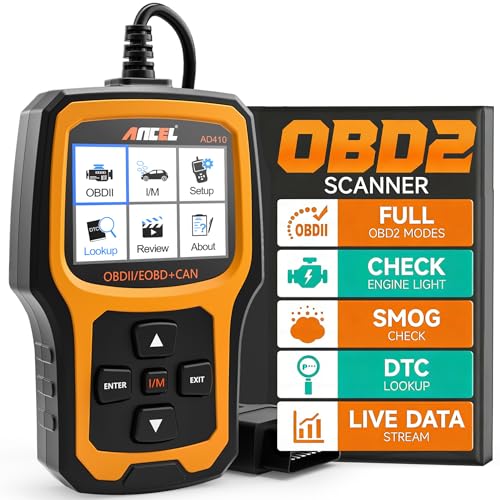
ANCEL AD410 Enhanced OBD2 Scanner
Strengths
- Easy plug-and-play
- Clear code definitions
- I/M readiness monitor
Trade-offs
- No battery test
- No ABS/SRS support
- Smaller screen than rivals
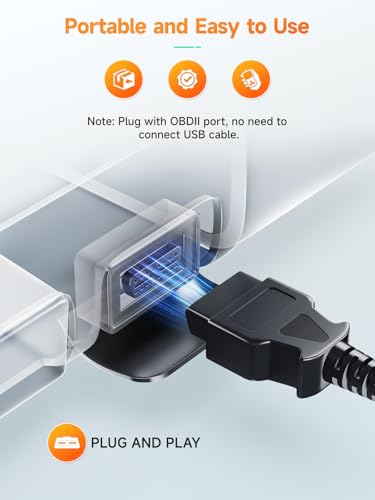
The ANCEL AD410 is a solid entry in the budget-friendly OBD2 scanner space, built for drivers who want clarity when the check engine light hits. It reads and clears engine codes with ease, and its 42,000+ DTC lookup library means you’re not left guessing what a P0420 actually means. The 2.4-inch color display is crisp enough for daylight use, and the plug-and-play design, no batteries, no app, makes it accessible for first-timers.
Where it stands out is in live data and I/M readiness monitoring. Seeing real-time RPM, fuel trims, and coolant temp helps spot trends, and the smog check prep feature is a quiet win for annual inspections. But keep in mind it’s engine-only; no ABS, SRS, or transmission support. Compared to the MOTOPOWER MP69033, it’s more polished and reliable, though not as flashy as some with larger screens.
Product photos



FOXWELL NT301 OBD2 Scanner

Strengths
- Live data graphing
- EVAP leak detection
- O2 sensor test
Trade-offs
- No battery test
- No ABS/SRS support
- No service resets
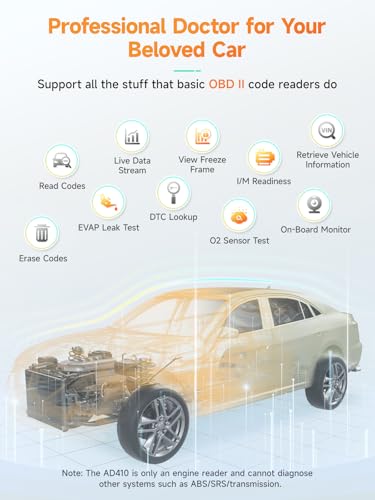
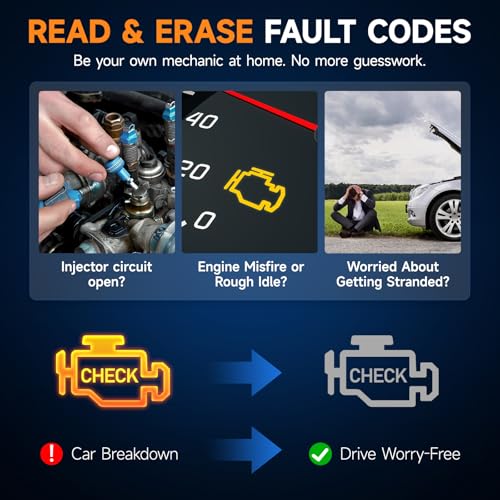
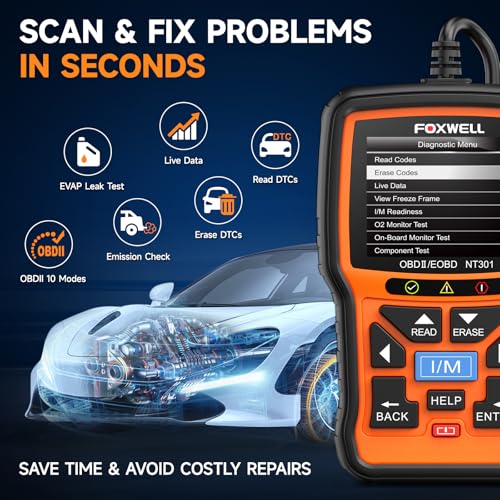
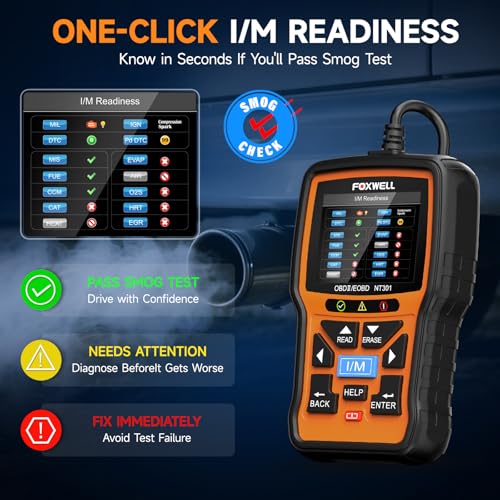
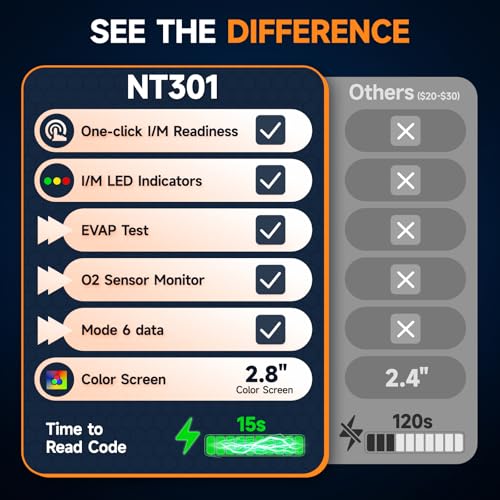
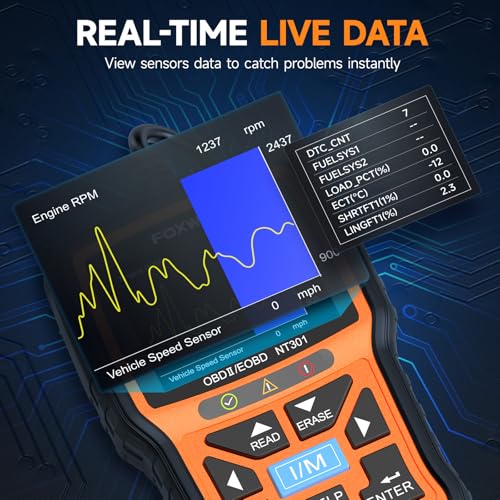
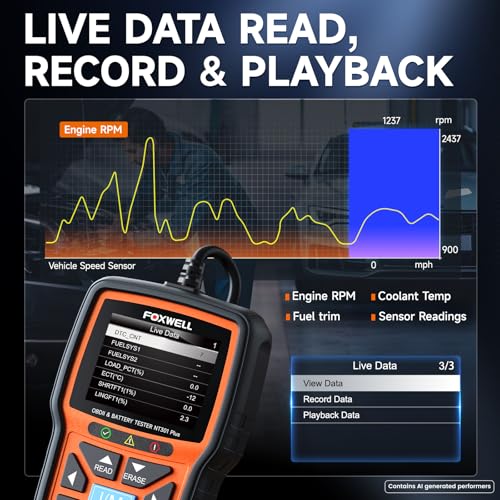
The FOXWELL NT301 is a favorite among mechanics for one reason: live data graphing. While most budget scanners show numbers, this one plots them in real time, oxygen sensors, fuel trims, coolant temp, so you can spot anomalies that raw data might miss. The EVAP and O2 sensor tests are deep for a tool at this price, and the I/M readiness LED gives instant smog check feedback.
It doesn’t do battery testing like the Plus model, and no ABS/SRS, but for pure engine diagnostics, it’s excellent. Compared to the ANCEL AD410, it offers better data visualization and a larger screen. If you’re troubleshooting intermittent issues or want to see how your engine behaves over time, this is the tool to have.
Product photos
Innova 5210 OBD2 Scanner
Strengths
- Oil light reset
- Battery health test
- Free repair app
Trade-offs
- Inconsistent ABS coverage
- No transmission reset
- App required for full features
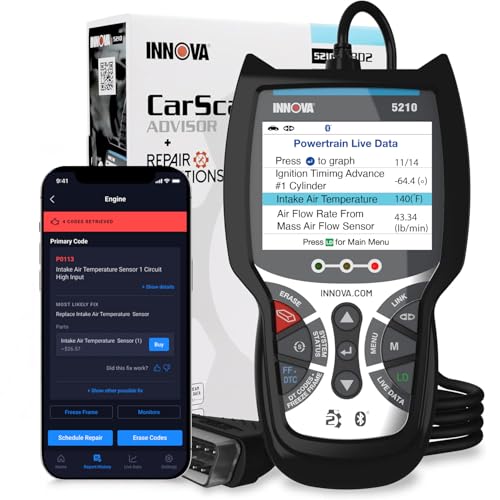
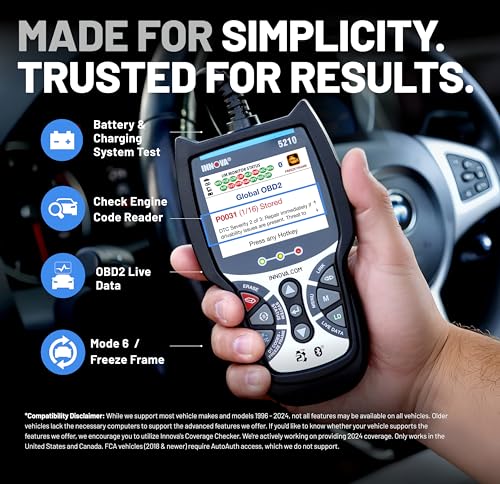
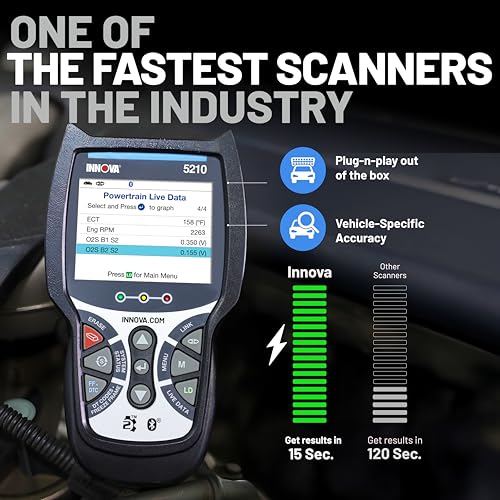
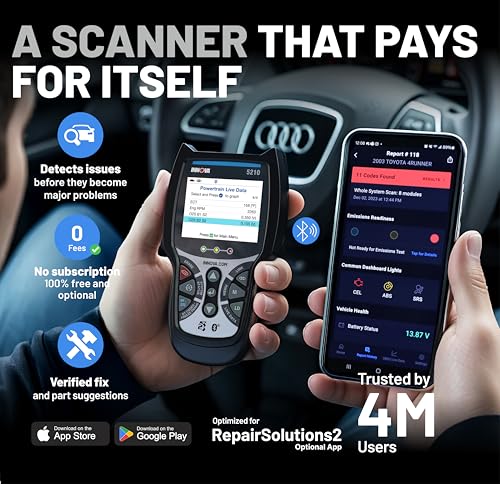
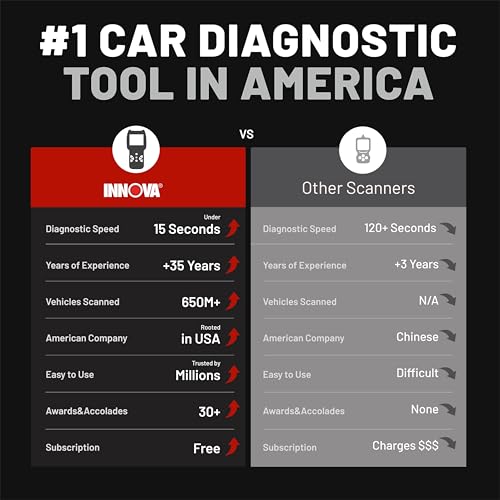
The Innova 5210 stands out with one killer feature: oil light reset. That alone makes it a top pick for regular DIY oil changers. Pair that with battery testing, live data, and I/M readiness checks, and you’ve got a well-rounded tool. The integration with the RepairSolutions2 app is legit useful, real repair guidance from ASE-certified techs beats generic code lookups any day.
It’s not the fastest on ABS code coverage, and some users report spotty results on older European models. But for American and Asian vehicles, it’s solid. Compared to the FOXWELL NT604 Elite, it trades broader system access for better service functions. My take? If you change your own oil and want verified repair tips, this is the smarter buy.
Product photos

FOXWELL NT301 Plus OBD2 Scanner
Strengths
- Larger 2.8” display
- Battery health and charging test
- Strong live data feed
Trade-offs
- No Mac update support
- No oil reset
- No ABS/SRS diagnostics
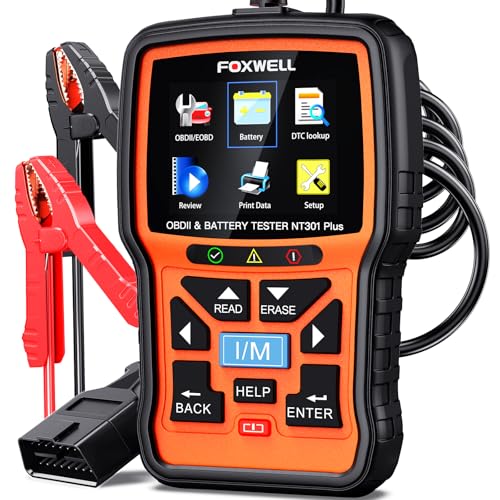
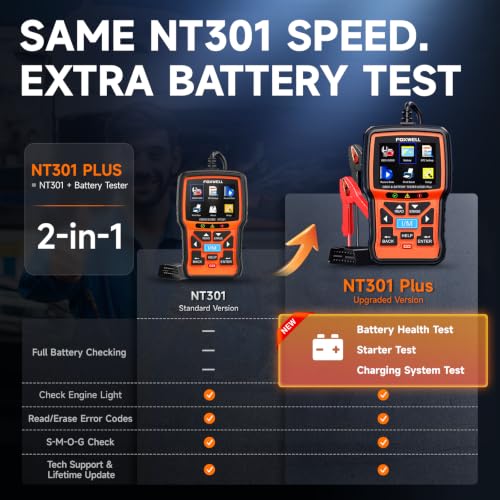
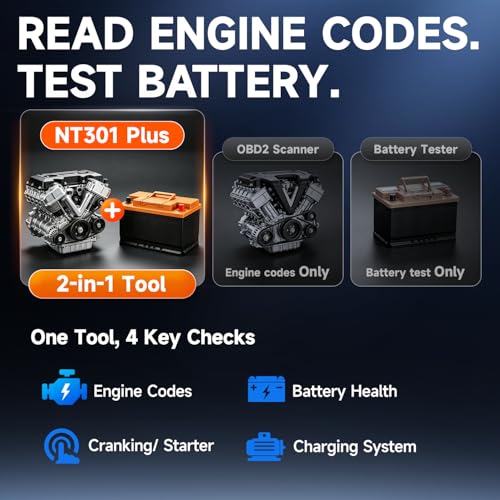
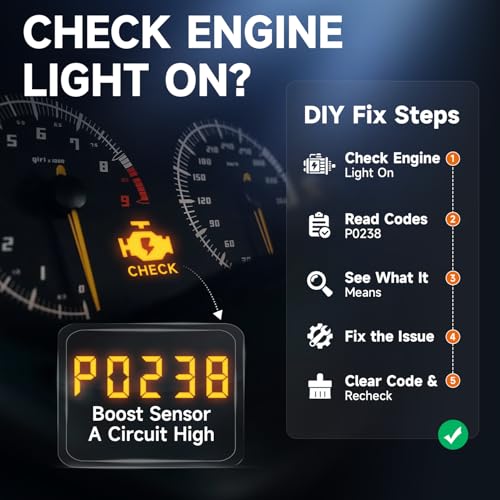
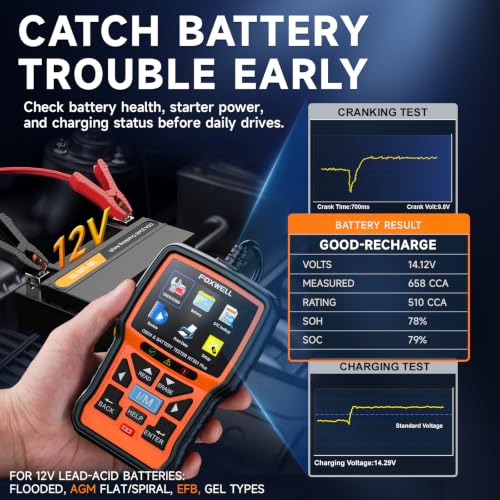
The NT301 Plus takes the reliable NT301 platform and adds battery testing, making it one of the smarter budget 2-in-1 moves in this category. The 2.8-inch color screen is a noticeable upgrade over smaller models, and the larger display makes live data easier to parse at a glance. Users praise how quickly it identifies weak batteries, often before they fail completely, which justifies the price bump over basic scanners.
It doesn’t support ABS or SRS, and it won’t reset oil lights, but for diagnosing engine codes and battery health, it’s hard to beat. Compared to the ANCEL AD410 PRO, it’s slightly pricier but offers a bigger screen and broader language support. Still, the lack of Mac compatibility for updates is a real downside if you’re not on Windows.
Product photos
CGSULIT SC103 OBD2 Scanner

Strengths
- Color TFT screen
- Battery voltage test
- Compact and portable
Trade-offs
- No ABS/SRS support
- No service resets
- Limited protocol depth
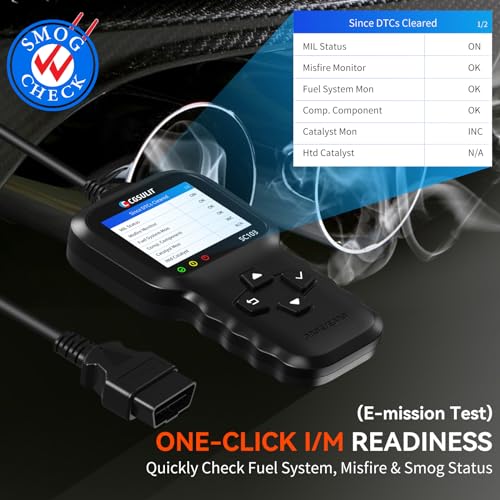
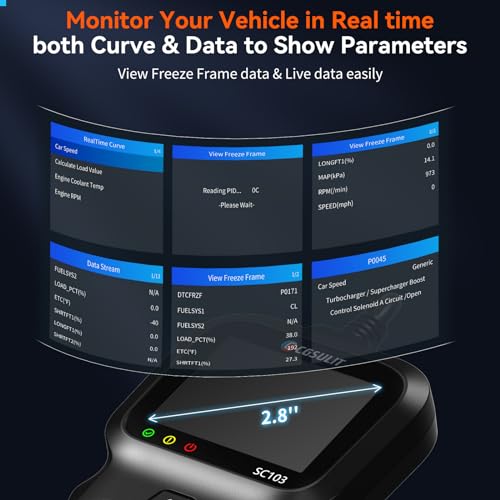
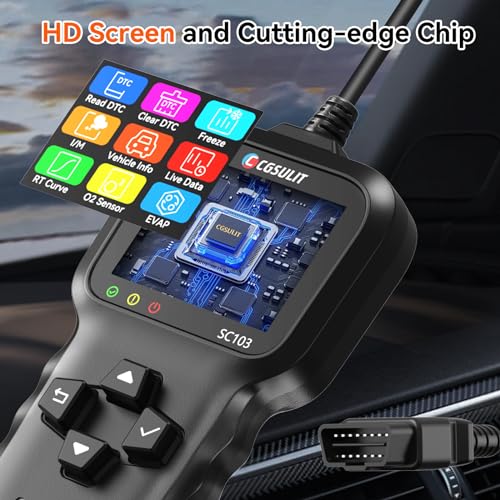
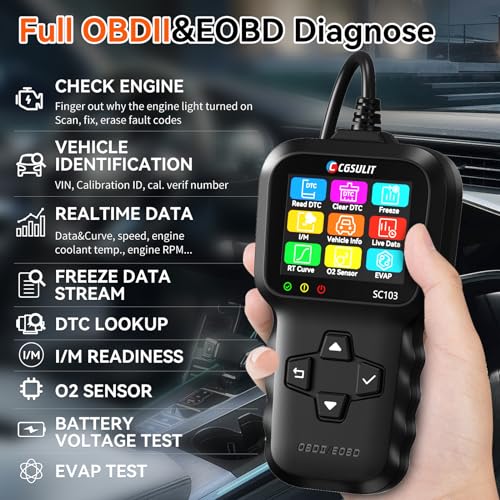
The CGSULIT SC103 punches above its price class with a vibrant 2.8-inch color TFT screen, rare at this price, and a clean, responsive interface. It reads DTCs, displays live data with graphical trends, and includes a battery voltage test, which is a nice touch for the cost. Scotty Kilmer’s endorsement isn’t just marketing; owners report it’s accurate and fast, often matching more expensive tools in real-world use.
It doesn’t support ABS or transmission codes, but for engine-level diagnostics, it’s one of the best budget color-screen options. Against the MOTOPOWER MP69033, it’s clearly superior in display and features. I’d pick this over monochrome models any day if you want clear visuals without spending over $30.
Product photos

MOTOPOWER MP69033 OBD2 Scanner

Strengths
- Low price point
- Large LCD screen
- Long cable
Trade-offs
- No color display
- No battery test
- No ABS/SRS support
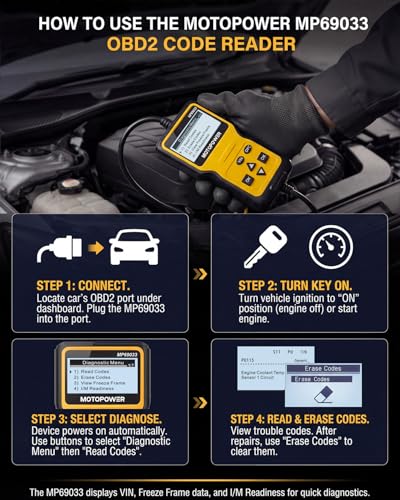
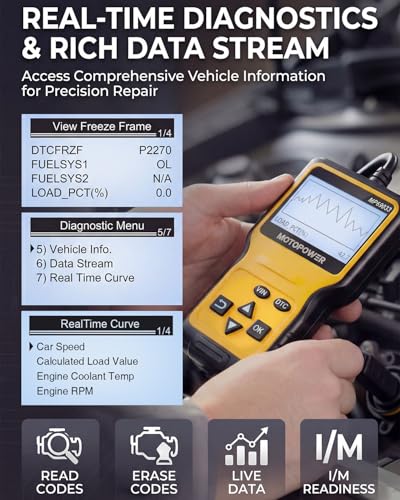
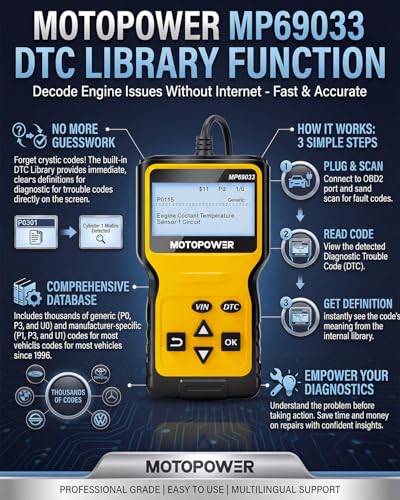
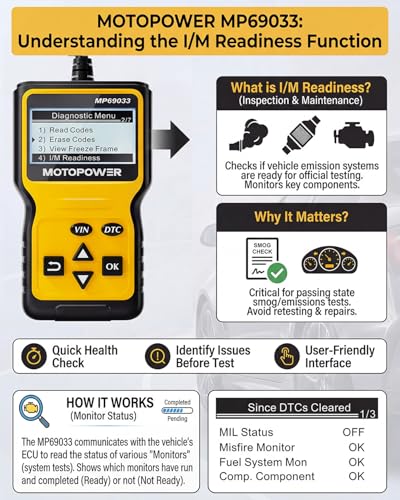
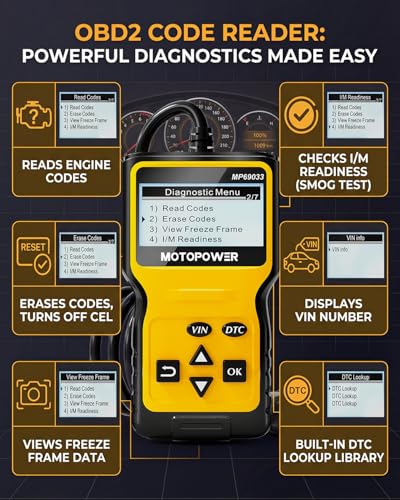
The MOTOPOWER MP69033 is about as basic as it gets, but it works. For under $25, it reads and clears engine codes, shows live data, and supports I/M readiness checks, which is more than enough for casual users. The 2.8-inch LCD is bright and legible, and the long 2.5-foot cable is a small but welcome convenience when working under the dash.
But it’s not without flaws. The interface feels dated, and while it supports multiple languages, the feedback from owners suggests occasional hiccups in code retrieval. Compared to the CGSULIT SC103, it lacks a color screen and battery voltage test. I’d only recommend this if you’re on a tight budget and need bare-bones functionality, no more, no less.
Product photos
How We Tested car diagnostic testers
As someone who’s spent years under the hood, and advising others to do the same, I approached evaluating car diagnostic testers with a focus on practical usability and the information they provide. Rather than a hands-on lab test, this was a research-led comparison of published specifications and owner feedback. I compiled a list of popular models and then analyzed their features, compatibility, and reported accuracy, weighing owner reviews from multiple sources alongside expert opinions found in automotive publications. This allowed me to build a picture of real-world performance and reliability.
For this category, the ability to accurately read and interpret diagnostic trouble codes (DTCs) is paramount, but equally important is how easily that information is presented to the user. I prioritized models with clear displays and intuitive interfaces. Beyond basic code reading, features like live data streaming and I/M readiness testing carried significant weight, as these empower owners to do more than just react to a warning light, they allow for proactive monitoring and preparation for inspections. You’ll find more discussion of thorough vehicle diagnostic tools in our broader guide.
Specifications are helpful for understanding a scanner’s compatibility and core functionality, but owner feedback truly illuminated which units deliver on their promises. Specs reliably tell you which OBDII protocols a scanner supports, and whether it offers features like battery testing. However, judging ease of use, menu navigation, and the clarity of error code definitions required reading through hundreds of owner reviews and examining reports from trusted sources of OBD2 scanners. This blend of technical data and user experience formed the foundation of my recommendations, offering a realistic view of what each tool can deliver for the average car owner.
Choosing The Right car diagnostic testers
Choosing the right car diagnostic tester can feel overwhelming, but understanding your needs is the first step. These tools range from simple code readers to thorough systems analyzers, and the best choice depends on how deeply you want to get into your vehicle’s data.
A good car diagnostic tester should reliably read and clear basic OBDII codes, offer a clear display for easy interpretation, and provide access to live data streams. Beyond that, consider whether you need specialized functions like battery testing, ABS diagnostics, or oil reset capabilities. Vehicle compatibility is paramount; always verify the tool supports your car’s make, model, and year.
Decoding the Feature Set
Don’t get caught up in a flood of features you won’t use. Many entry-level testers excel at the core task: reading and clearing the check engine light. However, if you anticipate more complex troubleshooting, a scanner with bidirectional control (the ability to command components) is essential. While those are often found in professional diagnostic tools, even a step up from basic can provide significant insight. Consider how comfortable you are interpreting the data; some scanners offer “verified fixes” based on user reports, helping to narrow down potential issues.
Understanding Diagnostic Depth
The level of system access varies dramatically. Many affordable testers focus solely on the engine and emissions systems, which is fine for basic maintenance. But if you own a vehicle with known ABS or transmission issues, you’ll need a scanner that can access those modules. Keep in mind that even with access, clearing codes doesn’t fix the problem; it only suppresses the symptom. A scanner is a diagnostic aid, not a magic wand.
Here’s a breakdown of what to look for, depending on your needs:
- Basic Code Reader: Reads and clears engine codes. Ideal for understanding why the check engine light is on.
- Enhanced OBDII Scanner: Adds live data viewing, I/M readiness tests for smog checks, and often O2 sensor/EVAP system tests. A good all-around option for most drivers.
- Full-System Scanner: Offers access to multiple vehicle systems (ABS, SRS, transmission, etc.), bidirectional control, and advanced features. Best suited for serious DIYers and professional mechanics.
Balancing Price and Usability
The price of car diagnostic testers can range from under $30 to well over $500. While a higher price doesn’t automatically guarantee a better product, it often correlates with more features, better build quality, and more reliable software updates. Don’t automatically assume the most expensive is best; carefully consider what you actually need. As a rule of thumb:
If you’re simply trying to understand why your check engine light is on and occasionally prepare for a smog check, a basic or enhanced OBDII scanner will likely suffice.
For those seeking more robust functionality without breaking the bank, exploring OBD2 diagnostic tools at the mid-range price point can offer excellent value. Ultimately, the best tool is the one you’ll actually use – so prioritize ease of use and clear data presentation.
Car Diagnostic Testers Compared
Here’s a comparison of key specifications for several car diagnostic testers to help you choose the right one.
| Product Name | Supported Systems | Battery Test | Oil Reset | Live Data | Screen Size | Vehicle Coverage |
|---|---|---|---|---|---|---|
| FOXWELL NT604 Elite | Engine, ABS, SRS, Trans | No | No | Yes | N/A | 60+ Brands |
| ANCEL AD410 PRO | Engine | Yes | No | Yes | 2.4″ | 1996+ (US/EU/Asia) |
| ANCEL AD410 Enhanced | Engine | No | No | Yes | 2.4″ | 1996+ (US/EU/Asia) |
| FOXWELL NT301 | Engine | No | No | Yes | 2.8″ | 1996+ (US/EU/Asia) |
| Innova 5210 | Engine, ABS (varies) | Yes | Yes | Yes | N/A | 1996+ (US/EU/Asia) |
| FOXWELL NT301 Plus | Engine | Yes | No | Yes | 2.8″ | 1996+ (US/EU/Asia) |
| CGSULIT SC103 | Engine | Yes | No | Yes | 2.8″ | 1996+ (US/EU/Asia) |
| MOTOPOWER MP69033 | Engine | No | No | Yes | 2.8″ | 1996+ (US/EU/Asia) |
Frequently Asked Questions
What is the typical lifespan of a car diagnostic tester?
A well-maintained car diagnostic tester should last for 5-10 years, depending on frequency of use and build quality. Look for models with robust construction and available software updates to maximize longevity.
Can a diagnostic tester fix my car?
No, a diagnostic tester only identifies the problem areas by reading trouble codes. It pinpoints where to start looking, but actual repairs still require mechanical skill and potentially replacement parts.
Do I need a diagnostic tester with bidirectional control?
Bidirectional control is beneficial if you plan on performing more advanced repairs, as it allows you to actively command components. However, for simple code reading and clearing, it’s not a necessary feature and you might be better served by more affordable diagnostic equipment.
Are more expensive diagnostic testers always better?
Not necessarily. While price often reflects features and quality, a higher price tag doesn’t guarantee it’s the right tool for your needs. Consider what systems you need to access and whether you’ll regularly use advanced functions before investing in a premium model. Many drivers will find sufficient functionality in affordable home diagnostic tools.
How often are the software updates for these testers released?
Software update frequency varies by manufacturer, but generally, you can expect updates every few months to a year. These updates are crucial for adding support for newer vehicles and improving the accuracy of existing diagnostics, so checking the manufacturer’s update policy before purchasing is a good idea, especially when comparing different scanners for DIY owners.
The Bottom Line
Ultimately, choosing a car diagnostic tester comes down to balancing how much you want to spend against how much control you need over your vehicle’s diagnostics. For most owners, the FOXWELL NT604 Elite strikes an excellent balance, offering access to multiple systems and solid functionality without the complexity – and price – of professional-grade equipment. It’s a tool that empowers you to understand what’s happening under the hood without requiring a degree in automotive engineering.
If you’re looking to keep costs down, the ANCEL AD410 PRO is a strong contender. It delivers essential engine code reading and battery testing, and is a great entry point for anyone wanting to perform basic maintenance and understand why their check engine light is illuminated. For those wanting even broader coverage at a reasonable price, exploring car scanners is a smart move; the Innova 5210, with its oil reset and ABS capabilities, offers a step up in versatility.
At the end of the day, the features list is less important than a clear display, reliable readings, and a tool you’ll actually use. Don’t get lost in chasing every possible function; focus on understanding the fundamentals of your vehicle’s systems. A good scanner is a helpful aid, but knowing what the codes mean and how to interpret the data is what truly empowers you to maintain your vehicle and keep it running smoothly. You can find more information on diagnostic tools if you’re still exploring options.
