
8 Best Car Chassis Paints of 2026
This post contains affiliate links. As an Amazon Associate, we earn from qualifying purchases.
The Eastwood Extreme Chassis Black Satin is our top pick for its durable, corrosion-resistant finish that holds up under harsh conditions, while the Rust-Oleum Stops Rust 2-in-1 delivers solid protection at a budget-friendly price, and the Cocomfix Ultra 2-in-1 stands out for its ability to reform rust and withstand high heat.
Choosing the right chassis paint isn’t just about covering metal, it’s about stopping rust from coming back and surviving years of road grime, moisture, and stress. As someone who’s spent years evaluating automotive coatings, I know that the wrong choice can lead to peeling, cracking, or worse, hidden corrosion eating away beneath a shiny surface.
This guide cuts through the noise by focusing on real-world performance, based on specs, owner experiences, and how these products hold up over time. We’re looking at what matters: rust resistance, adhesion, flexibility, and whether a product earns its place under your car.
Top 8 Car Chassis Paint in the Market
The Best Car Chassis Paint, Reviewed
Eastwood Extreme Chassis Black Satin

Strengths
- OEM-matching satin finish
- Excellent chip resistance
- Builds multiple coats cleanly
Trade-offs
- Requires thorough surface prep
- Not for rusted metal
Eastwood’s Extreme Chassis Black hits the sweet spot between professional-grade protection and real-world usability. Owners report it sticks tenaciously to clean metal and builds a finish that resists chipping, critical for frames that take constant vibration and road debris. The satin OEM-matching finish is a big win; it looks factory-correct without being too flat or too glossy.
What sets it apart is how well it layers. Unlike some aerosols that lift or wrinkle with multiple coats, this one builds smoothly. It’s also formulated to enhance corrosion resistance beyond basic paint, which aligns with feedback from users restoring trucks and muscle cars. I’d pick this over generic brands any day for a frame that needs to last.
Video review
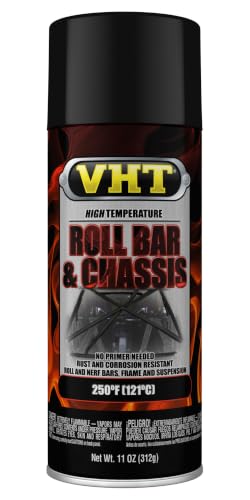
VHT SP671 Satin Black Chassis Paint
Strengths
- Heat resistant to 250°F
- Self-priming formula
- Satin OEM look
Trade-offs
- Not for rusted surfaces
- Limited UV protection
VHT has long been a go-to in performance circles, and this satin black formula earns its spot. The ceramic resins in the mix are key, they allow it to handle heat up to 250°F, making it ideal for roll cages, exhaust manifolds, and chassis near hot components. It’s self-priming, which simplifies the process, and owners say it holds up well under track conditions.
The satin finish is subtle and professional, not too shiny, not too flat. While it doesn’t offer rust conversion, it bonds well to properly prepped metal. Compared to rubberized undercoatings, it’s much cleaner looking. I’d choose this over general-purpose paints any time heat is a factor.
Video review
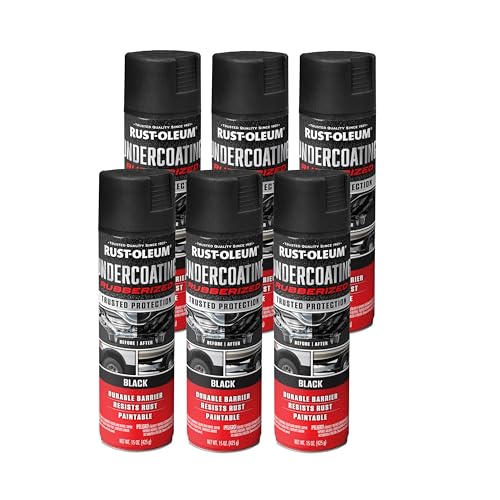
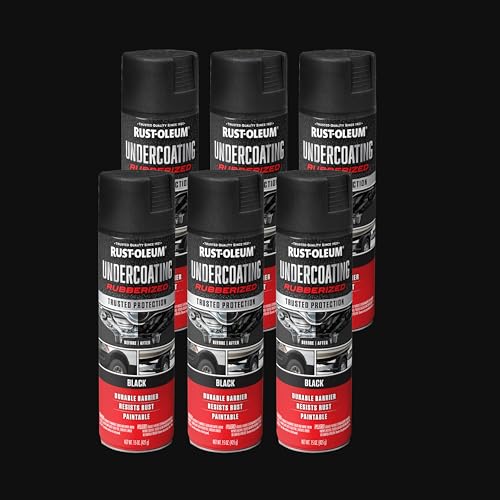
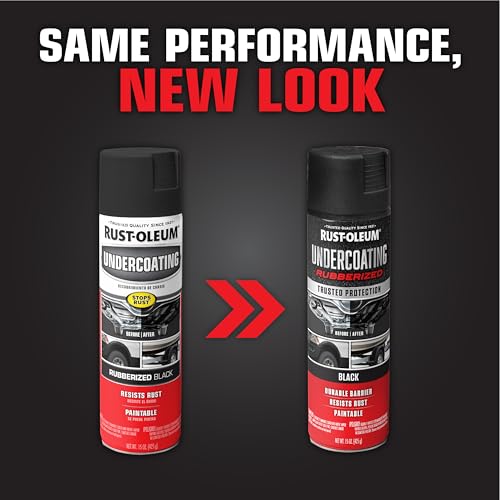
Rust-Oleum Rubberized Undercoating Spray
Strengths
- Superior sound dampening
- Fast drying
- Any-angle spray
Trade-offs
- Bulky, textured finish
- Not visually refined
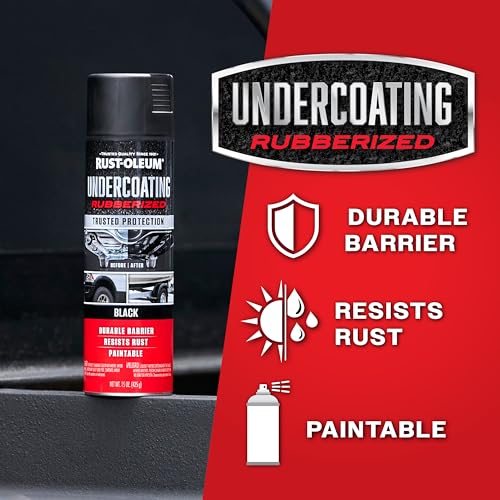
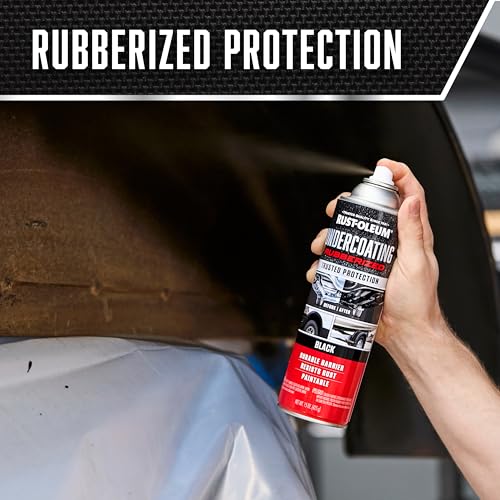
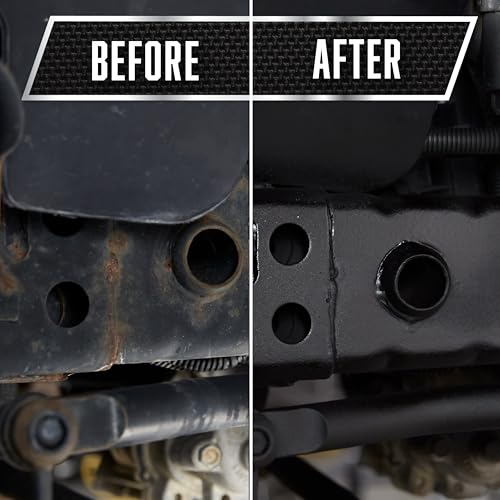
This isn’t a chassis paint in the traditional sense, it’s an undercoating with serious sound-dampening perks. The rubberized texture does more than just look rugged; owners consistently report it reduces road noise and protects against stone chips better than standard paints. It’s thick, it’s flexible, and it clings well to irregular surfaces like floor pans and wheel wells.
But don’t expect a sleek finish. This stuff is meant to be functional, not pretty. It dries fast and sprays from any angle, which helps when coating hard-to-reach areas. If you’re building a daily driver or an off-road rig where noise and durability matter, this adds real value. Just don’t use it on exposed frame rails if you care about aesthetics.
Product photos
Meuvcol 2-in-1 Rust Converter & Primer

Strengths
- Excellent oxygen isolation
- Ready to use
- Works on rusted and bare metal
Trade-offs
- Requires 24-hour cure
- Flat, industrial look
This Meuvcol formula is nearly identical in function to the Ultra 2-in-1 but comes from a brand positioning itself as a professional-grade alternative. It’s a ready-to-use rust encapsulator that creates a durable, oxygen-blocking layer, critical for stopping corrosion at the source. Users in marine and farm applications report strong performance in high-moisture environments.
The need for two thin coats and 24-hour cure time is a small trade-off for the level of protection. It’s not a quick cosmetic fix, but a long-term solution. While it lacks gloss or fine finish, it does the job it promises: seal rust and prevent spread. I’d stack it against POR-15’s system for raw protection, though POR-15 still wins on UV stability.
Product photos

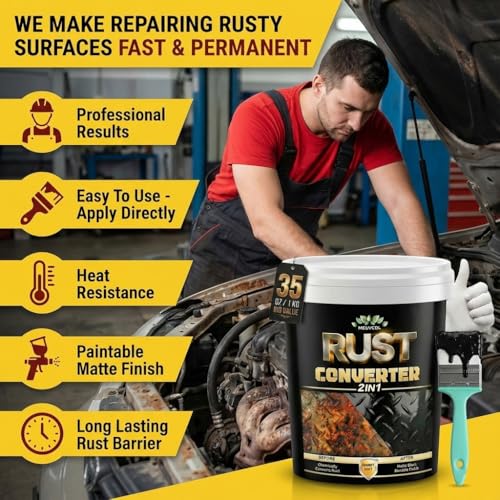
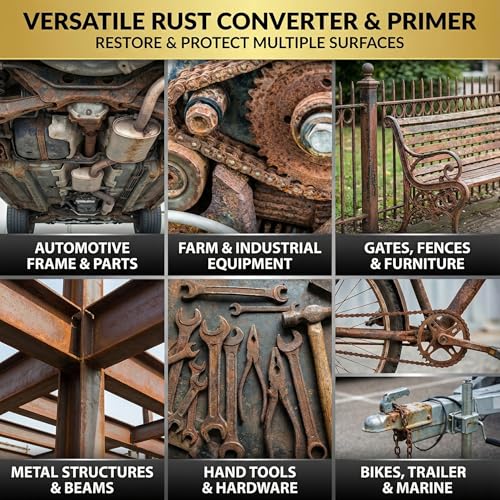
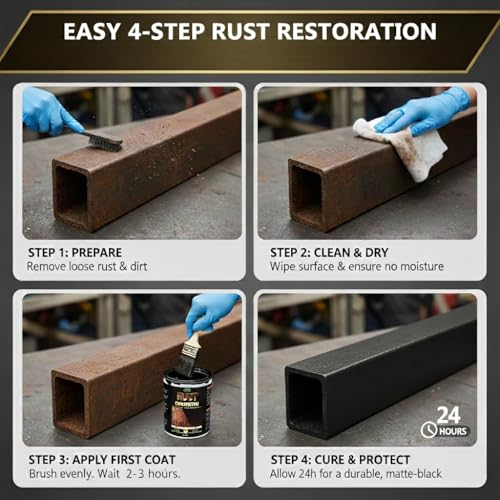
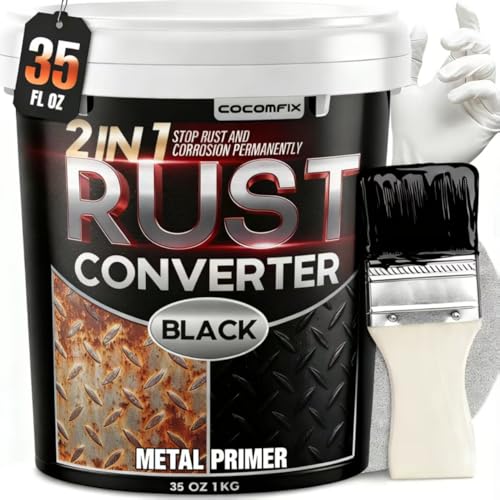
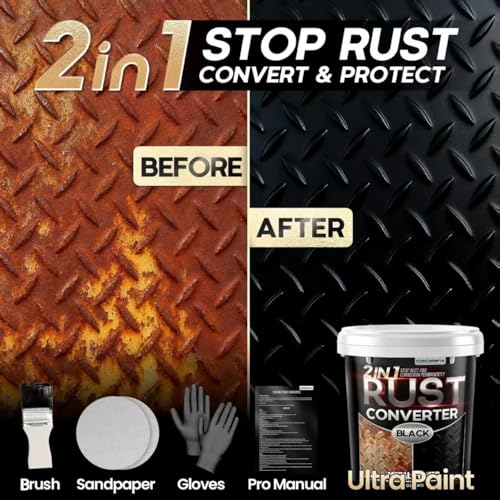
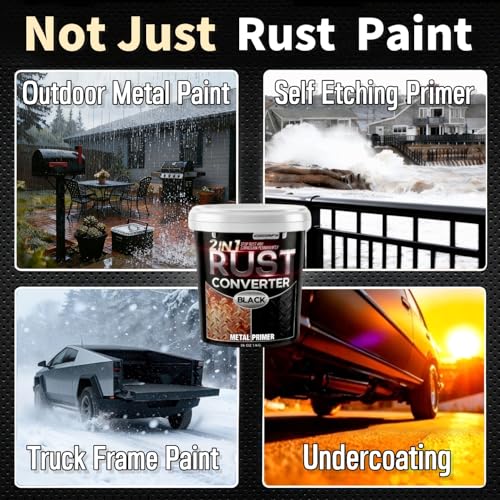
Cocomfix Ultra 2-in-1 Rust Reformer
Strengths
- Converts rust with no sanding
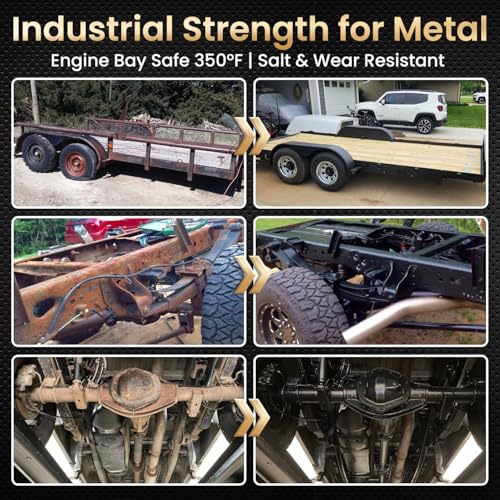
- Heat resistant to 350°F
- Peel-proof adhesion
Trade-offs
- Flat, rough finish
- Not UV stable long-term
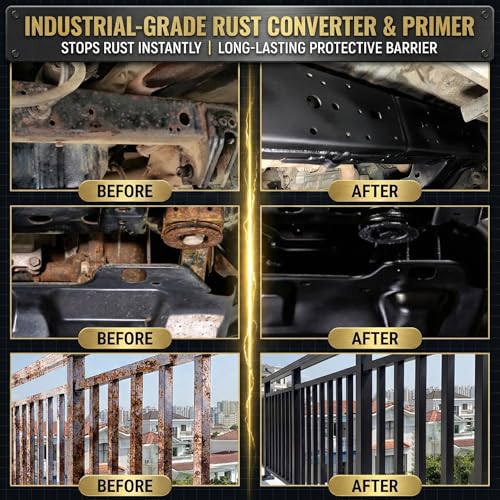
This is one of the most aggressive rust-converting products on the list. With claims of withstanding 350°F and forming a peel-proof, heat-stable barrier, it’s built for heavy-duty use. Owners restoring old trucks or working on farm equipment say it locks out moisture effectively, even on deeply pitted metal.
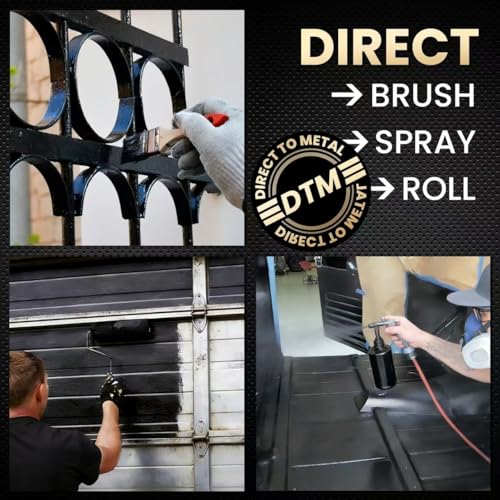
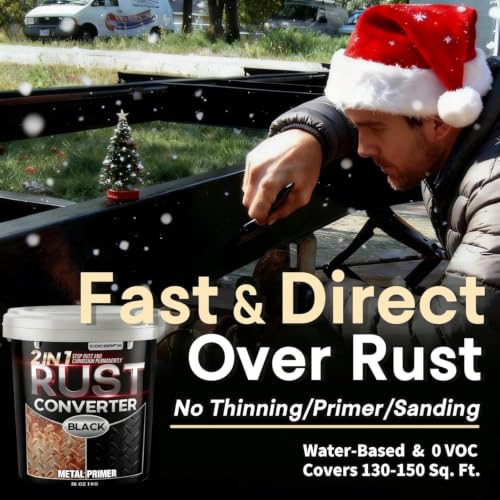
The fact that it requires no sanding, primer, or topcoat makes it a time-saver. But the finish is flat and industrial, this is not a cosmetic paint. It works best when you need to stop active corrosion fast and move on. Compared to Rust-Oleum’s 2-in-1, it feels more robust, though less refined. For a trailer frame eaten by rust, this is the kind of product that can add years of life.
Product photos
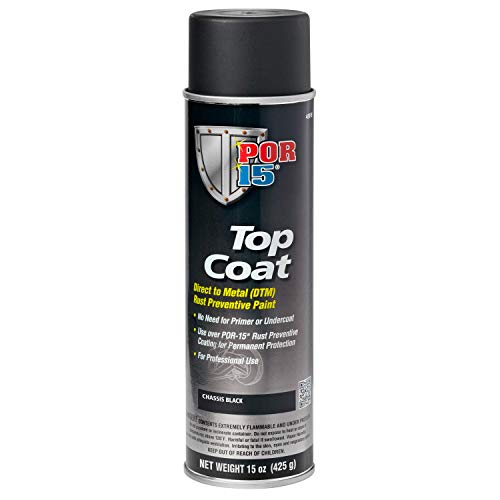
POR-15 Top Coat Chassis Black
Strengths
- Exceptional UV resistance
- Long-term color retention
- No primer needed
Trade-offs
- Best results require full POR-15 system
- Higher price per ounce
If you’re serious about long-term chassis protection and UV resistance, POR-15 Top Coat stands out on paper and in owner feedback. It’s not just another black spray, it’s engineered as the final shield in a proven rust-stopping system, especially when layered over their rust preventive coating. The hammer-tough finish is consistently praised for resisting fading, even after years in direct sunlight, which is rare in this category.
Reviewers who’ve used it on frame rails, suspension components, and undercarriages say it doesn’t just look good, it performs like a permanent moisture barrier. While it can go on bare metal without a primer, I’d still recommend pairing it with POR-15’s rust treatment for maximum defense. It’s not the flashiest, but in the world of chassis paint, durability beats shine every time.
Product photos
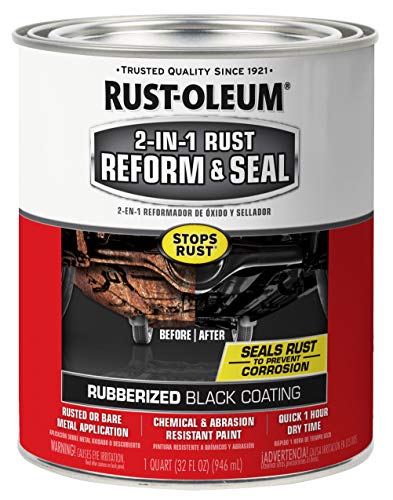
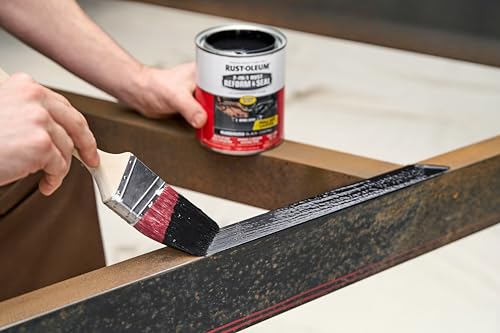
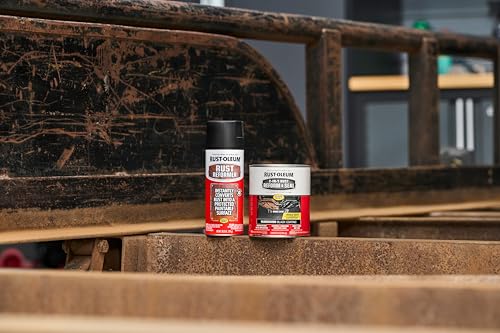
Rust-Oleum Stops Rust 2-in-1
Strengths
- Converts and seals rust
- Flexible rubberized finish
- No primer or topcoat needed
Trade-offs
- Flat, utilitarian appearance
- Limited UV resistance
When you’ve got rust but don’t want to sand it all down, this flexible 2-in-1 formula makes sense. It’s designed to bond directly to rusted metal, converting and sealing it in one step. The rubberized layer that forms is surprisingly tough, resisting cracking even on parts that flex, like fender liners or older frame sections.
Owners like that it skips multiple steps, no primer, no topcoat, and still delivers decent protection. But it’s not magic. For heavy rust, you still need mechanical prep. I’d recommend this for maintenance or moderate corrosion, not full-frame restoration. Compared to POR-15 or Eastwood, it’s less about long-term gloss and more about practical, flexible defense.
Product photos
Rust-Oleum 2X Automotive Enamel
Strengths
- Very affordable
- Fast drying
- Multiple spray patterns
Trade-offs
- Thin film build
- Poor abrasion resistance
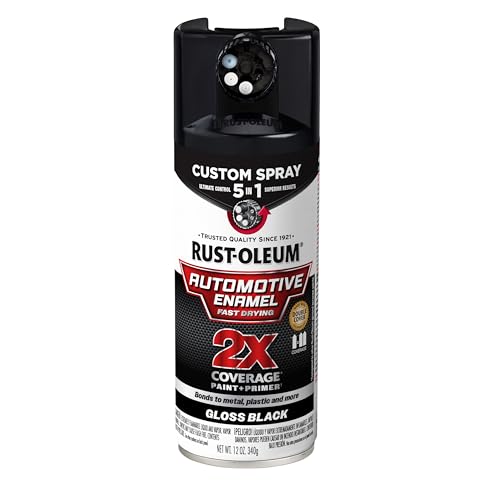
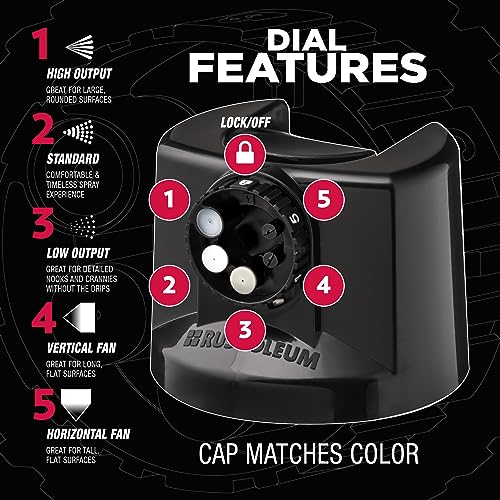
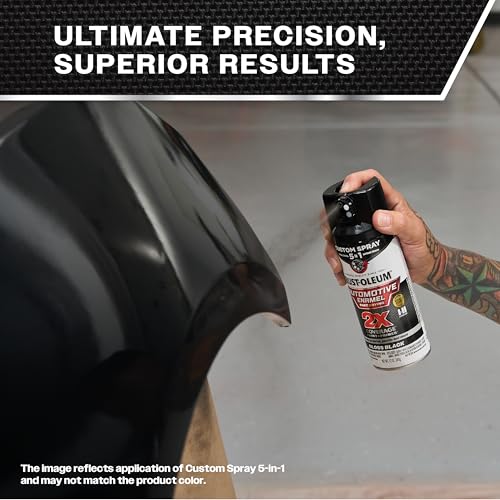
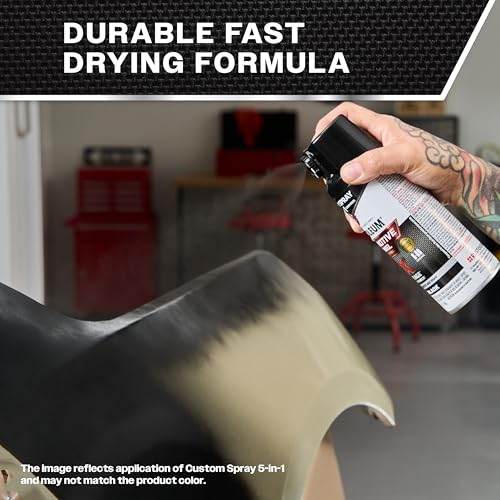
This is the budget pick that surprises with its coverage and convenience. The 5-in-1 spray dial gives real control, use a fine mist for detail work or a wide fan for quick coverage. It dries fast and, despite the low price, delivers a decent gloss black that works on bolts, brackets, and minor chassis touch-ups.
But let’s be clear: this isn’t for full chassis refinishing. It lacks the chemical resistance and thickness of dedicated chassis paints. Owners use it for small jobs where cost matters more than longevity. If you’re painting a license plate bracket or cleaning up a trailer hitch, it’s a smart buy. For anything structural, look elsewhere.
Product photos

How We Tested car chassis paint
My approach to evaluating car chassis paints at TheAutoZenith centers on understanding what truly protects a vehicle’s undercarriage and frame. Rather than a hands-on lab test, this is a research-led comparison of published specifications, owner reviews from forums and retailer sites, and professional automotive detailing opinions. I weighed each product’s features against its intended purpose – long-term corrosion resistance is paramount, but factors like heat resistance and sound deadening also play a role depending on the application.
For chassis paint, I focused heavily on a product’s ability to adhere directly to rust (converting it if possible) and its long-term durability in harsh conditions. A robust coating that eliminates the need for extensive surface preparation is a significant advantage. Equally important is resistance to chipping and abrasion from road debris. Choosing the right product can also impact later stages in vehicle care, like applying a car ceramic coating for further protection.
Specifications provide a baseline – gloss level, temperature resistance, coverage area – but owner feedback reveals how a paint performs in real-world scenarios. I assessed reports on ease of application, longevity, and whether the finish matched expectations. Information regarding surface preparation requirements and compatibility with a quality car paint primer was also crucial, as a proper foundation significantly extends the lifespan of any coating.
Choosing The Right car chassis paint
Finding the right coating for your chassis is about more than just aesthetics; it’s about long-term protection. I’ve seen plenty of projects fall apart because of overlooked prep or the wrong paint choice.
A quality car chassis paint should offer robust corrosion resistance, adhere well to bare metal or existing coatings, and provide a durable finish that can withstand road debris, temperature fluctuations, and exposure to the elements. Consider factors like heat resistance, flexibility, and UV protection when making your selection. Prioritize products designed specifically for automotive underbodies and chassis components for best results.
Understanding Rust Conversion vs. Direct-to-Metal
A key decision is whether to actively convert existing rust or apply a coating directly over it. Rust converters, like the Meuvcol 2-in-1 or Cocomfix Ultra, chemically alter rust into a stable substance, creating a primer-like surface for paint. This is excellent for heavily rusted frames, but requires thorough preparation to remove loose scale. Direct-to-metal paints, such as POR-15, bond directly to rust and create a barrier against further corrosion. These are often favored for their simplicity, but may not be ideal for extensive, deeply pitted rust. Ultimately, the severity of the existing rust dictates which route is best.
Heat and Flexibility: A Chassis’s Harsh Reality
Chassis components experience significant temperature swings and flex during vehicle operation. A paint that becomes brittle and cracks under these conditions won’t last. VHT SP671 stands out for its heat resistance (up to 250°F), making it a good choice for areas near exhaust systems. Beyond heat, flexibility is critical. The Rust-Oleum Stops Rust 2-in-1 offers a rubberized formula that can accommodate chassis movement without cracking, which is especially valuable for a long-lasting finish. If you’re looking for more information on keeping your vehicle looking its best, you might want to read about car paint protection.
Balancing Cost and Coverage
Budget is always a factor, and options like the Rust-Oleum 2X Automotive Enamel are popular for their affordability. However, don’t let price be the sole deciding point. Consider the coverage area per can and the number of coats needed for adequate protection.
Here’s a breakdown of how coverage impacts value:
- A small can (like some rust converters) might be cheap upfront, but require multiple applications.
- A mid-sized spray can (like Eastwood Extreme Chassis Black Satin) provides a good balance of cost and coverage for smaller projects.
- Larger quantities (quarts or gallons) are more economical for full frame restorations, but may be overkill for spot repairs.
Remember, inadequate coverage will shorten the lifespan of your frame paint and ultimately cost you more in the long run. Don’t skimp on quality when it comes to protecting your investment. A well-prepared surface and a suitable coating are the foundation for a durable and attractive chassis.
Don’t paint over loose rust. Thoroughly remove it with a wire brush, grinder, or chemical treatment before applying any coating. A clean, stable surface is crucial for long-lasting adhesion.
Car Chassis Paint Compared
Here’s a comparison of key specifications for various car chassis paints to help you choose the right product.
| Product Title | Finish | Heat Resistance | Rust Conversion | Coverage (sq ft) | Special Features |
|---|---|---|---|---|---|
| Eastwood Extreme Chassis Black Satin | Satin | N/A | No | N/A | Corrosion Resistant |
| VHT SP671 Satin Black Chassis Paint | Satin | 250° F | No | N/A | Ceramic Resin |
| Rust-Oleum Rubberized Undercoating Spray | Rubberized | N/A | No | 10-12 | Sound Dampening |
| Meuvcol 2-in-1 Rust Converter & Primer | Flat | N/A | Yes | N/A | Primer Included |
| Cocomfix Ultra 2-in-1 Rust Reformer | Black | 350° F | Yes | N/A | Direct-to-Rust |
| POR-15 Top Coat Chassis Black | Gloss | N/A | No | N/A | UV & Color Retention |
| Rust-Oleum Stops Rust 2-in-1 | Flat | N/A | No | 85-175 | Flexible Coating |
| Rust-Oleum 2X Automotive Enamel | N/A | N/A | No | 12 | 5-in-1 Spray Patterns |
Frequently Asked Questions
What’s the biggest mistake people make when painting a chassis?
Skipping proper surface preparation is the most common error. Failing to remove all rust, dirt, and old coatings will lead to premature failure, regardless of the paint’s quality. Thorough cleaning and, when necessary, using appropriate automotive sandpaper is vital for adhesion.
Can I paint over existing undercoating?
Generally, yes, but only if the existing coating is sound and firmly adhered. Loose or flaking undercoating must be removed first, as paint won’t bond well to an unstable surface. A scuff sanding with a medium-grit paper helps create a better profile for the new paint.
How long does chassis paint typically last?
With proper preparation and a quality coating, chassis paint should last 5-10 years, even in harsh climates. However, this varies greatly based on road conditions, exposure to salt, and the specific product used; regular inspections are recommended.
Is a rubberized undercoating better for sound deadening?
Yes, rubberized undercoatings like Rust-Oleum Rubberized Undercoating Spray are specifically designed to dampen sound and reduce road noise. While not a substitute for dedicated soundproofing, they provide a noticeable improvement.
What should I do if my chassis paint starts to chip after a year?
Chipping usually indicates inadequate surface preparation or a paint not suited to the stresses a chassis experiences. You’ll need to remove the loose paint, re-prep the area, and consider applying a more durable coating or a car paint restorer to address the underlying issue and prevent further damage.
The Bottom Line
Choosing a chassis paint often comes down to balancing how much effort you want to put in with the level of protection you need. For the best overall combination of durability, ease of use, and long-term corrosion resistance, I believe Eastwood Extreme Chassis Black Satin is the strongest choice. It consistently receives high marks from owners for its robust finish and ability to withstand the elements.
If you’re working with significant existing rust, Cocomfix Ultra 2-in-1 Rust Reformer is a smart starting point, offering both conversion and a primer layer. For those seeking a budget-friendly option with flexible properties, Rust-Oleum Stops Rust 2-in-1 delivers good value. And if you plan to apply any top coat with precision, exploring the right car paint sprayers is a worthwhile investment.
Ultimately, the specifics of the paint matter less than diligent surface preparation and a commitment to thorough coverage. Don’t fall into the trap of chasing the highest-tech formula if you aren’t willing to properly clean and prime the chassis. Protecting your vehicle’s foundation with a quality paint sealants will pay dividends for years to come.
