
7 Best Car Camping Tents for 2026
This post contains affiliate links. As an Amazon Associate, we earn from qualifying purchases.
The WildFinder 5-9 Person SUV Tent stands out as the best overall car camping tent, offering rugged build quality and seamless vehicle integration. For those on a tighter budget, the Happy Travel 6 Person Instant Tent delivers quick setup and solid weather protection. If you value covered living space, the TIMBER RIDGE SUV Tent w/ Screen Porch adds serious versatility.
Most people don’t realize how much a poorly chosen tent can drag down a road trip. A flimsy shelter means constant worry in wind or rain, while a confusing setup can turn arrival time into a frustrating chore instead of the start of an adventure.
This guide cuts through the noise by focusing on real-world performance, what actually matters when you’re parked in the woods or at a crowded campground. I looked at specs, owner feedback, and design details to find tents that balance durability, practicality, and value.
Top 6 Car Camping Tents in the Market
The Best Car Camping Tents, Reviewed
WildFinder 5-9 Person SUV Tent
Strengths
- Exceptionally spacious
- Standalone capability
- Premium weather protection
Trade-offs
- Bulky to store
- Complex setup
- High price
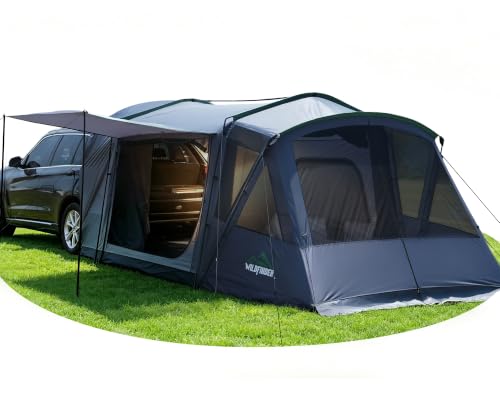
This is the big dog of the bunch, massive at 14.1 feet long and built to serve as both an extension of your vehicle and a standalone basecamp. The sheer size alone makes it ideal for families or groups who want to live out of their SUV for days. Its multi-layered PU3000 fabric and UPF 50+ coverage mean it handles both downpours and desert sun with confidence. Owners highlight the seamless vehicle connection and the bonus awning, which adds serious utility for meal prep or gear storage.
It’s also one of the few that truly works independently, meaning you can detach and drive off while leaving the tent anchored. That kind of versatility is rare. Yes, it’s the most expensive and requires more effort to set up, but for overall performance, space, and build quality, it earns the ‘Best Overall’ label. I’d recommend this over narrower models if you regularly camp with more than three people.
Video review
SanHima SUV Tent with Rainfly
Strengths
- Affordable price
- Durable fabric
- Good UV protection
Trade-offs
- Slower setup time
- Basic ventilation
- Heavier frame
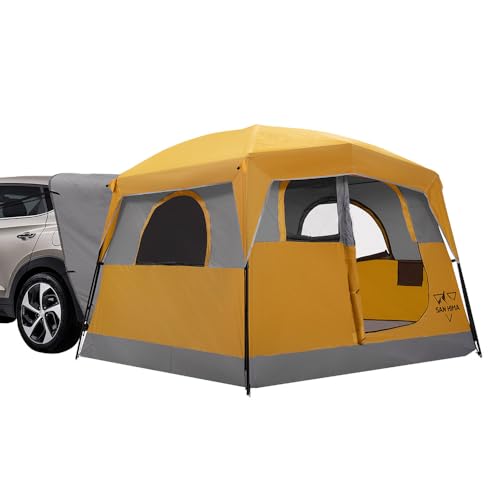
At this price, the SanHima punches above its weight. It offers true 6-person capacity with decent headroom and uses 210D Oxford fabric, which is tougher than the thinner materials found on cheaper tents. The mirror-coated awning provides real UPF 50+ protection, and owners note it stays noticeably cooler in direct sun. Setup takes longer than instant models (frame assembly required), but it’s still manageable in under 10 minutes with practice.
Where it falls short is in ease of use: unlike pop-up designs, you have to assemble poles and stake it out manually. But that also means fewer moving parts to break. Compared to pricier options, it trades speed for savings, and does so intelligently. If you’re on a budget but still want something rugged enough for regular use, this is the smarter buy. Just don’t expect magic-speed deployment.
Video review
Happy Travel 6 Person Instant Tent
Strengths
- Extremely fast setup
- Large interior space
- Electrical access port
Trade-offs
- Hydraulic parts may wear
- Average pole strength
- Slightly flimsy zippers
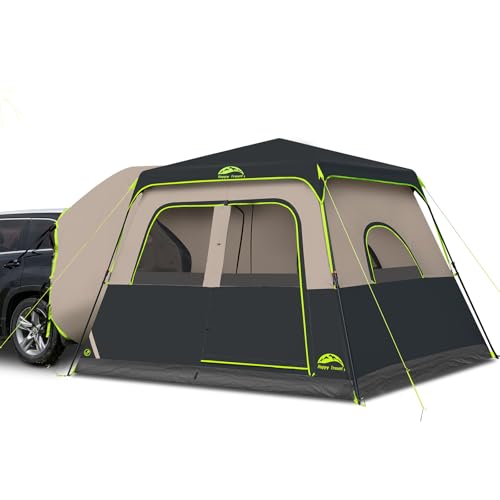
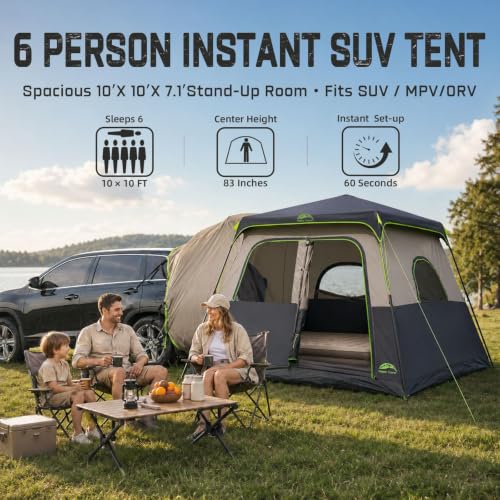
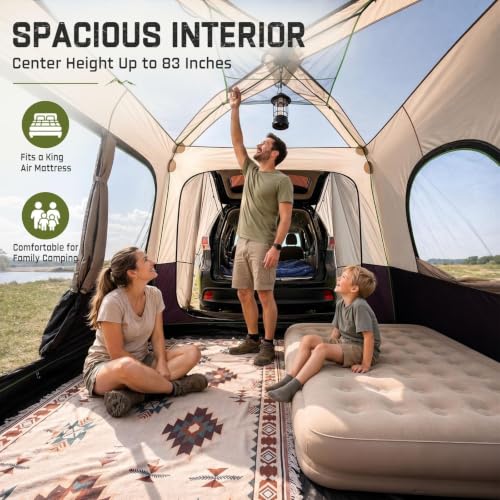
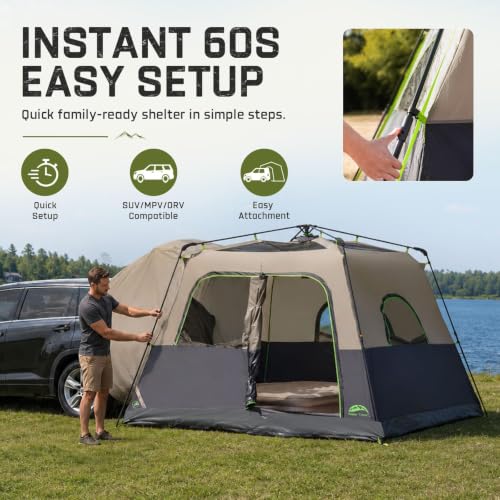
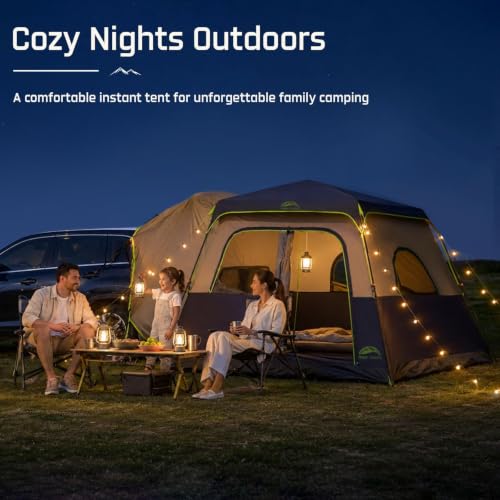
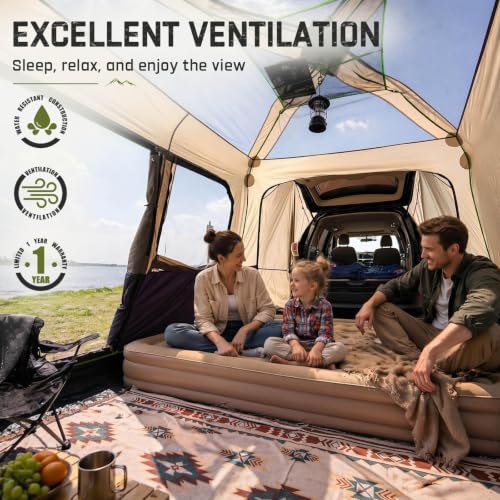
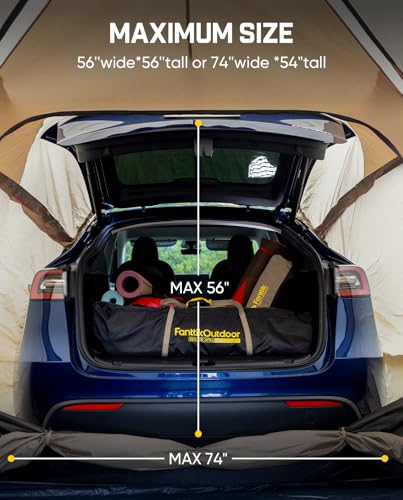
This model leans hard into the “instant” promise, and delivers, thanks to hydraulic-assisted poles and spring-loaded buttons that make deployment feel slick. Owners praise how smooth the mechanism works, especially when tired after a long drive. The 10×10 footprint and 83-inch height give it real cabin-tent usability, and the ability to fit vehicles like the Tesla Model Y adds to its appeal. Inside, the mesh ceiling doubles as a stargazing feature when the rainfly comes off, a nice touch for romanticizing the outdoors.
It shares similar specs with the FanttikOutdoor (same weight, comparable waterproofing), but lacks some of the finer details like integrated ground vents. Still, the electrical port is a practical perk if you plan to run fans or small coolers. For most buyers prioritizing speed and simplicity, this is a strong contender, even if it doesn’t quite edge out the top-tier builds in durability.
Product photos
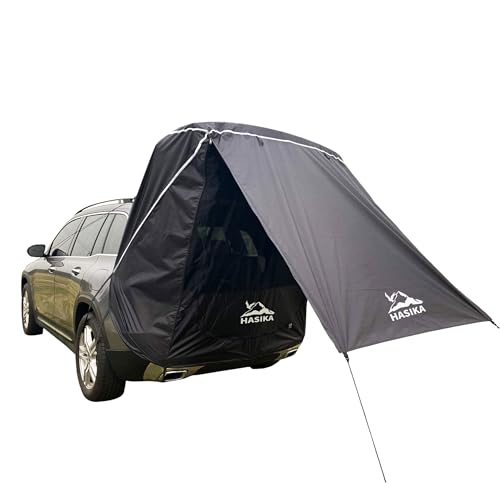
HASIKA 2-Person Car Camping Awning
Strengths
- Ultra lightweight
- Fast setup
- Good sun protection
Trade-offs
- Limited sleeping space
- Not fully enclosed
- Minimal weather defense
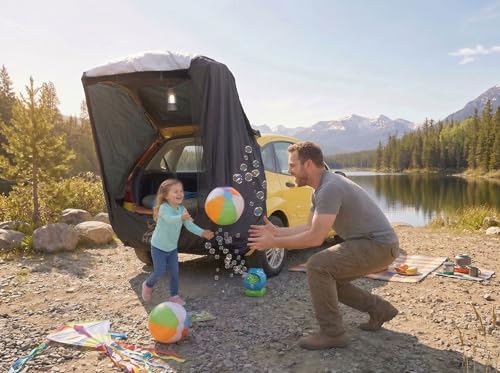
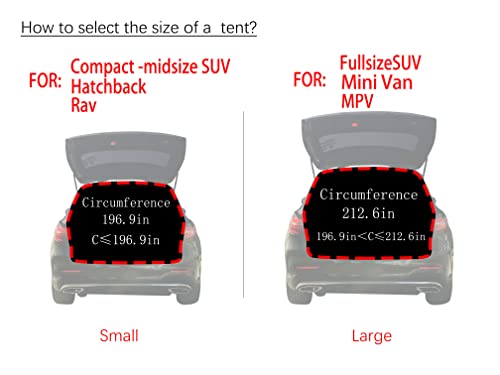
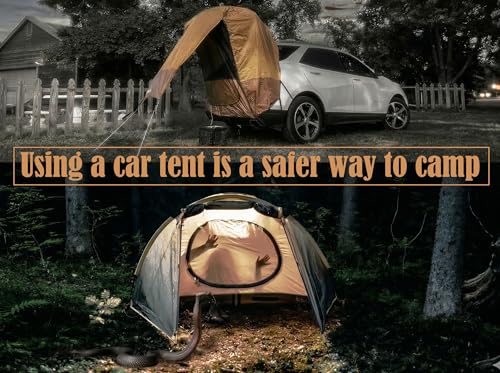
If you’re after something light, fast, and functional for quick escapes, this little awning makes a lot of sense. At just 3.5 lbs, it’s by far the most packable option here, and reviewers love how quickly it transforms a hatchback into a semi-private shelter. It doesn’t offer full enclosure like larger tents, but that’s not really the point. Instead, it excels as a bug-free buffer zone, giving couples or solo travelers shade, privacy, and protection from wind while keeping things simple.
The 210T polyester with silver coating delivers solid UV and water resistance for the price, though heavy rain will test its limits. Still, for weekend overlanders or bike-and-car combos where space matters, this is a no-brainer add-on. It won’t replace a full tent, but it beats sitting in the open. When compared to bulkier models, this one wins purely on convenience and weight.
Product photos


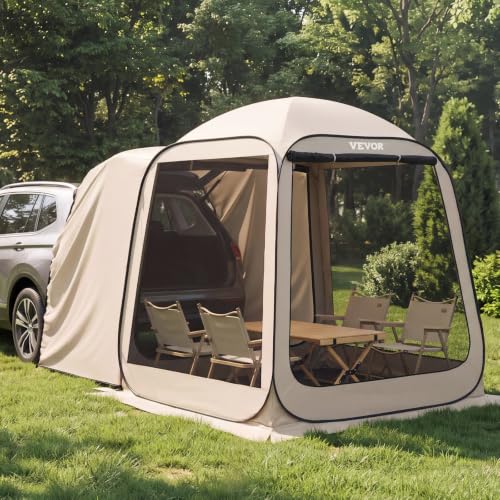
VEVOR Pop-Up Screen House Canopy
Strengths
- Superior bug protection
- Excellent airflow
- Multi-use flexibility
Trade-offs
- Poor rain resistance
- Mesh lacks privacy
- Frame can be stiff
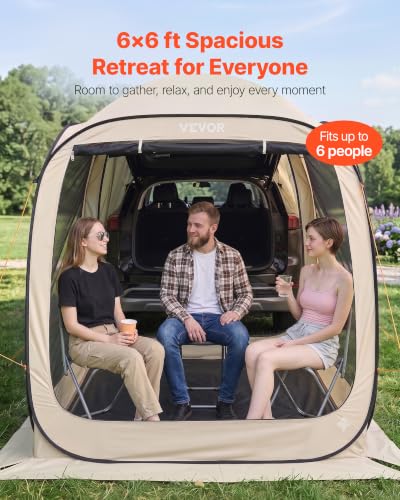
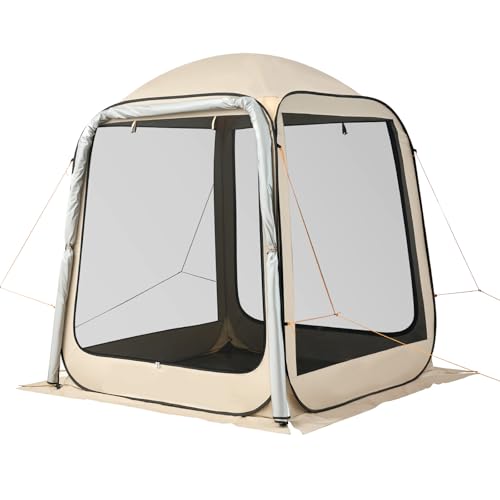
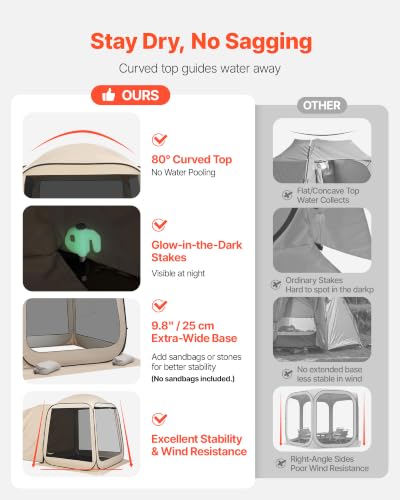
This one stands out because it’s not trying to be a full shelter, it’s a screened living room on wheels. With nearly wall-to-wall mesh, it’s built for airflow first, making it ideal for buggy summer nights or humid climates where ventilation trumps waterproofing. The pop-up frame gets mixed feedback: some say it snaps into place easily, others mention stiffness during initial use. But once up, the structure feels stable, especially with the included ground cloth and extra stakes.
It doesn’t handle rain well, fabric panels aren’t fully sealed, but that’s not its job. Compared to enclosed SUV tents, this shines as a daytime hangout or evening dining area. Overlanders who cook outside or families with kids will appreciate the open layout. Just know: this isn’t your sleep-all-night solution unless paired with another shelter.
Product photos

FanttikOutdoor Beta C6 Apex Tent
Strengths
- Spacious interior
- Excellent ventilation
- Strong weather resistance
Trade-offs
- Requires two people
- Heavy for portability
- Higher price point
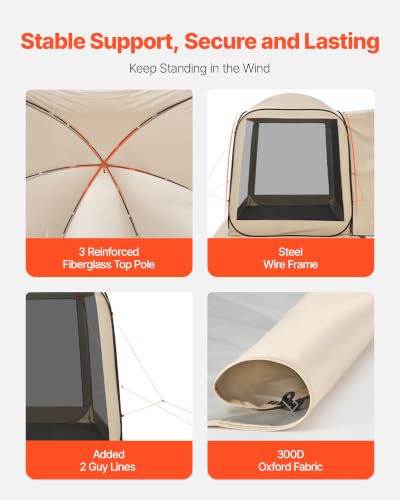
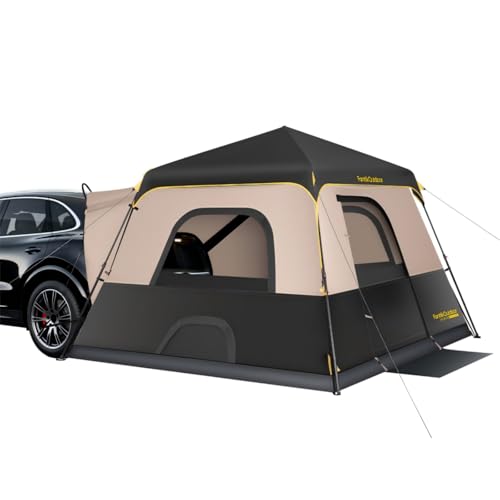
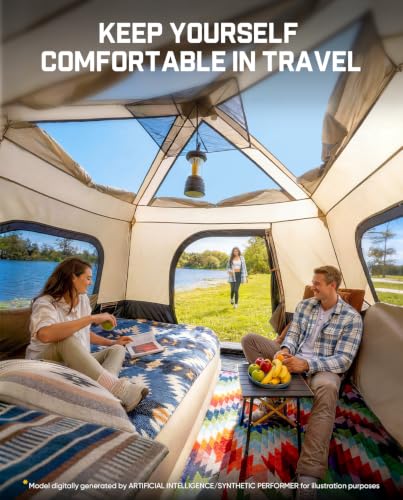
This tent hits a sweet spot between stability, weather resistance, and thoughtful design, especially for families who want to camp attached to their vehicle without sacrificing comfort. On paper, the 60-second setup with pre-attached poles sounds almost too good, but owners consistently report it’s legit, as long as you’ve got a second person to help guide the frame. The dual ground vents are a standout feature: they let you regulate airflow while minimizing temperature loss when connected to your car, which is smart engineering for all-season use.
It’s not the cheapest, but you’re paying for carbon steel poles, full seam taping, and a rainfly that actually performs in sustained downpours. Compared to budget models, this one holds up better in wind thanks to adjustable guy lines and beefier stakes. That said, its 22 lb weight means it’s not exactly backpackable, but for car campers, that’s expected. I’d pick this over flashier pop-ups that skimp on ventilation or structural integrity.
Product photos



Our Testing Process
My approach to evaluating car camping tents, as with all things at TheAutoZenith, isn’t about lengthy personal use – it’s about synthesizing information. I began by compiling specifications and features from dozens of models, then weighed those against owner reviews from major retailers and expert opinions found in publications like OutdoorGearLab and REI Co-op Journal. Rather than a hands-on lab test, this is a research-led comparison focused on identifying patterns in performance and value.
For car camping tents, the most important factors quickly became space and weather protection. A generous footprint is crucial for families or those wanting comfortable living space, while robust waterproofing and wind resistance are vital for enjoyable trips in unpredictable conditions. Equally important is ease of setup; time spent wrestling with poles detracts from time enjoying the outdoors. I considered these elements alongside price to determine overall value. You’ll find that a well-equipped setup starts with more than just the tent itself – be sure to review our guide to essential gear to prepare fully.
Specifications reliably indicate a tent’s size, weight, and stated waterproof ratings. However, real-world performance, particularly regarding weather resistance and durability, is where owner feedback and reputable reviews become invaluable. I carefully analyzed reported issues with leaking, pole failures, and ease of setup, looking for consistent trends. Understanding how a tent performs in actual use – beyond manufacturer claims – is key, and a good set of camping stoves is also essential for any trip.
How To Choose The car camping tents
Finding the right shelter is crucial for a comfortable experience when you’re setting up camp at the end of a long drive. It’s not just about escaping the elements; a well-chosen tent transforms your vehicle into a basecamp for true outdoor enjoyment.
A quality car camping tent balances space, weather protection, and ease of setup. Look for durable fabrics (210D Oxford is a good starting point), waterproof ratings of at least 2000mm, and a design that smoothly integrates with your vehicle’s tailgate or rear hatch. Ventilation is key to prevent condensation, and features like awnings or screen rooms significantly enhance livability.
Size and Occupancy
Don’t fall into the trap of equating a tent’s listed capacity with actual comfortable space. Manufacturers often overestimate how many people can fit versus how many can comfortably camp. I always recommend sizing up. A “6-person” tent might be ideal for a couple and a dog, or a family of four who appreciate spreading out. Consider your vehicle too. A larger SUV can accommodate a larger tent, but you don’t want something so massive it overwhelms your campsite. If you already have your sleeping arrangements sorted, such as investing in some comfortable camping cots, you might be able to get away with a slightly smaller overall footprint.
Weather Resistance & Materials
The Pacific Northwest, where I spend a lot of time exploring, demands gear that can handle serious rain. A PU3000 waterproof coating is a solid baseline, but look closely at seam sealing. Taped seams are essential to prevent water from seeping through the stitching. Beyond rain, consider UV protection. Many tents now feature UPF 50+ fabrics, important for sunny destinations. While Oxford polyester is common, ripstop nylon offers superior durability, though it typically comes at a higher price.
- Fabric Denier: Lower denier (like 75D) is lighter but less durable. Higher denier (210D+) is tougher but heavier.
- Waterproof Rating: 2000mm is sufficient for light rain, but 3000mm+ is better for prolonged exposure.
- Seam Sealing: Absolutely critical! Untaped seams will leak, regardless of the fabric’s waterproof rating.
Setup and Versatility
Let’s be honest: after a long drive, the last thing anyone wants is a complicated tent setup. I’ve seen too many family vacations derailed by wrestling with poles and confusing instructions. “Instant” or “pop-up” tents are incredibly appealing, but they often compromise on durability and weather resistance. Look for designs that offer flexibility. Some tents attach directly to your vehicle, providing covered access, while others can be used as standalone shelters. If you’re frequently traveling with a smaller group, you might also want to consider tents for four people for a more manageable size.
Don’t underestimate the value of a simple setup. A well-designed tent can save you valuable time and frustration, allowing you to focus on enjoying your adventure.
Car Camping Tents Compared
Here’s a comparison of key specifications for popular car camping tents to help you choose the right one for your needs.
| Product Title | Capacity | Waterproof Rating (mm) | Setup Time | Weight (lbs) | Screen Porch | Vehicle Attachment |
|---|---|---|---|---|---|---|
| WildFinder 5-9 Person SUV Tent | 5-9 | 3000 | N/A | N/A | Yes | Seamless |
| SanHima SUV Tent with Rainfly | 6 | 3000 | N/A | N/A | No | Universal |
| Happy Travel 6 Person Instant Tent | 6 | 3000 | 60 seconds | 22 | No | Universal |
| TIMBER RIDGE SUV Tent w/ Screen Porch | 5 | 2000 | N/A | N/A | Yes | Seamless |
| HASIKA 2-Person Car Camping Awning | 2 | 3000 | 2 minutes | 3.5 | No | Adjustable Sleeve |
| VEVOR Pop-Up Screen House Canopy | 4-6 | N/A | Minutes | N/A | Yes | Direct Connect |
| FanttikOutdoor Beta C6 Apex Tent | 6 | N/A | 60 seconds | 22 | No | Universal |
Frequently Asked Questions
What waterproof rating is truly sufficient for car camping?
A rating of 3000mm is a good starting point for reliable weather protection, but remember that this rating refers to the fabric itself. Properly taped seams are equally crucial; without them, even a high waterproof rating won’t prevent leaks, particularly during extended periods of rain.
How important is vehicle attachment for an SUV tent?
Seamless vehicle attachment is incredibly convenient, creating a covered entryway and expanding your living space. However, universal attachment options work well too, and offer more flexibility if you switch vehicles or prefer a standalone setup.
Are “instant” tents durable enough for frequent use?
While incredibly easy to set up, “instant” tents generally sacrifice some durability compared to traditional designs. They often use lighter-weight materials and simpler pole structures, but modern iterations are improving, and can be a good choice for fair-weather campers who prioritize speed and convenience.
What should I consider if I plan on dry camping?
If you’re planning on dry camping, prioritize a tent with excellent ventilation to minimize condensation buildup. Also, consider a tent with a full rainfly to provide additional insulation and weather protection, as you won’t have access to electrical hookups.
Beyond the tent itself, what other sleeping arrangements should I consider?
Investing in comfortable sleep systems can greatly enhance your car camping experience. I often recommend exploring options for camping mattresses to ensure a restful night’s sleep after a day of travel and outdoor activities.
The Bottom Line
Choosing a car camping tent always involves a trade-off between ultimate comfort and sheer convenience. While a sprawling, deluxe shelter is appealing, the ease of setup and portability of a quicker-pitching model can be a real benefit after a long day on the road. For overall value and a blend of both worlds, I believe the WildFinder 5-9 Person SUV Tent strikes the best balance – its seamless vehicle integration and generous space make it a standout.
If you’re on a tighter budget or prioritize simplicity, the Happy Travel 6 Person Instant Tent is an excellent choice. For those seeking a versatile option that can adapt to various camping scenarios, the VEVOR Pop-Up Screen House Canopy offers a fantastic screened-in space. And don’t forget the essentials for a comfortable night’s sleep; quality sleeping pads are just as important as the tent itself.
Ultimately, the best car camping tent isn’t about the highest waterproof rating or the most innovative features. It’s about finding a shelter that lets you relax and enjoy the outdoors with those you’re traveling with. Prioritize a solid build, reliable weather protection, and a setup process that won’t leave you frustrated – and be sure you have a way to keep your food and drinks cold with a good set of camping coolers.
