
8 Best Car Camping Sleeping Pads of 2026
This post contains affiliate links. As an Amazon Associate, we earn from qualifying purchases.
The Zzuvjoy Memory Sleeping Pad is our top pick for its exceptional comfort and rapid setup, closely followed by the budget-friendly Oramoose 4in Ultralight Sleeping Pad, which delivers surprising support for its weight and price.
For car campers, a bad night’s sleep can turn an adventure into a chore. Too many pads promise comfort but deliver noise, poor insulation, or endless inflation time.
After comparing specs and owner feedback across dozens of models, we focused on real-world performance, what actually keeps you comfortable and well-rested when you’re off the grid. This guide cuts through the marketing to highlight pads that balance ease of use, durability, and support based on what matters most: how well they help you sleep.
Top 8 Car Camping Sleeping Pads in the Market
The Best Car Camping Sleeping Pads, Reviewed
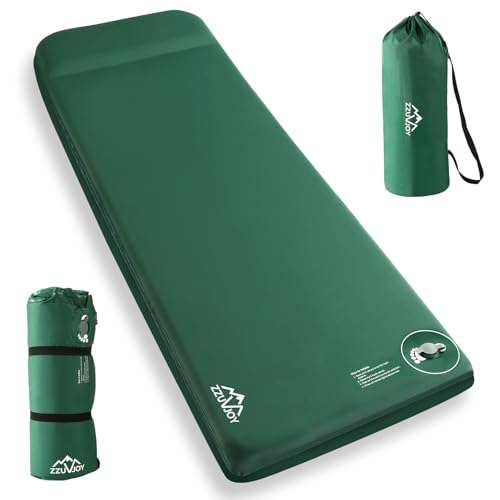
Zzuvjoy Memory Sleeping Pad
Strengths
- R-value 9.5 insulation
- Memory foam support
- Adjustable firmness
Trade-offs
- Heavy for backpacking
- Expensive
- Large packed size
This is the most complete package on the list. The hybrid memory foam and air core delivers a level of support that mimics a real bed, and the R-value 9.5 means it works year-round, even in snow. Owners consistently praise how quiet it is and how well it relieves pressure on hips and shoulders. The foot pump system is efficient, inflating it in under 30 seconds, and the dual-valve setup makes deflation fast.
The 6.5-pound weight keeps it out of backpacking territory, but for car camping, overlanding, or guest use, it’s perfect. The ability to adjust firmness is a real luxury, letting you fine-tune the feel. Compared to others, this one just feels more thoughtful.
Video review
Oramoose 4in Ultralight Sleeping Pad

Strengths
- Excellent price
- 4-inch thickness
- Ultra compact
Trade-offs
- Lower weight limit
- Material not for rugged terrain
- Pillow is basic
For under $20, this pad punches way above its price. The 4-inch thickness gives real lift off the ground, and the V-shape support design actually works, owners report less pressure on hips and shoulders, especially when sleeping on the side. The foot pump inflates it in 30 seconds, and the no-leak valve holds air through the night, which is rare at this price.
It’s also impressively compact, smaller than a water bottle when packed, and at 1.9 pounds, it won’t weigh down your pack. The 40D nylon isn’t as tough as 50D, but for typical trail use, it holds up fine. Compared to others, this is the budget pick that doesn’t feel like a compromise.
Video review
Pretyw Ultralight Sleeping Pad with Pillow

Strengths
- Comfortable wave design
- Lightweight and compact
- Quiet surface
Trade-offs
- Pump requires firm steps
- Slight firmness learning curve
- Repairs not field-tested
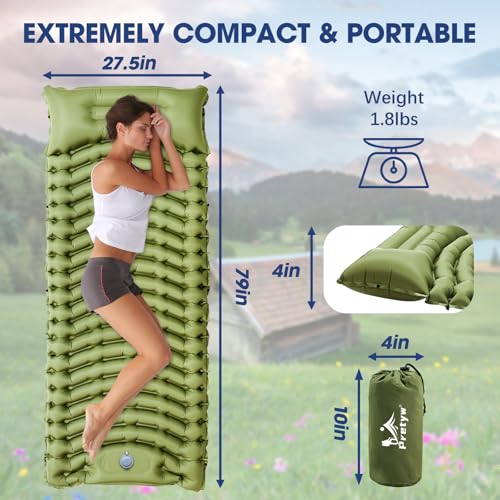
This pad splits the difference between comfort and portability better than most. The 4-inch thickness and ergonomic wave pattern deliver real pressure relief, and the built-in pillow is slightly more contoured than others in this range. Owners appreciate the 1.8-pound weight and how easily it slips into a backpack side pocket.
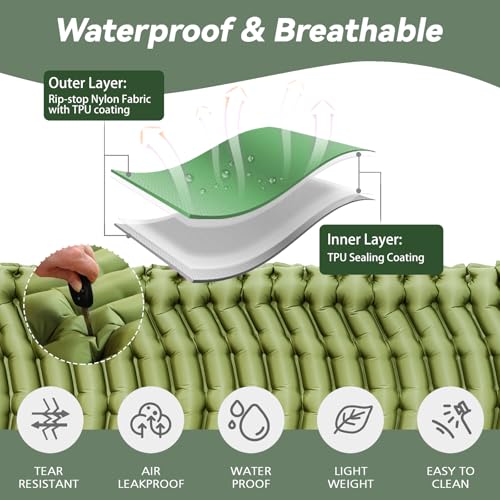
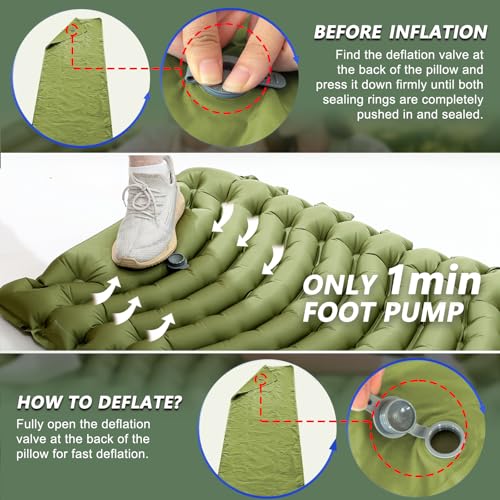
The foot pump works smoothly, and the TPU-coated 40D nylon resists abrasion better than expected. One thing that stands out is how quietly it sleeps, no crinkling or squeaking, which is a win for couples. It’s not the lightest or thickest, but for the balance of features, it’s hard to beat.
Product photos

OGERY 6″ Extra-Thick Inflating Pad
Strengths
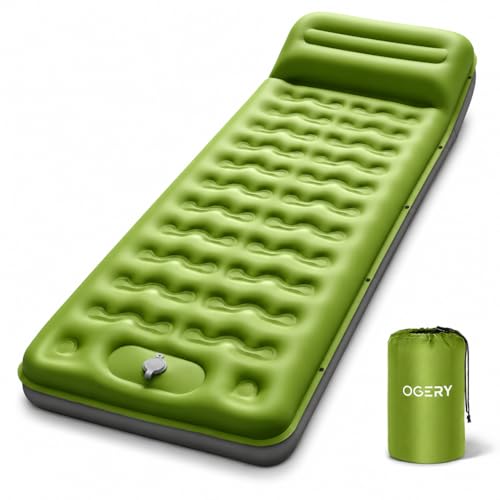
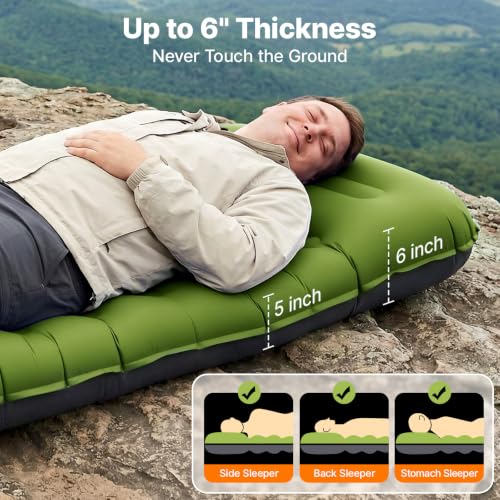
- 6-inch thickness
- Built-in pillow
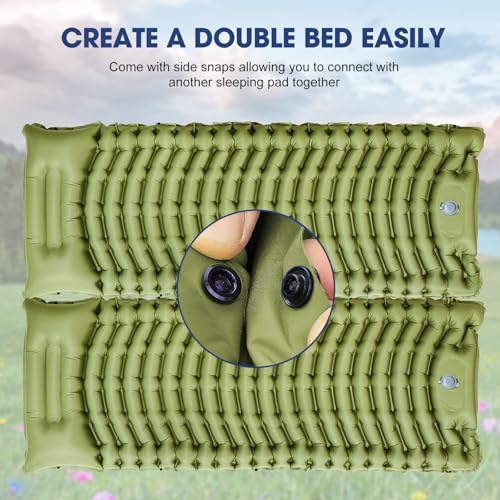
- Connectable design
Trade-offs
- Top-heavy feel
- Heavier than average
- Less stable
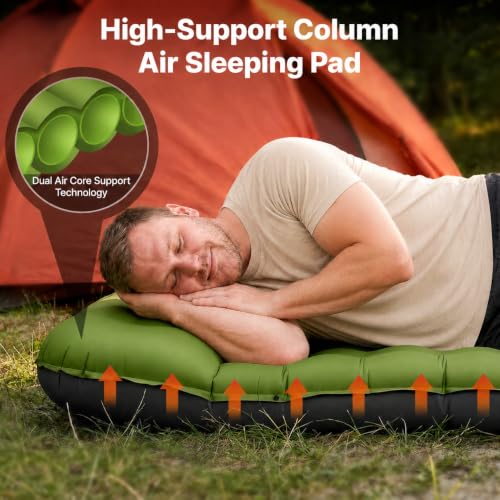
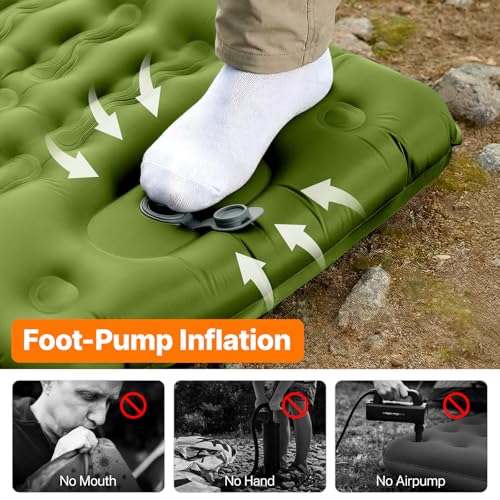
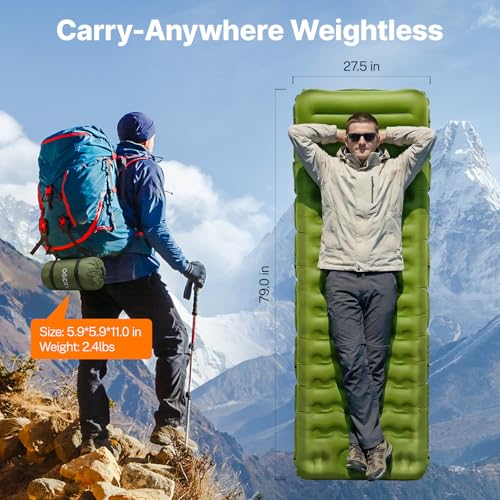
At 6 inches thick, this is the tallest pad on the list, closer to a raised cot than a traditional sleeping pad. The extra height makes getting up and down easier, especially for older campers or those with joint issues. The built-in pillow adds to the comfort, and the foot pump inflates it fast.
But that height comes at a cost: stability. Some owners report rolling off during the night, and the 2.4-pound weight isn’t trivial. It packs down reasonably small, but not as compact as others. Still, for car campers who want maximum cushioning and don’t mind the bulk, it’s a strong contender.
Product photos

CYMULA CertiPUR-US Memory Foam Pad

Strengths
- Memory foam comfort
- No inflation needed
- Non-slip waterproof base
Trade-offs
- Slow to expand
- Bulky when packed
- Not for backpacking
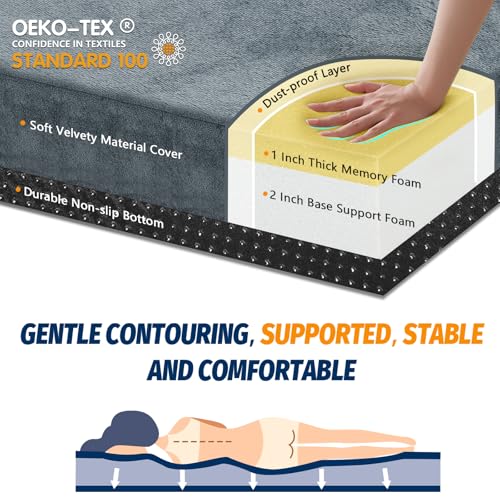
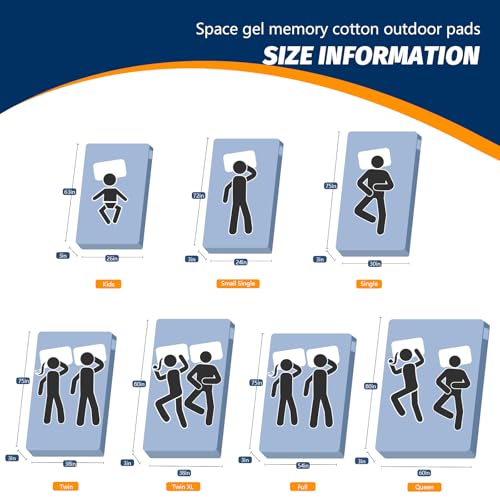
This memory foam pad stands out in a sea of air mats by offering something rare: consistent, pressure-relieving support without the risk of punctures or slow leaks. On paper, the 3-inch high-density foam sounds modest, but owners consistently report it delivers a level of comfort closer to a real mattress than most inflatable options. For car campers or those using it in an SUV or tent, the lack of inflation hassle is a major plus, just unroll and sleep.
The waterproof, non-slip bottom is a smart touch for uneven ground, and the included storage bag makes transport manageable despite the bulk. However, the need to let it expand for up to 72 hours after unboxing is a real pain point mentioned across reviews. Once expanded, it holds shape well, but it’s not a last-minute solution.
Product photos


Gear Doctors Ether Ultralight Pad

Strengths
- Extremely lightweight
- Bottle-sized pack
- Lifetime warranty
Trade-offs
- Low insulation
- Narrow width
- U-shape takes getting used to
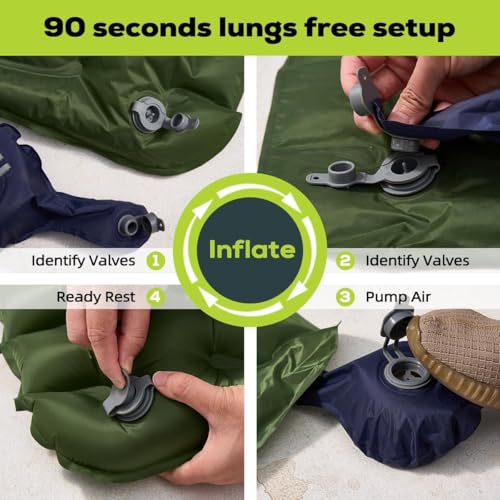
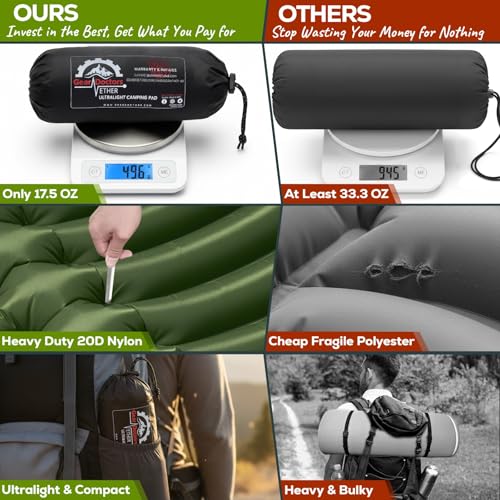
If you live for the trail, this is the pad to beat. At 17.5 ounces, it’s one of the lightest full-size options here, and it packs down to the size of a water bottle, perfect for ultralight backpackers. The ErgoCushion U-shape design actually stabilizes your body, preventing that roll-off feeling common with flat air pads.
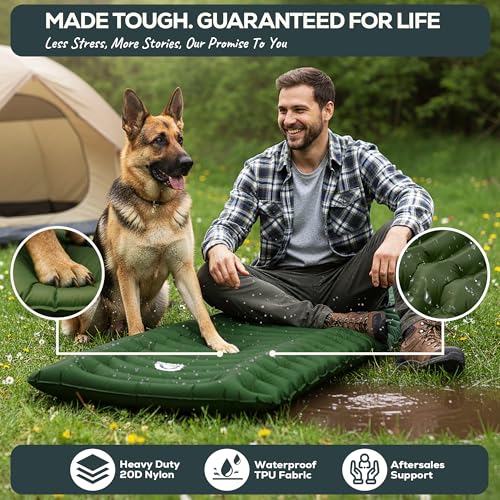
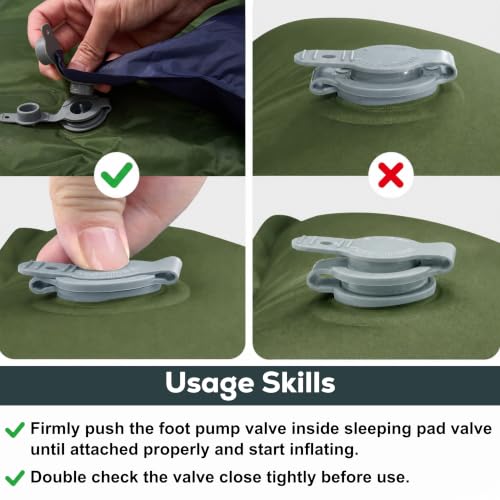
The detachable foot pump is clever and efficient, and the lifetime replacement policy is a rare confidence booster. Owners report it holds air well and survives rocky ground thanks to the 20D nylon with TPU. It’s only rated for 2 seasons (R-value 2), so it’s not for winter, but for spring and summer hikes, it’s a standout.
Product photos

FNARMW 5″ Thick Camping Mat

Strengths
- 5-inch thickness
- Foot pump included
- High weight capacity
Trade-offs
- Bulky packed size
- Some seam durability concerns
- Not ultralight
At 5 inches thick, this pad promises hotel-like comfort, and on paper, it delivers, with a catch. The egg-crate design and built-in pillow suggest strong support for side sleepers, and the 800-pound weight capacity means it’s built tough. Reviewers note it holds air well over a weekend, and the foot pump is a standout feature, inflating the pad in about a minute without straining your back.
Still, the 50D nylon feels durable, but some owners report seam issues after repeated folding. It’s also heavier and bulkier than most backpacking pads, so it’s clearly aimed at car campers. Compared to others in this list, it’s one of the few that could genuinely replace a cot for side sleepers who hate the trampoline effect.
Product photos


MOXILS Inflatable Sleeping Pad

Strengths
- Ultra lightweight
- Foot pump design
- Connectable pads
Trade-offs
- Minimal insulation
- Narrow width
- Average durability
This is the kind of pad that makes sense when every ounce counts. At just 1.9 pounds and packing down to bottle size, it’s clearly built for hikers who refuse to sacrifice sleep. The built-in foot pump works as advertised, 20 seconds of stomping and it’s ready, and the body-mapping design helps prevent that dreaded mid-sleep sag. Owners praise how stable it feels for such a light pad, though a few mention it doesn’t insulate well in cold weather.
What really sets it apart is the ability to link two pads together. For couples or friends sharing a tent, that’s a standout. It’s not the most cushioned option here, but for thru-hikers or minimalist campers, it hits the sweet spot of weight, speed, and comfort.
Product photos


How We Picked These car camping sleeping pads
Rather than a hands-on lab test, our evaluation of car camping sleeping pads is a research-led comparison of published specifications and owner feedback. I focused on identifying key features and comparing them across numerous models, then weighed those against what current owners are saying about real-world performance. We examined data from manufacturer specs, reputable outdoor gear review sites, and, crucially, thousands of customer reviews to get a sense of long-term reliability and comfort.
For this category, two factors stood out as most decisive: comfort and ease of use. A comfortable night’s sleep is paramount for enjoying car camping, and that’s heavily influenced by thickness and material. Equally important is quick and easy inflation – nobody wants to spend half an hour wrestling with a pump after a long drive. I also gave significant weight to durability, looking for materials and construction techniques that suggest long-term resilience. Finding the right balance between these factors, and considering price, ultimately shaped our recommendations, and helped us determine which options stand out from the many available, including related options like comfortable sleeping beds for vehicles.
Published specifications reliably indicate dimensions, weight, and R-value (insulation). However, owner feedback proved vital for assessing actual comfort levels, especially regarding long-term support and noise. Specs can tell you a pad has a memory foam layer, but reviews reveal if it truly provides pressure relief. Similarly, while manufacturers tout quick inflation, owner experiences shed light on whether the system is truly user-friendly. When choosing a shelter to pair with your new pad, you might also want to explore options for car camping tents to complete your setup.
How To Pick The Right car camping sleeping pads
Finding the right sleeping pad is crucial for comfortable nights under the stars – or, more accurately, in your vehicle. It’s a surprisingly complex purchase, and a bad choice can ruin an otherwise fantastic trip.
A quality sleeping pad balances comfort, insulation (R-value), packed size, weight, and durability. Look for materials resistant to punctures and tears, a thickness appropriate for your sleeping style, and an R-value suited to the expected temperatures. Consider ease of inflation and deflation, as well as overall portability for your intended use.
Prioritize Your Sleep Style
The most common complaint I hear is about insufficient support. Forget about simply “roughing it” – a good night’s sleep is essential for enjoying your adventures. Side sleepers, in particular, need more cushioning than back sleepers. Look beyond simple thickness. Pads like the Zzuvjoy Memory Sleeping Pad with its memory foam core are designed to contour to your body, relieving pressure points. Conversely, if you frequently shift positions, a firmer pad, like some of the Oramoose options, might be a better choice to prevent feeling “stuck.”
Understand Insulation and R-Value
Don’t assume a thicker pad is always warmer. Insulation is measured using an R-value; higher numbers indicate better insulation. For three-season camping, an R-value of 3 or 4 should suffice. However, if you plan on camping in colder temperatures or on snow, you’ll want something closer to 5 or higher. The FNARMW 5″ Thick Camping Mat boasts a robust construction suitable for varied conditions. Remember to also consider the insulation of your vehicle; a sleeping pad is just one part of a larger system to stay warm when you’re considering your overall car camping gear.
Balance Portability with Features
Weight and packed size are paramount, especially if you’re backpacking or have limited space in your vehicle. The Gear Doctors Ether Ultralight Pad is a prime example of prioritizing compactness, weighing in at just 17.5 oz. However, this often means sacrificing some comfort or durability. If you’re primarily car camping and space isn’t a major concern, you can afford to go with a heavier, more comfortable option.
Here’s what to keep in mind regarding features:
- Self-Inflation: Convenient, but can be less adjustable than manual inflation.
- Built-in Pillows: A nice convenience, but might not be ideal if you prefer a specific pillow.
- Connectable Pads: A clever feature (like on the MOXILS pad) for couples or families, turning individual pads into a larger sleeping surface.
Ultimately, the best sleeping pad will depend on your individual needs and priorities. Don’t underestimate the importance of a comfortable night’s sleep, and consider investing in a quality camping mattress that will enhance your outdoor experience.
Don’t cheap out on sleep. A good night’s rest is far more valuable than saving a few dollars.
Car Camping Sleeping Pads Compared
Here’s a comparison of specifications for popular car camping sleeping pads to help you make an informed decision.
| Product Title | Thickness | R-Value | Weight (lbs) | Inflate Time | Packed Size | Capacity (lbs) |
|---|---|---|---|---|---|---|
| Zzuvjoy Memory Sleeping Pad | 3.1 in | 9.5 | 6.5 | <30 sec | N/A | N/A |
| Oramoose 4in Ultralight Sleeping Pad | 4 in | N/A | 1.9 | 30 sec | 9.4×4.3in | 400 |
| Pretyw Ultralight Sleeping Pad | 4 in | N/A | 1.8 | 30-60 sec | 10x4in | N/A |
| OGERY 6″ Extra-Thick Inflating Pad | 6 in | N/A | 2.4 | 60 sec | 5.9×5.9x11in | 800 |
| CYMULA CertiPUR-US Memory Foam Pad | 3 in | N/A | N/A | N/A | N/A | N/A |
| Gear Doctors Ether Ultralight Pad | 3.35/2.36in | 2 | 17.5 oz (1.1lbs) | 90 sec | 8.6×3.1in | 440 |
| FNARMW 5″ Thick Camping Mat | 5 in | N/A | 4.2 | 60 sec | N/A | 800 |
| MOXILS Inflatable Sleeping Pad | N/A | N/A | 1.9 | 20 sec | N/A | N/A |
Frequently Asked Questions
What R-value is sufficient for most car camping situations?
An R-value of 3 or 4 is generally enough for three-season car camping, though if you anticipate colder temperatures, or are camping at higher elevations, you should look for a pad with an R-value of 5 or higher. Remember that your vehicle itself provides some insulation, too.
How important is packed size if I’m primarily car camping?
Packed size is less critical for car camping than for backpacking; you have more room to work with. However, a more compact pad still makes storage easier and leaves room for other gear, like those found in a review of car camping cots.
Are self-inflating pads as comfortable as manually inflated ones?
Self-inflating pads are convenient, but often offer less precise control over firmness compared to manual inflation, which is crucial for side sleepers. Many owners report needing to top off self-inflating pads with a pump for optimal support.
What should I look for in a sleeping pad if I sleep on my side?
Side sleepers should prioritize cushioning and contouring to relieve pressure points. A pad with a memory foam layer, like the Zzuvjoy, is a good starting point, but read reviews to confirm it provides adequate support for your weight and preferred sleeping position.
Beyond the pad itself, what else should I consider for staying warm while car camping?
A sleeping pad is only one element of a warm sleep system. Layering with appropriate bedding, and considering a supplemental heat source like one of the camping heaters we’ve reviewed, will significantly improve your comfort in colder conditions.
The Bottom Line
Choosing a sleeping pad often comes down to balancing the convenience of quick inflation and portability with the deep comfort that comes from thicker, more supportive designs. Ultimately, for most car campers, the Zzuvjoy Memory Sleeping Pad strikes the best overall balance. It provides a genuinely comfortable night’s sleep thanks to its memory foam construction, and owner feedback consistently praises its support, all without being excessively bulky or difficult to inflate.
If you’re on a tighter budget, the Pretyw Ultralight Sleeping Pad offers a surprisingly comfortable experience for the price. For those prioritizing a larger sleeping surface for couples or families, the MOXILS Inflatable Sleeping Pad’s connectable design is a clever solution. And if you’re seeking a premium experience and need something suitable for colder weather, the FNARMW 5″ Thick Camping Mat provides substantial insulation and cushioning. Don’t forget to check out our guide to car camping coolers to keep your refreshments cold!
At the end of the day, specs don’t tell the whole story. Focus on finding a pad that suits your sleeping style and the type of camping you do most often. Prioritize comfort and support over chasing the lightest weight or lowest price, and you’ll be well on your way to enjoying many restful nights on the road – perhaps even pairing it with a comfortable air mattress for ultimate relaxation.
