
7 Best Car Amplifier Cooling Fans of 2026
This post contains affiliate links. As an Amazon Associate, we earn from qualifying purchases.
The AC Infinity AIRCOM S7 stands out as the best overall car amplifier cooling fan, delivering strong airflow with whisper-quiet operation. For those on a tighter budget, the GDSTIME 80mm Brushless offers solid performance at a lower price, while the AC Infinity AIRCOM T10 is ideal for high-power setups needing maximum cooling.
Heat kills electronics, and car amplifiers run hot, especially when pushing bass-heavy audio for long periods. Without proper cooling, you’re risking distortion, shutdowns, or even permanent damage. At TheAutoZenith, I’ve seen too many high-end systems compromised by overlooked thermal management.
This guide cuts through the noise, focusing on real-world specs and user experiences to identify the fans that actually perform. We looked at airflow, noise, bearing quality, and smart features like PWM control to match the right fan to your amplifier’s demands.
Top 6 Car Amplifier Cooling Fans in the Market
The Best Car Amplifier Cooling Fans, Reviewed
AC Infinity AIRCOM S7 Cooling Fan

Strengths
- Extremely quiet
- PWM temperature control
- Dual ball bearings
Trade-offs
- Bulky footprint
- Higher price
- Top-only exhaust
This isn’t just a fan, it’s a smart cooling system with PWM control and dual ball-bearing fans that stay whisper-quiet at 19 dBA. The 140 CFM airflow is overkill for most single amplifiers, but if you’re managing a full rack of AV gear, the top-exhaust design and thermal triggers make it a set-and-forget solution. Owners praise how it ramps up only when needed, which saves wear and noise.
Compared to single fans, it’s a system play. You’re paying for integration, not just airflow. It’s bulkier than a DIY setup, but for a clean install behind a home theater or studio rack, it’s elegant. I’d pick this over the Wathai or GDSTIME units if you want automation and silence in one package.
Video review
GDSTIME 80mm Brushless Cooling Fan
Strengths
- Very quiet
- Low price for 2-pack
- Hydraulic bearing
Trade-offs
- No waterproofing
- Lower static pressure
- Not for wet locations
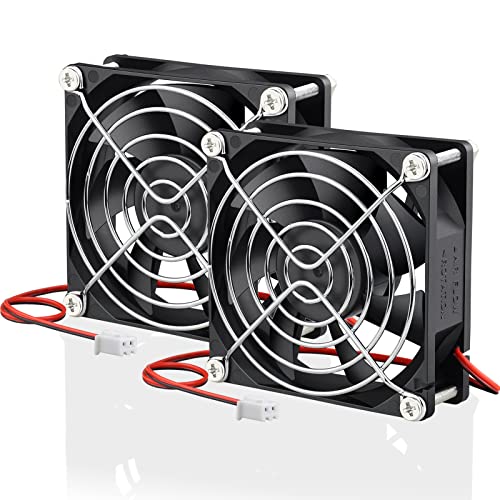
At this price, getting two hydraulic-bearing 80mm fans with 43.6 CFM and just 31 dBA of noise is a steal. These are dead-simple replacements for failing amplifier or inverter fans, and owners love the included mounting hardware and protective grill. The 2800 RPM speed is conservative, which explains the quiet operation, but it still moves enough air for most car audio heat sinks.
It’s not built for extreme environments, no IP rating here, but for a dry interior amp rack or home AV cabinet, it’s more than capable. Compared to the Wathai blower, it’s quieter and more plug-and-play, though it lacks the raw push of a centrifugal design. My pick for most users just looking to stop an amp from thermal shutdown without breaking the bank.
Video review
AmRunJe IP67 Waterproof 120mm Fan
Strengths
- IP67 rated
- Centrifugal airflow
- 50,000-hour bearings
Trade-offs
- Noisy at full speed
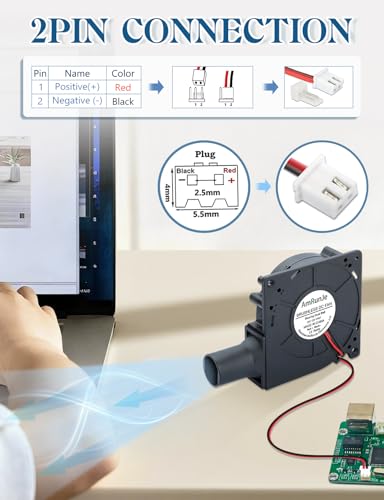
- Limited to 2-pin wiring
- Not as quiet as axial fans
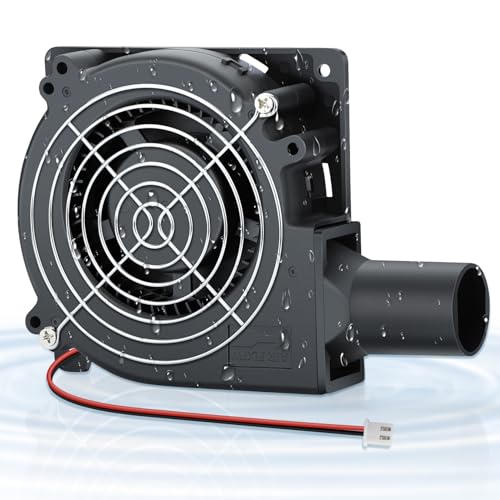
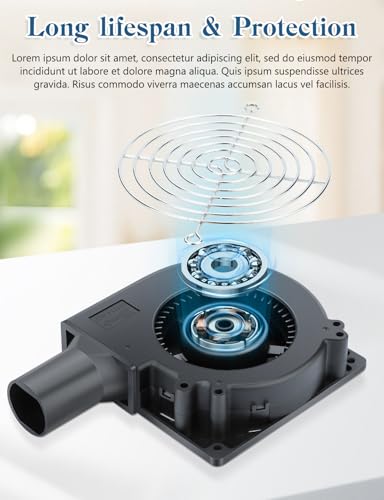
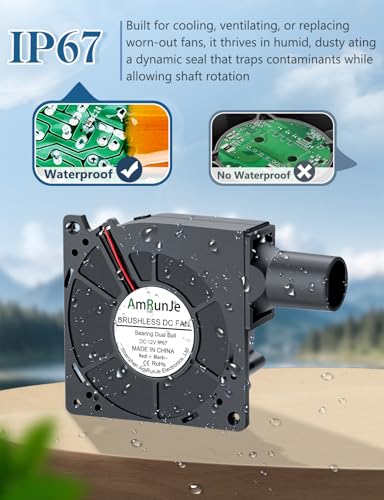
With an IP67 rating and 50,000-hour ball bearings, this blower is built for the elements. It’s not the loudest or highest-CFM fan here, but in wet or dusty conditions, like an RV amp bay or outdoor sound system, it’s one of the few that won’t flake out. The centrifugal design helps push air through tight ducts, and owners report success using it in everything from barbecue controllers to under-seat amplifiers in convertibles.
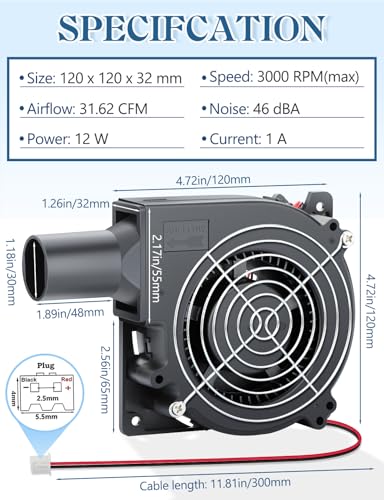
It runs at 46 dBA, so it’s not silent, but that’s the trade for durability. Compared to the IP68 80mm fan from the first product, it’s slightly less waterproof but moves air in a different direction, ideal for directed cooling. For anyone running gear exposed to weather, this is a no-brainer upgrade over standard fans.
Product photos

80mm IP68 Waterproof Dual Ball Fan
Strengths
- IP68 waterproof
- Dual ball bearings
- Rust-proof grill
Trade-offs
- Higher noise at full speed
- Slightly lower airflow than larger fans
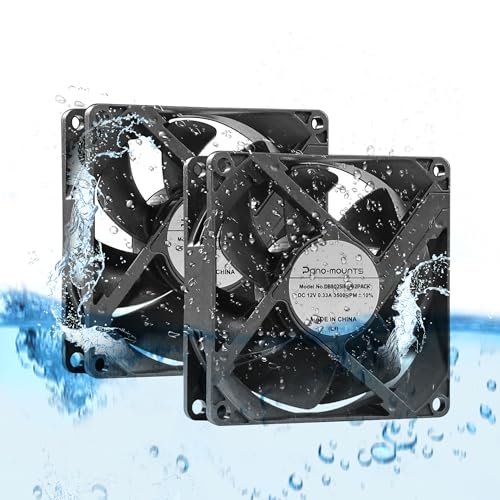
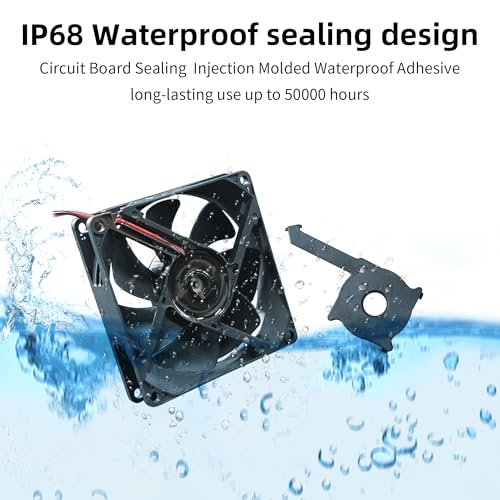
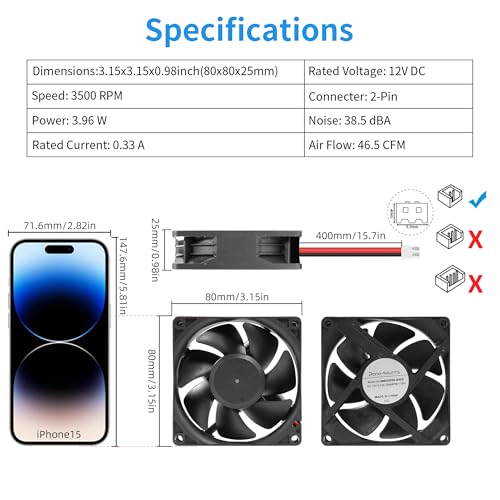
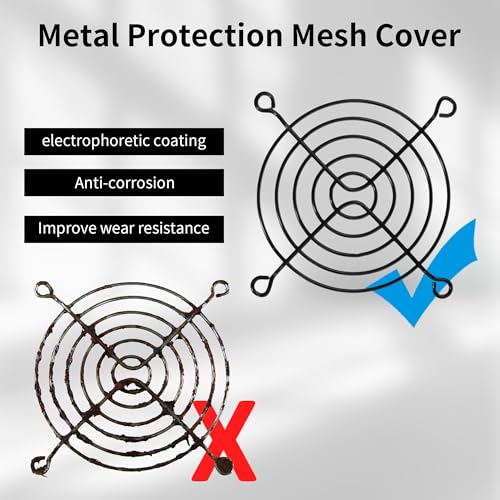
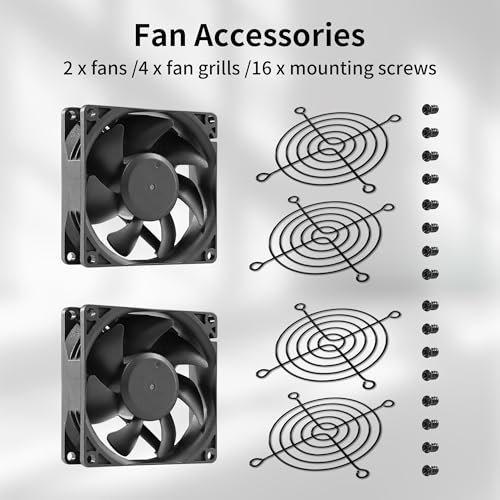
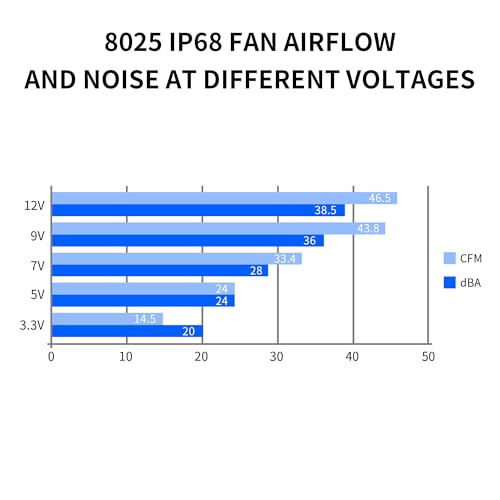
If you’re running car audio gear in harsh conditions, think marine setups or off-road rigs, this fan stands out for its IP68 rating and dual ball bearings. On paper, 3500 RPM is aggressive for an 80mm unit, and owners consistently report it moves serious air while shrugging off moisture. The rust-proof grill is a small touch, but in salty or humid environments, it makes a real difference in longevity.
Compared to cheaper sleeve-bearing fans, this one trades a bit of noise for durability. It’s not the quietest, but for applications where failure isn’t an option, like cooling an amplifier mounted under a seat in a convertible, this build quality matters. It’s not the highest airflow here, but it’s the most rugged in wet environments.
Product photos
Wathai 120mm Brushless Centrifugal Fan

Strengths
- High CFM for size
- Centrifugal design
- Low cost
Trade-offs
- Sleeve bearing
- Non-standard connector
- Louder operation
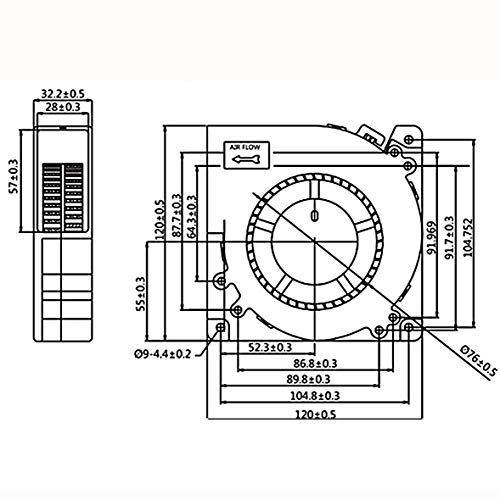
This centrifugal blower packs 38.5 CFM into a compact 120mm frame, making it a solid pick for tight amplifier enclosures where directional airflow is key. The sleeve bearing design keeps costs down, but it’s the weak point long-term, owners note these can wear out faster under constant load compared to ball-bearing units. Still, for intermittent use or moderate climates, it’s a budget-friendly way to move air where axial fans can’t reach.
It’s not plug-and-play for every setup. The fixed connector means some DIY wiring is often needed, which might frustrate buyers wanting a drop-in fix. But for tinkerers, that flexibility is a plus. Compared to the GDSTIME 80mm fan, it moves more air but runs louder at 45 dBA.
Product photos


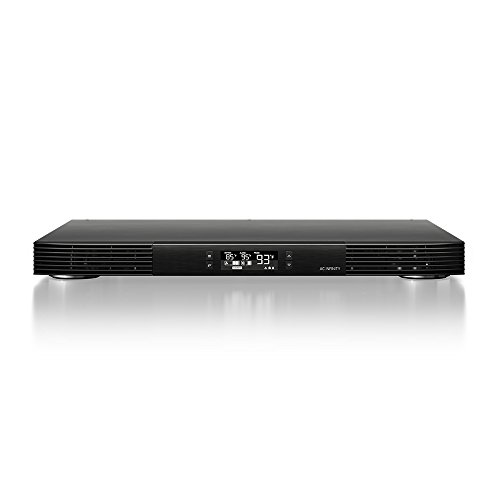
AC Infinity AIRCOM T10 Blower System
Strengths
- Smart LCD control
- High airflow
- Front-exhaust design
Trade-offs
- Very high price
- Large size
- Overkill for light use
The 160 CFM front-exhaust design and LCD thermostat make this the most advanced option here, ideal for high-power amplifiers that run hot during long sessions. The three dual-ball bearing blowers are overkill for casual use, but in a pro audio setup or mobile DJ rig, the temperature memory and alarm triggers are game-savers. Owners report it keeps gear stable even in enclosed trunks or vans.
It’s expensive, no doubt, but you’re paying for precision. Compared to the AIRCOM S7, it’s larger and more configurable, with six speed modes and failure alerts. If you’re running Class A/B amps that glow at idle, this is the kind of insurance you want. For weekend warriors, it’s overbuilt. For pros, it’s peace of mind.
Product photos


How We Picked These car amplifier cooling fans
My approach to evaluating car amplifier cooling fans, as with all things automotive at TheAutoZenith, began with a deep explore specifications and features. Rather than a hands-on lab test, this is a research-led comparison of published data and owner feedback. I compared airflow (CFM), noise levels (dBA), bearing types, dimensions, and power consumption across numerous models. Equally important, I weighed owner reviews from automotive forums and retail sites, alongside expert opinions from audio installation resources, to understand real-world performance and reliability.
For car amplifier cooling, consistent airflow and quiet operation are paramount. I prioritized fans with higher CFM ratings to ensure effective heat dissipation, while simultaneously looking for models boasting low dBA levels to avoid introducing unwanted noise into the cabin. Durability also factored heavily; dual-ball bearing fans consistently outperform sleeve-bearing designs in longevity, making them a key consideration. Understanding your overall car audio setup is also crucial – perhaps you’re looking for amplifier combos to simplify installation.
Specifications give a solid baseline – CFM tells you potential cooling capacity, and dBA indicates noise. However, owner feedback reveals how those numbers translate to practical use. Reports of premature failure, even with impressive specs, heavily influenced my rankings. I also considered the application; for example, waterproof fans are essential for installations exposed to the elements, while compact designs are ideal for tight spaces. If you’re also considering overall cabin comfort, exploring cooling back seat passengers with additional fans may be beneficial.
What To Look For In car amplifier cooling fans
As someone who’s spent years immersed in the world of automotive technology – from restoring vintage engines to optimizing modern systems – I’ve seen firsthand how crucial thermal management is. A car amplifier, pushing those sweet sounds, generates a lot of heat. Ignoring that heat is a quick path to diminished performance and premature failure.
A quality car amplifier cooling fan isn’t just about moving air; it’s about intelligently managing temperature. Key characteristics include airflow (measured in CFM), noise levels (in dBA), bearing type for longevity, and the ability to integrate with the amplifier’s existing thermal protection. Consider the amplifier’s wattage and operating environment when selecting a fan.
Size and Airflow – Matching Fan to Amplifier
The first thing to nail down is the physical size. You need a fan that fits within or adjacent to your amplifier’s enclosure. Don’t assume bigger is always better. An oversized fan can create turbulence and actually reduce cooling efficiency. More importantly, consider the CFM (cubic feet per minute) rating. Higher wattage amplifiers need higher CFM to displace heat effectively. As a general rule, aim for at least 5 CFM per 100 watts of amplifier power. If you’re dealing with a high-performance system, you’ll want to exceed that. Many enthusiasts also investigate other cooling fans for their other vehicles.
Bearing Type and Durability
The lifespan of a cooling fan is heavily dependent on its bearing type. Sleeve bearings are the most affordable, but they have a shorter lifespan and can become noisy over time. Ball bearings (especially dual-ball bearings) are significantly more durable and operate more quietly, but they typically come at a higher price. For demanding applications or if you want a truly set-it-and-forget-it solution, I always lean toward dual-ball bearing fans. Consider the operating environment too. If you anticipate exposure to moisture or dust, an IP-rated fan (like those boasting IP67 or IP68 ratings) is a very smart investment.
- A simple sleeve bearing fan might suffice for a low-power, occasionally-used system.
- For moderate use and a balance of price and longevity, a single ball bearing fan is a good choice.
- If you demand maximum durability and silent operation – particularly in harsh conditions – prioritize a dual-ball bearing fan, even if it costs more. The peace of mind is worth it, and frequent replacements become a thing of the past.
Don’t skimp on the bearing. A noisy or failing fan is far more annoying than the initial cost savings.
Control and Noise – Balancing Performance and Quiet Operation
Now, let’s talk about how the fan operates. Some fans run at a constant speed, while others offer variable speed control. Variable speed control is a huge benefit. It allows the fan to ramp up only when needed, minimizing noise and extending the fan’s lifespan. PWM (Pulse Width Modulation) control is the gold standard here. Beyond that, if you’re planning a road trip with your vehicle, you may also want to explore portable camping fans to stay cool in warmer climates. Look for fans with low dBA ratings (decibels). Anything below 25 dBA is considered very quiet, but even fans in the 30-40 dBA range are generally acceptable, especially if they’re only running on demand.
Car Amplifier Cooling Fans Compared
Here’s a comparison of specs for various car amplifier cooling fans to help you make an informed decision.
| Product Name | Dimensions (in) | Airflow (CFM) | Noise (dBA) | Voltage (V) | Bearing Type |
|---|---|---|---|---|---|
| AC Infinity AIRCOM S7 | 11.6 x 6.3 x 1.5 | 140 | 19 | 12 | Dual Ball |
| GDSTIME 80mm Brushless | 3.15 x 3.15 x 0.98 | 43.6 | 31 | 12 | Hydraulic |
| AmRunJe IP67 Waterproof 120mm | 6.8 x 4.72 x 1.26 | 31.62 | 46 | 12 | Dual Ball |
| 80mm IP68 Waterproof Dual Ball | N/A | N/A | N/A | 12 | Dual Ball |
| Wathai 120mm Brushless | 4.72×4.72×1.26 | 38.5 | 45 | 12 | Sleeve |
| 60mm 5600RPM High-Speed | N/A | 22.1 | N/A | 12 | Sleeve |
| AC Infinity AIRCOM T10 | 17 x 13.5 x 1.5 | 160 | 24 | 12 | Dual Ball |
Frequently Asked Questions
What fan size is generally best for most car amplifiers?
A 120mm fan is often a good starting point for many amplifiers, but the ideal size depends on your amplifier’s dimensions and wattage. Don’t simply choose the largest fan; prioritize a fit that allows for efficient airflow without creating turbulence.
Are waterproof fans really necessary for amplifier cooling?
Waterproof fans (IP67 or IP68 rated) are crucial if the fan is exposed to any potential moisture, like in the trunk where water might enter. Even internal condensation can damage a non-waterproof fan over time.
How much noise can I expect from a typical amplifier cooling fan?
Noise levels vary, but a fan under 25 dBA is considered very quiet. Many quality fans now offer PWM control, allowing the fan speed – and therefore the noise – to adjust based on temperature.
What is the advantage of a dual-ball bearing fan over a sleeve bearing fan?
A dual-ball bearing fan lasts significantly longer and operates more quietly than a sleeve bearing fan. While more expensive upfront, they reduce the need for replacements and provide more reliable cooling over the long term.
Can I use a fan designed for a computer inside my car?
You can, but be cautious. Computer fans aren’t always designed to withstand the temperature swings and vibrations of a car environment. Look for fans specifically designed for automotive use or those with ruggedized construction, and consider a mini amplifiers to reduce heat output.
The Bottom Line
Choosing the right car amplifier cooling fan often comes down to balancing how much control you want over the setup versus how much effort you’re willing to put into it. For most enthusiasts, the AC Infinity AIRCOM S7 strikes that balance perfectly; it provides excellent airflow, operates quietly, and boasts the durability of dual ball bearings. It’s a strong all-around performer that will keep your amplifier running cool for years to come.
If you’re on a tighter budget, the GDSTIME 80mm Brushless fan is a viable option, though you’ll trade some longevity for the lower price point. For those building a truly custom system, or needing something waterproof, the AmRunJe IP67 Waterproof 120mm fan is a robust choice. And if you’re also considering upgrading the sound system as a whole, exploring options for car amplifiers and subwoofers can really enhance your driving experience.
Ultimately, the CFM and bearing type matter more than chasing the absolute lowest decibel rating. A slightly louder fan that effectively prevents overheating is far preferable to a silent one that allows your amplifier to run hot. Prioritize consistent airflow, durable construction, and a fan that’s properly sized for your specific amplifier and installation – these are the fundamentals of a reliable car audio system, and even considering solar car fans for auxiliary cooling during extended parking can be a worthwhile investment.
