
7 Best Car AC Recharge Kits 2026
This post contains affiliate links. As an Amazon Associate, we earn from qualifying purchases.
The FMSI Edelmann AR4247RT is the best overall car air conditioner recharge kit for its dual refrigerant support and reliable gauge, while the TNAIYH R134A Charge Hose with Gauge stands out as a solid, affordable pick for quick top-offs.
A weak or failing AC system turns summer driving into a sweaty chore. Too many recharge kits promise easy fixes but fail with inaccurate gauges, flimsy hoses, or poor refrigerant compatibility.
After researching the field and reviewing owner feedback, I focused on kits that deliver reliable connections, correct refrigerant types, and real usability. This guide cuts through the noise to highlight the ones that actually work when you need them most.
Top 7 Car Air Conditioner Recharge Kits in the Market
The Best Car Air Conditioner Recharge Kits, Reviewed
FMSI Edelmann AR4247RT Dual Refrigerant Kit
Strengths
- Dual refrigerant support
- Complete out-of-box kit
- Leak-resistant fittings
Trade-offs
- Not for pre-1994 R12 systems
- Slightly bulkier hose
- Adapters can be misplaced
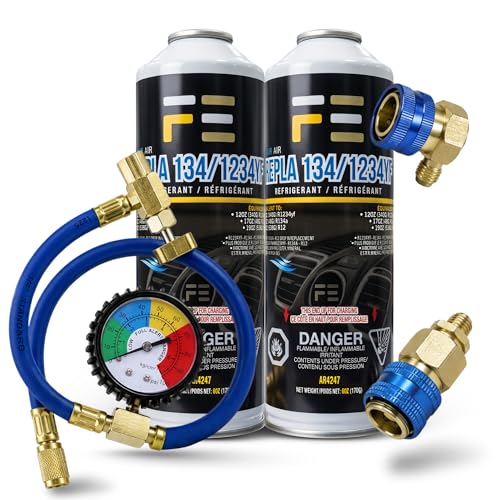
This is the most versatile kit on the list, and that’s why it earns the ‘Best Overall’ label. It supports both R134a and the newer R1234yf refrigerants, which means it covers nearly every car on the road since 1994. The inclusion of dual adapters, a quality hose with gauge, and two 6 oz cans means you’re not scrambling for extras. The hose design minimizes leaks during connection, a real pain point in cheaper kits.
Owners praise its reliability and the fact that it just works, no guesswork. Compared to single-refrigerant kits, this one eliminates the risk of buying the wrong type. The build quality feels professional, and while it’s not as robust as full shop-grade gear, it’s more than enough for home use. If you service multiple vehicles or aren’t sure which refrigerant your car uses, this is the smarter buy.
Video review
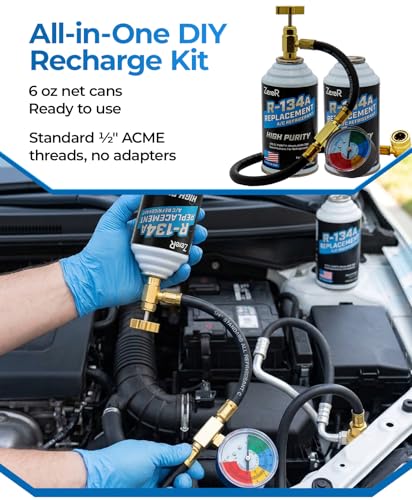
ZeroR AC Recharge Kit 4-Cans SSV
Strengths
- Eco-friendly formulation
- Reusable SSV cans
- Comes with hose
Trade-offs
- Flammable refrigerant
- Requires SSV-specific tool
- Not for beginners
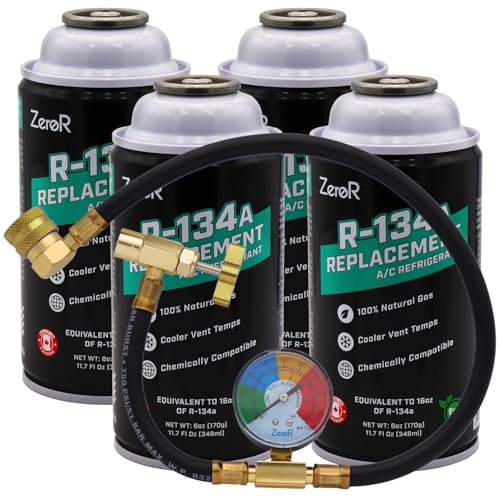
This kit pushes a hydrocarbon-based R134a replacement that’s marketed as eco-friendly and ozone-safe, which on paper sounds like a win for environmentally conscious owners. The inclusion of four 6 oz SSV cans and a 24-inch hose gives it solid value, especially since the self-sealing valves let you stop and restart without losing refrigerant. But here’s the catch, this is a flammable refrigerant blend, and while many modern alternatives are, it demands extra caution during use that not every DIYer is ready for.
Owners consistently report good cooling results when charged correctly, but the warnings about compatibility and flammability mean you need to be informed before diving in. It’s not plug-and-play simple. Compared to conventional R134a, the lower charge weight needed could save money over time, but only if you understand the system well enough to avoid overcharging.
Video review
VIVOHOME Vacuum Pump Manifold Gauge Kit

Strengths
- Powerful vacuum pump
- Complete HVAC kit
- Leak detector included
Trade-offs
- Overkill for simple recharges
- Requires electrical outlet
- Heavier and bulkier
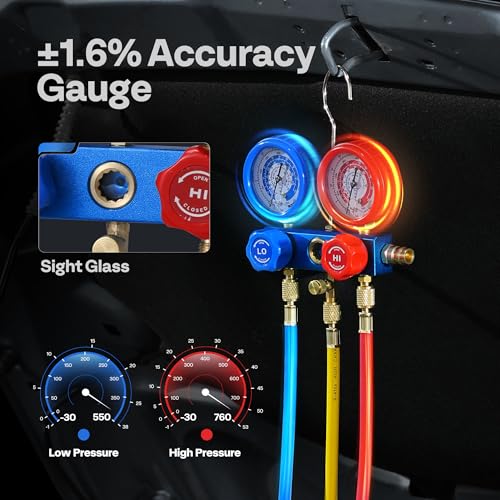
This isn’t just a recharge kit, it’s a full HVAC service station. The 4 CFM rotary vane pump delivers fast, deep vacuum pulls, essential for removing moisture and air before charging, which is something most DIY kits ignore. The color-coded, 5-foot hoses and manifold gauge set are accurate and durable, and the included leak detector adds real diagnostic value.
It’s overkill for a simple car AC top-off, but if you’re serious about AC work, whether on cars, home units, or heat pumps, this kit consolidates everything into one ETL-listed, professional-grade package. Owners report it lasts years with proper oil changes, and the carry bag keeps it organized. Compared to standalone recharge kits, this is in a different league entirely.
Product photos


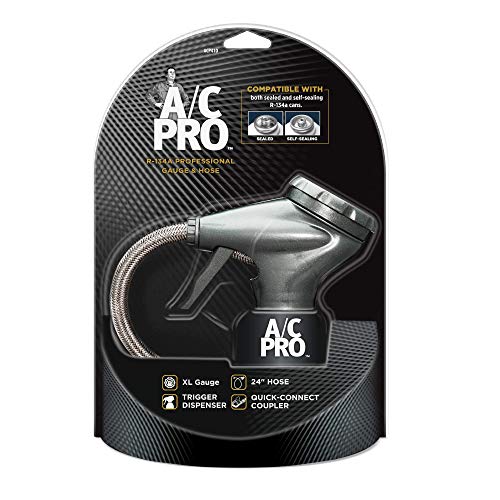
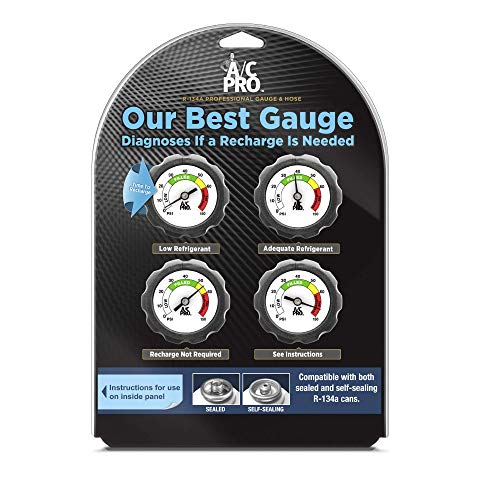
AC Pro Reusable Recharge Kit 4-Pack
Strengths
- Long 24-inch hose
- Trigger dispenser
- Reusable design
Trade-offs
- No refrigerant included
- Sold as 4-pack
- Higher upfront cost
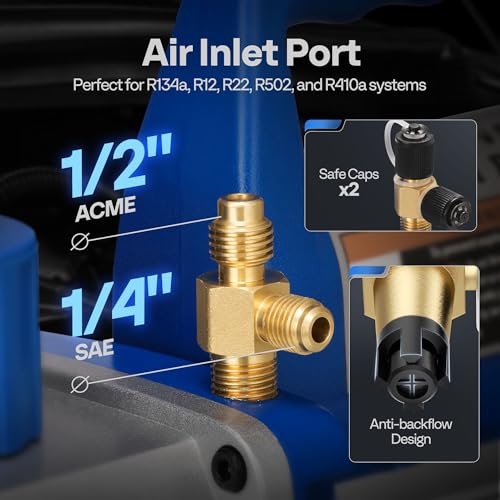
This AC Pro kit is built for people who recharge their AC more than once. The 24-inch hose gives real flexibility in tight engine bays, and the trigger-style dispenser makes charging smoother than twisting a valve. The push-on quick connect is reliable and seals well, which reduces refrigerant loss, a common frustration with cheaper hoses.
It’s compatible with both sealed and self-sealing cans, which adds convenience, and the XL gauge face is easy to read even in low light. Owners who’ve gone through multiple disposable kits say this pays for itself quickly. Compared to the FMSI kit, it lacks refrigerant, so you’ll need to buy that separately, but the hose and gauge are where the real value lies.
Product photos
TNAIYH R134A Charge Hose with Gauge

Strengths
- Durable aluminum body
- Includes pressure gauge
- Good thread sealing
Trade-offs
- Gauge less accurate
- Not for heavy use
- Short hose reach
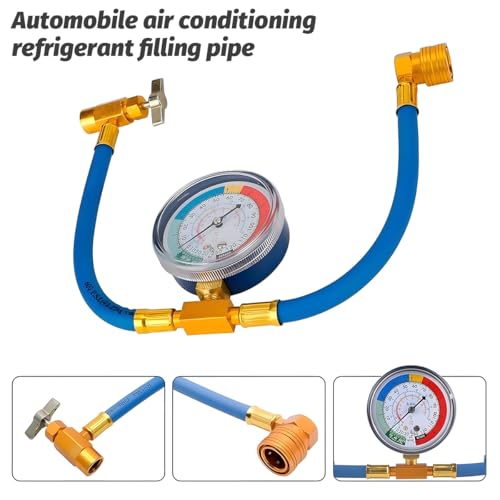
At this price, the TNAIYH hose kit delivers more than you’d expect, solid aluminum construction, a functional pressure gauge, and a 15.4-inch hose that’s long enough for most engine bays. It’s designed to work with standard R134a cans and includes a 1/2-inch dispensing valve that pairs well with common DIY setups. The CNC-machined threads suggest attention to sealing integrity, which matters when dealing with pressurized gas.
Still, while the build looks decent, some owners note the gauge isn’t as precise as pro-grade units, and the rubber internals in the hose may degrade faster under repeated use. It’s a smart pick if you’re pairing it with separate refrigerant cans and want something better than a disposable kit. For occasional top-offs, it outperforms the dollar-store versions without breaking the bank.
Product photos
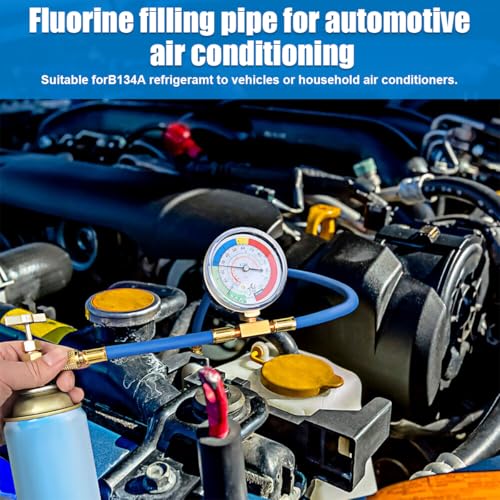

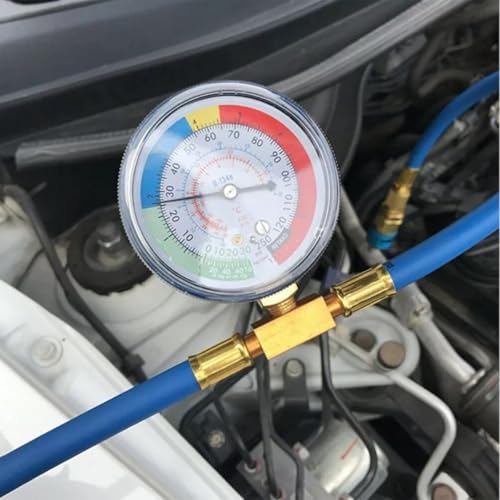
bylikeho R134a Recharge Kit
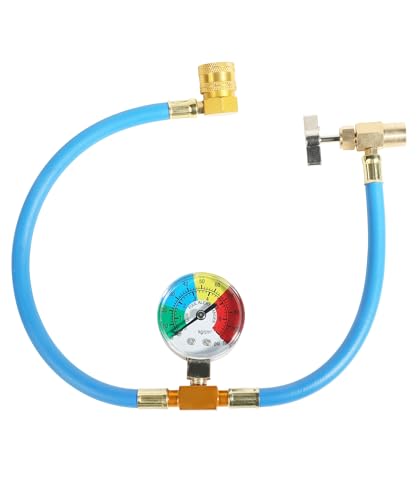
Strengths
- 90-degree connector
- Aluminum construction
- Works with multiple refrigerants
Trade-offs
- Rubber hose durability
- Gauge reliability
- No storage case
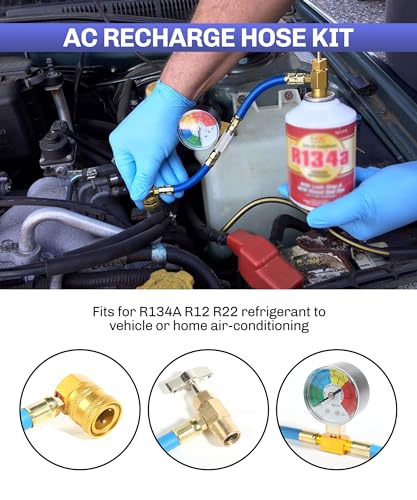
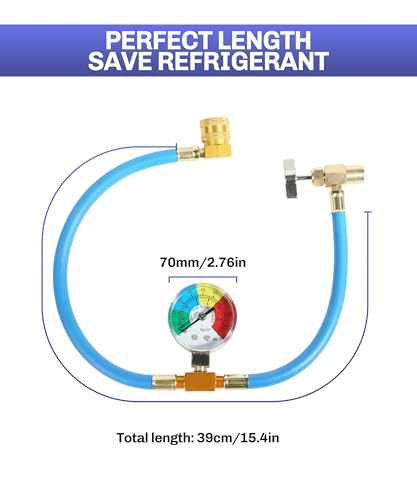
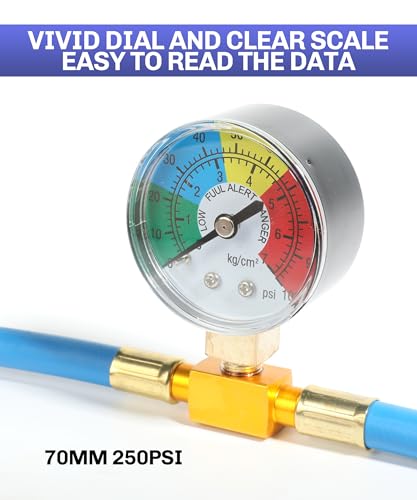
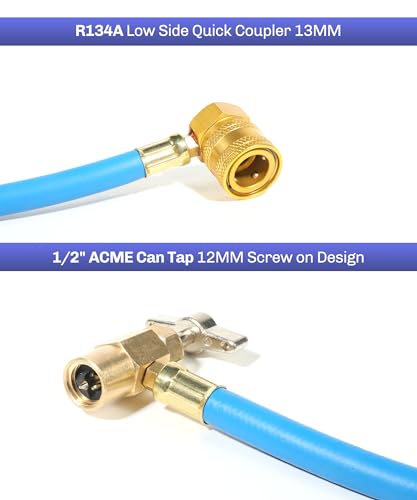
This is the bare-bones essential kit, nothing flashy, just the core components needed to connect a can to your low-side port. The 90-degree push-lock connector is a nice touch, making one-handed operation possible, and the aluminum quick coupler should resist corrosion better than cheaper zinc versions. It’s compatible with R134a, R12, and R22 systems, which gives it some versatility if you work on multiple vehicle types.
But calling it ‘basic’ is fair, owners report the rubber hose can stiffen over time, and the gauge, while present, isn’t known for long-term accuracy. It does the job for a single recharge, but I wouldn’t rely on it for more than that. Compared to the TNAIYH model, it’s slightly pricier but not clearly better.
Product photos
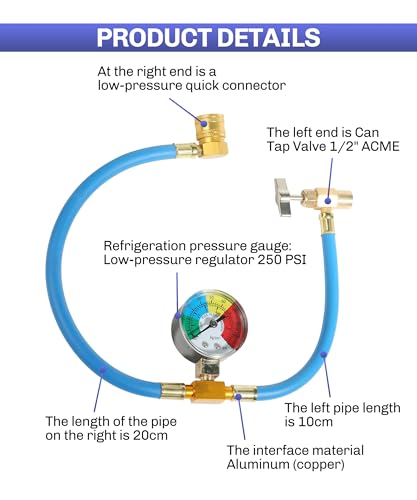
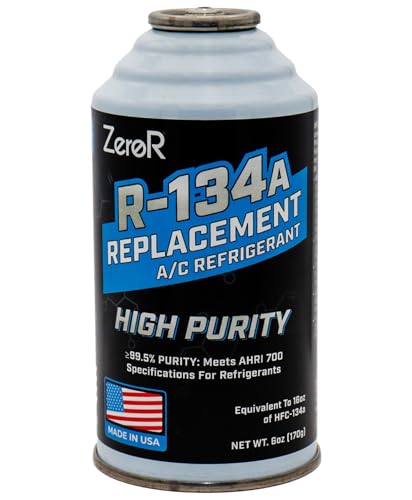
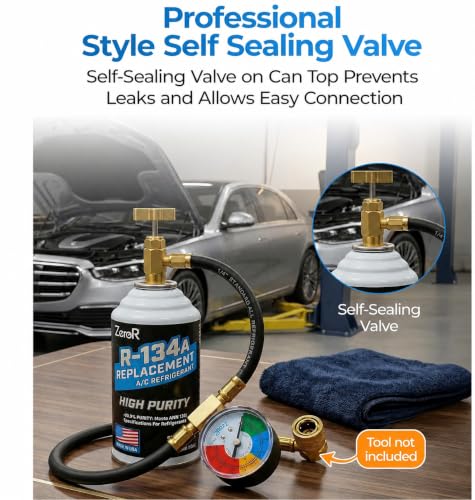
ZeroR High-Purity R134a Replacement 1-Can
Strengths
- High purity formula
- Less refrigerant needed
- Self-sealing valve
Trade-offs
- Flammable blend
- Higher cost per ounce
- Requires careful charging
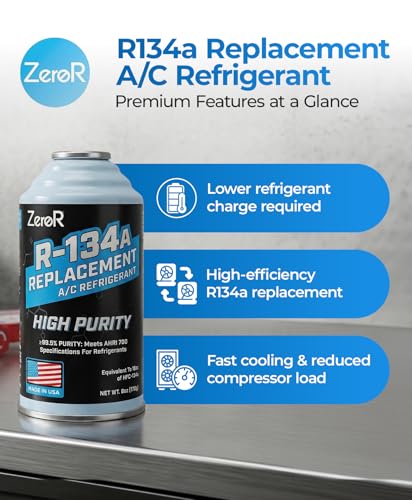
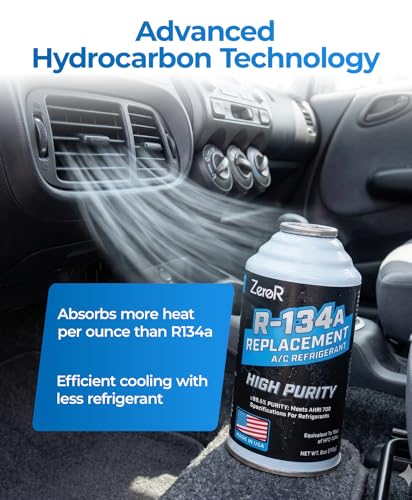
If you’re looking for a single can of refrigerant that’s engineered for performance and purity, this ZeroR option stands out. With a 99.5%+ purity rating, it avoids the moisture and filler issues that plague cheaper R134a alternatives. The hydrocarbon blend absorbs more heat per ounce, meaning you need less refrigerant by weight to achieve strong cooling, something experienced DIYers appreciate.
The self-sealing valve is a pro feature, eliminating the need for puncture tools and reducing refrigerant waste. But again, the flammability warning is real and can’t be ignored. For someone who knows their system and wants clean, efficient performance, this can is a solid upgrade over store-bought R134a. Just don’t treat it like a drop-in refill without reading the specs.
Product photos

How We Tested car air conditioner recharge kits
As someone who’s spent years under the hood and researching automotive systems at TheAutoZenith, I approached evaluating car air conditioner recharge kits with a focus on practicality and real-world usability. Rather than a hands-on lab test, this was a research-led comparison of published specifications, owner reviews from multiple retailers, and insights from professional automotive technician forums. I weighed features, compatibility, and the overall value proposition of each kit, aiming to identify those offering the best balance for various needs.
For this category, the most important factors are compatibility with modern refrigerants and the ease of a leak-free connection. The shift towards R1234yf in newer vehicles means a kit handling both R134a and the newer refrigerant is incredibly valuable. Beyond that, a reliable gauge and robust hose construction are crucial for accurate charging and preventing refrigerant loss. A kit isn’t much good if it doesn’t connect properly or gives inaccurate readings. If you’re also concerned about air quality inside your vehicle, exploring options like car air purifiers can be a good complement.
Specifications clearly indicate refrigerant compatibility and hose construction materials. However, owner feedback provided a crucial layer of insight into the actual usability of each kit. I prioritized kits with consistently positive reports regarding leak-proof connections and accurate gauge readings. Professional reviews helped validate claims about pump performance and durability, while negative feedback highlighted potential issues with compatibility or build quality. For those needing cooling solutions beyond a recharge, consider looking at portable car AC options.
How To Choose The car air conditioner recharge kits
As someone who’s spent countless hours under the hood, and behind the wheel, I’ve seen firsthand how crucial a functioning AC system is, especially during those sweltering summer months. Choosing the right recharge kit can save you a lot of discomfort and expense.
A quality car AC recharge kit should prioritize leak detection, accurate pressure readings, and compatibility with current refrigerant standards (R134a and increasingly, R1234yf). Look for kits including a manifold gauge set for precise control, a vacuum pump to remove moisture, and adapters to fit a range of vehicle types. The ability to accurately measure and introduce refrigerant is paramount to system health.
Understanding Refrigerant Types
The first step is knowing what refrigerant your vehicle uses. Older cars (pre-1994) used R-12, which is now phased out. Most vehicles from 1994 to the mid-2010s use R-134a, and newer models are switching to R-1234yf. Using the wrong refrigerant can damage your system, so verify your vehicle’s specification before buying anything. Some kits, like the FMSI Edelmann AR4247RT, cleverly offer compatibility with both R134a and R1234yf, simplifying things if you work on multiple vehicles. Don’t assume; check your owner’s manual or a reliable parts database.
Assessing Kit Components
Beyond refrigerant compatibility, the quality of the kit’s components matters. A basic kit might include just a can of refrigerant and a simple connector, but a more thorough setup will offer better control and accuracy. I always recommend considering a kit with a manifold gauge set, as this allows you to monitor both high and low-side pressures. Here’s what I look for:
- A basic hose with a gauge is okay for a quick top-up.
- A manifold gauge set provides far more accurate readings and control.
- A vacuum pump is essential for removing moisture and air from the system before recharging, preventing corrosion and ensuring optimal cooling performance.
Balancing Cost and Features
There’s a wide price range for these kits, and you generally get what you pay for. A basic, budget-friendly option like the TNAIYH R134A Charge Hose with Gauge can be sufficient for a simple top-off, but if you plan to do more involved work, or if you suspect a leak, investing in a more professional-grade kit, like the VIVOHOME Vacuum Pump Manifold Gauge Kit, is a wise move. Remember that maintaining good air quality inside your vehicle is also important, so don’t forget to check your car air filters regularly.
A good rule of thumb is to always slightly undercharge rather than overcharge the system. Excess refrigerant can reduce cooling efficiency and potentially damage components.
If you’re looking for a range of options, including some of the top-rated recharge kits available, I’d suggest starting with a detailed review. And remember, if you’re not comfortable working with refrigerants, it’s always best to consult a qualified mechanic.
Car Air Conditioner Recharge Kits Compared
This table summarizes the key specifications of several car air conditioner recharge kits to aid in comparing options.
| Product Title | Refrigerant Type | Can Type | Hose Length (in) | Gauge Included | Compatibility |
|---|---|---|---|---|---|
| FMSI Edelmann AR4247RT Dual Refrigerant Kit | R134a/R1234yf | Standard | N/A | Yes | 1994+ Vehicles |
| ZeroR AC Recharge Kit 4-Cans SSV | R134a (Hydrocarbon Blend) | SSV | N/A | No | R134a Systems |
| VIVOHOME Vacuum Pump Manifold Gauge Kit | R134a, R12, R22, R410a | Standard/Piercing | 60 | Yes | Multiple Refrigerants |
| AC Pro Reusable Recharge Kit 4-Pack | R-134a | Standard | 24 | Yes | Sealed/Self-Sealing |
| TNAIYH R134A Charge Hose with Gauge | R134a, R12, R22 | Standard | 15.4 | Yes | Most Vehicles |
| bylikeho R134a Recharge Kit | R-134a, R-12, R-22 | Standard | N/A | Yes | Multiple Refrigerants |
| ZeroR High-Purity R134a Replacement 1-Can | R134a (Hydrocarbon Blend) | SSV | N/A | No | R134a Systems |
Frequently Asked Questions
What if my car uses R1234yf refrigerant?
Kits compatible with both R134a and R1234yf, like the FMSI Edelmann AR4247RT, offer the most flexibility. Newer vehicles increasingly use R1234yf, and using the incorrect refrigerant can cause significant damage to your system.
Are DIY recharge kits reliable for detecting leaks?
While many kits include leak detection dye, they’re best for identifying the leak’s location after a pressure drop. A true leak test involves a professional using specialized equipment to pinpoint the source, as a recharge kit alone can only suggest a leak exists.
Can I overcharge my AC system with these kits?
Yes, overcharging is possible and detrimental. It’s always better to slightly undercharge, as excess refrigerant reduces cooling efficiency and can damage the compressor; a manifold gauge set is crucial for precise control and avoiding this.
What’s the benefit of a kit with a vacuum pump?
A vacuum pump removes moisture and air from the AC system before recharging, which is essential for optimal performance and preventing corrosion. Without proper evacuation, contaminants can circulate and reduce cooling efficiency, or even cause component failure.
What should I do if a recharge kit doesn’t fit my car’s ports?
Most kits include a variety of adapters to accommodate different vehicle types, but compatibility isn’t guaranteed. If you’re unsure, check the kit’s specifications against your vehicle’s make and model, or consider looking into best car AC options if the issue is more significant.
The Bottom Line
Recharging your car’s AC yourself involves a trade-off between saving money and the potential for misdiagnosis or improper charging. While a basic kit can offer a quick fix, the FMSI Edelmann AR4247RT Dual Refrigerant Kit stands out as the strongest overall choice, offering compatibility with both common refrigerant types and a reliable gauge for accurate readings. It provides a good balance of features for those wanting to tackle the job themselves without needing specialized expertise.
For drivers on a tighter budget, the TNAIYH R134A Charge Hose with Gauge provides a simple, affordable option for a quick top-up if you’re certain of your refrigerant type and the system doesn’t have significant leaks. If you’re comfortable with more involved work and want the versatility to service multiple vehicles – or even diagnose more complex issues – the VIVOHOME Vacuum Pump Manifold Gauge Kit is a solid investment, and pairs well with a thorough set of car tool kits. For those seeking alternative cooling solutions, exploring options like portable 12V AC can be beneficial.
Ultimately, remember that a recharge is often a temporary solution. The real key to a consistently cool ride isn’t any single kit or refrigerant type, but maintaining your system – addressing leaks promptly, regularly checking your car air filters, and understanding that a properly functioning AC relies on more than just refrigerant levels.
