
9 Best Cameras for Motorcycle Riding 2026
This post contains affiliate links. As an Amazon Associate, we earn from qualifying purchases.
The Insta360 X5 stands out as the best overall camera for motorcycle riding, delivering exceptional stabilization and 8K 360° footage, while the AKASO 360 offers a solid budget-friendly option for those wanting immersive video without breaking the bank. For riders focused on in-helmet POV shots, the Insta360 GO 3S In-Helmet Bundle brings unmatched convenience and stabilization in a tiny package.
Riders don’t just want to record their trips, they want to relive them with clarity and immersion. But most cameras fail under the stress of vibration, wind, and unpredictable weather. After researching the field and analyzing owner feedback, I focused on models that deliver real-world reliability, not just big specs on paper.
This guide cuts through the noise to highlight cameras that actually perform on the road, prioritizing stabilization, rugged mounting, and ease of use. We looked at how each model handles the unique demands of motorcycle use, from dual-channel setups to magnetic mounting and in-helmet flexibility.
Top 9 Cameras For Motorcycle Riding in the Market
The Best Cameras For Motorcycle Riding, Reviewed
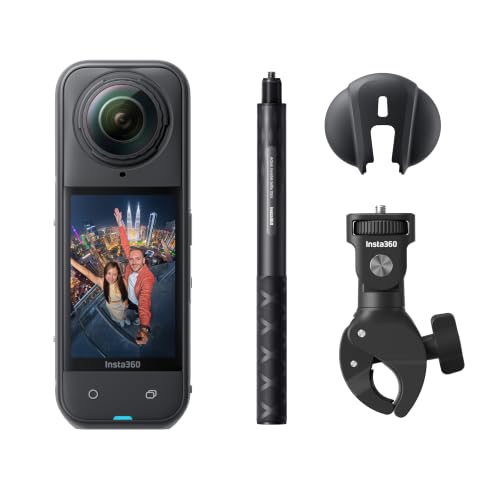
Insta360 X5 8K 360° Camera
Strengths
- 8K30fps video
- Excellent stabilization
- Replaceable lenses
Trade-offs
- Expensive
- No built-in storage
- Large for a 360 cam
This is the full-package 360 camera, and it shows. The dual 1/1.28″ sensors capture 8K footage with stunning dynamic range and color depth, something you feel more than see when reviewing clips of sunsets or forest rides. The triple AI chip makes a real difference in low light, reducing noise without smearing detail. FlowState Stabilization is exceptional, turning bumpy backroads into buttery-smooth sequences, and the 360° Horizon Lock keeps everything level even during aggressive leans.
The replaceable lenses are a smart durability play, drop it, scratch it, swap it in seconds. The 185-minute battery is solid, and fast charging to 80% in 20 minutes means less downtime. The AI editing tools are genuinely useful, pulling highlights automatically. At this price, it’s not cheap, but for riders who want the best in stabilization, clarity, and creative control, it’s the benchmark.
Video review
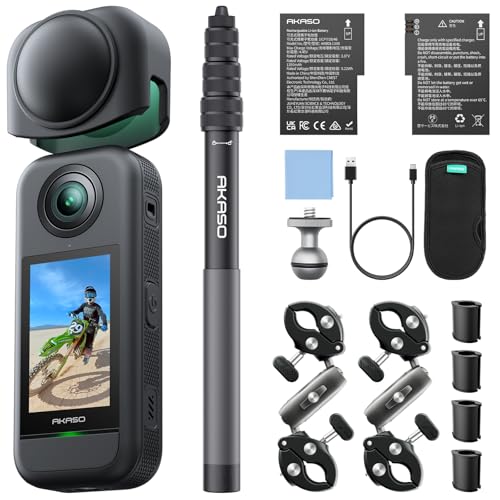
AKASO 360 5.7K Action Camera
Strengths
- 5.7K 360 video
- Horizon Lock
- AI tracking
Trade-offs
- Short battery life
- No waterproof case included
- App can be clunky
If you’ve ever wanted to film a ride without worrying about framing, this 360 camera delivers. The 5.7K resolution captures a full spherical view, so you can reframe in post to highlight passing scenery, your riding stance, or even create that ‘invisible selfie stick’ third-person effect. The dual 1/2″ sensors gather more light than most in this class, and owners say the footage holds up well in mixed lighting. The 360° Horizon Lock is a standout, it keeps the horizon level even if the camera tilts, which is huge on a leaning motorcycle.
The AI tracking works decently, though it’s not flawless when you’re weaving through traffic. Battery life is modest at around 90 minutes, but you can extend it with external power. At this price, it’s the most capable budget 360 option, especially if you value creative flexibility over traditional POV. It’s not the toughest or longest-lasting, but for immersive storytelling, it punches above its weight.
Video review
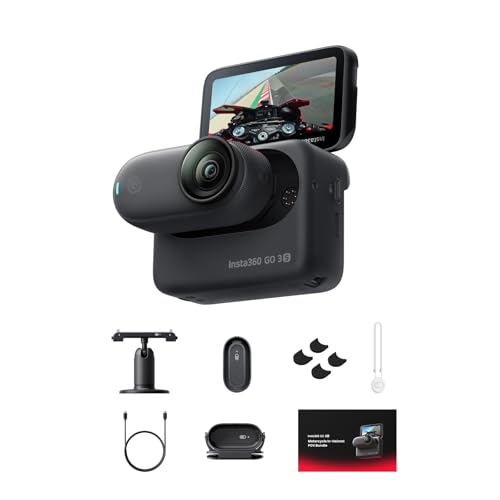
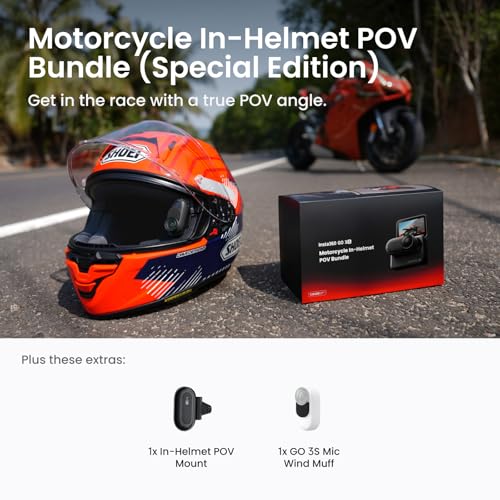
Insta360 GO 3S In-Helmet Bundle
Strengths
- Ultra compact
- Excellent stabilization
- Action Pod included
Trade-offs
- Short standalone battery
- No internal storage in Pod
- Needs app for full features
This is the ultimate in-helmet POV camera. The GO 3S is tiny, magnetic, and designed to disappear into your gear, especially with the included in-helmet mount. The 4K footage is sharp, and the FlowState Stabilization is shockingly effective for a camera this small. Paired with the Action Pod, you get a 2.2-inch screen, remote control, and extended 140-minute battery, which transforms it from a clip-on cam to a full system.
Owners love the gesture and voice controls, useful when you can’t reach the camera mid-ride. The audio is clear thanks to the wind muff, and the AI editing in the app makes short work of highlight reels. It’s not waterproof on its own beyond 10 meters, but the bundle includes accessories that make it versatile. For pure, immersive rider’s-eye footage, nothing else matches this setup.
Product photos
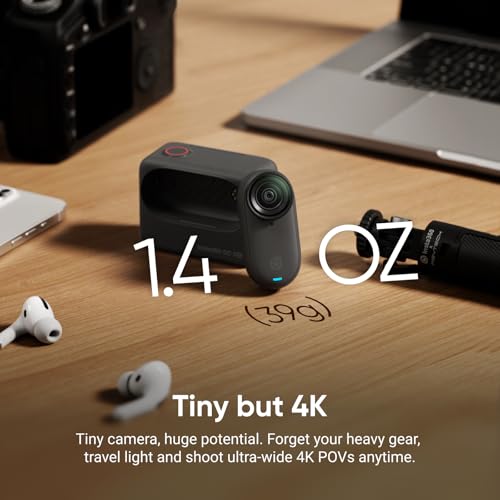


Sixmou i3 Thumb 4K Camera

Strengths
- Ultra lightweight
- Magnetic mount
- Long 1080P runtime
Trade-offs
- No stabilization
- Soft 4K footage
- No screen
This camera is all about stealth and simplicity. At just 1.25 ounces and smaller than your thumb, it’s the kind of camera you forget you’re wearing, until you review the footage and realize how much it captured. The magnetic mounting system is clever, and with the included accessories, you can slap it on a helmet, tank, or chest rig in seconds. Owners consistently report it holds up well on motorcycle rides, though the lack of any stabilization means bumpy roads show up clearly in the video.
On paper, 4K recording is a win, but real-world results in 4K mode are soft and lack detail, especially in lower light. It’s best used in 1080P for smoother performance and longer battery life. The 150-minute runtime in 1080P is solid for a camera this size, and the ability to record while charging helps for longer trips. For basic POV clips without drawing attention, it’s hard to beat the footprint.
Product photos


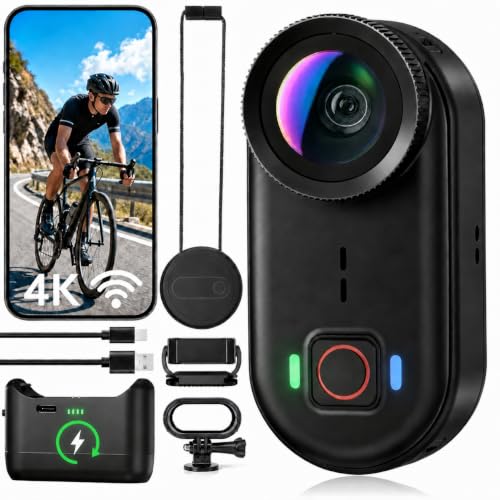
4K Mini WiFi Body Cam 64GB
Strengths
- Long 350-minute runtime
- EIS 2.0 stabilization
- Built-in storage
Trade-offs
- Limited waterproof depth
- Mediocre low-light video
- App lags
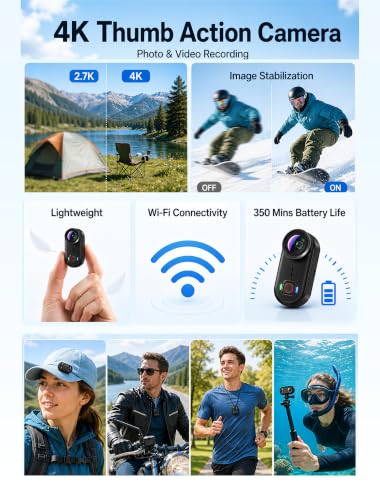
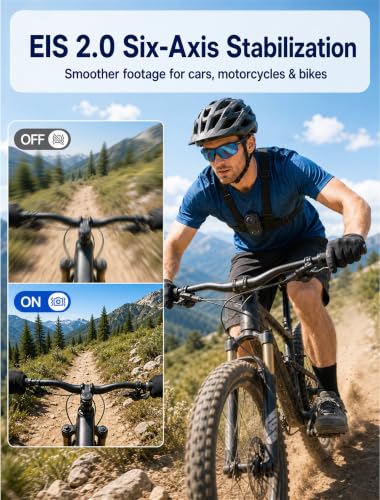
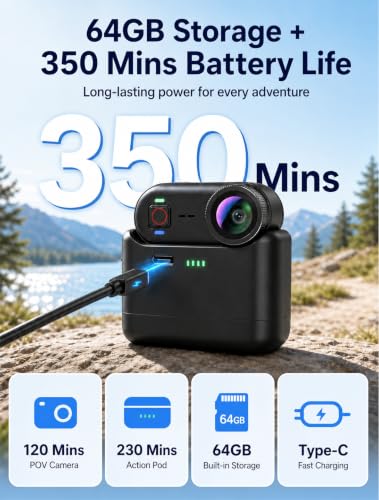
Battery life is where this one shines, 350 minutes with the charging case is a standout for long-distance riders. The built-in 64GB storage means you’re ready to roll out of the box, and the magnetic design makes repositioning on the fly easy. The EIS 2.0 stabilization is a noticeable upgrade over non-stabilized models, smoothing out vibrations from the handlebars or road bumps. It won’t match a gimbal, but it’s a big step up for this price range.
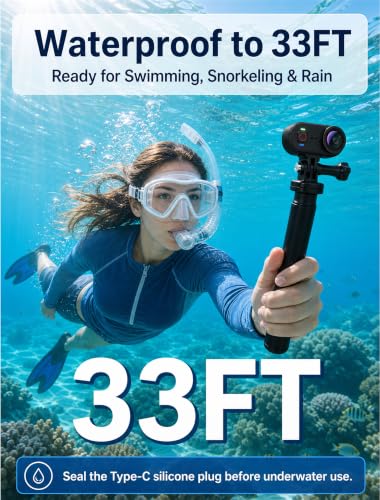
The 33-foot waterproof rating is modest compared to others here, but it’s enough for rain and splashes, no housing needed. Owners appreciate the loop recording and USB file transfer, though the app can be sluggish. Video clarity in 4K is good in daylight but softens in shade or evening. For riders doing multi-hour tours and wanting reliable, shake-reduced footage without swapping batteries, this is a smart pick.
Product photos
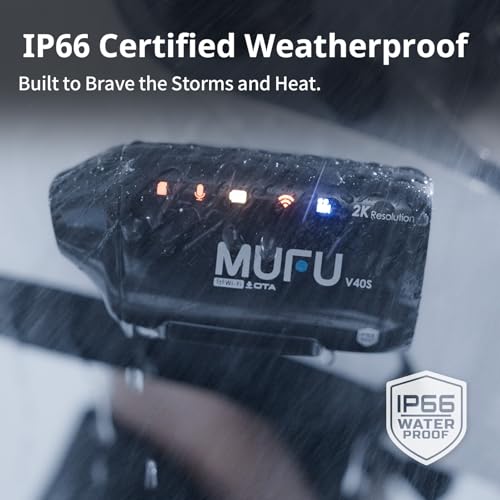
MUFU V40S Dual 2K Helmet Cam
Strengths
- Dual 2K lenses
- 8-hour battery
- IP66 rated
Trade-offs
- No stabilization
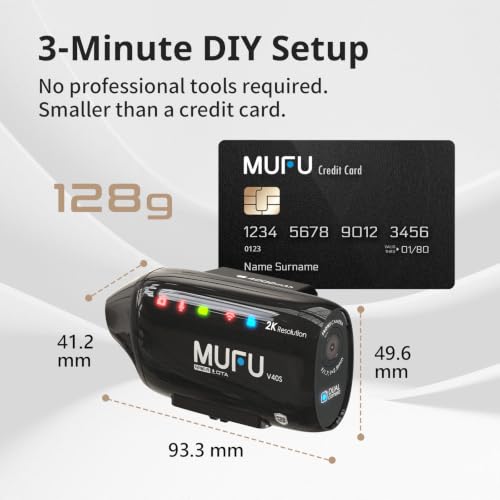
- Bulky for a body cam
- Rear lens view is narrow
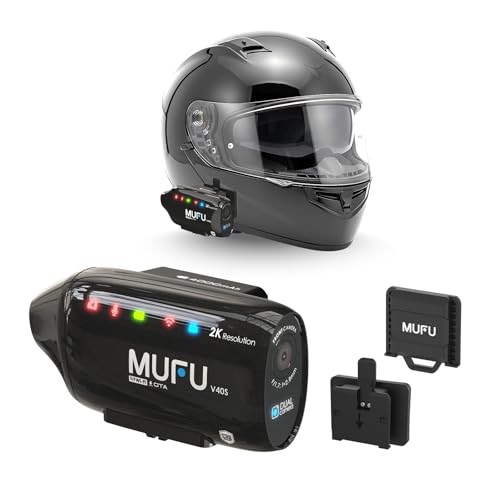
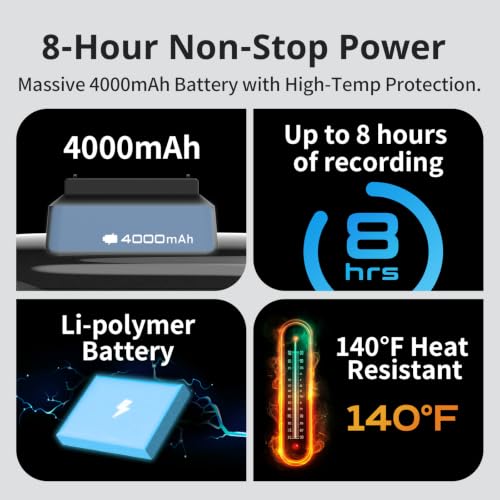
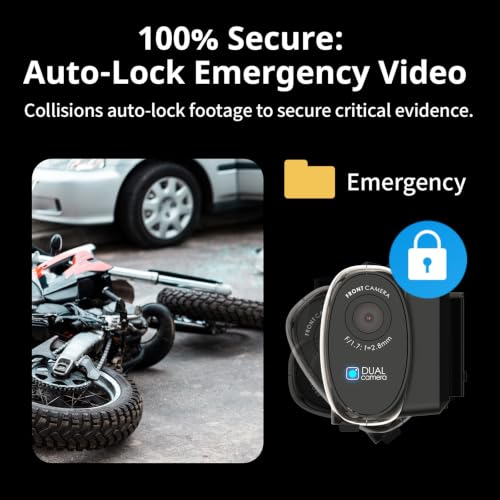
Dual lenses are the headline here, and for motorcyclists who want both road and rear coverage, it’s a rare win in this category. The 2K resolution on both front and rear cameras delivers noticeably sharper footage than 1080P dash cams, and the F1.7 aperture helps in low light. Owners report clear night rides and good detail in tunnels, something many budget cams struggle with. The 8-hour battery life is impressive, powered by a 4000mAh cell, making it ideal for cross-state trips without charging stops.
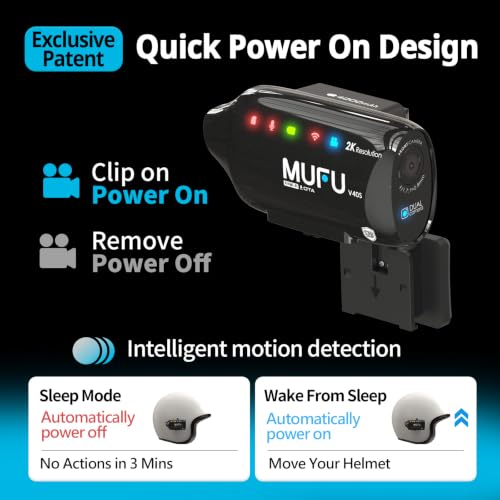
The IP66 rating handles rain and dust well, and the quick-release buckle is glove-friendly, which matters when you’re stopping in cold or wet conditions. It lacks advanced stabilization, so rear footage can get shaky, but the loop recording and emergency lock via tilt detection add real safety value. Compared to single-lens action cams, this feels more like a purpose-built motorcycle system.
Product photos
VSYSTO Dual 1080P Motorcycle Dash Cam
Strengths
- Dual 1080P cameras
- G-sensor lock
- Easy install
Trade-offs
- No stabilization
- 1080P only
- Basic night vision
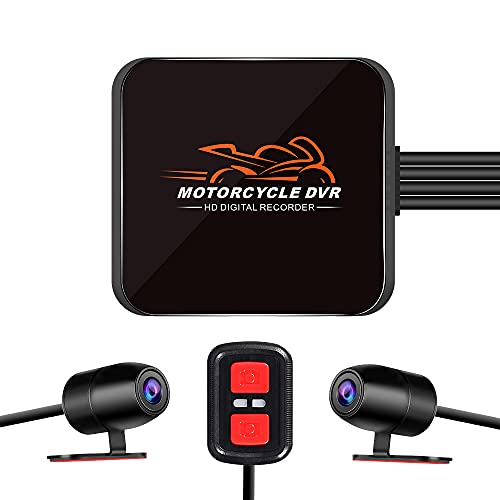
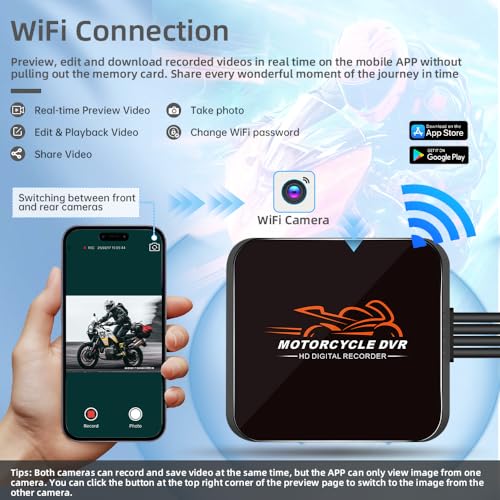
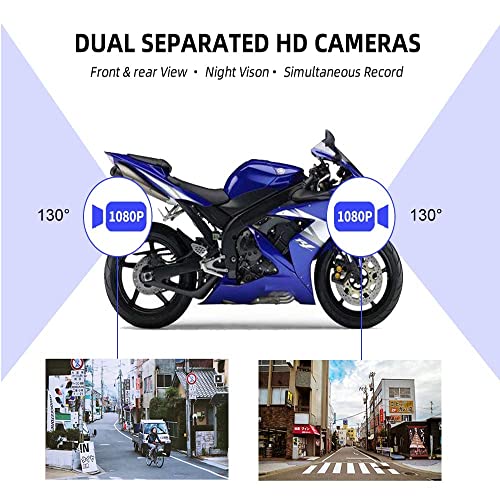
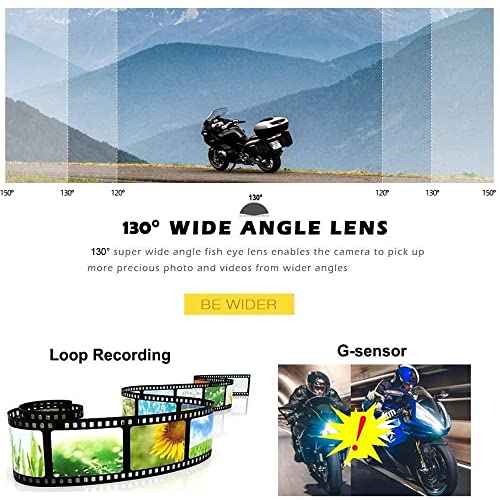
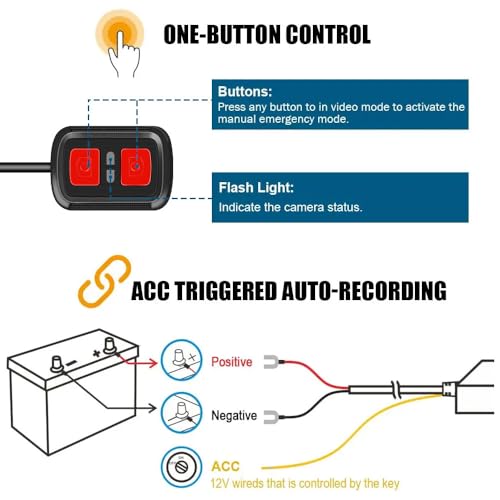
This is the budget pick for riders who want dual-channel coverage without spending big. The 1080P front and rear cameras won’t wow you with resolution, but they get the job done for accident documentation or ride review. The wired controller is a smart touch, easy to use with gloves, and the emergency lock via G-sensor works reliably, according to owners. The WiFi app lets you pull footage without removing the SD card, which is convenient for quick checks.
Installation is straightforward, and the main unit can be tucked under the seat to stay dry. The starlight night vision is basic but functional, better than nothing in dark conditions. It lacks stabilization and advanced features, but for pure dash cam duty, it’s dependable. Compared to action cams, it’s less flashy but more focused on safety and proof.
Product photos

4K Mini WiFi Action Camera
Strengths
- IPX7 waterproof
- Ultra compact
- Magnetic design
Trade-offs
- No stabilization
- Short 4K battery life
- Inconsistent WiFi
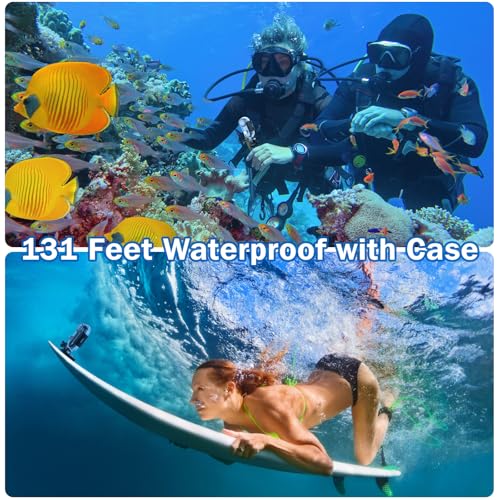
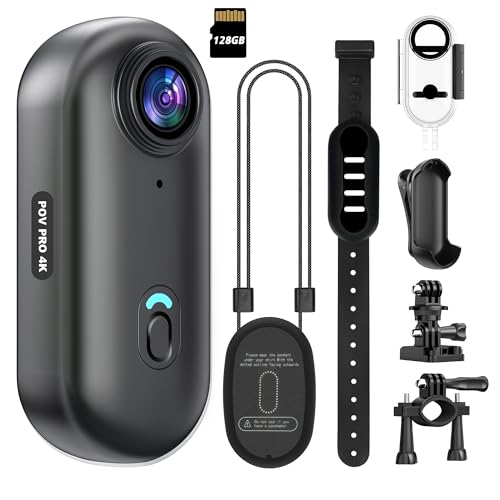
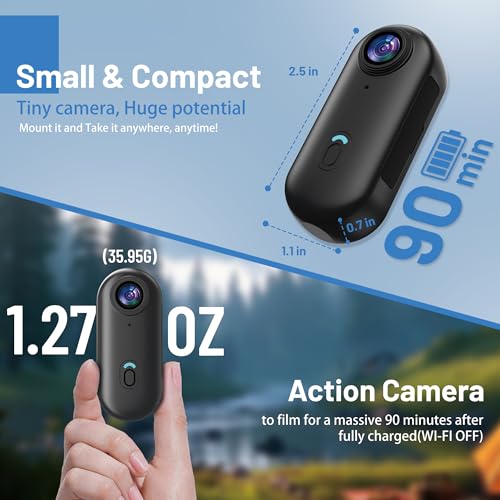
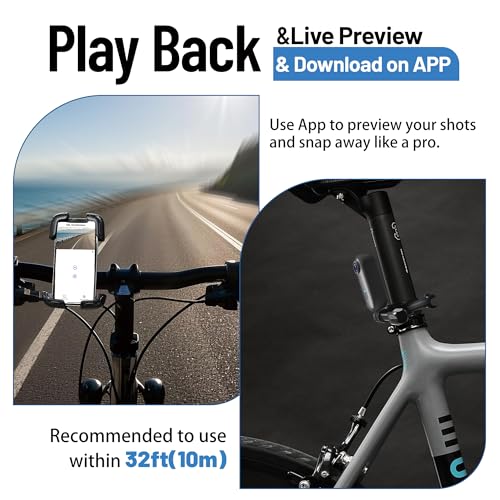
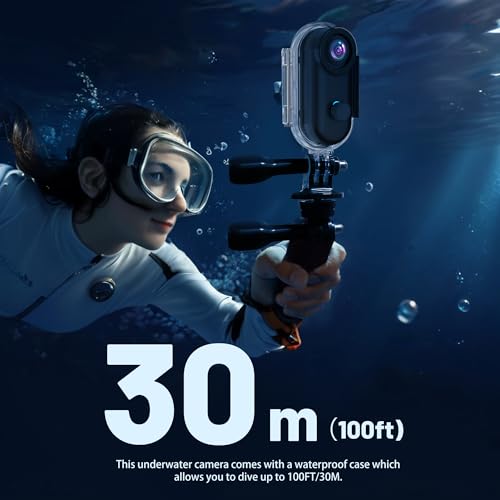
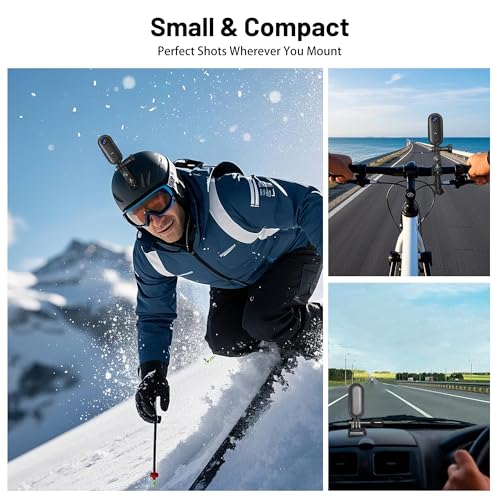
This camera leans hard into durability, and for riders who also dive or ride in downpours, that’s a real selling point. The IPX7 rating means it can handle 100 feet underwater, which is rare in this class. Paired with a rugged case, it’s built to survive the elements, rain, mud, or full submersion. The 1.27-ounce body stays out of the way, and the magnetic design makes mounting on a bike frame or helmet quick and tool-free.
Video quality is decent in daylight, with a wide field of view that captures a lot of the scene. But like others in this tier, it lacks stabilization, so rough roads translate to jittery footage. The 90-minute 4K runtime is underwhelming, and the app experience gets mixed feedback, some owners report slow transfers and spotty WiFi. Still, if you’re pairing motorcycle riding with water sports, this one pulls double duty better than most.
Product photos
CAMWORLD 4K Magnetic Body Camera
Strengths
- Built-in screen
- Vertical video mode
- Strong magnetic mount
Trade-offs
- No stabilization
- Average low-light performance
- Battery drains fast in 4K
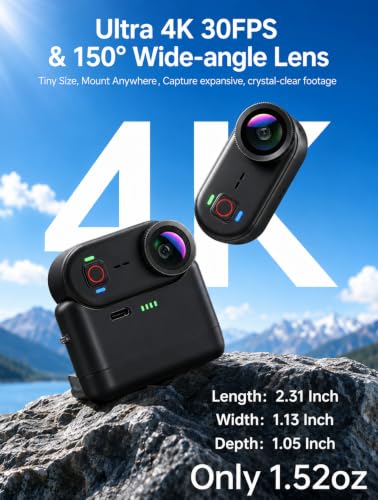
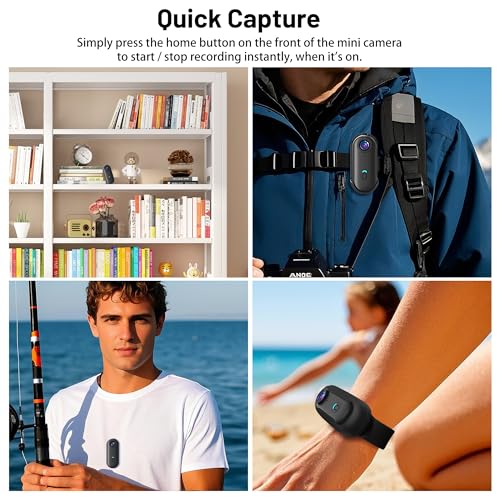
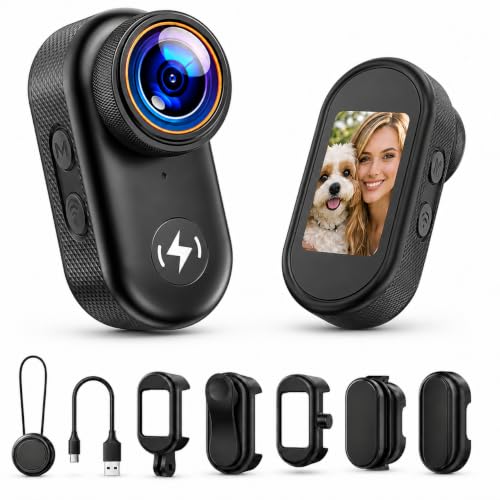
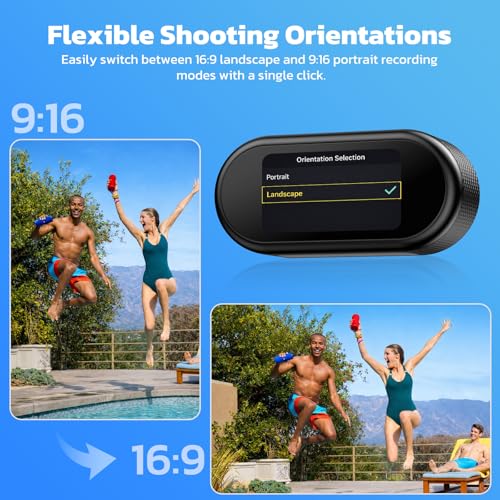
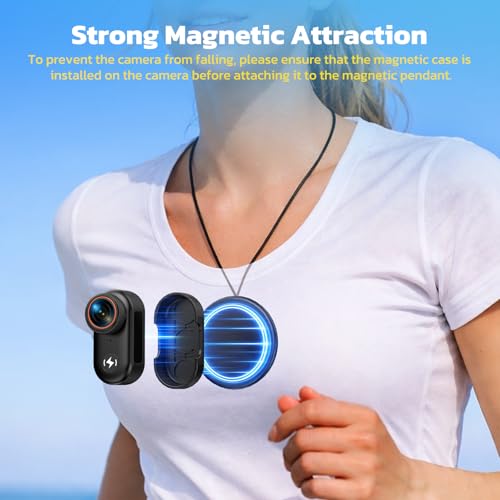
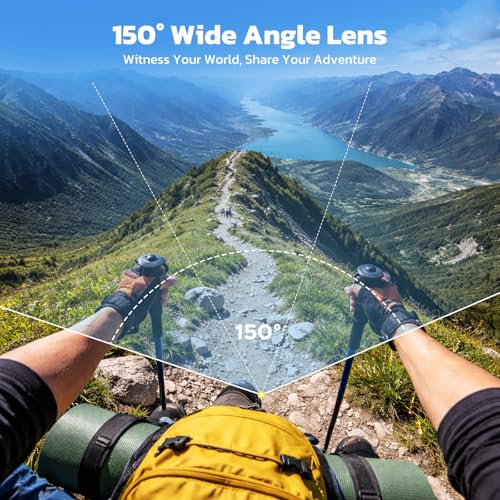
If you’re creating content for TikTok or Instagram, this one stands out. The built-in 1.47-inch screen is a small but meaningful upgrade, being able to review clips on the go without pulling out your phone is a real convenience. The 4K footage is sharp in good light, and the 150° field of view gives a true immersive POV, which works great for showing off your riding path or gear setup. The vertical video mode is a smart touch, letting you shoot directly for social media without cropping later.
Connectivity is solid with the Viipulse app, and owners say the WiFi pairing is stable. The magnetic mount is strong and versatile, though some note it can detach if slammed against rough terrain. Battery life is average, around 90 minutes in 4K, but it supports charging while recording. The big caveat? No image stabilization. On a vibrating motorcycle, that means shaky footage unless you’re on smooth pavement.
Product photos


How We Evaluated cameras for motorcycle riding
Rather than a hands-on lab test, my approach to recommending cameras for motorcycle riding involved a detailed research-led comparison of specifications, features, and, crucially, owner and expert feedback. I sifted through technical details like sensor size, resolution, frame rates, and stabilization technology, then weighed those against what riders are actually saying about real-world performance. I also considered the wider landscape of options, drawing on my experience exploring related equipment like those covered in our guide to action cameras for motorcycles.
For this category, image stabilization and durability emerged as the most significant factors. A bumpy ride demands a camera that can deliver smooth footage, and a motorcycle environment requires a unit built to withstand vibration, weather, and potential impacts. Beyond that, the ability to easily mount the camera – and the clarity of audio recording – played a large role in determining rankings. I also prioritized cameras offering features specifically tailored to motorcycle use, like loop recording and the ability to capture both front and rear views.
Specifications reliably indicate potential resolution and low-light performance, but owner reviews proved essential for gauging real-world usability. I paid close attention to reports on battery life under sustained use, the effectiveness of stabilization systems, and the simplicity of mounting options. Reputable expert reviews helped validate claims and identify potential weaknesses. Understanding the differences between a dedicated action camera and a more general-purpose dash camera was also key to discerning which models best suited the unique demands of motorcycle filming.
What To Look For In cameras for motorcycle riding
Choosing the right camera to document your rides can significantly enhance the experience, but the sheer number of options can be overwhelming. It’s not simply about resolution; a good motorcycle camera needs to handle vibration, weather, and deliver usable footage in challenging conditions.
A quality motorcycle camera prioritizes robust stabilization, weather sealing (at least splash resistance), and a mounting system secure enough to withstand road forces. Look for features like loop recording to save storage, wide dynamic range to handle high-contrast scenes, and ideally, dual-channel recording for front and rear coverage. Consider battery life and whether the camera supports external power for longer trips.
Stabilization is Paramount
Forget about image quality for a moment; if your footage is unusable due to shakiness, it doesn’t matter how many megapixels the sensor boasts. Motorcycle cameras take a beating from engine vibration and road imperfections. FlowState Stabilization, as seen in the Insta360 GO 3S, is a good benchmark, but even simpler electronic image stabilization (EIS) can make a huge difference. Don’t assume all EIS is created equal – some systems introduce noticeable distortion or crop the image significantly. Read reviews focusing on real-world riding footage, not just lab tests.
Mounting and Form Factor Matter
How you intend to mount the camera will dictate the best form factor. Many riders prefer the convenience of a helmet cameras setup, offering a first-person perspective. However, that means dealing with wind noise and potential bulk. Compact, magnetic cameras like the Sixmou i3 offer incredible versatility, but may require more creative mounting solutions. Consider these factors:
- Ease of use with gloves: Can you easily access the controls while wearing riding gloves?
- Mounting security: Will the mount hold firm at speed, even on rough roads? A flimsy mount renders the camera useless.
- Aerodynamic impact: A bulky camera can create drag and affect handling, especially at higher speeds. A streamlined design is preferable.
Features vs. Budget: Finding the Sweet Spot
You can spend anywhere from under $100 to upwards of $500+ on a motorcycle camera. Generally, you get what you pay for, but diminishing returns kick in quickly. The AKASO 360 offers a budget-friendly entry point into 360° recording, but it’s unlikely to match the image quality or features of the Insta360 X5. Before splurging, honestly assess your needs. Do you really need 8K resolution, or will 1080p or 2K suffice? If you’re primarily interested in capturing rides for personal use, a mid-range option might be the best value. If you’re looking for a broader selection of motorcycle cameras, checking out thorough buying guides is a good idea.
Don’t chase the highest resolution at the expense of stabilization and reliable mounting. A steady, usable 1080p video is far more valuable than a shaky, unusable 4K clip.
Cameras for Motorcycle Riding Compared
Here’s a comparison of key specifications for cameras suited for motorcycle riding.
| Product Name | Resolution | Waterproof Depth | Battery Life (Approx.) | Stabilization | Special Features |
|---|---|---|---|---|---|
| Insta360 X5 | 8K | 49ft (15m) | 185 min | FlowState | 360° Video, Invisible Selfie Stick |
| AKASO 360 | 5.7K | N/A | N/A | 360° Horizon | 360° Video, AI Subject Tracking |
| Insta360 GO 3S In-Helmet Bundle | 4K | 60m (with case) | 140 min (w/ Pod) | FlowState | In-Helmet POV, Magnetic Mounting |
| Sixmou i3 | 4K | 131ft (40m) | 150 min | N/A | Compact, Magnetic Mounting |
| 4K Mini WiFi Body Cam 64GB | 4K | 33ft (10m) | 350 min (w/ case) | EIS 2.0 | WiFi, 64GB Storage |
| MUFU V40S | 2K | N/A | 8 hr | N/A | Dual Front/Rear, Night Vision |
| VSYSTO Dual 1080P | 1080p | N/A | N/A | N/A | Dual Channel, Wired Controller |
| 4K Mini WiFi Action Camera | 4K | 100ft (30m) | 90 min | N/A | Compact, Magnetic Mounting |
| CAMWORLD 4K | 4K | N/A | N/A | N/A | Vertical Video, Magnetic Mounting |
Frequently Asked Questions
What’s the biggest difference between a dedicated action camera and a dash cam for motorcycle use?
Action cameras, like the Insta360 X5, generally prioritize image quality and versatility with features like 360° capture, while dash cams focus on continuous recording for evidence in case of an incident. For most riders, an action camera offers the best balance of features for capturing the experience, though some may prefer a dash cam’s always-on recording for security.
How important is waterproof rating, and what does it really mean for motorcycle cameras?
Waterproof ratings are crucial, but understanding the specifics is key. Most cameras advertise a depth rating (e.g., 33ft/10m), but that’s for submersion. For motorcycle riding, splash resistance is more relevant; look for cameras with good seals and consider a waterproof housing for heavy rain, particularly if you’re planning longer cameras for travel.
Can I really get usable footage without spending a fortune on advanced stabilization?
Yes, you can. While advanced systems like Insta360’s FlowState are excellent, many cameras now include electronic image stabilization (EIS) that dramatically reduces shake. However, EIS quality varies; review footage specifically shot from a motorcycle to assess its effectiveness before purchasing.
What’s the best way to power a camera on a long motorcycle trip?
Battery life is often a limiting factor, so an external power bank is highly recommended for extended rides. Many cameras can be powered via USB, allowing you to connect to a power bank in a tank bag or backpack. Alternatively, some models support hardwiring to the motorcycle’s electrical system, but that requires more technical expertise.
Are 360 cameras worth the extra cost for motorcycle riding?
They offer a unique perspective and flexibility in post-production, allowing you to reframe shots and create dynamic videos. While more expensive, the ability to capture everything around you can be incredibly rewarding, especially for group rides or scenic routes.
The Bottom Line
Ultimately, choosing a camera for motorcycle riding comes down to balancing your budget with your desire for features and ease of use. While top-tier models like the Insta360 X5 deliver stunning 8K footage and incredible stabilization, the Insta360 GO 3S In-Helmet Bundle strikes an excellent balance for most riders, offering a compelling blend of image quality, stabilization, and a convenient mounting system. It’s a strong all-around performer that won’t leave you fumbling with settings mid-ride.
For those on a tighter budget, or riders specifically interested in dual-channel recording, the MUFU V40S offers a surprisingly capable solution. And, if you’re focused on creating engaging content, exploring cameras for vlogging will reveal options tailored to that purpose. Alternatively, if you’re already invested in the GoPro ecosystem, researching top GoPro models for bikes can simplify your decision.
Beyond resolution and frame rates, remember that a secure mount and reliable stabilization are far more important than any specification on a datasheet. Don’t get caught up chasing the latest tech if it compromises the fundamental usability of the camera while you’re on two wheels. A smoothly captured memory is always better than a technically impressive, but shaky, one.
