
9 Best Cam Recorders for Car 2026
This post contains affiliate links. As an Amazon Associate, we earn from qualifying purchases.
The Icesky 4K 4 Channel Dash Cam stands out as the best overall choice, delivering sharp front and rear video with built-in GPS and solid owner feedback. For those watching their budget, the BOOGIIO 1080P FHD Dashboard Camera offers reliable basic recording without unnecessary extras, while the 360 View 4 Channel Dash Cam adds interior coverage for maximum versatility.
Too many drivers wait until an incident happens before realizing they needed a dash cam all along. When that moment comes, grainy footage or blind spots can leave you without proof. After researching the field and analyzing specs, user reviews, and real-world performance trends, these models rise to the top.
This guide breaks down what actually matters, resolution, coverage, and reliability, and highlights options that deliver based on honest feedback and technical merit, not just marketing claims.
Top 9 Cam Recorders For Car in the Market
The Best Cam Recorders For Car, Reviewed
360 View 4 Channel Dash Cam

Strengths
- True four-way coverage
- Strong night vision with WDR
- Time-lapse and loop recording
Trade-offs
- GPS sold separately
- Hardwire kit not included
- Setup takes more time
If you’re serious about total vehicle awareness, this 4-channel system delivers near-360° coverage with synchronized Full HD feeds from all sides. That kind of visibility is rare under $100, and owners praise how cleanly the app handles video stitching and playback. The 5GHz Wi-Fi is stable, and WDR plus eight infrared lights make side and nighttime recordings surprisingly usable, critical when someone dings your door in a parking lot.
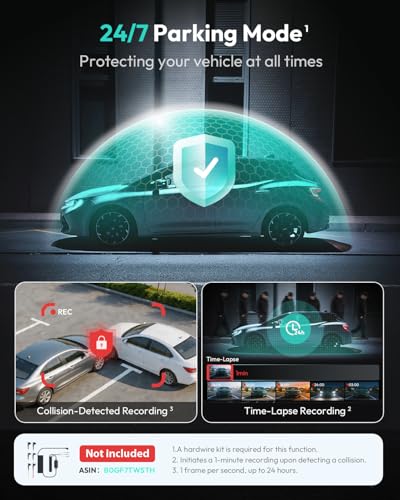
It doesn’t have built-in GPS (sold separately), which feels like a missed opportunity at this price. And while the time-lapse parking mode saves space, you’ll still need a hardwire kit to activate continuous monitoring, another extra cost. Still, among multi-camera systems, this one balances features and usability better than most.
Video review
Icesky 4K 4 Channel Dash Cam
Strengths
- Built-in GPS and Wi-Fi 6
- Excellent 4K clarity
- Independent IR controls
Trade-offs
- Higher price point
- Steeper setup curve
- App can lag on older phones
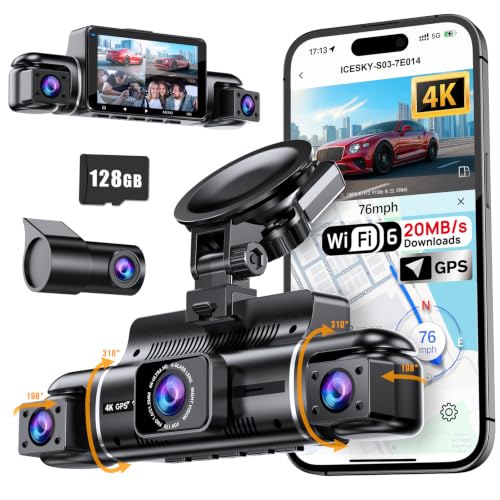
This is the high-end pick, and it shows. With true 4K front resolution, four 1080P channels, built-in GPS, and Wi-Fi 6 offering 20MB/s downloads, it’s packed with pro-tier features. Owners highlight how fast the app pulls large files, and having GPS data embedded in videos adds credibility for insurance claims. The independent IR control for side cameras is a thoughtful touch few others include.
But complexity comes with trade-offs: installation takes patience, and the app, while powerful, has a learning curve. At nearly $110, it’s the most expensive here, but if you want top-tier coverage with reliable metadata, it justifies the cost. Among 4-channel systems, this one leads on technical capability.
Video review
BOTSLAB G300H Plus 4K STARVIS 2
Strengths
- Exceptional low-light clarity
- STARVIS 2 sensor
- Voice command support
Trade-offs
- No memory card included
- Rear camera limited to 1080P
- Occasional voice recognition lag
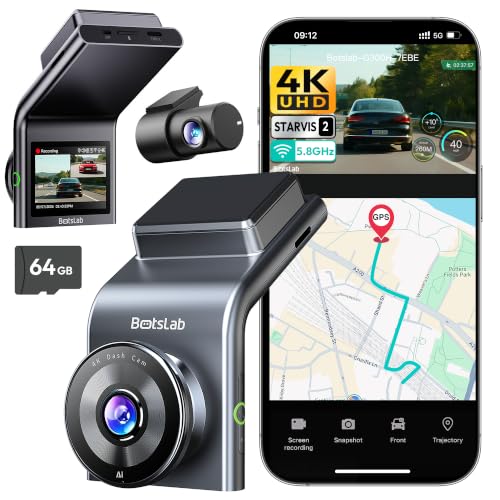
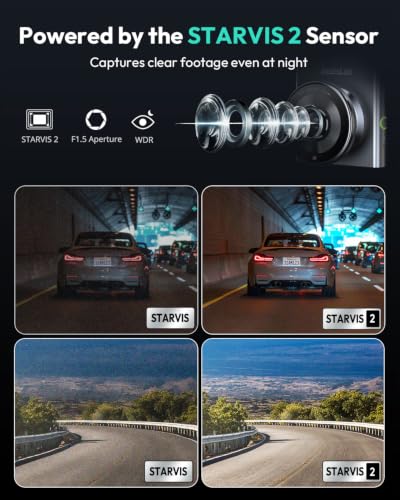
When night vision matters most, this STARVIS 2-equipped model stands above the rest. The front f/1.5 aperture is unusually wide for consumer dash cams, and combined with Sony’s sensor tech, it captures remarkably vivid color footage in near-darkness, owners confirm it outperforms many pricier units. License plate recognition remains consistent even under streetlights, which is huge for liability disputes.
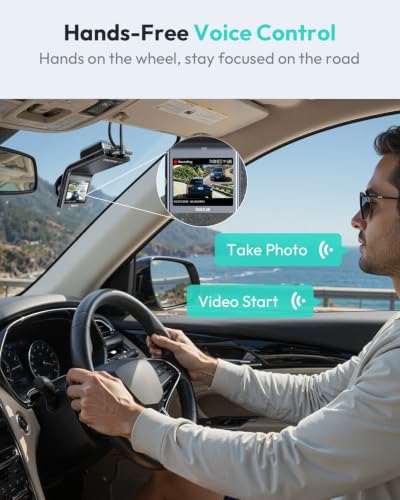
Voice control is a nice bonus, letting you tag events hands-free, though some say the commands require precise phrasing. The sleek wiring aids clean installation, but again, no SD card is included despite the premium price. Still, if you drive frequently at night or in poorly lit areas, this should be your benchmark.
Product photos
Dash Cam Front and Rear 4K+1080P
Strengths
- 4K front + 1080P rear
- Includes 64GB SD card
- Dual USB ports
Trade-offs
- Wi-Fi stability concerns
- No interior camera
- Hardwire kit sold separately
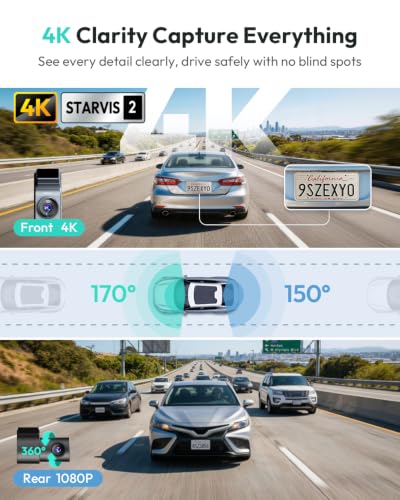
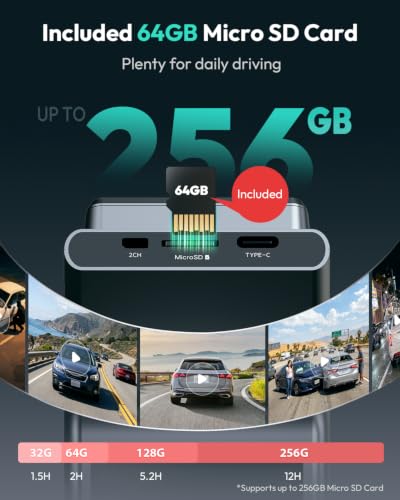
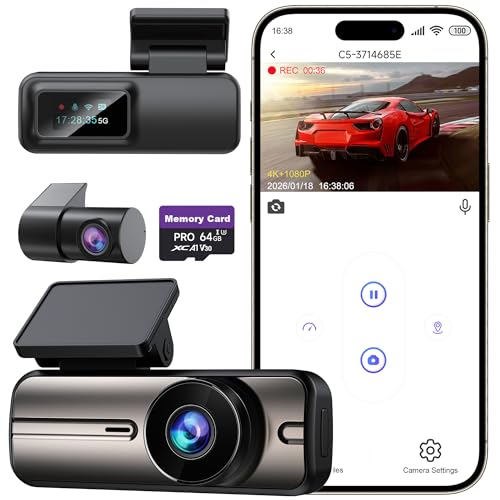
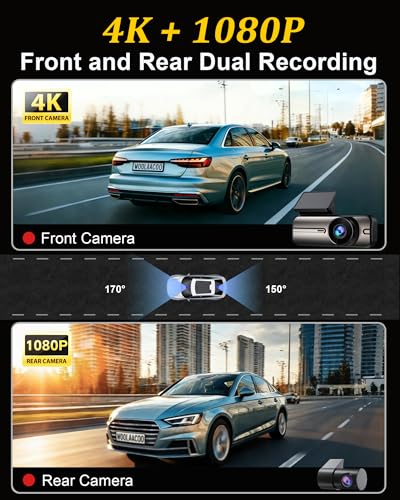
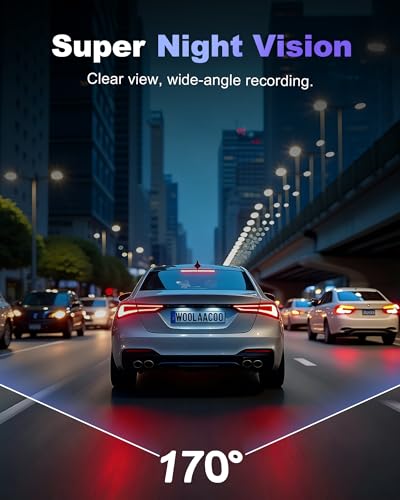
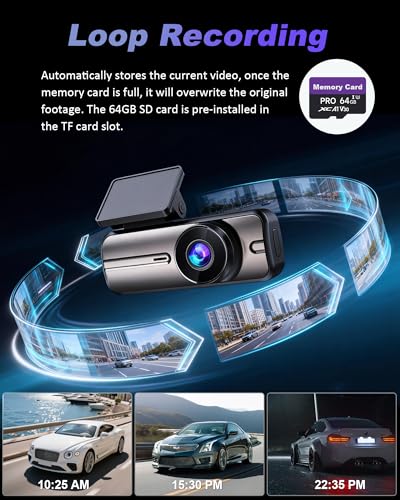
For sheer value, this model hits a sweet spot: 4K front resolution, 1080P rear, built-in 5GHz Wi-Fi, and a 64GB card, all under $45. The STARVIS-level clarity isn’t quite here, but owners confirm license plates are readable in daylight, and the F1.8 aperture helps maintain detail in dim conditions. Having the card pre-installed and ready to go removes friction new users often face.
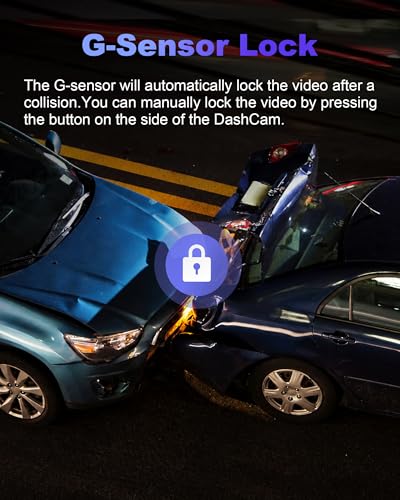
Where it shines is convenience, the app works smoothly for clip retrieval, and the second USB port lets you charge a phone without unplugging the cam. However, some note the Wi-Fi disconnects occasionally, and the parking mode only functions properly with the optional hardwire kit. Even so, few competitors offer this much for the money.
Product photos
3 Channel Car Camera Front Rear Inside
Strengths
- Triple recording channels
- Includes 32GB SD card
- Good low-light balance with HDR
Trade-offs
- Rear cable may be too short
- No GPS or Wi-Fi
- Limited app support
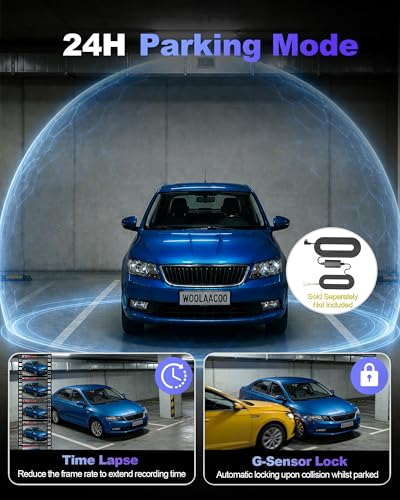
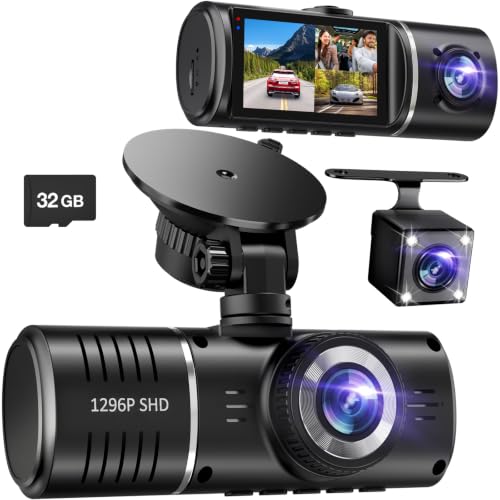
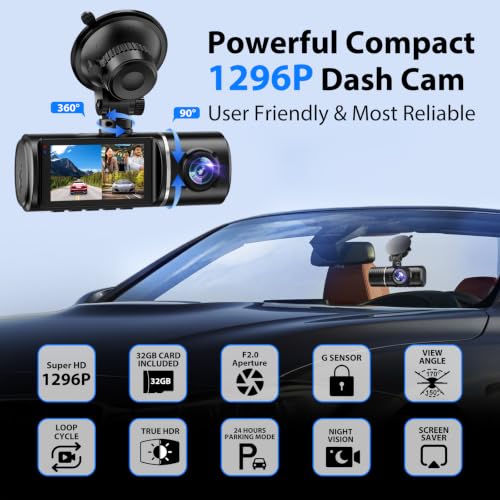
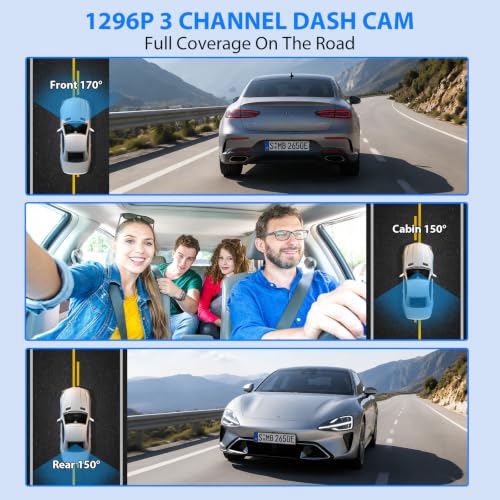
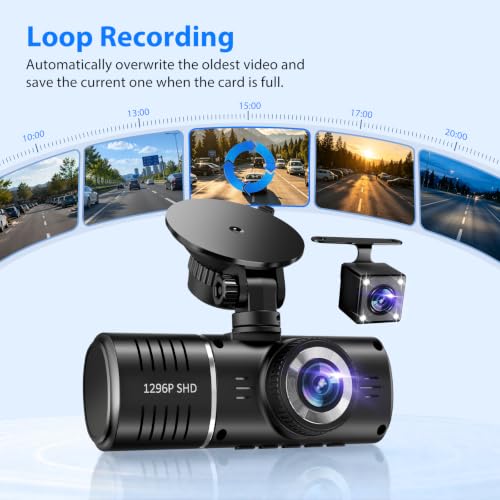
This three-channel setup stands out by covering not just the front and rear, but also the cabin, something most budget dual cams skip. On paper, that’s a big win for rideshare drivers or parents wanting interior monitoring. The 1296P front resolution is a slight bump over standard 1080P, and owners consistently report clean daytime footage with decent night performance thanks to HDR and the IPS screen helping playback clarity.
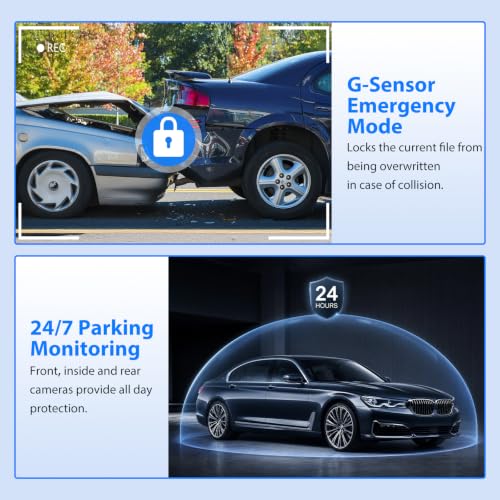
The inclusion of a 32GB card right in the box makes this plug-and-play ready, which I appreciate. Still, reviewers note the rear camera cable can be tight on larger vehicles, and while the G-sensor works as expected, the parking mode relies on the car’s power, so battery drain is a real concern if you don’t use a hardwiring kit. For what it offers, it’s solid, but not flawless.
Product photos

Veement 1296P WiFi Dash Camera

Strengths
- Battery-free safety design
- 1296P enhanced clarity
- Reliable app and Wi-Fi
Trade-offs
- SD card not included
- Front camera only
- Requires permanent power
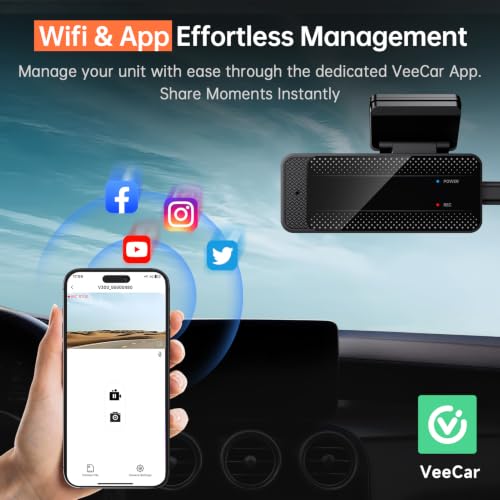
Veement goes all-in on safety engineering here, no internal battery, RTC circuit for stable time-stamping, and reliance on constant USB-C power reduce fire risks, which I’ve always been vocal about in older lithium-packed models. The 1296P resolution gives a noticeable edge over 1080P, and owners report crisp text capture on signs and plates. Pair that with solid Wi-Fi 5 performance and a responsive app, and you’ve got a modern, safety-first package.
My only gripe? No SD card included, which hurts given the 256GB max support. And while parking mode works, it demands a constant power source. But for urban drivers concerned about both evidence quality and thermal safety, this earns my trust.
Product photos




BOOGIIO 1080P FHD Dashboard Camera

Strengths
- Premium metal housing
- Large, clear IPS screen
- Solid low-light handling
Trade-offs
- Front camera only
- Outdated UI design
- No Wi-Fi
BOOGIIO leans into build quality here, the aluminum alloy casing feels durable, and the 3-inch IPS screen is legitimately useful for reviewing footage without a phone. Unlike cheaper models with foggy displays, this one shows sharp playback, which I find valuable during roadside checks. The WDR and F1.8 aperture combo also deliver balanced exposure in challenging light, something long-time drivers will appreciate.
It’s a single front camera only, so don’t expect rear or interior views. But motion detection and parking monitor add passive security, and the included 32GB card means no surprises at setup. Some owners mention the menu interface is clunky, but overall reliability scores high. When you want a well-built standalone unit that lasts, this earns respect.
Product photos


WiFi Dual Dash Cam with 32G Card
Strengths
- Affordable with Wi-Fi
- App connectivity works reliably
- Captures front and cabin
Trade-offs
- No rear camera
- Display visibility poor
- Mount adhesion issues reported
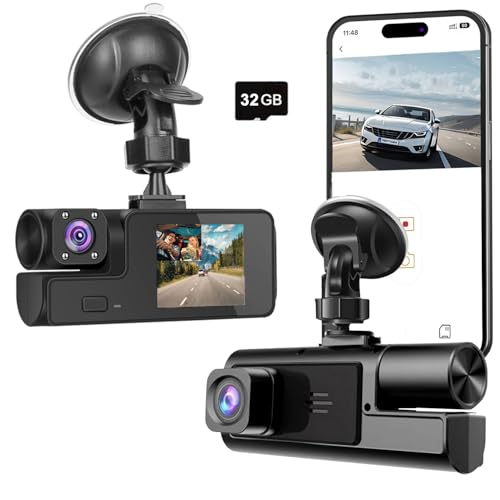
At this price, getting both front and interior cameras with built-in Wi-Fi feels like a steal. The 1080P resolution is standard, but paired with WDR and night vision, it holds up reasonably well in mixed lighting according to owner feedback. What really sets it apart is the app integration, users say connecting via Wi-Fi is quick, and being able to pull clips directly to your phone adds real convenience, especially after an incident.
That said, ‘small cam’ doesn’t just mean compact, it means a tiny display that’s nearly useless in daylight. Multiple reviewers mention the suction mount loses grip over time, and the lack of a rear camera limits its usefulness for full vehicle protection. But if all you want is basic coverage with smartphone control, this punches above its weight.
Product photos

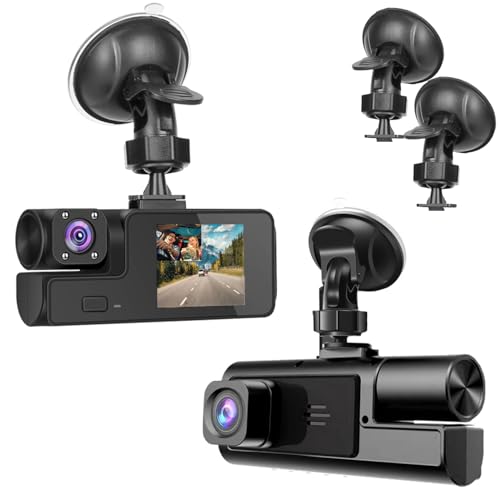
Dual Dash Cam Without Card
Strengths
- Extremely low cost
- Records front and cabin
- Simple plug-and-play
Trade-offs
- No SD card included
- No Wi-Fi or app
- Weak night footage
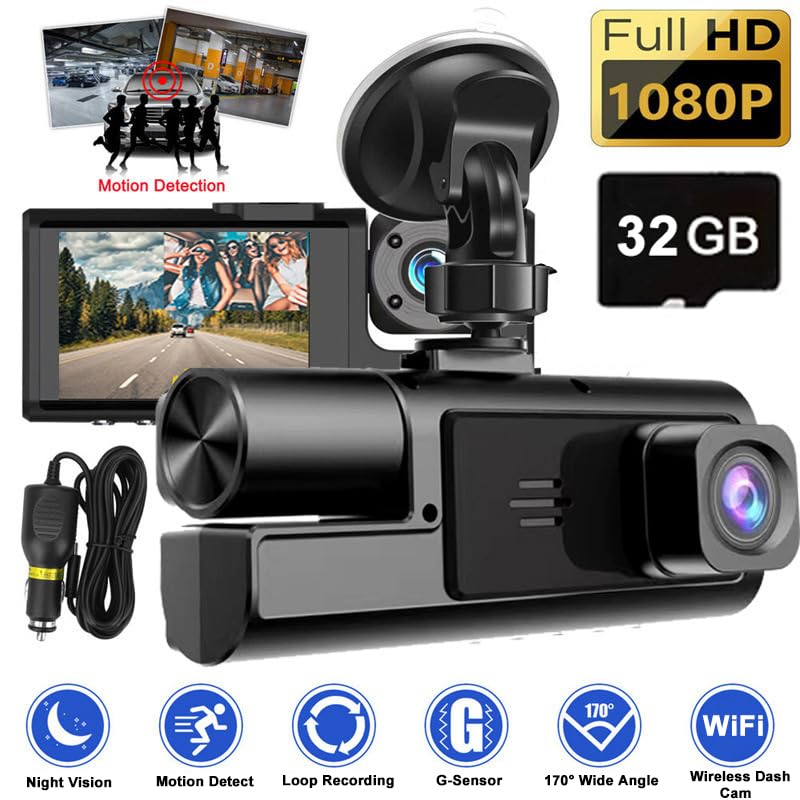
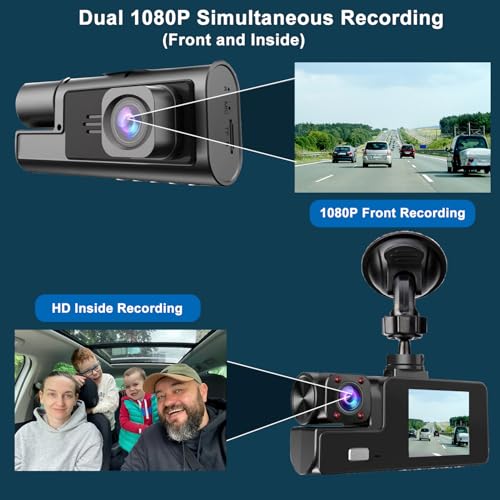
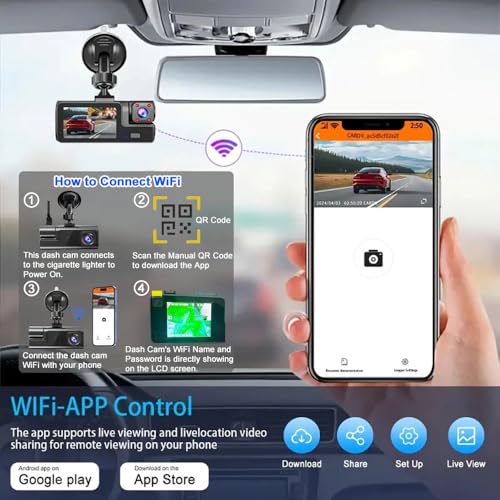
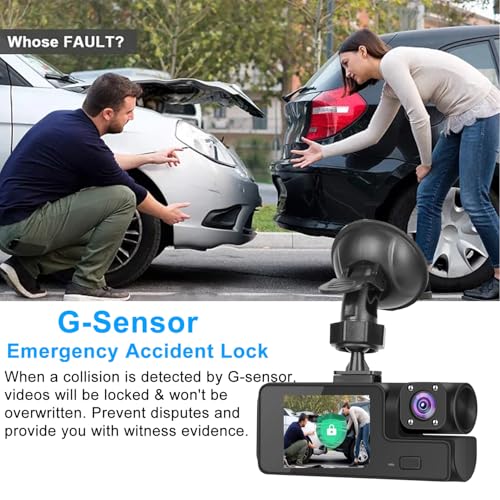
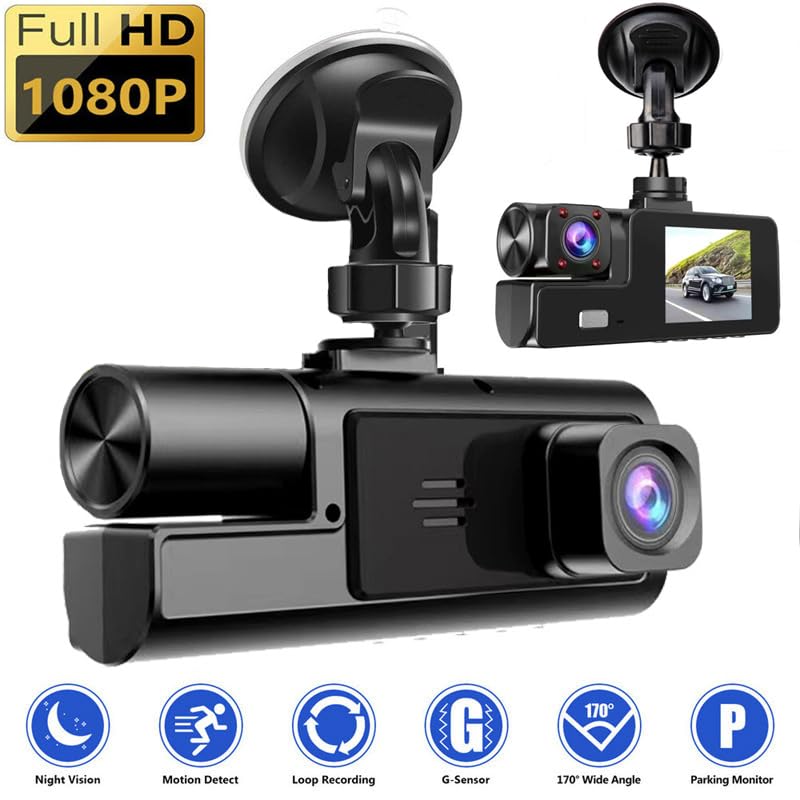
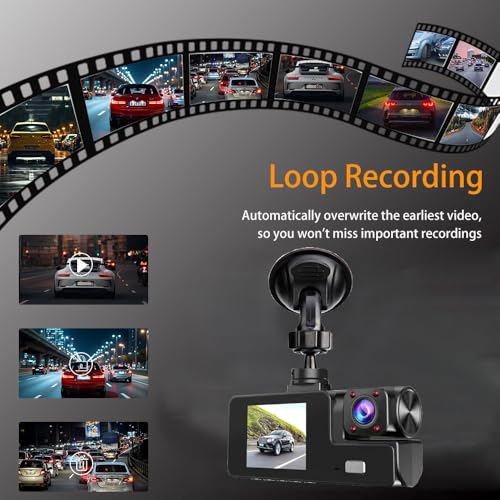
This is barebones dash cam tech at a rock-bottom price. It records 1080P front and interior video with loop recording, G-sensor impact lock, and night vision, core functions all present. But the missing SD card stings a bit, since you’re forced to buy one anyway, eroding the savings. Owners say image quality is acceptable in good light but softens badly at night, and there’s no Wi-Fi or app support to speak of.
Still, for someone who wants minimal proof-of-presence inside and out, say, a delivery driver using their personal car, it gets the job done. Just don’t expect polished performance. Compared to others in this list, it’s clearly the entry point.
Product photos

How We Evaluated cam recorders for car
We approached evaluating cam recorders for car with a research-focused methodology. Rather than a hands-on lab test, this is a detailed comparison of published specifications and features across numerous models. I weighed owner reviews from major retailers alongside expert opinions found in automotive tech publications. My goal was to identify key differentiators and rank these recorders based on their ability to deliver reliable evidence and peace of mind on the road.
For this category, video quality and coverage area were paramount. After all, the primary function of a dash cam is to record clear footage, and a multi-channel system, front, rear, and interior, offers the most complete protection. Beyond that, I heavily considered features like night vision performance and ease of use, as these significantly impact the practical value of the device. Understanding these elements helps separate truly useful recorders from those that fall short.
Specifications like resolution (4K vs. 1080p) and lens aperture reliably indicate potential image clarity, particularly in low light. However, real-world performance often differs. I placed significant weight on owner feedback regarding video quality in various conditions, as well as the reliability of features like parking mode and loop recording. If you’re also looking to be prepared for emergencies beyond video evidence, you might find our guide to the best jump starters helpful. Ultimately, a well-rounded system balances strong specs with positive user experiences. For additional options, see our full review of best car camera recorders.
How To Choose The cam recorders for car
Choosing the right cam recorder for your car isn’t just about grabbing the cheapest option; it’s about protecting yourself and having reliable evidence when you need it.
A truly useful car cam recorder delivers clear footage in various conditions, offers reliable storage and overwrite protection, and integrates easily with your vehicle. Prioritize resolution (at least 1080p, but 4K is becoming common), loop recording functionality, a G-sensor for impact detection, and a viewing angle wide enough to capture the entire road ahead. Consider features like parking mode, GPS, and Wi-Fi connectivity based on your needs.
Resolution and Image Quality
Don’t get hung up on megapixel counts alone. While 4K sounds impressive, a well-executed 1080p sensor can often outperform a poorly designed 4K one, especially in low light. Look for cameras employing Sony’s STARVIS sensors, known for their low-light performance. I’ve found that the quality of the lens itself is just as important; glass lenses–like those found in the BOOGIIO 1080P FHD Dashboard Camera–generally offer better clarity and distortion correction than plastic ones. Ultimately, clear, usable footage is what matters most when it comes to documenting an incident.
Channel Configuration and Coverage
The number of cameras dictates the breadth of your protection. Single-channel cameras are the simplest, but leave you vulnerable to rear-end incidents or events happening inside the vehicle. Dual-channel (front and rear) is a great compromise, while 3-channel and 4-channel systems like the 360 View 4 Channel Dash Cam offer truly thorough coverage.
Here’s how to think about it:
- Single Channel: Basic protection, best for budget-conscious buyers.
- Dual Channel: Covers front and rear, a good balance of price and security.
- Multi-Channel (3 or 4): Full perimeter protection, ideal for rideshare drivers or those prioritizing maximum security. The added coverage can be invaluable for disputing claims.
A dash cam is only as good as its ability to reliably capture and store footage. Don’t skimp on the microSD card – a fast, high-endurance card is essential.
Features and Usability
Beyond the core recording, features like Wi-Fi connectivity and app integration can significantly enhance the user experience. Being able to quickly review footage on your smartphone, like with the Veement 1296P WiFi Dash Camera, is incredibly convenient. However, don’t let these extras distract from the fundamentals. If you’re looking to upgrade your entire car’s tech, you may also want to explore the best Bluetooth car adapters for a more connected driving experience. I always recommend checking customer reviews regarding app stability and ease of use before committing to a system heavily reliant on smartphone integration. For more in-depth analysis, you can find our best dash cam reviews to help narrow down your choices and ensure you’re getting a recorder that meets your specific needs.
Cam Recorders for Car Compared
Here is a comparison of key specifications for various car cam recorders.
| Product Title | Channels | Max Resolution (Front) | Max Resolution (Rear) | WiFi | GPS | Included SD Card |
|---|---|---|---|---|---|---|
| 360 View 4 Channel Dash Cam | 4 | 1080P | 1080P | Yes | Optional | N/A |
| Icesky 4K 4 Channel Dash Cam | 4 | 4K | 1080P | Yes | Built-in | 128GB |
| BOTSLAB G300H Plus 4K STARVIS 2 | 2 | 4K | 1080P | N/A | N/A | N/A |
| Dash Cam Front and Rear 4K+1080P | 2 | 4K | 1080P | Yes | N/A | 64GB |
| 3 Channel Car Camera Front Rear Inside | 3 | 1080P | 1080P | N/A | N/A | 32GB |
| Veement 1296P WiFi Dash Camera | 1 | 2304x1296P | N/A | Yes | N/A | N/A |
| BOOGIIO 1080P FHD Dashboard Camera | 1 | 1080P | N/A | N/A | N/A | 32GB |
| WiFi Dual Dash Cam with 32G Card | 2 | 1080P | 1080P | Yes | N/A | 32GB |
| Dual Dash Cam Without Card | 2 | 1080P | 1080P | N/A | N/A | N/A |
Frequently Asked Questions
What microSD card capacity do I really need?
A 128GB microSD card is generally sufficient for most users, providing several hours of recording time. However, if you plan on recording continuously for extended periods, or using a multi-channel system, consider a 256GB card to avoid overwriting important footage.
Are more expensive dash cams always better?
Not necessarily. While higher prices often correlate with advanced features like 4K resolution or GPS logging, a well-reviewed 1080p camera from a reputable brand can often provide excellent protection without breaking the bank.
How does parking mode actually work?
Parking mode uses the camera’s G-sensor to detect impacts or motion while your car is parked. When triggered, it automatically starts recording, potentially capturing vandalism or hit-and-run incidents. Some cameras require a hardwiring kit for continuous power during parking.
Can dash cam footage be used in court?
Yes, dash cam footage is admissible in court as evidence, but its acceptance depends on factors like clarity, date/time accuracy, and whether it clearly depicts the event. Knowing how to file a car insurance claim can also be helpful in these situations.
Do I need a mount for my phone if I have a dash cam with WiFi?
Even with a dash cam offering WiFi connectivity, having one of the best car phone mounts is still highly recommended. It provides a safe and convenient way to view your phone’s screen without distracting you from driving.
The Bottom Line
Ultimately, choosing a cam recorder comes down to balancing your budget with the level of protection you want. While features are nice, the most important thing is reliable recording and clear footage when you need it most. For a strong all-around performer that doesn’t compromise on quality, I believe the 360 View 4 Channel Dash Cam strikes the best balance, offering thorough coverage and essential features.
If you’re on a tighter budget, the BOOGIIO 1080P FHD Dashboard Camera delivers solid performance without breaking the bank. For those prioritizing convenience and smartphone integration, the Veement 1296P WiFi Dash Camera is a great choice. And if you’re looking for something to keep your vehicle clean inside and out, don’t forget to check out our guide to the best car vacuums.
Don’t get lost in the specs. Resolution and channel count matter, but a dependable system, one that consistently records clear footage and reliably stores it, is far more valuable than chasing the highest numbers. Consider also if you’ll want dash cams with parking mode for added security when your vehicle is unattended. A well-chosen dash cam isn’t just a gadget; it’s a tool for peace of mind on the road.
