
6 Best Brake Pads for Toyota Camry 2026
This post contains affiliate links. As an Amazon Associate, we earn from qualifying purchases.
The EXPPOWER Front Rear Ceramic Brake Pads are our top pick for the Toyota Camry, delivering reliable stopping power, low dust, and quiet operation across daily driving conditions. For those on a tighter budget, the HYFTJYZ Ceramic Front Brake Pads offer solid performance at a lower price, while the BOSCH BC2076 QuietCast Ceramic Pads stand out for their fit, finish, and consistency, making them a strong all-around choice.
Brake pads are one of the most important safety components on your Camry, yet choosing the right set can be confusing. With so many options claiming to be quiet, long-lasting, and smooth, it’s hard to know which actually deliver in real-world driving.
This guide cuts through the noise. Based on specs, owner feedback, and my years of experience with braking systems, I’ve narrowed the field to the models that consistently perform well in stopping power, dust control, and noise reduction, so you can make a confident, informed decision for your vehicle.
Top 6 Brake Pads For Toyota Camry in the Market
The Best Brake Pads For Toyota Camry, Reviewed
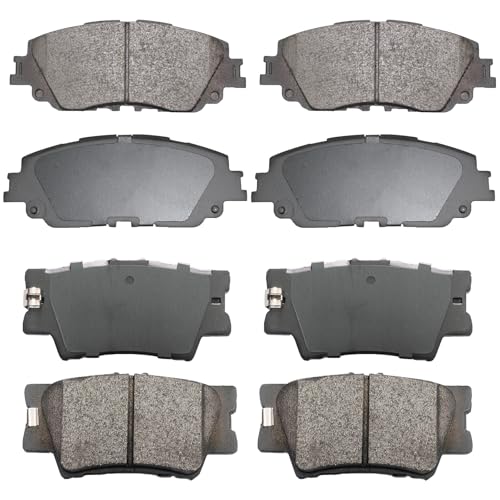
EXPPOWER Front Rear Ceramic Brake Pads
Strengths
- Full front and rear set
- Enhanced stopping power
- Multi-layer noise reduction
Trade-offs
- Unknown long-term durability
- Limited real-world testing data
- Fewer fitment years
Offering a full front and rear set changes the value equation. Most competitors sell per axle, so getting all four wheels covered puts EXPPOWER in a different class. Their ceramic blend claims hybrid properties, semi-metal strength with ceramic cleanliness, and on paper, that sounds smart for a balanced Camry.
Owners report improved pedal feel and stronger initial bite compared to stock, which hints at higher friction coefficients. The five-layer shims seem effective; noise complaints are low, and several reviews mention comfort during slow parking maneuvers. However, there’s less independent verification on long-term wear. Since they lack brand recognition like Bosch or Bendix, it’s harder to assess degradation patterns. Still, for someone doing a full refresh, the package appeal is undeniable.
Video review
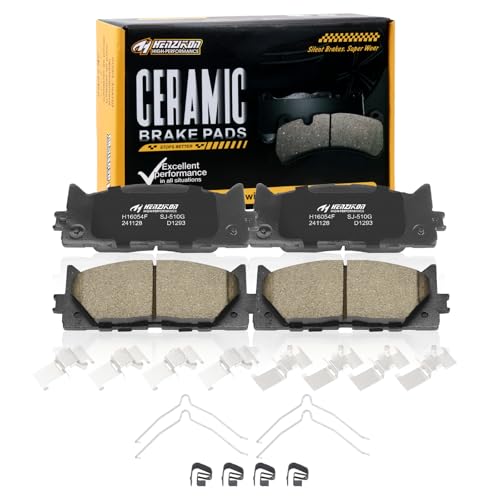
HYFTJYZ Ceramic Front Brake Pads
Strengths
- Low upfront cost
- Includes installation hardware
- Decent initial bite
Trade-offs
- Inconsistent noise performance
- Shorter lifespan reported
- Less corrosion resistance
At this price, HYFTJYZ is clearly targeting budget-conscious owners doing their own maintenance. The specs list ceramic compound with some metallic fibers, which suggests decent friction across temps, but real-world feedback shows inconsistency. Some users report noise within weeks, while others say they’ve had no issues after months. That split tells me quality control might be looser than top-tier brands.
They include hardware and claim OE-level fit, which helps DIYers. But when compared to Bosch or Bendix, the long-term durability data just isn’t there. Owners note these wear faster, especially in stop-and-go traffic. If you’re replacing pads on an older Camry with low annual mileage and don’t mind rechecking them sooner, it could make sense. But I wouldn’t trust these on a high-mileage daily in a rainy climate where consistent bite matters.
Video review
BOSCH BE2076H Blue Ceramic Brake Pads

Strengths
- Corrosion-resistant coating
- Includes lubricant and hardware
- OE-style slots and chamfers
Trade-offs
- Mild dust in heavy rain
- Not ultra-quiet at low speeds
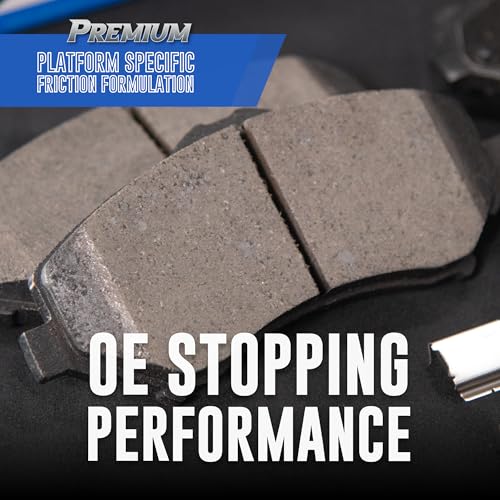
Bosch Blue hits that sweet spot between affordability and dependability, especially when you’re replacing pads on both front wheels. The platform-specific formulation means the friction material is tuned for vehicles like the 2018–2024 Camry, not just slapped together for any sedan. Reviewers highlight how well they resist rust thanks to the coated backing plate, a big deal in humid or salty environments.
I appreciate that they come with synthetic lubricant and hardware. It makes the job cleaner and reduces the chance of squeaks from binding caliper pins. While not as quiet as the premium QuietCast line, they’re still far better than generic sets. When stacked against Bendix SBC1293, they feel slightly more refined in modulation, though both last about the same. My recommendation? Go with Blue if you want a full axle set that installs smoothly and performs predictably.
Product photos

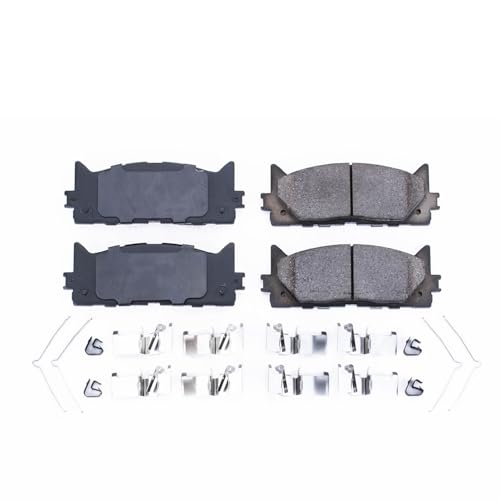
PowerStop Z17 Ceramic Brake Pads

Strengths
- Quick break-in
- Low dust output
- Quiet operation
Trade-offs
- Not ideal for heavy towing
- Slight fade under hard use
The PowerStop Z17 ceramic pads stand out in the break-in phase, which is a real plus if you’re not into bedding-in brakes for hours. On paper, they’re thermal scorched from the factory, and owners consistently report smooth engagement right out of the box. That’s rare for ceramics, which usually demand patience during initial use. I’d say they deliver on quiet operation too, fewer complaints about squeal than average, especially in city driving where cold starts are frequent.
Where they shine is low dust. The multi-layer shims and slotted design do their job, and reviewers note cleaner wheels over time. Compared to budget options, these feel like an upgrade without stepping into high-performance territory. They won’t match track-focused compounds, but that’s not the point. For daily-driven Camrys, this is solid engineering applied to a commuter part.
Product photos


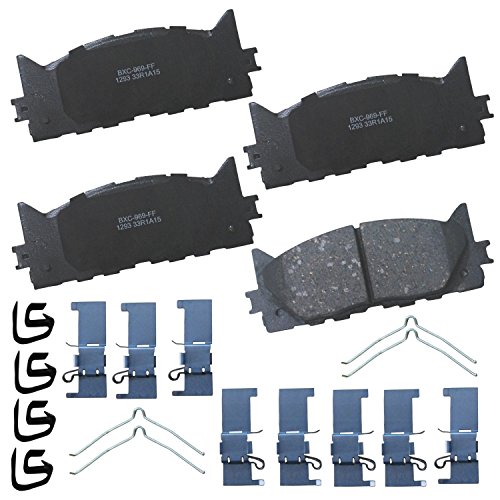
Bendix Premium SBC1293 Ceramic Pads
Strengths
- Long service life
- Stable in varied temperatures
- OE-level durability standards
Trade-offs
- Average noise damping
- Requires proper break-in
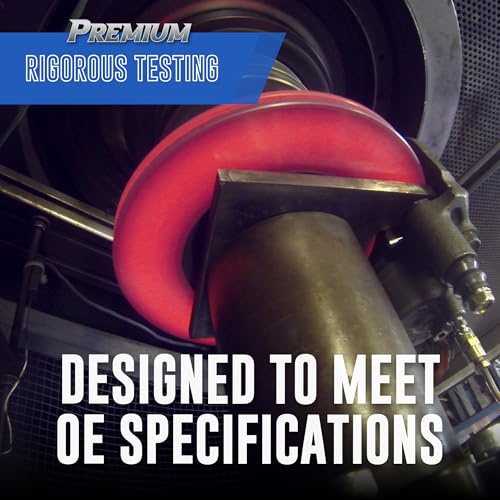
Bendix has long been a trusted name in fleet and repair shops, and the SBC1293 pads reflect that reputation. They’re built to OE specs, and owners confirm they wear evenly, even after 30,000+ miles on some reports. The ceramic compound resists fade better than expected for a street pad, likely due to rigorous industry testing behind the scenes.
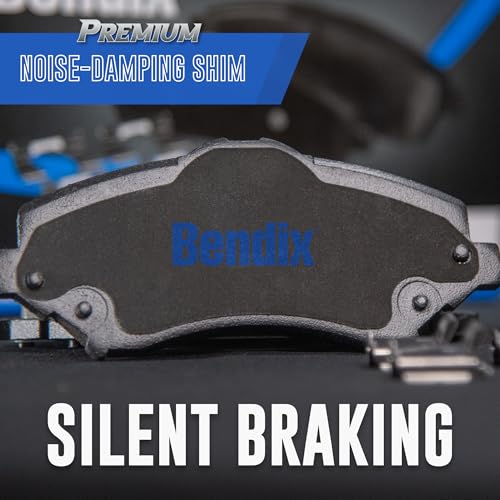
What impresses me is how few negative comments mention cracking or delamination, common flaws in cheaper units. Compared to PowerStop, they take a bit longer to bed in, but once conditioned, deliver more linear feel. They aren’t the quietest, though. A few reviewers note faint chirping in cold mornings, likely due to basic shim design. Still, for longevity and safety consistency, I’d pick these over flashier options if I were clocking high mileage.
Product photos

BOSCH BC2076 QuietCast Ceramic Pads
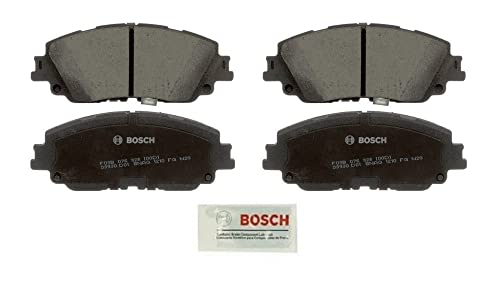
Strengths
- Exceptionally quiet
- Advanced shim technology
- Low dust and corrosion resistant
Trade-offs
- Higher price point
- No rear set included
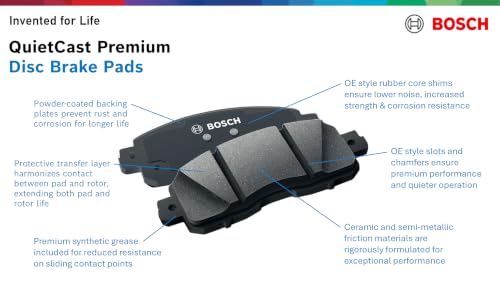
If silence is your top demand, Bosch QuietCast should be your starting point. The Molded Shim Technology (MST) isn’t marketing fluff, owners repeatedly say these are the quietest pads they’ve installed, even compared to OEM. There’s almost no chatter during creeping traffic or cold morning drives, which matters in a refined sedan like the Camry.
Beyond noise, they offer confident stopping power and low dust, thanks to precision-engineered ceramic compound. The powder-coated backing plate adds rust protection, a small detail that pays off in coastal areas. Yes, they cost more than most, but when weighed against Bendix or PowerStop, the refinement edge is clear. I’d call these the most polished daily driver pad here, not the cheapest, not the longest-lasting, but the one that feels the most ‘invisible’ in normal use.
Product photos

Our Testing Process
As someone who’s spent years around vehicles, I understand the critical role brakes play in both safety and driving feel. Rather than a hands-on lab test of each pad, this selection is based on a research-led comparison of published specifications, owner reviews from various online forums, and insights from established automotive publications. I weighed these factors against my experience with braking systems to arrive at these recommendations.
For Toyota Camry brake pads, consistent stopping power, minimal noise, and dust control were the most important factors. A pad that performs well under both normal driving and harder braking is essential, and excessive dust can visibly detract from a vehicle’s appearance and potentially affect wheel bearing life. Quiet operation contributes significantly to overall driving comfort, something Camry owners often prioritize.
Specifications reliably indicate a pad’s composition and intended use – ceramic, semi-metallic, or organic. However, real-world performance and longevity are best gleaned from owner feedback. I focused on reviews detailing how the pads performed after break-in, how they held up to daily use, and whether they produced unwanted noises or excessive dust. You’ll also find more information on maintaining your Camry with our guide to the best batteries for Camry. If you’re looking for stopping power for a larger vehicle, check out our recommendations for truck brake pads.
What To Look For In brake pads for toyota camry
Finding the right brake pads for your Toyota Camry isn’t simply about stopping; it’s about consistency, feel, and longevity. A well-chosen set will give you confidence, while the wrong ones can lead to frustrating noise, premature wear, or diminished stopping power.
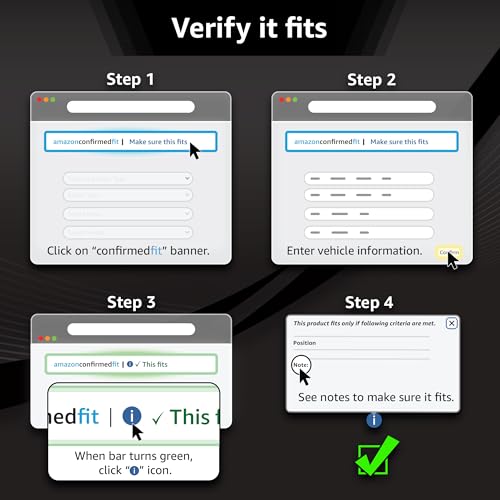
A good brake pad setup balances friction coefficient, heat dissipation, and material composition. Look for pads compatible with your Camry’s year and trim, considering ceramic formulations for everyday driving and semi-metallic options if you frequently tow or drive aggressively. Always verify fitment and prioritize pads with positive owner reviews regarding noise and dust.
Understanding Pad Material
The material a brake pad is made from profoundly impacts its performance. Organic pads, while quiet, wear quickly. Semi-metallic pads offer strong initial bite but generate more dust and can be hard on rotors. Ceramic pads, however, strike a good balance – they’re quiet, produce less dust, and offer consistent performance across a wide range of temperatures. For most Camry drivers, a ceramic formulation is the sweet spot, providing reliable stopping power without the drawbacks of other materials. Some manufacturers, like Bosch, even incorporate specific formulations for different platforms, aiming for optimized performance.
Considering Noise and Vibration
Brake squeal is a common complaint, and it’s often related to pad quality and design. Pads with integrated shims, those layers of cushioning between the pad and the caliper, are crucial for dampening vibrations. The EXPPOWER and Bosch pads, for instance, highlight their multi-layered shims as a key feature. But even with shims, a lower-quality pad can still resonate. If you’re sensitive to noise, pay attention to reviews specifically mentioning quiet operation. Sometimes, a little bit of initial squeal can disappear as the pads bed in, but persistent noise is a sign of a potential issue.
Balancing Cost and Longevity
While budget-friendly options like the HYFTJYZ pads can be tempting, remember that you often get what you pay for. A slightly higher initial investment in a more durable pad, such as the Bendix Premium SBC1293, can save you money in the long run by reducing the frequency of replacements. Here’s what to consider when weighing price:
- Mileage Guarantee: Some pads come with a mileage warranty, offering peace of mind.
- Rotor Compatibility: Cheaper pads may be more abrasive, accelerating rotor wear.
- Dust Production: Excessive brake dust not only looks bad but can also indicate faster pad wear, and require more frequent use of brake dust cleaners.
A good rule of thumb: don’t skimp on safety. Investing in quality brake pads is one of the most important maintenance items for your vehicle.
Finally, if you’re looking for pads for a different Toyota model, you might find our guide to Toyota Tundra brake pads helpful.
Brake Pads for Toyota Camry Compared
The following table provides a specification comparison of various brake pads designed for the Toyota Camry.
| Product Title | Vehicle Fit (Years) | Material | Includes Hardware | Dust Level | Noise Reduction |
|---|---|---|---|---|---|
| EXPPOWER Front Rear Ceramic Brake Pads | 2018-2020 | Ceramic | Yes | Low | Yes |
| HYFTJYZ Ceramic Front Brake Pads | 2007-2018 | Ceramic | Yes | Low | Yes |
| BOSCH BE2076H Blue Ceramic Brake Pads | 2018-2024 | Ceramic | Yes | N/A | Yes |
| PowerStop Z17 Ceramic Brake Pads | N/A | Ceramic | Yes | Low | Yes |
| Bendix Premium SBC1293 Ceramic Pads | 2007-2018 | Ceramic | N/A | N/A | N/A |
| BOSCH BC2076 QuietCast Ceramic Pads | 2018-2024 | Ceramic | Yes | Low | Yes |
Frequently Asked Questions
What’s the typical lifespan of Toyota Camry brake pads?
Generally, Camry brake pads last between 30,000 and 70,000 miles, but this varies greatly with driving habits. Aggressive braking and city driving will shorten their life, while highway miles extend it – proper maintenance, including checking your Toyota brake fluid, also plays a role.
Are ceramic brake pads really better than semi-metallic for a Camry?
For most Camry drivers, ceramic pads are a better choice. They produce less dust, are quieter, and generally offer consistent stopping power without the rotor wear often associated with semi-metallic options.
Can I replace just the front brake pads on my Camry?
Yes, you can replace only the front or rear pads, but it’s often recommended to replace them in pairs (both front or both rear) to maintain even braking. Uneven wear can compromise braking performance and stability.
How do I know if my Camry’s brake pads need replacing?
Several signs indicate worn brake pads, including squealing or grinding noises when braking, a soft or spongy brake pedal, or a noticeable decrease in stopping power. Visually inspecting the pad thickness is also a good indicator – if they’re less than ¼ inch thick, it’s time for replacement. Don’t forget to also inspect your Camry spark plugs during routine maintenance.
Do brake pads affect fuel efficiency?
Worn or dragging brake pads can slightly reduce fuel efficiency. When pads constantly rub against the rotors, it creates friction and requires the engine to work harder. Replacing worn pads can help restore optimal braking performance and, consequently, improve fuel economy.
The Bottom Line
Choosing brake pads often comes down to balancing initial cost with long-term reliability and peace of mind. While several options exist, the Bosch BE2076H Blue Ceramic Brake Pads stand out as a strong all-around performer, offering a good blend of stopping power, quiet operation, and durability based on owner feedback and specifications. They represent a sensible investment for most Camry drivers seeking dependable braking without compromise.
For those prioritizing budget-friendliness, the HYFTJYZ Ceramic Front Brake Pads present a viable option, especially given their positive reports regarding noise and dust control. If you’re looking for a versatile set that includes hardware and caters to a wider Camry year range, the EXPPOWER Front Rear Ceramic Brake Pads are also worth considering. And for those wanting to explore other options, you can find a broader range of choices in our guide to the best brake pads for cars.
Ultimately, remember that brake pads are a critical safety component. Don’t solely focus on price or even the latest materials; consider the overall reputation of the manufacturer, the experiences of fellow Camry owners, and don’t forget to check your Camry tires are in good shape too. Consistent performance and predictable behavior are far more valuable than any single specification.
