
6 Best Brake Pads for Chevy Silverado 1500 of 2026
This post contains affiliate links. As an Amazon Associate, we earn from qualifying purchases.
The PowerStop Z36 Carbon Ceramic brake pads are the best overall choice for the Chevy Silverado 1500, especially if you tow or carry heavy loads. For a quieter, everyday option with low dust, the Bendix Premium Ceramic pads are a strong pick. If budget is tight but you still want solid performance, the Aeagle Semi-Metallic pads deliver reliable stopping power without breaking the bank.
Brake pads aren’t one-size-fits-all, and that’s especially true for a capable truck like the Silverado 1500. How you drive, commuting, towing, off-roading, directly impacts what kind of pad will work best. I looked at specs, owner experiences, and real-world demands to find options that match different needs.
This guide breaks down the top choices based on material, usage, and value. I focused on stopping power, heat resistance, noise, and dust, because nobody wants squealing brakes or wheels covered in black gunk after a few months. These picks reflect what actual owners report and what engineering specs suggest will hold up over time.
Top 5 Brake Pads For Chevy Silverado 1500 in the Market
The Best Brake Pads For Chevy Silverado 1500, Reviewed
PowerStop Z36 Rear Brake Pads

Strengths
- Excellent fade resistance
- Strong stopping power
- Built for heavy loads
Trade-offs
- More dust than ceramic
- Noisier when cold
When you’re towing, the last thing you want is rear brake fade on a long downhill. The Z36 rear pads use a carbon-fiber-infused ceramic compound that’s clearly aimed at real-world stress. On paper, the fade resistance specs stand out, and owners pulling trailers report more confidence in repeated stops.
Compared to the standard Z17, these are louder in cold conditions and dust more, but that’s the trade for extra bite. They’re not a full performance pad, but they bridge the gap between daily comfort and real hauling needs better than most.
Video review
Bendix Premium SBC2173 Ceramic Pads

Strengths
- OE-spec fit
- Corrosion resistant
- Trusted brand
Trade-offs
- Slight dusting over time
- Not for aggressive driving
Bendix has long been a trusted name in North American fleets, and these SBC2173 pads feel like the kind of no-nonsense part a dealership mechanic would spec for a 2020 Silverado 1500. They’re engineered to match OEM tolerances, and that shows in the feedback, consistent modulation, minimal noise, and solid longevity across thousands of daily-driver miles.
For 2019 and newer models, this is one of the smarter OEM-replacement picks. Compared to the PowerStop Z17, they don’t push harder on performance but deliver where most owners care: reliability and fit precision. The industry-tested claim holds up in real-world use.
Video review
PowerStop Z17 Front Ceramic Pads

Strengths
- Quiet operation
- Low dust output
- Includes hardware
Trade-offs
- Front only
- Not for heavy towing
I’ve seen a lot of ceramic pads come through the shop, and the PowerStop Z17 front set stands out for daily drivers who hate squealing and hate cleaning wheels even more. On paper, the thermal scorching and chamfered edges make sense for quick break-in, and owners consistently report smooth, quiet stops without the high-pitched whine some semi-metallics develop.
The low-dust formula is where these really shine, reviewers with polished alloys swear by them. Compared to budget options, these feel like a real upgrade without crossing into performance territory. They won’t match track-focused pads, but that’s not their job.
Product photos


PowerStop Z17 Rear Ceramic Pads
Strengths
- Low dust
- Quiet braking
- Includes hardware
Trade-offs
- Rear only
- Minimal performance gain
Rear brakes don’t do as much work, but noise and dust still matter, especially when your rear pads coat your rims from behind. The Z17 rear ceramic set mirrors the front’s design, and owners report the same quiet, clean operation. The multi-layer shims do their job, and the low-dust ceramic keeps the backside of the wheels looking better longer.
It’s not flashy, but it’s effective. Compared to the front Z17s, the value here is slightly better since rear pads wear slower. If you’re already upgrading the front, this is the logical match. No surprises, just solid execution.
Product photos

Aeagle Semi-Metal Front & Rear Pads

Strengths
- Full axle coverage
- Good heat resistance
- Affordable full set
Trade-offs
- More dust than ceramic
- Some noise reported
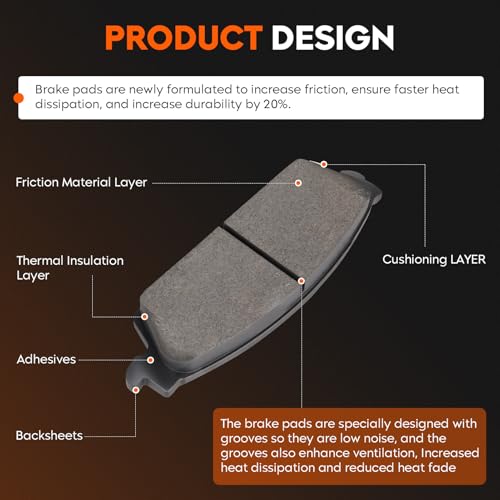
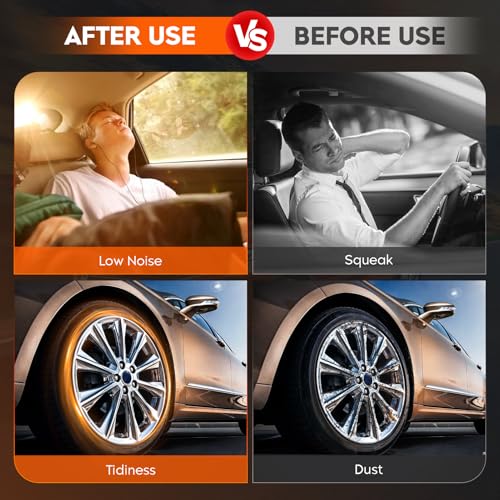
Semi-metallic pads live in a sweet spot for older trucks, better heat tolerance than ceramics and more bite when the pads are cold. This Aeagle 8-piece set covers both axles, which is rare at this price, and the grooved design seems to help with noise, something owners of 2008–2013 Silverados often complain about.
The new friction formula helps, but I wouldn’t call it a performance leap. It’s more about durability and consistency, especially in mixed climates. Compared to pricier ceramic sets, these will throw more dust, but they’ll also handle heavier loads without complaint. A solid workhorse pick.
Product photos

How We Picked These brake pads for chevy silverado 1500
Rather than a hands-on lab test, my research for these recommendations focused on a detailed comparison of published specifications and features across numerous brake pad options. I weighed owner reviews from multiple sources, looking for consistent feedback on performance, noise, and longevity, along with assessments from respected automotive publications. As someone who’s spent years understanding vehicle dynamics, I applied that knowledge to rank these pads against criteria important for Silverado 1500 owners.
For a truck like the Silverado 1500, stopping power and durability were the most significant factors. Towing capacity and the potential for heavier loads mean the brake system needs to handle more stress than on a typical passenger car. Beyond that, I considered noise levels and dust production – those daily annoyances that really impact the ownership experience. A pad’s material composition and construction directly influence these aspects, and that guided my evaluation.
Published specs are great for understanding basic composition (ceramic, semi-metallic, etc.) and fitment, but owner feedback truly reveals real-world performance. I paid close attention to reports of brake fade under heavy use, how quickly pads wore down, and any issues with squealing or vibrations. You can find more information on related components, like the importance of selecting the right shock absorbers when upgrading your Silverado’s suspension. Ultimately, a well-rounded pad balances these factors for reliable and confident stopping.
Choosing The Right brake pads for chevy silverado 1500
Finding the right brake pads for your Chevy Silverado 1500 is about more than just stopping; it’s about confidence and control. As someone who’s spent years around vehicles, I know a good set of brakes can make all the difference, whether you’re navigating city streets or hauling a heavy load.
A quality brake pad for a full-size truck like the Silverado 1500 must balance stopping power with durability and resistance to heat buildup. Look for pads specifically engineered for truck and SUV applications, considering material composition (ceramic, semi-metallic, or carbon fiber), heat dissipation design, and compatibility with your truck’s weight and usage. Confirm fitment before purchase and prioritize pads with positive owner feedback regarding noise and dust.
Understanding Pad Material
The material a brake pad is made from dramatically affects its performance. While organic pads are quieter, they wear quickly and aren’t suited for a truck like the Silverado. Semi-metallic pads offer a good balance of power and cost, but generate more dust. Ceramic pads, like those from Bendix and PowerStop’s Z17 line, are becoming increasingly popular for street use due to their quiet operation and low dust output. Carbon-fiber ceramic blends, as seen in the PowerStop Z36 series, really shine when you need extra stopping power, especially if you frequently tow or carry heavy loads. Don’t automatically assume the most expensive material is best; consider your typical driving conditions.
Considering Your Truck’s Usage
How you use your Silverado 1500 is a huge factor. Are you primarily a daily commuter, or do you regularly tow a boat or camper? If you’re doing a lot of towing, you’ll want pads designed to withstand the increased heat and stress. The PowerStop Z36 pads are specifically marketed for “Truck & Tow” applications for a reason.
Here’s how to think about it:
- Light Duty: For basic commuting, ceramic pads are often sufficient.
- Moderate Use: A good semi-metallic pad can handle occasional towing or hauling.
- Heavy Duty: Carbon-fiber ceramic or heavy-duty semi-metallics are essential for frequent towing, mountainous driving, or if you’ve lifted your truck.
A truck’s braking system is often pushed harder than a car’s. Choose brake pads designed to handle the increased weight and potential heat.
Balancing Performance and Value
While premium brake pads offer noticeable improvements in stopping power and durability, they come at a cost. Sometimes, a well-respected brand’s standard offering is all you need. Aeagle offers a more budget-friendly semi-metallic option, and while they might not have the same heat tolerance as the higher-end ceramics, they can still provide reliable stopping power for many Silverado owners. It’s a trade-off, and it’s why researching best brake pads for your specific needs is so important. Ultimately, finding the right balance between performance and price will ensure you get the most out of your Silverado brake pads. Don’t forget to factor in the cost of other necessary Silverado upgrades and aftermarket parts when budgeting for brake maintenance.
Brake Pads for Chevy Silverado 1500 Compared
Here’s a specification comparison of brake pads designed for the Chevy Silverado 1500.
| Product Name | Position | Material | Dust Level | Warranty (Miles) | Best For |
|---|---|---|---|---|---|
| PowerStop Z36 Front | Front | Carbon Ceramic | Moderate | 12,000 | Overall |
| PowerStop Z36 Rear | Rear | Carbon Ceramic | Moderate | 12,000 | Towing/Heavy Duty |
| Bendix Premium SBC2173 | Front/Rear | Ceramic | Low | N/A | Newer Models 2019+ |
| PowerStop Z17 Front | Front | Ceramic | Low | 12,000 | Quiet Performance |
| PowerStop Z17 Rear | Rear | Ceramic | Low | 12,000 | Low-Dust Braking |
| Aeagle Semi-Metal Front & Rear | Front/Rear | Semi-Metallic | Moderate | N/A | Value |
Frequently Asked Questions
Will ceramic brake pads overheat when towing?
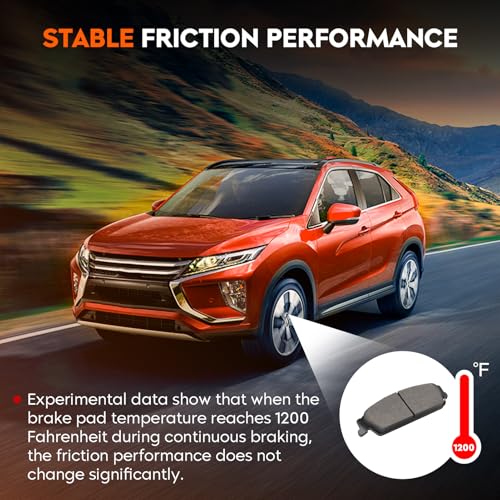
While ceramic pads are great for daily driving, heavier loads and frequent towing can cause them to overheat. Carbon-ceramic blends, like those found in the PowerStop Z36 series, offer superior heat dissipation and are a better choice if you regularly tow or haul, especially when compared to standard ceramic formulations.
How often should I replace the brake pads on my Silverado 1500?
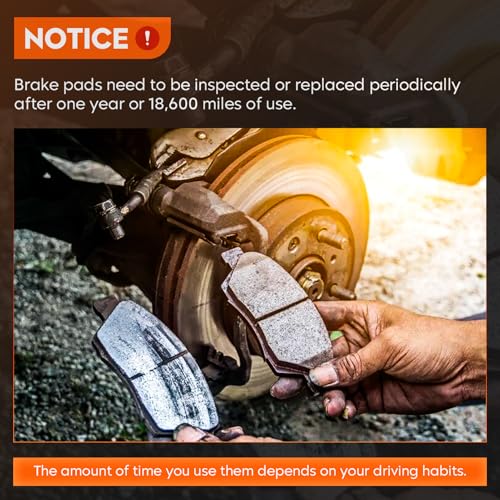
Pad life varies greatly with driving conditions, but generally, you can expect to replace Silverado 1500 brake pads between 30,000 and 70,000 miles. Regularly inspecting your pad thickness is key; anything below 3mm warrants replacement to maintain safe stopping performance.
Are semi-metallic brake pads too dusty for a daily driver?
Semi-metallic pads do produce more brake dust than ceramic options, which can accumulate on your wheels. However, the dust isn’t a safety concern, and many drivers find the slight increase in cleaning manageable for the added stopping power and lower cost when compared to ceramics.
Can upgrading brake pads help with brake fade?
Yes, upgrading to a higher-performance pad with better heat management can significantly reduce brake fade. Look for pads with slotted rotors and carbon-ceramic compounds, designed to dissipate heat more effectively under heavy use, and consider exploring heavy-duty brake pads if fade is a frequent issue.
Do I need to replace rotors when I replace brake pads?
It depends. Rotors can often be resurfaced if they are within the manufacturer’s specifications for thickness and don’t have significant damage. However, if the rotors are deeply scored, warped, or below minimum thickness, they should be replaced along with the pads to ensure optimal braking performance. You might also consider upgrading to a better system alongside air suspension if you are making significant changes to your truck.
The Bottom Line
Choosing brake pads often comes down to balancing initial cost against long-term confidence. While you can find cheaper options, the PowerStop Z36 pads represent the strongest all-around choice for most Silverado 1500 owners, offering a blend of stopping power, durability, and reasonable dust control. It’s a worthwhile investment for a truck that likely sees demanding use.
For those with specific needs, the field narrows nicely. If you’re prioritizing quiet operation and minimal brake dust, especially on a newer model, the Bendix Premium SBC2173 pads are an excellent pick. Conversely, if budget is your primary concern, the Aeagle Semi-Metal pads provide a reliable solution without breaking the bank. And if you’ve invested in a suspension lift kits and plan on serious off-roading, exploring options designed for lifted trucks is wise.
Ultimately, the specs and materials matter, but remember to prioritize pads designed for truck applications, and pay attention to owner feedback. A truly effective braking system is about more than just the pads themselves; it’s about consistent maintenance and ensuring all components work together to deliver reliable stopping power. Consider pairing new pads with rotors and checking your brake lines as well – a thorough approach is always the safest.
