
7 Best Bottle Cages for Road Bikes 2026
This post contains affiliate links. As an Amazon Associate, we earn from qualifying purchases.
The ELITE Custom Race Bottle Cage is our top pick for its exceptional grip and durable build, ideal for performance-focused riders. For those on a budget, the ROCKBROS PC Cage offers solid retention at a fraction of the cost, while the CNC Aluminum Bike Bottle Cage delivers reliable strength and broad bottle compatibility for everyday use.
As someone who’s spent years working on bikes from vintage steel frames to modern carbon machines, I know that even small components like bottle cages matter more than they seem. A loose cage can rattle against your frame, scratch paint, or worse, fail when you need hydration most.
This guide cuts through the noise by focusing on what actually matters: real-world retention, material durability, and proper fit. I compared specs and owner feedback across popular models to find cages that perform consistently, whether you’re riding smooth tarmac or rough backroads.
Top 7 Bottle Cage Road Bikes in the Market
The Best Bottle Cage Road Bikes, Reviewed
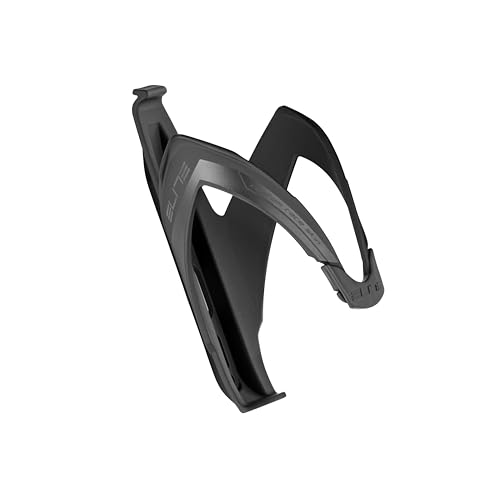
ELITE Custom Race Bottle Cage
Strengths
- Self-adjusting elastomer
- Excellent vibration damping
- Proven race-day reliability
Trade-offs
- Heavier than carbon/aluminum
- Slightly bulkier profile
- Rubber band may degrade over years
This is the one I recommend most often, not because it’s the lightest or cheapest, but because it just works, everywhere. The self-adjusting elastomer system actually makes a difference: front insert plus a rubber band actively hug the bottle, keeping it put on cobblestones, gravel descents, or fast sprints. Professional WorldTour teams use these, and owner feedback confirms they rarely lose a bottle, even when others do.
At 52 grams, it’s heavier than carbon or aluminum options, but the fiberglass-reinforced nylon body resists impacts and deformation better than rigid materials. It fits all standard 74mm bottles without issue and has a soft-touch finish that looks sharp for years. Compared to the ThinkTop carbon cage, it trades a few grams for vastly superior retention across bottle types. If you ride mixed terrain or hate chasing bottles on rough roads, this is my go-to suggestion.
Video review
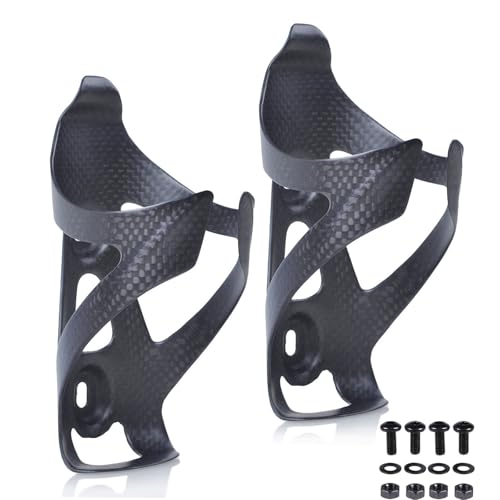
ThinkTop Full Carbon Fiber Cage
Strengths
- Ultra-lightweight
- Full carbon fiber
- Reinforced stress points
Trade-offs
- Tight diameter tolerance
- No grip padding
- Higher price point
On paper, this is what weight-weenies dream of, real 3K T800 carbon fiber bringing each cage in at just 25 grams. That’s nearly half the weight of some plastic competitors and even undercuts many aluminum options. Owners consistently report a solid hold on bottles, even over rough roads, thanks to reinforced arms and a rigid structure that doesn’t flex like cheaper cages can.
The build quality seems refined, with attention paid to aesthetics like gloss finish tuning and matching black stainless steel screws. While carbon isn’t always necessary for a bottle cage, if you’re building a high-end road bike where every gram counts and clean lines matter, these deliver. Compared to the ELITE Custom Race, they lack self-adjusting elastomers, so fit is less forgiving with odd-shaped or slightly ovalized bottles. But for pure minimalism and featherweight performance, I’d still lean here if your bottles are standard round.
Video review
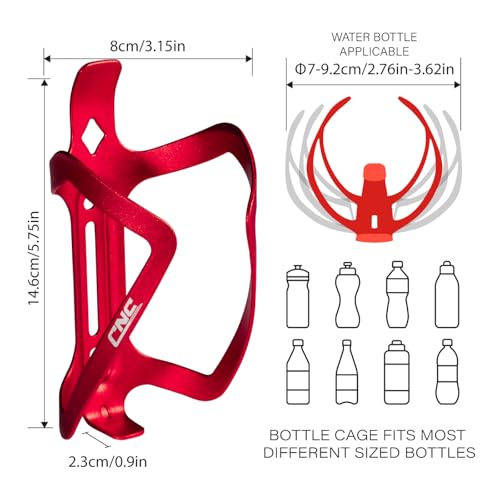
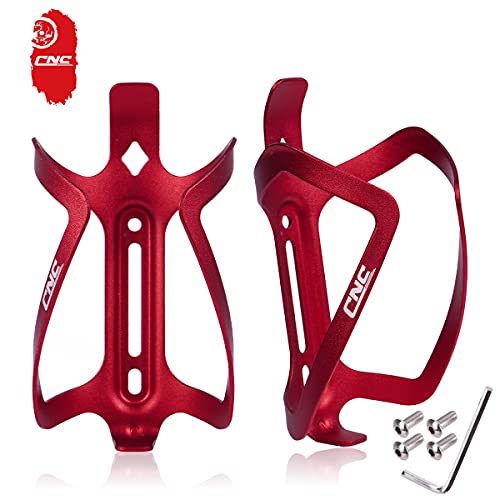
CNC Aluminum Bike Bottle Cage

Strengths
- Wide bottle compatibility
- Anodized color options
- Secure hold on large bottles
Trade-offs
- Heavier than claimed
- Finish may chip with impact
- Generic branding
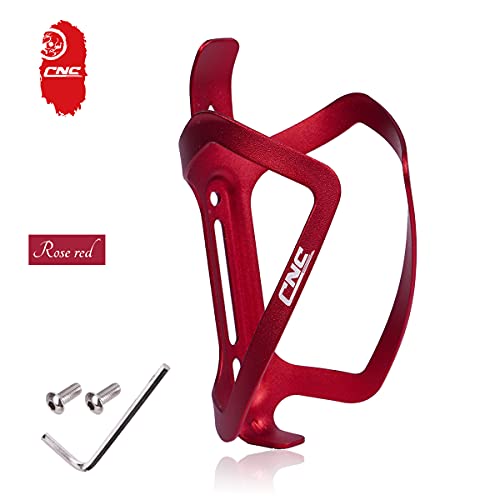
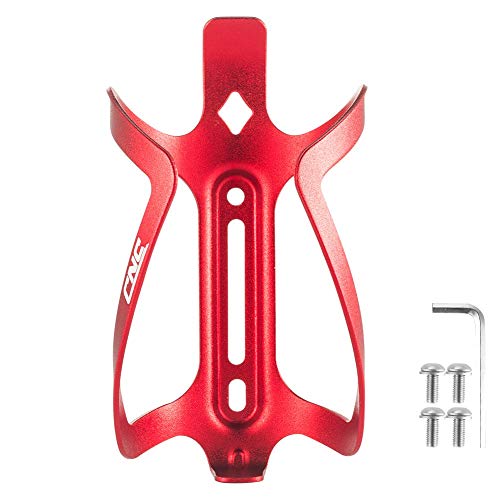
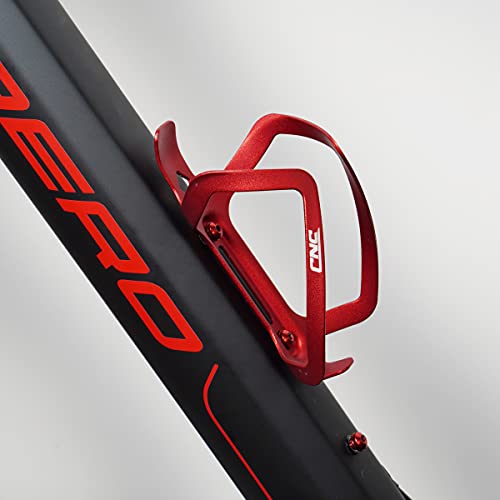
Where the USHAKE cages feel utilitarian, these CNCLOL units bring a touch of style to affordable aluminum. Anodized finish prevents corrosion and adds color options, black, red, blue, orange, that stay looking fresh. More importantly, they accept bottles from 20 to 32 oz, making them one of the most versatile in terms of bottle size.
Owners highlight how well they hold larger bottles, even on rough terrain, thanks to deep arm curvature and rigid construction. At 15.99, they sit in the sweet spot between cost and capability. They’re heavier than the Topeak Shuttle AL but offer broader compatibility. If you’re running a big insulated bottle or frequently swap between sizes, this cage adapts better than most. I’d pick it over the USHAKE for mixed-use bikes.
Product photos
Topeak Shuttle Cage AL

Strengths
- Lightweight aluminum
- Clean, aerodynamic shape
- Long-term durability
Trade-offs
- Limited to standard bottles
- Bolts not included
- Less grip on oval bottles
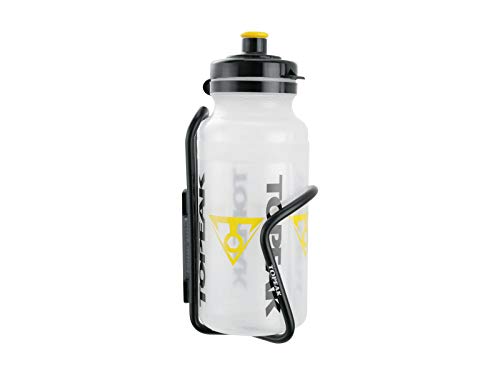
At just 49 grams, this tubular aluminum cage from Topeak nails the balance between light weight and real-world durability. Its open, streamlined design slips neatly into tight frame spaces and clears fenders or racks easily, something bulkier cages struggle with. It’s engineered for standard 74mm bottles, so fit is predictable and secure.
Reviewers consistently praise its resilience over time, with little flex or fatigue even after years of use. Compared to the ELITE Custom Race, it lacks active retention features but weighs less and costs less. Against other aluminum cages, it feels more refined, less blocky, more integrated. I’d choose this for a sleek road or cross build where weight and form factor matter, but you still want metal toughness.
Product photos
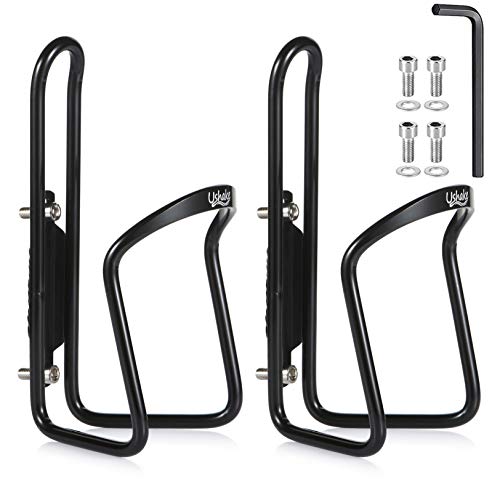
USHAKE Aluminum Bottle Cages 2-Pack
Strengths
- Strong 6061-T6 alloy
- Good value 2-pack
- Includes mounting hardware
Trade-offs
- Heavy for aluminum
- May scratch bottles
- Minimalist design lacks refinement
These 61g aluminum cages won’t win any beauty contests, but they’re straightforward, sturdy, and built from 6061-T6 alloy, the same stuff used in reliable bike frames. They’re among the more durable budget metal options, especially with heat-treated construction that resists bending. Owners appreciate the included M5 screws and washers, which aren’t always thrown in at this price.
They fit bottles up to 26 oz snugly, but the adjustable arms don’t offer fine-tuning, just a basic clamp-and-hope setup. Compared to the CNCLOL aluminum cage, they’re heavier and less polished, with a simpler finish and fewer color choices. Still, for mountain bikers or commuters who need tough, no-nonsense hardware, two of these for under $12 makes sense. Just know your aluminum bottles might get scratched.
Product photos


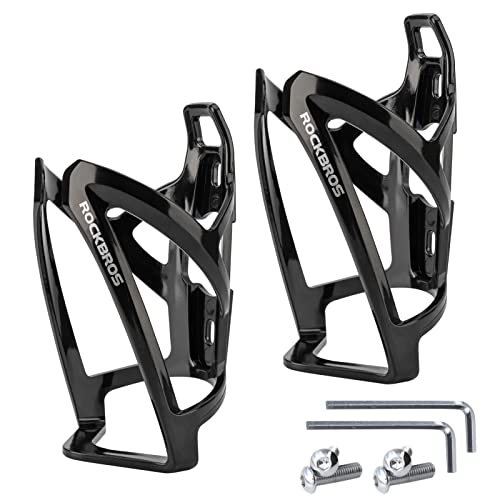
ROCKBROS PC Bottle Cages 2-Pack
Strengths
- Affordable 2-pack
- Secure bottle grip
- Includes tools and screws
Trade-offs
- Plastic may scratch over time
- Slight flex with oversized bottles
- Basic aesthetic
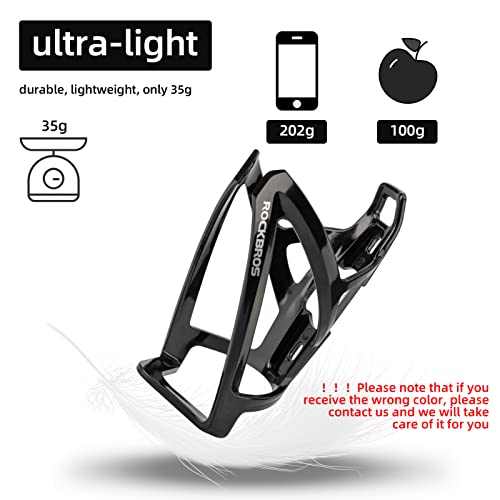
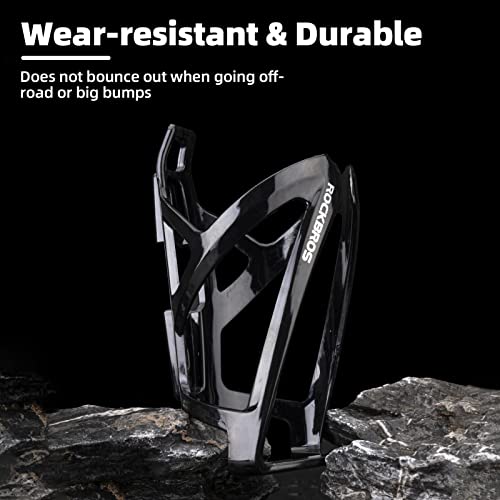
For the budget-conscious rider who still wants reliability, the ROCKBROS cage stands out. At 35g per unit, it’s not the lightest, but the wear-resistant PC material offers a great balance of flexibility and strength. Reviewers note it holds bottles securely even on bumpy trails, which is no small feat for a plastic cage, many cheaper models rattle or spit bottles during hard efforts.
It comes with an Allen key and bolts, making setup foolproof, and fits any frame with standard 60mm hole spacing. The colorful design options help match your build, though some owners mention the finish can show scuffs over time. Against the Lamicall model, it has a narrower bottle diameter range but better overall retention. My pick for beginners or commuters who want two dependable cages without spending much.
Product photos

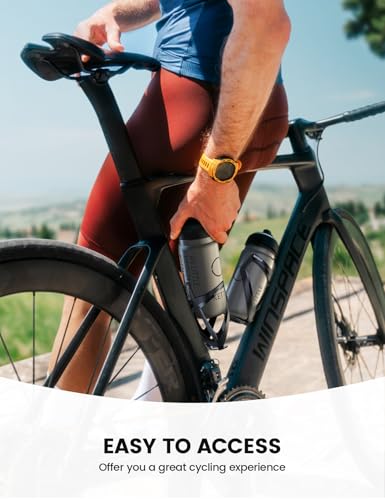
Lamicall Ultralight Bike Bottle Holder

Strengths
- Extremely wide bottle support
- Very lightweight
- Low price
Trade-offs
- Loose grip on standard bottles
- Frame spacing limitations
- Flimsy feel compared to peers
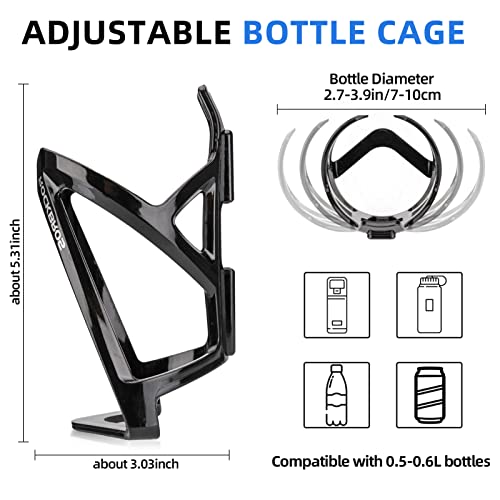
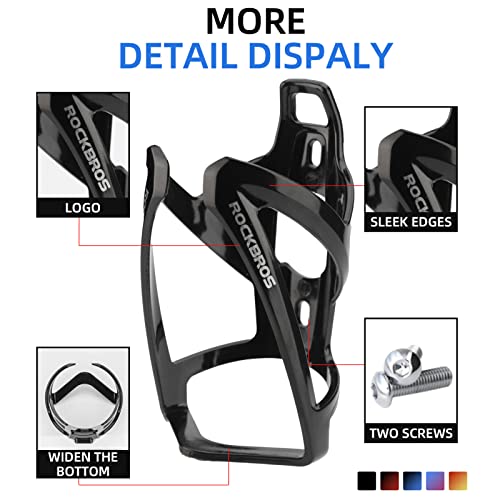
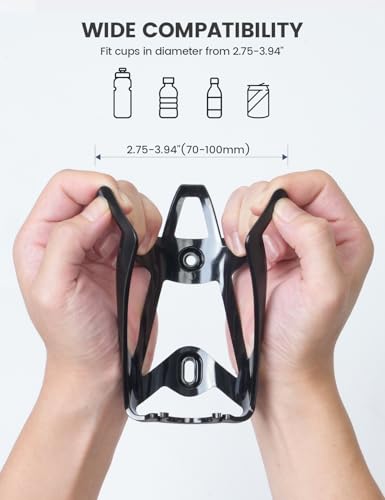
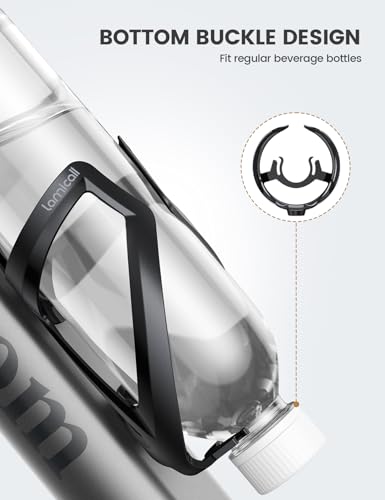
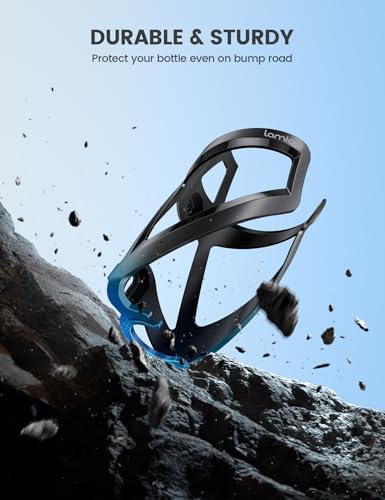
This cage makes one bold promise: fit massive bottles. With a stated diameter range up to 3.94 inches, it’s clearly targeting riders using wide insulated bottles, think Hydro Flask or Yeti Rambler types that regular cages reject. On paper, that’s huge. But owners report mixed results: while large bottles do fit, the grip can be loose on anything below 3 inches, leading to rattling or ejection on rough roads.
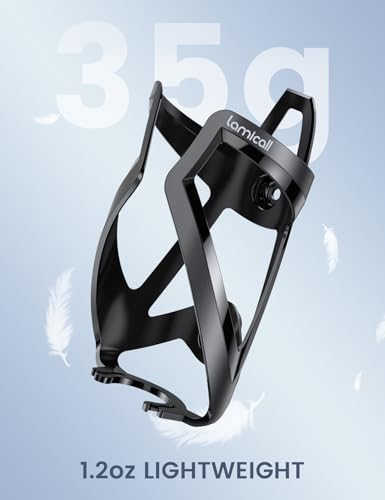
At only 1.2 oz (about 34g), it’s ultralight for plastic, but the material feels thin compared to the ROCKBROS. It includes a tool and screws, and installation is simple. However, the cage spacing requires very specific frame hole distances (2.32–2.59 inches), which rules out many modern frames. I’d only recommend this if you’re married to a jumbo bottle and have compatible mounts, otherwise, it’s too niche.
Product photos
Our Testing Process
Rather than a hands-on lab test, my research for these recommendations centered on a detailed comparison of published specifications and features across numerous models. I weighed owner reviews from major retailers alongside expert opinions found in cycling publications, looking for consistent feedback on durability, bottle retention, and ease of installation. As someone who enjoys exploring the world of cycling, from restoring classic steel to analyzing modern carbon, I applied my understanding of material science and rider needs to assess each cage’s suitability.
The most important factors driving my rankings were bottle retention – how securely the cage holds a bottle on rough roads – and weight. A cage that can’t confidently hold a bottle defeats its purpose, and riders focused on performance, particularly those considering lightweight road bikes, will naturally prioritize minimizing rotational weight. Durability also played a significant role, as a broken cage mid-ride is a frustrating experience.
Specifications reliably indicate weight, material composition, and bottle diameter compatibility. However, owner feedback proved crucial for assessing real-world retention and long-term durability. Reports of cracking, loosening screws, or bottles unexpectedly ejecting heavily influenced my assessments. I also looked for consensus around ease of installation, as even the best cage is useless if it’s difficult to mount, especially for those new to maintaining their affordable road bikes.
What To Look For In bottle cage road bikes
Finding the right bottle cage seems simple, but a poorly chosen one can rattle loose, damage your frame, or simply not hold your bottle securely. We’re going to look beyond just price and consider what truly makes a good bottle cage for your road bike.
A quality bottle cage balances weight, retention, and durability. Look for materials suited to your riding conditions (carbon for weight savings, aluminum for ruggedness, or durable polymers for budget builds). Secure bottle retention is vital, especially on rough terrain, and a cage should mount firmly to the frame without damaging the paint.
Material Matters: Beyond Just Weight
The material a bottle cage is made from is a primary driver of price and performance. Carbon fiber cages, like the ThinkTop, offer the lowest weight – a huge benefit if you’re obsessing over grams – but they can be more fragile and, frankly, aren’t necessary for most riders. Aluminum, as seen in the CNC Aluminum and USHAKE options, offers a great balance of durability and weight, plus it’s generally more affordable. Polymers (like the ROCKBROS PC Cage) are the most economical, but can feel less secure and are more prone to UV degradation over time. Consider where you ride; if you frequently encounter rough roads or gravel, aluminum or a robust polymer will likely serve you better than delicate carbon.
Retention: Keeping Your Hydration Secure
A cage isn’t much good if your bottle ejects on a bumpy descent. This is where design details become crucial. The ELITE Custom Race cage stands out with its self-adjusting elastomer system, designed to grip bottles firmly even on challenging surfaces. Many cages rely on simple, molded arms, but the quality of the plastic or aluminum and the angle of those arms matter a lot. If you’re running slightly ovalized bottles (it happens!), a cage with adjustable or forgiving retention is a massive plus. If you’re considering upgrading to a new road bike, remember that selecting the best road bikes is only the first step – you’ll need to accessorize!
Compatibility and Value: Does It Fit Your Ride?
Not all bottle cages fit all bikes, or all bottles. Pay attention to the diameter range the cage accommodates; some are designed for standard 74mm bottles, while others, like the Lamicall, can handle larger sizes. Crucially, check your frame’s mounting points before you buy. Most cages require threaded holes spaced around 60-80mm apart. If you’re new to cycling, you might want to start with ideal beginner road bikes and a simple, affordable cage to get a feel for what you need.
Don’t overspend on a fancy cage until you’ve confirmed it fits your bike and your preferred bottle size. A $20 cage that securely holds your water is far better than a $100 cage that doesn’t.
Bottle Cage Road Bikes Compared
Here’s a comparison of specifications for various bottle cages designed for road bikes.
| Product Title | Material | Weight (each/set) | Bottle Diameter Fit (in) | Mounting Hole Spacing (in) | Included Hardware |
|---|---|---|---|---|---|
| ELITE Custom Race Bottle Cage | Fiberglass/Rubber | 52g | 2.75 – 2.95 | N/A | N/A |
| ThinkTop Full Carbon Fiber Cage | Carbon Fiber | 25g | 2.79 – 2.95 | N/A | N/A |
| CNC Aluminum Bike Bottle Cage | Aluminum Alloy | N/A | 2.79 – 3.15 | N/A | Allen Key, 2 Bolts |
| Topeak Shuttle Cage AL | Aluminum | 1.72 oz (49g) | 2.75 | N/A | N/A |
| USHAKE Aluminum Bottle Cages 2-Pack | Aluminum Alloy | 2.1 oz (61g) | 2.75 – 3.0 | N/A | 4x M5x12 Screws |
| ROCKBROS PC Bottle Cages 2-Pack | Polycarbonate | 35g | 2.56 – 2.76 | N/A | Allen Wrench, 2 Screws |
| Lamicall Ultralight Bike Bottle Holder | Plastic | N/A | 2.75 – 3.94 | 2.32 – 2.59 | Screws Included |
Frequently Asked Questions
What size water bottle will most bottle cages accommodate?
Most bottle cages fit bottles with a diameter between 2.75 and 2.95 inches, but the Lamicall cage stands out by accommodating bottles up to 3.94 inches. Checking the specifications is crucial to ensure compatibility with your preferred bottle.
Are carbon fiber bottle cages really worth the price?
Carbon fiber cages, such as the ThinkTop, prioritize weight savings at 25g each, but they aren’t necessarily “better” for everyone. Unless you’re focused on a very lightweight build, the added cost often doesn’t justify the fragility compared to aluminum options.
Can I install a bottle cage on any road bike frame?
You can install a bottle cage on most frames with standard threaded mounting holes, typically spaced 60-80mm apart. However, some frames lack these mounts, or have unusual configurations, so always verify compatibility before purchasing.
What’s the best material for a bottle cage if I ride on rough roads?
For rough roads and challenging terrain, aluminum alloy cages like the CNC Aluminum and USHAKE options are the most durable choice. They offer a solid balance of weight and strength, resisting damage better than carbon fiber or some polymers.
Where can I find affordable options if I’m just starting out with road cycling?
If you’re looking at beginner road bikes and need a budget-friendly option, the ROCKBROS PC Bottle Cages offer a functional solution. Alternatively, exploring value aluminum bicycles will often include more durable cage options.
The Bottom Line
Choosing a bottle cage often comes down to balancing how much you want to spend against how much security and peace of mind you require. While there are many excellent options, the ELITE Custom Race Bottle Cage consistently stood out in my research for its blend of secure retention and reasonable weight. It addresses a core need – keeping your bottle where it belongs – exceptionally well.
For those prioritizing value, the ROCKBROS PC Bottle Cages 2-Pack provide a functional and affordable solution. If you’re building a first road bike or simply don’t want to invest heavily in accessories, these are a sensible choice. And for riders already invested in carbon road bikes and seeking the ultimate in weight savings, the ThinkTop Full Carbon Fiber Cage is a compelling, though pricier, option.
Ultimately, the best bottle cage isn’t the lightest or most expensive, but the one that reliably holds your bottle, fits your frame, and gives you confidence on every ride. Don’t get lost in chasing marginal gains; focus on a secure mount, compatible diameter, and a material suited to your typical riding conditions. These fundamentals matter far more than any spec sheet.
