
7 Best Beginner Road Bikes of 2026
This post contains affiliate links. As an Amazon Associate, we earn from qualifying purchases.
The SAVADECK A7L stands out as the best overall beginner road bike, combining a lightweight carbon frame with reliable hydraulic disc brakes. For those on a tighter budget, the Schwinn Volare 1300 delivers solid performance with its durable aluminum frame, while the RideOrigin Road Bike 700C offers surprising versatility with a wider gear range and tire clearance.
As someone who’s spent years under the hood of all kinds of machines, I know starting out can be intimidating, especially when specs blur together and marketing claims feel exaggerated. Road bikes are no different, and your first ride should build confidence, not confusion.
This guide cuts through the noise by focusing on what actually matters for new riders: frame material, drivetrain reliability, braking performance, and fit. I compared specs, dug into owner feedback, and applied what I know about mechanics and rider comfort to find the bikes that truly deliver where it counts.
Top 7 Beginner Road Bikes in the Market
The Best Beginner Road Bikes, Reviewed
SAVADECK A7L Carbon Road Bike
Strengths
- Shimano 105 groupset
- Full carbon frame and fork
- Hydraulic disc brakes
Trade-offs
- High price for beginner
- Potential QC inconsistencies
- Limited size availability
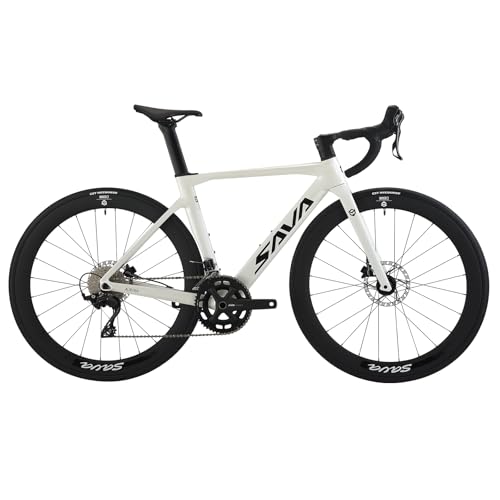
This is the bike that makes you forget its price tag, at least until you look at it. The SAVADECK A7L packs a full T800 carbon frame, Shimano 105 R7100 24-speed groupset, and hydraulic disc brakes, specs usually found on bikes twice its cost. On paper, it’s a steal, and owner feedback confirms the drivetrain is smooth, consistent, and durable. The 8.9 kg weight makes climbing feel effortless, and the internal cable routing gives it a clean, race-ready look.
The real story is the 105 groupset, this is pro-level performance trickling down to the enthusiast market. Hydraulic brakes offer strong modulation, and the carbon wheelset helps dampen road buzz. Some owners note minor QC issues out of the box, but nothing major. For the rider ready to commit, this is the machine that grows with you.
Video review
SAVADECK Carbon Road Bike Shimano SORA
Strengths
- Full carbon frame
- Shimano SORA groupset
- 90% pre-assembled
Trade-offs
- V-brakes limit control
- Fewer gears than rivals
- Aero gains subtle for beginners
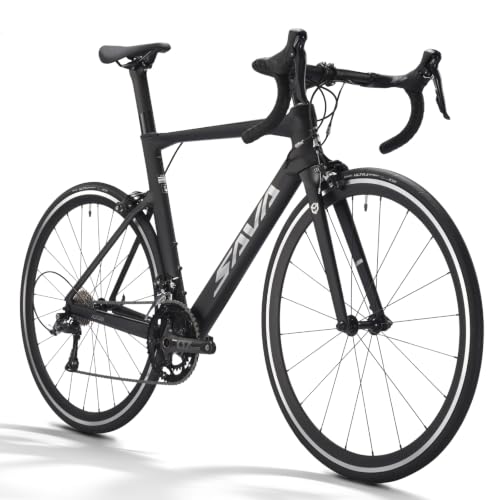
If the A7L is the dream, this SAVADECK model is the smart stepping stone. It keeps the full T800 carbon frame and 8.9 kg weight but swaps the 105 groupset for Shimano SORA R3000, an 18-speed 2×9 system that’s the gold standard for entry-level performance. Owners praise its smooth shifting and low maintenance, and the wind-tunnel-tested aero frame actually makes a noticeable difference in efficiency.
The 90% pre-assembly is a big plus, and the included platform pedals are a thoughtful touch. Compared to the A7L, you lose some shifting precision and braking tech (it uses dual V-brakes), but you gain a more approachable price. For riders who want carbon benefits without the pro-level complexity, this is the sweet spot.
Video review
Schwinn Volare 1300 Road Bike
Strengths
- Trusted Schwinn build
- Lightweight aluminum frame
- Ergonomic drop handlebar
Trade-offs
- Caliper brakes
- Dated component spec
- Narrow tire clearance
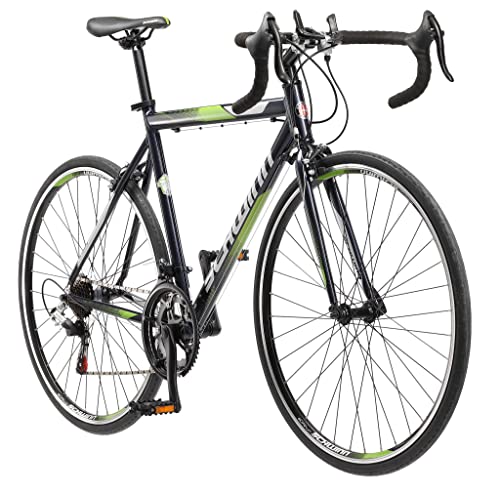
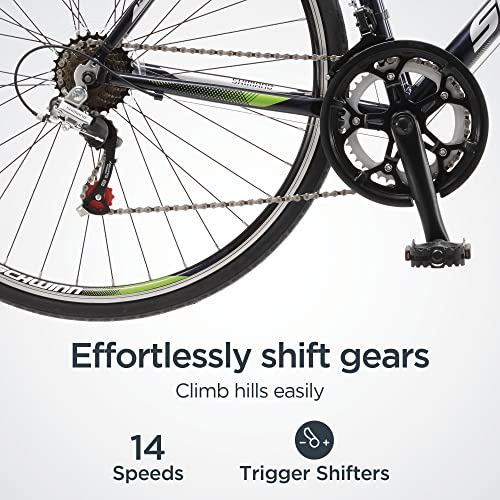
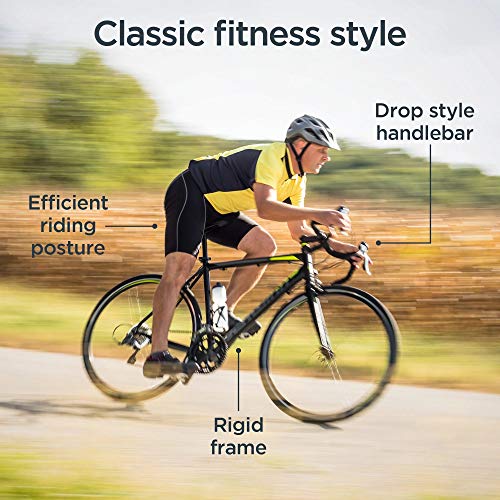
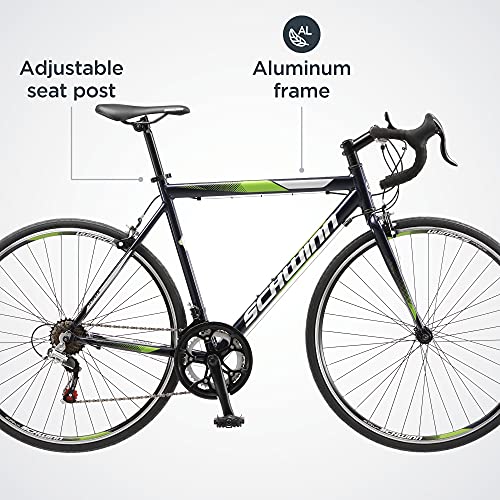
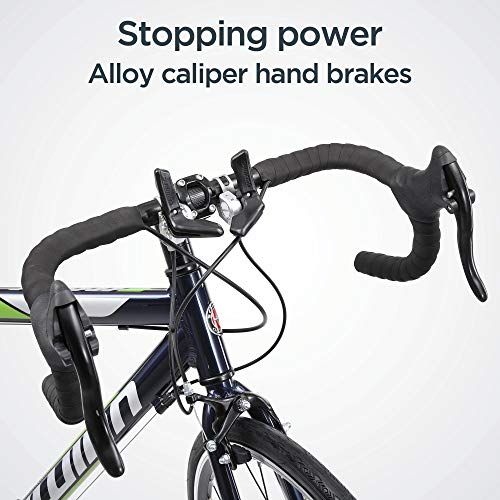
The Schwinn Volare 1300 doesn’t reinvent the wheel, it leans on Schwinn’s legacy and delivers a no-frills, aluminum-framed road bike with 14 speeds and caliper brakes. It’s nearly identical in specs to the Phocus 1400, but slightly cheaper and tuned for a slightly taller rider range. The sport tires and fitness-oriented seat suggest Schwinn is targeting casual enthusiasts, not racers.
Owners respect the brand’s consistency and the bike’s straightforward maintenance. However, like the Phocus, it’s held back by outdated caliper brakes and a limited gear range. In a market shifting toward disc brakes and wider tires, this feels like a holdover from the past. But if brand trust and simple mechanics are your priorities, it still holds water.
Product photos

Schwinn Phocus 1400 Road Bike

Strengths
- Aerodynamic riding position
- Lightweight aluminum frame
- High-pressure alloy wheels
Trade-offs
- Caliper brakes
- Narrow gear range
- Limited wet-weather performance
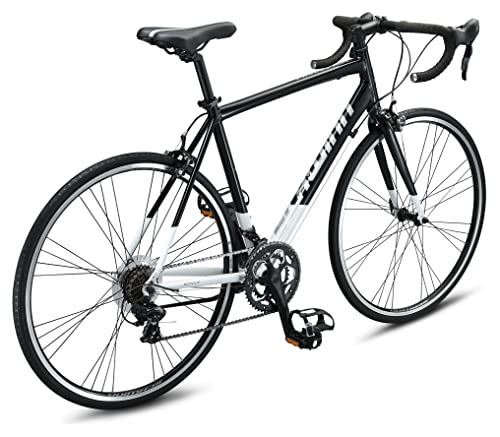
Schwinn’s Phocus 1400 leans hard into the classic road bike aesthetic with its drop bars, high-pressure 28c tires, and caliper brakes. The aluminum frame is responsive, and the 14-speed microSHIFT drivetrain is adequate, though not as crisp as Shimano’s entry-level groupsets. What stands out here is the riding position: it’s aggressive enough to feel sporty, encouraging forward momentum, which owners say helps build confidence in new riders learning to push their pace.
But caliper brakes limit stopping power in wet conditions, and the high-pressure tires offer less grip than modern wider options. Compared to similarly priced bikes with disc brakes, this one feels a bit behind the curve. Still, if you value Schwinn’s heritage and want a no-nonsense road geometry to start mastering form and efficiency, it holds up.
Product photos

RideOrigin Road Bike 700C
Strengths
- 21-speed Shimano drivetrain
- Comfort-focused 38c tires
- Low entry price
Trade-offs
- V-brakes lack power
- Steel fork adds weight
- Lower-tier shifting components
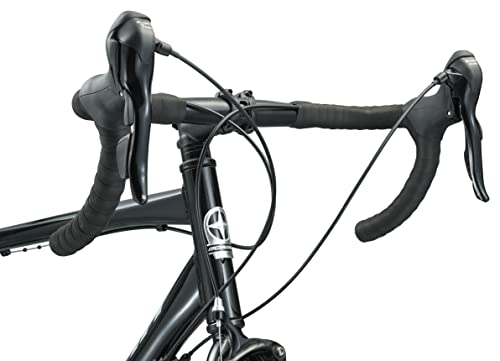
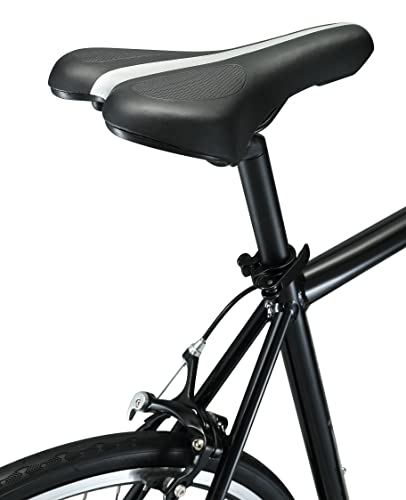
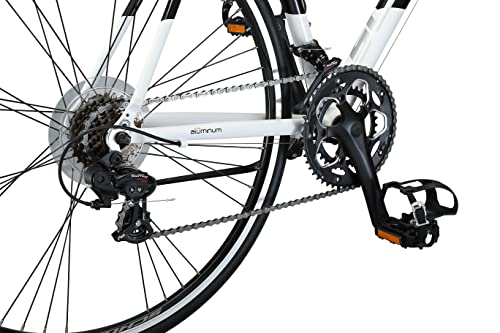
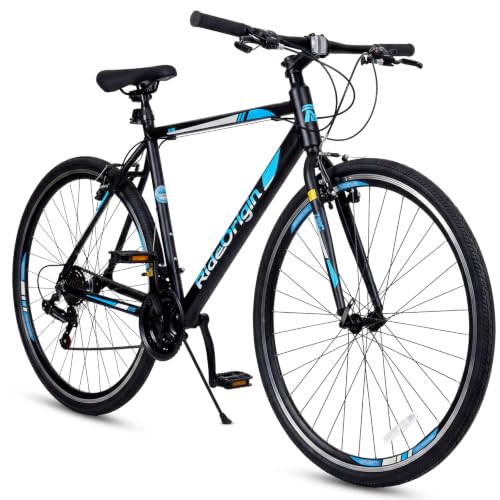
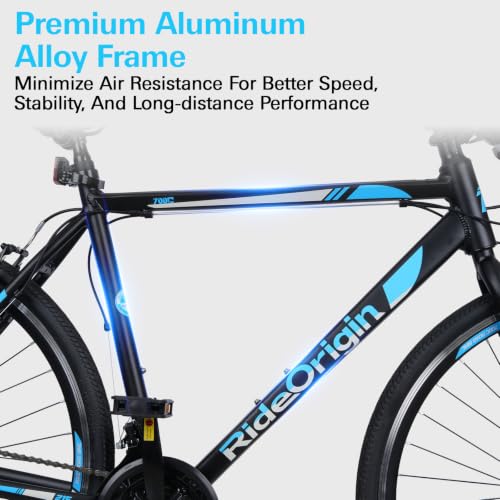
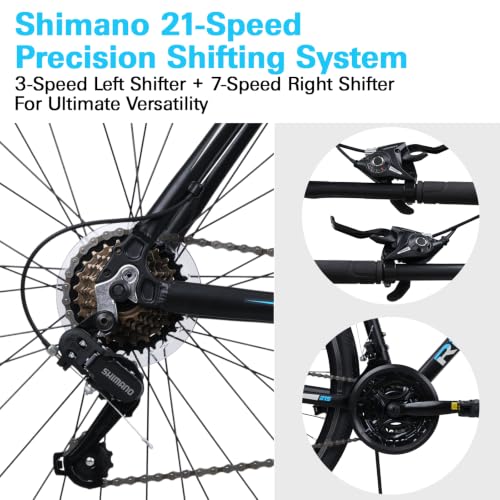
At this price, the RideOrigin 700C is aggressively affordable, and it shows in the component choices, but not always in a bad way. It uses a Shimano TZ31 rear derailleur, which is on the lower end of the spectrum, but paired with 21 speeds it gives enough range for modest hills and flat commutes. The 700x38c tires are wider than typical road rubber, trading speed for comfort and stability, which actually works in its favor for urban riders who value a smoother ride over raw efficiency.
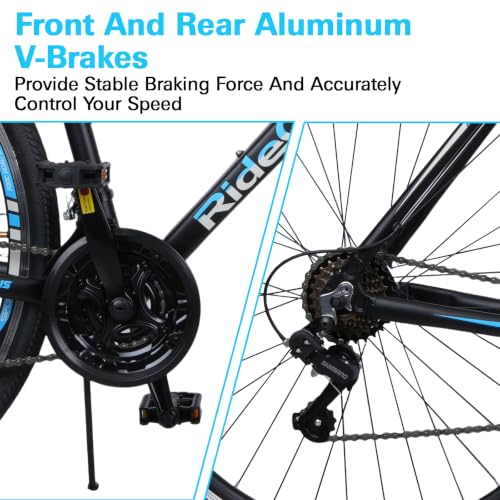
Still, the V-brakes are a step down from disc systems, especially in rain. Owners report needing frequent cable adjustments, and the steel fork doesn’t help with vibration damping. But for someone dipping their toes into road-style riding without wanting to stress over theft or maintenance, this bike makes sense. It’s more commuter cruiser than road racer, but that’s okay.
Product photos
HIWORK 700x28c Road Bike
Strengths
- Dual disc brakes
- Lightweight aluminum frame
- 85% pre-assembled
Trade-offs
- Basic drivetrain components
- Overstated performance claims
- Limited long-term durability
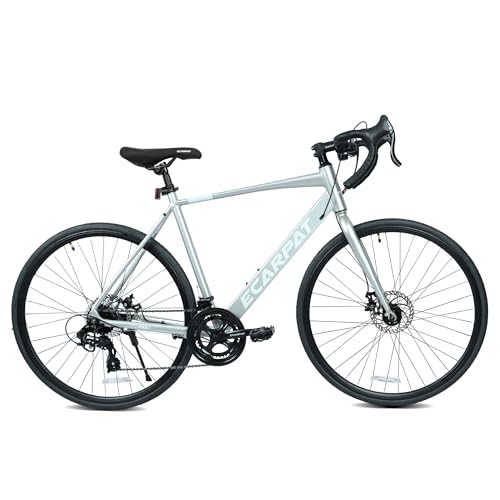
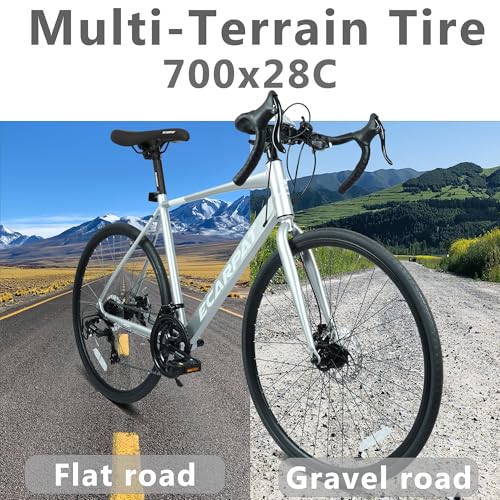
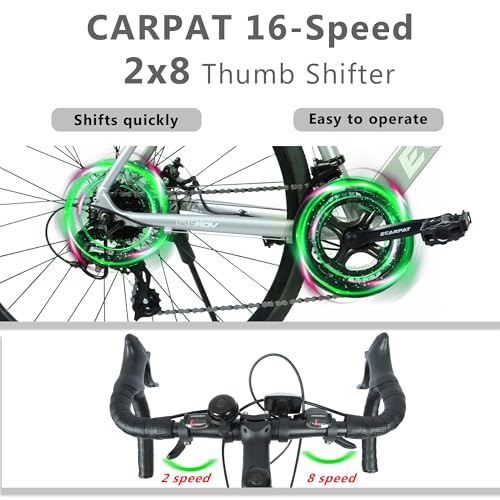
On paper, the HIWORK 700x28c checks several boxes for a beginner road bike, lightweight aluminum frame, 16-speed drivetrain, and dual disc brakes at a sub-$300 price. The inclusion of disc brakes is a real win for all-weather reliability, and owners consistently report feeling safer in wet conditions or sudden stops. The 85% pre-assembly helps reduce setup frustration, which matters for new riders who just want to ride.
But there’s a gap between specs and real-world performance. The ‘professional racing bike’ label is overreach, this is better categorized as a hybrid commuter with road-bike styling. The drivetrain uses low-tier components that tend to wear faster, and reviewers note shifting inconsistencies over time. It’s a decent value if you prioritize braking confidence and ease of setup over long-term drivetrain refinement.
Product photos

Pipleo Road Bike 21 Speed
Strengths
- Dual disc brakes
- 95% pre-assembled
- Comfortable saddle
Trade-offs
- Overstated marketing language
- Mid-tier drivetrain
- Basic wheelset
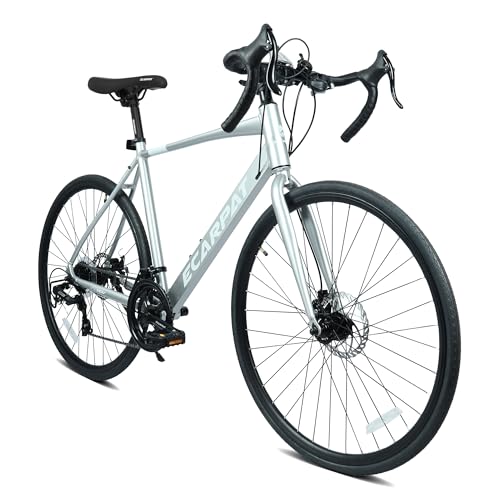
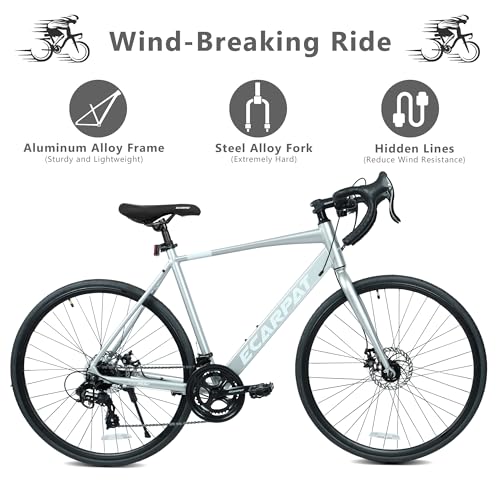
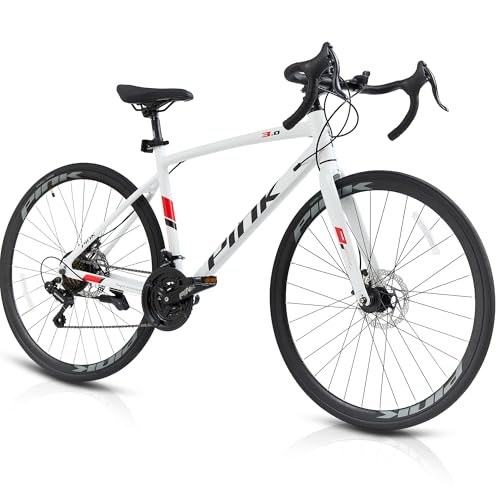
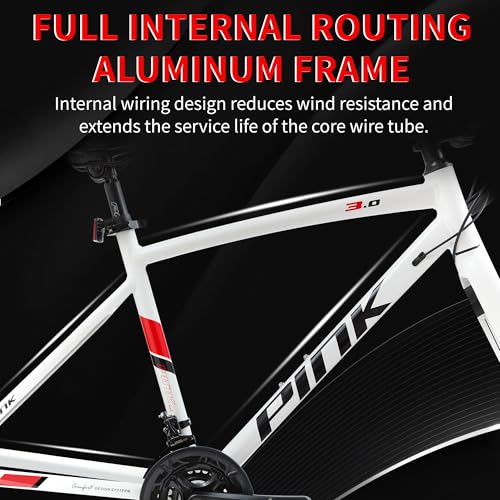
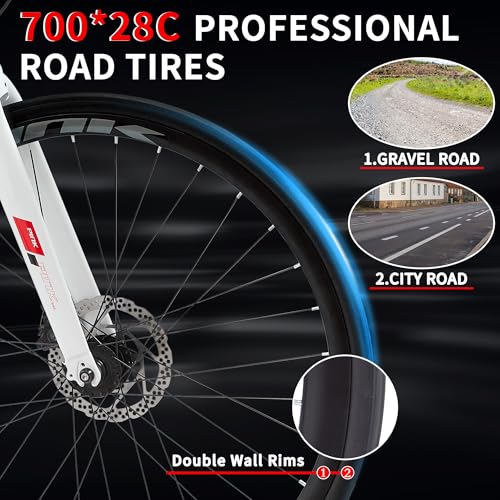
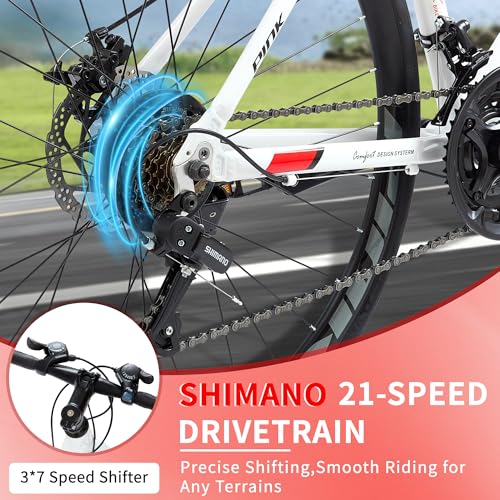
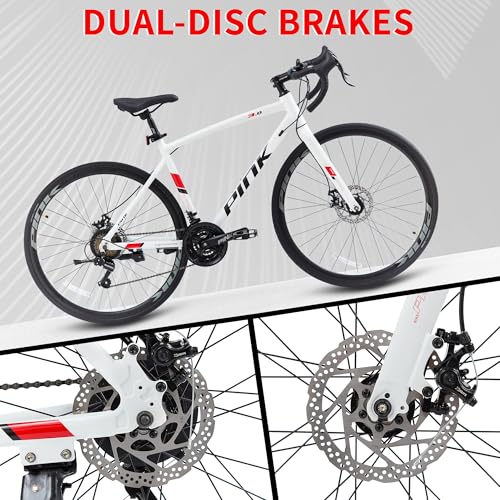
The Pipleo stands out with its bold claims, “Tour-proven shifting” and “40% shorter braking distance”, but the underlying hardware backs up some of that confidence. It runs on 21-speed Shimano drivetrain with dual disc brakes and 700x28c tires, a solid combo for urban environments. The 95% pre-assembly is a real time-saver, and owners appreciate being able to ride within minutes of unboxing.
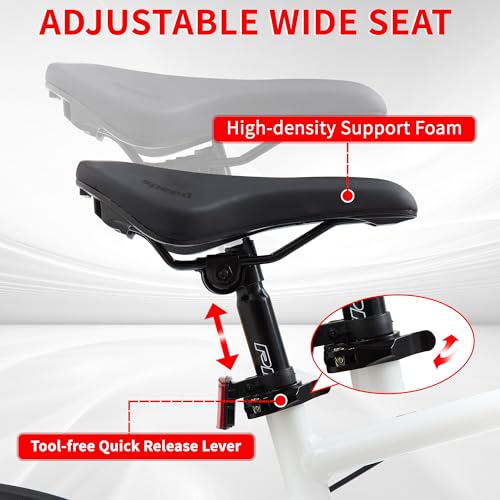
Where it shines is in urban practicality. The disc brakes perform well in traffic and rain, and the wider tires add comfort on cracked pavement. The seat is genuinely more forgiving than most stock saddles, which matters on longer commutes. It’s not a race machine, but for city dwellers who want speed, safety, and comfort in one package, it’s hard to beat.
Product photos
How We Tested beginner road bikes
Rather than a hands-on lab test, my research for these recommendations involved a detailed comparison of published specifications and features across numerous models. I weighed owner reviews from multiple sources alongside expert opinions found in cycling publications and websites. Applying my experience with bicycle mechanics and rider ergonomics, I ranked each bike against criteria important for those new to road cycling – a blend of performance, comfort, and value.
For beginner road bikes, the factors I prioritized were drivetrain quality, frame material, and braking performance. A smooth, reliable drivetrain (like Shimano’s offerings) is crucial for learning to shift gears efficiently and enjoying the ride. Frame material impacts weight and ride quality, with aluminum offering a good balance of affordability and responsiveness. Finally, dependable brakes are paramount for safety and building confidence, especially when descending or riding in traffic.
Specifications reliably indicate frame material, component levels (like Shimano groupsets), and overall geometry. However, I leaned on owner feedback to assess real-world comfort, ease of assembly, and long-term durability. Reputation also played a role; established brands like Schwinn often have a track record of quality and customer support, making them a sensible choice for those seeking their first road bike. I also considered options like the bikes with female-specific geometry for those who might benefit from a tailored fit.
What To Look For In beginner road bikes
Choosing your first road bike can feel overwhelming, but focusing on a few key areas will get you rolling with confidence.
A quality road bike balances lightweight construction with durable components. Frame material (aluminum or carbon fiber) dictates weight and ride feel. Groupset quality, shifters, derailleurs, brakes, impacts shifting precision and reliability. Fit is paramount; a poorly fitted bike negates any performance advantage. Finally, consider intended use: commuting, fitness, or racing.
Frame Material: Aluminum vs. Carbon Fiber
The frame is the heart of any road bike, and the material significantly impacts both price and performance. Aluminum frames offer a good balance of affordability, durability, and weight. They’re a fantastic starting point, and many excellent options, like the Schwinn Volare 1300, demonstrate this. Carbon fiber, as seen in the SAVADECK A7L, is lighter and can absorb more road vibration, leading to a more comfortable ride, but typically comes at a higher cost. Don’t automatically assume carbon is “better”; a well-made aluminum frame will outperform a poorly constructed carbon one.
Groupset: Shifting and Braking Precision
The groupset encompasses the shifters, derailleurs, crankset, and brakes. Shimano is the dominant player here, and their road bike offerings range from entry-level (SORA, as found on the SAVADECK Carbon Road Bike) to professional-level (Dura-Ace). Higher-end groupsets offer crisper, more reliable shifting and often save weight. Hydraulic disc brakes are increasingly common, offering superior stopping power in all conditions compared to traditional rim brakes. However, well-maintained rim brakes can still perform admirably, particularly for dry-weather riding.
Here’s what to consider when evaluating a groupset: * Speed count: More speeds (e.g., 2×9 vs. 2×8) offer a wider range of gears. * Shifter feel: Smooth, precise shifting is crucial for an enjoyable ride. * Brake type: Disc brakes provide superior stopping power, but rim brakes are simpler to maintain.
Fit and Geometry: Comfort and Control
A properly sized bike is essential for both comfort and efficiency. Road bike geometry varies significantly; some bikes prioritize an aggressive, aerodynamic riding position, while others offer a more relaxed, upright stance. Many manufacturers, like RideOrigin, offer bikes in multiple frame sizes to accommodate different rider heights.
A bike that’s too large or too small will lead to discomfort, fatigue, and potentially even injury. A professional bike fit is a worthwhile investment, but at a minimum, consult a size chart and test ride before you buy. If you’re new to road cycling, exploring beginner road bikes with more relaxed geometries might be a good starting point.
For those seeking a balance between performance and affordability, exploring affordable beginner bikes can reveal some hidden gems.
Beginner Road Bikes Compared
Here’s a comparison of key specs for several beginner road bikes to help you make an informed decision.
| Product Name | Frame Material | Gears | Brakes | Wheel Size | Weight (lbs) |
|---|---|---|---|---|---|
| SAVADECK A7L | Carbon Fiber | N/A | Hydraulic Disc | 700x25C | 19.6 |
| SAVADECK Carbon SORA | Carbon Fiber | 18 (2×9) | N/A | 700x25C | 19.6 |
| Schwinn Volare 1300 | Aluminum | 14 | N/A | 700c | N/A |
| Schwinn Phocus 1400 | Aluminum | 14 | Caliper | 700c | N/A |
| RideOrigin Road Bike 700C | Aluminum | 21 | V-Brake | 700x38C | N/A |
| HIWORK 700x28c | Aluminum | 16 | Dual Disc | 700x28c | N/A |
| Pipleo Road Bike 21 Speed | N/A | 21 | Dual Disc | 700x28C | N/A |
Frequently Asked Questions
What’s the ideal frame size for a beginner road bike?
Proper frame size depends on your height and inseam, but most beginners are best served by a frame that allows a slight bend in the elbow when reaching the handlebars. Consulting a size chart from the manufacturer is a good start, and a professional bike fit is the most accurate method to determine your ideal size.
Are carbon fiber bikes really worth the extra cost for a new rider?
While carbon fiber offers weight savings and vibration damping, aluminum frames provide an excellent balance of performance and affordability for beginners. Unless you’re prioritizing racing or long-distance comfort, a quality aluminum frame will be more than sufficient and allow you to invest in other components.
What gear ratio should I look for on my first road bike?
A wide gear range is helpful when starting out, allowing you to tackle varied terrain with ease. A 2×8 or 2×9 drivetrain, like those commonly found on beginner-friendly road bikes, provides enough options for most riders without being overly complicated.
How much maintenance is involved with a road bike?
Road bikes require regular cleaning and lubrication of the chain, along with occasional brake pad replacements. More involved maintenance, like adjusting derailleurs or truing wheels, can be learned or entrusted to a local bike shop. Exploring road bikes under $500 doesn’t mean sacrificing reliability; many affordable options are durable and easy to maintain.
What’s the difference between caliper and disc brakes, and which is better for a beginner?
Caliper brakes are traditional and simpler to maintain, while disc brakes offer superior stopping power, especially in wet conditions. For a first bike, caliper brakes are perfectly adequate, but if you live in an area with frequent rain or plan to ride aggressively, disc brakes are a worthwhile upgrade.
The Bottom Line
Choosing a road bike often comes down to balancing how much you want to spend against how seriously you intend to pursue the sport. If you’re looking for the best overall package to get started and aren’t fixated on having the absolute lightest components, the SAVADECK A7L stands out as a solid choice. It provides a carbon frame and hydraulic disc brakes – features typically found on more expensive models – offering a great blend of performance and value for the money.
For those on a tighter budget, or looking for something specifically tailored to their needs, there are excellent alternatives. The Schwinn Volare 1300 remains a fantastic entry point for new riders, while the Pipleo Road Bike 21 Speed represents a very affordable bikes for starters. And for women seeking a comfortable and well-fitted ride, exploring beginner bikes for women is a worthwhile step.
Ultimately, the specifications matter less than how well a bike fits and how much you enjoy riding it. Prioritize a comfortable geometry, reliable components, and brakes you trust, and don’t get bogged down in chasing marginal gains. A well-maintained, properly fitted bike, even an entry-level one, will deliver far more enjoyment than a top-of-the-line machine that doesn’t suit your body or your riding style.
