
7 Best Booster Cables for Car 2026
This post contains affiliate links. As an Amazon Associate, we earn from qualifying purchases.
The best booster cables for car emergencies are the NOONE 1 Gauge for raw power and reach, the EXTRESPO 4-Gauge as a smart budget pick with solid extras, and the NOONE Smart-7 if you want built-in safety smarts. These stand out after comparing specs, owner feedback, and real-world usability across the category.
Most people don’t think about booster cables until they’re stranded with a dead battery and a cold engine. Then, the last thing you want is flimsy, stiff, or unsafe cables that fail when you need them most. At TheAutoZenith, I’ve seen how the wrong gear turns a simple jump into a dangerous hassle.
This guide cuts through the noise by focusing on what actually matters: gauge, length, flexibility in winter, and real safety features. These picks are based on a deep look at specifications, verified owner experiences, and the kind of reliability you’d demand from any tool under the hood.
Top 7 Booster Cables For Car in the Market
The Best Booster Cables For Car, Reviewed
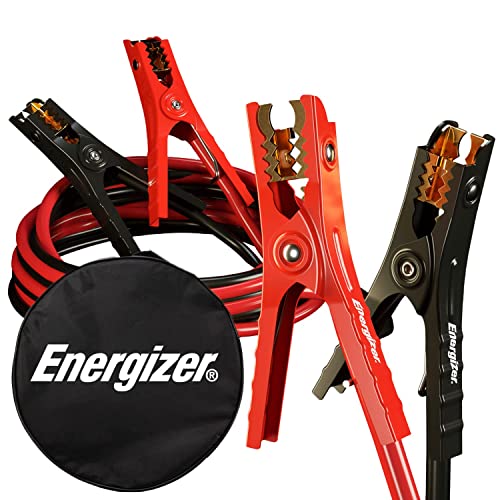
Energizer 6 Gauge 16 Ft Jumper Cables
Strengths
- Good brand reputation
- Tangle-free storage
- Affordable reliability
Trade-offs
- 16 ft limits positioning
- 6 gauge not for heavy engines
Energizer’s 6 gauge 16-foot cables are a solid all-rounder, shorter reach, but plenty for most jump scenarios. The brand’s reputation for reliability shows in the thick vinyl coating and consistent conductivity, even in subzero temps. Owners note these stay tangle-free in the bag, and the included carry case is sturdier than most.
While not the most powerful here, they handle standard cars and mid-size SUVs without issue. Compared to the EXTRESPO set, they’re similarly priced but feel a bit more refined in clamp grip and insulation quality. My recommendation? This is the best overall pick for most drivers, reliable, well-made, and easy to store.
Video review
EXTRESPO 4 Gauge 20 Ft Jumper Cables

Strengths
- Affordable
- Tangle-free 20 ft length
- Includes brushes and gloves
Trade-offs
- 4 gauge limits high-draw use
- No voltage indicator
At this price, the EXTRESPO 4 Gauge cables deliver more than expected, especially with the full kit that includes gloves, brushes, and a carry bag. The 4 gauge wire is thinner than 2 or 1 gauge options, so it’s less ideal for large engines, but for gas-powered cars and smaller SUVs, it’s more than adequate. Owners note the serrated clamps hold tight even on corroded terminals, which is a real win in the field.
It’s not the most heavy-duty option here, but for someone who needs a reliable, affordable set that won’t tangle and stores neatly, this is the smarter buy. Compared to pricier kits, it lacks advanced safety tech, but it meets UL standards and handles cold weather without stiffening. If you’re on a budget but don’t want to sacrifice core reliability, this one earns its spot.
Video review
NOONE 1 Gauge 25 Ft Jumper Cables

Strengths
- Quick-connect plug
- 900A capacity
- Permanent install ready
Trade-offs
- Expensive
- Overbuilt for small engines
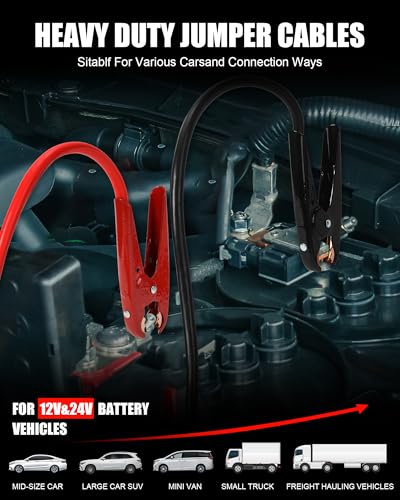
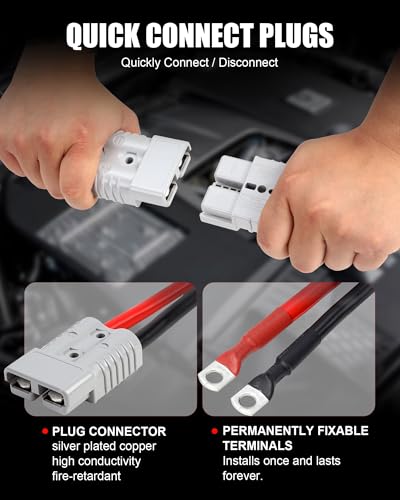
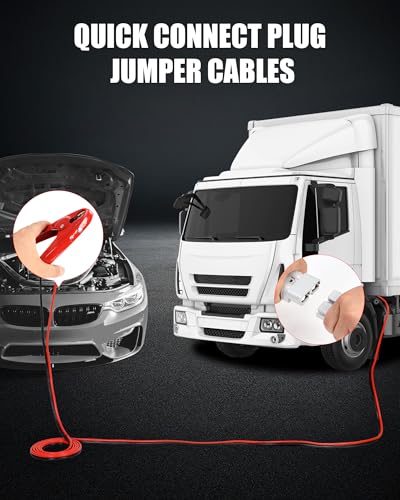
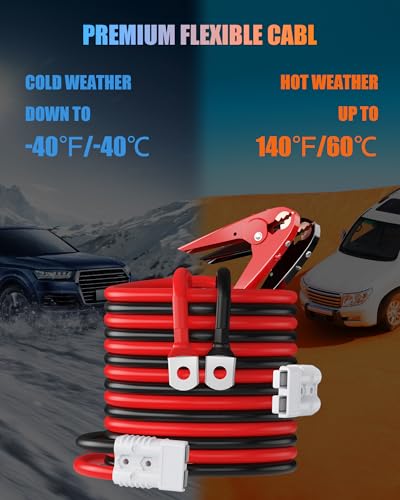
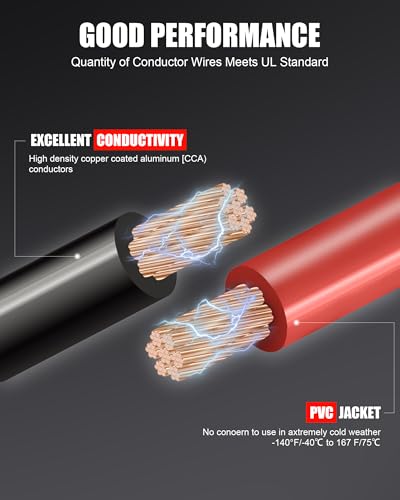
This NOONE set is unique with its 20 + 5 ft modular design and quick-connect plug, perfect for permanent installation on diesel trucks or work vehicles. The 900A surge capacity and 1 gauge CCA core mean it can handle tough starts, and the quick-connect end saves time during emergencies. Owners appreciate not having to fumble with clamps every time.
It’s overkill for most passenger cars, but if you’re running a freight hauler or large diesel SUV, this setup makes sense. The included accessories match other premium kits, and the 3-year service promise adds confidence. Compared to standard 20 ft cables, this is the smarter buy for fleet or commercial use where speed and reliability matter most.
Product photos
NOONE 2 Gauge Smart-7 Jumper Cables

Strengths
- Smart-7 Protector
- Reverse polarity protection
- UL listed clamps
Trade-offs
- Not pure copper core
- No included brushes
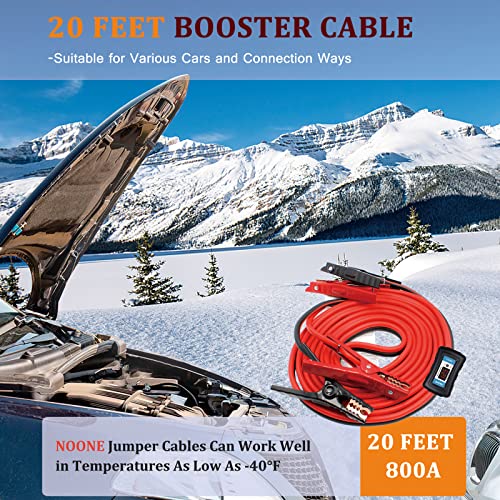
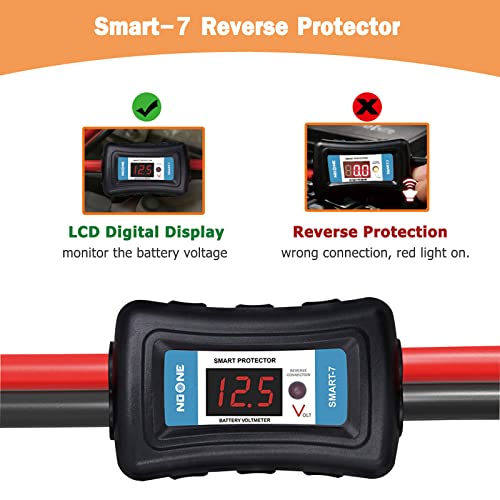
The NOONE 2 Gauge cables stand out for their Smart-7 Protector tech, which includes reverse polarity detection and an LCD voltage display, features you rarely see at this price. That digital feedback loop gives peace of mind, especially for less experienced users who might otherwise misconnect clamps. On paper, the 600A rating is solid, but what owners consistently report is how the UL-listed clamps with rubber insulation add a real layer of safety, reducing spark risk during jumps.
The 20-foot length is practical for most scenarios, and the thick vinyl coating handles cold weather well. While the copper-clad aluminum core isn’t pure copper, it’s typical for this class and performs reliably when connections are clean. I’d pick these over basic sets if you value built-in diagnostics and want fewer guesswork moments during a jump.
Product photos

GOODYEAR 2 Gauge 20 Ft Jumper Cables
Strengths
- 2 gauge thick wire
- Weather-resistant build
- Reliable brand reputation
Trade-offs
- No safety tech
- Basic clamp design
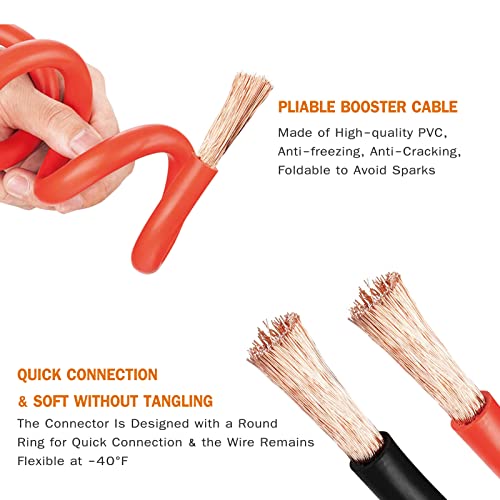
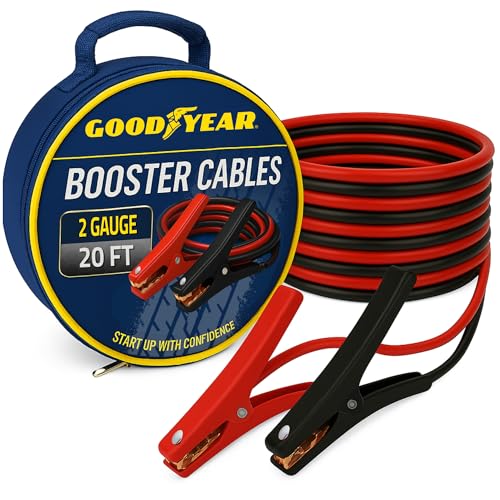
GOODYEAR’s 2 gauge 20-foot cables feel like a no-nonsense workhorse, thick insulation, solid 2 gauge wire, and a clean design that prioritizes function over gimmicks. The PVC coating stays flexible in cold weather, and owners consistently report reliable starts even after years of storage. It doesn’t have digital displays or reverse protection, but it doesn’t need them, this is what you grab when you want proven performance.
Compared to the NOONE Smart-7 model, this lacks tech, but it’s more durable in harsh conditions and simpler to deploy under pressure. The carrying case keeps things tidy, and the universal fit covers most 12V vehicles. If you’re towing or driving in remote areas, this is the kind of set you trust when everything else fails.
Product photos



A ABIGILE 1 Gauge 25 Ft Jumper Cables

Strengths
- 25 ft long
- 1 gauge thick wire
- High-tension clamps
Trade-offs
- Bulky for small cars
- No smart features
At 25 feet and 1 gauge thickness, these A ABIGAIL cables are built for reach and power, ideal when you can’t park vehicles close. The 800A rating and thick copper-clad aluminum core make it a strong contender for trucks, vans, and larger SUVs. Reviewers frequently highlight the non-slip rubber coating on the clamps, which makes handling safer, especially with gloves on.
The 1 gauge wire outperforms thinner 4 or 6 gauge sets in cold starts, and the PVC jacket stays flexible even in deep winter. It’s heavier than most, but that’s the trade-off for durability. Compared to the NOONE 2 gauge set, this one moves more current and reaches farther, my pick if you regularly deal with large or diesel-powered vehicles.
Product photos

WORKKOOL 6 Gauge 16 Ft Jumper Cables
Strengths
- Strong bite clamps
- Tangle-free design
- Compact 16 ft length
Trade-offs
- Shorter reach
- 6 gauge limits power transfer
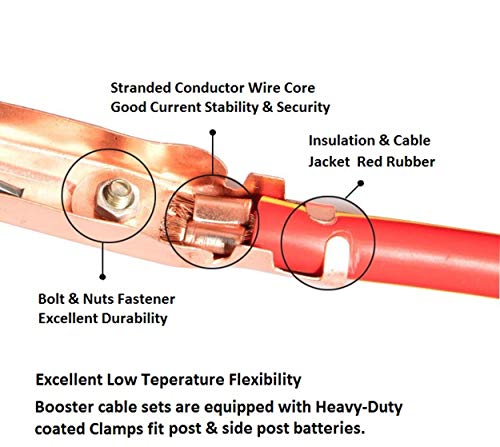
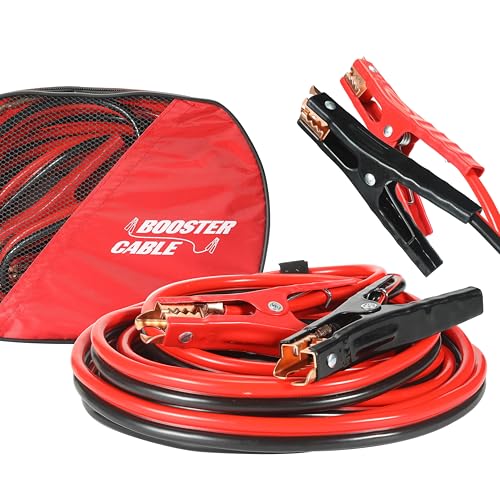
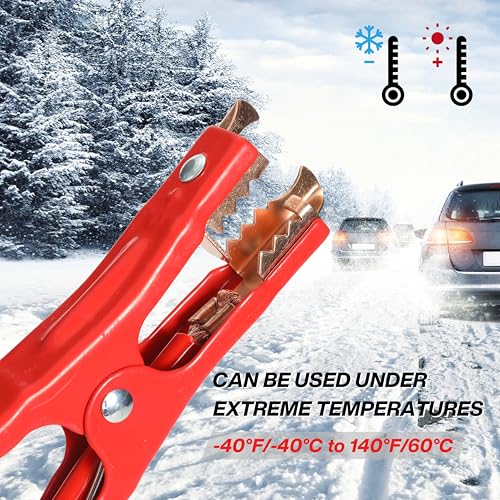
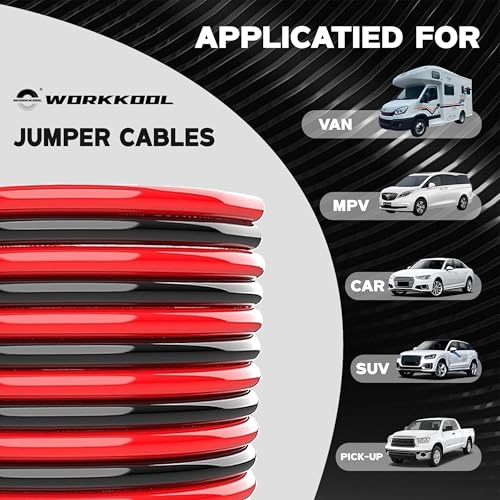
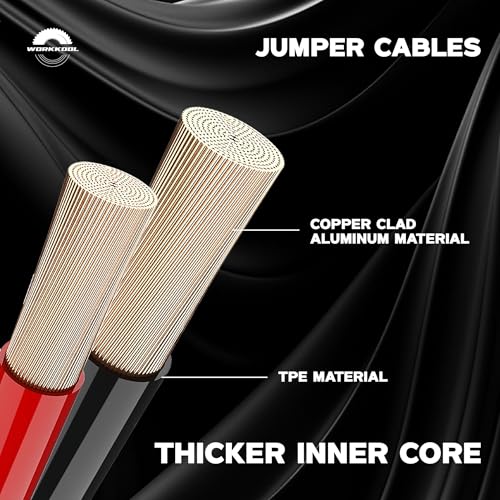
These WORKKOOL 6 Gauge 16-foot cables are a textbook mid-range option, nothing flashy, but well-executed basics. The shorter 16-foot length is fine for side-by-side jumps, but you’ll struggle if vehicles can’t get close. The copper-clad aluminum core and UL 1839 compliance mean it handles extreme temps and delivers solid conductivity for engines up to 3.0L gas.
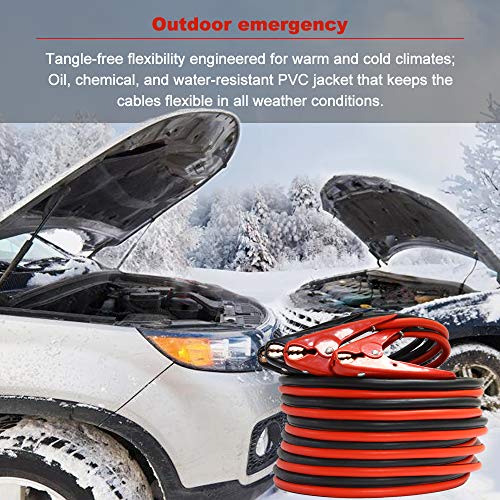
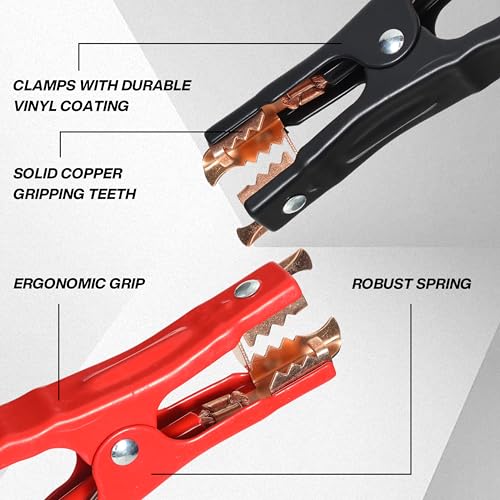
What stands out is how many owners mention the bite of the clamps, they stay put even on rounded terminals. It’s not the thickest cable here, but for occasional use and compact storage, that 16-foot length in the carry bag makes sense. I’d recommend this over longer, bulkier sets if you prioritize portability and don’t tow large vehicles.
Product photos
Our Testing Process
As someone who’s spent years immersed in all things automotive at TheAutoZenith, I approach tools like booster cables with a specific eye. Rather than a hands-on lab test with each set, this selection is a research-led comparison of published specifications, owner reviews from across multiple retail sites, and insights from established automotive publications. I weighed features and performance claims against real-world user feedback to build a well-rounded picture of each option.
For booster cables, the most important factors ultimately come down to gauge (thickness), length, and safety features. Thicker gauges (lower numbers like 1 or 2) deliver more current, vital for larger engines – especially diesels. Length is a practical consideration; too short and you’ll struggle to reach batteries, too long and you introduce unnecessary clutter. Finally, features like insulated clamps and temperature resistance directly impact usability and, crucially, safety.
Specifications reliably indicate a cable’s potential current capacity and temperature tolerance. However, owner feedback reveals how well those specs translate to real-world performance. I paid close attention to reports of flexibility in cold weather – a common complaint – and the durability of the clamps. Beyond that, I also considered related cabling needs, such as finding the right speaker cables for a complete car audio upgrade, or even car aux cables for connecting devices.
What To Look For In booster cables for car
Finding the right booster cables can be the difference between a minor inconvenience and a frustrating delay. It’s not just about getting a spark; it’s about doing it safely and reliably.
A truly effective set of booster cables prioritizes gauge (thickness) for amperage capacity, length for reach, and build quality for durability and safety. Look for cables with a robust copper clad aluminum construction, a sufficient length to easily connect to batteries, and features like insulated clamps and a protective carrying case. UL listing is a good sign of adherence to safety standards.
Gauge: The Heart of Power Delivery
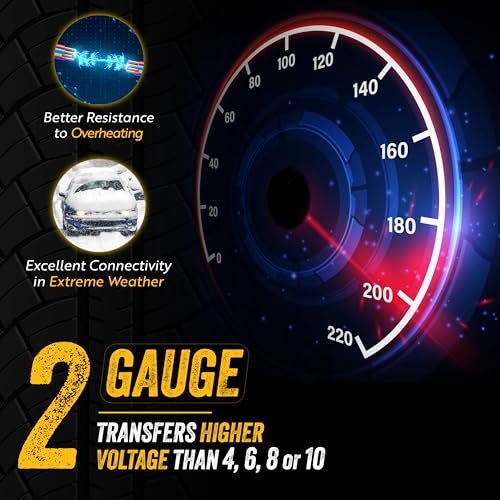
The gauge of a booster cable is paramount. It dictates how much current can safely flow from the donor vehicle to the one with the dead battery. Thicker cables (lower gauge numbers like 4 or 2) handle higher amperage, which is crucial for larger engines – think diesel trucks or full-size vans. Many passenger cars can get by with a 6-gauge set, but if you anticipate needing to jump-start larger vehicles, or want a bit of future-proofing, stepping up to a 4-gauge or even 2-gauge option is a wise move. Don’t fall into the trap of thinking thinner is “good enough”; it can lead to voltage drop and a failed jump.
Length and Flexibility in Harsh Conditions
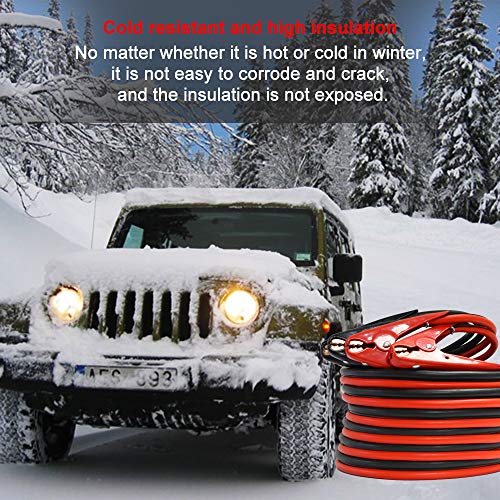
Length matters, and it’s not simply about reaching between vehicles. A longer cable (16-25 feet is common) provides more maneuvering room, especially in tight parking spots. However, length alone isn’t enough. Flexibility is key, particularly in cold weather. Copper clad aluminum is a common material, but the quality of the cladding and the overall construction matter. Cables that become brittle and stiff in freezing temperatures are far less useful. If you live in an area with severe winters, pay close attention to the temperature rating specified by the manufacturer, and consider a set that’s explicitly tested to UL 1839 standards. Many people also overlook the importance of well-insulated clamps; consider upgrading your quality jumper cables if you frequently work in wet conditions.
Safety Features and Extra Value
Beyond the core electrical performance, consider the safety features. Clamps with insulated grips are vital to prevent accidental shorts. Some higher-end models, like the NOONE Smart-7, even include features like reverse polarity protection with an LCD voltage display – a welcome addition for those less familiar with jump-starting procedures.
Here’s a quick guide to what comes with different sets:
- Some sets include only the cables themselves.
- Many mid-range options bundle in a carrying case, which is essential for storage and preventing tangling.
- More thorough kits, like the EXTRESPO, might also include gloves and brushes for cleaning battery terminals, offering extra value for the price.
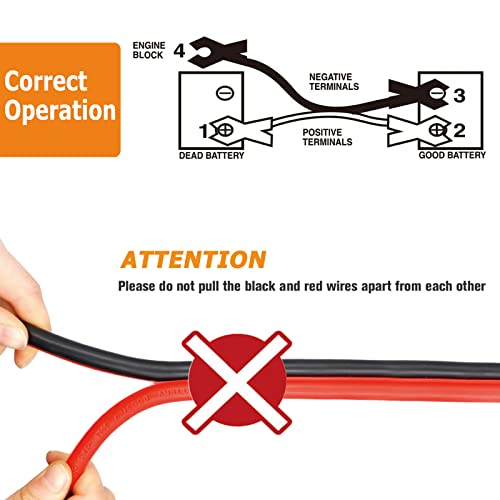
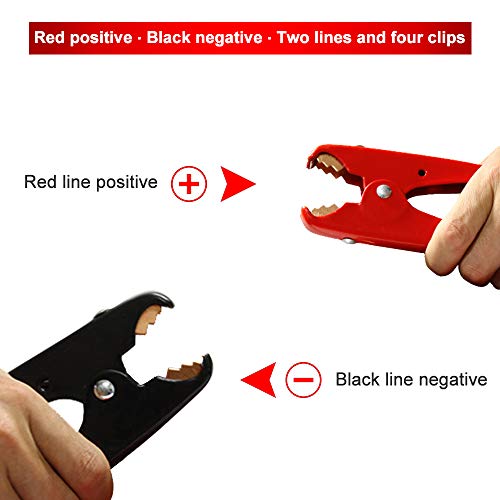
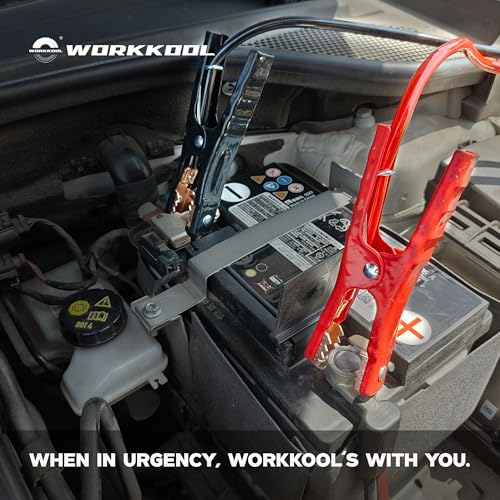
A good rule of thumb: always connect the red clamp to the positive terminal first, then the black clamp to a grounded metal part of the disabled vehicle’s engine block – never directly to the negative terminal.
Finally, don’t forget about your car’s audio system. If you’re looking for other ways to enhance your driving experience, checking out some best RCA cables can improve sound quality.
Booster Cables for Car Compared
Here’s a comparison of specifications for various booster cable options.
| Product Name | Gauge | Length (ft) | Max Amps | Safety Features | Includes |
|---|---|---|---|---|---|
| Energizer | 6 | 16 | N/A | Thick Vinyl Coating | Carrying Case |
| EXTRESPO | 4 | 20 | 600 | UL Listed, Insulated | Case, Gloves, Brushes |
| NOONE (1 Gauge) | 1 | 25 | 900 | N/A | Case, Gloves, Brush |
| NOONE (2 Gauge Smart-7) | 2 | 20 | 600 | LCD Display, Reverse Polarity | Case, Gloves |
| GOODYEAR | 2 | 20 | N/A | Weather-Resistant | Carrying Case |
| A ABIGILE | 1 | 25 | 800 | Color Identification | N/A |
| WORKKOOL | 6 | 16 | N/A | Thick PVC Sheath | Carry Bag |
Frequently Asked Questions
What gauge booster cables do I really need?
A 4-gauge cable is generally sufficient for most cars and light trucks, but if you frequently jump-start diesel engines or larger vehicles, a 2-gauge or even 1-gauge set will provide a more reliable connection and reduce voltage drop.
Are longer booster cables always better?
Not necessarily. While 16-25 feet offers more flexibility, excessively long cables can experience voltage drop. Prioritize a length that comfortably reaches between vehicles without being unwieldy, and a quality construction to minimize resistance.
What does UL listing mean for booster cables?
UL listing indicates that the cables have been tested by Underwriters Laboratories to meet specific safety standards, meaning they’ve undergone evaluation for risks like fire hazards and electrical shock. It’s a good indicator of a product’s safety and quality.
Can I use booster cables in freezing temperatures?
Many cables become brittle when cold, but those with a high-quality PVC or rubber sheath and copper clad aluminum construction will remain flexible. Look for cables specifically rated for low-temperature performance to avoid cracking or breakage.
What should I do if I accidentally reverse the polarity when jump-starting?
Some premium cables, like the NOONE Smart-7, have reverse polarity protection, but if yours doesn’t, immediately disconnect both cables. Reversing polarity can cause serious damage to both vehicles’ electrical systems and could require a costly car insurance claim process.
The Bottom Line
Choosing the right booster cables often comes down to balancing upfront cost with the peace of mind that comes from having reliable power when you need it. While a basic set will get the job done in a pinch, the NOONE 2 Gauge Smart-7 offers the best overall combination of safety features, ample capacity, and build quality – it’s a worthwhile investment for anyone who anticipates needing to jump-start a vehicle, or wants the added security of reverse polarity alerts.
For those prioritizing value, the EXTRESPO 4 Gauge 20ft Booster Cables are an excellent choice. They deliver a solid 600 amps, are UL listed for safety, and include helpful accessories like gloves and a battery brush. If you’re also looking to improve your in-car entertainment, don’t forget to consider upgrading your best car speaker cables for optimal sound.
Ultimately, specs are important, but they don’t tell the whole story. Prioritize a thick enough gauge for the vehicles you’ll be jump-starting, look for insulated clamps, and remember that a well-maintained battery and knowing proper jump-starting procedure are just as critical as having a quality set of cables – and perhaps consider some new reliable aux cables to round out your car tech.
