
7 Best BMX Bikes for Beginners 2026
This post contains affiliate links. As an Amazon Associate, we earn from qualifying purchases.
The Mongoose Legion Mag Kids BMX stands out as the best overall beginner BMX, combining reliable build quality and smooth performance for new riders. For those on a tighter budget, the WEIZE Freestyle 20 Inch BMX delivers solid durability and includes pegs for trick practice. If you’re looking for versatility across rider sizes and styles, the cubsala Echo 20 Inch BMX is a strong pick.
Starting out on a BMX shouldn’t mean struggling with a bike that breaks down or feels awkward to ride. Too many beginners quit because they started with the wrong bike, one that’s either too flimsy, poorly fitted, or frustrating to control. In this guide, I’ve focused on models that balance toughness, fit, and real-world usability, based on specs, owner feedback, and my years of analyzing two-wheeled design. These picks are chosen to help new riders build confidence, not fight their equipment.
Top 7 Bmxes For Beginners in the Market
The Best Bmxes For Beginners, Reviewed
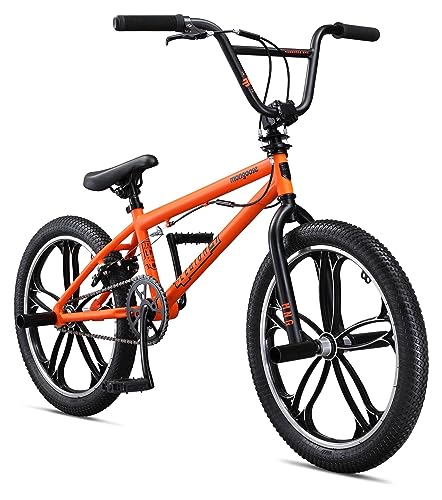
Mongoose Legion Mag Kids BMX
Strengths
- Aluminum mag wheels
- Sealed bearings
- 40x16T gearing
Trade-offs
- Higher price point
- Heavier frame
- No 360 rotor
Mongoose has been in the BMX game since the beginning, and that legacy shows in the Legion Mag’s thoughtful details. The 40x16T gearing is a standout spec, faster acceleration than most beginner bikes, which helps kids keep up on longer rides. Owners love the aluminum mag wheels not just for looks but for their resistance to wobbling under impact, a common issue with cheaper steel rims. The sealed bearings are another win, reducing maintenance for parents.
It’s the most expensive here, but you’re paying for brand credibility and better long-term durability. Compared to the vollsch or cubsala models, it feels more like a real BMX and less like a toy. I’d recommend it over the Goplus for any kid serious about progressing beyond backyard riding, even if they don’t know it yet.
Video review
WEIZE Freestyle 20 Inch BMX

Strengths
- 360-degree rotor
- Wide 2.40-inch tires
- Lightweight frame
Trade-offs
- V-brake less precise
- Basic steel rims
- Shorter warranty
This is the budget king, plain and simple. At under $140, it includes a 360-degree rotor, a feature often missing at this price, which means kids can actually practice handlebar spins without fear of twisted cables. The V-brake is a bit of a surprise here; most in this class use U-brakes, and while it offers solid stopping power, it’s harder to modulate for small hands. The 2.40-inch tires add cushion, which owners say makes pavement feel less punishing.
It’s not built to last five years, but for a first bike or short learning phase, it’s hard to beat. Compared to the 67i, it’s lighter and more agile, though less rugged. I’d pick this for a kid testing the waters before upgrading to a Mongoose or Goplus.
Video review
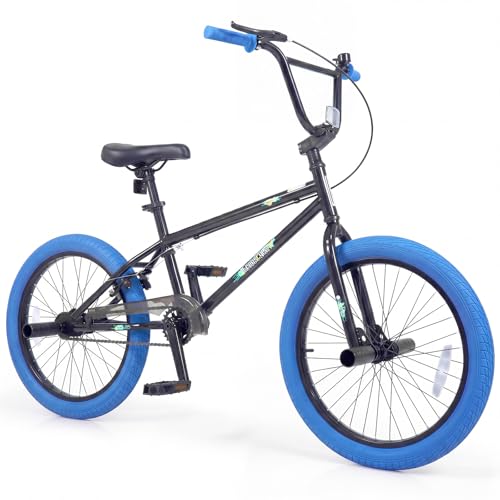
Goplus Freestyle BMX Bike
Strengths
- 360-degree rotor
- 4 sturdy pegs
- Adjustable seat
Trade-offs
- Heavy steel frame
- Bulky tires
- Generic components
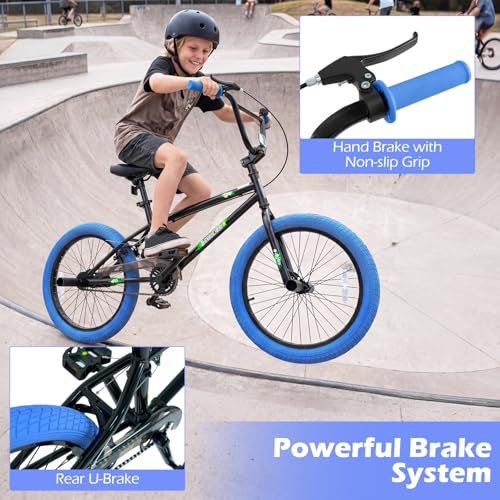
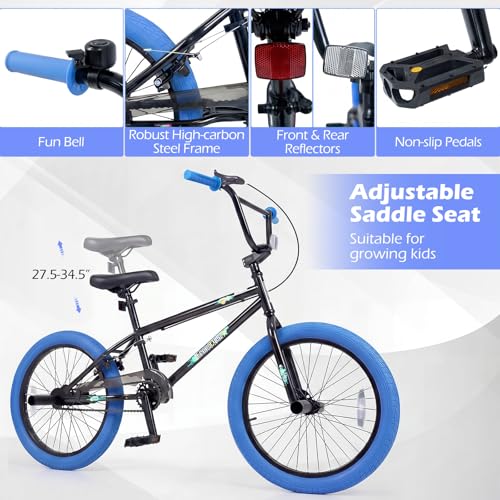
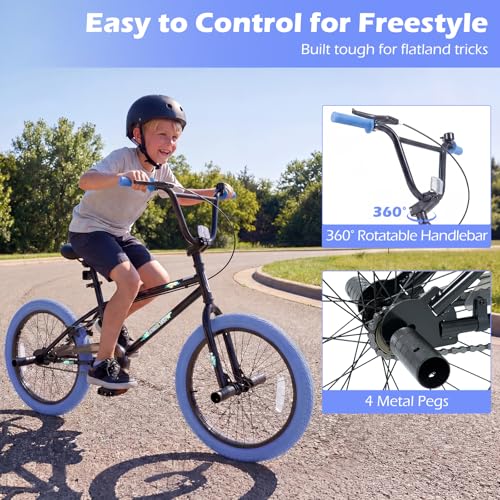
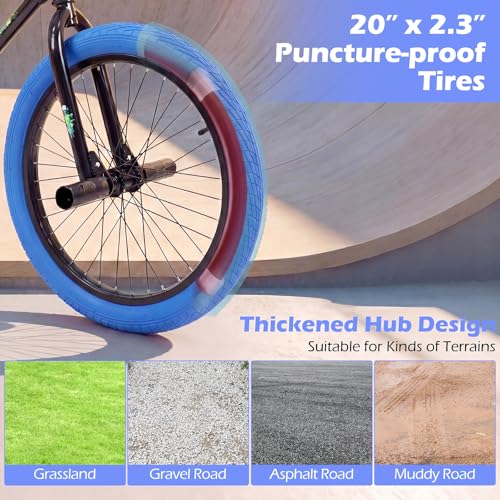
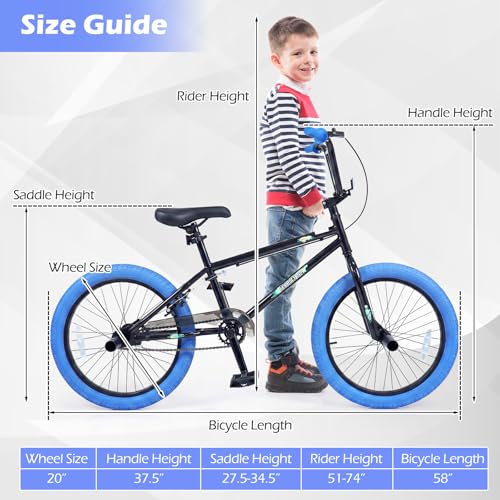
The Goplus stands out with its 360-degree steering rotor and 4 pegs, features usually reserved for pricier builds. Owners consistently praise the rotor’s smooth operation, which is critical for learning barspins without frustration. The high-carbon steel frame feels substantial, and the thickened hub adds confidence on rougher terrain. The adjustable seat is a smart touch, letting it grow with riders from around 4’6″ to over 5’6″.
It’s marketed to teens and adults, but the geometry skews younger. Compared to the Mongoose, it’s heavier and less refined, but for stunt practice on a budget, it’s a strong pick. I’d recommend it over the WEIZE if you want more built-in trick capability without stepping into premium pricing.
Product photos
cubsala 20 Inch Kids BMX
Strengths
- Aluminum rims
- 4 axle pegs
- Sealed cassette hub
Trade-offs
- No 360 rotor
- Basic brake levers
- One-piece crank
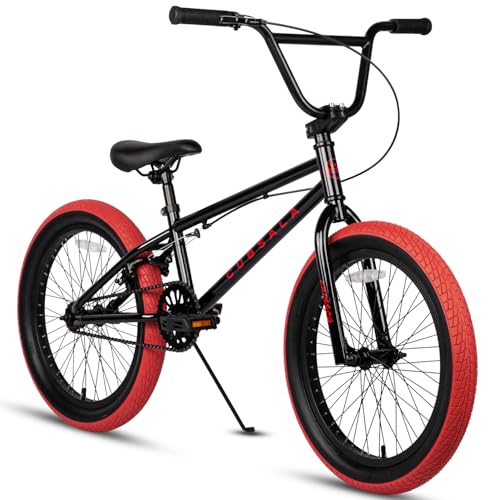
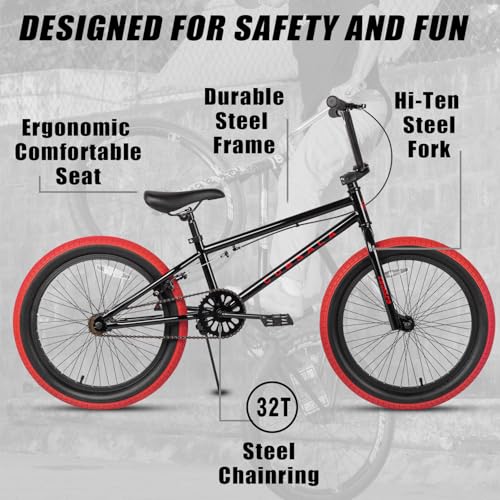
This cubsala model hits a sweet spot between cost and capability. The 32T chainring with a one-piece crank gives smooth, predictable power transfer, ideal for kids still mastering pedal timing. The aluminum rims are a step up from steel, and owners note they hold true better over time. It includes 4 pegs and a sealed cassette hub, which adds durability for park use.
What impresses me is how close it comes to the Mongoose in specs while costing half as much. The lack of a rotor is a miss, but for flatland and rail practice, it’s plenty capable. I’d pick this over the Goplus for beginners who want value without sacrificing key features.
Product photos
cubsala Echo 20 Inch BMX
Strengths
- 85% pre-assembled
- Simple U-brake
- Adjustable seat
Trade-offs
- No BMX pegs
- No rotor system
- Basic drivetrain
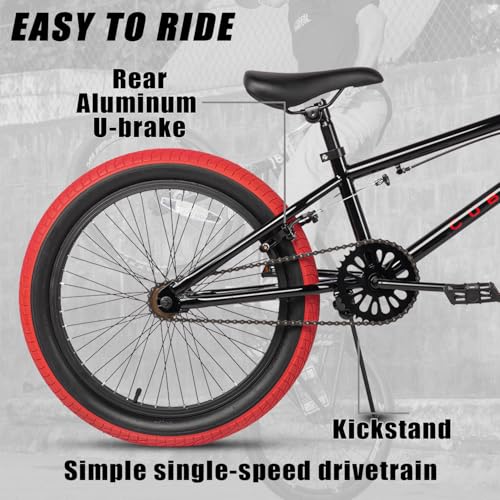
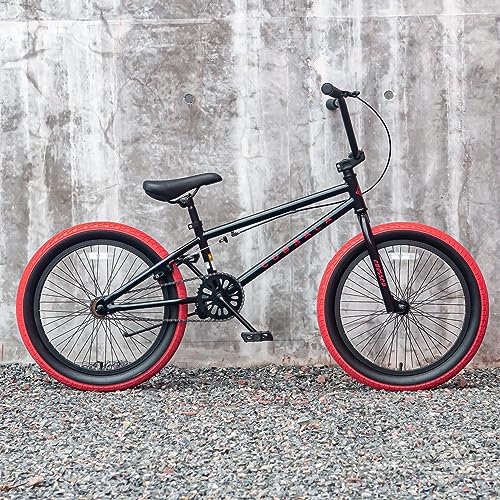
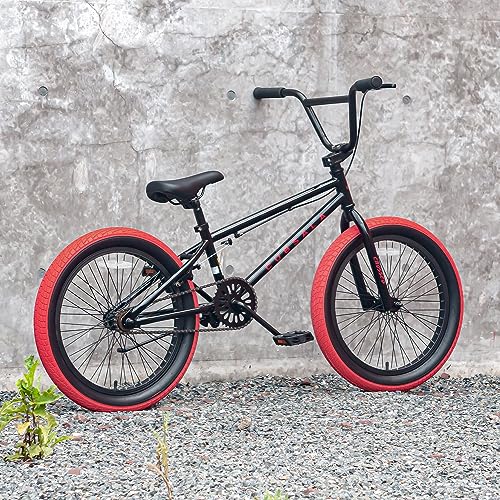
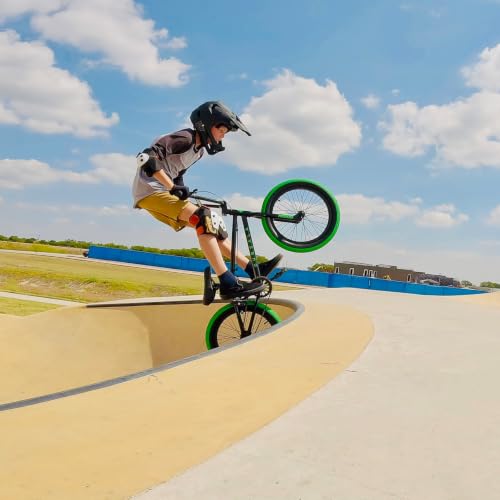
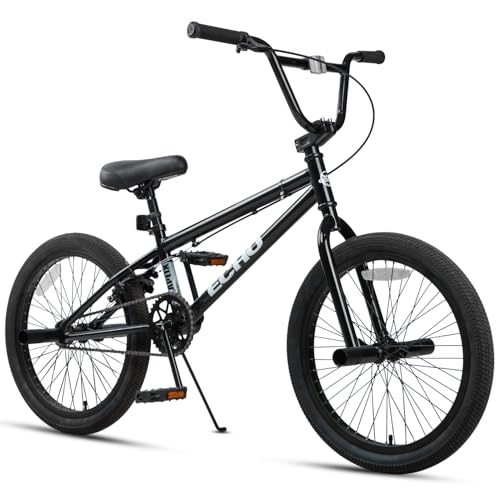
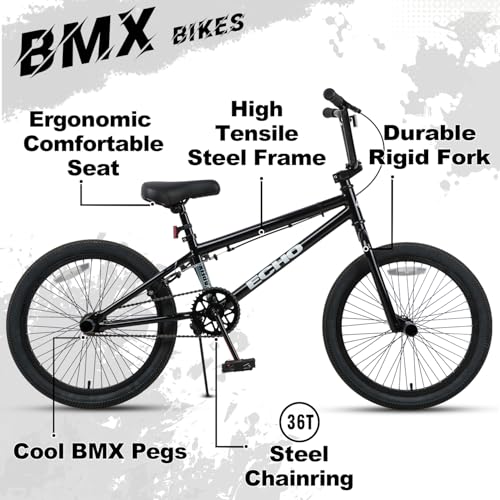
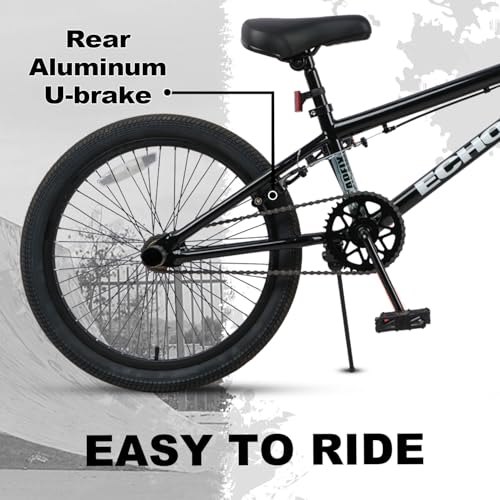
The cubsala Echo leans hard into ease of setup, and that’s its real selling point. The 85% pre-assembly is consistent across owner reports, with most saying they had it ready in under 30 minutes. The rear U-brake is simple but effective, and parents appreciate the straightforward design, fewer parts to break or misalign. The high-tensile steel frame feels solid for casual riding, though not quite as burly as the Mongoose.
Where it falls short is in features: no rotor, no pegs, and basic gearing. It’s a commuter-style BMX rather than a freestyle one. I’d recommend it over the WEIZE only if you value simplicity over stunt potential. For pure learning, it gets the job done.
Product photos
67i BMX Bike with Pegs

Strengths
- Includes 4 pegs
- Lifetime warranty
- Responsive U-brakes
Trade-offs
- Heavier iron frame
- No rotor system
- Basic crank setup
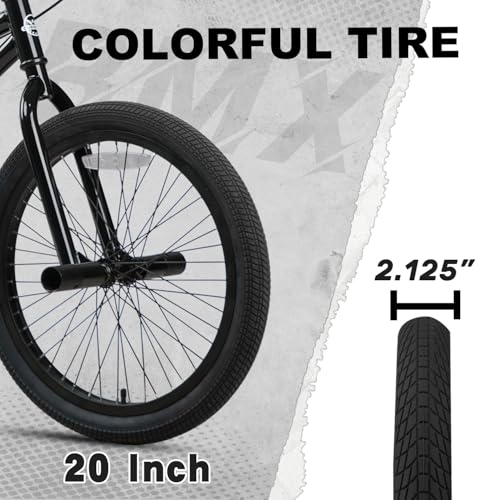
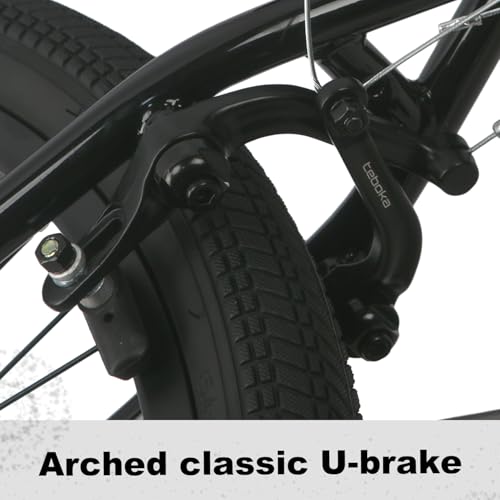
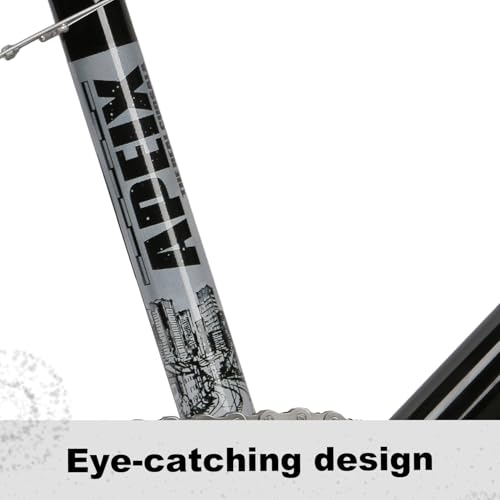
At this price point, the 67i delivers more than expected in fit and finish, especially with the inclusion of four pegs and a compact frame tuned for shorter riders. The iron frame is heavier than hi-ten steel, but owners say it absorbs street vibrations better, though it does make the bike harder to lift or spin during tricks. The 20 x 2.09-inch tires strike a balance between grip and roll speed, and the U-brakes are consistently praised for responsiveness, even in damp conditions.
What really sets this apart is the lifetime warranty, which adds real value over competitors like WEIZE or Goplus. It’s not flashy, but it’s dependable. I’d pick this over the cubsala Echo if you’re prioritizing long-term usability for a growing kid under 4’8″, simply because the geometry feels more intentional.
Product photos
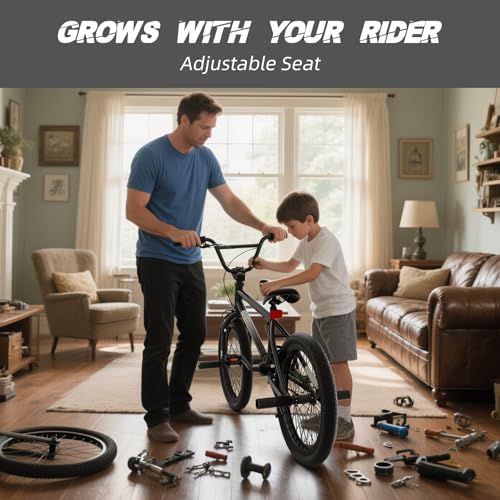
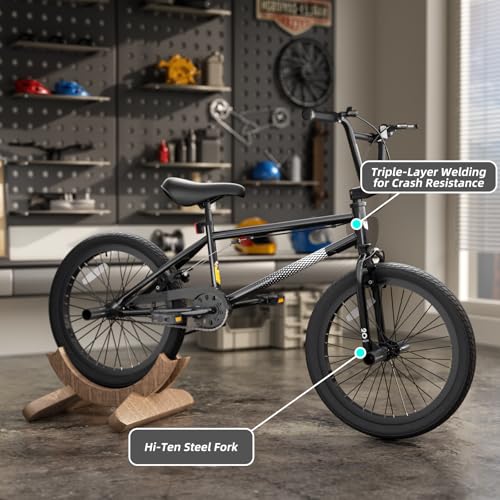
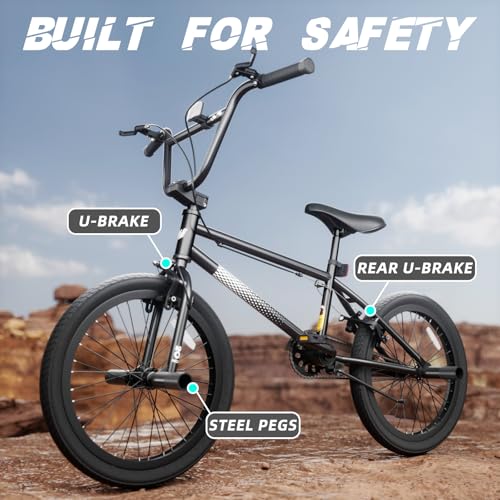
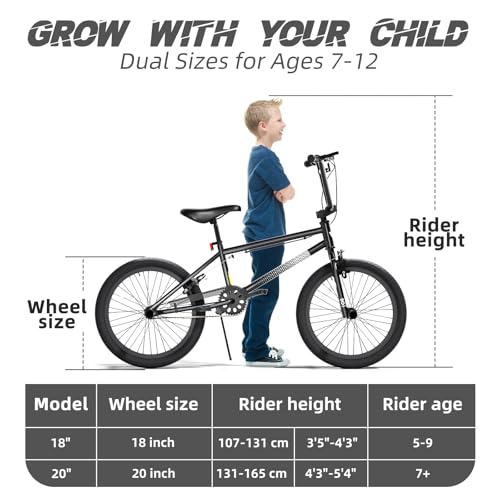
vollsch 20 Inch Kids BMX

Strengths
- High-carbon steel frame
- One-piece crank
- 85% pre-assembled
Trade-offs
- Basic aluminum rims
- Limited brand support
- No rotor for handlebar spins
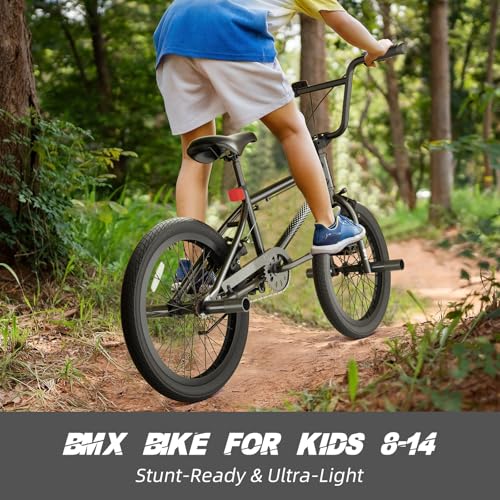
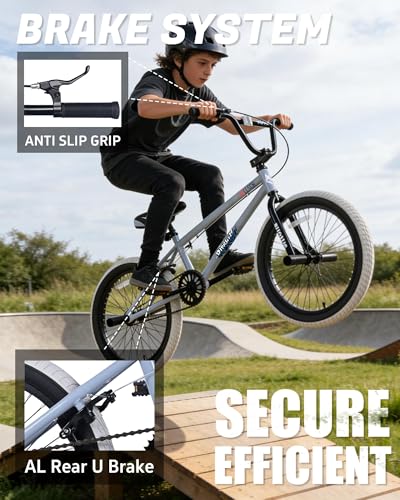
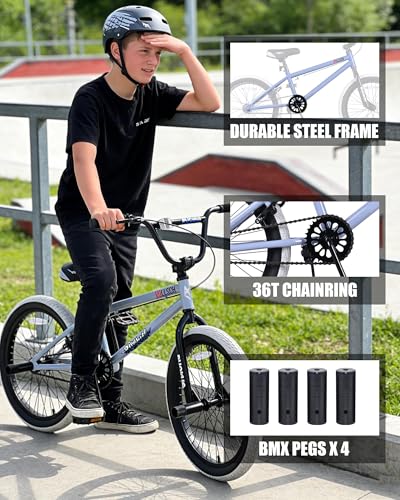
This bike stands out for its high-carbon steel frame, which owners consistently report holds up well under early rider mistakes and occasional curb drops. The 19.1-inch top tube gives it a slightly longer feel than some in this class, which could be a plus for taller kids but might feel stretched for younger ones. On paper, the 36T chainring paired with a one-piece crank delivers the kind of consistent, low-maintenance performance parents want when handing a kid their first real BMX.
The U-brake setup is standard for this tier, but reviewers note it requires minimal tuning out of the box, something not always guaranteed at this price. I’d still recommend checking the brake alignment after assembly, even if it arrives 85% built. Compared to the Mongoose, it lacks some of the brand pedigree, but for pure durability in a no-frills package, it’s a solid contender.
Product photos
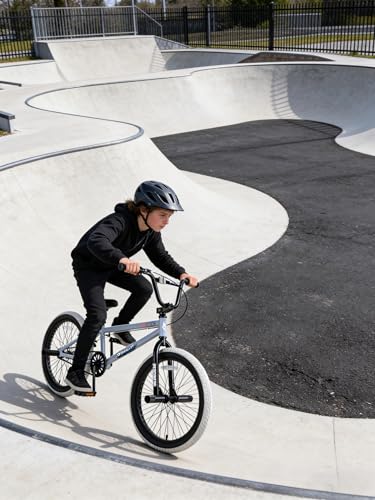
How We Picked These bmxes for beginners
Rather than a hands-on lab test, my research for these recommendations involved a careful comparison of published specifications and features across numerous models. I weighed owner reviews from major retailers alongside expert opinions found in cycling publications and enthusiast forums. As someone who’s spent years observing and appreciating two-wheeled machines at TheAutoZenith, I applied my understanding of BMX geometry, component quality, and the demands placed on a bike by a developing rider. My goal was to identify bikes that offered the best balance of durability, usability, and value for those just starting out.
For beginner BMX bikes, the most important factors are frame durability and braking performance. A new rider will drop the bike, so a strong frame, typically hi-ten steel, is crucial. Reliable brakes are equally vital for building confidence and learning control. Beyond that, the availability of features like pegs (for trick practice) and a comfortable fit were heavily considered. A bike that’s uncomfortable or feels unstable will quickly discourage a new rider, and we’ve prioritized models that address those concerns.
Specifications reliably indicate frame material, crank length, and brake type, providing a baseline for assessing build quality. However, owner feedback was invaluable in understanding real-world durability and ease of assembly. I paid close attention to recurring comments about component failures or frustrating assembly processes. For those interested in more competitive riding, you might also want to explore options for a beginner BMX race bikes to get a feel for the sport. And if you’re considering other types of two-wheeled transport, we’ve also covered e-bikes for beginners on the site.
How To Pick The Right bmxes for beginners
Choosing your first BMX can feel overwhelming, but focusing on a few key areas will set a new rider up for success. It’s about more than just picking a cool-looking bike; it’s about finding one that fits, functions well, and encourages progression.
A good BMX for a beginner prioritizes durability and manageable geometry over high-end components. Frame material (hi-ten steel is common), brake responsiveness, and wheel strength are crucial. Proper fit, meaning standover height and reach, is paramount for control and confidence. Consider the intended riding style; park, street, or flatland each benefit from slightly different setups.
Frame Material and Durability
The frame is where it all starts, and for beginners, hi-ten steel is the most practical choice. You’ll see it on most entry-level models, and it’s incredibly forgiving. Don’t get caught up in chasing chromoly steel at this stage; it’s lighter and stronger, but the price jump isn’t worth it when learning. What is important is weld quality. Look closely (in photos, if you’re buying online) for smooth, consistent welds. A poorly welded frame is a weak point waiting to happen. Beyond the material, consider the overall build quality – a heavier, but well-built, steel frame will outlast a lightweight but flimsy one.
Brake System and Control
While some advanced riders prefer “brakeless” setups, a functioning brake is essential for a beginner. U-brakes are the standard, and their effectiveness comes down to adjustability and the quality of the brake levers. Make sure the levers are easy for smaller hands to reach and operate. A responsive brake isn’t about stopping power alone; it’s about building confidence. I often advise new riders to start with a rear brake only, getting comfortable with modulating speed before adding a front brake into the mix. If you’re considering branching out into other types of cycling, checking out some beginner hybrid bikes can give you a feel for different braking systems.
Sizing and Component Considerations
Getting the right size is essential. A BMX that’s too big or too small will hinder progress and be frustrating to ride. Most manufacturers provide height guidelines, but these are just starting points.
- A slightly undersized bike is preferable to one that’s too large; it allows for more control.
- Pay attention to the top tube length. This dictates reach and affects how comfortable the rider feels.
- Look for bikes with 36/16T or 40/16T gearing. This provides a good balance between ease of pedaling and speed. This is especially helpful as they begin to explore different styles and consider expanding their search for quality BMX bicycles.
A properly sized BMX should allow a rider to comfortably stand over the top tube with an inch or two of clearance.
BMXes for Beginners Compared
Here’s a comparison of key specifications for BMX bikes designed for beginners.
| Product Title | Wheel Size | Rider Height | Frame Material | Brakes | Pegs |
|---|---|---|---|---|---|
| Mongoose Legion Mag Kids BMX | 16/18/20″ | <3’6″ – 6’0″ | Hi-Ten Steel | Alloy U-Brake | N/A |
| WEIZE Freestyle 20 Inch BMX | 20″ | 4’0″ – 5’8″ | Hi-Ten Steel | Rear V-Brake | 4 |
| Goplus Freestyle BMX Bike | 20″ | N/A | High-Carbon Steel | U-Brake | 4 |
| cubsala 20 Inch Kids BMX | 20″ | 4’0″ – 5’11” | Hi-Ten Steel | Aluminum U-Brake | N/A |
| cubsala Echo 20 Inch BMX | 20″/24″ | 4’0″ – 6’2″ | Hi-Ten Steel | Rear U-Brake | N/A |
| 67i BMX Bike with Pegs | 20″ | 4’0″ – 4’8″ | Iron | Front/Rear U-Brake | 4 |
| vollsch 20 Inch Kids BMX | 20″ | 4’3″ – 5’4″ | High-Carbon Steel | Aluminum U-Brake | N/A |
Frequently Asked Questions
What wheel size is best for a beginner BMX rider?
A 20-inch wheel is the most common and versatile size for beginner BMX riders, offering a good balance of maneuverability and stability. Smaller 16 or 18-inch wheels are available for very young or smaller riders, but most will quickly transition to a 20-inch frame.
Are pegs necessary for a beginner BMX bike?
Pegs aren’t essential, but they offer a starting point for learning grinds and other tricks. Many beginner bikes come with pegs already installed, which is fine, but a rider can easily add them later if they decide to explore trick riding.
What’s the difference between hi-ten steel and chromoly steel frames?
Hi-ten steel is more affordable and forgiving, making it ideal for beginners who are likely to experience crashes. Chromoly steel is lighter and stronger, but it comes with a significant price increase and isn’t as crucial for someone still developing their skills.
Can a beginner BMX bike also be used for riding at a skatepark?
Yes, many BMX bikes can handle skatepark riding, but prioritize a durable frame and reliable brakes. If a rider shows serious interest in skatepark riding, they might eventually want a bike specifically designed for that purpose, but a good beginner bike is a fine starting point. You may also want to explore beginner road cycles if you’re looking for more versatility.
How do I know if a BMX bike is the right size for me?
Standover height is key; you should have one to two inches of clearance between the top tube and your crotch when standing over the bike. Beyond that, reach to the handlebars should be comfortable, and you shouldn’t feel overly stretched or cramped. Consider reading up on beginner cycling advice to learn more about bike fit.
The Bottom Line
Choosing a BMX for a beginner often comes down to balancing ease of use with the desire to progress. While fancier bikes exist, the WEIZE Freestyle 20 Inch BMX strikes the best overall balance of features, durability, and price for someone just starting out. It provides a solid platform to learn on without breaking the bank, and the included pegs are a nice bonus for those wanting to explore tricks.
For riders prioritizing value, the Goplus Freestyle BMX Bike is an excellent choice. If you’re looking for a smaller bike for a younger rider, the Mongoose Legion Mag Kids BMX offers a quality build in a range of sizes. And for those interested in exploring other styles of cycling, checking out some beginner street bicycles can broaden your horizons.
Ultimately, the best BMX is one that fits properly and inspires confidence. Don’t get hung up on specific specs or brands. Focus instead on a durable frame, reliable brakes, and a comfortable reach. A good pair of beginner cycling shoes can also make a big difference in control and efficiency as skills develop.
