
9 Best Bike Travel Cases of 2026
This post contains affiliate links. As an Amazon Associate, we earn from qualifying purchases.
The SCICON Aerocomfort 3.0 TSA Road Bag stands out as the best overall bike travel case, offering serious protection and airline-friendly features. For a budget-friendly yet solid option, the 900D Bike Travel Bag for MTB delivers strong value. If you’re after maximum durability and don’t mind the weight, the B&W International Bike Box 2.0 is a trusted hardshell choice.
Packing a bike for travel is more than just throwing it in a box, it’s about trusting that your machine will survive check-in, layovers, and baggage carts without a scratch. Too many cases look good on paper but fall apart at the zipper or let the frame shift during transit.
This guide cuts through the noise by focusing on real-world feedback, build quality, and practical features like weight, TSA locks, and wheel compatibility. I compared top models based on specs, owner experiences, and how well they balance protection with usability, so you can roll through the airport with confidence.
Top 9 Bike Travel Cases in the Market
The Best Bike Travel Cases, Reviewed
SCICON Aerocomfort 3.0 TSA Road Bag

Strengths
- Kickstand included
- No handlebar removal
- Smooth eight-wheel system
Trade-offs
- Expensive
- No work stand
- Heavy for a soft case
This is the one I’d choose if I were flying regularly with a road bike. The triple-layer, padded material is tough, and the twin-wheel system makes rolling through airports effortless, eight wheels mean it tracks straight even when fully loaded. The built-in kickstand is a small thing, but it’s incredibly useful when you’re assembling your bike trackside. No need to remove the saddle or handlebars, which saves time and reduces wear on components.
Owners consistently report their bikes arrive unharmed, and the TSA-approved lock adds security. Compared to the Thule RoundTrip Road, it’s lighter and more streamlined, though it lacks a built-in work stand. At this price, you’re paying for premium engineering, and it shows. My recommendation: this is the best overall pick for serious road cyclists who fly often.
Video review
B&W International Bike Box 2.0
Strengths
- Removable lid
- Superior suspension system
- German-engineered build
Trade-offs
- High price
- Heavy at 13+ kg
- Bulky when packed
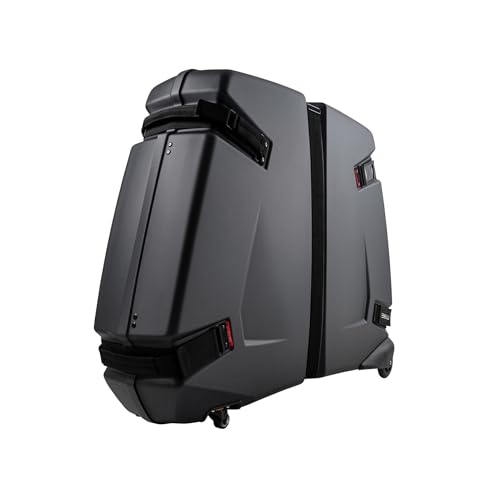
This is the gold standard for a reason. The removable lid lets you lay the case flat, drop the bike in from above, and secure it without contorting parts through a narrow opening. That alone makes packing faster and safer than any clamshell design. The ABS shell and aluminum frame are bomber, and the interior suspension system, complete with TEX.22 wheel bags and foam corner protection, keeps everything locked down. Owners flying regularly say their bikes arrive unscathed, even after rough handling.
It’s expensive, yes, but it’s also what pros use. Compared to the SCICON Aerocomfort, it’s heavier but offers better structural integrity. I’d pick this over any soft bag or budget hard case for long-term durability and peace of mind. If you’re serious about protecting a high-end build, this is the smarter buy.
Video review
Thule RoundTrip Transition Case

Strengths
- Built-in repair stand
- ABS hard shell
- Supports long wheelbases
Trade-offs
- Outdated interior padding
- No removable lid
- Heavier than alternatives
The standout here is the integrated repair stand, this isn’t just a case, it’s a mobile workshop. Once unpacked, the aluminum click-rail system doubles as a stable stand for reassembly, which is a standout if you’re setting up at a race or remote location. The ABS shell is durable, and with support for bikes up to 46 inches wheelbase, it handles most road and gravel rigs. Owners praise how easy it is to pack compared to clamshell designs, and the wheels make airport hauling manageable.
But it’s older than some competitors, and lacks some modern touches, like a removable lid or advanced suspension. Compared to the Thule RoundTrip Road, it’s less refined in fit and finish. Still, that work stand feature is hard to beat. I’d recommend this for mechanics or DIY riders who value function over form and want to avoid carrying a separate stand.
Product photos
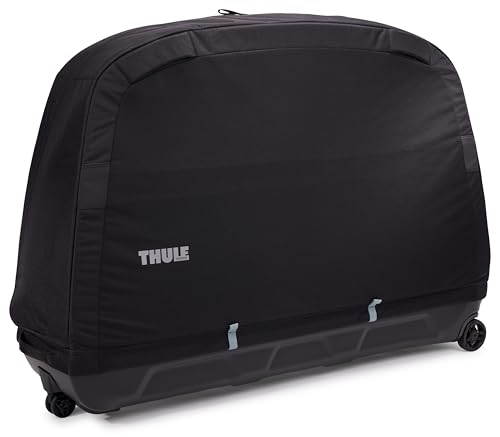
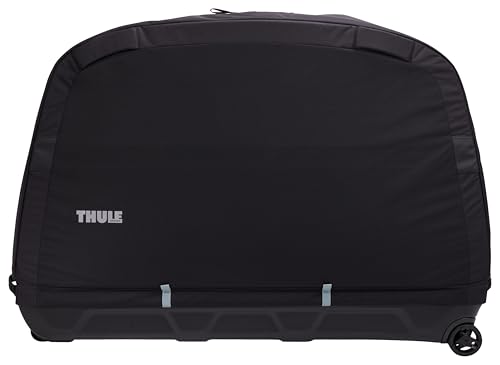
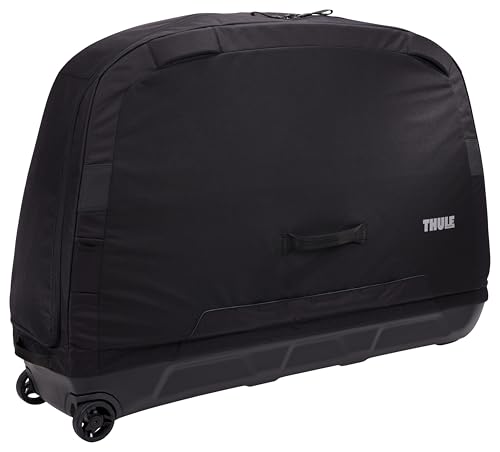
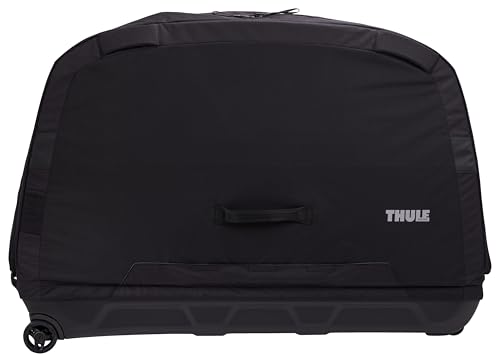
Thule RoundTrip Road Rolling Case
Strengths
- Includes work stand
- Superior structural protection
- Fits long wheelbases
Trade-offs
- Very expensive
- Heavy
- Limited soft storage
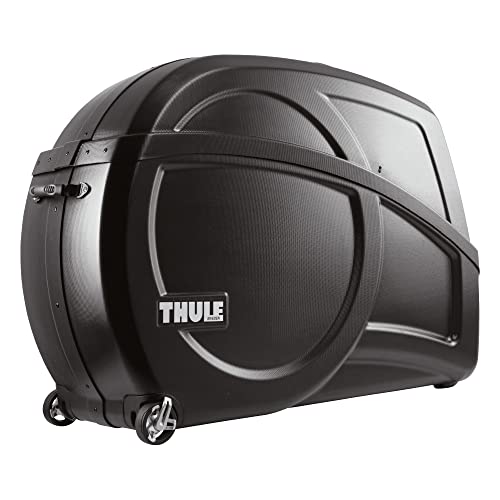
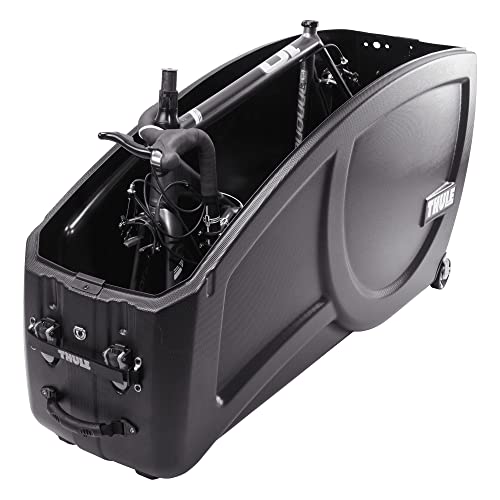
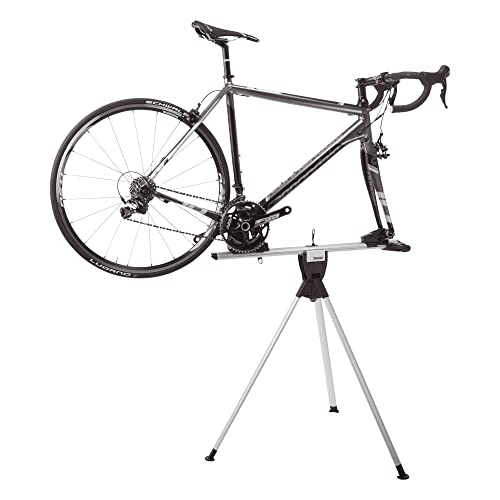
This is Thule’s flagship for a reason: it blends top-tier protection with pro-level convenience. The molded HDPE bottom and 5mm polypropylene-reinforced walls offer serious impact resistance, and the padded interior keeps everything from fork to derailleurs locked down. The included work stand isn’t just a gimmick, it makes reassembly faster and cleaner, especially in tight spaces. With support for wheelbases up to 110cm, it fits most road and gravel bikes, including modern endurance and adventure builds.
It’s the most expensive option here, and heavier than the SCICON, but it’s also more protective. Compared to the B&W Bike Box 2.0, it’s easier to assemble and has better internal ergonomics. I’d pick this over any other case if you’re flying with a high-end gravel or road bike and want the best combination of protection and functionality.
Product photos

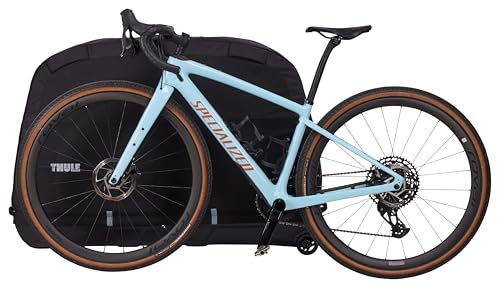
VEVOR EVA Hard Shell Bike Case
Strengths
- EVA hard shell
- TSA lock included
- Dedicated wheel storage
Trade-offs
- Basic interior layout
- Heavier than soft bags
- Limited brand support
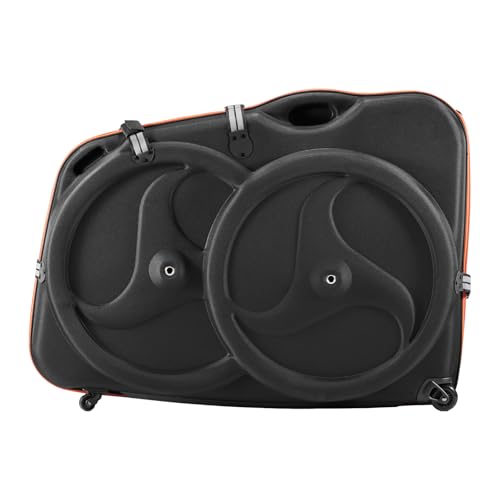
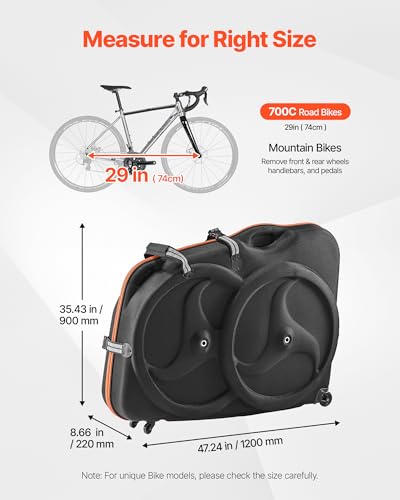
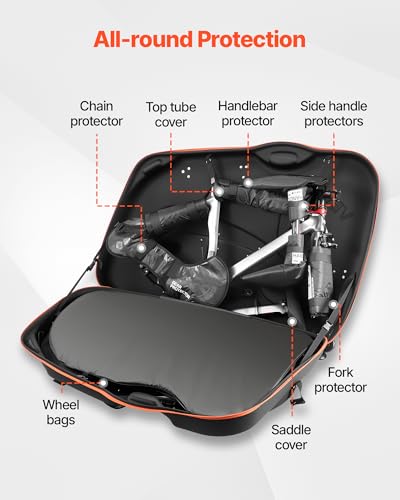
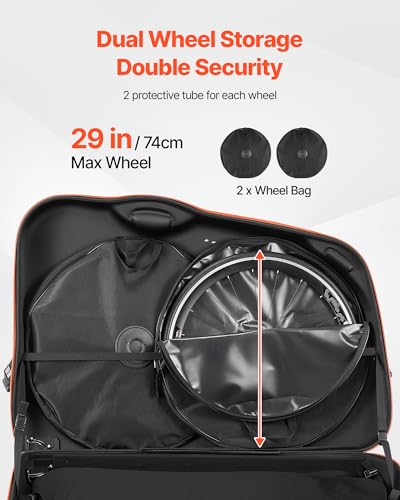
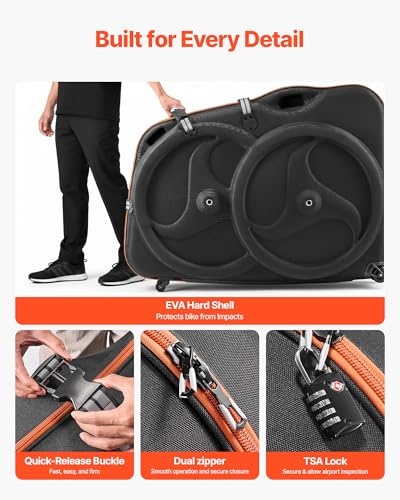
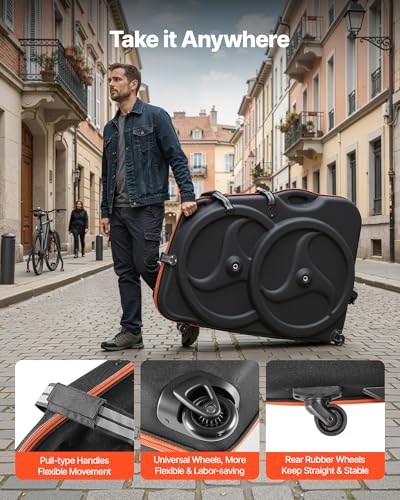
With its EVA hard shell, this VEVOR case steps up from their soft bag and offers real impact resistance at a price that undercuts nearly every other hard case on this list. It’s designed for 700C road bikes, and the rigid shell paired with internal foam supports means your frame isn’t relying on fabric alone. Reviewers note the build feels a bit utilitarian, nothing flashy, but the wheels roll smoothly, the TSA lock works, and the included wheel bags help keep things organized.
It’s not as refined as the Thule or SCICON options, and the interior layout isn’t as intuitive as the B&W Bike Box 2.0’s removable lid. But for the budget-minded rider who wants hard-shell protection without spending $500+, this is a solid entry point. My recommendation? If you’re not racing or flying weekly, this delivers more protection than you’d expect for the cost.
Product photos
VEVOR Triathlon Bike Travel Bag
Strengths
- TSA-approved lock
- Dual wheel compartments
- Good triathlon fit
Trade-offs
- Soft construction
- Basic padding
- Not crush-proof
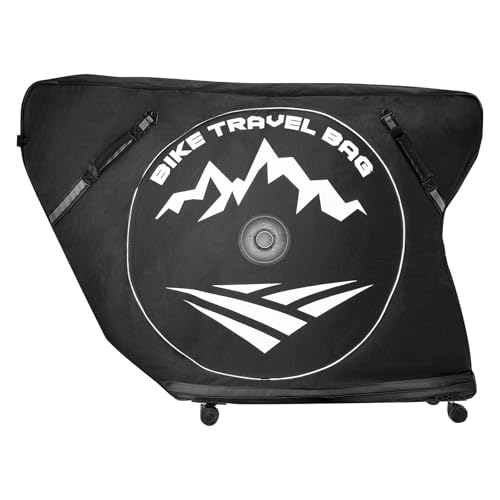
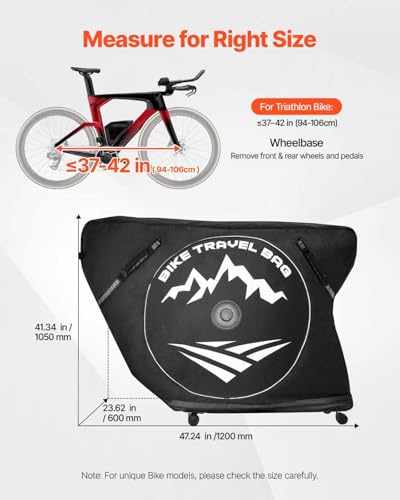
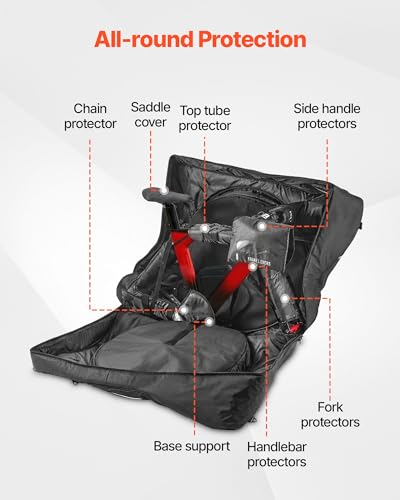
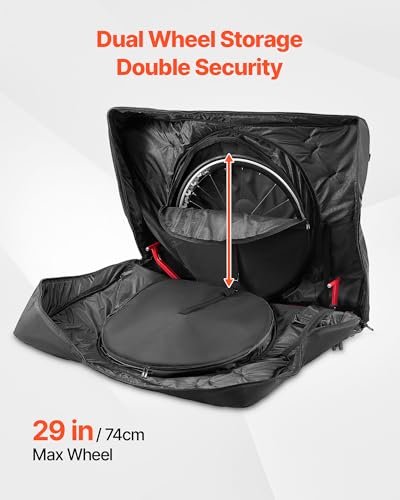
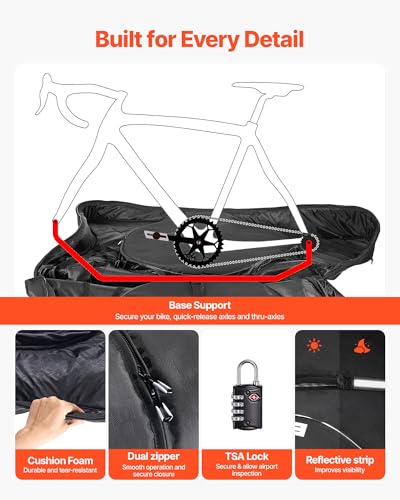
This bag is built specifically for triathletes who need a no-fuss, functional soft case that gets the job done without breaking the bank. On paper, it covers the essentials: TSA lock, dual zippers, dedicated wheel compartments, and a design that accommodates up to a 42-inch wheelbase, right in line with most tri bikes. Owners consistently report it’s easy to pack once you’ve done it a few times, and the included protectors do their job against scratches and minor impacts.
Still, it’s a soft bag, so don’t expect it to stand up to the kind of abuse a hard case can. Compared to something like the B&W Bike Box 2.0, this lacks structural rigidity and advanced suspension. But for frequent travelers who want something lighter and more flexible than a hard shell, this hits a sweet spot. I’d pick it over the KEMIMOTO if you’re focused on triathlon bikes, just for the tighter fit and better internal organization.
Product photos

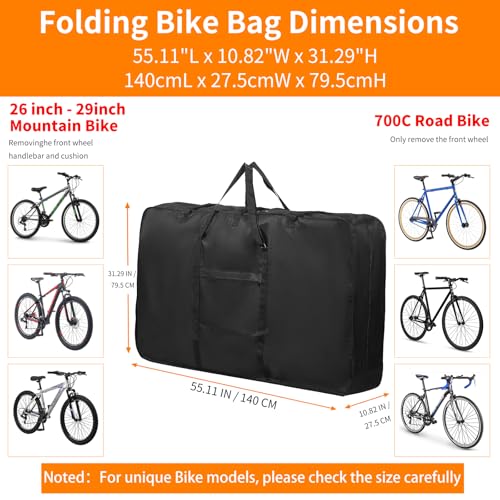
900D Bike Travel Bag for MTB

Strengths
- Budget-friendly
- Anti-burst buckles
- UV and water resistant
Trade-offs
- No hard protection
- Basic interior layout
- Straps can feel flimsy
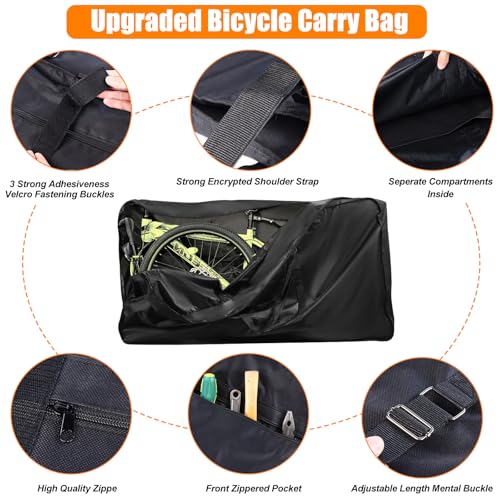
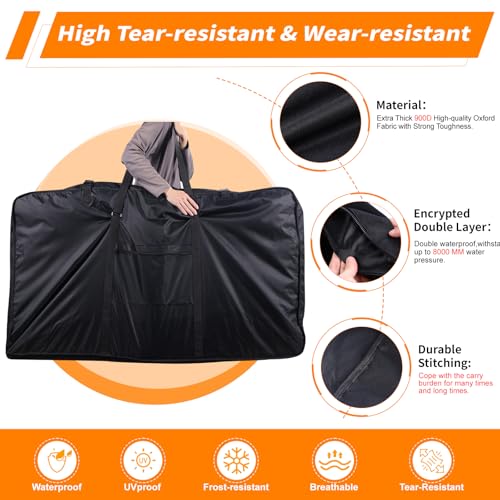
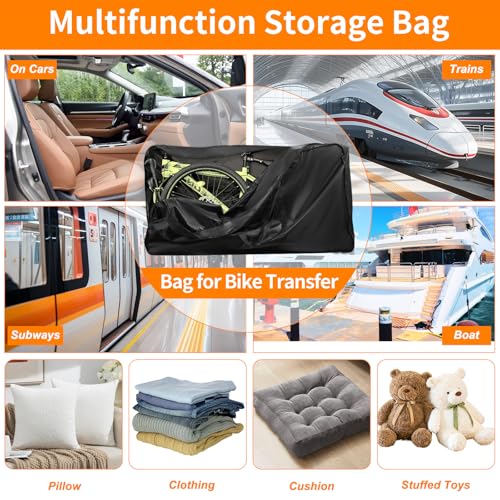
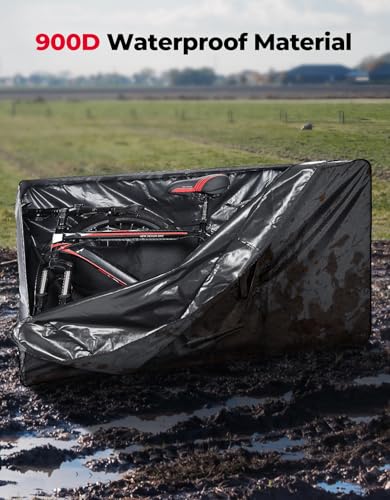
At under $50, this soft bag is a steal if you’re on a tight budget and need basic protection for occasional travel. Made from 900D Oxford fabric with SPF+85 coating, it resists UV, water, and abrasion better than cheaper alternatives. The anti-burst design with three fixed buckles is a standout, owners report fewer zipper failures than typical zipper-only bags. And the separate compartments for frame and wheels help prevent scratches.
But let’s be real: it’s a soft bag. It won’t stop a baggage handler from dropping a suitcase on it. Compared to the KEMIMOTO, it’s slightly less refined in storage and handle design. Still, for someone who flies with their bike once a year, this gets the job done. I’d recommend it over ultra-cheap bags that rip after one trip.
Product photos
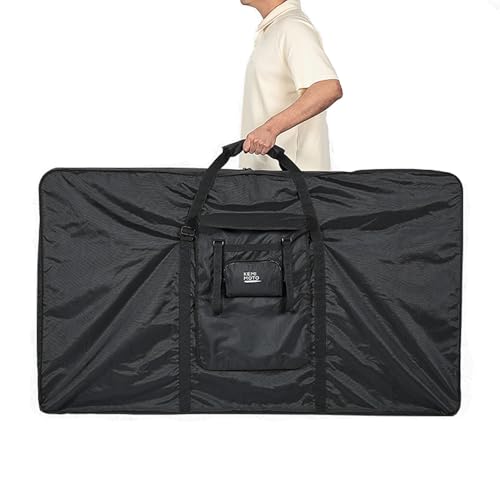
KEMIMOTO 900D Water-Resistant Bike Bag
Strengths
- Compact foldable design
- Water-resistant fabric
- Built-in accessory pocket
Trade-offs
- No wheels
- Minimal padding
- Not crush-proof
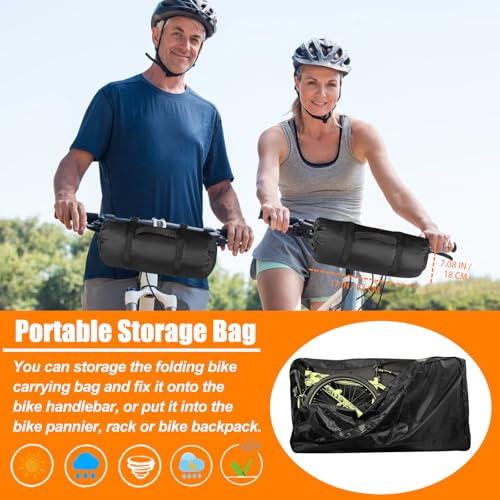
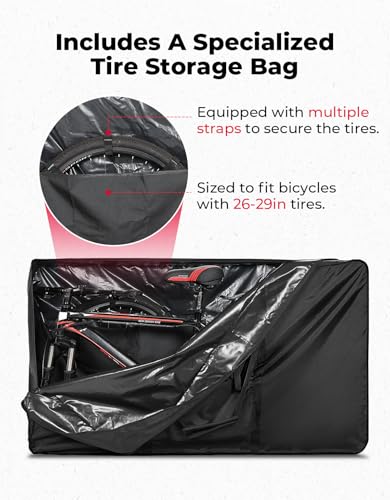
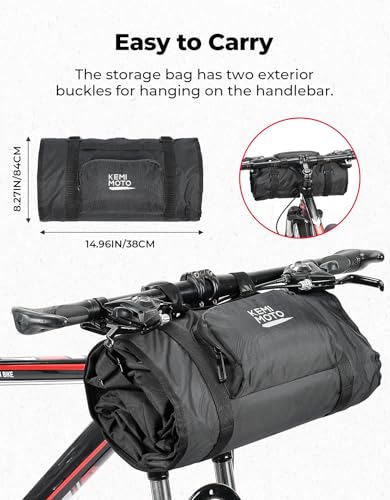
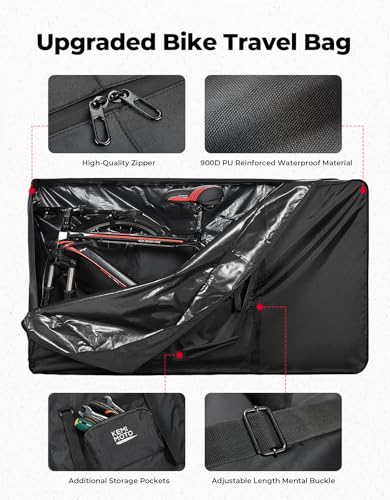
This bag nails the balance between price and thoughtful design. It’s nearly identical in cost to the 900D bag but adds a foldable handlebar pouch with a pocket, super handy for carrying tools or documents during transit. The 900D water-resistant fabric holds up well, and the dedicated tire compartment helps prevent shifting. Owners like how compact it folds when not in use, and the adjustable shoulder straps make it easier to carry than most in this class.
It doesn’t have wheels or a rigid frame, so it’s not for those hauling bikes across terminals daily. But for weekend warriors or bikepackers who need reliable, portable protection, this is the smarter buy over the basic 900D model. I’d pick it as the best value in the soft bag category.
Product photos
Exquimac Oversized Bike Travel Case
Strengths
- Fits long wheelbases
- Heavy-duty padding
- Eight grab handles
Trade-offs
- Still a soft case
- Bulky design
- Overpriced for fabric build
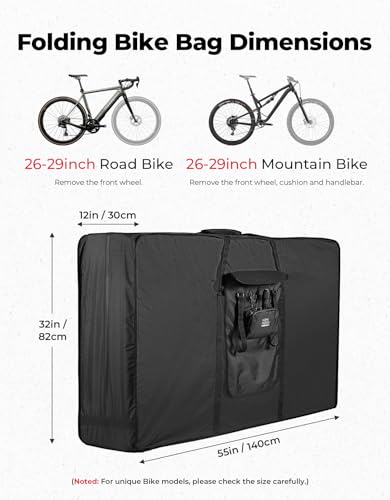
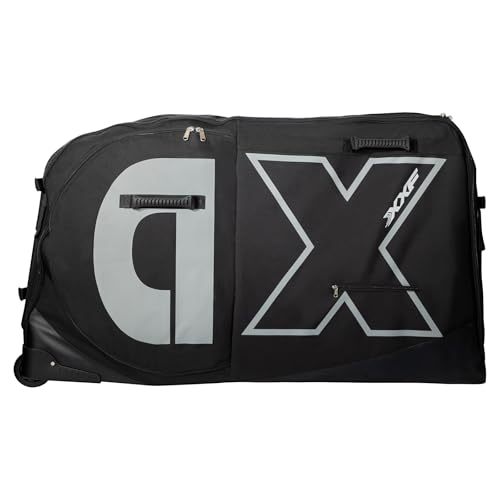
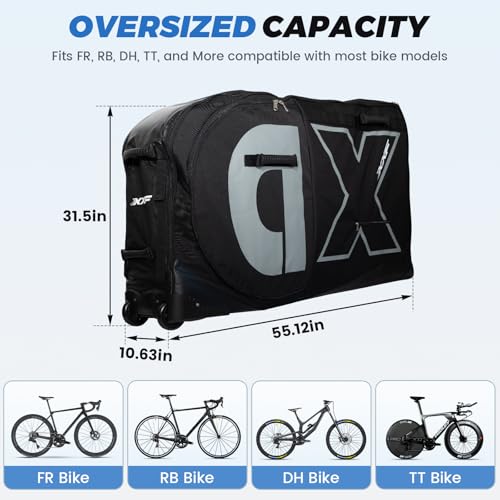
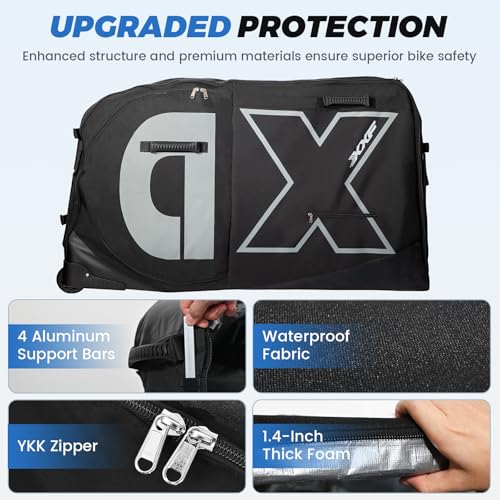
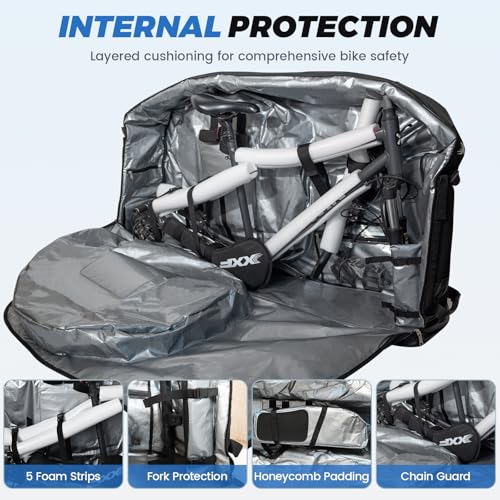
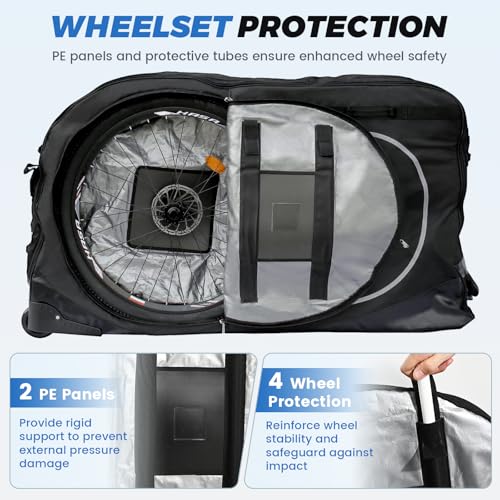
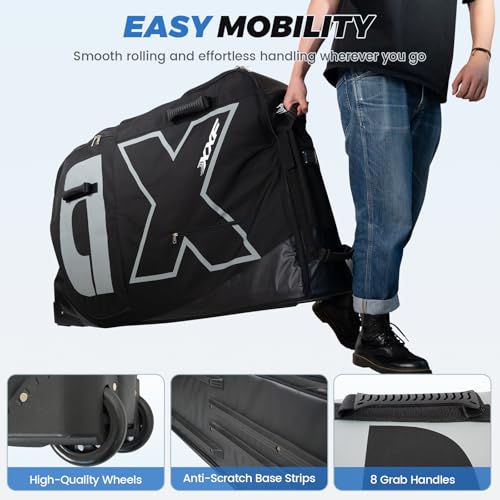
With a wheelbase fit up to 110cm and compatibility across road, MTB, and gravel, this case is built for riders with larger or long-reach bikes that don’t fit standard cases. The oversized capacity is its biggest selling point, and the 1.4-inch foam padding plus honeycomb layers offer better impact resistance than most soft bags. Eight grab handles and smooth wheels make maneuvering easier, and the anti-scratch base strips are a nice touch for durability.
But despite the high price, it’s still a soft case. Owners note it’s bulky and doesn’t compress well, and the interior organization isn’t as clean as the SCICON or B&W options. Compared to the VEVOR EVA case, it’s pricier but offers less structural protection. I’d recommend it only if you have a long-wheelbase bike that won’t fit elsewhere.
Product photos
How We Picked These bike travel cases
My approach to evaluating bike travel cases wasn’t about long-term ownership or extensive field testing – that’s simply impractical for a category like this. Instead, I focused on a research-led comparison of published specifications, features, and, crucially, owner and expert feedback. I compared models across a range of price points, paying close attention to construction materials, internal protection systems, and ease of transport. This involved weighing the pros and cons detailed in numerous online reviews and reputable cycling publications.
For bike travel cases, the most important factors really come down to protection and convenience. A case needs to safeguard your investment – whether it’s a road bike, mountain bike, or triathlon machine – from the inevitable bumps and jostles of air travel. Equally important is how easy the case is to pack, unpack, and maneuver through airports. Cases excelling in these areas consistently ranked higher in my assessment, and I often looked to see if owners mentioned having success with particular airlines or travel situations.
Specifications reliably tell you about dimensions, materials, and weight. However, judging durability and real-world usability requires looking beyond the numbers. I heavily weighed owner feedback regarding zipper quality, wheel performance, and the effectiveness of internal padding. Reputable reviews also helped me assess subtle nuances, like the ease of removing wheels or whether the case truly fits the stated bike types, and many owners discuss whether they pair their case with additional protective covers for e-bikes for added security. Finally, I considered the value proposition – are the features justified by the price, and does the case offer good bang for your buck when compared to other available bike accessories ?
What To Look For In bike travel cases
Getting your bike to your destination safely is paramount, and the right travel case makes all the difference.
A quality bike travel case prioritizes impact resistance, secure bike retention, and ease of transport. Look for durable materials like ABS plastic or high-denier nylon, internal padding to prevent scratching, and a design that accommodates your specific bike type (road, mountain, triathlon). Crucially, consider airline compatibility and features like TSA-approved locks and robust wheels.
Shell Material & Durability
The core decision revolves around hard shell versus soft shell cases. Hard shell cases, like the B&W International Bike Box 2.0, offer superior impact protection – vital if you anticipate rough handling from baggage handlers. However, they are typically bulkier and more expensive. Soft shell cases, like the 900D Bike Travel Bag, excel in portability and often cost less. Don’t automatically discount a soft case; the quality of the materials matters immensely. Look for high denier nylon (900D is a good benchmark) and reinforced stitching.
Internal Retention System
Simply getting the bike into the case isn’t enough. A good case actively secures the bike to prevent movement during transit. Many cases include wheel bags, frame protectors, and straps. Consider how easily these components work together. Cases like the Thule RoundTrip Transition Case integrate a work stand, providing added utility, but the retention system itself is the primary concern. Avoid cases where the bike feels loose even after tightening all straps.
Value, Weight & Usability
While protection is key, practicality matters too. A case weighing nearly 10kg (like the SCICON Aerocomfort 3.0 TSA Road Bag) can quickly eat into airline baggage allowances. Think about how often you’ll be traveling and whether the added protection of a heavier case justifies the weight penalty. Also consider ease of packing and unpacking. Some cases, like the VEVOR EVA Hard Shell Bike Case, require you to remove almost every component, while others allow you to leave handlebars and seats attached. If you frequently travel with your bike, exploring different types of bike bags – including options beyond dedicated travel cases – might be worthwhile.
A bike’s finish is an investment. Always pad vulnerable areas (derailleurs, shifters) even if the case includes basic protection.
Finally, don’t overlook the importance of wheels and handles. Maneuvering a bulky case through an airport is difficult enough without flimsy wheels or uncomfortable handles. If you’re looking for a wider selection of protective bike bags to compare, you’ll find several options detailed on our site.
Bike Travel Cases Compared
Here’s a comparison of specifications for various bike travel cases to help you choose the right one for your needs.
| Product Title | Weight | Dimensions (External) | Wheel Size Compatibility | Hard/Soft Shell | TSA Lock |
|---|---|---|---|---|---|
| SCICON Aerocomfort 3.0 TSA Road Bag | 9.5 Kg | 117x97x54 cm | Road | Hard | Yes |
| B&W International Bike Box 2.0 | N/A | N/A | Up to 62cm | Hard | Yes |
| Thule RoundTrip Transition Case | N/A | N/A | Up to 116.8 cm | Hard | N/A |
| Thule RoundTrip Road Rolling Case | N/A | N/A | Up to 110cm | Hard | N/A |
| VEVOR EVA Hard Shell Bike Case | N/A | N/A | 700C | Hard | Yes |
| VEVOR Triathlon Bike Travel Bag | N/A | N/A | 94-106 cm | Soft | Yes |
| 900D Bike Travel Bag for MTB | N/A | 55.11″ x 31.29″ x 10.82″ | 26-29″ | Soft | N/A |
| KEMIMOTO 900D Water-Resistant Bike Bag | N/A | 55.91″ x 33.07″ x 12.60″ | 26-29″ | Soft | N/A |
| Exquimac Oversized Bike Travel Case | N/A | 55.12×10.63×31.5 inches | 26″, 27.5″, 29″ | Soft | N/A |
Frequently Asked Questions
What’s the biggest difference between a hard shell and soft shell case?
Hard shell cases provide significantly more impact protection, making them ideal for airlines with reputations for rough handling. Soft shell cases are generally lighter and more affordable, but rely on dense padding and durable materials to safeguard your bike.
Will any bike fit inside a “universal” travel case?
No, not really. While many cases claim universal compatibility, you must always check the internal dimensions against your bike’s frame size and wheel diameter. Triathlon bikes or those with aero bars often require cases specifically designed for those configurations.
Are airline baggage fees different for bike cases?
Yes, most airlines charge oversized baggage fees for bike cases, regardless of whether they’re hard or soft shell. These fees vary widely by airline and destination, so it’s crucial to confirm the current policy before your trip and consider whether the best racks might be a more economical option for frequent travel.
How much preparation is needed to pack a bike into a travel case?
Packing requires partial disassembly. Expect to remove the wheels, pedals, and potentially the handlebars and seatpost. Cases with internal retention systems will minimize the need for extensive additional padding, but protecting delicate components is always wise.
What’s the best way to maintain a bike travel case when not in use?
Store the case in a dry, climate-controlled environment to prevent mildew or damage to the materials. Periodically inspect the zippers, wheels, and straps for wear and tear, and address any issues promptly to prolong the case’s lifespan – much like maintaining your bike pumps to keep them in good working order.
The Bottom Line
Choosing a bike travel case often comes down to balancing peace of mind with practicality. If maximum protection is your priority, and you don’t mind the added weight and cost, the B&W International Bike Box 2.0 stands out as a top-tier choice. It’s built to withstand serious abuse, giving you confidence your bike will arrive safely, and is frequently recommended by owners transporting high-value bikes.
For those seeking a balance between protection and portability, or who need a case for a specific bike type, there are excellent options. The VEVOR Triathlon Bike Travel Bag is a strong contender for triathletes, while the 900D Bike Travel Bag for MTB is a popular choice for mountain bikers. If you’re also looking for ways to transport your bike closer to home, exploring different bike carriers can expand your options.
Ultimately, the best bike travel case isn’t defined by a single feature or price point. It’s about finding a case that fits your needs, travel style, and the value you place on protecting your investment. Don’t skimp on securing your bike properly inside – remember to add extra padding to vulnerable components, and consider pairing your case with a reliable set of bike locks for added security at your destination.
