
8 Best Bike Torque Wrenches of 2026
This post contains affiliate links. As an Amazon Associate, we earn from qualifying purchases.
The WAXTRON 35-Piece Click is the best overall bike torque wrench for its precision, reliable ±3% accuracy, and high-quality bit set. If you’re watching your budget, the YIYEIE 1/4 Inch Drive delivers solid performance and excellent range at a lower price. For maximum versatility across different bike types, the LEXIVON 1/4-Inch Dr. covers the broadest torque spectrum.
Every cyclist dreads cracking a carbon seatpost or stripping a bolt because a tool couldn’t be trusted. I’ve seen too many expensive parts ruined by guesswork or poorly made tools that drift out of spec. When you’re working with delicate materials and tight tolerances, a torque wrench isn’t a luxury, it’s a necessity.
This guide cuts through the noise by focusing on real-world usability, range, accuracy, and owner-reported reliability. I looked at specs, compared kits, and evaluated long-term performance based on feedback across forums and retail sites. These picks reflect what actually works for riders and home mechanics who need dependable results without constant recalibration.
Top 8 Bike Torque Wrenches in the Market
The Best Bike Torque Wrenches, Reviewed
Fanttik WB10 Nova Mini Torque Wrench
Strengths
- Compact design
- Carbon-safe range
- Includes tire repair tools
Trade-offs
- Limited to 10Nm
- No 3/8″ drive option
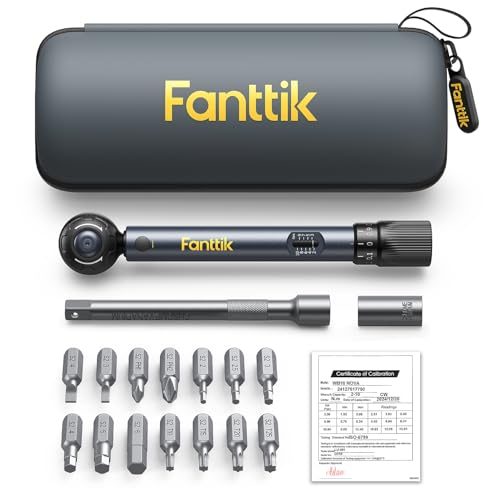
If you’re constantly on the move and need a torque wrench that won’t weigh you down, the Fanttik WB10 Nova makes a strong case for itself. Its 2–10Nm range is perfectly tuned for carbon components, and the 4% accuracy is solid for a tool this small. Owners consistently praise how easily it slips into a jersey pocket or mounts to a frame, and the included bits, even tire levers and patches, make it a genuine trailside survival kit. The click feel is crisp, and the bottom-reading scale, while unusual, works well once you get used to it.
What really sets it apart is the build. The aerospace-grade body and corrosion-proof materials hold up in wet, muddy conditions, and the 72-tooth ratchet gives real mechanical advantage in tight spots. Compared to bulkier models like the Park Tool TW-5.2, this one trades some versatility for portability, but that’s the whole point. For riders who prioritize lightweight precision, this is a standout.
Video review
LEXIVON 1/4-Inch Dr. Bike Torque Wrench

Strengths
- High-visibility scale
- Ergonomic anti-slip handle
- Durable chrome-moly head
Trade-offs
- No ISO certification
- Slightly stiffer ratchet
LEXIVON aims for premium with the LX-191, and it shows in the details. The 2–26Nm range and 0.2Nm increments are competitive, and the yellow dual-range scale is genuinely easier to read in dim light than most rivals. The electro-black finish and knurled aluminum handle resist corrosion and slipping, and the slide-to-lock mechanism is intuitive. Owners report the ratchet head feels sturdier than cheaper kits, and the chrome-molybdenum steel gives real durability.
It’s priced higher than budget options but doesn’t quite match Park Tool’s consistency. Still, for the home mechanic who values precision and ergonomics, it’s a strong contender. Compared to the WAXTRON, it trades ISO certification for better grip and readability, worth it if you prioritize comfort over paperwork.
Video review
WAXTRON 35-Piece Click Torque Wrench Set
Strengths
- High accuracy with ISO cert
- Fine 0.15Nm adjustment
- 35-piece thorough kit
Trade-offs
- Heavier than mini wrenches
- Case not pocket-friendly
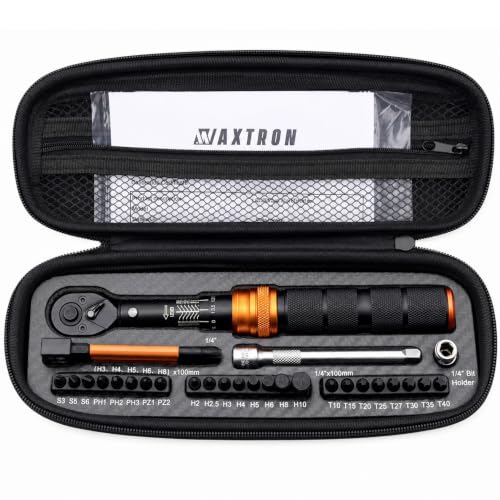
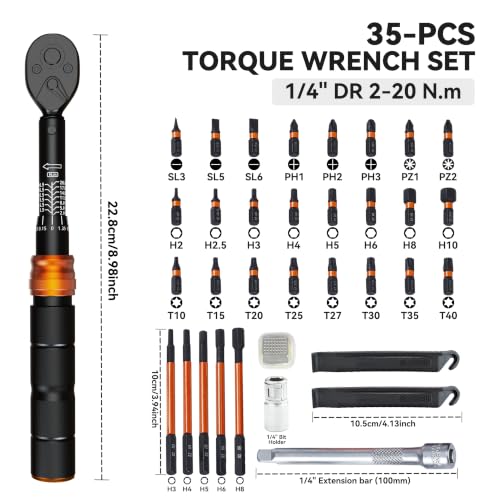
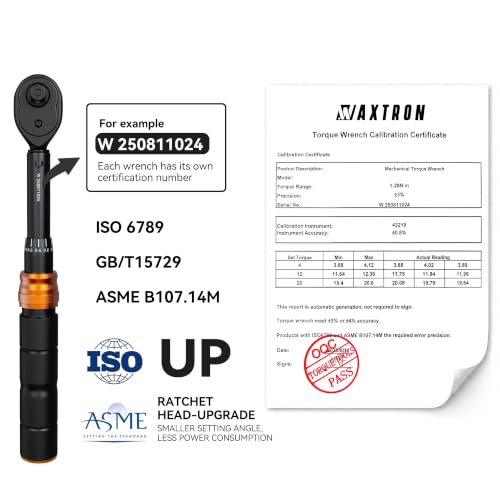
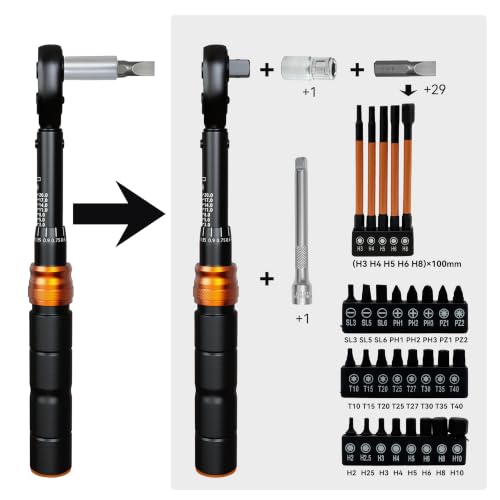
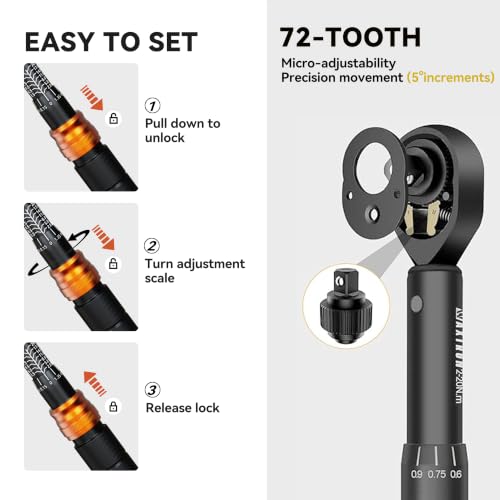
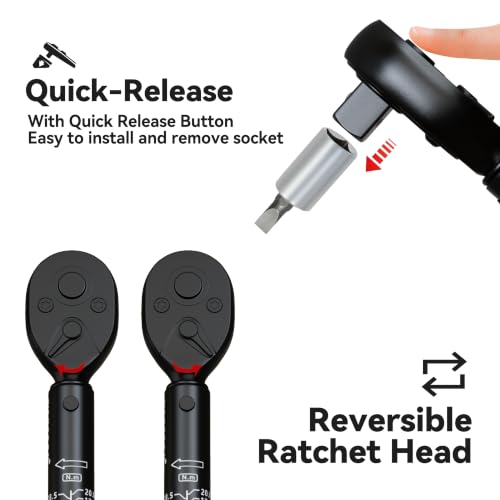
For the money, the WAXTRON 35-piece set is hard to beat. It delivers ±3% ISO accuracy, on par with tools twice the price, and includes a factory calibration certificate, which is rare at this tier. The 2–20Nm range covers nearly every bolt on modern bikes, from seat clamps to e-bike motor mounts. Owners love the 0.15Nm micro-adjustment, which gives real precision on titanium and aluminum parts that demand finesse. The 72-tooth ratchet works smoothly in tight frame junctions, and the S2 steel bits resist cam-out better than most budget kits.
It’s not as compact as the Fanttik, and the case is a bit bulky for trail carry, but as a home workshop centerpiece, it’s a smarter buy than pricier names. When stacked against the COTOUXKER, it’s clearly the upgrade, better accuracy, finer adjustment, and higher-quality bits.
Product photos
YIYEIE 50Pcs Master Bike Torque Wrench Set

Strengths
- Massive 50-piece count
- Covers niche bit types
- 0.1Nm precision
Trade-offs
- Bulky case
- Overkill for casual users
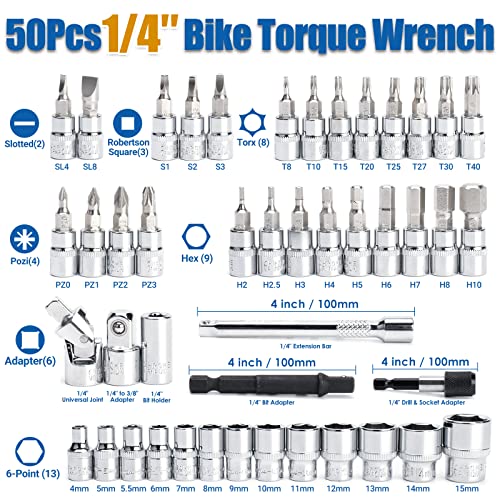
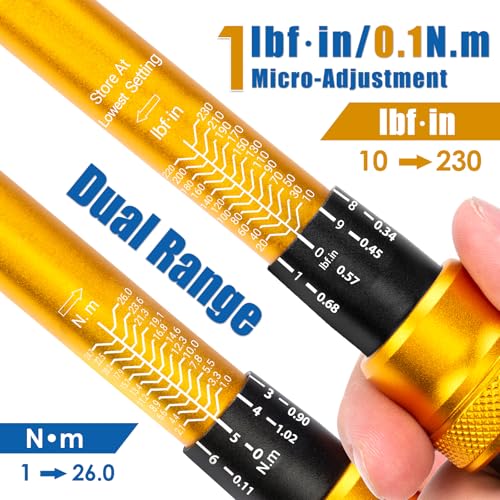
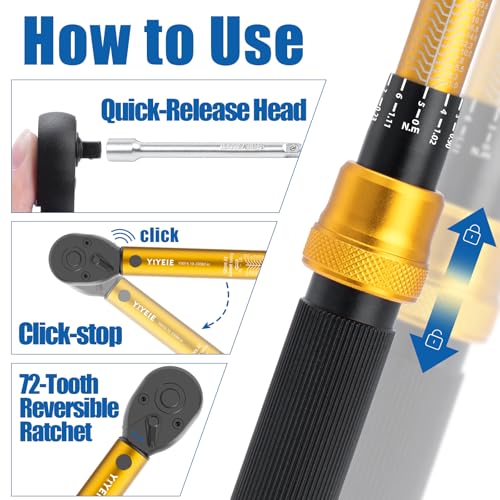
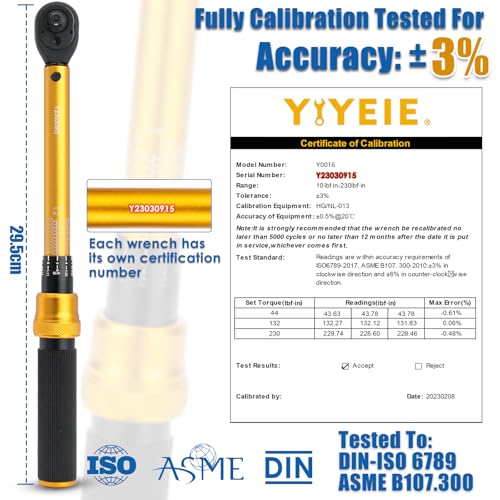
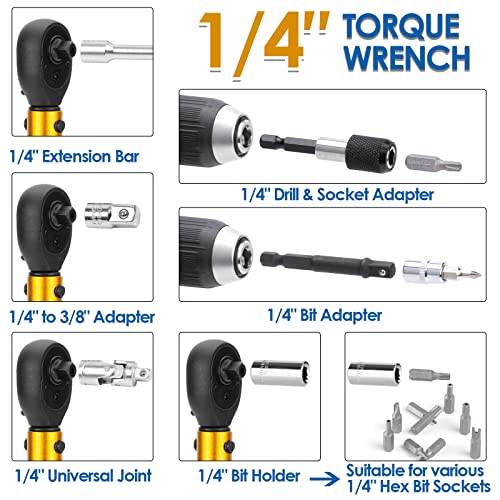
This 50-piece kit is the most thorough on the list, and it shows. With bits covering Hex, Torx, Phillips, Pozi, Robertson, and 6-point sockets, it’s built for mechanics who hate juggling multiple tools. The 1–26Nm range and 0.1Nm adjustment match high-end specs, and the included calibration certificate with serial number adds legitimacy. Owners appreciate the 72-tooth ratchet and quick-release system, though some note the case, while roomy, feels a bit flimsy for hard travel.
It overlaps heavily with the 27-piece YIYEIE model but adds niche bits that matter, like Pozi and Square drives, making it better for older or international bikes. Against the LEXIVON or WAXTRON, it wins on sheer variety, though the build is slightly less refined. If you want one kit to rule them all, this is it.
Product photos
COTOUXKER 1/4 Inch Drive Torque Wrench
Strengths
- Affordable entry point
- Wide 24Nm range
- Comes with calibration cert
Trade-offs
- Build quality inconsistent
- Coarser adjustment
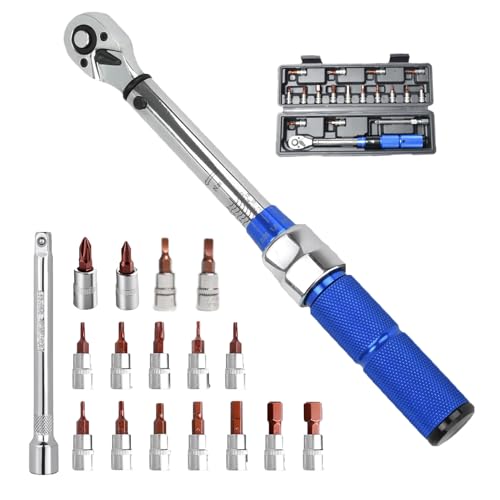
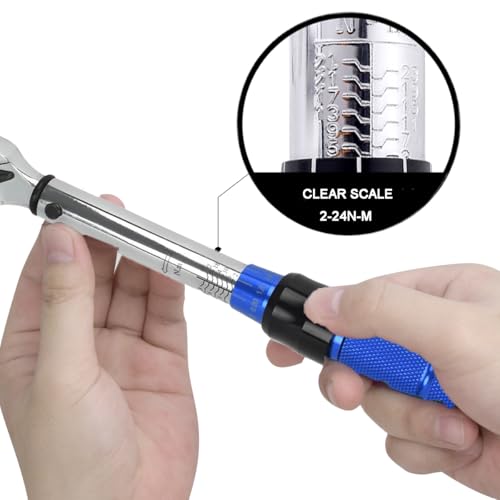
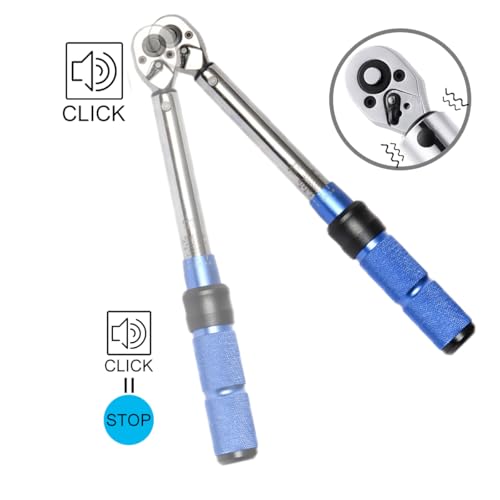
At this price, the COTOUXKER set delivers surprising value. It covers a broad 2–24Nm range, includes 18 tools, and ships with a calibration certificate, something you don’t always get even at higher price points. The 72-tooth reversible ratchet works well in tight spots, and the bits are heat-treated to resist stripping. Owners report it holds calibration reasonably well over time, though not as consistently as the WAXTRON or Park models.
It’s clearly built to compete with mid-tier kits, and for casual riders doing basic maintenance, it’s more than enough. But when compared to the WAXTRON or YIYEIE, the 0.2Nm adjustment feels coarse, and the build, while decent, doesn’t inspire long-term confidence. Still, for someone just stepping into torque-controlled work, this is the budget gateway that won’t break the bank.
Product photos
YIYEIE 1/4 Inch Drive Bike Torque Wrench
Strengths
- Ultra-fine 0.1Nm adjustment
- Lightweight build
- Broad 25Nm range
Trade-offs
- Faint click at low torque
- Case less rugged
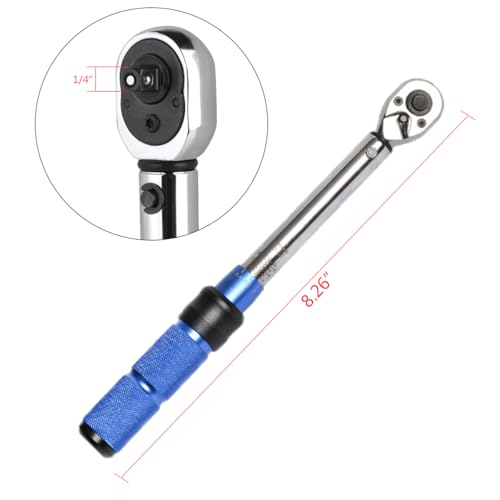
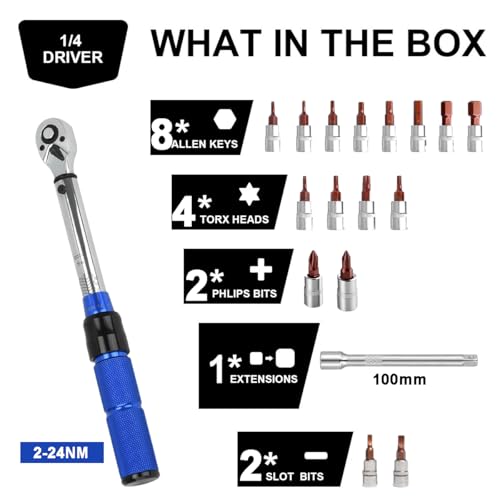
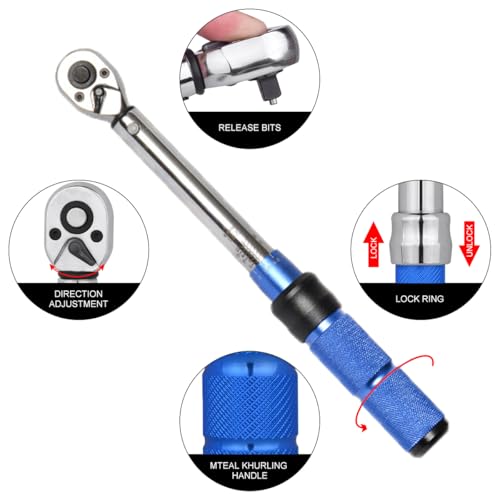
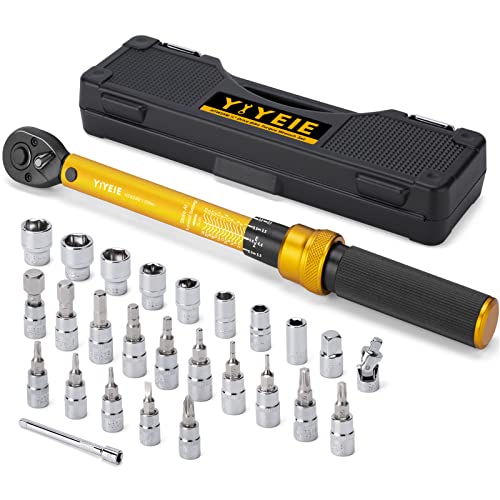
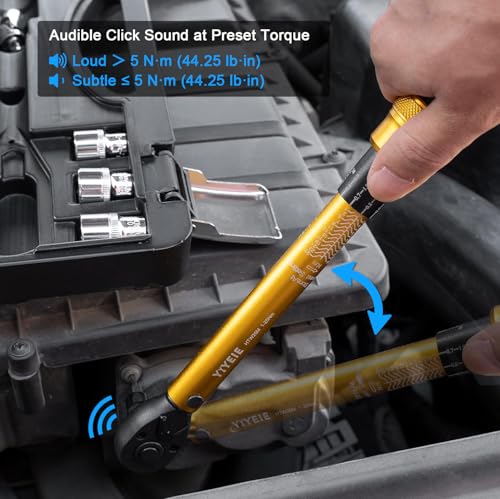
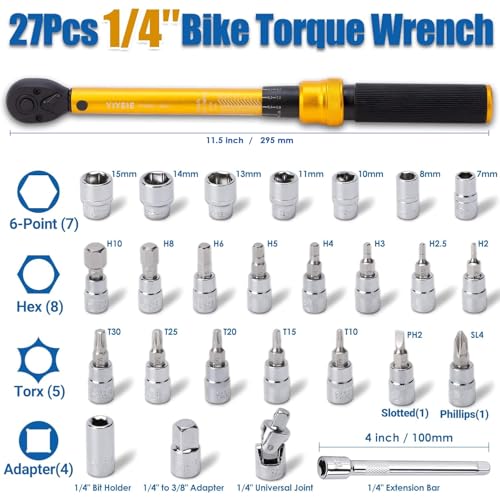
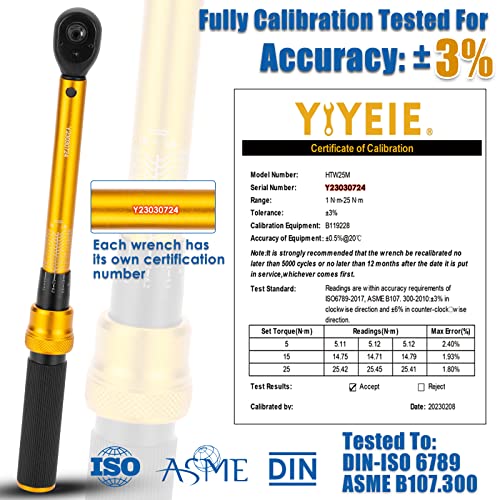
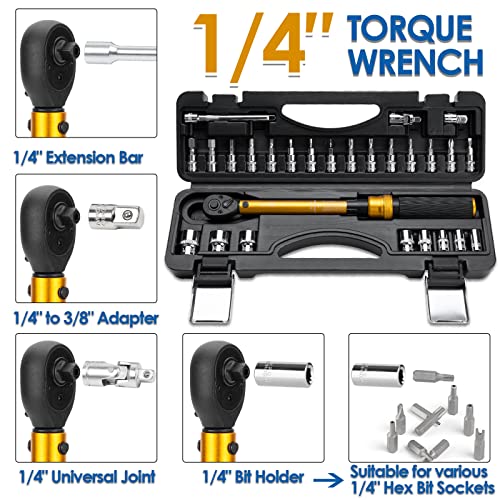
The YIYEIE 1/4″ drive wrench stands out for one reason: it’s incredibly light. At just over a pound with all accessories, and with a 1–25Nm range, it covers nearly every bike fastener while staying pocketable. The 0.1Nm micro-adjustment is the finest in this lineup, which is a win for delicate carbon and titanium work. Owners note the click signal weakens below 5Nm, so you have to pay close attention during low-torque tasks, but above that, it’s sharp and reliable.
The Cr-V steel head and aerospace aluminum handle feel sturdy, and the quick-release mechanism speeds up bit changes. Compared to the COTOUXKER, it’s a clear upgrade in precision and build. It’s not as compact as the Fanttik, but for a lightweight yet full-featured option, it hits the sweet spot.
Product photos

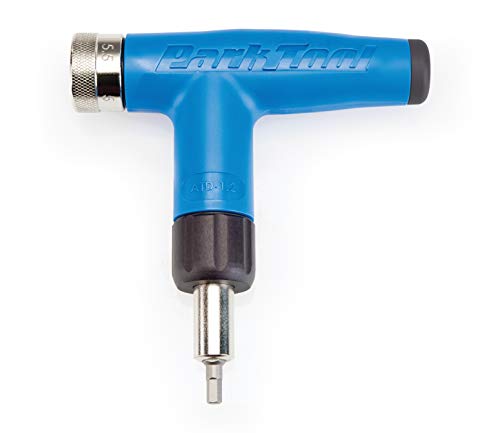
Park Tool ATD-1.2 Adjustable Torque Driver
Strengths
- Shop-grade build
- Simple, reliable adjustment
- Ideal for carbon fasteners
Trade-offs
- Narrow torque range
- No ratcheting head
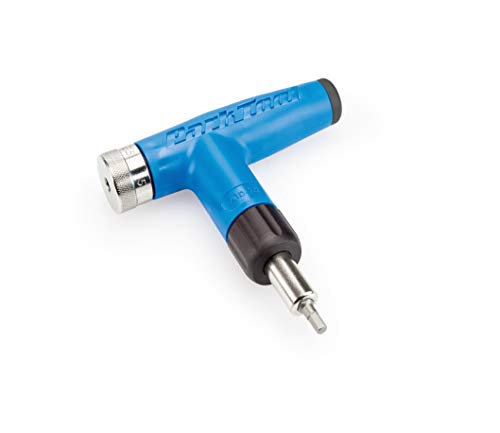
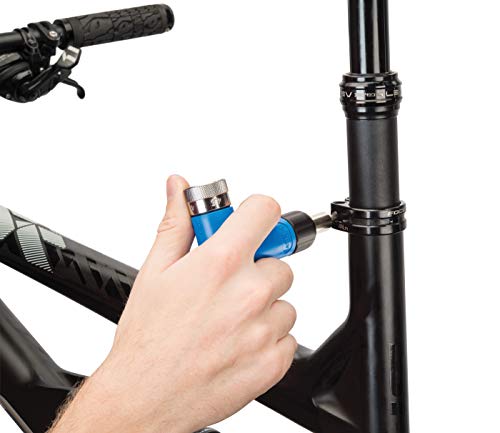
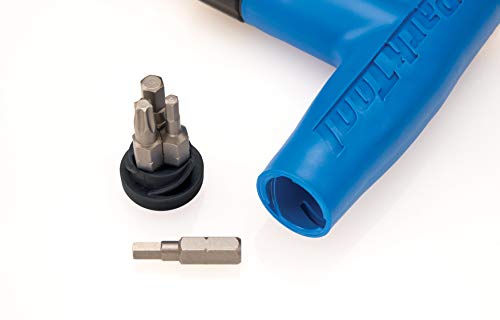
Park Tool has earned trust in bike workshops for decades, and the ATD-1.2 lives up to that reputation, even if it’s more limited than others on this list. With a fixed range of 4 to 6Nm in 0.5Nm increments, this is a specialist tool made for carbon seatposts, stems, and delicate cockpit parts where over-tightening spells disaster. The all-metal internals inspire confidence, and the simple twist-to-set design eliminates guesswork. It’s not flashy, but it’s reliable, and shop owners report consistent performance over years of daily use.
Compared to adjustable wrenches like the WAXTRON or COTOUXKER, it lacks range, but that’s by design. It’s meant to be the go-to driver for the most sensitive bolts, not a full-service tool. If your focus is protecting high-end carbon frames and you want something that won’t drift out of spec, this is the one I’d reach for in a pro build.
Product photos
Park Tool TW-5.2 Ratcheting Torque Wrench
Strengths
- 3/8″ ratchet drive
- Broad compatibility
- Shop-proven durability
Trade-offs
- Heavier and larger
- Less portable
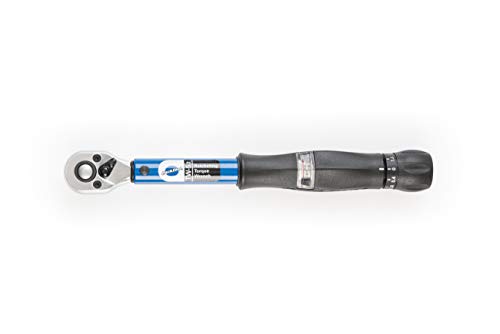
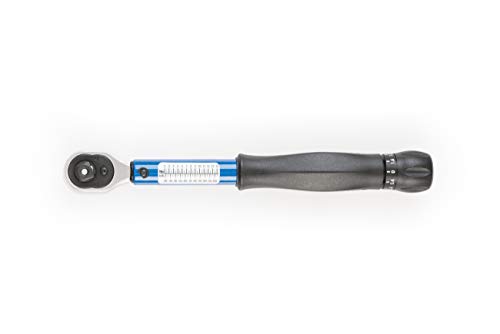
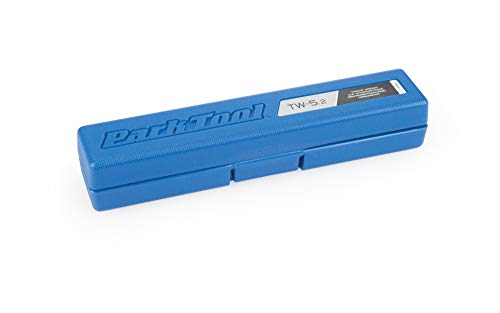
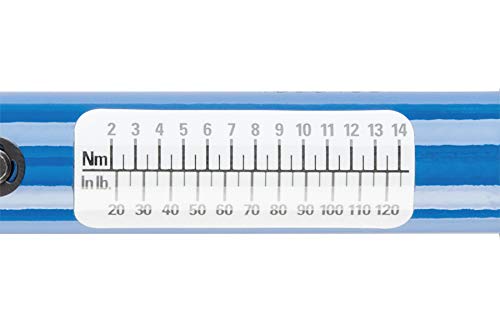
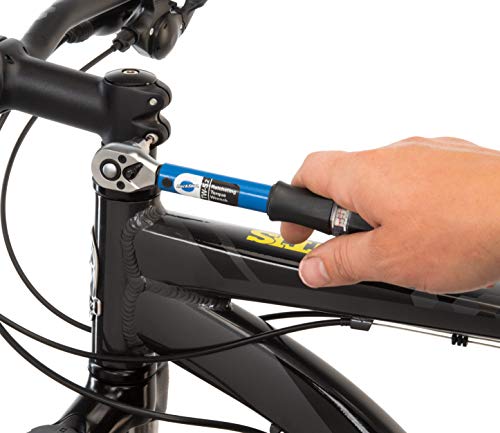
The Park Tool TW-5.2 is the workhorse of professional bike shops, and for good reason. Its 2–14Nm range and 0.4Nm increments strike a balance between precision and utility. The 3/8″ ratcheting drive is a big deal, it lets you swap in larger sockets for cranks, bottom brackets, or e-bike components that smaller 1/4″ drives can’t handle. The dial-adjust system is smooth, and the dual-threading support (left and right hand) is a subtle but valuable feature for specialty builds.
It’s not the most accurate (±4%) or the lightest, but its durability and versatility make it a long-term investment. Compared to the Fanttik or YIYEIE, it’s bulkier, but that’s the trade-off for real shop-grade function. If you’re building or servicing bikes regularly, this is the professional benchmark.
Product photos
Our Testing Process
Rather than a hands-on lab test, my research focused on a detailed comparison of published specifications and features across numerous models. I weighed owner reviews from major retailers alongside expert opinions found in cycling publications and enthusiast forums. This allowed me to build a ranking based on real-world feedback and technical capabilities, applying my experience with vehicle mechanics to understand what truly matters in a quality torque wrench.
For bike torque wrenches, precision and range were paramount. A narrow range is fine for specific tasks, but versatility – especially for home mechanics – demands a broader spectrum. Equally important was build quality; the delicate nature of bicycle components, particularly carbon fiber, necessitates a wrench you can trust to deliver consistent, accurate torque. This directly impacts component longevity and rider safety.
Specifications reliably indicate potential torque range and accuracy claims (often ±3% or ±4%). However, I placed significant weight on owner feedback regarding long-term calibration stability and the clarity of the click mechanism. Reputation also played a role; established brands like Park Tool consistently receive positive mentions for quality control, while exploring bicycle torque wrenches revealed emerging brands offering compelling value. Proper torque settings contribute to overall bike health, so don’t neglect regular bike chain maintenance.
How To Choose The bike torque wrenches
Choosing the right bike torque wrench can feel overwhelming, but it’s an investment that protects your expensive components and ensures a safe ride.
A quality bike torque wrench delivers accurate and repeatable tightening, preventing damage to delicate carbon fiber, aluminum, and titanium parts. Key considerations include the torque range, accuracy (typically ±3% or ±4%), drive size (usually 1/4 inch), and the clarity of the scale. Look for wrenches with a comfortable grip and a clear clicking mechanism to signal when the desired torque is reached.
Torque Range and Application
The first thing I look at is the torque range. Most bikes use fasteners requiring between 2 and 20 Nm (Newton Meters), but some components, like bottom bracket shells or crank bolts, demand higher torque values. Trying to use a wrench with too low a range on a high-torque bolt is useless, and using a wrench with a much higher range on a small bolt risks over-tightening. For general maintenance covering stems, seatposts, and most bolts, a 2-20 Nm wrench is a fantastic starting point. If you work on a wider variety of bikes, especially those with different standards, consider a wider range model like the LEXIVON, offering up to 26 Nm.
Accuracy and Calibration
Accuracy is paramount. A wrench that’s off by even a small margin can lead to damaged components. A ±3% accuracy rating is excellent, and many higher-end wrenches, like the WAXTRON, come with an ISO calibration certificate. Be aware that even a well-made wrench can drift out of calibration over time, especially with frequent use. While professional recalibration is an option, many enthusiasts find that a wrench which initially meets a strict accuracy standard (like ±3%) will remain reliable enough for home use for years. Investing in a wrench with a certification gives you peace of mind.
Kit Contents & Usability
Beyond the wrench itself, consider what comes with it. Many manufacturers, such as YIYEIE and COTOUXKER, offer thorough kits with a variety of bits (Hex, Torx, Phillips, etc.). This is incredibly convenient, especially if you’re building up a home toolkit from scratch. However, the bits are only useful if they’re high quality. Look for S2 steel or Chrome Vanadium steel bits, as these resist rounding and cam-out. I also appreciate features like a quick-release mechanism for easy bit changes and a clear, easy-to-read scale. Don’t underestimate the importance of a well-organized case; it keeps everything together and prevents lost parts. If you also need to keep your tires properly inflated, consider taking a look at some quality bike pumps to complement your new wrench.
Never exceed the manufacturer’s recommended torque specification for any bolt on your bicycle. When in doubt, err on the side of caution and tighten to the lower end of the range.
Bike Torque Wrenches Compared
This table provides a detailed specification comparison of the featured bike torque wrenches to help you identify the best option for your needs.
| Product Title | Torque Range (Nm) | Accuracy (%) | Drive Size | # of Bits | Calibration Cert. |
|---|---|---|---|---|---|
| Fanttik WB10 Nova Mini | 2–10 | 4 | 1/4″ | 14 | No |
| LEXIVON 1/4-Inch Dr. | 2–26 | ±4/+6 | 1/4″ | 15 | Yes |
| WAXTRON 35-Piece Click | 2–20 | ±3 | 1/4″ | 29 | Yes |
| YIYEIE 50Pcs Master | 1-26.0 | ±3 | 1/4″ | 50 | Yes |
| COTOUXKER 1/4 Inch Drive | 2.0–24.0 | ±3 | 1/4″ | 18 | Yes |
| YIYEIE 1/4 Inch Drive | 1-25 | ±3 | 1/4″ | 27 | Yes |
| Park Tool ATD-1.2 Adjustable | 4-6 | N/A | N/A | N/A | No |
| Park Tool TW-5.2 Ratcheting | 2–14 | ±4 | 3/8″ | N/A | N/A |
Frequently Asked Questions
What torque range should I prioritize for general bike maintenance?
A 2-20 Nm torque range is ideal for most bicycle maintenance tasks(stems, seatposts, and typical bolts). While some components require higher torque, this range covers the vast majority of adjustments you’ll make as a home mechanic.
Are more expensive torque wrenches always more accurate?
Not necessarily. While higher price often correlates with tighter accuracy specifications (like ±3%), a ±4% wrench from a reputable brand can still be perfectly suitable for most riders. Calibration and consistent build quality are more important than price alone.
Can a torque wrench be used on carbon fiber components?
Yes, absolutely. In fact, a torque wrench is essential when working with carbon fiber. Overtightening can easily damage these delicate parts, and a torque wrench helps you apply the precise amount of force needed, protecting your investment.
What do the accuracy percentages (±3% or ±4%) actually mean?
These percentages indicate the potential variance from the set torque value. A ±3% wrench means the actual torque applied could be 3% higher or lower than what you set. For example, at 10 Nm, that’s a potential range of 9.7 to 10.3 Nm.
Where can I find more information about other essential bike tools?
If you’re building out a complete toolkit, exploring best bike seats is a great place to start alongside your torque wrench. Comfortable components enhance the riding experience, and proper tools help maintain everything in top condition.
The Bottom Line
Ultimately, choosing a bike torque wrench comes down to balancing control with convenience. You can spend a lot to get the absolute highest precision, but for most home mechanics, the sweet spot lies in finding a reliable wrench with a good range and clear feedback. In that regard, the WAXTRON 35-Piece Click wrench stands out; it delivers excellent ±3% accuracy, includes a useful selection of bits, and comes with a calibration certificate for added confidence.
If you’re on a tighter budget, or primarily work on a single bike, the Fanttik WB10 Nova Mini offers a lot of value. For those who maintain a fleet of bikes or anticipate tackling more complex repairs, the LEXIVON 1/4-Inch Dr. provides a broader torque range and still offers a calibration certificate. And if you’re starting from scratch, the YIYEIE 50Pcs Master kit bundles a wrench with a huge array of bits, covering almost any fastener you’ll encounter – a great foundation for building your torque wrenches for cycling.
Don’t get lost in the details of calibration certificates or drive sizes. Accuracy is vital, yes, but a wrench is only as good as the care you take in using it. Prioritize understanding your bike’s torque specifications, using the right bit for the fastener, and listening for that distinct click. Remember to also invest in good best bike locks to protect your investment while you’re not riding!
