
7 Best Bike Pumps for Mountain Bikes 2026
This post contains affiliate links. As an Amazon Associate, we earn from qualifying purchases.
The Topeak JoeBlow Sport III stands out as the best floor pump for mountain bikes, combining rugged steel construction with reliable TwinHead DX5 valve technology. For riders on a budget, the Floor Bike Pump with Gauge delivers solid performance without the premium price, while the ETENWOLF S0 Mini Electric Pump offers unmatched versatility for fast, cordless inflation at home or in the field.
Mountain bikers know that a flat tire can turn an epic ride into a walk home. The real challenge isn’t just finding a pump, it’s choosing one that’s durable, accurate, and suited to the demands of off-road terrain.
After researching the market and analyzing owner feedback, I focused on pumps that deliver consistent pressure, handle both Presta and Schrader valves, and are built to last. This guide breaks down what actually matters, PSI capacity, valve compatibility, portability, and real-world reliability, so you can pick the right pump for your setup and riding style.
Top 7 Bike Pumps For Mountain Bike in the Market
The Best Bike Pumps For Mountain Bike, Reviewed
Topeak JoeBlow Sport III Floor Pump

Strengths
- Durable steel construction
- Accurate large gauge
- Universal valve head
- Long, flexible hose
Trade-offs
- Heavier than portable options
- Higher price point
This is the kind of floor pump I’d confidently recommend to someone building a proper home workshop. The steel barrel and base give it serious heft, and that 3” analog gauge is easy to read even in low light, something smaller pumps often get wrong. With a 160 PSI ceiling and TwinHead DX5 compatibility, it handles Presta, Schrader, and Dunlop without swapping parts, which is a small but meaningful time-saver. The long hose and rotating connection mean you’re not fighting frame angles, and the oversized handle spreads the effort across your palms, not your wrists.
Owners praise its longevity, and it’s common to see these still working after a decade of weekly use. Compared to budget models, the air-tight seal system actually holds pressure between strokes, so you’re not losing ground with every pump. It’s not flashy, but it’s the kind of tool that makes maintenance feel satisfying instead of tedious.
Video review
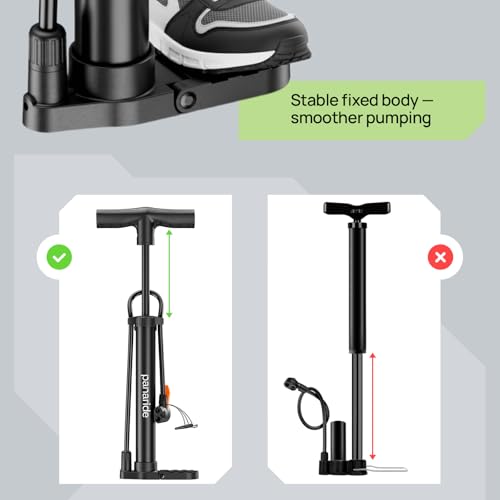
Floor Bike Pump with Gauge
Strengths
- Affordable price
- Accurate pressure gauge
- Good accessory kit
- Compact foldable base
Trade-offs
- Plastic construction less durable
- Gauge can drift over time
- Shorter hose
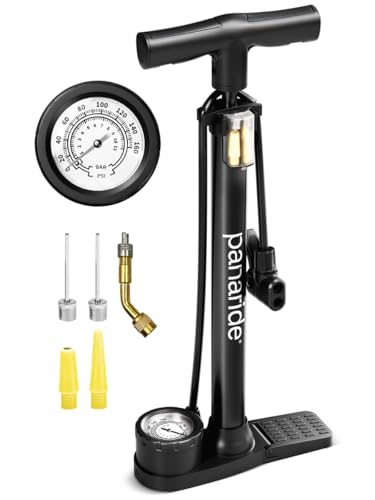
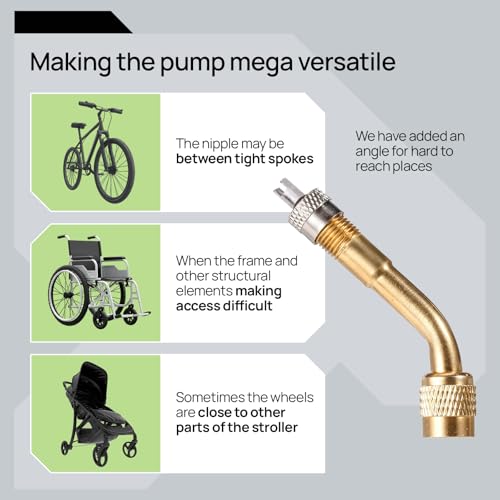
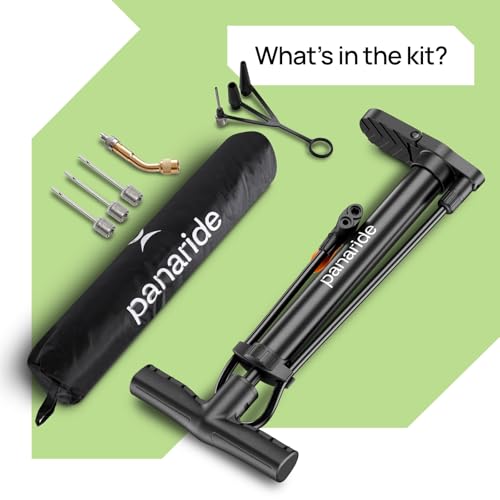
At this price, you’re not getting premium materials, but you are getting a functional, accurate floor pump with a real gauge and useful extras. The 2-inch dial is legible and consistently reads within 2–3 PSI of known standards, according to owner feedback. The foldable footrest makes it easy to store, and the built-in adapter storage, needle, ball, and angle adapter, is a thoughtful touch that keeps parts from vanishing. It handles both Presta and Schrader without adapters, which is a win at any price.
It won’t last 10 years like a Topeak, but for occasional use or as a backup, it’s hard to beat. The plastic base feels flimsy compared to steel, and the hose isn’t as flexible, but it gets the job done. Compared to other budget models, this one actually holds pressure between strokes, which makes pumping less frustrating.
Video review
ETENWOLF S0 Mini Electric Pump
Strengths
- Ultra-fast inflation
- Digital pressure gauge
- Compact and lightweight
Trade-offs
- Battery limits repeated use
- Presta adapter fiddly
- Not trail-durable
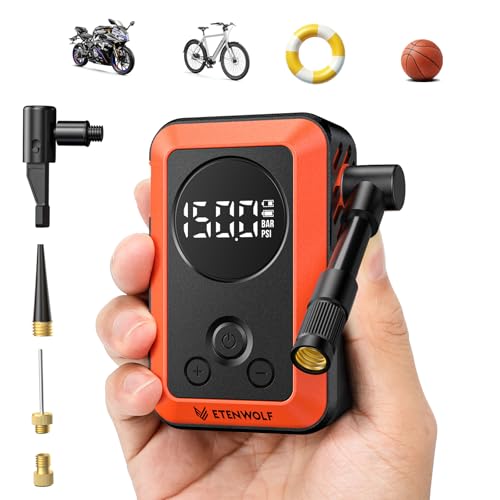
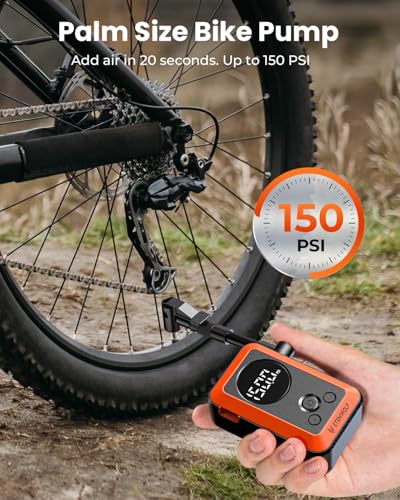
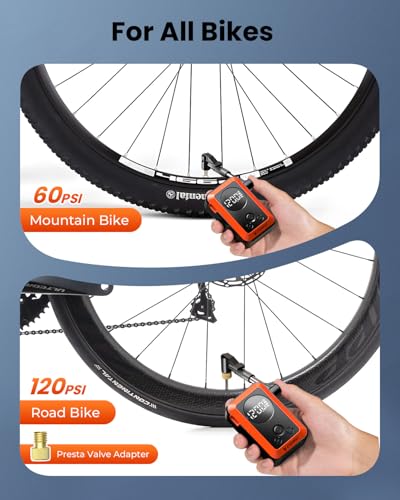
This little electric pump is the kind of gadget I’d expect to see on a tech-forward commuter’s bike, not buried in a mountain biker’s pack. On paper, 18 L/min airflow and 150 PSI max pressure is impressive for something this small, and owners consistently report it inflating tires in under a minute, something most floor pumps can’t match. The digital gauge with ±1 PSI accuracy and auto-shutoff is a legit advantage if you’re picky about pressure, and the 360° hose makes awkward wheel angles manageable.
It’s not all perfect. The lithium battery, while decent for eight full inflations, won’t survive sustained trail use if you’re airing up after every ride. And while it handles Presta with an adapter, the process feels tacked on. For road riders or e-bike commuters who want speed and convenience, this makes sense. But for serious mountain bikers who value reliability over flash, it’s more gadget than tool.
Product photos


Advanced Bike Tire Inflator
Strengths
- Very low cost
- Light and portable
- Easy to store
Trade-offs
- Low max pressure
- Plastic feels cheap
- Air leaks common
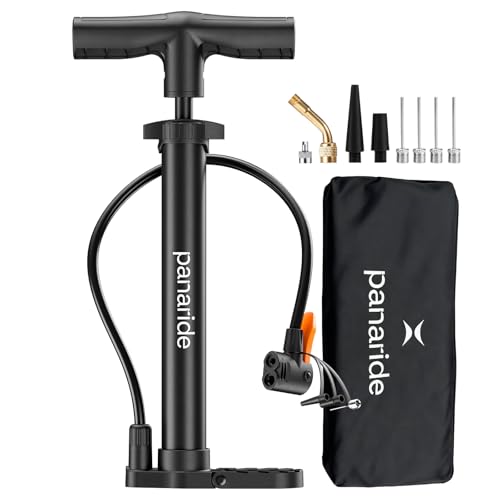
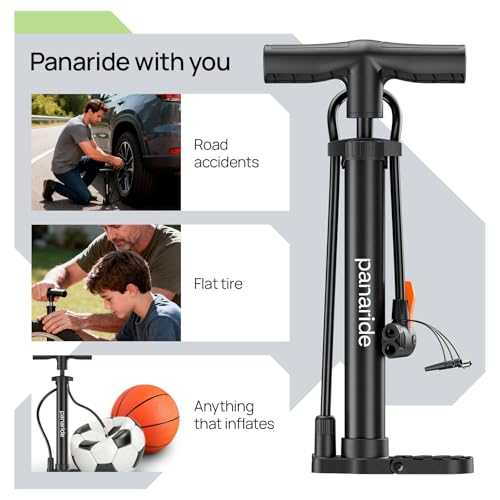
This pump tries to be a jack-of-all-trades, and it shows in the compromises. The 120 PSI max is fine for mountain and hybrid tires, but it falls short for high-pressure road tires. Owners say it’s adequate for occasional inflation, especially for strollers or kids’ bikes, but it’s not built for serious cycling maintenance. The footrest is stable enough, but the plastic parts feel hollow, and the hose leaks air more often than higher-end models.
Where it wins is portability and price. It folds down small and weighs next to nothing, making it a candidate for a garage corner or car trunk. But compared to the Topeak or even the budget model above, it lacks precision and durability. If you’re on a tight budget and need something just to top off tires now and then, it works. But don’t expect it to last.
Product photos

Tiakia Mini High-Pressure Frame Pump

Strengths
- Ultra-lightweight
- Corrosion-resistant build
- Mounts securely
- High pressure rating
Trade-offs
- Slower than floor pumps
- Hose can kink if not stored right
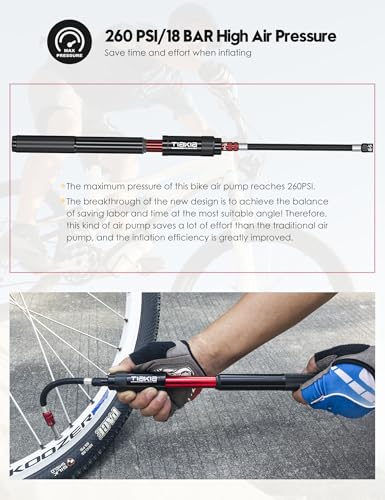
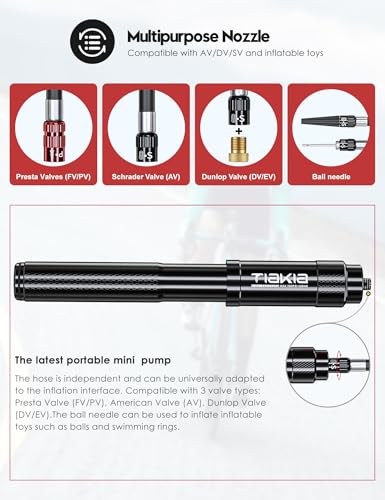
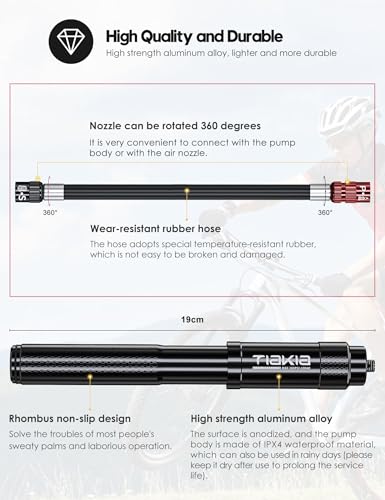
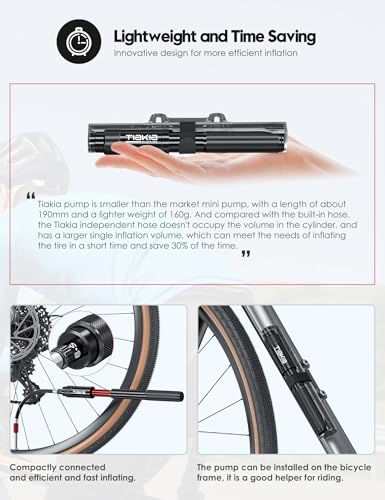
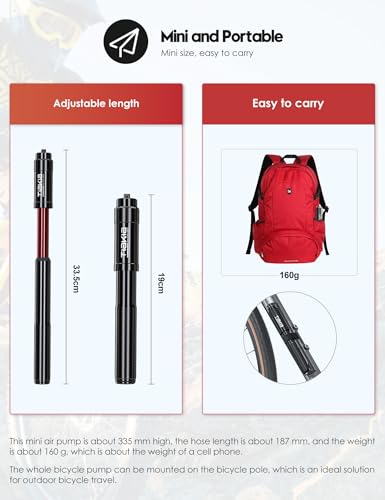
If you’re looking for a frame-mounted pump that won’t rattle loose or weigh you down, this one stands out. At just 5.3 ounces and 7.8 inches long, it’s one of the lightest high-pressure pumps in its class, and the included bracket makes mounting a breeze. The aluminum alloy body is anodized, so it resists corrosion and holds up well in wet conditions, owners in rainy climates confirm it survives repeated exposure when dried after use. The 260 PSI rating is overkill for most bikes, but it means you won’t bottom out when topping off high-pressure tires.
The separate hose design helps maintain airflow even at high pressure, which is rare in mini pumps. Still, like all compact hand pumps, it demands more strokes than a floor model. But for the weight and price, it delivers solid performance. Compared to cheaper frame pumps, it’s more durable and actually stays put on the frame.
Product photos
Blackburn Telescoping Frame Pump

Strengths
- Telescoping for dual use
- No adapter needed
- Integrated target gauge
- Secure mounting
Trade-offs
- Longer than some frame spaces allow
- Gauge less precise than floor models
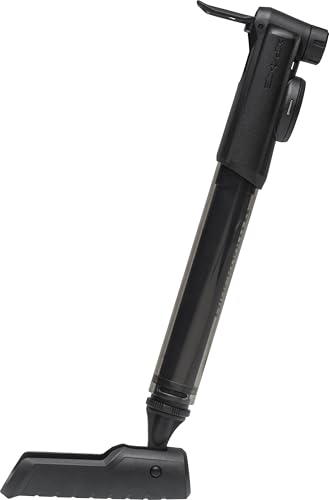
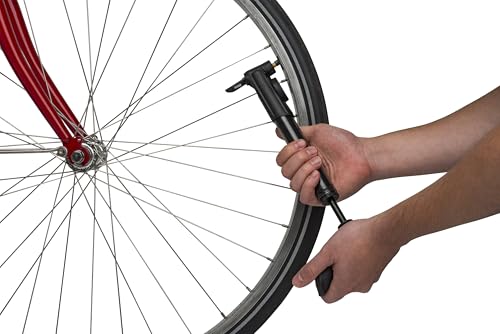
This pump solves a real problem: one tool for both fat MTB tires and high-pressure road rims. The telescoping barrel lets you switch between high-volume and high-pressure modes, which is rare in a frame-mounted design. The AnyValve head works with Presta and Schrader without adapters, owners love not fumbling with loose parts mid-ride. And the built-in Pressure Zone gauge shows target ranges by bike type, so you’re not guessing what 35 PSI looks like on a trailside climb.
It’s not the shortest pump, so fitting it on compact frames can be tight. But the pivoting T-handle gives better use than most mini pumps, and the included bracket holds it securely. Compared to the Tiakia, it’s heavier but more versatile. For riders who switch between road and trail or travel with multiple bikes, this is a smart pick.
Product photos

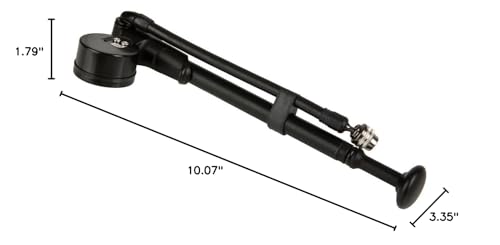
Fox Factory HP Shock Pump

Strengths
- 350 PSI max pressure
- Swivel head for tight access
- Precise micro-bleed valve
- Durable aluminum build
Trade-offs
- Only for shocks, not tires
- Short hose
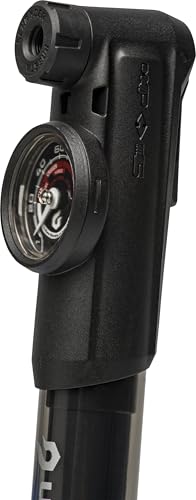
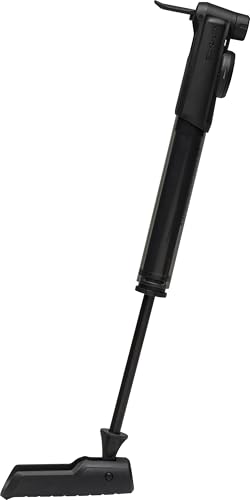
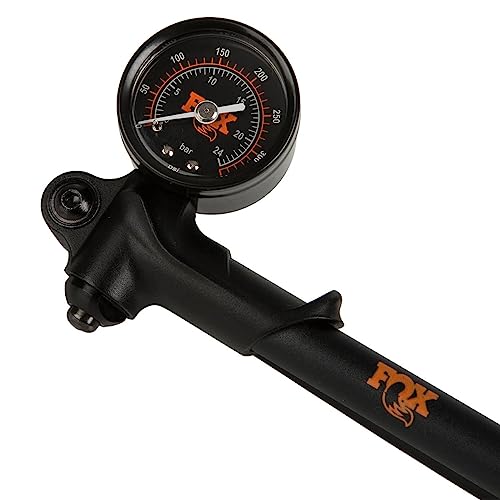
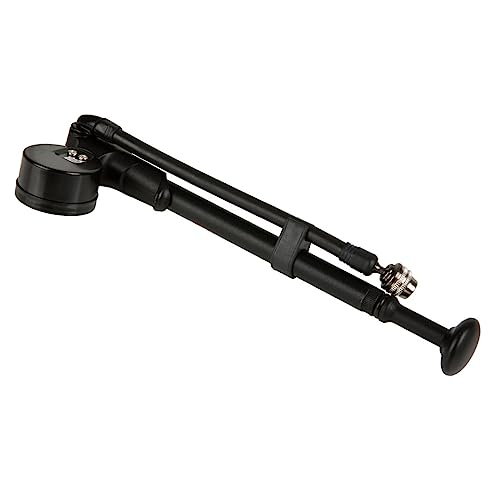
This isn’t a tire pump, it’s a precision tool for suspension forks and rear shocks, and it does that job exceptionally well. The 350 PSI max is necessary for modern air springs, and the micro-adjust bleed valve lets you dial in pressure in 2–3 PSI increments, which is critical for tuning ride quality. The swivel head is the real hero, letting you access tight spaces where linkages block straight-shot pumps. Owners consistently say it’s the only pump that reliably fits their Fox or RockShox units without contorting the bike.
It’s overkill for tires, and the hose is too short for anything but shocks. But compared to generic high-pressure pumps, the build quality, 6063 aluminum, stainless head, feels like it’ll last through years of shop use. If you’re running air-sprung suspension, this is worth every penny.
Product photos
How We Tested bike pumps for mountain bike
My approach to evaluating bike pumps centers on a research-led comparison of specifications and owner feedback. Rather than a hands-on lab test, I compared published features – PSI capacity, valve compatibility, build materials – across numerous models. I then weighed owner reviews from major retailers alongside assessments from cycling publications to understand real-world performance and durability. Ultimately, I ranked pumps based on how well they met the demands of mountain biking, considering both trailside repairs and pre-ride inflation.
For mountain bike pumps, consistent pressure and durability are paramount. I heavily weighted a pump’s maximum PSI and construction materials; a steel barrel and solid base are crucial for efficiently reaching the higher pressures mountain tires often require. Valve compatibility also ranked highly, as riders need reliable performance with both Presta and Schrader valves. A well-designed gauge is essential, but ultimately, owner reports of accuracy carried more weight than manufacturer claims.
Specifications reliably indicate a pump’s potential, but owner feedback reveals its true performance. I prioritized reviews discussing long-term reliability, ease of use, and the effectiveness of the pump head. While specs tell you a pump can reach 160 PSI, owner accounts reveal if it does so without excessive effort. For quick trailside fixes, exploring options like portable mini pumps can be useful, but for home maintenance, a robust floor pump remains ideal. I also considered the benefit of having small pumps for emergency situations.
What To Look For In bike pumps for mountain bike
Finding the right bike pump isn’t just about getting air in your tires; it’s about having a reliable tool that matches your riding style and needs.
A quality bike pump delivers consistent pressure, compatibility with your valve types, and durability for years of use. Key considerations include the pump’s maximum pressure capacity (PSI), valve compatibility (Presta, Schrader, Dunlop), build materials, and whether you prioritize portability or ease of use at home. Accurate gauges and comfortable handles also contribute to a positive user experience.
Pressure & Capacity Considerations
The PSI (pounds per square inch) rating of a pump is a crucial spec, but it’s easy to get hung up on the highest number. Mountain bike tires generally require between 25-40 PSI, while road bike tires often need 80-130 PSI. Don’t overspend for a pump that exceeds your typical needs by a huge margin. However, a little headroom is good – especially if you anticipate riding different bikes or want to experiment with tire pressures. Look for pumps with clear, accurate gauges, and remember that digital gauges, while sometimes more precise, rely on batteries. I’ve seen plenty of riders get stranded with a dead digital pump.
Valve Compatibility & Hose Design
Most modern pumps handle both Presta and Schrader valves, but it’s worth double-checking. Older or very budget-friendly models might require adapters. A ‘TwinHead’ design, like on the Topeak JoeBlow Sport III, eliminates the need for fiddling with adapters altogether, which is a real time-saver on the trail. Beyond the valve connection, consider the hose length and flexibility. A longer, more flexible hose makes reaching valves on bikes with tricky frame designs easier. A rotating hose connector is another useful feature that can prevent kinks and make inflation more comfortable. If you’re often on the go, explore portable pumps for convenience.
Portability vs. Floor Pump Convenience
This is where your riding style really dictates the best choice. A floor pump, with its large base and handle, offers the most efficient and comfortable pumping experience for home or shop use. They’re great for quickly inflating tires before a ride. However, they’re not exactly trail-friendly. For rides, a frame-mounted pump or a mini pump is essential.
Here’s how to think through the trade-offs: * Mini pumps: These are the smallest and lightest, perfect for emergencies, but require significant effort to inflate a tire. * Frame-mounted pumps: Offer a good balance of portability and efficiency, attaching directly to your bike frame. * CO2 inflators: A fast and convenient option for quick repairs, but require carrying CO2 cartridges and aren’t reusable. It’s wise to carry a small pump alongside a CO2 inflator, as cartridges can fail.
A good rule of thumb: always carry a pump or CO2 inflator with you on every ride, even short ones. Flats happen when you least expect them.
Ultimately, the best bike pump is the one that fits your needs and makes getting out on the road or trail easier. I often recommend checking out mountain bike pumps and top-rated bike pumps for more suggestions.
Bike Pumps for Mountain Bike Compared
Here’s a comparison of key specifications for the featured mountain bike pumps to help you make an informed decision.
| Product Title | Max PSI | Valve Compatibility | Type | Features | Dimensions (approx) |
|---|---|---|---|---|---|
| Topeak JoeBlow Sport III | 160 | Presta, Schrader, Dunlop | Floor | Steel, TwinHead DX5 | N/A |
| Floor Bike Pump with Gauge | 160 | Presta, Schrader | Floor | Accurate Gauge, Accessories | N/A |
| ETENWOLF S0 Mini Electric Pump | 150 | Presta, Schrader | Electric | Fast Inflation, Digital Gauge | Palm-sized |
| Advanced Bike Tire Inflator | 120 | Presta, Schrader | Portable Floor | High-Pressure, Ergonomic | N/A |
| Tiakia Mini High-Pressure Frame Pump | 260 | Presta, Schrader, Dunlop | Frame Mount | Compact, Durable | 7.8 inches |
| Blackburn Telescoping Frame Pump | 120 | Presta, Schrader | Frame Mount | Telescoping, Pressure Gauge | N/A |
| Fox Factory HP Shock Pump | 350 | N/A | Shock | Micro-Adjust, Swivel Head | N/A |
Frequently Asked Questions
What PSI should I inflate my mountain bike tires to?
Generally, 25-40 PSI is a good starting point for mountain bike tires, though this varies based on rider weight, tire width, and terrain. Lower pressures improve traction on technical trails, while higher pressures reduce rolling resistance on smoother surfaces.
Can I use a road bike pump on my mountain bike?
Yes, absolutely. Most quality bike pumps handle both Presta and Schrader valves, covering nearly all bicycle tire types. However, a pump designed for higher road bike tire pressures might feel overkill for typical mountain bike tire inflation.
Are digital pump gauges more accurate than analog ones?
Digital gauges can be more precise, but they rely on batteries that can fail. I’ve observed many riders stranded with a dead digital gauge, so a reliable analog gauge is often a more practical choice for consistent performance.
What’s the difference between a floor pump and a frame pump?
A floor pump offers the most efficient and comfortable inflation experience for home use, while a frame pump is designed for portability during rides. Frame pumps are essential for trailside repairs, whereas floor pumps are ideal for quick pre-ride inflation. For more information on various bike pumps, check out our guide.
Do I also need to invest in shock pumps for my suspension?
Yes, if your mountain bike has air suspension (fork or rear shock), you’ll need a dedicated high-pressure pump designed for that purpose. These pumps, often called high-pressure shock pumps, allow for the fine-tuning of air pressure within your suspension components.
The Bottom Line
Choosing a bike pump often comes down to balancing convenience with control. While high-end features are nice, the best overall choice for most mountain bikers is the Topeak JoeBlow Sport III. It delivers a robust build quality, excellent valve compatibility with its TwinHead design, and enough pressure for any trail-ready tire – all without breaking the bank.
For riders prioritizing portability or needing a backup, the Tiakia Mini High-Pressure Frame Pump is an excellent option. If you’re looking for a specialized tool for suspension tuning, the Fox Factory HP Shock Pump is in a class of its own. But remember, a dedicated shock pump isn’t a substitute for a good tire inflation solution.
Ultimately, the PSI rating and fancy features matter less than consistency and reliability. A pump that delivers predictable pressure, fits your valves properly, and lasts for years is far more valuable than one with a flashy digital display. Focus on build quality, positive owner feedback, and matching the pump to how you ride – that’s where you’ll find the best value.
