
8 Best Bike Maintenance Stands of 2026
This post contains affiliate links. As an Amazon Associate, we earn from qualifying purchases.
The Park Tool PCS-9.3 is the best overall bike maintenance stand for its rock-solid build and reliable performance, while the RAD Cycle Pro Repair Stand stands out as a strong budget-friendly pick that doesn’t skimp on key features like height adjustability and stability.
Every cyclist knows the frustration of trying to fix a stubborn chain or true a wobbly wheel while the bike slips and shifts on a makeshift perch. A proper maintenance stand solves that, turning awkward floor work into a smooth, efficient process.
In this guide, I break down the top stands based on real-world feedback, specifications, and what actually matters when you’re elbow-deep in a repair. We’ll cover stability, clamp design, weight capacity, and portability, so you can find the right fit for your garage, budget, and type of riding.
Top 8 Bike Maintenance Stands in the Market
The Best Bike Maintenance Stands, Reviewed
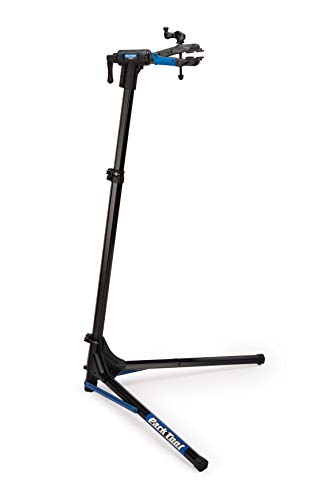
Park Tool Team Issue Portable Stand
Strengths
- Ultra-rigid Hexatude tubing
- Folds compactly
- Lightweight at 13 lbs
- Smooth, reliable clamp
- Pro-level stability
Trade-offs
- High price
- No tool tray
- Limited max height
The Park Tool Team Issue is the Ferrari of bike stands, lightweight, ultra-stiff, and built for pros. At 13 pounds and folding to just 47 inches, it’s the most portable high-end stand available, yet it doesn’t sacrifice stability. The proprietary Hexatude aluminum tubing eliminates twist and flex, a critical detail when you’re adjusting derailleurs or torquing cranks.
Reviewers consistently call it “the best” for on-the-go mechanics, race pit crews, or anyone who values precision and packability. The clamp height adjusts up to 60 inches, which is modest compared to others, but the trade-off is unmatched rigidity. It lacks a tool tray, and the price is steep, but if you’ve ever fought a wobbly stand during a critical repair, you’ll understand why this one is worth it.
Compared to the PCS-10.3, it’s lighter and stiffer but less adjustable. For most home users, it’s overkill. But for serious cyclists who travel with their tools, it’s unmatched.
Video review
Park Tool PCS-10.3 Deluxe Stand

Strengths
- Extremely stable
- Smooth 360° rotation
- Durable steel build
- Excellent clamp grip
- Trusted brand reliability
Trade-offs
- No tool tray
- Heavy for transport
- Pricier than most
The Park Tool PCS-10.3 is the gold standard for home mechanics who want pro-level performance without the shop-tier price of the Team Issue. On paper, it shares the same robust steel construction and smooth height adjustment as its siblings, but what sets it apart is the upgraded clamp mechanism and superior stability. Reviewers consistently praise its rock-solid hold and buttery 360° rotation, which makes complex drivetrain work feel effortless.
It’s heavier than portable stands, but that weight translates into zero flex during aggressive adjustments. The clamp opens wide enough for most seat posts and includes protective jaws that won’t mar finishes. Compared to budget models, the difference is night and day in feel and longevity. While it lacks a tool tray, its reliability and engineering justify the cost for serious riders. If you maintain multiple bikes regularly, this is the kind of stand that pays for itself in saved frustration.
Video review
Park Tool PCS-9.3 Basic Stand

Strengths
- Durable steel construction
- Stable and rigid
- Simple, reliable design
- Folds for storage
- Trusted Park Tool build
Trade-offs
- No tool tray
- Heavier than alternatives
- Basic clamp mechanism
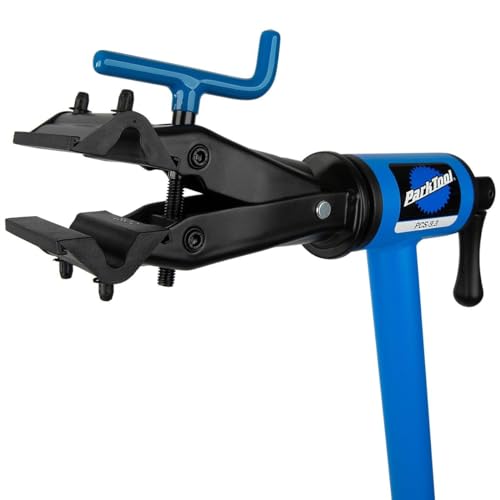
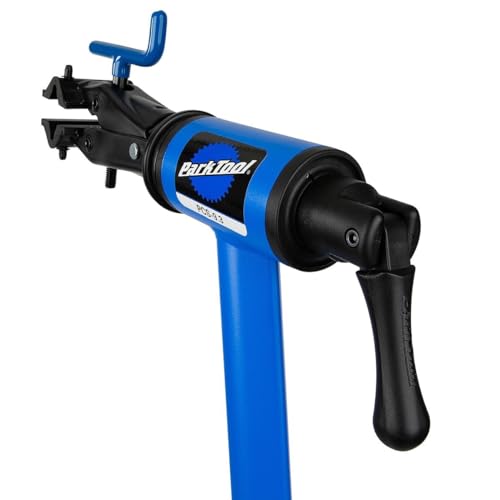
The Park Tool PCS-9.3 is the no-nonsense entry point into the brand’s legendary workstand lineup. It’s built with all-steel teardrop tubing for reduced flex, and the locking yoke keeps the bike steady during adjustments. While it lacks a tool tray and has a simpler clamp than the PCS-10.3, it still delivers the core Park Tool promise: reliability and stability.
Owners appreciate its straightforward design and ease of use, with many calling it “bulletproof” for basic tune-ups and chain maintenance. It’s heavier than aluminum stands, but that adds to its steadiness. Compared to budget models, it feels more deliberate in every movement, no creaks, no wobble. If you’re looking for the most dependable value from a trusted brand and don’t need bells and whistles, this is the one. It won’t impress with extras, but it won’t let you down.
Product photos


VEVOR 4-Leg Steel Bike Stand

Strengths
- High weight capacity
- Stable four-leg base
- Magnetic tool tray
- Folds for storage
- Affordable
Trade-offs
- Bulky when folded
- Clamp lacks micro-adjustment
- Rubber pads could be better
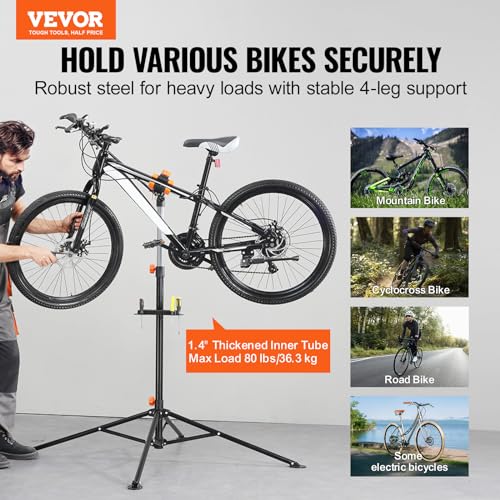
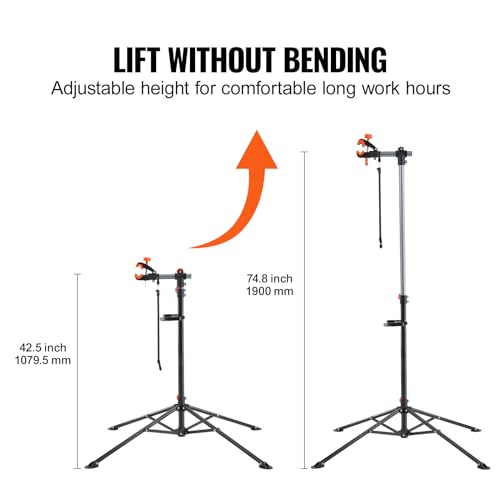
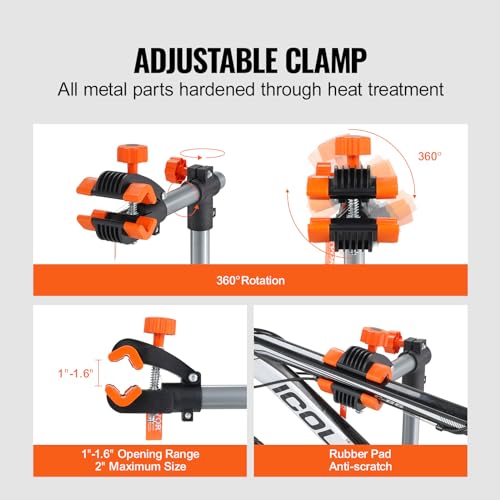
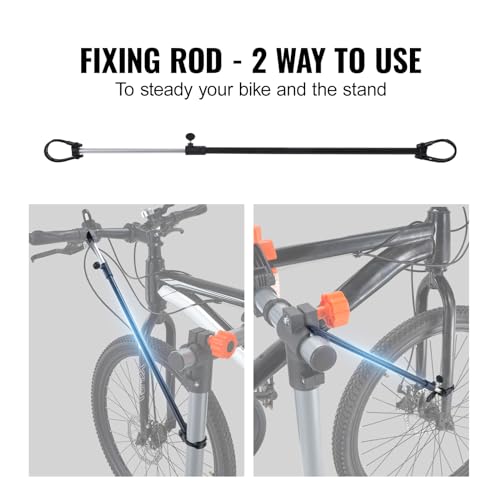
For budget-focused riders who still want a heavy-duty build, the VEVOR Bike Repair Stand delivers more than its price suggests. With a true 80-pound capacity and a four-legged steel base, it’s one of the most stable low-cost stands I’ve seen on paper. Owners consistently report it handles e-bikes and fat-tire models without wobble, which is rare at this price. The 360° clamp works smoothly and accommodates a wide range of tube diameters, though some note the rubber pads could be thicker to prevent micro-scratches on delicate frames.
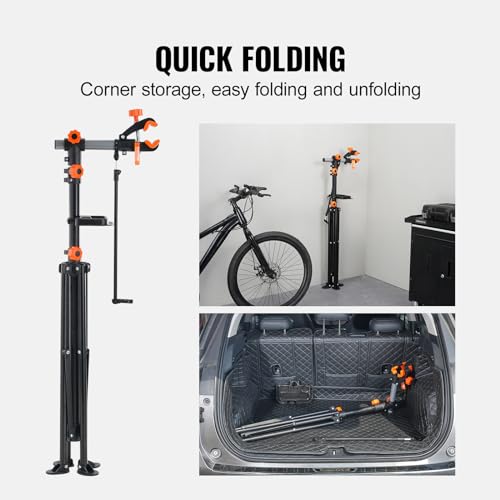
The adjustable height range is generous, and the magnetic tool tray is a thoughtful addition that stays put during use. It folds down for storage, but the legs don’t lock together, making transport a bit clunky. Compared to pricier Park Tool models, it lacks refinement in the clamp mechanics and overall rigidity, but for weekend wrenchers on a tight budget, this stand punches above its weight.
Product photos
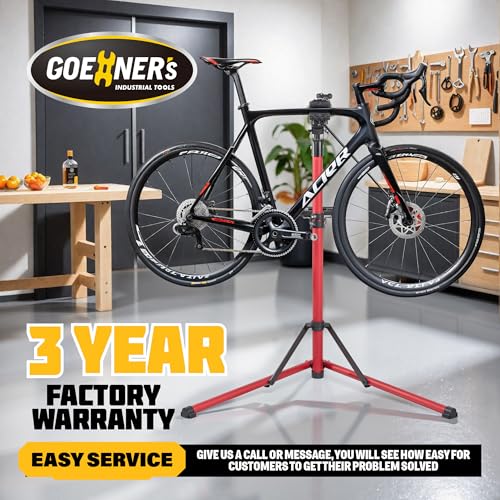
GOEHNER’s Upgrade 2.0 Bike Stand

Strengths
- Highest weight capacity
- Lightweight aluminum build
- Micro-adjust clamp
- Removable tool tray
- Folds compactly
Trade-offs
- Limited max height
- Slightly narrower clamp range
- No leg lock for transport
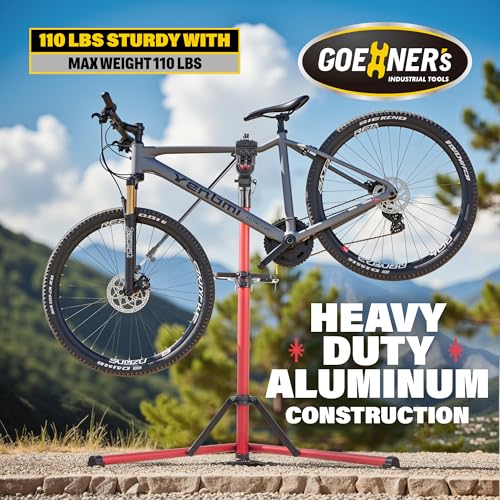
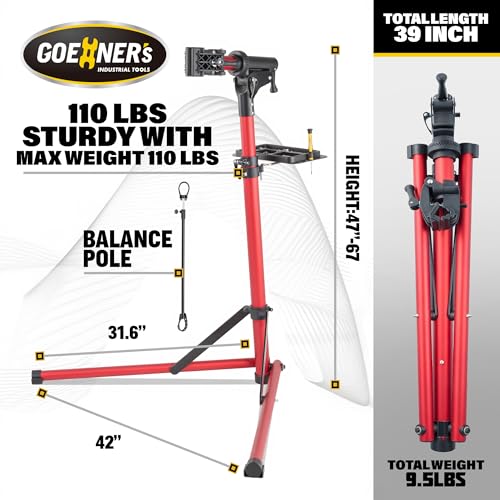
When it comes to e-bikes and heavier builds, the GOEHNER’s Upgrade 2.0 stands out with a rare 110-pound capacity, a full 30 pounds more than most competitors. That extra margin makes it a top pick for e-bike owners who worry about stressing their stands. The aluminum frame keeps it light at just 9.5 pounds, yet the 1.78-inch diameter tubing adds serious stiffness.
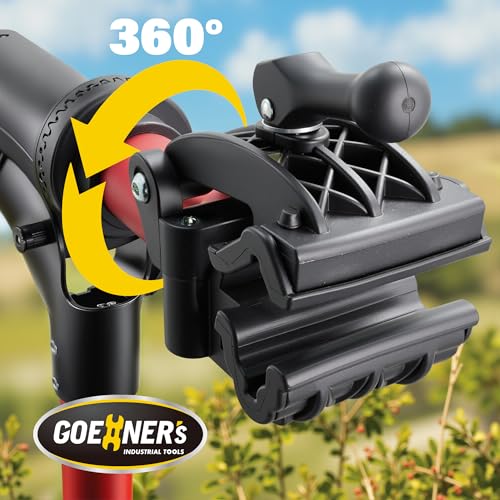
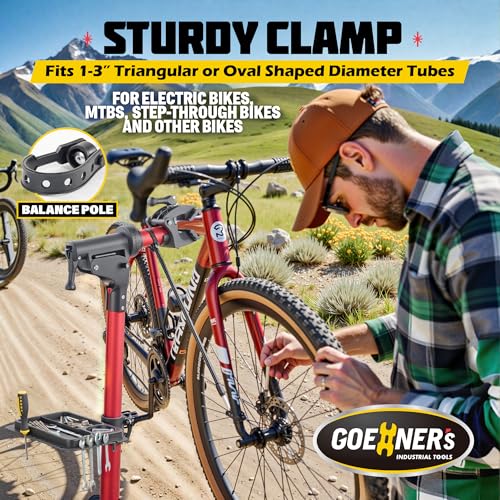
The micro-adjust clamp is a standout feature, allowing fine-tuned positioning that prevents slippage during drivetrain work. The 360° rotation is smooth, and the removable magnetic tray is practical and easy to clean. Some owners note the height range is narrower than others, topping out at 67 inches, which might not suit taller users. But for e-bike mechanics or anyone with a heavy mountain bike, the GOEHNER offers peace of mind you won’t find elsewhere at this price.
Product photos
CXWXC 88lbs E-Bike Repair Stand

Strengths
- Higher than average weight capacity
- Stable tripod base
- Magnetic tool tray
- Lightweight
- Quick fold design
Trade-offs
- Shorter height range
- Plastic tray less durable
- Clamp may loosen over time
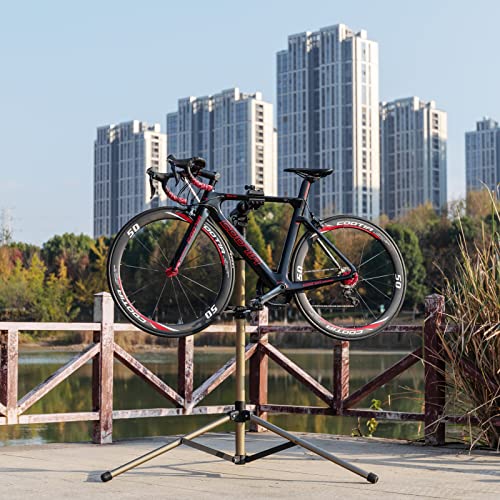
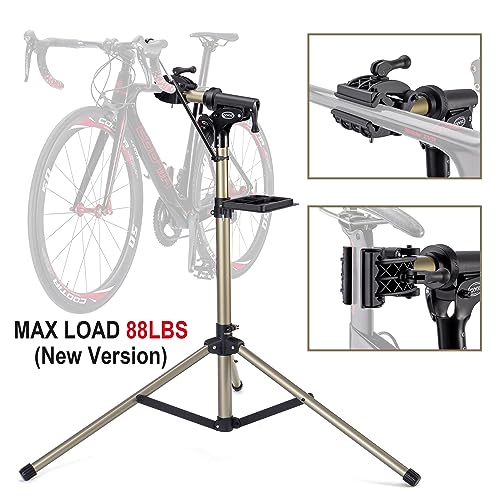
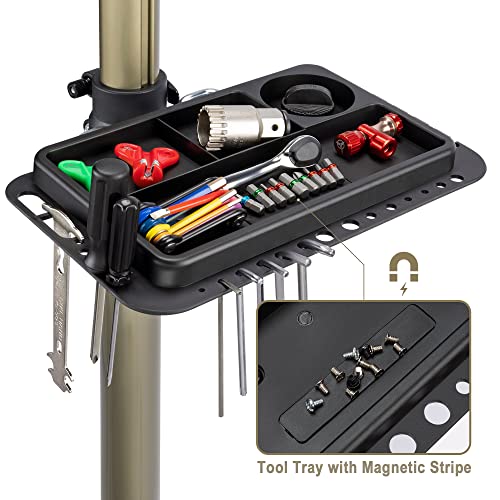
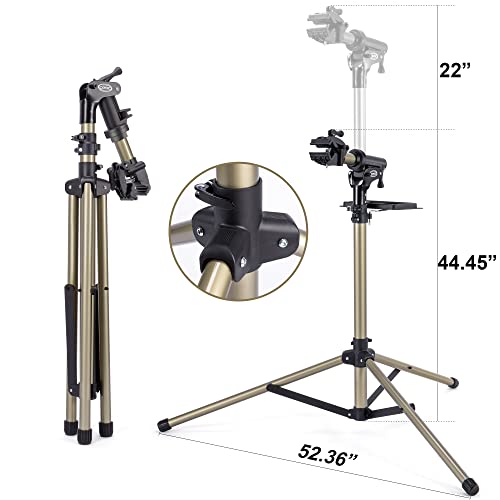
The CXWXC Bike Repair Stand is a solid mid-range option for e-bike owners who want more capacity than the standard 80 pounds but aren’t ready to pay premium prices. With an 88-pound limit, it bridges the gap between budget models and high-end stands. The tripod base is wide and stable, and the anti-slip feet prevent shifting during use, a detail owners appreciate during chain cleaning or wheel removal.
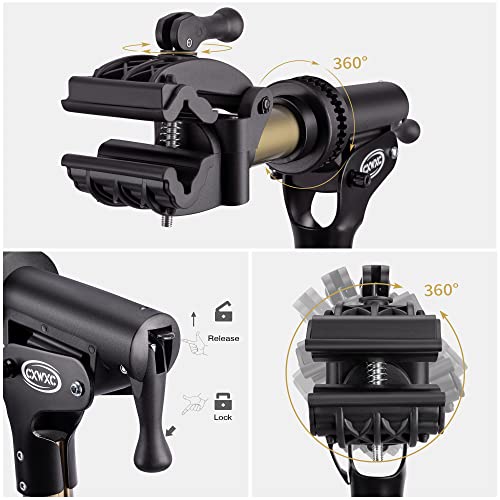
The 360° clamp works well, though some report slight play over time. The plastic tool tray with magnetic compartment is functional, but not as strong as metal trays on Park Tools. At 44.45″ to 66.45″ height range, it suits average-height users but may feel short for taller mechanics. It’s lightweight and folds down quickly, making it a decent choice for shared garage spaces.
Product photos
CHEPARK 80lbs Bike Repair Stand

Strengths
- Good weight capacity
- Lightweight and portable
- Magnetic tool tray
- Quick setup
- 360° rotation
Trade-offs
- Shorter max height
- Less rigid than premium stands
- Plastic components feel budget
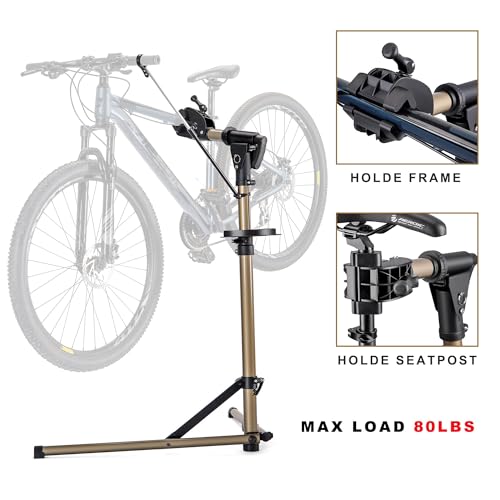
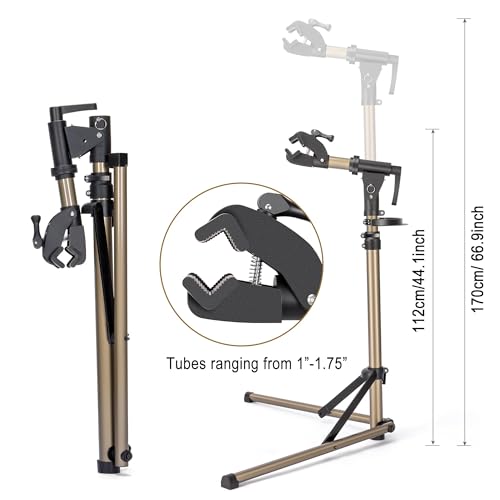
The CHEPARK Bike Repair Stand hits a sweet spot between cost and capability, making it a strong contender in the mid-tier market. At just over $80, it offers 80-pound capacity, 360° rotation, and a magnetic tool tray, all key features that mirror more expensive models. The clamp is well-padded and adjusts easily with a quick-release, and owners report it holds bikes securely without slippage.
Its height range is slightly shorter than some competitors, maxing out at 66.9 inches, which might limit taller users. But at only 12.76 pounds and with legs that fold in one motion, it’s genuinely portable. The build quality feels solid for the price, though not quite as rigid as Park Tool stands under heavy torque. For most home users, especially those working on road or mountain bikes, this is the smarter buy over pricier options unless you demand absolute top-tier precision.
Product photos

RAD Cycle Pro Repair Stand
Strengths
- Tall height range
- Stable when anchored
- Lightweight frame
- Smooth clamp rotation
- Easy setup
Trade-offs
- Lower weight capacity
- No tool tray
- Less suitable for heavy bikes
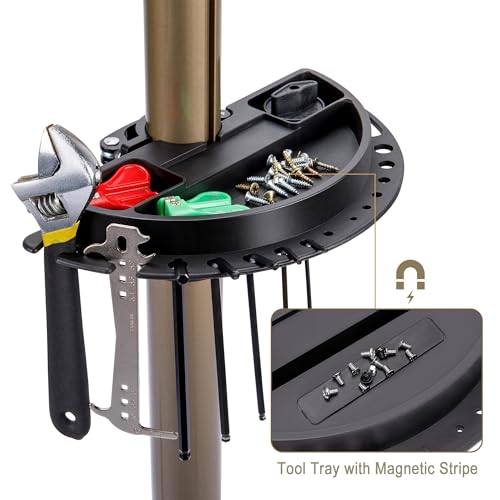
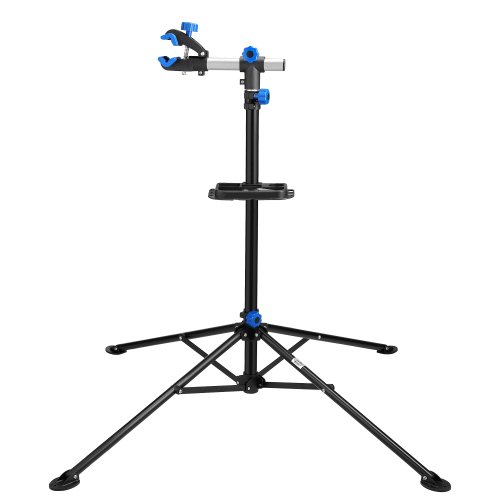
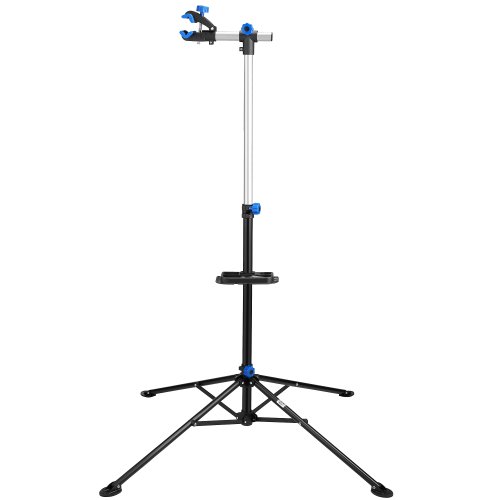
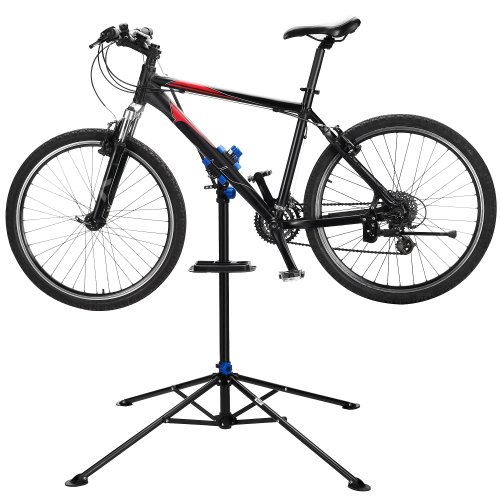
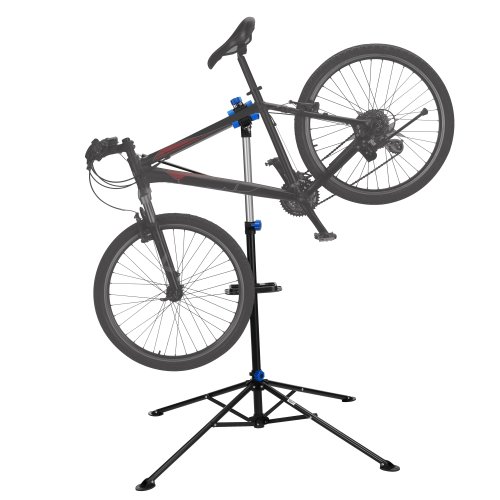
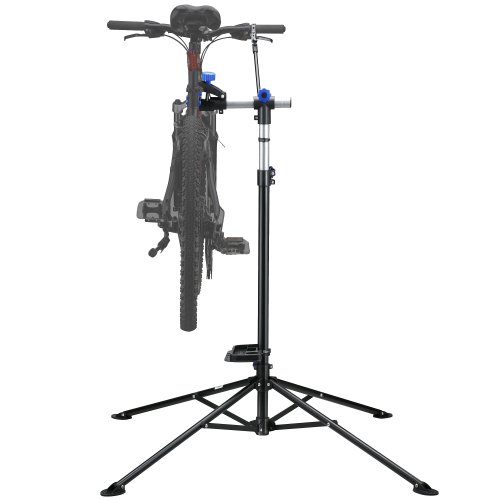
The RAD Cycle Pro Stand is clearly designed with road cyclists in mind, slim, tall, and built for precision. Its 66-pound limit is lower than others, but that’s fine for lightweight road bikes. The 41″ to 75″ height range is one of the most flexible here, making it ideal for taller riders who hate hunching over.
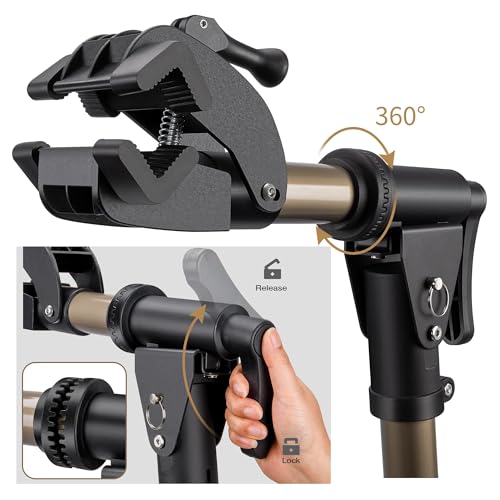
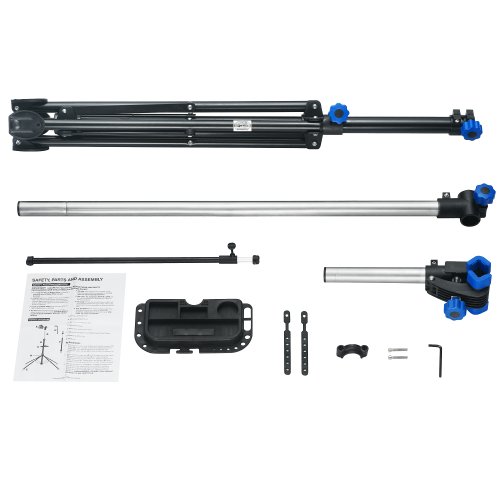
The 360° clamp rotates smoothly and holds tight without marring finishes, and the optional handlebar stabilizer rod helps keep the front wheel from swinging. What really sets it apart is the pre-drilled foot holes, you can bolt it down for absolute stability during aggressive work. Owners love it for regular tune-ups and wheel swaps. While it’s not built for e-bikes or fat-tire models, for road-focused riders, this is a well-engineered, underrated option.
Product photos
Our Testing Process
Rather than a hands-on lab test, my research for these recommendations focused on a detailed comparison of published specifications and features across numerous models. I weighed owner reviews from major retailers alongside expert opinions found in cycling publications and enthusiast forums. Ultimately, I ranked stands based on their suitability for a range of bikes and repair tasks, leaning on my understanding of what makes for a stable and efficient workspace.
For bike maintenance stands, stability and clamping security were the most critical factors. A wobbly stand defeats the purpose, and a clamp that damages a frame is unacceptable. Load capacity also figured prominently, particularly as the prevalence of heavier e-bikes increases. Beyond these, adjustability – both in height and clamp rotation – directly impacts usability and how comfortably a mechanic can work.
Specifications reliably indicate maximum weight limits and clamping ranges, but I placed a greater emphasis on owner feedback regarding real-world stability and long-term durability. Reports of leg slippage or clamp failures carried significant weight. Reputation also played a role; brands with a long history of producing quality bicycle tools, like Park Tool, naturally earned more consideration. If you’re also looking for ways to store your bike, check out our guide to vertical bike stands. And for a broader selection of options, you can browse our overall list of bike stands.
How To Choose The bike maintenance stands
Finding the right bike maintenance stand can transform wrenching from a frustrating chore into a genuinely enjoyable experience. It’s a surprisingly nuanced purchase, though; beyond simply holding a bike up, quality stands offer stability, adjustability, and features that can significantly improve your workflow.
A good bike maintenance stand prioritizes stability – look for a wide base and robust construction. Adjustability is key, encompassing both height and clamp rotation. Capacity matters; heavier bikes, particularly e-bikes, demand a stand with a higher weight limit. Finally, consider portability and storage when determining the best option for your needs.
Stability and Weight Capacity
Let’s be honest: a wobbly stand is a dangerous stand. Beyond the risk of tipping, constant adjustments to compensate for instability eat into your focus and slow you down. For most standard road or mountain bikes, a stand with a 66lb capacity (like the RAD Cycle Pro Repair Stand) is sufficient. But if you’re working on e-bikes or heavier downhill machines, you absolutely need to step up to a stand rated for 80lbs or more – the VEVOR 4-Leg Steel Bike Stand and CXWXC 88lbs E-Bike Repair Stand are good examples. Don’t skimp here.
Clamp Design and Adjustability
The clamp is where the rubber meets the road (or, rather, where the bike meets the stand). A truly versatile clamp will accommodate a variety of frame shapes and sizes. Many stands, like the GOEHNER’s Upgrade 2.0 Bike Stand, boast clamps that can handle seat posts, top tubes, and down tubes. 360-degree rotation is essential, allowing you to position the bike precisely for any task.
Here’s what I see consistently make a difference: * Quick-release mechanisms are convenient for fast adjustments. * Rubberized clamp jaws prevent damage to your frame’s finish. * A wider clamp opening (up to 1.75 inches, as seen on the CHEPARK 80lbs Bike Repair Stand) ensures compatibility with a broader range of bikes, including those with larger diameter tubes.
Portability and Value
Not everyone has a dedicated workshop. If space is at a premium, portability becomes a major consideration. Stands like the Park Tool Team Issue Portable Stand excel here, folding down compactly for easy storage and transport. But remember that portability often comes at a cost – lighter stands may sacrifice some stability. If you’re primarily working in a fixed location, the slightly heavier, more robust PCS-9.3 from Park Tool offers excellent value from a trusted brand. If you are looking for other types of stands, check out our guide to dirt bike stands for more options.
A stand should feel solid and secure when set up, even with your bike mounted. If it feels flimsy, it probably is.
Ultimately, choosing the best bike maintenance stand comes down to matching the features to your specific needs and budget. Don’t hesitate to spend a little more for quality; a well-chosen stand is an investment that will pay dividends in convenience and enjoyment for years to come. Explore our full list of best bike repair stands for even more detailed reviews and comparisons.
Bike Maintenance Stands Compared
This table provides a reference of specifications for various bike maintenance stands to aid in comparison.
| Product Title | Max Load Capacity | Height Adjustment | Clamp Capacity (Tube Diameter) | Weight | Folded Size (Approx.) |
|---|---|---|---|---|---|
| Park Tool Team Issue Portable Stand | 29 lbs (13 kg) | Up to 60″ | N/A | 13 lbs (6 kg) | 47″ |
| Park Tool PCS-10.3 Deluxe Stand | N/A | N/A | N/A | N/A | N/A |
| Park Tool PCS-9.3 Basic Stand | N/A | N/A | N/A | N/A | N/A |
| VEVOR 4-Leg Steel Bike Stand | 80 lbs (36.3 kg) | 42.5″ – 74.8″ | 1-1.6″ (up to 2″) | N/A | N/A |
| GOEHNER’s Upgrade 2.0 Bike Stand | 110 lbs | 47″ – 67″ | 1″ – 3″ | 9.5 lbs | 39″ x 8″ |
| CXWXC 88lbs E-Bike Repair Stand | 88 lbs | 44.45″ – 66.45″ | 25-45 mm | N/A | N/A |
| CHEPARK 80lbs Bike Repair Stand | 80 lbs (36 kg) | 41.1″ – 66.9″ | 1″ – 1.75″ | 12.76 lbs | N/A |
| RAD Cycle Pro Repair Stand | 66 lbs (30 kg) | 41″ – 75″ | 1″ – 1.5″ | N/A | N/A |
Frequently Asked Questions
What’s the maximum weight capacity I should look for in a bike maintenance stand?
Generally, 66lbs is enough for most bikes, but if you own an e-bike or heavier mountain bike, I recommend a stand with at least an 80lb capacity to provide sufficient stability and prevent tipping. Stands like the VEVOR 4-Leg Steel Bike Stand and CXWXC 88lbs E-Bike Repair Stand accommodate these heavier machines.
Will any bike fit into the clamp of most maintenance stands?
Most clamps will fit a wide range of bikes, but look for a clamp that adjusts to at least 1.5 inches in diameter to be safe. Some, like the GOEHNER’s Upgrade 2.0 Bike Stand, can even accommodate up to 3 inches, offering compatibility with unusual frame shapes.
Are portable bike maintenance stands stable enough for serious repairs?
Portable stands prioritize convenience but often sacrifice some stability. While options like the Park Tool Team Issue Portable Stand are suitable for basic maintenance, complex repairs are best performed on a more robust, non-folding stand for enhanced safety and precision.
What features should I prioritize if I have limited storage space?
If space is tight, consider a folding bike maintenance stand. These stands, such as the Park Tool Team Issue Portable Stand, can be compacted for easy storage, though you might be giving up some weight capacity or overall stability. You might also want to look at bike floor stands for alternative storage solutions.
What tools do I also need alongside a bike maintenance stand?
Beyond the stand itself, a good set of Allen wrenches, screwdrivers, and a chain tool are essential. Don’t forget bike pumps for keeping your tires properly inflated, and consider investing in a torque wrench to avoid over-tightening bolts and damaging components.
The Bottom Line
Choosing a bike maintenance stand often comes down to a trade-off between ultimate stability and portability, or between a lower initial cost and long-term durability. For the best overall experience, particularly if you work on a variety of bikes, the Park Tool PCS-9.3 Basic Stand strikes an excellent balance of features, build quality, and reputation. It’s a solid investment that will make your time wrenching much more pleasant.
If you’re specifically looking for a stand to handle heavier e-bikes, or you simply want maximum capacity, the VEVOR 4-Leg Steel Bike Stand is a standout. For those on a tighter budget, the RAD Cycle Pro Repair Stand provides a capable, if less refined, solution. And if you need something truly portable for roadside repairs or races, the Park Tool Team Issue Portable Stand is the obvious choice – though remember you’ll be giving up some stability. You can also explore more options in our guide to garage bike stands.
Ultimately, the best stand is the one that fits your needs and workflow. Don’t get too hung up on specific specs; a secure clamp, a stable base, and a comfortable working height are far more important than any single number. Remember to regularly perform basic maintenance like a clean bike chain to keep your bike running smoothly, no matter what stand you use.
