
8 Best Bike Computers for Mountain Biking 2026
This post contains affiliate links. As an Amazon Associate, we earn from qualifying purchases.
The Garmin Edge MTB is the overall best bike computer for mountain biking, combining rugged build quality, multi-band GPS, and trail-specific metrics like Grit and Flow. For a budget-friendly option, the ROCKBROS Wireless Bike Computer stands out with impressive 60-hour battery life and solid core functionality.
Choosing the right bike computer means cutting through marketing hype to find a unit that performs when you’re deep in the woods, riding technical trails, or pushing your limits on long backcountry routes. Too many riders end up with devices that quit in the rain, lose GPS under tree cover, or drain before the ride ends.
This guide cuts to what matters: I compared specs, analyzed owner feedback, and evaluated real-world performance across durability, GPS accuracy, battery life, and interface design. These picks reflect what actually works on the trail, based on deep research and my years of working with vehicle tech systems.
Top 8 Bike Computers For Mountain Biking in the Market
The Best Bike Computers For Mountain Biking, Reviewed
Garmin Edge MTB Rugged GPS
Strengths
- Trailforks & Forksight
- Grit and Flow metrics
- Jump tracking
- Rugged build
- Multi-band GPS
Trade-offs
- Short 14-hour battery in active mode
- High price
- Overkill for road riders
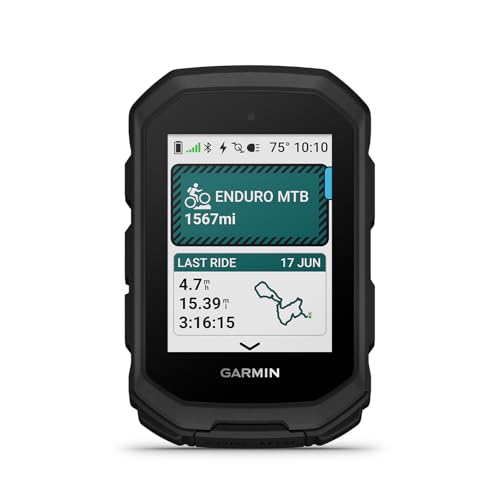
If you ride technical trails and want a computer that speaks your language, the Garmin Edge MTB is the best overall pick, and it shows. Built specifically for mountain biking, it brings Trailforks integration, Forksight navigation, and Grit and Flow metrics that actually tell you how hard you’re shredding. The gyro and barometer track jumps, hang time, and descent speed, giving real feedback on trail performance.
The 7-button layout works flawlessly with gloves, and the Corning Gorilla Glass screen shrugs off mud and impacts. Multi-band GPS locks on fast, even in deep woods, and the timing gates let you segment runs for improvement tracking. When paired with a phone, live leaderboards and in-ride messaging add a social layer that’s fun on group rides. It’s expensive, but for MTB enthusiasts, it’s worth every penny.
Video review
Garmin Edge 540 GPS

Strengths
- Multi-band GNSS
- ClimbPro ascent planner
- Power guide
- Stamina insights
- Smart training prompts
Trade-offs
- No MTB-specific metrics
- Screen not as rugged
- Expensive
The Edge 540 sits in Garmin’s pro-tier lineup for a reason, it’s built for riders who treat training like a science. The multi-band GNSS delivers pinpoint accuracy even under tree cover or in canyons, and the ClimbPro feature is a standout for pacing long ascents. When paired with a power meter and HR strap, the stamina insights and power guide offer real-time feedback that feels almost like having a coach on your handlebars.
The 42-hour battery saver mode is strong, though real-world trail use drops that closer to 26 hours. It lacks the ruggedness of the MTB-specific model, but the button controls work with gloves, and the ride-type-specific maps make route planning intuitive. Owners praise its smart integration with Garmin Connect, including workout prompts and missed session alerts. It’s not the flashiest, but it’s one of the most capable all-around units here.
Video review
iGPSPORT BSC300T Touchscreen GPS
Strengths
- Touchscreen + buttons
- Offline maps
- 130+ data fields
- Real-time tracking
- E-bike compatible
Trade-offs
- Touchscreen unreliable when wet
- Interface feels clunky
- Battery life average
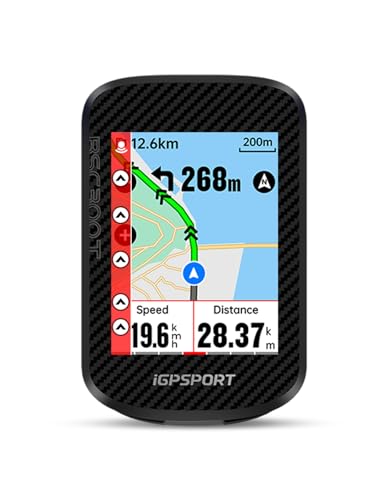
The iGPSPORT BSC300T is the only touchscreen option here, and that alone makes it stand out for riders who hate fumbling with buttons mid-ride. The 2.4-inch touch display works reasonably well, though it can be finicky with wet gloves, thankfully, it also has 6 physical buttons for backup. The offline maps are detailed, and the off-course warning is loud and persistent, which is a safety win on remote trails.
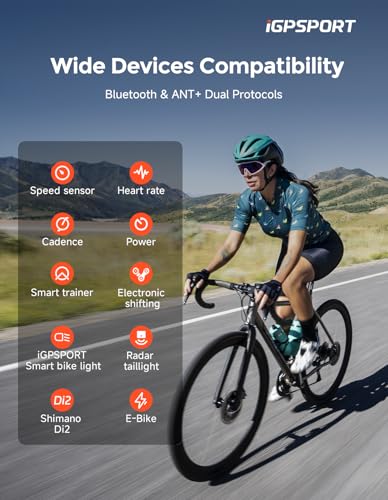
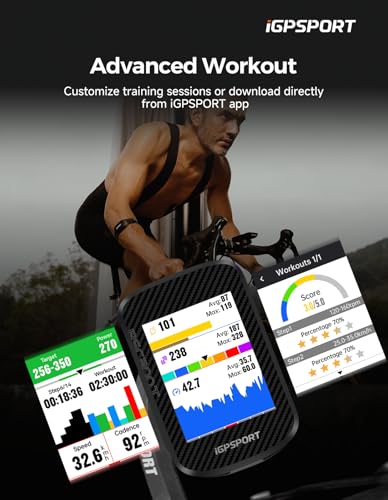
Owners appreciate the 130+ data fields and strong ANT+/Bluetooth 5.0 compatibility, letting it connect to nearly any sensor or e-bike system. The real-time group tracking is a standout for ride leaders, and integration with Strava and Komoot is seamless. It’s not as polished as Garmin’s interface, but for the price, it delivers serious navigation muscle.
Product photos


CYCPLUS Wireless GPS G1

Strengths
- Lowest price with GPS
- 55-hour battery
- IPX6 waterproof
- Sunlight-readable screen
- Auto on/off
Trade-offs
- No route navigation
- No ANT+ support
- Basic data display
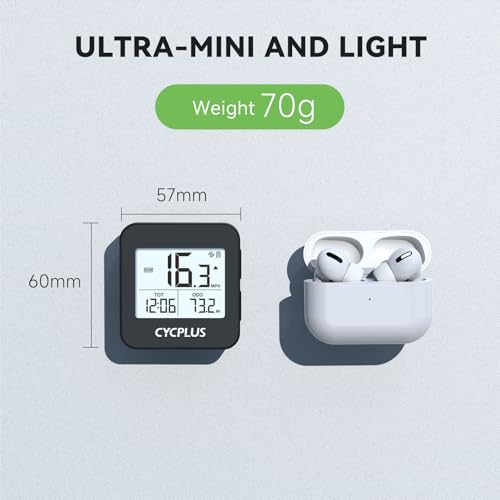
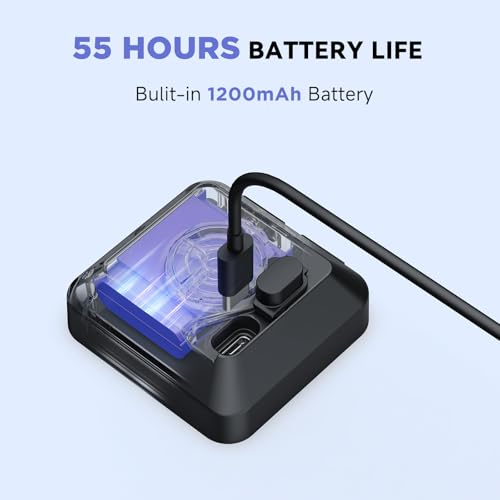
At this price, the CYCPLUS G1 is a no-frills workhorse that delivers core GPS functionality without fluff. It’s one of the most affordable true GPS units with a decent 55-hour battery life and IPX6 waterproofing, so it won’t quit in a downpour. The FSTN anti-glare screen holds up well in sunlight, and the automatic sleep/wake function is reliable, small touches that make daily use smoother.
It won’t wow you with navigation, no maps, just breadcrumb tracking and basic elevation data, but for riders who stick to known routes or use a phone for navigation, it’s perfectly adequate. The lack of ANT+ support limits sensor compatibility, but Bluetooth pairing with heart rate straps and speed sensors works fine. For commuters or fitness riders on a tight budget, this is a solid win.
Product photos



BKVTOP Wireless GPS Bike Computer
Strengths
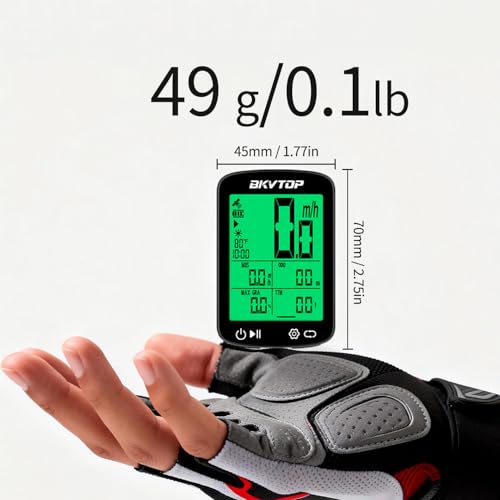
- Ultra-light at 50g
- IPX7 waterproof
- Auto start/stop
- Clean data layout
- Standard mount
Trade-offs
- Only 28-hour battery
- No ANT+
- No route support
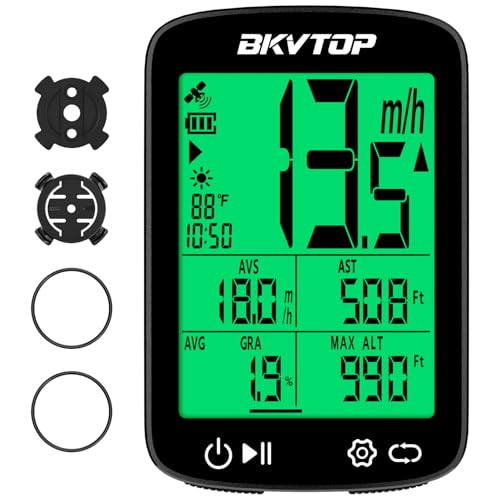
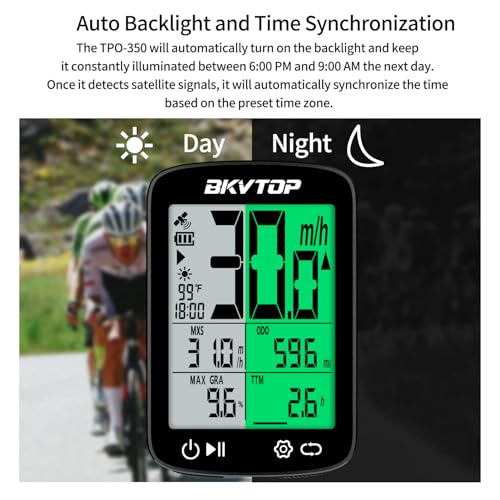
The BKVTOP earns its “lightweight” title at just 50 grams, making it one of the most discreet GPS computers you can mount. It’s not trying to be a navigation beast, instead, it focuses on clean, glanceable data for commuters and casual riders who want GPS accuracy without bulk. The 2.4-inch LCD is legible, and the green auto-backlight helps at night without draining the battery too fast.
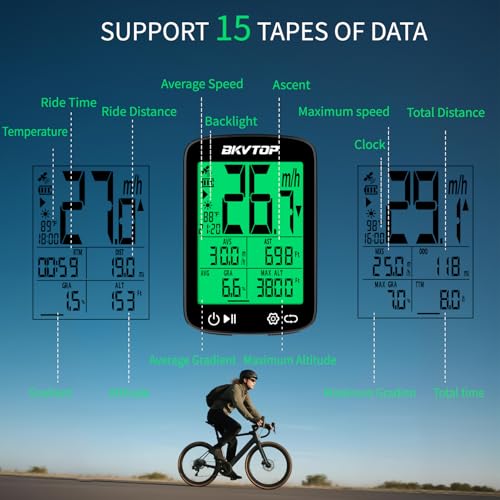
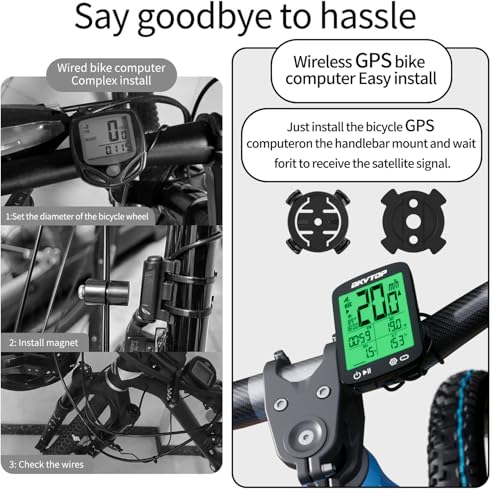
It logs all the basics, speed, distance, altitude, gradient, and the auto start/stop is responsive. But with only 28 hours of runtime and no ANT+, it’s clearly not built for endurance or sensor-heavy setups. The IPX7 rating means it can survive heavy rain, and the included mount is standard, so swapping between bikes is easy. For a minimalist upgrade from a basic wired computer, it hits the sweet spot.
Product photos
GEOID CC600 Color Screen

Strengths
- Color screen
- WiFi syncing
- 100-hour ride memory
- Auto rerouting
- Indoor training mode
Trade-offs
- AGNSS requires stable location sync
- Mount can feel flimsy to some
- Battery life lags behind leaders
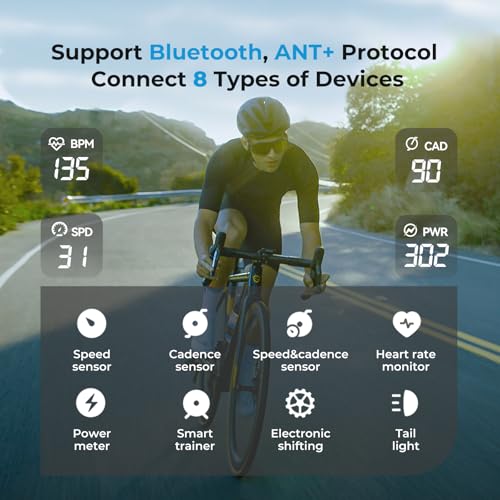
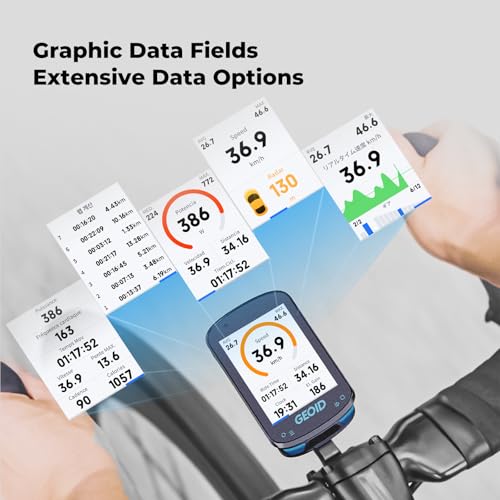
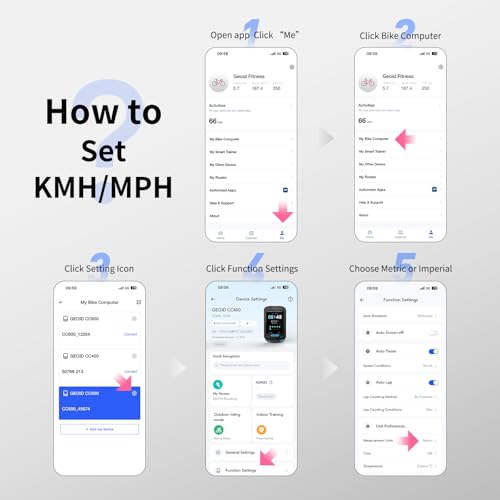
The GEOID CC600 stands out in the mid-tier GPS bike computer space by packing a surprising amount of functionality for its price. Its 2.4-inch color screen is bright and sharp, making navigation far more intuitive than on monochrome units, and the automatic rerouting when you miss a turn is a real confidence builder on unfamiliar trails. Owners consistently report that the 5-second AGNSS sync works well when conditions are favorable, and the ability to upload GPX files via the app adds serious value for riders who plan routes on platforms like Komoot or Ride with GPS.
Where it really impresses is in data flexibility. With 10 customizable data pages and support for 108 data fields, it’s a playground for stat nerds. The inclusion of free indoor training mode with power target settings is a thoughtful touch, and the dual Bluetooth and ANT+ support means it plays well with most sensors. WiFi syncing is a standout perk, faster than Bluetooth and a rarity at this price.
Product photos


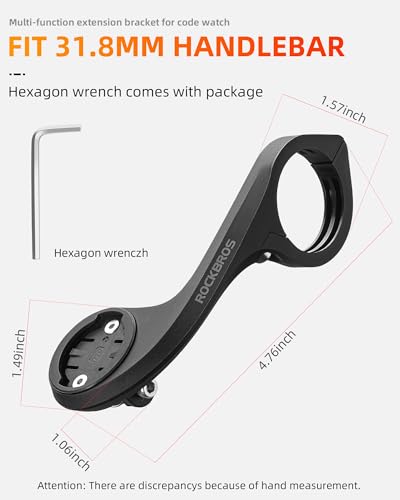
ROCKBROS Wireless Bike Computer
Strengths
- 60-hour battery
- Includes cadence sensor
- Type-C charging
- Quad-GNSS support
- Full accessory kit
Trade-offs
- Display lags in bright sun
- Plastic feel on mount
- No offline maps
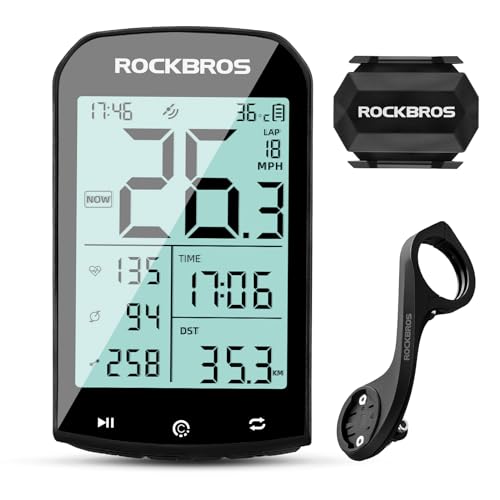
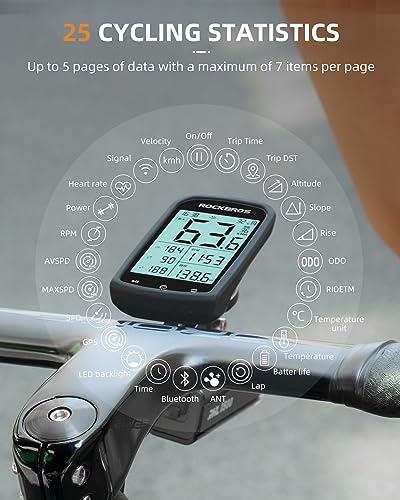
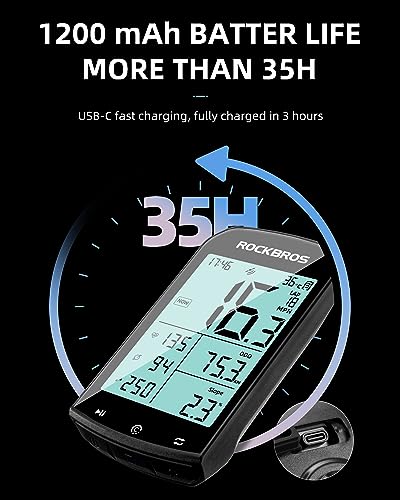
If battery endurance is your top priority, the ROCKBROS unit makes a compelling case. With a 60-hour runtime on a 1200mAh battery, it outlasts nearly every other non-Garmin unit in this list, making it ideal for long-distance tourers or gravel riders tackling multi-day routes. The 25 available data fields cover most essentials, speed, cadence, altitude, heart rate, power, and the inclusion of a cadence sensor in the box adds real value over competitors that charge extra.
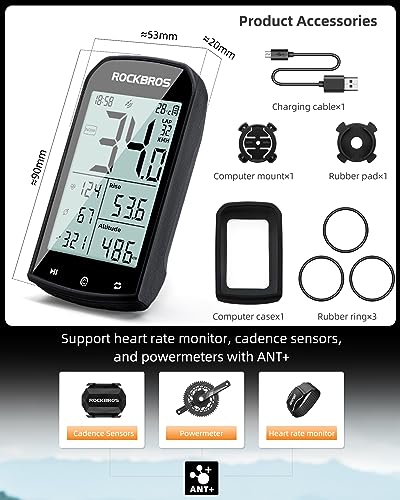
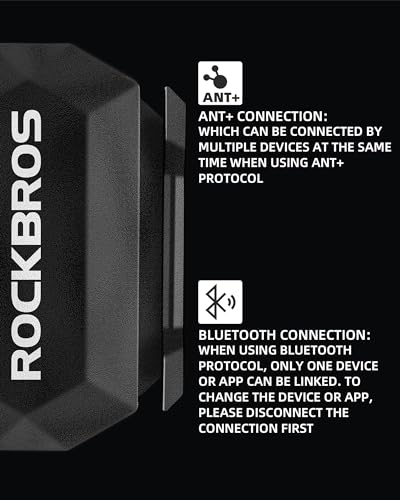
The LED HD display with auto-brightness performs well in mixed lighting, though it doesn’t match the clarity of higher-end units in direct sun. Positioning via quad-constellation GPS is generally reliable, but some owners report occasional drift in dense forest. Still, the Type-C charging and full accessory bundle mean you’re ready to roll out of the box, no hunting for extra sensors or cables.
Product photos
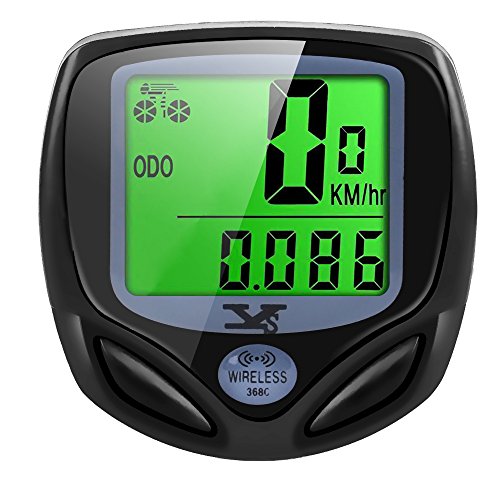
SY Wireless Bike Speedometer
Strengths
- Extremely low cost
- Simple setup
- Auto wake-up
- Waterproof design
- Works without GPS
Trade-offs
- No GPS or mapping
- No advanced metrics
- Basic display
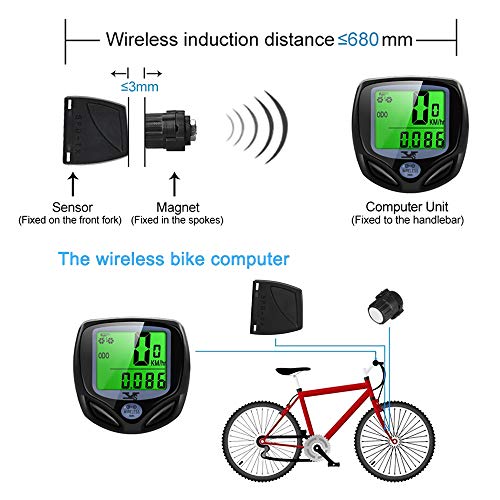
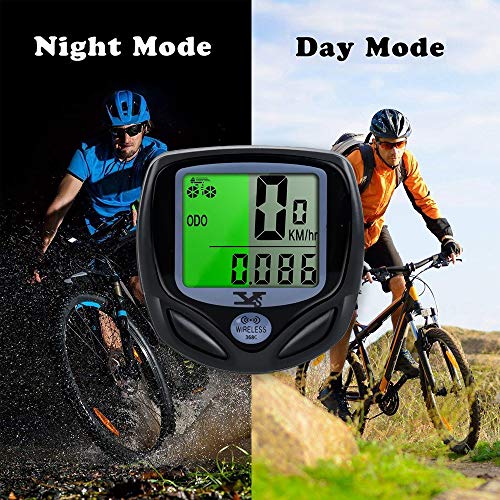
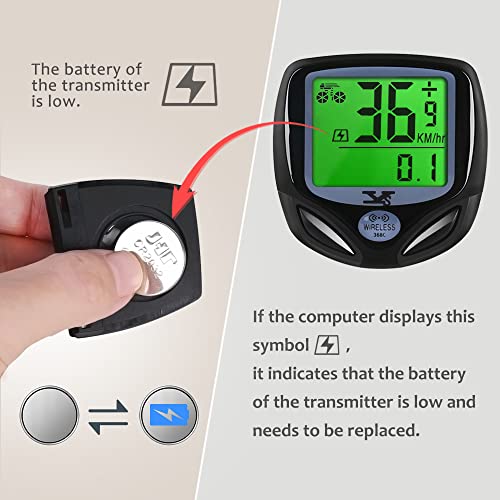
This SY unit is the definition of “bare bones”, and that’s exactly why it works for some. With no GPS, no Bluetooth, just a wireless speed and odometer display, it’s a throwback to simpler times. The auto-wake vibration sensor is responsive, and the LCD screen with night backlight makes it usable day or night. At under $20, it’s cheaper than most replacement sensors.
It won’t track routes or elevation, and the lack of cadence or heart rate is obvious. But for riders who just want to know their speed, distance, and ride time, commuters, fitness cyclists, or those reviving an old bike, it gets the job done. Installation is straightforward, and the two-button interface is intuitive. It’s not smart, but it’s reliable.
Product photos


How We Evaluated bike computers for mountain biking
Rather than a hands-on lab test, my research focused on a detailed comparison of published specifications and features across numerous models. I weighed owner reviews from major retailers alongside expert opinions found in cycling publications and online tech reviews. This process allowed me to build a ranking based on what truly matters to mountain bikers, applying my experience with vehicle technology to understand the nuances of each unit.
For mountain biking specifically, accurate GPS tracking and ruggedness were heavily weighted factors. A reliable GPS signal, especially when navigating challenging terrain or dense tree cover, is paramount. Equally important is build quality; these computers take a beating, so durability is key. Battery life also played a significant role, as longer rides, and the potential for getting lost, demand extended power.
Specifications reliably indicate core hardware capabilities like GPS chipset, screen resolution, and battery capacity. However, real-world performance – particularly GPS accuracy in difficult conditions and the responsiveness of the interface – is much better understood through owner feedback and expert analysis. I also considered the reputation of each brand for software updates and customer support when forming my recommendations; you can find more detailed bike computer reviews on my site. For those focused on exploring new trails, checking out navigation computers is a great next step.
What To Look For In bike computers for mountain biking
Choosing the right bike computer can elevate your mountain biking experience from simply riding trails to meticulously tracking performance and navigating challenging terrain.
A quality bike computer for mountain biking balances accurate data recording with durability and usability. Key considerations include GPS accuracy (multi-band is preferred for dense forests), screen readability in direct sunlight, battery life for long rides, and the ability to display relevant metrics like gradient, jump analytics, and trail-specific data from sources like Trailforks. Robustness and a user-friendly interface are also crucial.
Prioritize GPS Accuracy and Reliability
For mountain biking, a reliable GPS signal is paramount. You’re often riding under tree cover, which can severely degrade signal strength. Look beyond basic GPS; multi-band GPS, like that found in the Garmin Edge 540 and Edge MTB, pulls data from multiple satellite constellations (GPS, GLONASS, Galileo, Beidou) and frequencies to maintain a lock even in difficult conditions. Don’t assume all GPS chips are created equal – read reviews specifically mentioning GPS performance in wooded areas.
Understand Data Fields and Metrics
What data actually matters to you? While speed and distance are universal, mountain biking benefits from specialized metrics. The Garmin Edge MTB, for instance, tracks “Grit” and “Flow” – metrics designed to quantify the difficulty and smoothness of trails, respectively. Beyond that, consider whether you want climb-specific data (ClimbPro on Garmin devices is excellent), jump analytics, or integration with power meters and heart rate monitors.
- Basic models like the SY Wireless Bike Speedometer will give you speed, distance and time.
- Mid-range options, such as the iGPSPORT BSC300T, add navigation and more detailed data fields, but often lack the advanced sensors and analytics.
- High-end devices, like the GEOID CC600, offer a thorough suite of features, including detailed mapping, route planning, and extensive data customization, but come at a premium price.
Don’t get caught up in chasing every metric. Focus on the 3-5 data points that will genuinely help you improve your riding and understand your performance.
Balance Features with Usability and Battery Life
A feature-rich computer is useless if it’s a pain to operate while you’re bouncing down a trail. A button-based interface (like on the Garmin Edge series) can be more reliable in wet or muddy conditions than a touchscreen. Equally important is battery life. Longer rides demand longer battery life; the ROCKBROS Wireless Bike Computer boasts a 60-hour battery, which is significant. If you frequently embark on all-day epics, prioritize a model with extended battery life or the option to carry a power bank. For those seeking a blend of features and ease of use, exploring GPS bike computers can provide a wider perspective on available options. Consider also whether you want to be able to sync data and plan routes with top cycling computers.
Bike Computers for Mountain Biking Compared
Here’s a comparison of key specs for popular mountain biking computers to help you choose the right one.
| Product Name | Display Size | GPS Support | Battery Life (Max) | Waterproof | Connectivity | Price (USD) |
|---|---|---|---|---|---|---|
| Garmin Edge MTB Rugged GPS | N/A | Multi-Band | 26 hrs | Yes | ANT+/BLE | N/A |
| Garmin Edge 540 GPS | N/A | Multi-Band | 42 hrs | Yes | ANT+/BLE | N/A |
| iGPSPORT BSC300T Touchscreen GPS | 2.4″ | 5 Systems | N/A | N/A | ANT+/BLE | N/A |
| CYCPLUS Wireless GPS G1 | N/A | N/A | 55 hrs | IPX6 | N/A | N/A |
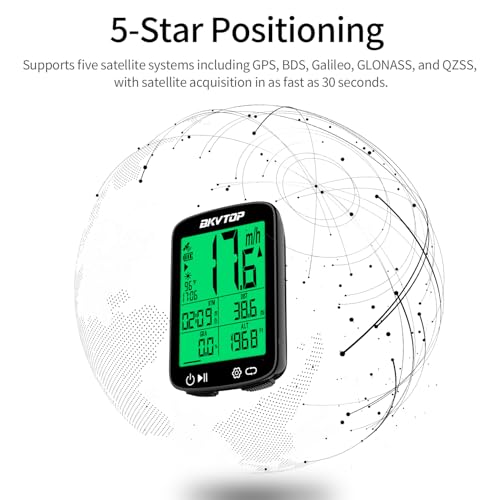
| BKVTOP Wireless GPS Bike Computer | 2.4″ | GPS | 28 hrs | IPX7 | N/A | N/A |
| GEOID CC600 Color Screen | 2.4″ | 5 Systems | N/A | N/A | ANT+/BLE | N/A |
| ROCKBROS Wireless Bike Computer | N/A | 4 Systems | 60 hrs | N/A | N/A | N/A |
| SY Wireless Bike Speedometer | N/A | N/A | N/A | Yes | N/A | N/A |
Frequently Asked Questions
What GPS accuracy should I expect from a mountain bike computer?
Multi-band GPS, supporting constellations like GPS, GLONASS, and Galileo, is ideal for mountain biking. This technology significantly improves signal reliability in dense forests, ensuring more accurate tracking compared to standard GPS systems.
Can a bike computer track jumps and flow?
Yes, some computers, like the Garmin Edge MTB, specifically quantify jumps and flow using metrics designed to assess trail difficulty and riding smoothness. These features provide a unique insight into your performance on technical trails.
How important is a touchscreen on a mountain bike computer?
Touchscreens can be convenient, but a button-based interface is often more reliable in wet or muddy conditions common to mountain biking. Buttons are less likely to register accidental inputs or become unresponsive with gloves.
What’s the typical battery life for a mountain bike computer?
Battery life varies, but you can find models offering up to 60 hours (like the ROCKBROS Wireless Bike Computer). For longer rides, prioritizing a computer with extended battery life or external power bank compatibility is wise.
Are more expensive bike computers always better for mountain biking?
Not necessarily. While high-end models offer advanced features, the best choice depends on your needs. If you prioritize accurate GPS and essential metrics, mid-range options or even well-reviewed, simpler MTB computers can be a great fit. For those needing advanced route planning, consider a dedicated mountain bike GPS.
The Bottom Line
Choosing a bike computer often comes down to balancing how much control you want over your data versus how much fuss you’re willing to deal with. For the rider who wants the best overall experience, packed with features and proven reliability, the Garmin Edge MTB Rugged GPS stands out; it’s a substantial investment, but the advanced metrics and rugged design justify the cost for serious trail riders.
If you’re seeking a specific solution, the choices become clearer. For those on a tighter budget, the SY Wireless Bike Speedometer provides essential data at an accessible price. Meanwhile, riders prioritizing long-distance adventures should look to the ROCKBROS Wireless Bike Computer and its impressive battery life.
Ultimately, the most important thing isn’t a particular spec or brand, but understanding your riding style and what data will truly help you improve. Accurate GPS, a durable build, and a clear display are all vital, but those features are best applied to the metrics you care about. Don’t get lost in the details, focus on enjoying the trail and making informed decisions based on the information that matters to you, and explore what Garmin devices can offer.
