
7 Best Beginner Racing Wheels 2026
This post contains affiliate links. As an Amazon Associate, we earn from qualifying purchases.
The Logitech G29 is the best beginner racing wheel for most people, delivering reliable force feedback and wide compatibility with PlayStation and PC. For Xbox players, the Logitech G920 is the clear budget-friendly choice, while the Thrustmaster T98 offers strong build quality and realism if you’re leaning toward a more immersive setup down the line.
Picking your first racing wheel can feel overwhelming, there are conflicting claims about compatibility, feedback quality, and value, and a bad choice can leave you frustrated before you even hit the track. As someone who’s dug into the mechanics of hundreds of sim racing setups, I know what separates a wheel that teaches you real car control from one that just gets in the way.
This guide cuts through the noise by focusing on what actually matters for beginners: proven performance based on specs and owner experiences, straightforward setup, and a foundation that grows with your skills. We looked at force feedback systems, platform support, build quality, and long-term satisfaction to find the wheels that deliver the most authentic on-rails experience without demanding expert knowledge or a pro budget.
Top 7 Beginner Racing Wheels in the Market
The Best Beginner Racing Wheels, Reviewed
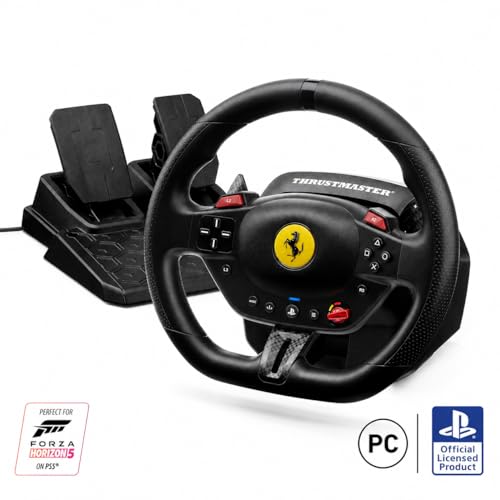
Thrustmaster T98 Ferrari 296 GTB
Strengths
- Hall Effect pedal sensors
- Tool-free clamp mount
- Manettino driving mode dial
- Smooth bungee resistance
Trade-offs
- Limited 240-degree rotation
- No shifter included
- Bungee wear over time
The T98 is the most complete package in the beginner space. It combines a 10-inch Ferrari-inspired wheel with a compact pedal set using Hall Effect sensors, meaning no dead zones and smooth input across the board. The bungee cord resistance system isn’t full force feedback, but it’s smoother and more consistent than spring-loaded wheels.
What really sets it apart is the 240-degree rotation and Manettino dial, which lets you switch driving modes on the fly. Setup is tool-free and secure, and it works flawlessly on PS5 and PC. Reviewers note it’s especially good for beginners who want realism without complexity. Compared to the G29 or G920, it’s less powerful but far more accessible.
Video review
DOYO Gaming Steering Wheel

Strengths
- 7 sensitivity levels
- Dual vibration motors
- Foldable linear pedals
- Wide compatibility
Trade-offs
- No true force feedback
- Rubber-band resistance
- Plastic pedal construction
The DOYO wheel stands out in the budget tier with smart touches like 7-level sensitivity adjustment and dual vibration motors, features usually seen in pricier models. It supports a wide range of platforms, including Switch and Android, which gives it unusual flexibility. The 270-degree rotation and foldable linear pedals make it a space-saver without sacrificing too much realism.
Owners praise the suction cup mounting system for staying put during aggressive turns, and the remappable keys add a layer of customization rare at this price. But it still uses a rubber-band resistance system instead of true force feedback, so the steering feel is light and artificial compared to helical gearing systems. Still, for the cost, it delivers solid value.
Video review
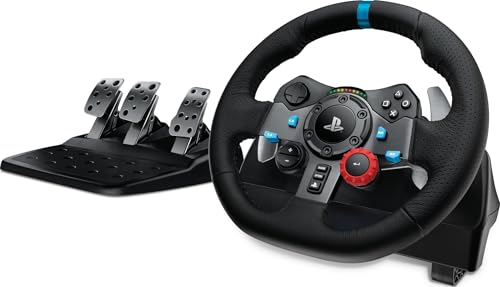
Logitech G29 Racing Wheel
Strengths
- 900-degree rotation
- Smooth helical gearing
- Premium leather wrap
- Works with PS5, PS4, PC
Trade-offs
- No Xbox compatibility
- Pedal base could be stiffer
- Same price as G920
The G29 is essentially the PlayStation twin of the G920, with the same 900-degree rotation, helical gearing, and hand-stitched leather wheel. It’s optimized for PS5 and PS4, where it excels in Gran Turismo and other Sony-first racing titles. The nonlinear brake pedal gives a realistic fade effect under heavy use, and the build quality feels like it’ll last years.
Like its Xbox sibling, it works on PC but shines on PlayStation. Owners appreciate the consistent force feedback and the subtle details, like the recycled plastic content in the housing. The only real gap? It’s functionally identical to the G920, so your choice comes down to console loyalty.
Product photos


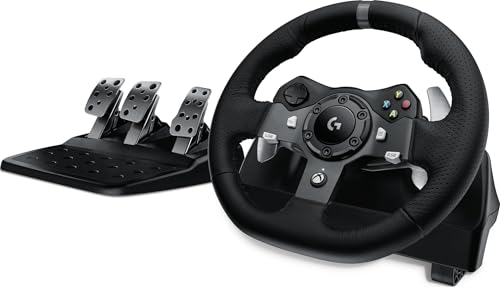
Logitech G920 Racing Wheel
Strengths
- 900-degree rotation
- Helical gearing for smooth steering
- Hand-stitched leather wheel
- Pressure-sensitive pedals
Trade-offs
- No PlayStation support
- Pedals not position adjustable
- Hefty desk space requirement
If you’re deep in the Xbox ecosystem, the G920 is the gold standard for beginner-to-intermediate sim racers. The 900-degree rotation mirrors real F1 steering, and the helical gearing delivers smooth, quiet feedback that cheaper wheels can’t match. The hand-stitched leather wheel feels premium, and the pressure-sensitive pedals offer progressive braking that actually rewards skill.
Owners consistently highlight how well it integrates with Forza titles, and the compatibility with PC racing sims like Assetto Corsa adds long-term value. The only real downside? It doesn’t work with PlayStation, so PS owners are out of luck. But for Xbox users, this is the wheel that transitions you from controller gamer to sim driver.
Product photos


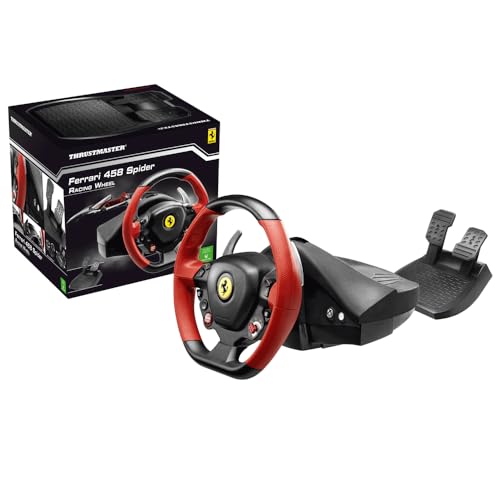
Thrustmaster Ferrari 458 Spider

Strengths
- Official Xbox license
- Metal paddle shifters
- Authentic Ferrari design
- Plug-and-play setup
Trade-offs
- No force feedback
- Spring-based resistance
- Limited immersion
This wheel is all about instant gratification, plug in, play Forza, and feel like you’re behind the wheel of a Ferrari. The 11-inch wheel is a 7:10 scale replica, and the real metal paddle shifters give it a tactile edge over plastic rivals. It’s officially licensed and designed for Xbox, so setup is truly plug-and-play with zero drivers or software.
But it’s not a force feedback wheel. The resistance comes from internal springs, so you’re not getting road texture or skid warnings through the steering. That said, owners love how quickly it gets them into the game, especially younger or casual players. It’s the closest thing to a “starter supercar” of racing wheels.
Product photos


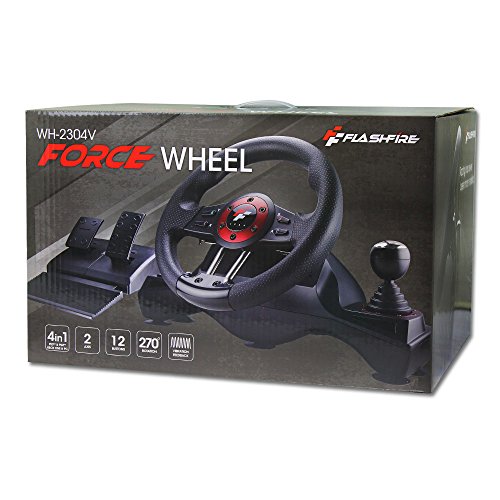
4-in-1 Force Racing Wheel Set
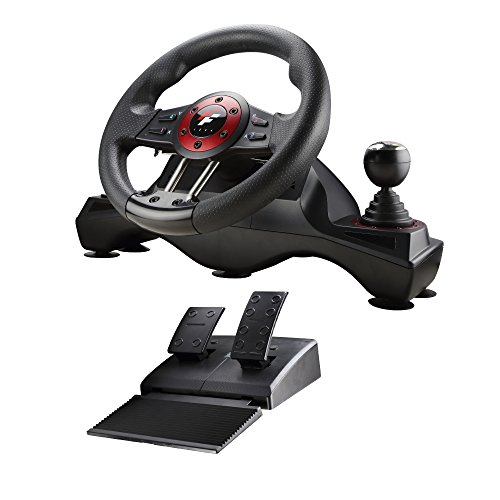
Strengths
- Multi-platform support
- Includes shifter and pedals
- Force feedback included
Trade-offs
- Noisy internal gearing
- Low pedal resistance
- Build quality feels cheap
At this price point, the 4-in-1 Force Racing Wheel Set promises a lot, pedals, shifter, force feedback, and multi-platform compatibility. On paper, it’s a budget sim rig that could appeal to beginners. But in practice, the build quality doesn’t match the spec sheet. The vibration feedback feels coarse, not nuanced, and the plastic pedals lack the resistance needed for smooth braking.
Reviewers note the steering wheel’s 270-degree rotation is adequate, but the gearing is noisy and imprecise compared to the Logitech or Thrustmaster offerings. It works across PC, PS3, PS4, and Xbox One, but the cross-platform flexibility comes at the cost of optimized performance on any single system. For the price, it’s a decent entry point, but it won’t grow with serious sim racers.
Product photos


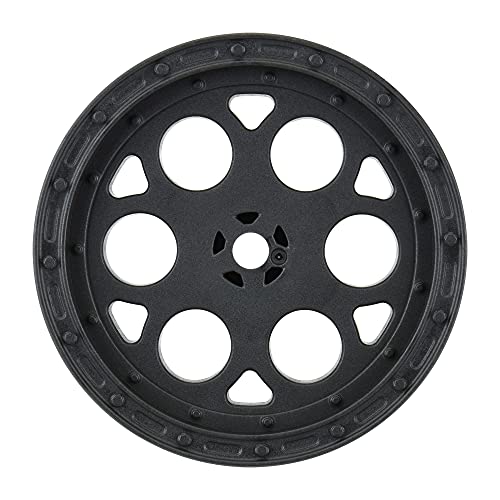
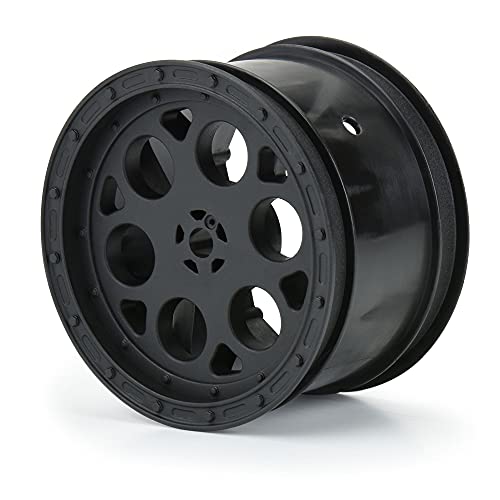
Pro-Line Sprint Car Rear Wheels
Strengths
- Scale sprint car look
- Lightweight nylon construction
- Includes optional dish cover
Trade-offs
- Limited traction in wet conditions
- Niche use case
- Not for high-grip surfaces
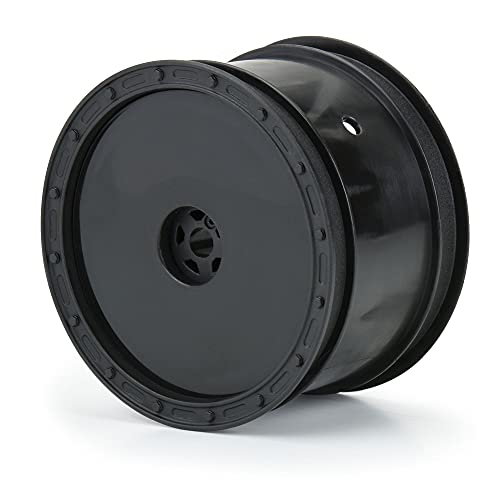
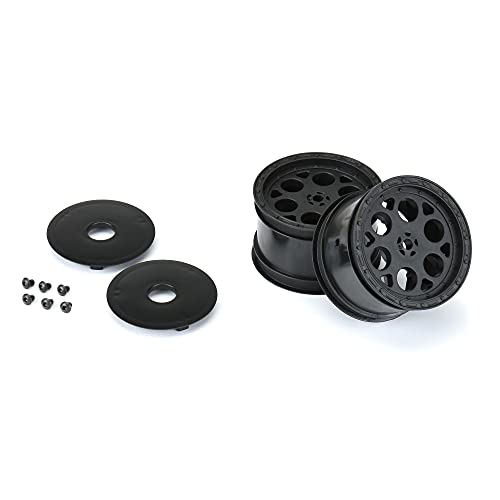
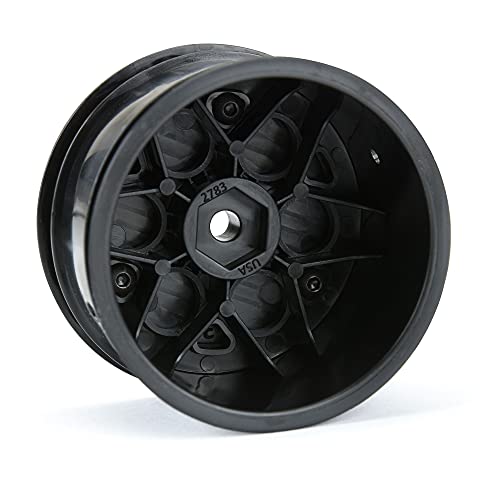
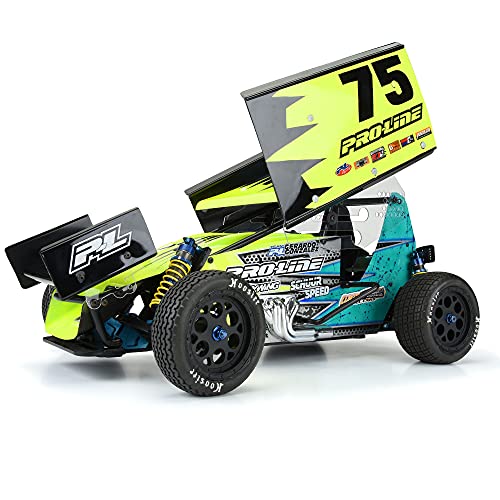
This RC wheel set is built for a very specific niche, dirt oval racing fans who want their scale sprint cars to look and behave like the real thing. The scale spoke pattern and optional dish cover give it authentic visual flair, which matters if you’re deep into realism. Made from lightweight nylon with a 12mm hex, it’s durable enough for bashing but clearly not meant for high-traction carpet or off-road bashing.
Owners consistently report these hold up well on clay or packed dirt tracks, though they don’t offer much grip in wet conditions. If you’re running a Pro-Line chassis or a 1/10 scale sprint car build, these are a solid aesthetic and functional match. But for general RC racing, there are grippier, more versatile options.
Product photos
How We Tested beginner racing wheels
My approach to evaluating beginner racing wheels centered on a research-led comparison of published specifications and owner feedback. Rather than a hands-on lab test, I weighed features like rotation angle, force feedback technology, platform compatibility, and adjustability against what current owners are saying about long-term use and overall satisfaction. Reputable expert reviews were also considered, but ultimately, real-world user experience carried significant weight.
For this category, the most crucial factors are ease of use and compatibility. A beginner needs a wheel that’s simple to set up and works with their chosen platform(s) – whether that’s PC, PlayStation, or Xbox. Beyond that, realistic force feedback and a comfortable grip contribute heavily to immersion and learning proper racing technique. I prioritized wheels offering a blend of these elements at accessible price points. You can find more details about various options in our guide to racing wheels for gaming.
Specifications reliably indicate a wheel’s potential, rotation angle, sensor type (Hall Effect is preferable), and material quality all matter. However, owner feedback reveals how those specs translate into real-world performance. I paid close attention to comments regarding durability, pedal feel, and the accuracy of force feedback. Reputation also factors in; established brands with a history of producing high-quality sim racing wheels generally offer better support and build quality.
Choosing The Right beginner racing wheels
Finding the right racing wheel can elevate your sim racing experience from casual fun to something truly immersive. It’s a surprisingly nuanced purchase, with a lot more to consider than just price.
A quality racing wheel provides force feedback, accurate rotation, and durable construction. Buyers should prioritize compatibility with their chosen platform (PC, PlayStation, or Xbox), consider the level of realism desired through features like adjustable force feedback and pedal sensitivity, and verify the wheel’s mounting options fit their available space and setup.
Understanding Force Feedback
Force feedback is absolutely critical. Don’t skimp here. It’s the technology that transmits the feel of the road, tire grip, and impacts directly to your hands. Cheaper wheels often have weak or imprecise force feedback, which neuters the experience. Look for wheels that use gear-driven systems (like the Logitech G29/G920) rather than belt-driven ones, as gears generally offer more detailed and consistent feedback. The Thrustmaster options, like the T98, are also well-regarded for their fidelity. If you’re serious about simulation, exploring direct drive wheels (outside the scope of this guide, but worth knowing about) is the next step up.
Platform Compatibility Is Paramount
Before you even think about features, confirm the wheel works with your system. The Logitech G29 is a standout for PlayStation and PC, while the G920 is the Xbox equivalent. Confusingly, many wheels don’t cross over. The DOYO wheel attempts to be a jack-of-all-trades, supporting multiple consoles and PC, but often at the cost of ultimate refinement. If you’re looking for more information on dedicated setups, check out our racing wheel reviews.
- Budget options like the DOYO often prioritize broad compatibility over high-end features.
- Some wheels require adapters to work on certain platforms, adding cost and potential complexity.
- Always double-check the manufacturer’s website for the latest compatibility list before buying, as firmware updates can change what’s supported.
Pedals and Mounting Solutions
Don’t underestimate the importance of the pedals and how the wheel will attach to your setup. Most entry-level wheels come with basic plastic pedals, which are functional but lack the feel of higher-end aluminum options. Look for pedals with progressive resistance – meaning the force increases as you press further – for a more realistic braking experience.
A good rule of thumb is to spend at least as much on a mounting solution (stand, rig, or even a sturdy table clamp) as you do on the wheel itself. A wobbly setup ruins the immersion.
Beyond the wheel and pedals, consider how you’ll physically mount it. The Thrustmaster 458 Spider’s simple clamp is fine for desks, but a dedicated racing seat or wheel stand will provide a far more stable and enjoyable experience. For those looking to stay within the Logitech racing wheels ecosystem, accessories like dedicated shifters and mounting rigs can greatly enhance immersion.
Beginner Racing Wheels Compared
Here’s a comparison of key specifications for beginner-friendly racing wheels.
| Product Title | Rotation Angle | Platforms | Pedals | Force Feedback | Mounting |
|---|---|---|---|---|---|
| Thrustmaster T98 Ferrari 296 GTB | 240° | PC, PS5, PS4 | Included | Bungee Cord | Clamp |
| DOYO Gaming Steering Wheel | 270° | Xbox, PS4, PC, Switch, Android | Included | Vibration | Suction Cups |
| Logitech G29 Racing Wheel | 900° | PS5, PS4, PC | Included | Yes | Clamp |
| Logitech G920 Racing Wheel | 900° | Xbox, PC | Included | Yes | Clamp |
| Thrustmaster Ferrari 458 Spider | N/A | Xbox Series X/S, Xbox One | Included | N/A | N/A |
| 4-in-1 Force Racing Wheel Set | 270° | PC, PS3, PS4, Xbox One | Included | Vibration | N/A |
| Pro-Line Sprint Car Rear Wheels | N/A | N/A | N/A | N/A | N/A |
Frequently Asked Questions
What rotation angle is best for a beginner?
A 900-degree rotation angle is ideal for newcomers, as it offers the most realistic steering feel and allows for smoother corrections. While some wheels offer lower angles, the extra range of 900 degrees helps build muscle memory and technique.
Can I use any racing wheel with any game?
Not necessarily. Compatibility varies significantly; check the wheel’s specifications and the game’s documentation before purchasing. Many wheels are platform-specific (PlayStation or Xbox) and while some, like the DOYO, attempt broader support, they often compromise on quality.
Are force feedback pedals necessary for a realistic experience?
While not strictly necessary, pedals with progressive resistance greatly enhance realism. Standard plastic pedals offer limited feedback, whereas better pedals mimic the feel of a real car’s brake system, allowing for more precise control and consistent lap times.
What’s the difference between gear-driven and belt-driven force feedback?
Gear-driven systems generally provide more detailed and consistent force feedback compared to belt-driven systems. Belt-driven wheels can feel less precise and may experience slippage over time, impacting the overall simulation experience. For a deeper look at PC racing wheels, explore our guide racing wheels for PC.
What should I look for in a wheel mounting solution?
Stability is key. A flimsy setup undermines the immersion and precision of a good wheel. Invest in a dedicated wheel stand or racing rig, or at least a robust table clamp, to prevent unwanted movement during intense racing sessions. If you’re on a PlayStation, be sure to check out our recommendations for the best PS4 racing wheels.
The Bottom Line
Choosing a racing wheel often comes down to balancing how much you want to invest versus how deeply you want to get involved in sim racing. For the vast majority of newcomers, the Logitech G29 remains the strongest all-around choice. It provides a solid 900-degree rotation, reliable force feedback, and excellent compatibility with both PlayStation and PC, making it an easy recommendation for anyone looking to jump in.
If your needs are more specific, there are great alternatives. Those on Xbox should strongly consider the Logitech G920, while budget-conscious drivers might find the DOYO Gaming Steering Wheel a decent starting point, though you’ll be making compromises on feel. For those seeking a more immersive experience without breaking the bank, the Thrustmaster T98 Ferrari 296 GTB delivers surprisingly good force feedback for its price point. You can find more details about Xbox racing wheels on our site.
Ultimately, the best wheel isn’t about chasing the highest number for rotation angle or the most advanced force feedback technology. It’s about finding a setup that feels comfortable, inspires confidence, and lets you focus on the driving. Prioritize a wheel that feels good in your hands and allows you to develop smooth, consistent inputs – that’s what will truly improve your lap times and enjoyment of racing wheels for video games.
