
7 Best Bass Systems for Cars 2026
This post contains affiliate links. As an Amazon Associate, we earn from qualifying purchases.
The Skar Audio Dual 12″ SDR stands out as the best overall bass system for cars, delivering hard-hitting, clean low end with a solid enclosure and included wiring kit. For those on a tighter budget, the 10″ Under Seat Car Subwoofer offers a compact, stealthy option that still brings noticeable punch without eating up cargo space.
Most drivers want deeper, richer bass without blowing out their speakers or their wallet. But too many systems promise power and deliver distortion, or don’t fit well in real vehicles.
After researching the market and comparing specs and owner experiences, I focused on systems that balance real-world performance, build quality, and value. This guide breaks down what actually matters, clean output, proper enclosure design, and smart integration, so you can pick a setup that hits hard and lasts.
Top 7 Bass Systems For Cars in the Market
The Best Bass Systems For Cars, Reviewed
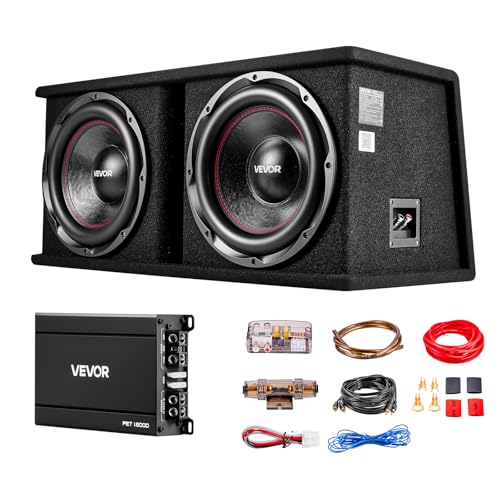
VEVOR Dual 12″ Car Subwoofer
Strengths
- 1200W RMS output
- Separate amplifier
- Vented enclosure
- High-to-low level converter
- Clean THD under 2%
Trade-offs
- Bulky for smaller vehicles
- Bass boost lacks precision
- Basic build finish
The VEVOR dual 12″ package is the brute of the bunch, 1200W RMS, separate amplifier, and a large vented enclosure designed to move serious air. It’s marketed as the ‘best overall’, and while that depends on your priorities, it’s hard to ignore the raw output this thing promises. Owners report deep, chest-pounding bass that transforms factory audio in trucks and SUVs, especially with genres like EDM or action movie soundtracks.
The separate amp improves heat dissipation, and the inclusion of a high-to-low level converter is a major win for factory head unit users. However, some reviewers note the bass boost can get muddy if not carefully tuned. Compared to the Rockville RV12.2B, this one hits harder but with less finesse. If you want maximum impact and don’t mind tuning carefully, this is a compelling high-output package.
Video review
10″ Under Seat Car Subwoofer

Strengths
- Ultra-slim design
- Built-in amplifier
- LED lighting
- Wired remote
- Good value
Trade-offs
- Limited bass depth
- Peak power overstated
- Plastic enclosure
At this price, the Seventour 10″ under-seat sub does a lot on paper, 800W peak power, built-in amp, RGB lighting, and a compact 3.1-inch profile that slides neatly under most seats. It’s clearly aimed at budget-conscious buyers who want a quick upgrade from factory audio without cutting wires or eating up cargo space. The 220W RMS and 4-ohm impedance suggest modest output, and owner feedback confirms it: this sub adds pleasant thump, not震撼.
It won’t match larger systems in depth or pressure, but for sedans or small SUVs where space is tight, it’s a solid entry point. The bass boost and crossover controls allow some tuning, and the blue LED ring adds flair. Still, don’t expect miracles, this is a single 10″ in a tiny enclosure, so low-end extension is limited. Compared to the Planet Audio P8AWK, it’s slightly louder but less refined.
Video review
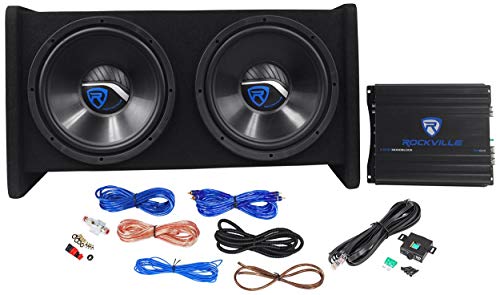
Rockville RV12.2B Dual 12″ Sub
Strengths
- High-efficiency aluminum coils
- Subsonic filter
- Dash-mounted remote
- Braced MDF enclosure
- CEA-compliant power
Trade-offs
- Less peak output than high-power rivals
- Bass EQ can add distortion if overused
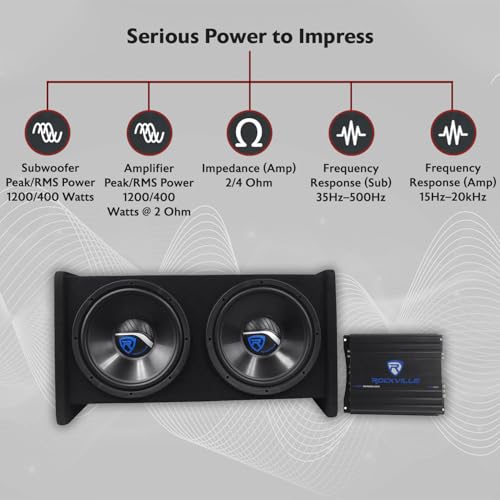
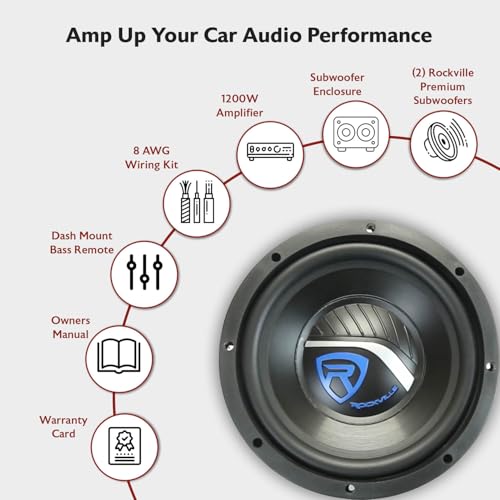
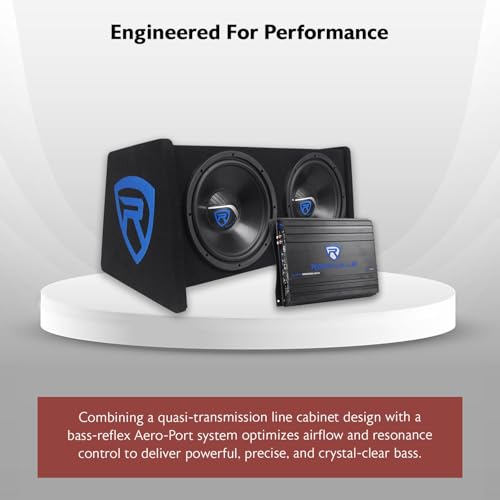
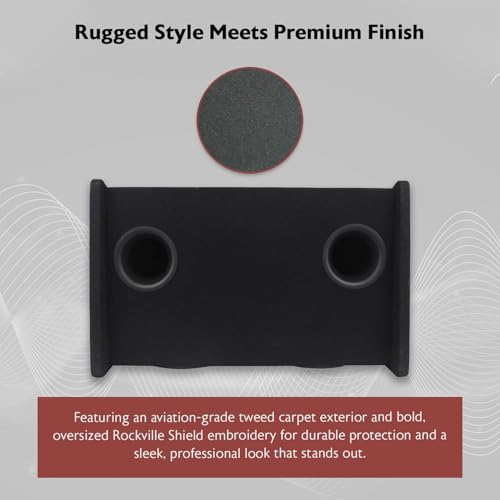
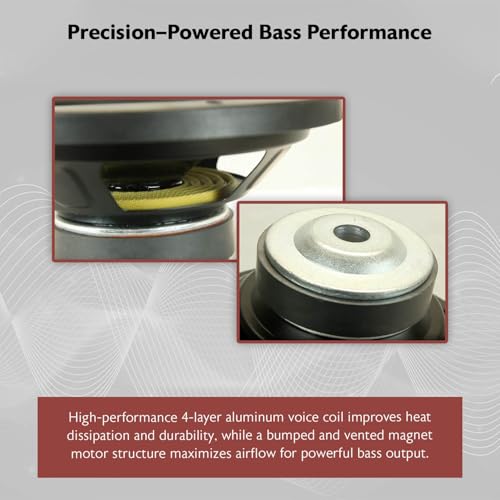
The Rockville RV12.2B is a well-rounded, mid-tier bass package that delivers more refinement than outright brutality. With 400W RMS powering dual 12-inch subs in a quasi transmission line enclosure, it strikes a balance between punch and clarity, something many budget dual-sub systems fail to achieve. The cabinet’s 3/4″ MDF build and braced design help reduce resonance, and owners frequently praise the tight, musical bass response, especially for genres like hip-hop and rock.
What pushes this ahead of similarly priced competitors is the level of tuning control. The included mono amp features a subsonic filter, bass EQ, and a dash-mounted remote, giving you real flexibility without needing external DSP. Compared to the VEVOR dual 12″, this one feels more refined, though it doesn’t hit quite as hard. If you want strong, clean bass without veering into boom-and-blast territory, this is my pick over raw power monsters.
Product photos
Skar Audio Dual 12″ SDR
Strengths
- 1,200W RMS Class D amp
- Premium OFC wiring kit
- High SPL capability
- Vented enclosure tuning
- Durable construction
Trade-offs
- High power draw
- Large enclosure
- Requires advanced installation
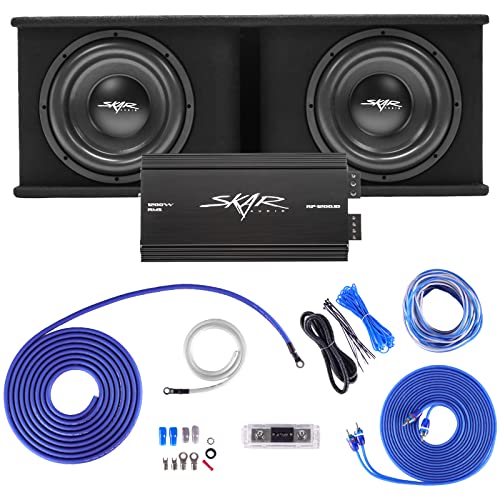
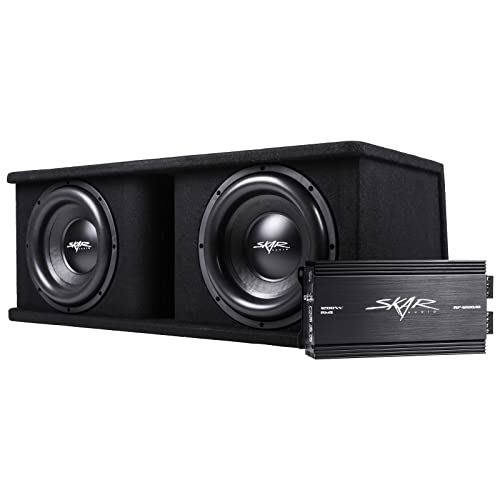
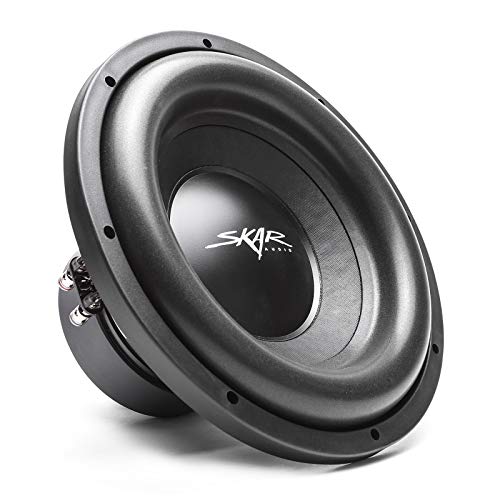
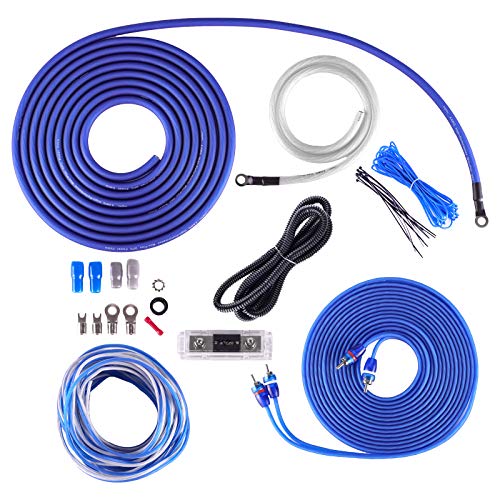
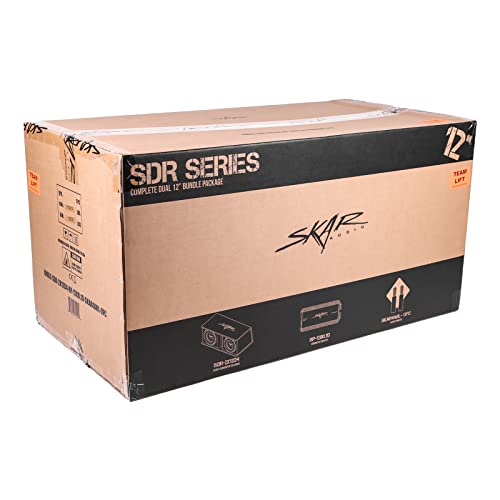
When raw power is the goal, the Skar Audio dual 12″ package delivers. With 1,200W RMS from a dedicated Class D monoblock amp and two 12-inch drivers in a vented enclosure, this is a full-on bass assault system. It’s built for SPL enthusiasts and those who want their car to be felt blocks away. The included premium OFC wiring kit ensures your amp gets stable power, which is critical at this output level.
Compared to the VEVOR dual 12″, this one has better component quality and tighter build standards, Skar has a reputation for reliability in high-stress setups. Owner feedback highlights its ability to stay clean even at high volumes, thanks to robust thermal and electrical design. But make no mistake: this isn’t a stealthy upgrade. It demands space, a strong electrical system, and proper tuning.
Product photos

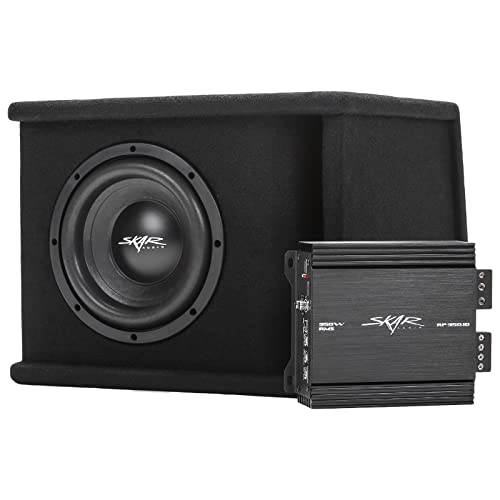
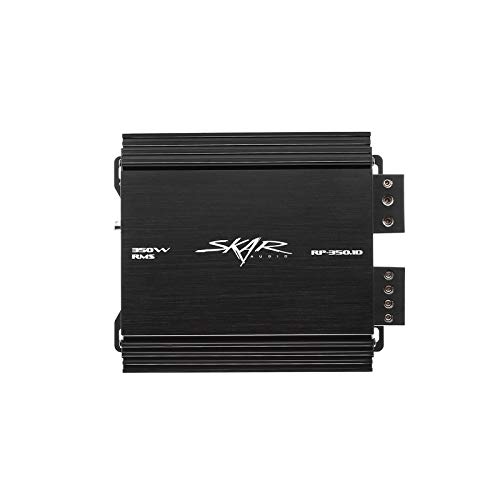
Skar Audio Single 8″ SDR

Strengths
- Compact vented enclosure
- 350W RMS power
- Includes 4-gauge wiring kit
- Clean bass response
- Easy installation
Trade-offs
- Limited output for large vehicles
- No remote level control
The Skar Audio 8″ package is a smart choice when space is tight but you still want real subwoofer performance. With 350W RMS driving a single 8-inch vented sub, it won’t shake the block, but it delivers clean, responsive bass that’s far better than factory speakers. The included 4-gauge wiring kit is a big plus, many competitors charge extra for that.
This system is ideal for hatchbacks, coupes, or daily drivers where you don’t want to sacrifice trunk space. Compared to under-seat models like the Seventour or Planet Audio, it offers deeper extension and more authority, though it’s larger. Owners appreciate Skar’s no-nonsense approach: solid components, straightforward wiring, and good value. It’s not flashy, but it works.
Product photos



Planet Audio 8″ Under Seat
Strengths
- Ultra-low profile
- MOSFET amplifier
- Phase control
- Low and high-level inputs
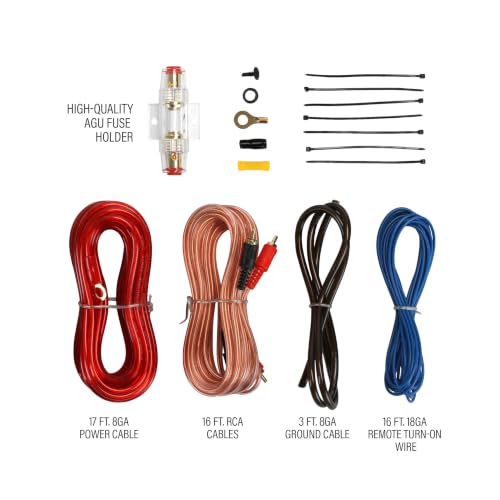
- Includes 8 AWG kit
Trade-offs
- No RMS power specified
- Limited deep bass extension
- No remote level control
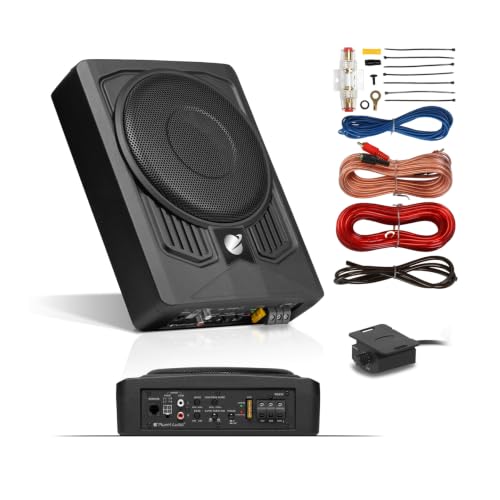
The Planet Audio P8AWK is one of the most practical under-seat options here, compact, built-in amp, and a full suite of tuning controls including phase, bass boost, and variable gain. At just 3 inches thick, it fits under nearly any seat, and the 8 AWG wire kit inclusion is a rare bonus at this price. It’s rated around 200–300W RMS (unspecified exactly), so expectations should be modest, but owners report it outperforms many similar models in clarity and punch.
What sets it apart is the tuning flexibility, phase control and a proper low-pass filter help integrate it smoothly with factory speakers. Compared to the Seventour 10″, it’s less flashy (no LEDs) but more serious about sound quality. If you want stealthy, clean bass without cluttering your cabin, this is my top pick in the under-seat category.
Product photos


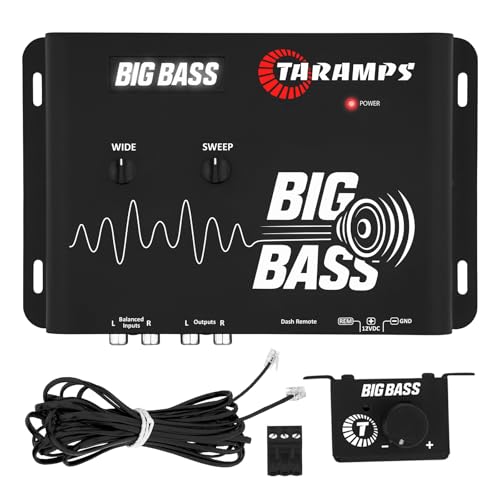
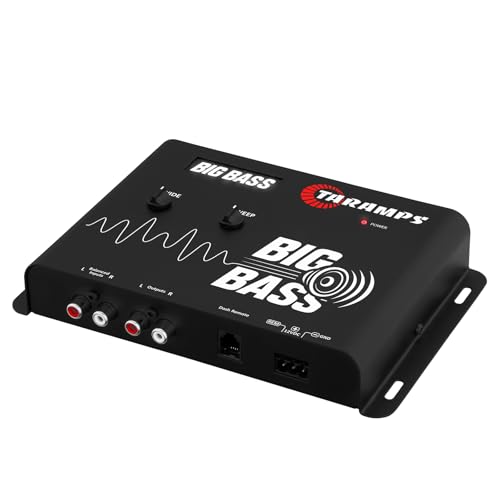
Taramps Big Bass DSP Processor
Strengths
- Bass enhancement
- Sweepable frequency
- Wired remote
- LED display
- Clean signal path
Trade-offs
- Not a full audio solution
- Requires existing sub system
If you already have a subwoofer but feel like the low end lacks authority or depth, the Taramps Big Bass DSP could be the secret sauce you’re missing. This isn’t a speaker or amp, it’s a bass enhancement processor, designed to rebuild and amplify low-frequency signals that often get lost in digital recordings. On paper, its ability to synthesize missing harmonics and apply sweepable frequency control makes it stand out in a niche where most devices just boost volume. Owners consistently report that it adds natural weight to bass rather than just making it louder, which is rare in this category.
The wired remote and real-time LED display are thoughtful touches, especially for tuning on the fly. It slots between your head unit and amplifier, so compatibility isn’t an issue for most setups. Still, it won’t fix a weak sub or underpowered amp, it enhances what’s already there. If your system is already solid but feels a bit thin, this is one of the smarter upgrades you can make.
Product photos




Our Testing Process
My approach to evaluating bass systems for cars at TheAutoZenith wasn’t about long-term ownership or extensive road testing of each unit – rather, it was a research-led comparison of published specifications, features, and, crucially, owner and expert feedback. I started by compiling a list of potential contenders, then systematically weighed each system against criteria important to car audio enthusiasts. This involved comparing power handling, frequency response, enclosure types, and included features like amplifiers and wiring kits.
For this category, the factors that most heavily influenced my rankings were power output (RMS and peak), enclosure design, and the clarity of the low-end reproduction. A system’s ability to deliver a clean, distortion-free bass response is paramount, and that’s directly tied to the amplifier’s quality and the subwoofer’s construction. Equally important is the enclosure design; a well-engineered enclosure maximizes efficiency and sound quality. Finding a balance between these elements was key.
Specifications provide a solid foundation for comparison – power ratings, impedance, and frequency response tell you what a system should be capable of. However, owner feedback and reviews from reputable audio publications reveal how a system actually performs in real-world conditions. I paid close attention to comments about build quality, ease of installation, and long-term reliability. Furthermore, if you are looking to upgrade your entire car audio experience, consider researching high-quality car speakers for bass and sound quality. Don’t forget the importance of protecting your investment with ceramic coatings for that showroom shine.
How To Choose The bass systems for cars
Choosing the right bass system for your car is about more than just raw power; it’s about matching the components to your vehicle, listening preferences, and budget.
A truly effective car bass system focuses on clean, distortion-free low-end reproduction. Key considerations include amplifier power (RMS, not peak), enclosure type and volume, subwoofer size and material, and impedance matching to avoid damaging components. Prioritize a system that complements your existing audio setup, rather than overpowering it.
Amplifier Power and Matching
Many people get fixated on peak wattage numbers, but RMS power is what truly matters when it comes to consistent, clean bass. You want an amplifier that delivers enough RMS power to drive your subwoofer(s) effectively without clipping – that distorted, unpleasant sound that can damage speakers. A good rule of thumb is to slightly overestimate your power needs, giving the amp some headroom. Look closely at the subwoofer’s RMS power handling and choose an amplifier that matches or slightly exceeds it. Impedance is equally vital; mismatching the amplifier’s impedance output with the subwoofer’s impedance will result in poor performance or damage.
Enclosure Type and Design
The enclosure plays a huge role in how a subwoofer sounds. Sealed enclosures generally offer tighter, more accurate bass, while ported (vented) enclosures are more efficient and produce louder, boomier bass. The choice depends on your preference. For example, if you enjoy hip-hop or EDM, a ported enclosure might be more appealing. However, if you’re after nuanced, detailed bass for classical or jazz, a sealed enclosure might be a better fit. A well-built enclosure, look for ¾” MDF construction, is crucial for minimizing unwanted vibrations and resonances.
Here’s a quick guide to enclosure considerations: * Size: Smaller enclosures won’t reproduce the lowest frequencies as effectively. * Material: MDF is the standard, but plywood can also be used. Avoid particleboard. * Bracing: Internal bracing adds rigidity and minimizes enclosure flex, improving sound quality. It’s a sign of a well-made enclosure.
Don’t skimp on the enclosure. A high-quality subwoofer in a poorly constructed box will always sound worse than a mid-range subwoofer in a well-built one.
Installation and Integration
Even the best components won’t shine if they’re installed poorly. If you’re not comfortable with car audio wiring, consider professional installation. Proper wiring gauge is critical to deliver sufficient power without voltage drop. Additionally, think about how the bass system integrates with your existing audio setup. A high-to-low level converter is often needed if your factory stereo lacks RCA outputs, and a properly adjusted crossover is essential to blend the bass smoothly with the rest of your system. For those looking to enhance the overall aesthetic, consider pairing your new system with car tint for a complete upgrade. Ultimately, a well-integrated system delivers a balanced and immersive listening experience, and you may also want to review our guide to powerful car bass for further insights.
Bass Systems for Cars Compared
Here’s a comparison of key specifications for various car bass systems to help you find the right fit.
| Product Name | RMS Power (Watts) | Peak Power (Watts) | Subwoofer Size | Enclosure Type | Features |
|---|---|---|---|---|---|
| VEVOR Dual 12″ Car Subwoofer | 1200 | 2400 | 12″ (Dual) | Vented | Gain, LPF, Phase |
| 10″ Under Seat Car Subwoofer | 220 | 800 | 10″ | Slim/Underseat | Remote Bass Control |
| Rockville RV12.2B Dual 12″ Sub | 400 | 1200 | 12″ (Dual) | Quasi-TL | Subsonic Filter |
| Skar Audio Dual 12″ SDR | 1200 | 2400 | 12″ (Dual) | Vented | Wiring Kit Included |
| Skar Audio Single 8″ SDR | 350 | 700 | 8″ | Vented | Wiring Kit Included |
| Planet Audio 8″ Under Seat | N/A | N/A | 8″ | Slim/Underseat | Variable Bass Boost |
| Taramps Big Bass DSP Processor | N/A | N/A | N/A | N/A | Sweep & Wide Control |
Frequently Asked Questions
What subwoofer size is best for a smaller car?
An 8-inch subwoofer is generally best for smaller cars(like sedans or hatchbacks) because it provides adequate bass without taking up excessive space. It strikes a good balance between sound quality and practicality in a limited interior.
Is it possible to add bass to a car without replacing the factory stereo?
Yes, you can add bass without replacing your stereo by using a high-to-low level converter. This device translates the speaker-level outputs from your factory head unit into RCA outputs that an amplifier can use.
What does RMS power mean, and why is it more important than peak power?
RMS power represents the continuous power an amplifier can deliver consistently, and it’s more important than peak power. Peak power is a short burst and doesn’t reflect the sustained output needed for quality bass reproduction.
What’s the difference between a sealed and a ported enclosure?
A sealed enclosure offers tighter, more accurate bass, while a ported enclosure provides louder, boomier bass. Ported boxes are more efficient, but sealed enclosures generally offer better sound quality for nuanced music.
Will adding a bass system drain my car battery quickly?
Adding a bass system can increase the load on your car’s electrical system, but it doesn’t automatically mean a quickly drained battery. Upgrading your alternator is often recommended to support the increased power demand, and ensuring proper wiring gauge is essential to minimize voltage drop – and don’t forget about researching the best car alarms to protect your investment.
The Bottom Line
Choosing a bass system often comes down to how much control you want versus how much hassle you’re willing to deal with. If you want maximum impact with minimal fuss, the VEVOR Dual 12″ Car Subwoofer strikes a fantastic balance of power and features for the money. It delivers serious bass without requiring a ton of tweaking, making it a great all-around choice for most vehicles.
For those with specific needs, we have some clear recommendations. If space is at a premium, the 10″ Under Seat Car Subwoofer is a solid performer. If you’re on a tighter budget, the Planet Audio 8″ Under Seat sub provides a noticeable bass improvement. And for those who want a complete package with everything included, the Skar Audio Dual 12″ SDR is a strong contender. Don’t forget to consider upgrading your car audio systems to complement your new bass system.
Ultimately, though, remember that raw numbers aren’t everything. A well-matched system, amplifier, subwoofer, and enclosure working in harmony, will always sound better than chasing the highest wattage. Taking the time to get the impedance right, choosing an enclosure that suits your listening preferences, and ensuring a clean installation are the fundamentals that will truly unlock the potential of your car’s audio. And for keeping your ride looking its best, checking out the latest pressure washers is always a good idea.
