
8 Best Backpacks for Bike Commuting 2026
This post contains affiliate links. As an Amazon Associate, we earn from qualifying purchases.
The Two Wheel Gear Pannier Backpack Convertible is the best overall for its smart KLICKfix mounting and reliable weather protection, while the Hycline 28L 5-in-1 Waterproof Pannier stands out as a rugged, high-capacity budget pick that handles downpours without issue. For daily versatility and comfort, the Osprey Escapist 20L is hard to beat.
Most riders don’t realize how much a shifting load can wreck their ride, poorly balanced weight leads to fatigue, bad posture, and even handling problems on longer commutes. A true bike-specific backpack does more than carry gear; it stays put, keeps you visible, and protects your essentials from rain and grime.
This guide cuts through the noise by focusing on real-world performance. I looked at specs, owner feedback, and design details that matter most: how well each pack resists water, mounts securely, and organizes your daily load. These picks reflect what actually works for consistent, reliable commuting.
Top 8 Backpacks For Bike Commuting in the Market
The Best Backpacks For Bike Commuting, Reviewed
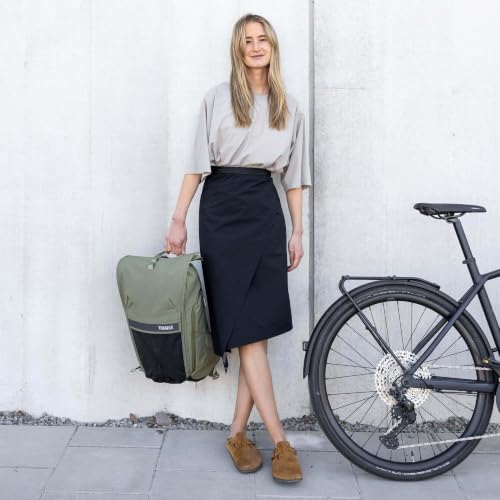
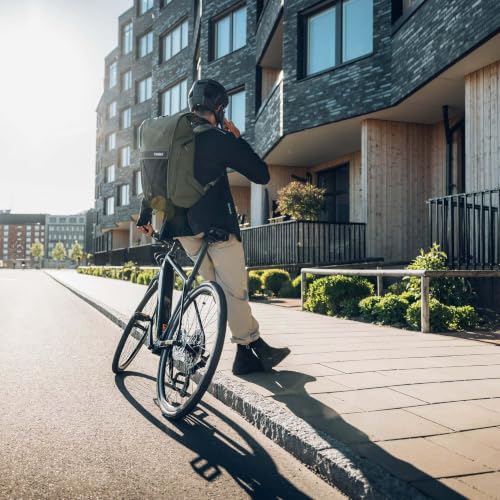
Two Wheel Gear Pannier Backpack Convertible

Strengths
- 2-in-1 pannier conversion
- KLICKfix mounting system
- Recycled waterproof materials
Trade-offs
- Premium price
- No built-in hydration sleeve
- Slightly bulky as backpack
This is the kind of bag that redefines what a commuter should expect from a single piece of gear. The fact that it transitions so cleanly between pannier and backpack is not just convenient, it’s transformative for urban riders who don’t want to carry a separate work bag. On paper, the 22L capacity feels just right, and owners consistently report that the internal layout makes sense for daily use, especially the padded 15.6-inch laptop sleeve and the clever external pockets for quick-grab items like a U-lock or rain cover.
The use of recycled ripstop with waterproof coating and YKK zippers gives it serious weather credibility, and the included neon rain cover is a thoughtful touch. What really sets it apart, though, is the KLICKfix mounting system, it’s German-engineered, secure, and widely praised for its reliability across different rack types. The M.A.S. hooks for helmet carry and the reflective details add real-world utility without clutter. For riders who want one bag to do it all, this is as close to a no-compromise pick as you’ll find.
Video review
Osprey Escapist 20L Biking Backpack

Strengths
- Excellent weight distribution
- Ventilated back panel
- Smart pocket layout
Trade-offs
- Rolltop not fully waterproof
- No built-in rain cover
- Laptop sleeve not padded
Osprey’s reputation for fit and ventilation is on full display here. The dropped-lumbar design keeps the weight centered on the sit bones, which makes a noticeable difference on longer rides, reviewers note less shoulder strain and better balance in aggressive postures. The split upper backpanel is a small detail that pays off when you’re leaning forward on drop bars or technical trails.
The organization is top-tier: hipbelt pockets, side stash zones, and a stretch front pocket give you access without dismounting. LidLock helmet attachment and blinky light loop are thoughtful touches. Compared to the Thule Paramount, it trades some laptop protection for superior wearability. If you’re on the bike for more than 30 minutes daily, this fit advantage is real.
Video review
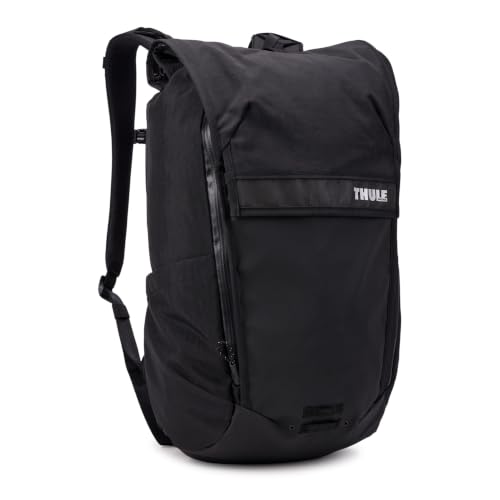
Thule Paramount Bike Commuter Backpack
Strengths
- Superior laptop protection
- Rolltop with expansion
- PFC-free water resistance
Trade-offs
- Minimal hip support
- No side water bottle pockets
- Less breathable back panel
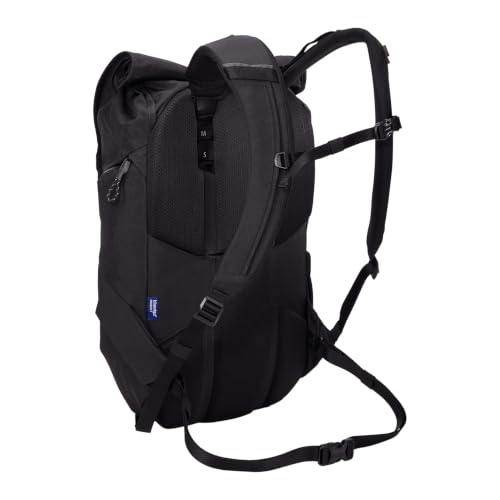
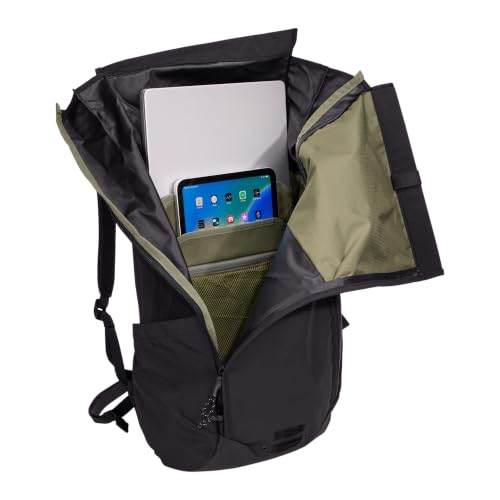
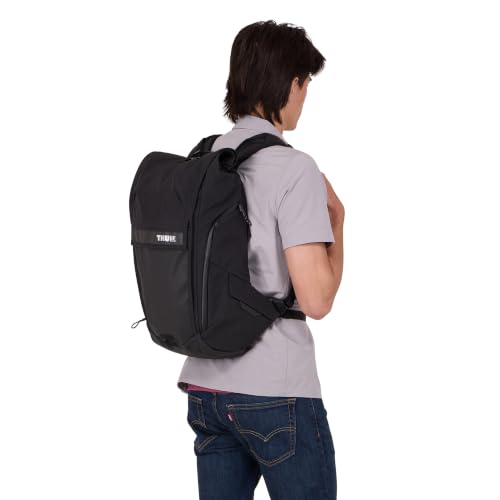
Thule has always leaned into protection and durability, and the Paramount delivers on that reputation. The floating laptop compartment is a standout, owners say it keeps a 16-inch laptop stable and isolated from impacts, which matters when you’re bouncing over potholes. The rolltop closure adds both weather resistance and a bit of expandability, and the PFC-free water-resistant finish aligns with eco-conscious buyers without sacrificing performance.
It’s not the most innovative in design, but the adjustable harness and bluesign-certified materials signal Thule’s attention to long-term wear and environmental impact. Compared to the Osprey Escapist, it lacks some of the ergonomic finesse in fit, but it edges ahead in raw protection for electronics. If your laptop is your lifeline and you need it locked down, this is a strong contender.
Product photos
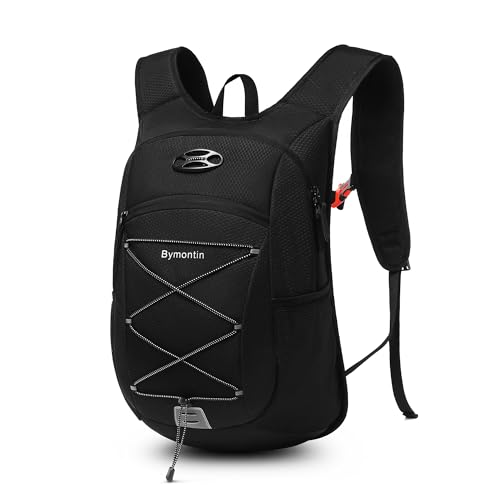
Ultra-Light Soft Hiking Daypack
Strengths
- Very affordable
- Breathable back panel
- Basic organization
Trade-offs
- Not waterproof
- Lightweight materials
- Minimal security features
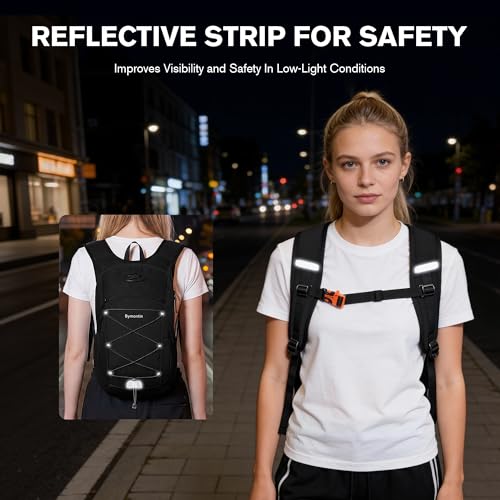
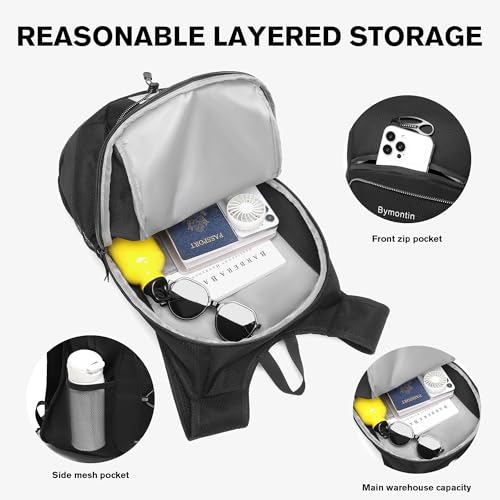
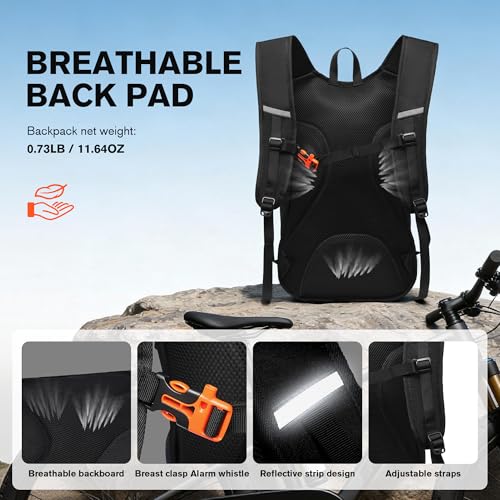
At $17, this pack is clearly built to hit a price point, and it does so with a few smart compromises. The breathable mesh back panel and foam padding stand out for the cost, owners say it feels more comfortable than expected during short to moderate rides. The two-zipper design keeps things organized, and the side mesh pockets are a small but useful addition.
But it’s not waterproof, just water-resistant, and feedback consistently warns against relying on it in rain. The stitching is tight, but the materials are thin. It’s best seen as a fair-weather commuter or backup bag. Compared to the Sea to Summit, it’s heavier and less protective, but more structured for daily carry. For riders who need a bag and not the bag, it gets the job done.
Product photos
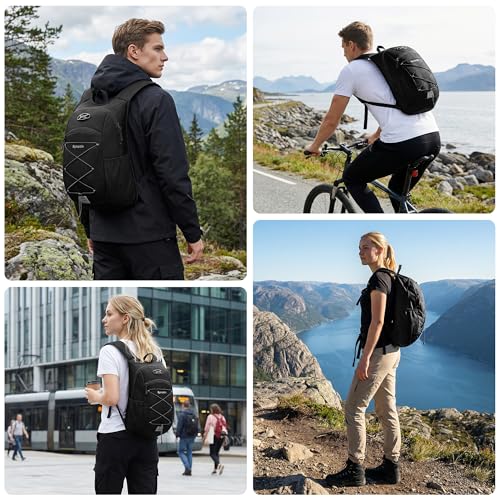
Anmeilu 18L Bicycle Backpack

Strengths
- Built-in hydration support
- Breathable EVA back panel
- Adjustable harness system
Trade-offs
- Bulky urban profile
- Lower-quality zippers
- Minimal organization
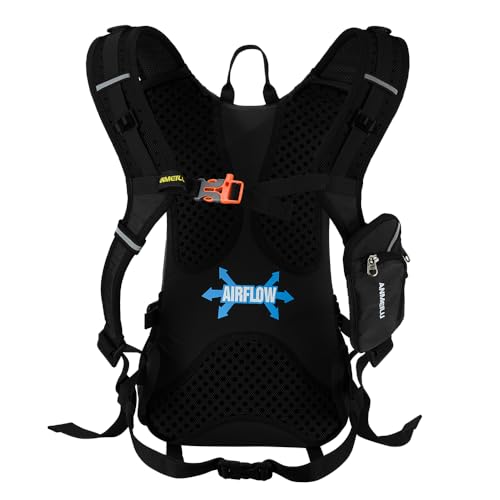
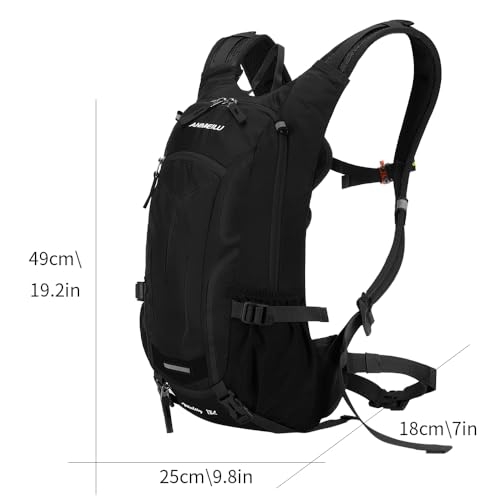
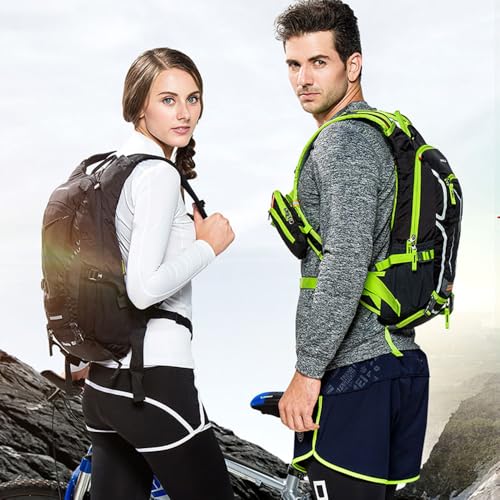
This backpack is built around one key feature: hydration. The integrated 2L reservoir sleeve and routed hose on the shoulder strap make it a rare find in the commuter category, owners who use it for longer rides or trail access swear by the convenience. The mesh-punched EVA back panel and adjustable straps also contribute to solid breathability and fit, especially for the price.
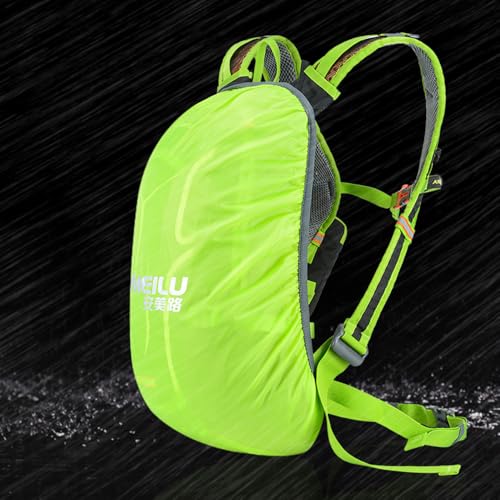
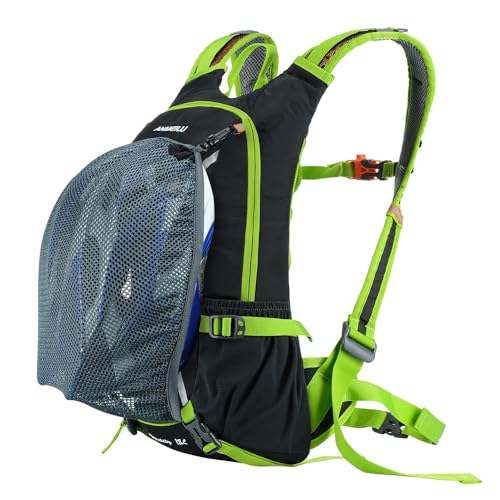
It’s not sleek or subtle, this is a rugged, outdoor-focused pack that happens to work for commuting. The hidden helmet net is a nice touch, and the included rain cover adds some weather protection. But the design leans more toward mountain biking than urban riding. Compared to the Osprey or Thule, it’s less refined for city use, but if you’re combining trail miles with your commute, it’s a strong value.
Product photos
OFFBONDAGE Bike Rack Trunk Bag
Strengths
- Excellent night visibility
- Affordable price
- Multi-use carry options
Trade-offs
- No backpack comfort padding
- Limited capacity
- Basic materials
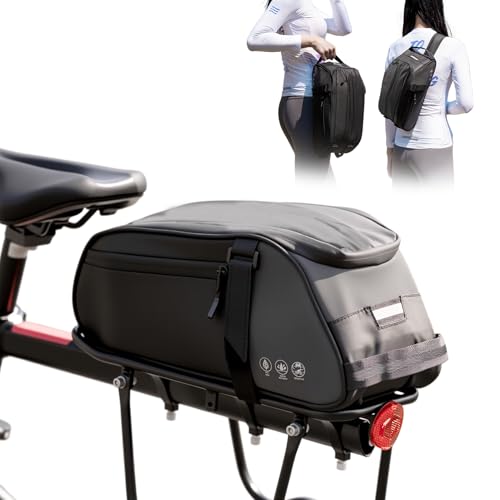
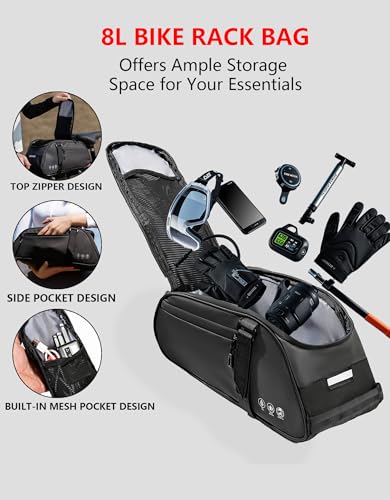
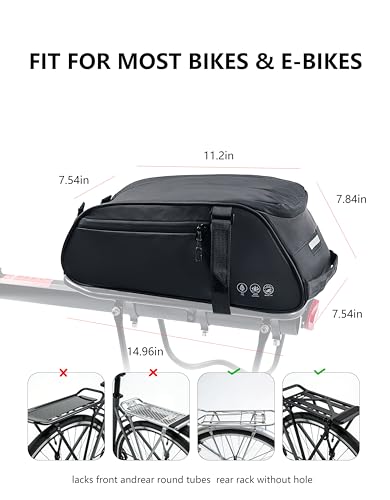
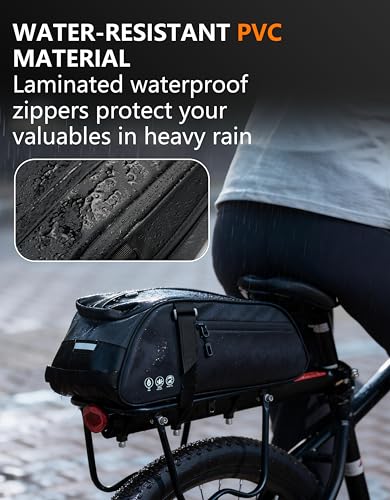
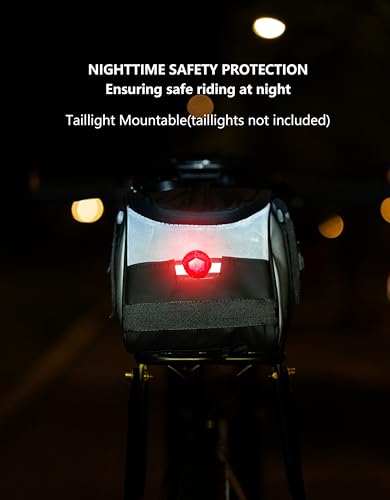
For under $15, this bag punches above its weight in both visibility and versatility. The 8L capacity is modest, but the organization, main compartment, side pockets, zip pouch, mesh dividers, makes it surprisingly functional for essentials. The 600D Oxford fabric and laminated zipper hold up well in rain, and the large reflective panels are a major safety win, especially at night.
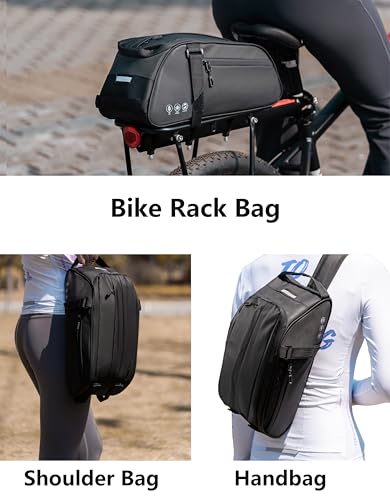
Owners appreciate the quick hook-and-loop installation and the fact that it converts into a chest or handbag, making it useful beyond the bike. It won’t replace a full commuter backpack, but as a dedicated rack bag that doubles as a small carryall, it’s one of the smarter budget plays out there. Compared to pricier options, it lacks padding and structure, but for basic storage and visibility, it delivers.
Product photos
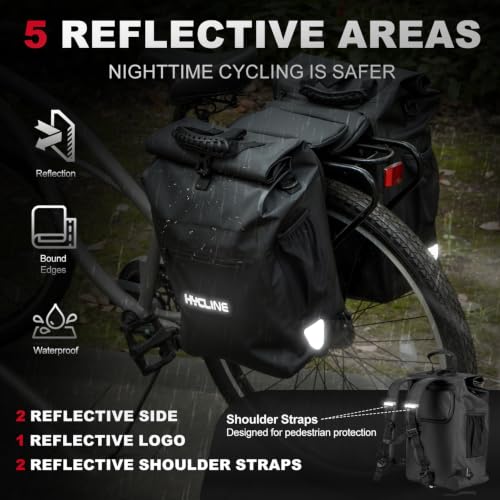
Hycline 28L 5-in-1 Waterproof Pannier
Strengths
- True 5-in-1 functionality
- Excellent waterproofing
- High visibility reflectivity
Trade-offs
- Bulky when full
- Mounting hooks less durable than KLICKfix
- Straps not as padded
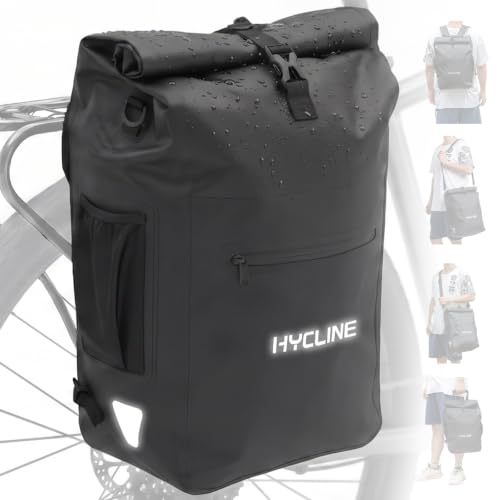
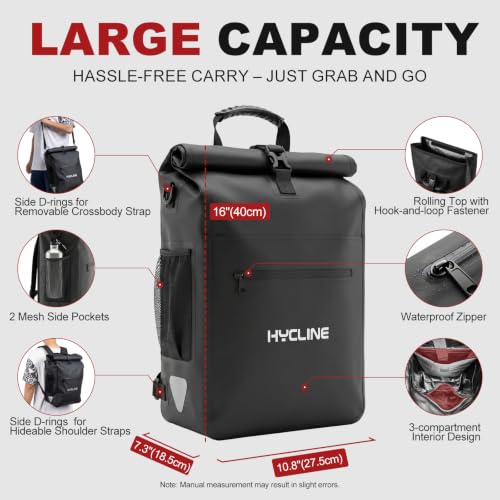
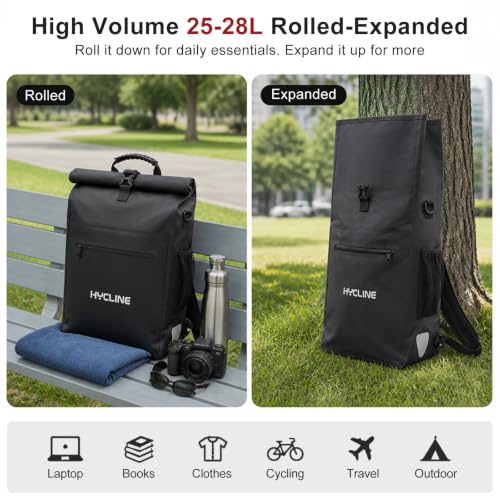
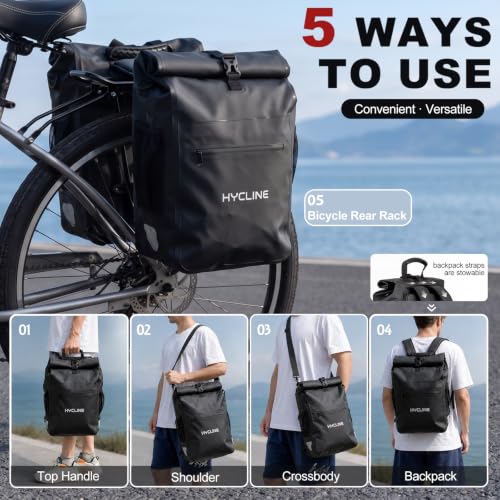
The 28L capacity and 5-in-1 functionality make this a standout for versatility. It’s one of the few bags in this list that truly functions well as both a pannier and a standalone travel backpack. The roll-top design with dual-layer waterproofing is effective in rain, and owners confirm it keeps contents dry even in sustained downpours. The 360° reflectivity is a major safety upgrade over basic models.
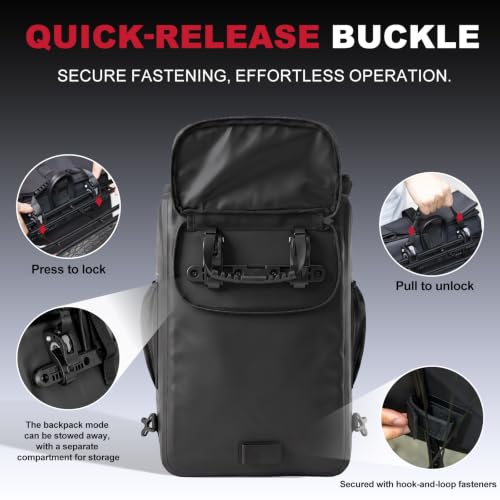
The mounting system, dual top hooks and a loop strap, is secure and tool-free, fitting most racks. When used as a backpack, the hidden straps deploy cleanly, and the rigid panel prevents sagging. It’s not as refined as the Two Wheel Gear, but for less than a third of the price, it offers remarkable flexibility. If you want one bag for commuting, weekend trips, and errands, this is the most adaptable option.
Product photos
Sea to Summit Ultra-SIL Dry Pack

Strengths
- Extremely lightweight
- Fully waterproof
- Packs tiny
Trade-offs
- No padding or structure
- Not for heavy loads
- Fragile if dragged
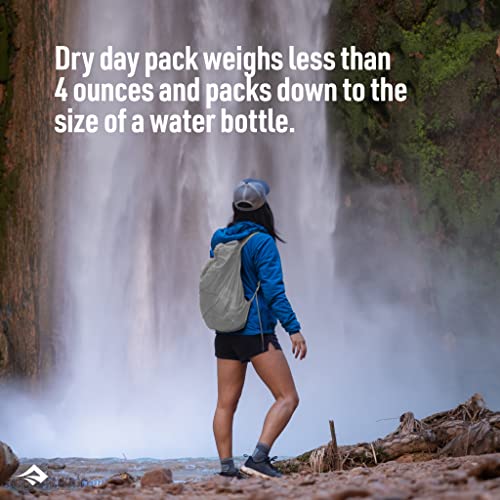
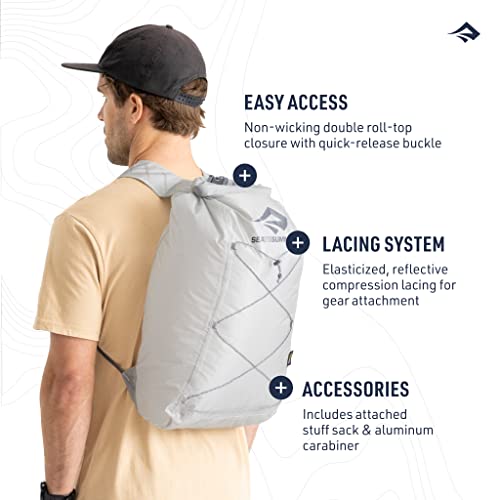
At under four ounces, this pack is in a weight class that feels almost absurd, like bringing a grocery bag that somehow holds 22 liters. The Ultra-Sil fabric is no joke; owners confirm it handles downpours without issue, and the double roll-top with quick-release buckle is both secure and fast to use. It’s not meant for heavy loads or long-term shoulder carry, but for fair-weather commuters or bike-to-train riders who want minimal bulk, it’s hard to beat.
The lack of structure or padding means it won’t replace a traditional backpack for daily office commutes with a laptop, but paired with a pannier or used for light carry, it shines. It’s also the kind of pack you can stash in a jersey pocket and forget until needed. For minimalist riders, this is the ultimate “just in case” bag.
Product photos



How We Chose These backpacks for bike commuting
Rather than a hands-on lab test, my research focused on a detailed comparison of published specifications and features across numerous models. I weighed owner reviews from multiple sources – including Amazon and dedicated cycling forums – alongside expert opinions from sites specializing in outdoor gear and commuting solutions. This process allowed me to build a ranked list based on how well each backpack fulfills the demands of daily bike commuting.
For this category, capacity and weather protection were the most heavily weighted factors. A bike commuter needs enough room for work essentials, a change of clothes, and potentially groceries, but bulk can throw off balance. Equally crucial is reliable water resistance; getting caught in a downpour with a soaked laptop is a frustrating experience. Durability and comfort, while important, ranked slightly lower due to the wide range of personal preferences.
Specifications reliably indicate storage volume, material construction, and features like laptop sleeve dimensions. However, judging real-world comfort, ease of mounting, and long-term durability required careful analysis of owner feedback. I paid close attention to recurring themes in reviews – consistent praise or complaints about strap design, waterproofing effectiveness, or the functionality of mounting systems – and factored those insights into my assessments. You can find more insights on choosing the right carry solution in our guide to backpacks for cycling. Don’t forget to also consider pairing your new backpack with quality commuter bike helmets for a safe commute.
Choosing The Right backpacks for bike commuting
Finding the right backpack for bike commuting isn’t just about comfort; it’s about blending practicality, safety, and a fit that won’t throw off your balance.
A quality bike commuting backpack balances durable, water-resistant construction with features specifically tailored for cyclists. Look for secure mounting options, reflective elements for visibility, dedicated compartments for essentials like laptops and rain gear, and a comfortable fit that distributes weight effectively. Prioritize features suited to your typical commute length and load.
Mounting & Stability
The biggest difference between a regular backpack and one suitable for bike commuting is how securely it attaches to you or your bike. Pannier-style backpacks, like the Two Wheel Gear Pannier Backpack Convertible, offer the benefit of transforming into a rack-mounted bag using systems like KLICKfix, providing excellent stability. However, if you prefer carrying the load directly, a snug fit is paramount. A poorly fitted backpack will shift during your ride, throwing off your balance and potentially causing discomfort. Look for adjustable straps – sternum and waist straps are particularly helpful – and a back panel designed to minimize movement.
Weatherproofing & Durability
Commuting often means facing the elements, so weatherproofing isn’t just a nice-to-have, it’s essential. While “water-resistant” buys you some time, truly waterproof materials and sealed seams (like those found in the Hycline 28L 5-in-1 Waterproof Pannier) are worth the investment. Beyond water, consider the material’s abrasion resistance. A robust fabric like Oxford nylon (as used in the OFFBONDAGE Bike Rack Trunk Bag) will withstand daily wear and tear, especially if you’re navigating crowded urban environments.
- Consider the closure type: roll-top closures (found on many pannier-style bags) offer superior water protection.
- Look for reinforced stitching at stress points – this is a sign of a well-made backpack.
- Waterproof zippers aren’t always standard, but are a significant upgrade, offering an extra layer of defense against rain; a feature like that in the Thule Paramount Bike Commuter Backpack is a worthwhile investment.
A little preventative maintenance goes a long way. Regularly treat the exterior fabric with a waterproofing spray, even on bags marketed as waterproof, to maintain optimal performance.
Organization & Comfort Features
Beyond just hauling your gear, a good commuter backpack should organize it efficiently. Dedicated laptop sleeves (often padded, like in the Thule Paramount) are a must for many, as are pockets for water bottles, locks, and smaller accessories. The Osprey Escapist 20L Biking Backpack excels in this area with its extensive pocket layout. Don’t underestimate the importance of comfort. Padded back panels and breathable materials will make a noticeable difference on longer rides. And remember to think about visibility; integrating safe commuting lights with your backpacks for bike commuters is a smart move for nighttime safety.
Backpacks for Bike Commuting Compared
Here’s a comparison of key specifications for popular backpacks designed for bike commuting to help you make an informed decision.
| Product Title | Capacity (L) | Waterproofing | Laptop Size | Mounting System | Weight (lb) |
|---|---|---|---|---|---|
| Two Wheel Gear Pannier Backpack | 22 | Yes | 15.6″ | KLICKfix | N/A |
| Osprey Escapist 20L Biking Backpack | 20 | Yes | N/A | N/A | 2.21 |
| Thule Paramount Bike Commuter | N/A | Water-Resistant | 16″ | N/A | N/A |
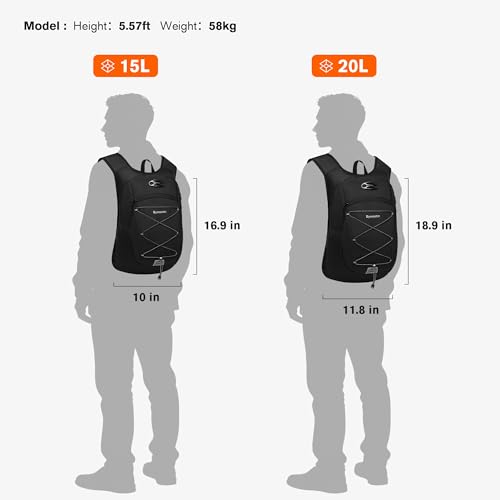
| Ultra-Light Soft Hiking Daypack | 16.9 x 10 x 7 | Water-Resistant | N/A | N/A | N/A |
| Anmeilu 18L Bicycle Backpack | 18 | Yes | N/A | N/A | N/A |
| OFFBONDAGE Bike Rack Trunk Bag | 8 | Yes | N/A | Hook & Loop | N/A |
| Hycline 28L 5-in-1 Waterproof Pannier | 28/25 | Yes | N/A | Adjustable Hooks | N/A |
| Sea to Summit Ultra-SIL Dry Pack | 22 | Yes | N/A | N/A | 3.9oz |
Frequently Asked Questions
What level of water resistance should I expect from a bike commuting backpack?
Truly waterproof backpacks, like those using fully sealed construction, offer the best protection, but water-resistant options are often sufficient for light to moderate rain. Consider your typical commute and local weather patterns; a water-resistant bag treated with a spray-on protectant can handle most conditions, while heavier downpours demand a fully waterproof design.
Are pannier-style backpacks more stable than traditional backpacks?
Yes, pannier-style backpacks generally offer greater stability because they attach to a bike rack, shifting the weight lower and closer to the bike’s center of gravity. This reduces sway and makes for a more balanced ride, especially when fully loaded, and can be a better option than searching for the [best bike panniers for commuting].
How important is a dedicated laptop compartment?
A padded laptop compartment is extremely important for anyone carrying a laptop to work or school. It protects your device from impacts and provides a secure, dedicated space, preventing it from shifting around and potentially getting damaged during your commute.
What backpack size is best for daily commuting?
A capacity of 20-25 liters is generally ideal for daily commuting, providing enough room for work essentials, a change of clothes, and some personal items. However, your specific needs will dictate the best size; if you frequently carry bulky items, you may need a larger backpack, but consider if a [bike for commuting] with more cargo capacity might be a better fit.
How can I improve the comfort of a bike commuting backpack?
Look for backpacks with padded back panels, adjustable sternum straps, and hip belts to distribute weight evenly. Proper adjustment is key; a snug but not overly tight fit will prevent the backpack from bouncing around and causing discomfort, and may be preferable to [choosing a commuter bike] with no ability to carry gear.
The Bottom Line
Choosing a bike commuting backpack often comes down to balancing control and convenience. Do you want the ultimate stability of a pannier system, or the simplicity of a traditional backpack? For overall performance and a blend of features, I believe the Two Wheel Gear Pannier Backpack stands out. It offers the best of both worlds – carrying comfort when you want it, and rock-solid mounting when you need it.
However, if budget is a primary concern, the Anmeilu 18L Bicycle Backpack delivers excellent value. Those prioritizing versatility and weatherproof protection should consider the Hycline 28L 5-in-1 Waterproof Pannier, which adapts to various carrying needs. Don’t forget to pair your new backpack with reliable bike locks to keep your investment secure.
Ultimately, the ideal backpack isn’t about the highest specs or the most features. It’s about finding a bag that fits your commute, your body, and your priorities. Prioritize a secure fit, effective weather protection, and a layout that keeps your essentials organized – those fundamentals matter far more than any single number on a spec sheet when you’re relying on this gear every day.
