
5 Best ATV Tire Sealants of 2026
This post contains affiliate links. As an Amazon Associate, we earn from qualifying purchases.
The FlatOut Sportsman Formula is the best overall ATV tire sealant for long-term protection and reliability, sealing punctures up to 1/2 inch. For riders on a budget, the Slime 2-in-1 offers solid performance for smaller flats, while the TUSK First Line adds balancing benefits for smoother trail rides.
Dealing with a flat ATV tire deep in the woods is more than just a nuisance, it can end your ride early and leave you stranded. Preventing that failure means choosing a sealant built for real off-road punishment, not just paved shortcuts.
After comparing specs and owner feedback across top models, I focused on sealing strength, longevity, and terrain versatility. These picks reflect what actually works when rocks, thorns, and rough trails put your tires to the test.
Top 5 Atv Tire Sealant in the Market
The Best Atv Tire Sealant, Reviewed
Slime 2-in-1 Tire & Tube Sealant

Strengths
- Lowest price
- Easy installation
- Safe for tubes
Trade-offs
- Shorter protection life
- Smaller puncture limit
Slime has been around forever, and the 10194 model stays true to its reputation as the budget workhorse. It’s not trying to last 10 years or seal ¾-inch gashes, it’s built to get you back on the trail after a small puncture. The 1/4-inch tread puncture seal limit is the smallest on this list, but for most ATV riders dealing with nails, thorns, or small gashes, it’s more than enough.
What I like is how user-friendly it is. The included valve tool and clear hose make installation simple, and the non-toxic, water-soluble formula means cleanup is no drama. Owners praise it for reliability in tubes and tubeless setups alike, something not all sealants can claim. Compared to FlatOut or LiquiTube, it’s not a permanent fix, but for two years of protection at the lowest price point, it’s hard to beat. This is the go-to if you want something reliable, easy, and affordable.
Video review
FlatOut QuickStrike Off-Road Tire Sealant

Strengths
- Fast sealing action
- Kevlar-enhanced
- Works in tubed and tubeless
Trade-offs
- Most expensive option
- Diminishing returns vs. Sportsman
QuickStrike is FlatOut’s answer to the “I need this sealed now” crowd. The bag-in-bottle design is clever, it’s meant to install faster and mix more cleanly, and owners say it really does flow and seal quicker than traditional liquid sealants. That speed matters when you’re out riding and lose air fast. The ½-inch puncture rating matches the Sportsman formula, but this one’s marketed as more reactive than preventative.
It still uses Kevlar and lasts the life of the tire, so you’re not sacrificing durability for speed. But compared to the Sportsman version, it’s significantly more expensive for the same volume. For budget-conscious riders, that’s hard to ignore. If you’re constantly riding in rocky, thorny, or root-heavy trails where punctures happen fast, the premium might be justified. But for most, the regular Sportsman formula offers better value.
Video review
FlatOut Sportsman Formula Tire Sealant

Strengths
- Long-term protection
- Kevlar reinforcement
- Water-washable formula
Trade-offs
- Higher upfront cost
- Not ideal for temporary fixes
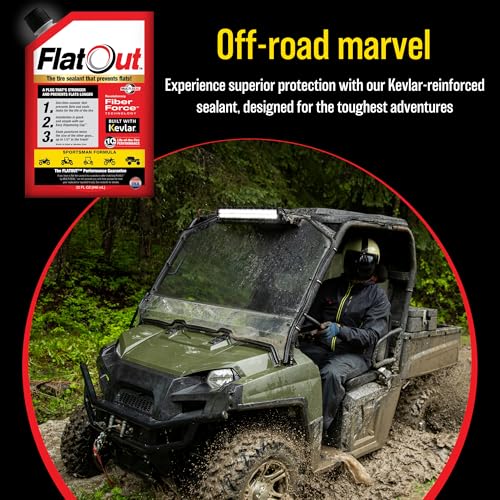
I’ve seen a lot of sealants come and go, and what stands out with FlatOut Sportsman Formula is its long-term pitch, 10+ years of protection sounds aggressive, but owners consistently report not just sealing punctures up to ½ inch, but also eliminating slow leaks that plague ATV tires over time. The inclusion of Kevlar fibers is a legit differentiator; it’s not just filler. This isn’t a “use it and forget it until the next flat” product. On paper and in owner feedback, it behaves more like a permanent upgrade to your tire’s resilience.
The fact that it’s water-washable and latex-free is a real win for maintenance. No one wants to deal with gummy residue when it’s time to replace a tire. And while it’s not the cheapest option, the claim of decade-long effectiveness, if even close to accurate, makes it a smarter buy over repeatedly dosing with short-term sealants. Compared to Slime, it’s clearly built for endurance, not just emergency patching.
Product photos



TUSK First Line Tire Sealant
Strengths
- Balances tires
- Reduces vibration
- Freeze resistant
Trade-offs
- Balancing effect varies by tire
- Slightly pricier than basics
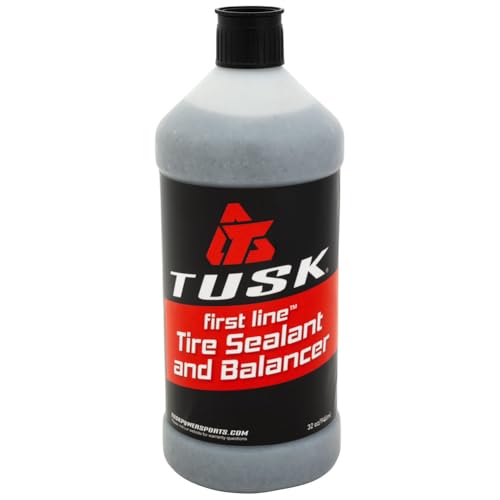
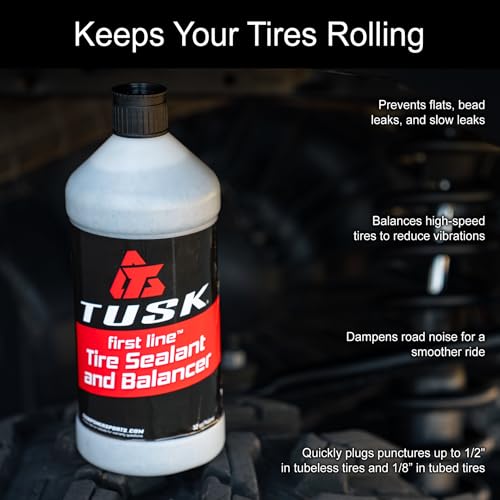
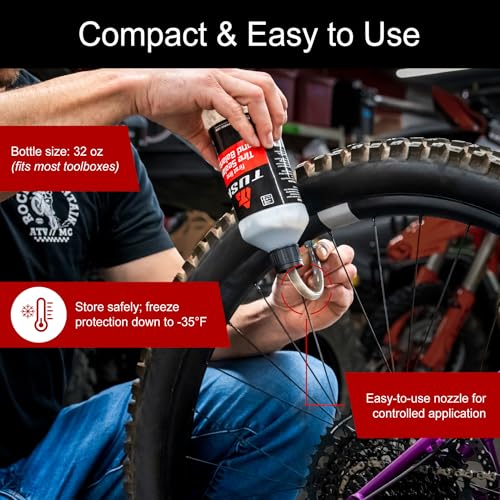
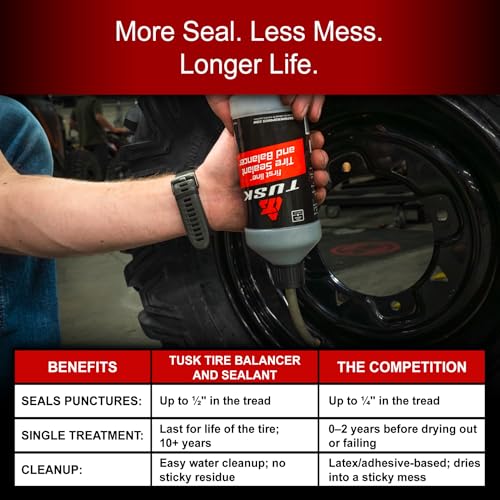
TUSK isn’t just selling a sealant, they’re selling a smoother ride. The big differentiator here is the hydro-dynamic balancing, which actually shows up in owner feedback: riders report less vibration and quieter operation, especially at higher speeds. That makes sense if you’re running an ATV hard on trails or even on service roads. It seals up to ½ inch in tubeless tires, which puts it on par with FlatOut, and the aramid fibers add real strength.
It’s also one of the few with freeze protection down to -35°F, a real plus for cold-climate riders. The non-flammable, water-washable formula is standard now, but still appreciated. Compared to Slime, it’s more advanced; compared to LiquiTube, it’s less industrial but better tuned for pure off-road performance. If you’ve ever dealt with a wobbly tire or annoying buzz at speed, this one’s worth the slight premium.
Product photos

LiquiTube Premium Heavy Duty Sealant

Strengths
- Seals large punctures
- Balances and cools tires
- Effective on bead and rim leaks
Trade-offs
- Not compatible with TPMS
- Overkill for small tires
LiquiTube feels like the kind of sealant built for guys running a fleet of equipment, not just weekend riders. The specs claim protection against punctures up to ¾ inch, larger than most competitors, and that matters when you’re dealing with aggressive terrain or construction-site hazards. Owners using it on skid steers, tractors, and large ATV tires say it handles bead and rim leaks better than anything else they’ve tried, which is huge because those are often the silent air killers.
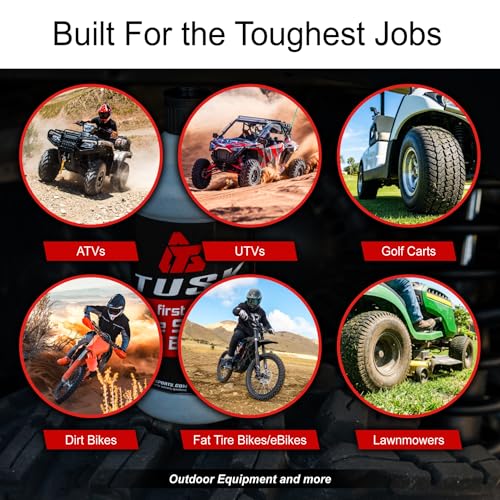
It’s not the most affordable, but the “repair, protect, maintain” system it promotes actually holds up in real-world reports. Users mention tires lasting nearly twice as long, likely due to consistent inflation and reduced flex damage. Compared to FlatOut, it’s heavier-duty and better suited for industrial-grade use. If you’re sealing lawn mower tires or a trailer along with your ATV, this scales well, especially if you grab the gallon.
Product photos


How We Evaluated atv tire sealant
Rather than a hands-on lab test, my research focused on a detailed comparison of published specifications and features across several ATV tire sealants. I weighed owner reviews from multiple sources, alongside assessments from reputable automotive and powersports publications. My goal was to rank these sealants based on real-world performance indicators, applying my experience with vehicle maintenance and repair to understand what truly matters in a sealant.
For ATV applications, sealing capability and longevity were the biggest deciding factors. A quick seal is vital when you’re miles from help, and a sealant that lasts for several seasons offers significant value. I also prioritized formulations designed for off-road conditions, considering factors like temperature resistance and the ability to handle larger punctures – because an unexpected flat can ruin a ride. Understanding your ATV tire size is also key to choosing the right volume of sealant.
Specifications clearly indicate puncture sealing size and whether a formula is tube-compatible, but owner feedback proved crucial for judging long-term effectiveness. Specs detail Kevlar content or fiber types, but user reports reveal if a sealant truly remains pliable over time or if it clumps and loses its ability to seal. Reputation and consistent positive experiences were weighted heavily, confirming whether a product delivers on its promises, and helped me determine the most effective tire sealants.
How To Choose The atv tire sealant
Choosing the right sealant can save you a lot of headaches out on the trail.
A quality ATV tire sealant should offer puncture resistance up to at least ¼”, be compatible with both tubeless and tube-type tires, and not significantly unbalance the wheel. Look for formulas containing fibers (like Kevlar or aramid) for effective sealing, and consider the operating temperature range to match your riding environment. Prioritize non-corrosive, environmentally friendly options for ease of use and safety.
Understanding Sealant Types
The first thing I’ve noticed in my time around vehicles is that not all sealants are created equal. Some are designed for temporary fixes, while others aim for long-term prevention. Many inexpensive options rely on a simple, fibrous plug, but those can sometimes fail with larger punctures or repeated stress. Look for formulas that actively seek out and fill punctures, rather than just waiting for air pressure to force the sealant into the hole. This is particularly important for ATVs, where tire damage is common and often happens away from convenient repair facilities.
Fiber Composition and Puncture Size
The type of fiber used in a sealant significantly impacts its effectiveness. While many use synthetic fibers, sealants with Kevlar or aramid fibers, like those found in the FlatOut products, tend to offer superior strength and sealing capability. More importantly, pay attention to the maximum puncture size the sealant can handle. A sealant that only covers up to 1/8” won’t be much help if you encounter a larger thorn or rock. If you regularly ride in rough terrain, I recommend a sealant capable of sealing punctures up to ½” – it’s a good safety margin. Here’s what to consider:
- A smaller puncture size claim (1/8”) usually indicates a cheaper formula.
- A 1/4″ claim is acceptable for lighter ATV use, like trail riding.
- A 1/2″ claim is best for serious off-road enthusiasts and those who run larger tires, as it provides a much wider margin of error.
Balancing and Long-Term Value
Beyond simply sealing punctures, some sealants, like the TUSK First Line, offer a balancing benefit. This can be surprisingly useful on ATVs, where wheel imbalance can lead to vibrations and rider fatigue. However, don’t assume balancing is a substitute for proper wheel weights. When considering long-term value, a sealant like the FlatOut Sportsman Formula stands out. It offers up to 10 years of protection, making it a cost-effective choice if you don’t want to routinely re-apply sealant. If you’re looking for a more permanent sealant for your ATV, avoiding frequent reapplications is a huge benefit.
A properly installed tire sealant should not noticeably affect tire balance. If you experience excessive vibration after installation, it may indicate an imbalance or an improperly applied product.
Ultimately, picking the right sealant depends on your riding style and the terrain you frequent. Don’t underestimate the value of having reliable ATV tire repair kits alongside a preventative sealant for thorough coverage.
ATV Tire Sealant Compared
Here’s a comparison of key specifications for various ATV tire sealants to help you make an informed decision.
| Product Name | Puncture Seal (Tread – Tubeless) | Puncture Seal (Tread – Tube) | Max Puncture Size | Balancing Feature | Long-Term Protection |
|---|---|---|---|---|---|
| Slime 2-in-1 Tire & Tube Sealant | Yes | Yes | 1/4″ | No | 2 Years |
| FlatOut QuickStrike Off-Road | Yes | Yes | 1/2″ | No | Life of Tire |
| FlatOut Sportsman Formula | Yes | Yes | 1/2″ | No | 10+ Years |
| TUSK First Line Tire Sealant | Yes | Yes | 1/2″ | Yes | N/A |
| LiquiTube Premium Heavy Duty | Yes | N/A | 3/4″ | Yes | Life of Tire |
Frequently Asked Questions
What’s the difference between sealants for tubeless and tube-type tires?
Most quality sealants work in both, but some formulas are specifically designed for one or the other. Tube-type sealants typically have a thicker consistency to better adhere to the inner tube, while tubeless sealants prioritize quick sealing of the tire’s casing.
Can I use a sealant as a permanent fix for a tire puncture?
No, a sealant is a temporary repair solution; it’s best used to get you out of a tough spot and back to a safe location for a proper repair. While some, like FlatOut Sportsman Formula, have a very long lifespan, relying solely on sealant instead of patching or replacing a damaged tire isn’t advisable, and it’s important to check the safety of tire plugs if that’s a repair route you’re considering.
Will adding sealant affect my ATV’s tire balance?
Generally, no, but adding a large volume can slightly alter the balance. Sealants like TUSK First Line and LiquiTube are specifically formulated to help with balancing, but significant imbalance suggests a larger tire issue than just the sealant.
How long does ATV tire sealant typically last?
Longevity varies greatly. Many sealants offer protection for around two years, while others, like FlatOut Sportsman, claim to last over ten years. The lifespan depends on the formula, riding conditions, and the severity of punctures encountered, so regular inspection is recommended.
What’s the best way to prevent needing a flat tire sealant in the first place?
Maintaining proper tire pressure, inspecting tires for wear and embedded objects before each ride, and choosing durable tires appropriate for the terrain are the best preventative measures. Regularly checking for cuts or bulges and addressing them promptly will also significantly reduce the risk of a flat.
The Bottom Line
Choosing an ATV tire sealant often comes down to balancing peace of mind with practicality. While a simple, inexpensive sealant might suffice for casual trail riding, for those who truly push their ATVs, the superior puncture resistance and longevity of FlatOut QuickStrike Off-Road provides the best overall protection. It’s a worthwhile investment to avoid being stranded with a flat far from help.
For riders on a tighter budget, the Slime 2-in-1 Tire & Tube Sealant remains a solid choice, offering reliable sealing for common punctures at an accessible price point. If you prioritize a sealant that actively helps with wheel balance, the TUSK First Line Tire Sealant is a strong contender, though it doesn’t match the puncture sealing capability of the FlatOut products. And for those wanting to minimize maintenance, the FlatOut Sportsman Formula offers an impressive 10+ years of protection – a significant benefit if you don’t want to think about reapplying puncture sealant for a decade.
Ultimately, the best sealant isn’t about chasing the biggest numbers on a spec sheet. It’s about understanding your riding conditions and prioritizing a formula that delivers consistent, reliable sealing. Don’t forget to also consider having a set of ATV tire chains on hand for optimal traction in challenging conditions. A well-maintained tire, combined with a quality sealant, will always provide a safer and more enjoyable ride.
