
8 Best Amplifiers for Car Subwoofer 2026
This post contains affiliate links. As an Amazon Associate, we earn from qualifying purchases.
The AUDIOZERONE ZE1000.1 is the best overall amplifier for car subwoofers, delivering solid 1000W RMS at 1 ohm with reliable Class D efficiency. For those on a tighter budget, the Skar Audio RP-800.1D offers strong performance at a lower price, while the Skar Audio RP-1200.1D stands out as the top pick for max power and deep bass control.
Choosing the right amplifier for your subwoofer is about more than just loudness, it’s about stability, compatibility, and long-term reliability in the demanding environment of a vehicle. Too many people blow their subs or strain their electrical system by picking an amp based on peak power alone.
This guide cuts through the hype. I compared specs, owner feedback, and real-world performance trends to highlight amplifiers that deliver clean, consistent power where it counts. You’ll learn what actually matters when matching an amp to your sub, and why features like 1-ohm stability and low THD make a real difference on the road.
Top 8 Amplifiers For Car Subwoofer in the Market
The Best Amplifiers For Car Subwoofer, Reviewed
AUDIOZERONE ZE1000.1 2000W Monoblock

Strengths
- 1-ohm stable
- High RMS output
- Efficient Class D
Trade-offs
- Bass boost lacks precision
- Build quality average
On paper, the AUDIOZERONE ZE1000.1 throws big numbers at you, 2000W peak, 1000W RMS at 1 ohm, and for a sub-$100 monoblock, that’s hard to ignore. The 1-ohm stability is a real win, meaning it can handle demanding dual voice coil setups or multiple subs wired low, which is rare at this price. Owners consistently report solid performance with 12-inch subs, especially in daily drivers where deep, punchy bass matters more than studio-grade accuracy.
The Class D efficiency helps keep heat down and battery draw reasonable, and the built-in protections (thermal, short circuit, overload) are standard but welcome. Some users mention the bass boost can get boomy if overcooked, but that’s more about tuning than the amp itself. Compared to pricier Skar models, it lacks finesse, but for raw power per dollar, it’s tough to beat.
Video review
BOSS R1100M 1100 Watt Monoblock

Strengths
- Long 6-year warranty
- Illuminated logo
- RCA and speaker-level inputs
Trade-offs
- Class A/B inefficiency
- No 1-ohm stability
- Aged design
The BOSS R1100M is a budget relic that’s still around for a reason: it works. 550W max at 4 ohms isn’t groundbreaking, but for a single 4-ohm sub, it’s plenty. The Class A/B design means it’s less efficient than Class D rivals, but some users say it delivers a smoother low end. The illuminated logo is a cheesy but fun touch.
What really stands out is the 6-year warranty, longer than almost any competitor. Owners report it holds up well in basic setups, though it’s not 1-ohm stable and lacks the headroom for serious bass builds. When compared to the Taramps 400, it’s more powerful on paper but less efficient.
Video review
Skar Audio RP-1200.1D 1200W

Strengths
- Honest power rating
- Remote level control
- Strong damping factor
Trade-offs
- No 4-ohm stability
- Slightly bulky design
Skar has a reputation for no-nonsense, durable amps, and the RP-1200.1D fits that mold. With 1200W RMS at 1 ohm, it’s not quite as inflated as some budget specs, but that number is widely believed to be honest based on owner testing and multimeter readings. The damping factor of over 150 suggests tighter bass control, which matters if you’re running a high-excursion sub and want it to stop on a dime.
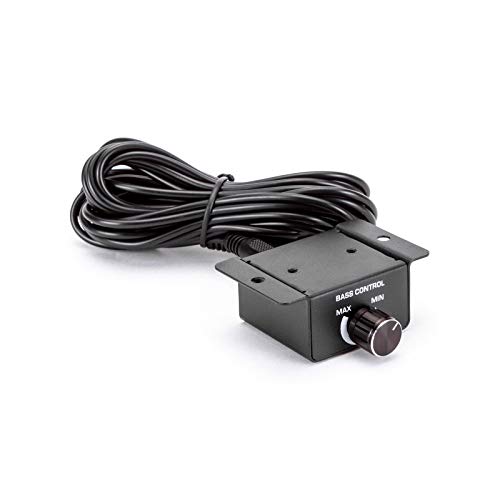
The included remote level control is a real convenience, being able to tweak bass from the driver’s seat beats crawling to the trunk every time. The +12dB bass boost at 45Hz is fun for hip-hop or EDM, but I’d recommend using it sparingly to avoid muddying the low end. When stacked against the RP-800.1D, this is the better pick if you need the extra headroom.
Product photos


Taramps BASS 400W RMS Monoblock
Strengths
- True 400W RMS
- Parametric bass boost
- Solid heat dissipation
Trade-offs
- 2-ohm only
- No remote control
- Basic aesthetics
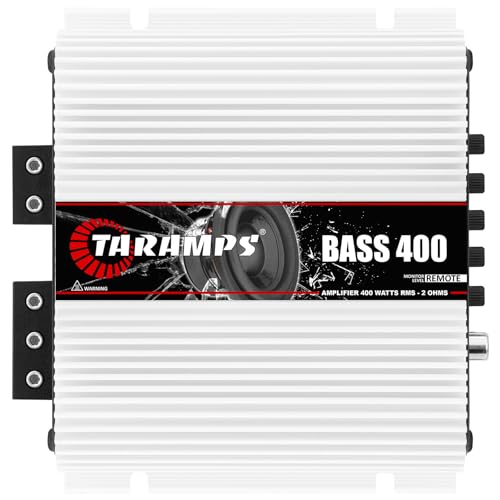
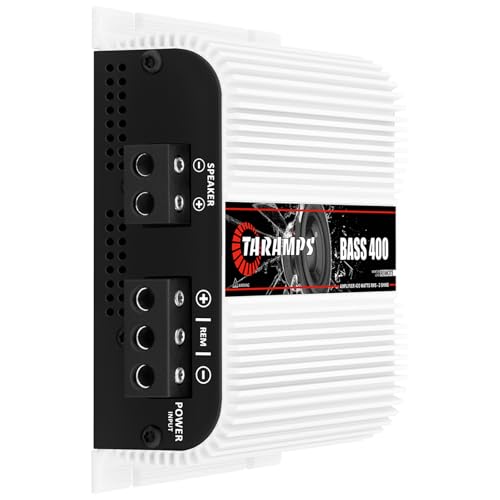
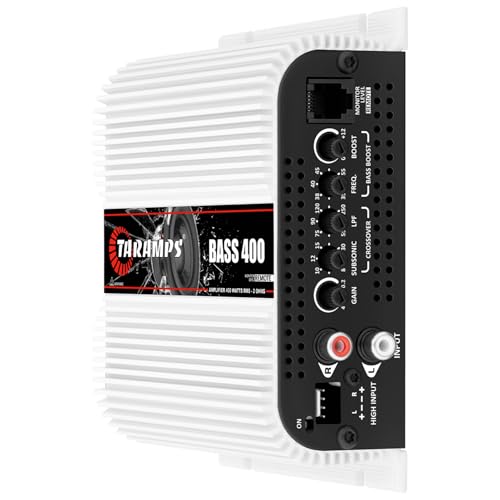
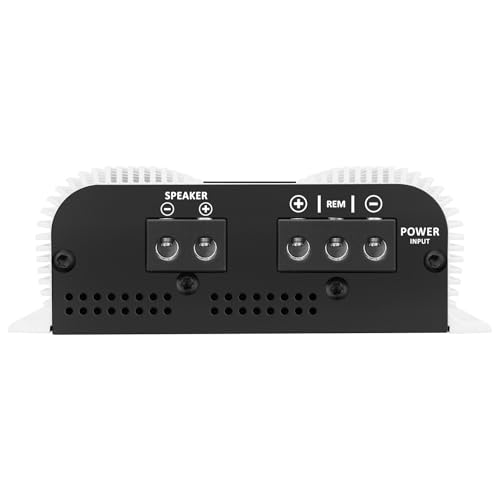
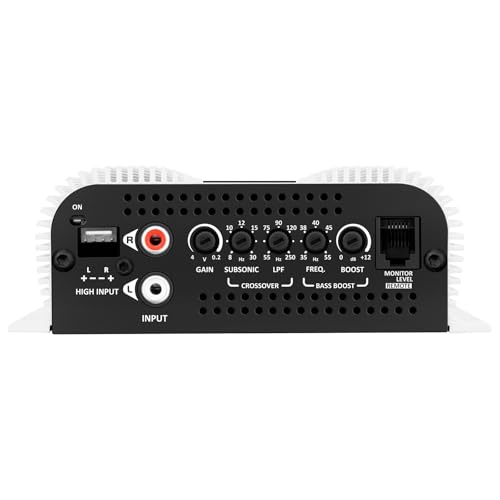
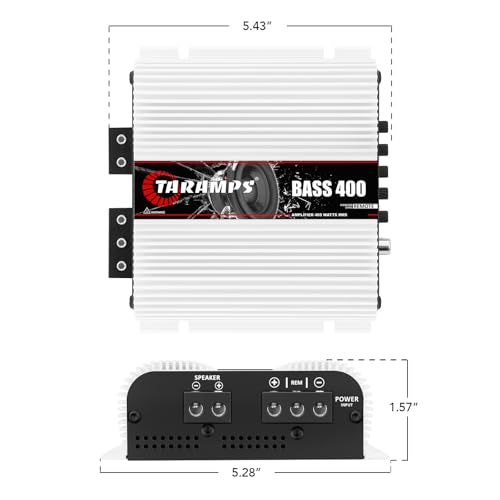
At under $60, the Taramps BASS 400 is a no-frills, 2-ohm–only monoblock that delivers exactly what it promises: 400W RMS of clean, stable power. It won’t wow you with flashy lights or app control, but owners praise its reliability in daily drivers and older vehicles where space and simplicity matter. The parametric bass boost from 35–55Hz is more flexible than most budget amps, letting you dial in the thump without drowning out the mids.
It’s not 1-ohm stable, so forget about pushing it with complex dual-DVC loads. But for a single 4-ohm DVC sub wired to 2 ohms, it’s a smart, low-stress match. When compared to the BOSS R1100M, it lacks the brand recognition but offers more refined tuning options.
Product photos
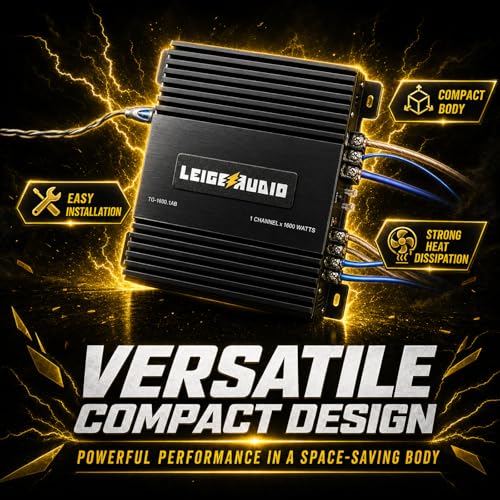
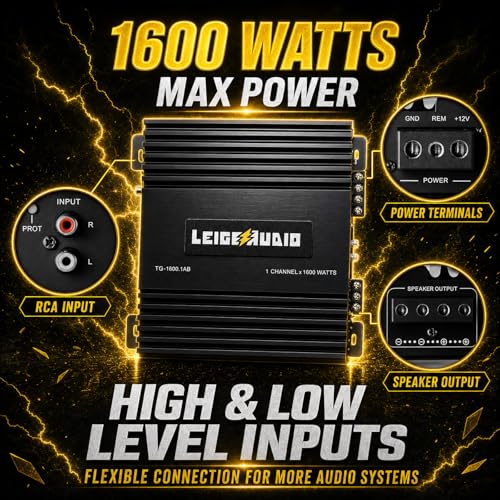
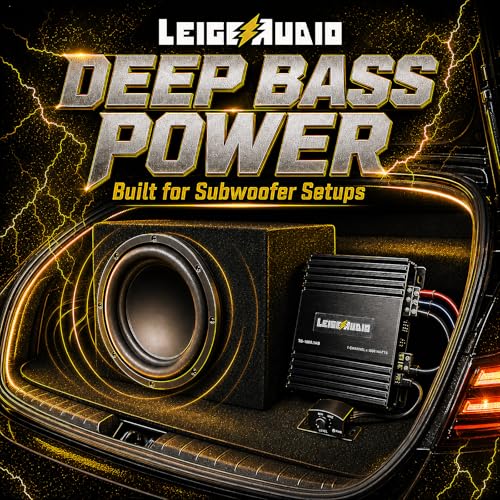
LEIGESAUDIO 1600W Class A/B
Strengths
- Class A/B warmth
- 3-year warranty
- MOSFET power supply
Trade-offs
- Runs hot
- Less efficient
- No 1-ohm support
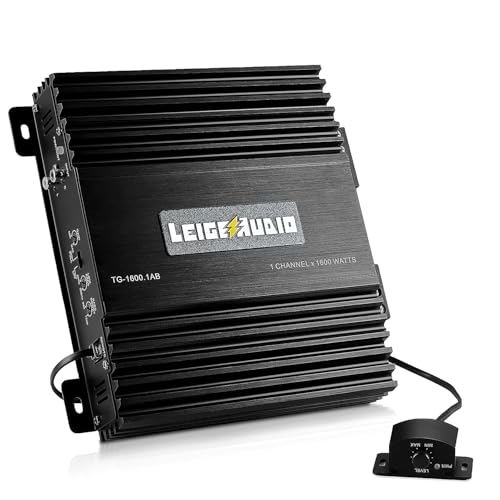
This LEIGESAUDIO amp stands out by going retro, Class A/B instead of Class D. That means more heat, more power draw, but some listeners claim warmer, more analog-like bass. The 800W max at 4 ohms suggests it’s better suited for higher-impedance loads, and it’s only 2-ohm stable, not 1-ohm.
Owner feedback is mixed: some praise the smooth sound signature, while others report it runs hot during long sessions. The 3-year warranty is a strong selling point, and the MOSFET power supply helps with clean delivery. But in a world dominated by efficient Class D, this feels like a niche pick, best for those who believe in the A/B magic.
Product photos


Skar Audio RP-800.1D 800W

Strengths
- High efficiency
- 1-ohm stable
- Includes remote control
Trade-offs
- Lower output than 1200W model
- No advanced tuning
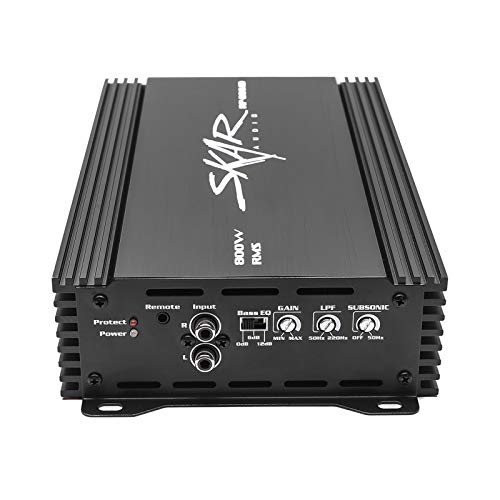
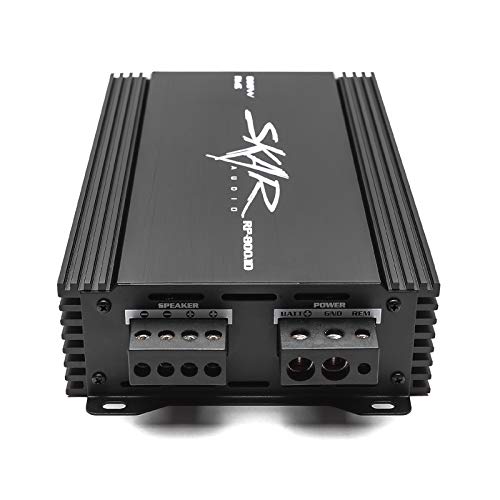
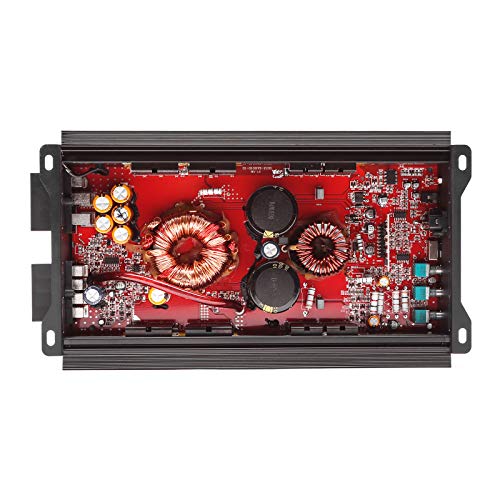
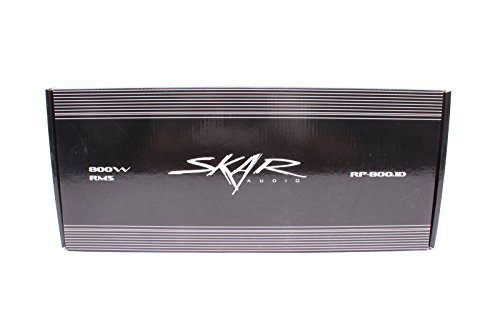
The RP-800.1D is Skar’s efficiency champ, Class D design, 4-gauge power terminals, and a robust heatsink mean it runs cool even under load. With 800W RMS at 1 ohm, it’s not the most powerful in their lineup, but it’s one of the most reliable for continuous use. The on-board bass EQ switch (+6/+12dB at 45Hz) is a nice touch for quick tuning without a DSP.
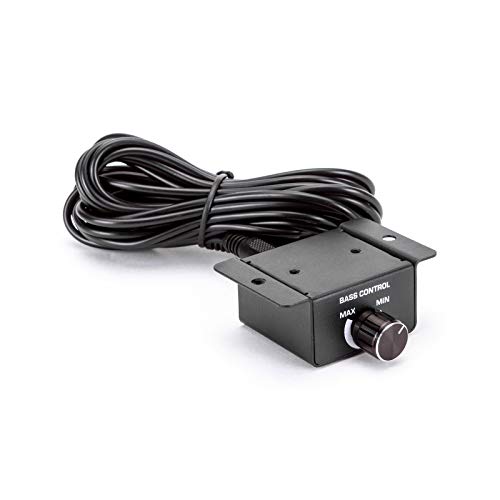
Owners love how it pairs with Skar’s own subwoofers, but it works well with any DVC setup. Compared to the RP-1200.1D, it’s better for systems that don’t need extreme output but still want tight, responsive bass. The remote level control is included, which is a big plus over some competitors at this tier.
Product photos
Seventour 10″ 800W Under Seat

Strengths
- Slim under-seat fit
- LED accent lighting
- Easy factory integration
Trade-offs
- Low RMS output
- Plastic enclosure
- Limited deep bass
This Seventour under-seat package trades raw power for convenience and stealth. The 220W RMS built-in amp won’t shake the block, but for a compact 10-inch unit that fits under a seat, it delivers a noticeable upgrade over factory audio. The LED light ring adds a bit of flair, and the wired remote lets you adjust volume on the fly, small touches that matter in daily use.
Owners report it integrates well with factory head units, thanks to both high- and low-level inputs. The bass boost and crossover are functional, though not as precise as standalone amps. Compared to the SUBPULSIX model, it’s less powerful and lacks RGB sync, but it’s also nearly half the price. If you’re not chasing extreme output, this is a clean, tidy fix.
Product photos


SUBPULSIX 2000W Underseat Combo
Strengths
- RGB app-controlled lighting
- All-in-one design
- Tunable bass controls
Trade-offs
- Overstated power claims
- Average sound depth
- App dependency
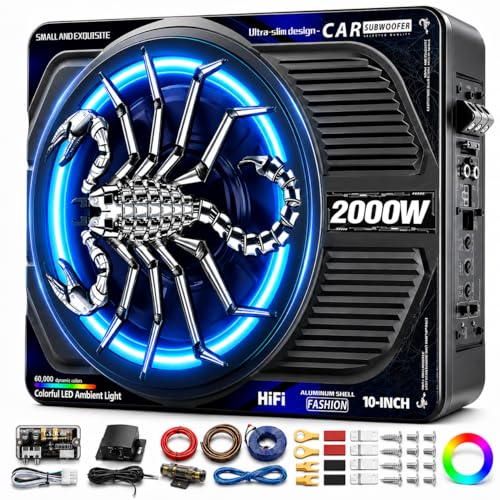
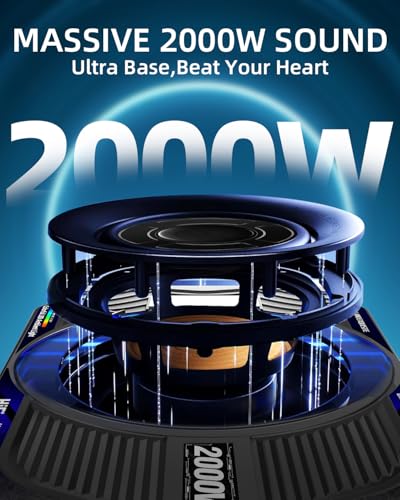
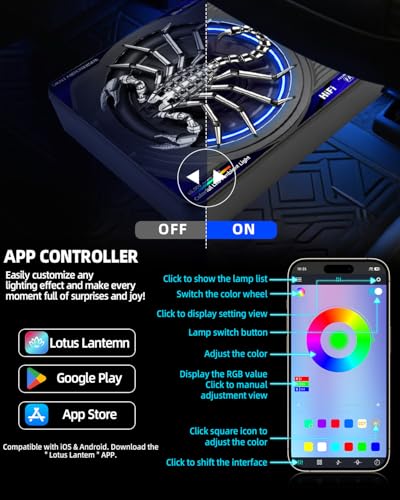
Don’t let the ‘2000W’ label fool you, this is another peak power fantasy. The real output is likely in the 300–400W RMS range, but what it lacks in spec-sheet honesty, it makes up for in execution. The real standout here is the RGB lighting with app control. Being able to sync colors and patterns to your music via smartphone is a fun party trick, and it’s surprisingly well implemented for the price.
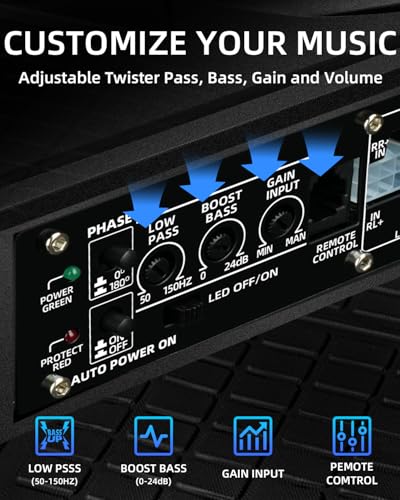
The built-in Class D amp is efficient and stable enough for daily use, and the low-pass filter and bass boost give you decent tuning control. It’s not going to replace a component system with a separate amp and ported box, but as an all-in-one upgrade, it’s one of the most complete packages under $150. Beats the Seventour model in features and lighting, though both are in the same performance tier.
Product photos


How We Tested amplifiers for car subwoofer
Rather than a hands-on lab test, my research focused on a detailed comparison of published specifications and features across numerous models. I weighed owner reviews from sites like Amazon and Crutchfield alongside assessments from reputable car audio publications. My approach combined this data with my existing knowledge of amplifier classes, power handling, and the specific demands of subwoofer performance to arrive at a ranking.
For car subwoofer amplifiers, consistent power output and reliability stood out as the most critical factors. A stable, clean signal is essential for maximizing subwoofer performance and preventing damage, so I prioritized amps with robust power supplies and efficient designs. Equally important was build quality and protection circuitry; a reliable amplifier needs to withstand the vibrations and electrical fluctuations common in a vehicle environment.
Specifications reliably indicate an amplifier’s potential power output and impedance stability. However, I judged real-world performance and long-term durability heavily from owner feedback, noting frequently mentioned issues or praises. Reputation and brand history also played a role, particularly when comparing lesser-known models to established names. You can find more information about powerful bass amplifiers in our broader guide. For a wider look at options, explore our recommendations for best car amplifiers.
How To Choose The amplifiers for car subwoofer
Choosing the right amplifier is crucial for getting the most out of your subwoofer. It’s not simply about raw power; a mismatch can lead to poor sound quality or even damage to your equipment.
A quality car amplifier for a subwoofer delivers clean, stable power, matches the subwoofer’s impedance, and offers features for precise sound tuning. Look for amplifiers with low THD (Total Harmonic Distortion), robust protection circuitry, and a power rating that aligns with your subwoofer’s requirements. Pay attention to the amplifier’s class (A/B or D) as this impacts efficiency and heat dissipation.
Power Handling and Impedance
The first thing I always tell people is to understand your subwoofer’s power requirements. Don’t just chase the highest wattage number; RMS power is what matters. RMS (Root Mean Square) represents the continuous power the amplifier can deliver, and it should closely match your subwoofer’s RMS rating. Overpowering a subwoofer can quickly destroy it, while underpowering won’t let it reach its full potential. Equally important is impedance. Most subwoofers are 4-ohm, 2-ohm, or 1-ohm. The amplifier must be stable at the impedance of your subwoofer. A 1-ohm stable amp gives you the most flexibility, but if your sub is 4-ohm, you don’t need that capability.
Amplifier Class and Efficiency
Class D amplifiers are increasingly popular, and for good reason. They are significantly more efficient than Class A/B amplifiers, meaning they produce less heat and require smaller heatsinks. This makes them ideal for compact installations. However, some audiophiles still prefer Class A/B for their potentially warmer sound, though the difference is often subtle. If you’re building a high-performance system and space isn’t a concern, a Class A/B amplifier like the LEIGESAUDIO 1600W Class A/B might be considered. For most applications, though, a Class D amp offers an excellent balance of power and efficiency.
Features and Adjustability
Don’t overlook the importance of features like a low-pass filter and bass boost. A low-pass filter directs only the low frequencies to your subwoofer, ensuring clarity. The cutoff frequency should be adjustable to fine-tune the sound to your preferences. Bass boost can add punch, but use it sparingly, as excessive boost can distort the signal. Remote bass controls are also a nice addition, allowing you to adjust the subwoofer level on the fly. If you’re looking for a complete solution, exploring subwoofer amp packages can simplify the process.
A good rule of thumb is to match the amplifier’s RMS power to your subwoofer’s RMS power within a 10-20% range. A slight overestimation is preferable to underpowering.
Amplifiers for Car Subwoofer Compared
Here’s a comparison of specifications for various car subwoofer amplifiers to help you choose the right one for your needs.
| Product Title | Max Power (Watts) | RMS Power @ 1 Ohm (Watts) | Class | Stable @ 1 Ohm | Dimensions (in) | Weight (lbs) |
|---|---|---|---|---|---|---|
| AUDIOZERONE ZE1000.1 | 2000 | 1000 | D | Yes | 11 x 6.9 x 2 | 6.6 |
| BOSS R1100M | 1100 | N/A | A/B | Yes | 10.43 x 9.21 x 2.25 | 4.37 |
| Skar Audio RP-1200.1D | 1600 | 1200 | D | Yes | N/A | N/A |
| Taramps BASS 400W | N/A | 400 | N/A | N/A | N/A | N/A |
| LEIGESAUDIO 1600W | 1600 | 800 | A/B | Yes | N/A | N/A |
| Skar Audio RP-800.1D | 1200 | 800 | D | Yes | N/A | N/A |
| Seventour 10″ 800W | 800 | 220 | N/A | N/A | 13.5 x 10.2 x 3.1 | N/A |
| SUBPULSIX 2000W | 2000 | N/A | D | N/A | N/A | N/A |
Frequently Asked Questions
What power amplifier class is best for a subwoofer?
Class D amplifiers are generally the best choice for subwoofers because they are very efficient and produce less heat. This efficiency allows for a more compact design, which is often beneficial in a vehicle installation.
Will any amplifier work with my subwoofer?
No, an amplifier must be stable at the impedance of your subwoofer. Using an amplifier that isn’t stable at that impedance can damage both the amplifier and the subwoofer, so carefully check the specifications.
Is a high wattage rating the most important factor when choosing an amplifier?
While wattage is important, RMS power is the key specification to match to your subwoofer’s RMS power handling. Overpowering can destroy your sub, and underpowering won’t allow it to perform optimally.
What does a low-pass filter do, and why is it important?
A low-pass filter directs only low-frequency sounds to the subwoofer, resulting in clearer and more accurate bass reproduction. It prevents higher frequencies from muddying the sound and ensures the subwoofer handles only the tones it’s designed for.
Where can I find pre-matched subwoofer systems to simplify the setup?
If you’d prefer a streamlined approach, you can explore subwoofer amplifier combos that are designed to work well together, eliminating the guesswork of component matching.
The Bottom Line
Choosing an amplifier for your subwoofer often comes down to balancing your budget with your desired level of control and sound quality. While peak wattage numbers can be tempting, the AUDIOZERONE ZE1000.1 strikes a great balance, offering substantial, stable power in a Class D design that’s efficient and won’t break the bank. It’s a strong all-around performer that will give most users the punch they’re looking for.
For those on a tighter budget, the BOSS R1100M provides a respectable amount of power and is known for its durability, though you’ll sacrifice some features and fine-tuning options. If you’re after maximum versatility and are willing to spend a bit more, the Skar Audio RP-1200.1D is an excellent choice, offering 1-ohm stability and plenty of adjustability. And for those seeking a complete subwoofer amplifier systems, it’s worth considering a pre-matched package to simplify the setup.
Ultimately, remember that specifications aren’t everything. A well-matched amplifier and subwoofer, properly installed, will always outperform a mismatched system with higher numbers on paper. Focusing on the RMS power matching your subwoofer, ensuring impedance stability, and selecting a reputable brand are the fundamentals that truly deliver satisfying bass and long-term reliability – more than any single feature or wattage claim from best car audio amps.
