
8 Best All Terrain Ebikes of 2026
This post contains affiliate links. As an Amazon Associate, we earn from qualifying purchases.
The Ekellaka 9000W stands out as the most powerful option for serious off-road capability, making it our top overall pick. For those watching their budget, the URLIFE 1000W delivers solid performance and practical features at a lower price point, while the DEEPOWER QS7 strikes a strong balance between range, build quality, and versatility across terrain types.
All-terrain ebikes promise freedom, real freedom, to ride pavement, gravel, dirt, and trail without limits. But too many riders end up frustrated by underpowered motors, short battery life, or flimsy suspension that can’t handle what the trail throws at them.
This guide cuts through the noise. Based on specs, real-world feedback, and what actually matters when conquering rough ground, I’ve narrowed the field to the models that deliver where it counts: power, durability, and ride quality.
Top 8 All Terrain Ebikes in the Market
The Best All Terrain Ebikes, Reviewed
Ekellaka 9000W Dual Motor E-Bike
Strengths
- 9000W dual motor
- 120-mile range
- Hydraulic brakes
Trade-offs
- Very high price
- Overkill for city use
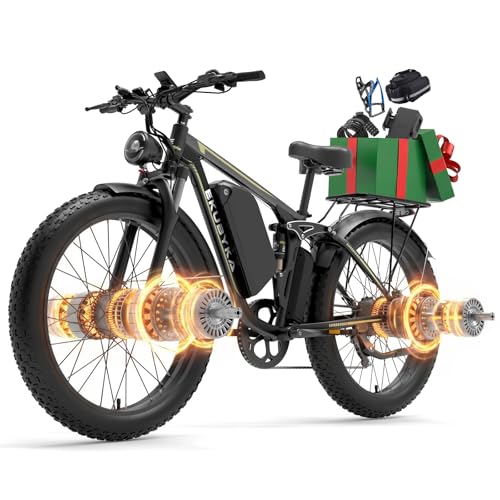
The Ekellaka isn’t just powerful, it’s overpowered in the best way. With a 9000W dual-motor system, 48MPH top speed, and a 120-mile range, it’s in a class of its own. The 52V 36Ah battery is massive, and owners report it shrugs off range anxiety like no other. The 26″ x 4.0″ tires and 85% bump reduction claim from its dual suspension make it one of the smoothest rides in this lineup, especially on brutal terrain.
Hydraulic brakes and a 400lb capacity add to its heavy-duty appeal. Compared to the DEEPOWER, it’s faster, longer-ranged, and more refined, just pricier. But if you want the closest thing to an electric dirt bike with commuter practicality, this is it. My recommendation for riders who want no compromises and are willing to pay for peak performance.
Video review
DEEPOWER QS7 2000W E-Bike
Strengths
- 2000W peak motor
- Battery size options
- Dual suspension
Trade-offs
- Heavy without pedal assist
- Assembly can be complex
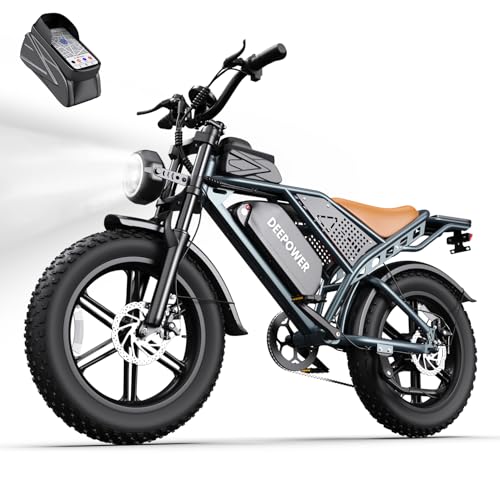
If raw power and customization are your thing, the DEEPOWER QS7 stands out with its 2000W peak motor and optional 35Ah or even 60Ah batteries, specs that border on e-motorcycle territory. The 20×4″ fat tires and dual suspension setup mean it can claw through sand and snow with confidence, and owners praise its hill-climbing ability on 30-degree grades. The dual disc brakes inspire trust, though I’d still want more modulation at 28MPH.
What really sets it apart is choice: you can spec this bike for endurance or brute force. Compared to the Ekellaka, it doesn’t hit the same insane 48MPH, but it’s more accessible and still delivers serious off-road capability. For the rider who wants to tweak their setup and doesn’t want to upgrade in a year, this is the kind of machine that grows with you. My pick over the Jasion or ASKGO for serious terrain.
Video review
URLIFE 1000W Long-Range E-Bike
Strengths
- UL 2849 certified
- 80-mile range claim
- Front suspension
Trade-offs
- No rear suspension
- Battery smaller than top models
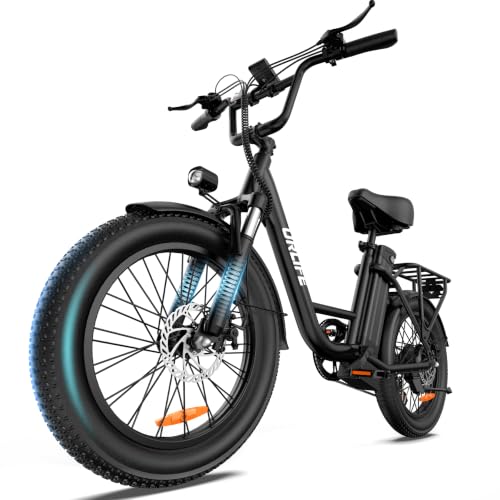
At this price, the URLIFE e-bike punches above its weight with a claimed 80-mile range and a UL 2849 certification, which is not something every budget model can claim. That kind of safety validation gives me more confidence in its battery system than most in this segment. The 1000W motor and 20″ x 3.0″ fat tires should handle city streets and light trails just fine, and the front suspension helps smooth out bumps, though don’t expect magic on rocky descents.
Owners consistently report solid build quality for the price and appreciate the bright LED lights and real-time LCD feedback, which add real-world usability. But that range? It’s best taken with a grain of salt, it’s likely under ideal conditions. Still, for commuters needing dependable, no-fuss power and decent range, this is a strong contender, especially when compared to pricier bikes that don’t offer much more in practice.
Product photos


HQYEX 1500W Dual Suspension E-Bike
Strengths
- Dual suspension
- 1500W motor
- 48V 20Ah battery
Trade-offs
- Top speed limited by brakes
- No hydraulic braking
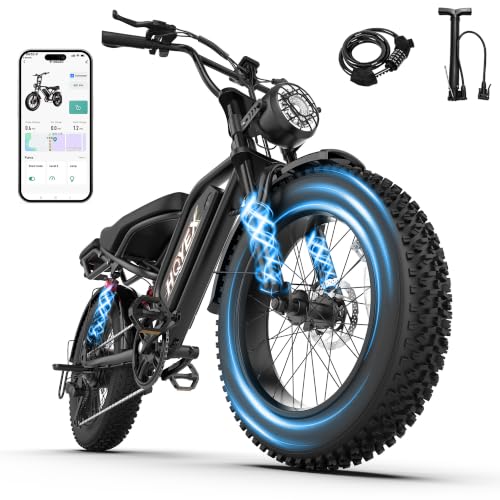
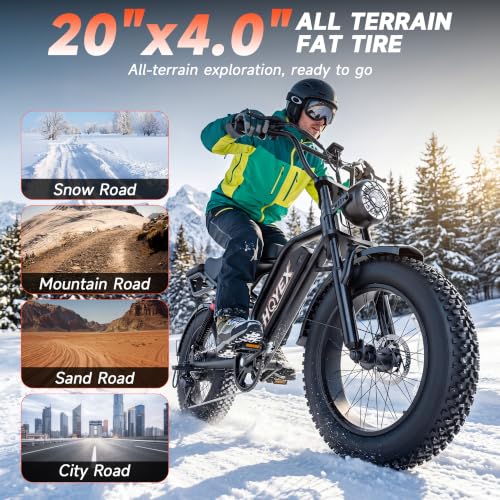
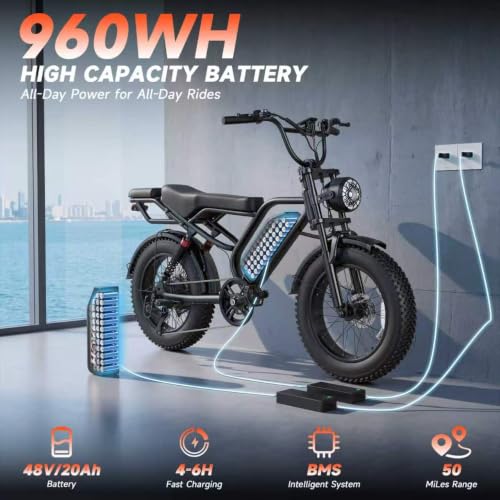
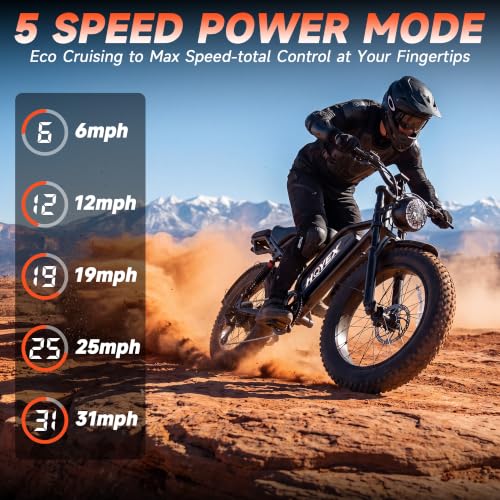
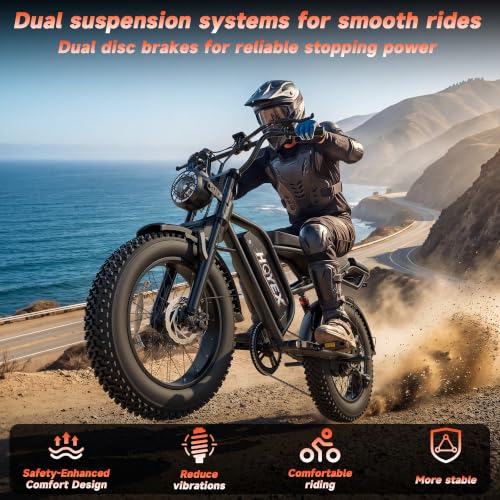
Dual suspension at this price is a win, and the HQYEX delivers exactly that, front and rear shocks that owners say make a noticeable difference on cracked pavement and forest paths alike. The 1500W motor and 48V 20Ah battery combo is well matched, offering strong torque and a realistic 50–60 mile PAS range, which stacks up well against bikes costing hundreds more. I like that it hits 31MPH, but that kind of speed demands respect, especially with mechanical disc brakes that, while adequate, aren’t as sharp as hydraulic units.
It’s also built for practicality: 90% pre-assembled, easy to charge indoors, and stable on snow and gravel. Compared to the URLIFE, this one trades a bit of range for far better ride comfort. But it’s not the most powerful here, DeePower and Ekellaka go harder, but for riders wanting balance between performance and smoothness, this is a smart middle ground.
Product photos

Jasion RetroVolt 2000W E-Bike
Strengths
- Retro styling
- 2000W peak motor
- Full suspension
Trade-offs
- Smaller battery capacity
- Steel frame adds weight
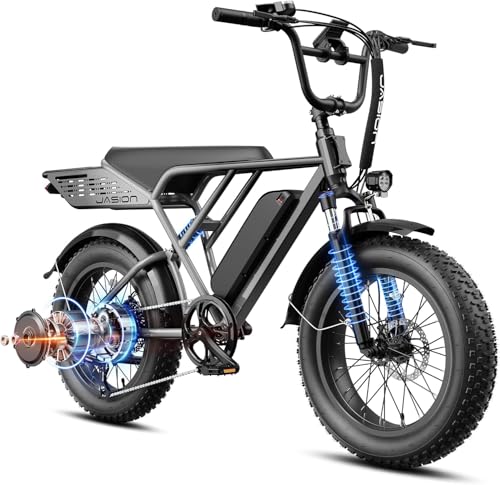
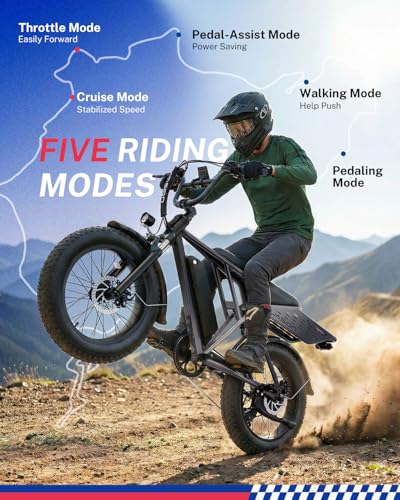
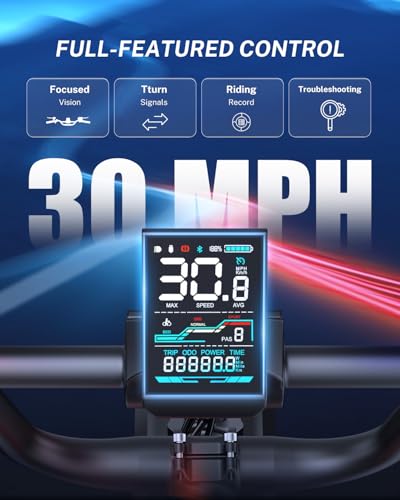
The Jasion RetroVolt is the only e-bike here that leans into style with a vintage frame and retro color options, something you just don’t see often in this category. Underneath the looks, it’s no slouch: 2000W peak power, 30MPH top speed, and 20×4″ fat tires give it real all-terrain chops. The full suspension and dual disc brakes keep it safe and stable, and owners say it handles snow and sand better than expected for the price.
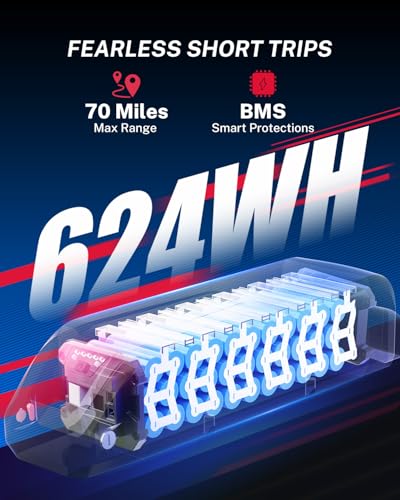
But that 13Ah battery feels light next to the 20Ah units in bikes like the HQYEX and YVY. You’ll get around 70 miles in PAS mode, but real-world conditions may cut that significantly. Compared to the DEEPOWER, it’s less customizable and slightly underpowered on endurance. Still, if you want to turn heads while bombing down beach trails, this is the one to grab.
Product photos


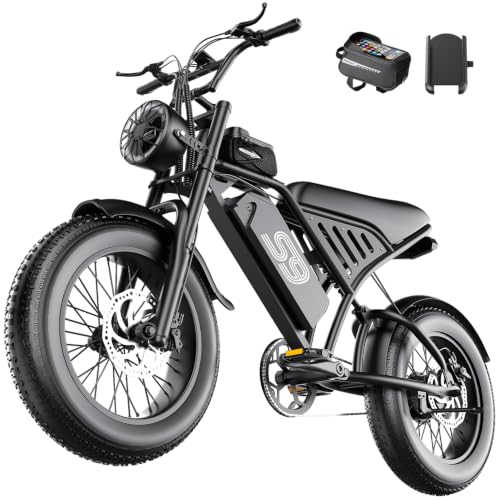
ASKGO 2500W NFC Unlock E-Bike
Strengths
- NFC unlock feature
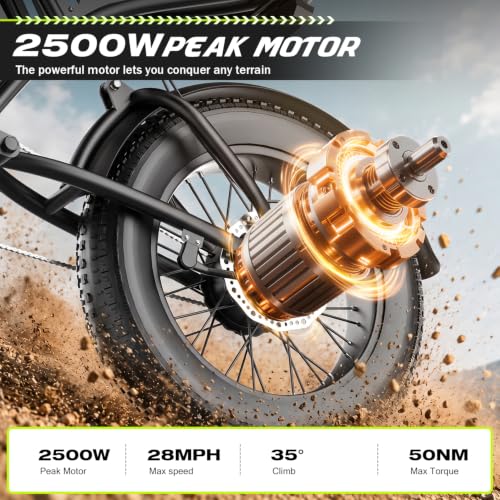
- 2500W peak motor
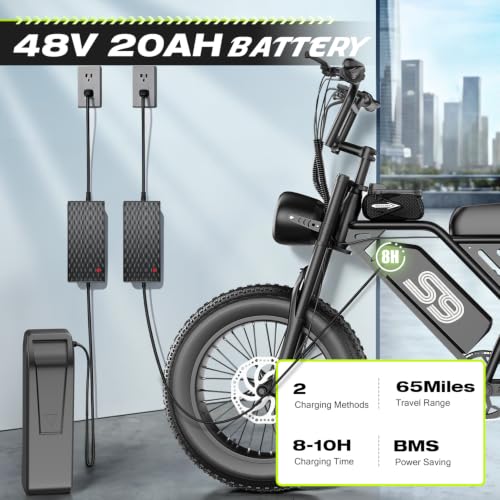
- Fast charging battery
Trade-offs
- 16″ wheels less stable
- Fewer comfort upgrades
The ASKGO stands out with tech-forward touches like NFC unlock and a 2500W peak motor, specs that sound impressive on paper. The 16″ wheels suggest a more compact, agile build, ideal for tighter trails or urban maneuvering. Owners like the fast-charging 20Ah battery and the linear braking from dual discs, though the 330lb load limit means it’s not built for heavy cargo.
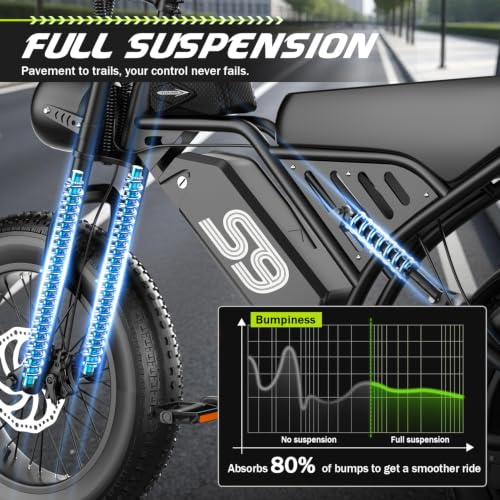
But the small wheel size and lack of full suspension tuning make it less stable on rough terrain compared to the HQYEX or YVY. NFC unlock is neat, but not a standout for most riders. Compared to the VARUN, it’s more powerful but less practical. I’d pick it only if you value modern features and compact handling over plush ride quality.
Product photos
YVY 1500W Full Certified E-Bike
Strengths
- Full safety certification
- Hydraulic brakes
- 80-mile range
Trade-offs
- No top speed advantage
- Heavier steel frame
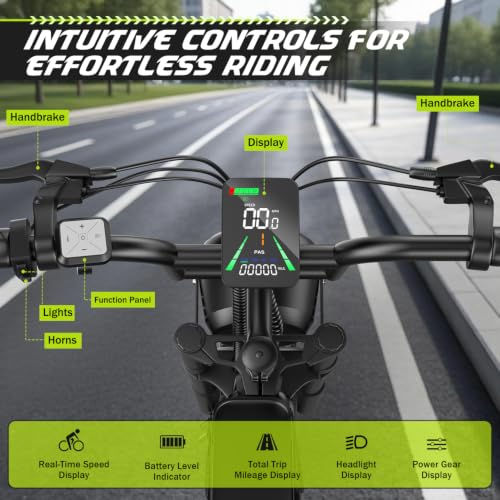
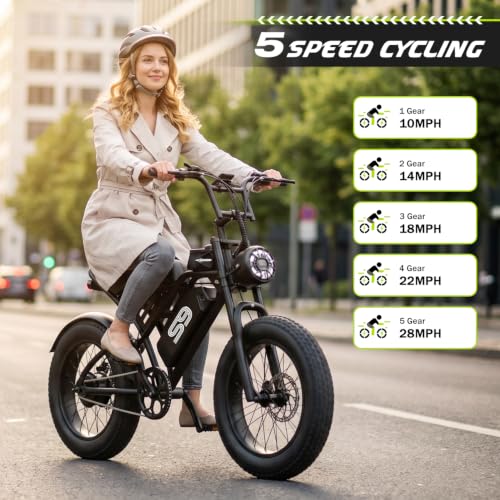
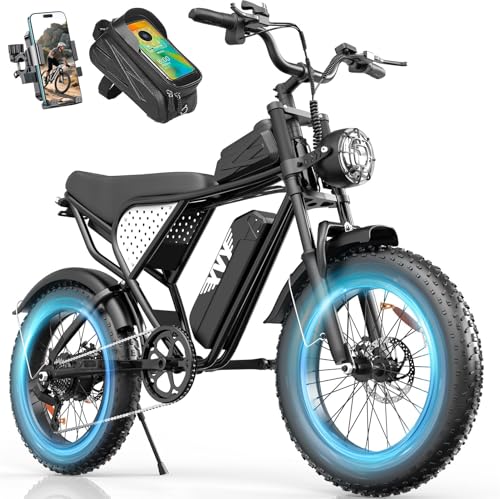
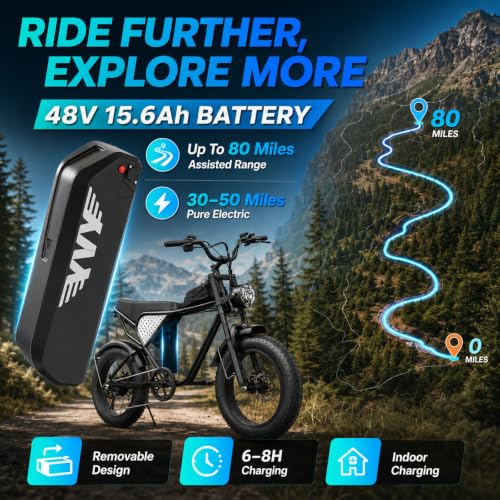
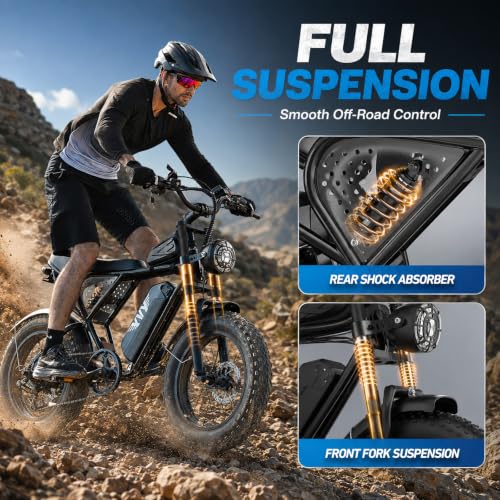
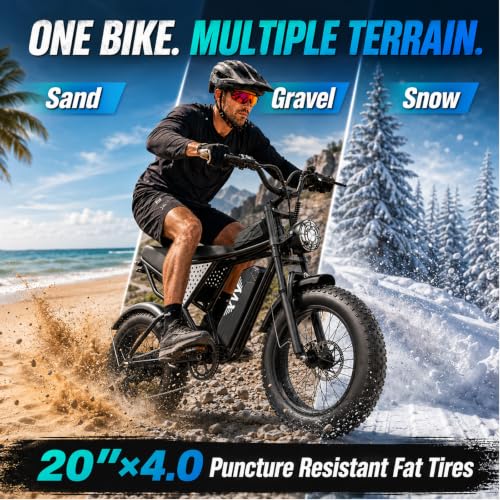
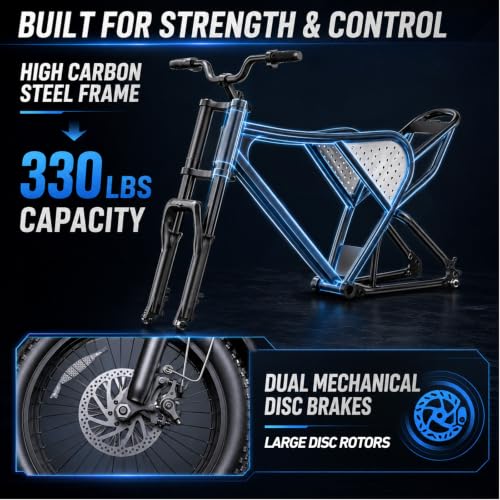
The YVY makes safety its headline feature, and it shows. With full electrical certification and a 48V 15.6Ah battery, it’s one of the few here that emphasizes indoor charging safety as a core selling point. That, plus hydraulic brakes, gives it an edge in rider confidence, especially in wet or slippery conditions. The 1500W motor and 20×4.0″ fat tires deliver strong off-road grip, and owners report excellent traction in snow and mud.
It matches the HQYEX in range and motor power but improves on braking. Compared to the URLIFE, it’s better built and safer overall. If you live in a snowy climate or just want peace of mind with your charging setup, this is the smarter buy. Not the flashiest, but one of the most responsible choices on the list.
Product photos
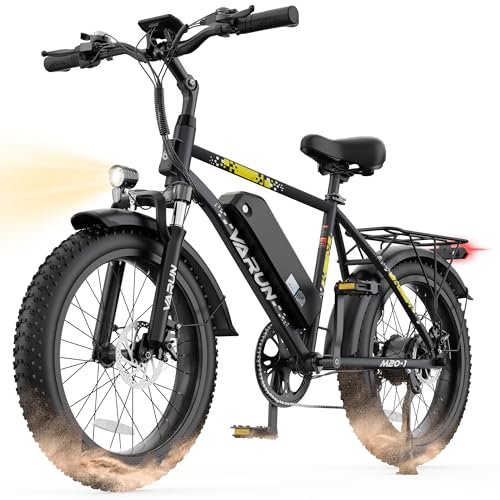
VARUN 1000W Budget E-Bike
Strengths
- Lowest price
- Front and rear suspension
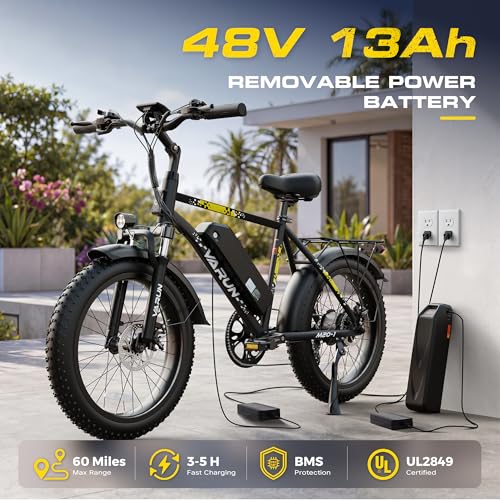
- UL-certified battery
Trade-offs
- Lower top speed
- Limited range in real conditions
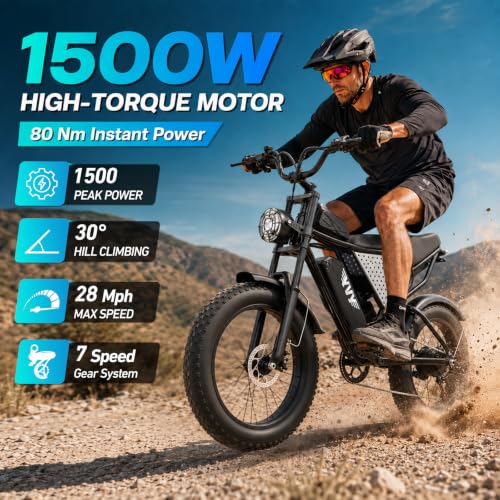
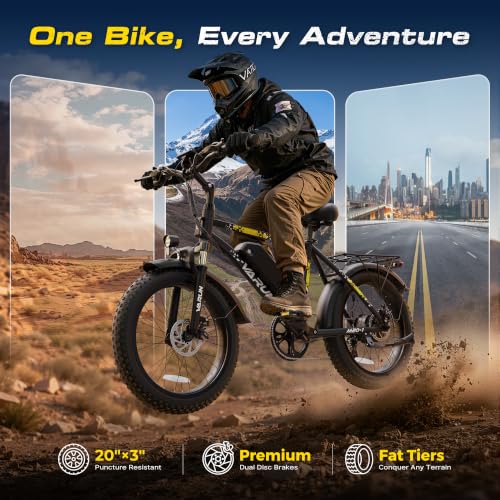
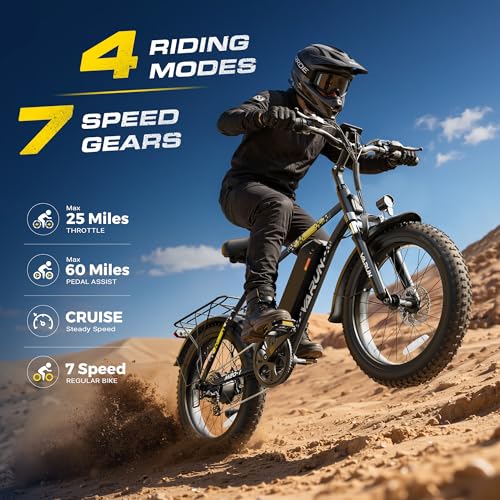
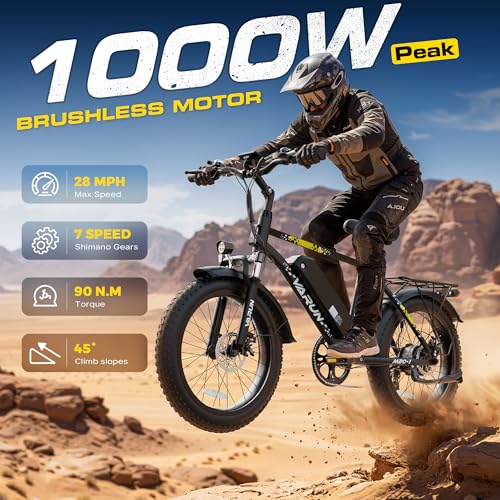
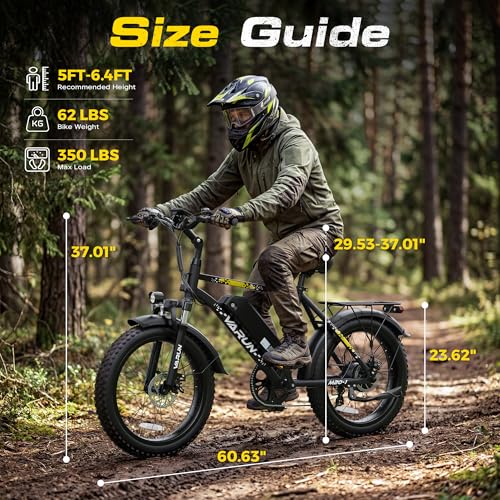
At under $300, the VARUN is the budget king, and it shows where it cuts corners. The 1000W peak motor and 20″ x 3″ tires handle moderate off-road use, and the front and rear suspension make it more comfortable than you’d expect at this price. I appreciate the UL-certified battery and the cargo rack, which adds real utility for grocery runs or light hauling.
But it’s capped at 25MPH, and the mechanical disc brakes, while functional, don’t inspire confidence at higher speeds. Compared to the URLIFE, it trades range and a few premium touches for cost savings. Still, for teens, students, or first-time riders testing the e-bike waters, this is the smart entry point. Just don’t expect it to keep up with the big dogs on steep trails.
Product photos
How We Evaluated all terrain ebikes
My approach to evaluating all terrain ebikes involved a thorough, research-led comparison of specifications, features, and owner/expert feedback. Rather than a hands-on lab test with each model, I focused on dissecting published data – motor wattage, battery capacity, suspension travel, brake types – and then cross-referencing that with what riders are actually saying about performance and reliability. I weighed input from reputable cycling publications and online forums, looking for consistent trends in both praise and criticism.
For this category, I prioritized motor power and battery range as the most significant factors. An all-terrain ebike needs sufficient power to tackle varied landscapes, and a longer range expands its usability beyond short commutes. Durability, particularly frame strength and brake performance, were also heavily weighted, as these directly impact safety and long-term ownership costs. The ability to handle rough terrain is also influenced by choosing the best all-terrain tires for your riding style.
Specifications reliably indicate a bike’s potential – peak wattage, battery voltage, and suspension travel give a good baseline. However, owner reviews provided crucial insights into real-world performance, build quality, and the accuracy of manufacturer claims. Reputation and brand consistency also played a role; established brands with positive track records generally carried more weight. For those considering using these bikes for daily commutes, exploring all-terrain tires for daily driving is a worthwhile consideration.
How To Choose The all terrain ebikes
Choosing the right all-terrain ebike takes more than just picking a shiny model. It’s about matching the bike’s capabilities to where, and how, you intend to ride.
A truly capable all-terrain ebike blends a potent motor with robust suspension, long-lasting battery capacity, and reliable braking. Key specs to examine include motor wattage (peak and continuous), battery voltage and amp-hours (Ah), suspension travel (front and rear), brake type (hydraulic disc is preferred), and tire width/tread pattern. Look for frames constructed from aluminum alloy or carbon fiber for a balance of strength and weight.
Motor Power and Torque
Don’t get blinded by peak wattage numbers alone. While a 9000W motor like the one in the Ekellaka 9000W sounds impressive, continuous power and torque are more indicative of real-world performance. Consider the terrain you’ll be tackling. For gentle trails and paved paths, 750W to 1000W is often sufficient. For steep climbs and loose surfaces, 1500W or more is where you want to be. I’ve seen riders underestimate their needs and quickly find themselves wishing for more grunt, especially when loaded down with gear.
Suspension and Comfort
All-terrain riding means absorbing a lot of bumps. Full suspension is a significant advantage, but the quality of the suspension matters greatly. Cheap shocks won’t do much beyond adding weight. Look for bikes with adjustable front forks and a rear shock with adjustable preload and damping. The Ekellaka 9000W boasts an 85% bump reduction, which, while a marketing claim, indicates a focus on comfort.
Here’s what to consider when evaluating suspension: * Travel: More travel (measured in millimeters) generally equals greater bump absorption. * Adjustability: The ability to fine-tune the suspension to your weight and riding style is crucial. * Component Quality: Brands like RockShox and Fox are known for their high-performance suspension components.
A good rule of thumb: if you’re planning on serious off-road riding, prioritize a bike with at least 100mm of suspension travel in both the front and rear.
Practicality and Range
A powerful ebike is useless if you’re constantly running out of battery. Consider your typical ride length and choose a bike with a sufficient range. Battery capacity is measured in amp-hours (Ah) and voltage (V). Higher Ah and V translate to longer range. Removable batteries are a huge convenience, allowing for easy charging indoors. Also, think about usability features. The URLIFE 1000W, for example, features a large rear cargo rack, perfect for commuting or carrying supplies. If you drive off-road with your truck, you may also be interested in checking out best F-150 all-terrain tires to ensure your vehicle is equally capable. Beyond that, finding reliable all-terrain bicycle reviews can help narrow your search.
All Terrain Ebikes Compared
Here’s a spec comparison of several all-terrain ebikes to help you understand their key differences.
| Product Name | Motor Power (W) | Battery (V/Ah) | Range (miles) | Tire Size | Suspension | Max Speed (MPH) |
|---|---|---|---|---|---|---|
| Ekellaka 9000W | 9000 | 52/36 | 30-120 | 26 x 4.0 | Front/Rear | 48 |
| DEEPOWER QS7 | 2000 | 48/20 | 70-100 | 20 x 4.0 | Front/Rear | 28 |
| URLIFE 1000W | 1000 | N/A | 80 | 20 x 3.0 | Front | N/A |
| HQYEX 1500W | 1500 | 48/20 | N/A | 20 x 4.0 | Front/Rear | 31 |
| Jasion RetroVolt | 2000 | 48/13 | 70 | 20 x 4.0 | Front/Rear | 30 |
| ASKGO 2500W | 2500 | 48/20 | 65 | 16 x 4.0 | Front/Rear | 28 |
| YVY 1500W | 1500 | 48/15.6 | 30-80 | 20 x 4.0 | Front/Rear | N/A |
| VARUN 1000W | 1000 | 48/13 | 60+ | 20 x 3.0 | Front/Rear | N/A |
Frequently Asked Questions
What battery capacity do I really need for all-terrain riding?
A battery with 48V and at least 15Ah is a good starting point for all-terrain use, offering a balance between weight and range. Realistically, your terrain and assist level will dictate how far you go, but more capacity gives you a buffer for unexpected hills or extended adventures.
Are full-suspension ebikes essential for off-road trails?
While not strictly essential, a full-suspension ebike significantly improves comfort and control on rough terrain. The rear suspension absorbs impacts, reducing fatigue and increasing traction, especially on technical trails.
How important is hydraulic disc brake performance?
Hydraulic disc brakes are very important for all-terrain ebikes due to their superior stopping power and modulation in all weather conditions. They offer much more reliable performance compared to mechanical disc brakes, particularly when descending steep or muddy slopes.
What tire pressure should I run for different terrains?
Lower tire pressures (around 15-20 PSI) provide better traction on loose surfaces like sand or mud, but increase the risk of pinch flats. Higher pressures (25-30 PSI) are better for hardpack trails and paved roads, offering lower rolling resistance. Checking your tires before each ride is crucial for optimal performance.
Should I consider specialized tires like those for a Toyota Tacoma?
If you’re already researching best Tacoma all-terrain tires for your vehicle, understanding tire tread patterns and construction can help you choose the best tires for your ebike too. Aggressive tread patterns maximize grip on loose surfaces, while durable sidewalls protect against punctures.
The Bottom Line
Choosing an all-terrain ebike often comes down to balancing outright capability with practical considerations like price and ease of use. If you want the most powerful and feature-rich option, capable of tackling truly challenging terrain, the Ekellaka 9000W stands out. However, that level of performance comes at a cost, and for many riders, a more focused approach will yield a better result.
For those prioritizing value, the URLIFE 1000W delivers a compelling mix of features and affordability. If you need a versatile machine for both commuting and weekend adventures, the DEEPOWER QS7 offers an excellent balance of range, power, and suspension. And for those who live in areas with significant snow or ice, researching best winter all-terrain tires is just as important as the bike itself.
Ultimately, the “best” all-terrain ebike isn’t about chasing the highest numbers on a spec sheet. It’s about finding a machine that fits your riding style, your typical terrain, and your budget. Prioritize a solid frame, reliable brakes, and tires suited to the conditions you’ll encounter, those fundamentals will deliver more enjoyment than any single component ever could.
