
7 Best Airbag Jackets for Motorcycles 2026
This post contains affiliate links. As an Amazon Associate, we earn from qualifying purchases.
The Hit-Air MLV2 Airbag Vest stands out as the best overall choice for its rapid deployment, full coverage, and reliable reuse system, while the SPOTANT IRONRIDE Upgraded Airbag Vest is a solid budget-friendly option that doesn’t skimp on speed. For riders wanting maximum protection, the Hit-Air HDS Airbag Jacket offers a sturdy, CE-certified shell design.
Riders are increasingly looking for gear that goes beyond basic abrasion resistance, and airbag jackets deliver a serious leap in impact protection. But with so many systems, tethered vs. sensor-based, reusable vs. single-use, it’s hard to know which one actually performs when it counts.
This guide cuts through the noise by ranking top models based on deployment reliability, real-world feedback, and practicality. I focused on verified specs, CE certification, cartridge reuse, and how well these jackets integrate with your existing riding gear.
Top 7 Airbag Jacket Motorcycles in the Market
The Best Airbag Jacket Motorcycles, Reviewed
Hit-Air HDS Airbag Jacket

Strengths
- Full jacket with shell
- CE-certified armor
- Weather resistant
Trade-offs
- Heaviest option listed
- Highest price point
- Longer dry time if wet
The HDS isn’t just a vest, it’s a full jacket with a purpose-built shell, and that changes everything. It’s the only model here with a non-mesh, weather-ready outer layer, meaning you can ride in rain or cold without adding another layer. The built-in CE-certified armor adds structural protection beyond inflation alone, and the removable hood is a thoughtful touch for stormy rides. Owners appreciate how it balances coverage, comfort, and readiness, and the automatic deployment is as quick as any Hit-Air model.
Compared to the MLV or MLV2, it’s heavier and more expensive, but you’re paying for integration, this is a standalone riding jacket, not an add-on. The adjustable fit works well over base layers, and the reflective piping boosts visibility without looking tacky. If you want one piece of gear that does it all, weather protection, armor, and airbag safety, this is the closest thing to a complete solution.
Video review
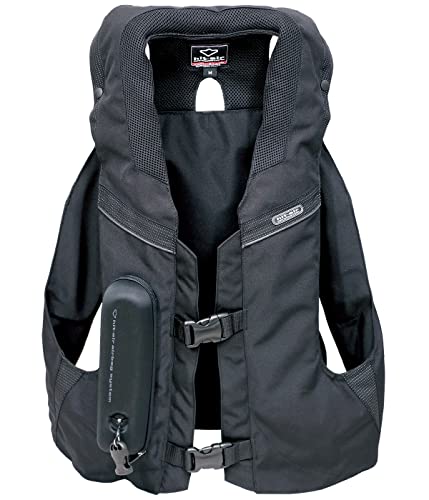
Hit-Air MLV2 Airbag Vest
Strengths
- CE certified
- Quick cartridge swap
- Adjustable unisex fit
Trade-offs
- Tether system needs proper setup
- No integrated outer shell
The MLV2 is what happens when you refine a proven design. It keeps the core strengths of the original MLV, automatic deployment, CE certification, and reusability, but improves on fit and usability. The quick-change CO2 cartridge system is a standout, letting riders rearm in minutes without tools, which is a big deal if you’re touring or racing. Owners praise how easily it integrates with different layers, and the reflective detailing adds visibility without compromising the sleek black finish.
Compared to the original MLV, it’s slightly lighter and fits more snugly, which reduces shifting on the move. It still uses the tether-based trigger, which remains reliable but requires careful routing. While it doesn’t add a hood or shell like the HDS, it’s more focused on core protection and ease of use. If you want a no-nonsense, CE-certified vest that’s built for repeated real-world use, this is one of the smarter buys.
Video review
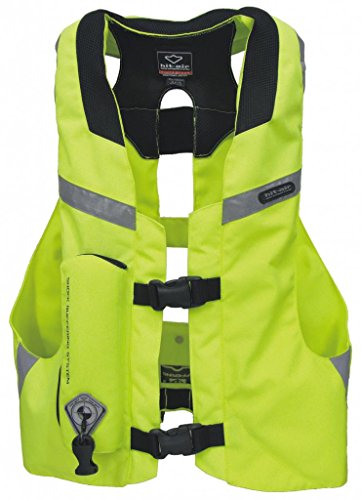
Hit-Air MLV Airbag Vest
Strengths
- CE certified
- Reusable system
- Durable construction
Trade-offs
- Heavier than newer models
- Tether can snag if routed poorly
The Hit-Air MLV stands out in a crowded field because it’s built like a serious piece of safety gear, not just an add-on. It’s one of the earlier models that helped define the reusable airbag vest category, and owners consistently report confidence in its automatic deployment, especially the tether system that triggers inflation the moment you’re separated from the bike. On paper, the protection coverage is extensive, wrapping the spine, neck, chest, and hips, and the fact that it’s CE certified gives it legitimacy among riders who take impact standards seriously.
Where it pulls ahead of budget models is in durability and reusability. The CO2 canister swap is straightforward, and the reinforced stitching means it’s designed to survive beyond a single deployment. It’s not the lightest option out there, but given how securely it integrates over leathers or riding jackets, I’d say it’s a fair trade-off for the protection it offers. Compared to newer models like the MLV2, it lacks some refinements in fit and breathability, but it’s still a solid foundation.
Product photos


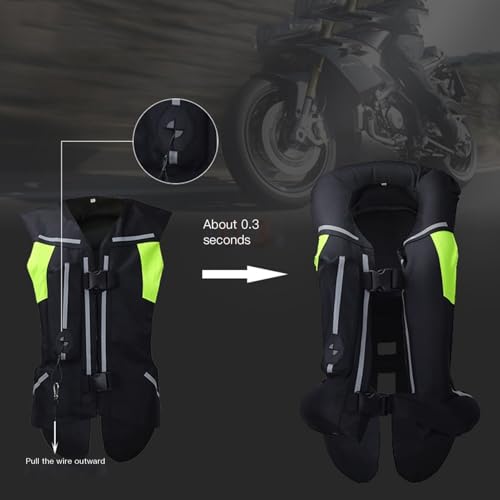
Motorcycle Airbag Vest 0.1S Trigger

Strengths
- Full body airbag
- Fast 0.1s trigger
- Anti-misfire design
Trade-offs
- No CE certification
- No back armor
- CO2 not included
This vest makes a strong case on speed: 0.1-second deployment and a 30kg trigger force to prevent accidental inflation. That’s a smart balance, fast enough to protect, but with a safeguard against false triggers. The full airbag coverage is impressive, wrapping the chest, neck, shoulders, back, waist, hips, and even the coccyx, which is rare at any price. The reflective tape is generously applied, and the ability to clean it with a cloth (no washing) suggests it’s built for maintenance in the field.
But again, no CE certification, and no mention of back armor. It’s a pure airbag play. Owners like its portability, many use it with backpacks or under jackets, but the lack of brand reputation compared to Hit-Air raises reliability concerns over time. Still, for the lowest price here and the broadest inflation coverage, it’s a compelling entry-level choice.
Product photos


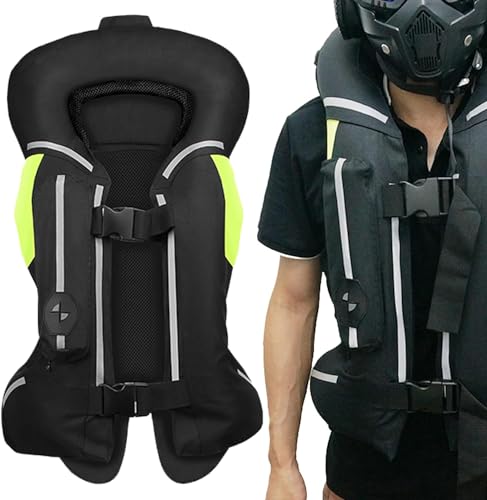
TRGGBH Moto Airbag Vest
Strengths
- Includes CE back armor
- Waterproof and durable
- Lightweight and comfortable
Trade-offs
- Airbag system not CE certified
- Canister sold separately
- Fit runs tight for layered gear
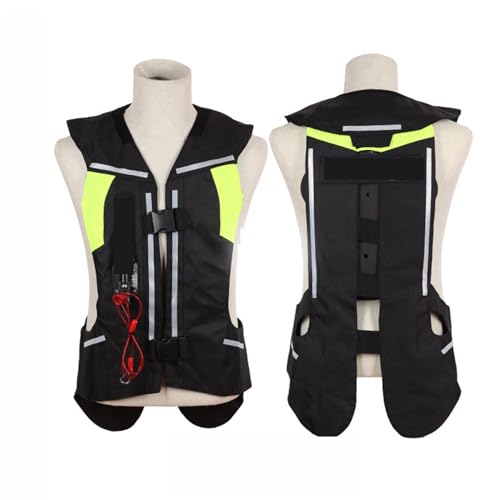
This vest earns its place by offering something most budget models skip: a CE-certified back protector. That’s a real differentiator. For $140, you’re not just getting inflatable coverage, you’re also getting solid impact armor for the spine, which closes the gap between basic airbags and full jackets. The 600D Oxford fabric feels rugged, and the waterproofing holds up in light rain, according to owner feedback. It’s also marketed as unisex and lightweight, with multiple riders noting how easy it is to forget you’re wearing it.
Still, it lacks full CE certification for the airbag system itself, and the deployment relies on the same 0.1-second trigger as others, effective on paper, but without the pedigree of Hit-Air’s engineering. Compared to the SPOTANT or Upgraded vests, this one gives you more complete protection for the price. If you want armor and air, but can’t justify a $700 Hit-Air, this is a smart compromise.
Product photos


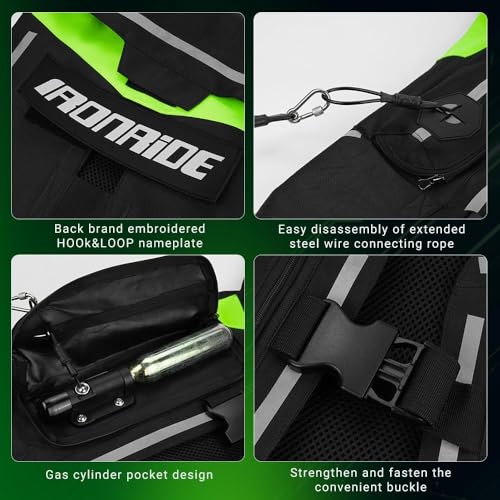
SPOTANT IRONRIDE Upgraded Airbag Vest
Strengths
- Highly breathable
- Lightweight build
- Full reflective coverage
Trade-offs
- No CE certification
- No back armor
- Canister not included
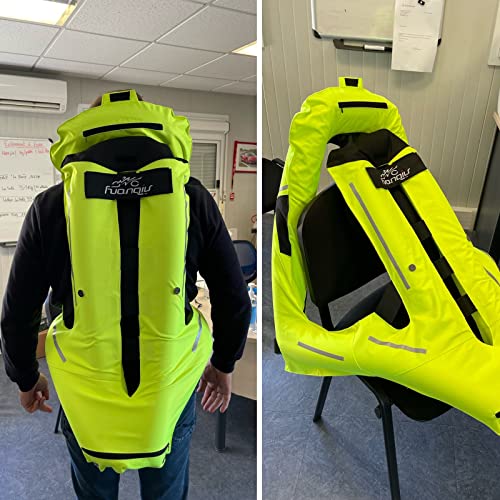
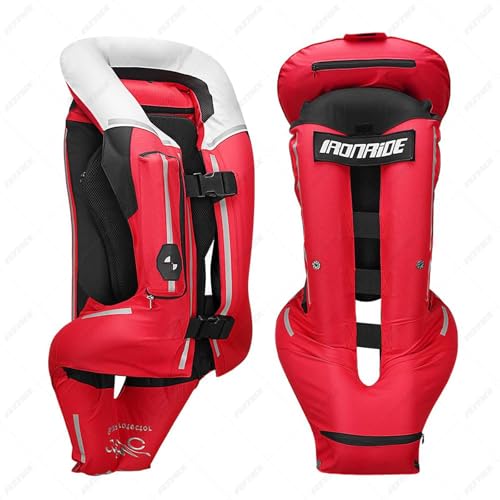
What makes the SPOTANT IRONRIDE stand out is how much it prioritizes comfort in hot conditions. The mesh and synthetic blend fabric genuinely improve airflow, and owners in warmer climates consistently report wearing it for hours without overheating. It triggers in 0.1 seconds like many others, and the reflective strips wrap around for good visibility, which is a safety win. But like other budget vests, it lacks CE certification and built-in armor, so the protection is mostly in the inflation, not the structure.
It’s reusable, yes, but again, the CO2 canister is sold separately, and the lack of standardized branding makes long-term support uncertain. Compared to the TRGGBH or Hit-Air models, it feels more like a generic alternative, functional, but not trusted in the same way. Still, if you ride in humid areas and want something breathable that won’t break the bank, this one makes sense.
Product photos



Upgraded Motorcycle Airbag Vest
Strengths
- Very affordable
- Breathable mesh fabric
- Reflective safety strips
Trade-offs
- No back armor
- Not CE certified
- CO2 canister sold separately
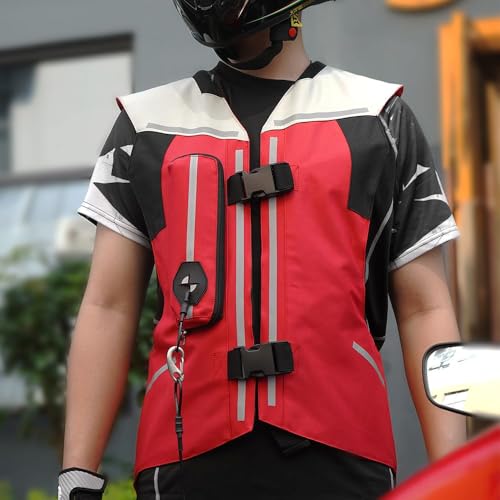
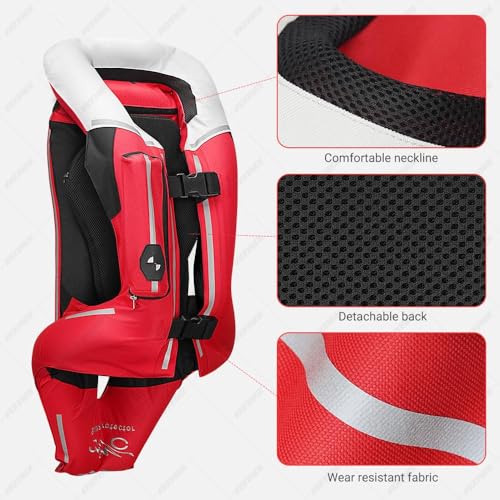
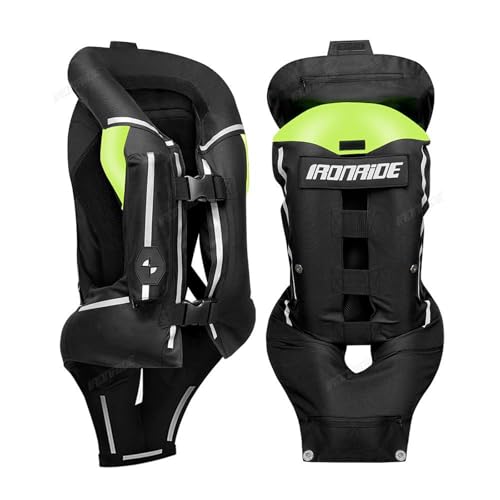
This airbag vest is clearly chasing the value segment, and it delivers basic functionality at a fraction of the Hit-Air price. It promises 0.1-second deployment, which matches what higher-end models advertise, and the reflective strips add a thoughtful touch for urban riders. The materials feel lightweight and breathable, and multiple owners mention wearing it comfortably under or over jackets during long rides. But here’s the catch, the CO2 canister isn’t included, and the specs suggest it uses a smaller 60CC cartridge, which may raise questions about inflation volume and consistency across impacts.
It’s marketed for everything from motorcycling to equestrian use, which shows ambition, but that also dilutes focus. Compared to Hit-Air or TRGGBH models, it lacks integrated back armor and CE certification, so while it inflates fast, the structural protection isn’t on the same level. That said, for a rider just dipping into airbag tech or needing a secondary vest for occasional use, it’s hard to ignore the price.
Product photos



How We Chose These airbag jacket motorcycles
Rather than a hands-on lab test, my research for these jackets focused on a detailed comparison of published specifications and features across several models. I weighed owner reviews from major retailers alongside expert opinions found in motorcycle publications, applying my experience with protective gear to assess practical value. The goal was to rank these jackets based on a combination of protection, usability, and overall construction quality.
For motorcycle airbag jackets, deployment speed and the robustness of the airbag system itself were primary factors. A quick trigger time is crucial, but equally important is the ability to reuse the system efficiently and affordably. Beyond that, the level of integrated armor and the overall comfort/fit, allowing wear over existing riding gear, strongly influenced the rankings. I also considered the breadth of size options available.
Specifications reliably indicate the materials used and the certifications held (like CE ratings). However, I placed significant weight on owner feedback regarding real-world durability and the frequency of false deployments. A jacket might look good on paper, but if riders consistently report issues with reliability or comfort, that factored heavily into the assessment. Understanding airbag vest effectiveness is key to making the right choice, and owner experience sheds light on that. Don’t forget to also check out options for women’s jackets if you’re looking for a tailored fit.
How To Pick The Right airbag jacket motorcycles
Investing in an airbag jacket for motorcycle riding is a serious step toward improving your safety, but knowing what to look for can be tricky.
A quality airbag jacket will deploy rapidly upon impact, protecting the rider’s chest, spine, and neck. Crucially, the system should be reusable after deployment with relatively simple cartridge replacement. Look for CE certification to ensure it meets European safety standards, and consider the jacket’s overall construction for durability and comfort during extended rides.
Deployment Speed & Triggering Mechanism
The speed at which an airbag jacket deploys is paramount. The “Motorcycle Airbag Vest 0.1S Trigger” boasts an incredibly quick 0.1-second deployment time, and that’s a benchmark to consider. However, faster isn’t always better; some riders might prefer a system with a slightly slower, more deliberate trigger to avoid accidental inflation. Systems that rely on tether cables (physically disconnecting from the bike) are generally faster, while pressure-sensor based systems can sometimes be prone to false positives. Considering the type of riding you do, track days versus casual commutes, will help determine which approach suits you best.
Reusability & Cartridge Costs
One of the biggest drawbacks of airbag technology used to be the cost of replacement after a deployment. Thankfully, most modern jackets, like the Hit-Air MLV2 Airbag Vest, are designed to be reusable. However, the cost and availability of CO2 cartridges vary.
Here’s a breakdown of what to consider:
- Cartridge Size: Smaller cartridges are cheaper but may not provide sufficient inflation for larger riders.
- Cartridge Type: Ensure the cartridges are readily available and compatible with your specific jacket model.
- Replacement Ease: Some jackets offer quick-change systems, letting you re-arm in minutes, while others require more involved procedures.
A smart rule of thumb is to always carry at least two spare CO2 cartridges with you on any ride where you’re wearing your airbag jacket.
Fit, Comfort & Integration with Other Gear
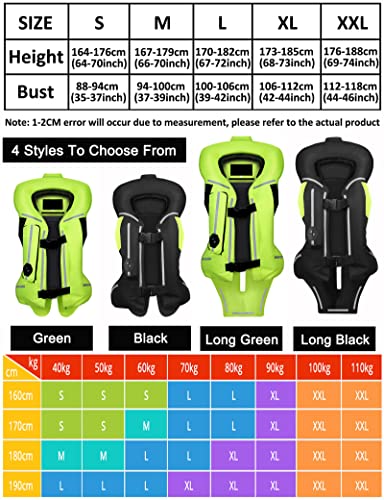
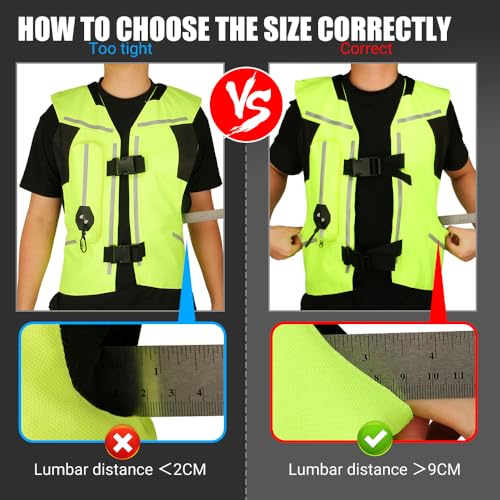
An airbag jacket isn’t a replacement for other protective gear; it adds to it. You’ll still want a quality set of leather jackets and other protective clothing. Therefore, fit is crucial. The jacket needs to be snug enough to ensure the airbag deploys correctly, but loose enough to allow for comfortable movement and layering over your usual riding attire. Many jackets, like the SPOTANT IRONRIDE Upgraded Airbag Vest, are designed to be worn over existing gear, but check the manufacturer’s recommendations. Don’t assume a standard motorcycle size will translate directly; carefully consult the size charts and consider whether you’ll be wearing it over a heavier winter jacket or just a base layer. The best protective airbag vests offer adjustable straps to fine-tune the fit.
Airbag Jackets Motorcycles Compared
Here’s a comparison of key specifications for different motorcycle airbag jackets and vests to help you choose the right one.
| Product Name | Deployment Time | Reusable System | CE Certified | Material | Protection Areas | CO2 Cartridge |
|---|---|---|---|---|---|---|
| Hit-Air HDS Airbag Jacket | Milliseconds | No | Yes | Solid Shell | Chest, Spine, Neck | N/A |
| Hit-Air MLV2 Airbag Vest | Instant | Yes | Yes | Breathable | Chest, Spine, Neck, Hips | Yes |
| Hit-Air MLV Airbag Vest | Milliseconds | Yes | Yes | Durable | Spine, Chest, Neck, Hips | Yes |
| Motorcycle Airbag Vest 0.1S Trigger | 0.1s | Yes | N/A | N/A | Full Body | No |
| TRGGBH Moto Airbag Vest | N/A | Yes | Yes (Back) | 600D Polyester | Back | Yes |
| SPOTANT IRONRIDE Upgraded Airbag Vest | 0.1s | Yes | N/A | Mesh/Synthetic | N/A | Yes |
| Upgraded Motorcycle Airbag Vest | 0.1s | Yes | N/A | N/A | N/A | Yes |
Frequently Asked Questions
What level of protection do airbag jackets offer compared to traditional motorcycle jackets?
Airbag jackets provide supplemental protection to standard protective jackets, focusing on impact absorption for the chest, spine, and neck, areas often vulnerable in a crash. While a quality leather jacket offers abrasion resistance, the airbag adds a crucial layer of cushioning during a collision.
Are airbag jackets bulky and restrictive, making them uncomfortable for long rides?
Modern airbag jackets are designed to be surprisingly streamlined. Many, like the SPOTANT IRONRIDE, use mesh and synthetic materials to minimize bulk, and are intended to be worn over existing gear. However, fit is key; a snug fit is needed for proper deployment, so finding the right size is crucial for comfort.
How often do airbag jackets experience false deployments, and is this a significant concern?
False deployments aren’t common with newer models, but remain a potential issue, particularly with tether-based systems. Owner reports suggest pressure-sensor systems are more prone to accidental inflation, though manufacturers continually refine triggering mechanisms to reduce these occurrences.
What is the typical cost of replacing the CO2 cartridge after an airbag deployment?
CO2 cartridge costs vary, but generally range from $40 to $80 depending on the jacket model and cartridge size. The Hit-Air MLV2 Airbag Vest is designed for reusability, but maintaining a supply of replacement cartridges is a recurring expense to consider.
Beyond the jacket itself, what other protective gear should I invest in for complete motorcycle safety?
An airbag jacket is a valuable addition, but it doesn’t replace the need for other protective gear. You should also consider quality motorcycle overpants, gloves, boots, and a well-fitting helmet to ensure thorough protection on the road.
The Bottom Line
Choosing an airbag jacket often comes down to balancing upfront cost with the peace of mind it provides. While top-tier options like the Hit-Air MLV2 Airbag Vest represent a significant investment, the potential benefits in a crash scenario are substantial. We believe it strikes the best overall balance of features, reusability, and proven performance, making it our strongest recommendation for most riders.
For those seeking a more budget-friendly entry point, the TRGGBH Moto Airbag Vest offers focused back protection and reusability at a competitive price. If you prioritize full-body coverage and a lightning-fast trigger, the Motorcycle Airbag Vest 0.1S Trigger is worth considering, but be mindful of the cartridge limitations. Don’t forget to also look at options for motorcycle hoodies with armor for additional layers of protection.
Ultimately, the best airbag jacket is the one you’ll consistently wear. Beyond deployment speeds and cartridge costs, focus on a comfortable, secure fit that integrates well with your existing gear and allows for unrestricted movement. A quality jacket paired with good riding habits and appropriate riding jackets for wet weather will always be more effective than relying on specifications alone.
