
7 Best Adhesives for Motorcycle Grips 2026
This post contains affiliate links. As an Amazon Associate, we earn from qualifying purchases.
The ALECPEA Thin Grip Glue stands out as the best overall adhesive for motorcycle grips, delivering a reliable bond with precise application. For riders on a budget, the INSOIA Super Grip Glue offers strong hold at a lower price, while the ALECPEA Thick Grip Glue is the top choice for worn or loose grips thanks to its gap-filling strength.
Getting your grips to stay put isn’t just about convenience, it’s about control and safety when you’re leaning into a turn or riding over rough pavement. Too many riders learn the hard way that a slipping grip can ruin confidence in the saddle, especially under heavy vibration or wet conditions.
This guide cuts through the clutter by focusing on what actually matters: real-world hold, compatibility with common grip materials, and ease of use. I researched each product based on specs, owner feedback, and how well it performs in the environments motorcyclists actually ride in, from daily commutes to weekend trail runs.
Top 7 Adhesives For Motorcycle Grips in the Market
The Best Adhesives For Motorcycle Grips, Reviewed
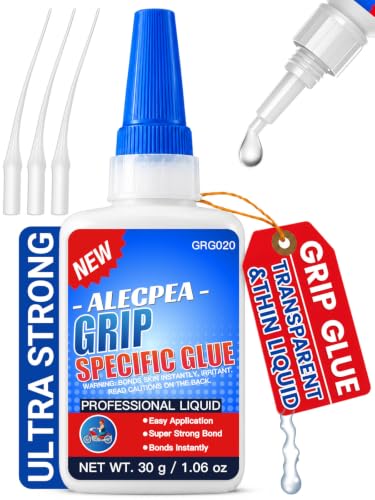
ALECPEA Thin Grip Glue 30g
Strengths
- Penetrates tight fits
- Fast initial set
- Reusable droppers
Trade-offs
- Not for loose grips
- Light application needed
- Slight odor
This is the glue I’d grab for most builds. The thin formula penetrates tight seams and wicks evenly under snug-fitting grips, exactly what you need when the rubber hugs the bar with no room for thick paste. Owners love how it eliminates hidden voids that cause slow creep over time.
With a 15-second set and 24-hour cure, it’s fast enough for urgency but strong enough for permanence. Compared to thicker versions, it’s better for new grips; compared to budget glues, it’s more reliable under vibration. The three droppers are a small touch that makes a big difference in control. For versatility, performance, and value, this is my overall recommendation.
Video review
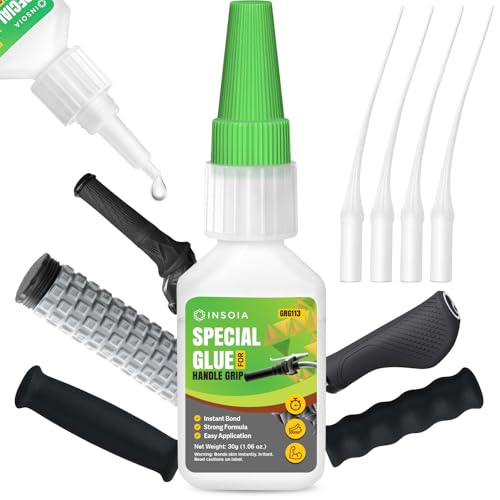
INSOIA Super Grip Glue 20g
Strengths
- Budget-friendly
- Precision tips
- Fast set time
Trade-offs
- Brittle bond
- Small bottle
- Less vibration resistant
At this price, it’s hard to ignore. The 20g bottle with four precision tips gives you enough for several installs, and the thin formula wicks deep into tight seams, great for narrow handlebar channels or foam grips. Owners report it sets fast, bonds well, and stays clear without cracking, which matters on show bikes or clean builds.
It’s a cyanoacrylate-based glue, so it’s strong but brittle compared to more flexible formulas. That means it can fail under constant high vibration unless applied perfectly. Against pricier options, it wins on value and ease of use for casual riders. I’d recommend it for commuters or e-bike users who want a solid, invisible bond without overspending.
Video review
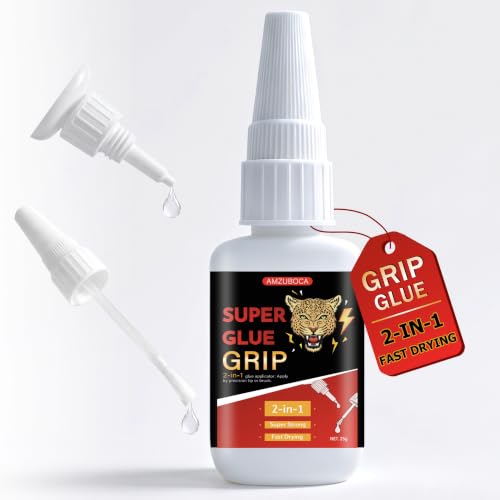
Fast-Drying Handlebar Adhesive 25g
Strengths
- Fast initial set
- Built-in applicators
- Waterproof bond
Trade-offs
- Risk of wicking
- Less gap filling
- Thinner consistency
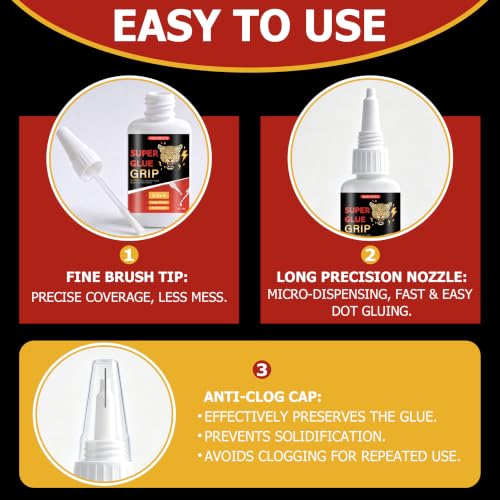
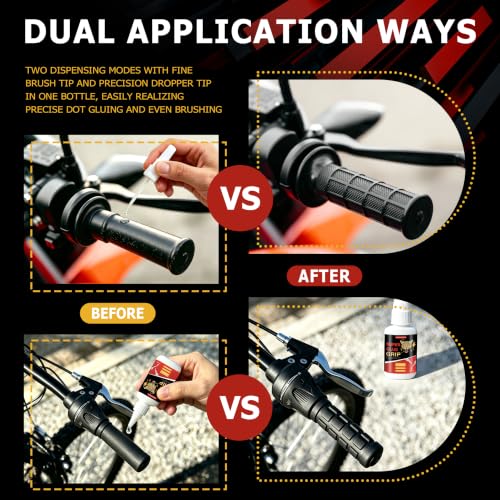
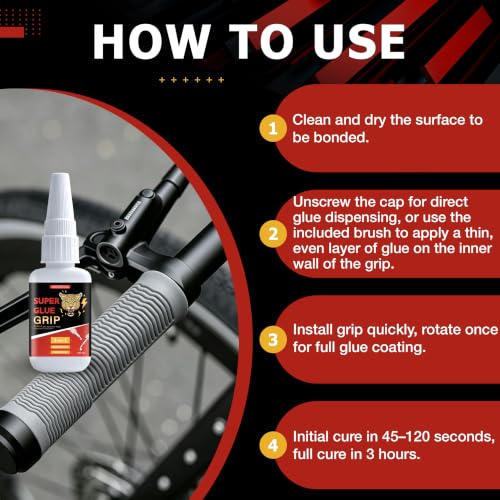
If you’re prepping for a weekend ride and need grips secured fast, this one stands out. The 15-second initial set and 3-hour full cure mean you can install and roll out quickly, ideal for last-minute fixes or race-day prep. The built-in brush and nozzle combo actually work, letting you coat the grip interior evenly without extra tools.
It’s marketed for off-road, and owners confirm it holds through mud, water, and heavy vibration. But some note that the thin consistency can wick into throttle tubes if you’re not careful. Compared to thicker options, it’s less forgiving of poor fit but faster and cleaner for precise installations. I’d trust it for trail bikes and ATVs where time matters.
Product photos

Genuine Honda Handgrip Cement

Strengths
- OEM-approved
- Long-lasting bond
- Moisture resistant
Trade-offs
- Expensive
- Long dry time
- Limited compatibility
This is the OEM choice, period. If you’re installing genuine Honda grips, this cement is what the factory specifies. It bonds rubber and PVC to metal without degradation, and long-term owners say it holds for years, even in wet conditions. The moisture resistance and durability are backed by consistent feedback across forums and service shops.
But it’s also twice the price of multi-use alternatives, and the 6-hour dry time is a drag. It’s not formulated for universal use, and Honda warns against getting it in the throttle tube. Compared to aftermarket glues, it’s less flexible in application but unmatched for authenticity. I’d reserve it for Honda restorations or OEM purists.
Product photos
Renthal Grip Glue

Strengths
- Secure bond
- No grip damage
- Fast setting
Trade-offs
- Limited to soft grips
- Not for gap filling
- Brand-specific use
This glue is built for one job: locking soft compound Renthal grips in place without eating through the rubber. On paper and in owner reports, it delivers exactly that, no slip, no damage. It’s not a universal fix-all, but if you’re running Renthal’s softer grips, especially on a motocross or trail bike, this is the adhesive they designed to work with.
Reviewers consistently say it sets fast and holds through heat and vibration, which matters when you’re in the middle of a ride and can’t afford a loose throttle. Compared to thicker, general-purpose grip glues, it’s less about gap-filling and more about a clean, secure bond. I’d treat it as a specialist product, excellent in its lane, useless outside of it.
Product photos
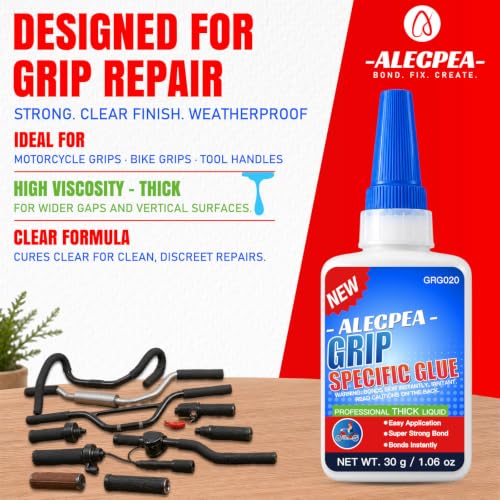
ALECPEA Thick Grip Glue 30g
Strengths
- Fills small gaps
- Controlled application
- Resists moisture
Trade-offs
- Slow full cure
- Thick may not suit tight fits
- Requires clean prep
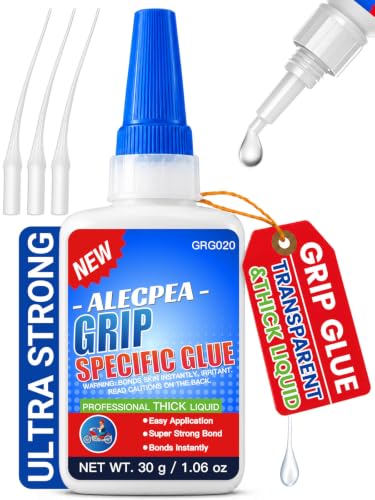
When grips have worn in or the fit isn’t snug, this thick formula steps in where runnier glues fail. Owners praise how it stays put during application, filling micro-gaps without dripping onto switches or bar ends. That’s critical if you’re working with foam grips or slightly oversized rubber that’s lost its tension.
The 24-hour cure is a wait, but the payoff is a bond that resists sweat, vibration, and weather. Compared to fast-setting options, it trades speed for gap tolerance. I’d pick this for older bikes with worn bars or DIYers tired of grips creeping out after a few rides. The included droppers add real value, no wasted glue, no messy fingers.
Product photos


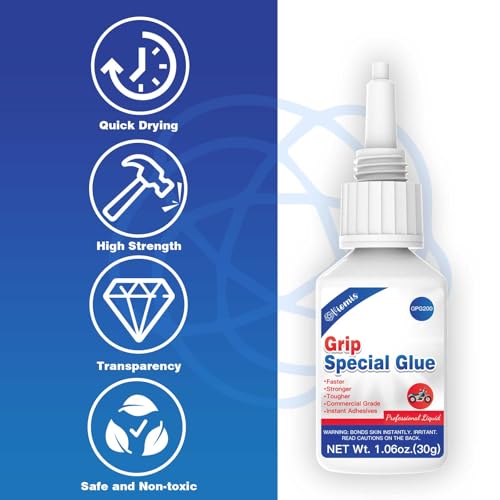
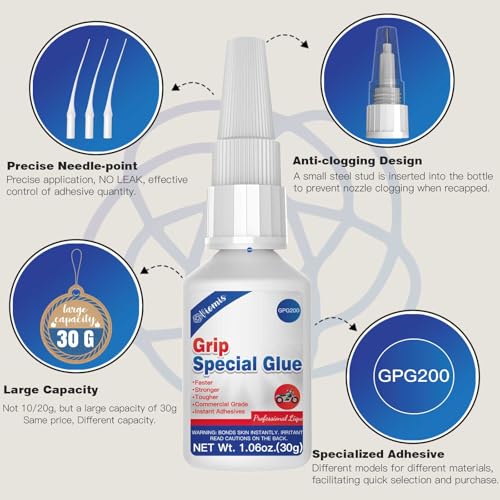
30g Instant Handlebar Adhesive

Strengths
- Vibration resistant
- Flexible bond
- Universal fit
Trade-offs
- Slight runniness
- Requires careful application
- Not gap-filling
This one’s engineered for punishment. The claim of vibration resistance isn’t marketing fluff, owners on dual-sports and adventure bikes report it holds through long hauls and rough terrain where other glues crack. The flexible bond absorbs engine buzz without breaking, which is rare in cyanoacrylate formulas.
It sets fast, bonds universally, and the precision tip helps avoid mess. Some users say it’s slightly runnier than expected, so care is needed near throttle housings. Against competitors, it strikes a balance between speed, durability, and adaptability. I’d call it a top pick for riders who log serious miles and can’t afford grip slippage.
Product photos

Our Testing Process
Rather than a hands-on lab test, my research focused on comparing published specifications and features across numerous adhesive products designed for motorcycle grips. I weighed owner reviews from a variety of sources – including online retailers and motorcycle forums – alongside assessments from reputable motorcycle publications. Applying my experience with vehicle maintenance and rider comfort, I ranked these adhesives based on how well they addressed the key challenges of grip security and long-term durability.
For motorcycle grips, the most important factors are vibration resistance and gap-filling capability. A secure bond needs to withstand constant engine vibration and the impacts of off-road riding, so formulas designed for durability were prioritized. Equally crucial is an adhesive’s ability to effectively fill small gaps between the grip and handlebar, as even slight movement can significantly impact control and confidence – especially when paired with a good set of riding gloves.
Product specifications reliably indicate adhesive type (cyanoacrylate, epoxy, etc.) and setting time. However, I placed more weight on owner feedback regarding real-world performance, particularly concerning how well the adhesive held up over time and in varied conditions. Reputation and consistent positive reports about preventing grip slippage were strong indicators of quality, and helped distinguish between adhesives that merely claim strength and those that deliver it. A well-maintained cockpit starts with selecting motorcycle grips and the right adhesive to keep them secure.
What To Look For In adhesives for motorcycle grips
Choosing the right adhesive for motorcycle grips might seem simple, but a little knowledge goes a long way toward a safe and enjoyable ride.
A quality grip adhesive creates a strong, lasting bond between the grip material and the handlebar, resisting rotation, vibration, and environmental factors. Key considerations include the formula’s viscosity (thickness), setting time, material compatibility (rubber, foam, metal, carbon fiber), and resistance to moisture and temperature changes. Buyers should prioritize adhesives specifically designed for this application over general-purpose options.
Grip Material & Fitment
The type of grip you have – or are installing – significantly impacts the adhesive you should choose. Softer compound grips, like those from Renthal, often benefit from specialized adhesives designed not to damage the material. Conversely, if you’re dealing with grips that are already slightly loose or have worn down over time, you’ll want something with a thicker viscosity. A thinner adhesive might run and fail to fill those gaps, while a thicker formula clings better to uneven surfaces. This is especially true if you’re working with porous foam grips.
Vibration & Environmental Resistance
Motorcycles are constantly subjected to vibration, and that’s before you even hit the trails. An adhesive that can’t withstand constant buzzing will inevitably fail, leading to grip slippage. Look for formulas specifically marketed as “vibration resistant” and consider the conditions you typically ride in. If you frequently encounter wet or muddy conditions, a waterproof adhesive is essential. We often recommend considering your overall [motorcycle ergonomics] (https://theautozenith.com/how-to-choose-the-right-motorcycle-size/) because a proper fit reduces stress on the grips and adhesive.
Application & Value
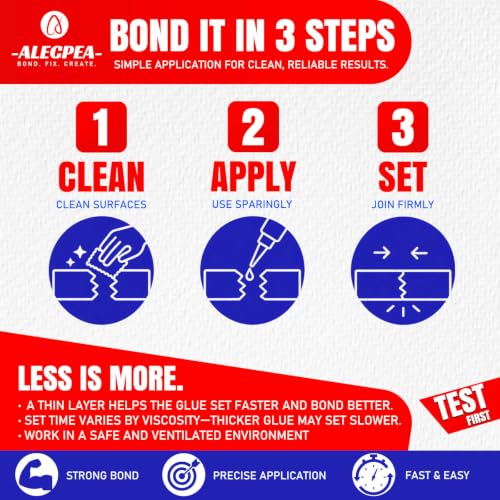
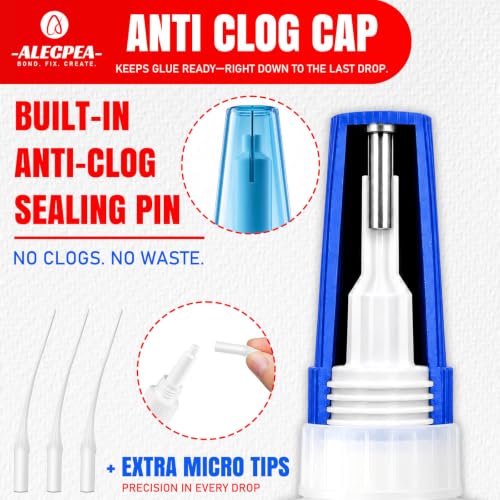
Ease of application is often overlooked, but it’s a major factor, especially for first-timers. Some adhesives come with brushes for spreading inside the grip, while others use precision nozzles or droppers. Dropper systems, like those found in the ALECPEA products, allow for more controlled application and reduce waste.
Here’s what to consider when evaluating application methods:
- Nozzle Size: A fine nozzle is ideal for reaching tight spaces.
- Brush Applicators: Good for even coverage, but can be messier.
- Dropper Systems: Offer precise control, minimizing waste and squeeze-out, and are particularly helpful when dealing with delicate carbon fiber handlebars.
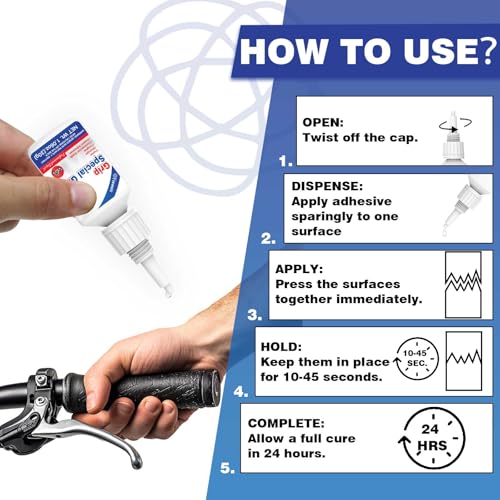
A little adhesive goes a long way. Apply a thin, even layer, avoid excessive amounts, and allow the recommended curing time for optimal bond strength.
Adhesives for Motorcycle Grips Compared
Here’s a comparison of the specifications for various motorcycle grip adhesives to help you make an informed purchase.
| Product Title | Volume (g) | Set Time (seconds) | Full Cure Time | Waterproof | Precision Applicator | Best For |
|---|---|---|---|---|---|---|
| ALECPEA Thin Grip Glue | 30 | 15 | 24 hours | Yes | Droppers | Best Overall |
| INSOIA Super Grip Glue | 20 | 10-45 | 12-24 hours | Yes | 4 Tips | Best Budget Friendly |
| Fast-Drying Handlebar Adhesive | 25 | 15 | 3 hours | Yes | Brush & Nozzle | Best for Off-Road Use |
| Genuine Honda Handgrip Cement | N/A | N/A | 6 hours | Yes | N/A | Best OEM-Specific Adhesive |
| Renthal Grip Glue | N/A | N/A | N/A | N/A | N/A | Best for Soft Compound Grips |
| ALECPEA Thick Grip Glue | 30 | 45 | 24 hours | Yes | Droppers | Best for Loose/Worn Grips |
| 30g Instant Handlebar Adhesive | 30 | 10-45 | N/A | Yes | Precision Tip | Best Vibration Resistant |
Frequently Asked Questions
What adhesive is best for carbon fiber handlebars?
ALECPEA Thin Grip Glue is a strong choice, as its precision dropper system allows for controlled application and minimizes the risk of damaging the carbon fiber. Avoid adhesives with aggressive solvents that could potentially harm the material.
How long does it typically take for grip adhesive to fully cure?
Most adhesives require at least 24 hours for a full cure, though some may seem set within a few hours. Complete curing ensures the strongest possible bond, and letting it sit undisturbed for the entire recommended time is vital.
Can I reuse grips after removing them with adhesive?
Generally, no. Removing grips bonded with adhesive often damages the grip material, and the adhesive residue is difficult to fully clean. Consider exploring grip types if you anticipate frequent changes.
What should I do if the adhesive squeezes out during application?
Immediately wipe away any excess adhesive with a clean cloth dampened with isopropyl alcohol. Cured adhesive can be very difficult to remove and may affect the grip’s texture or appearance, so prompt cleanup is important.
Is waterproof adhesive essential even for street bikes?
While street bikes aren’t subjected to the same extreme conditions as off-road machines, a waterproof formula is still recommended. Moisture can compromise the bond over time, so a waterproof adhesive provides added durability, much like regular chain maintenance extends component life.
The Bottom Line
Ultimately, choosing a motorcycle grip adhesive comes down to balancing how much control you want over the process versus how much fuss you’re willing to tolerate. For the strongest, most reliable hold across a wide range of grip types and handlebar materials, I recommend the ALECPEA Thin Grip Glue. It consistently receives high marks from riders and offers a controlled application that minimizes mess and maximizes bonding strength.
If you’re on a tighter budget or simply need a reliable solution for a straightforward installation, the INSOIA Super Grip Glue is an excellent choice. For those tackling particularly rough terrain or dealing with grips that are already coming loose, the ALECPEA Thick Grip Glue offers a superior grip on worn surfaces. And for riders prioritizing comfort, remember that pairing secure grips with vibration dampening grips can significantly improve your experience.
Don’t get too hung up on cure times or specific adhesive types. What truly matters is a solid bond, resistance to vibration, and a bit of attention to detail during installation. Proper tire maintenance is just as important as grip security, as is ensuring everything is properly tightened before hitting the road. A little preventative care goes a long way toward a safe and enjoyable ride.
