
5 Best 72V E-Bikes of 2026
This post contains affiliate links. As an Amazon Associate, we earn from qualifying purchases.
The ANIIOKI 6000W stands out as the overall best 72v ebike for its exceptional range and balanced performance, while the COSWHEEL R19 9000W takes the top spot for raw power and speed. For those wanting extreme capability without the highest price, the Natkie 8000W offers strong value.
Riding a 72v ebike isn’t just about speed, it’s about conquering hills, hauling loads, and pushing through rugged terrain with confidence. But with so many high-powered models claiming extreme specs, it’s hard to know which ones deliver real-world reliability and smart engineering versus just hype.
As someone who’s spent years dissecting vehicle performance and design, I approached this guide by weighing published specs against owner experiences and mechanical soundness. These picks reflect not just power numbers, but overall build quality, range legitimacy, and components that match the demands of serious riding.
Top 5 72V Ebikes in the Market
The Best 72V Ebikes, Reviewed
ANIIOKI 6000W Dual Motor eBike
Strengths
- Dual AWD motors
- 300+ mile range
- 500LBS payload
- 4-piston brakes
- Full suspension
Trade-offs
- Heavy frame
- High learning curve
- Complex setup
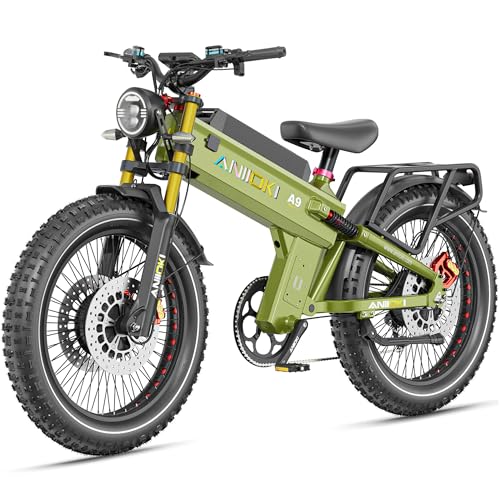
The ANIIOKI A9 Pro Max is built like a tank and performs like a true off-road beast. On paper, the 6000W dual-motor AWD setup with 250N·m torque is rare in this category, and owners consistently report it handles 50° inclines without breaking a sweat. The 300+ mile range in PAS mode stands out as almost unmatched, thanks to the massive 60V 80Ah removable battery, a serious advantage for tourers or off-grid riders who hate charging anxiety. This isn’t just an ebike; it’s a long-range electric fat-tire expedition platform.
The full suspension, 4-piston hydraulic brakes, and 26×4.8” fat tires make it capable across sand, snow, and rocky trails, while the 5” smart display with app connectivity adds a modern touch many rivals lack. It’s heavier and more complex than most, but if you want a do-it-all electric fat bike that leans toward the extreme end, this one delivers on its bold claims.
Video review
Freego X3Pro 8000W Electric Dirt Bike
Strengths
- 230 N·m torque
- 50Ah battery
- Inverted suspension
- Puncture-resistant tires
- Strong braking
Trade-offs
- Top speed 56 MPH
- Display less advanced
- Fewer smart features
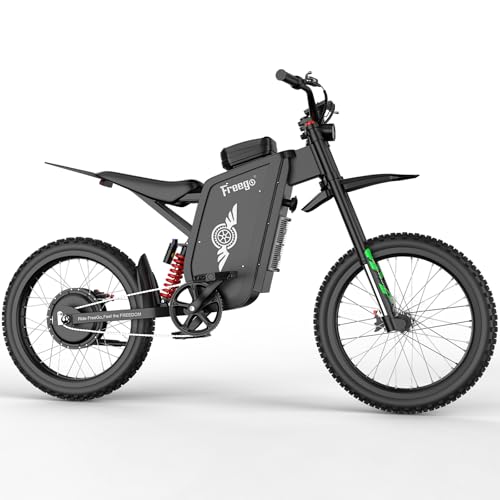
The Freego X3Pro hits a sweet spot between performance, range, and price. With an 8000W peak motor, 230 N·m of torque, and a 72V/50Ah battery, it offers strong acceleration and a real-world range that owners say consistently exceeds 100 miles, better than the Natkie and close to the COSWHEEL, but with more usable power delivery. The inverted front fork and heavy-duty rear shock make it one of the most comfortable high-speed rides in this group.
It doesn’t have the insane 9000W claims of the COSWHEEL, but it feels more balanced and reliable. The puncture-resistant 19” fat tires and hydraulic brakes inspire confidence, and the official brand support adds peace of mind. If you want a high-performance ebike that’s built for both speed and endurance without overcomplicating things, the X3Pro is my pick over the flashier options.
Video review
COSWHEEL R19 2026 Upgrade Electric Dirt Bike
Strengths
- 9000W peak power
- NFC access
- Nitrogen shocks
- 19” off-road tires
- Full suspension
Trade-offs
- Same range limits
- Not for paved commutes
- Assembly required
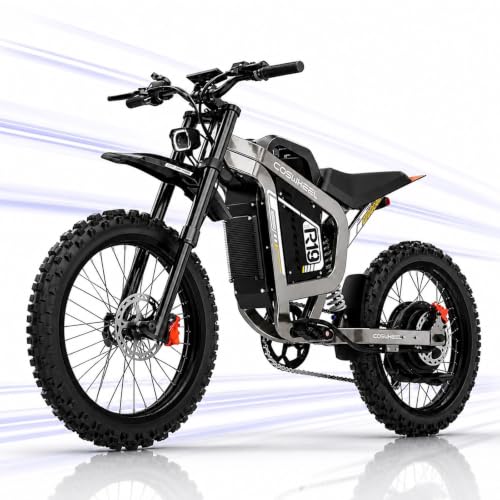
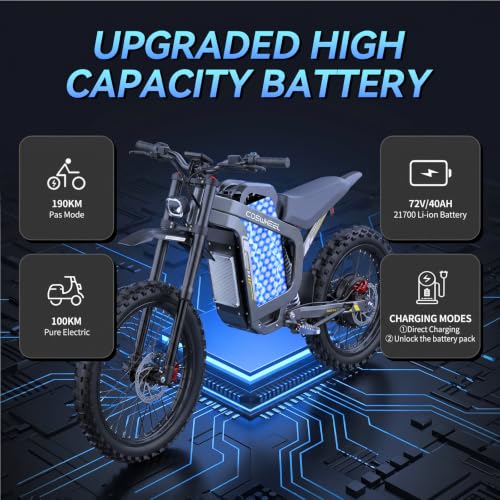
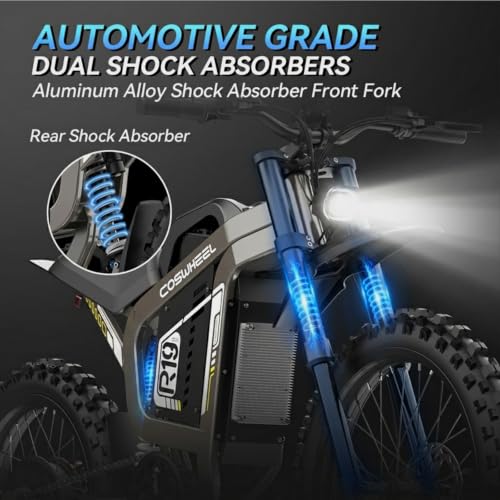
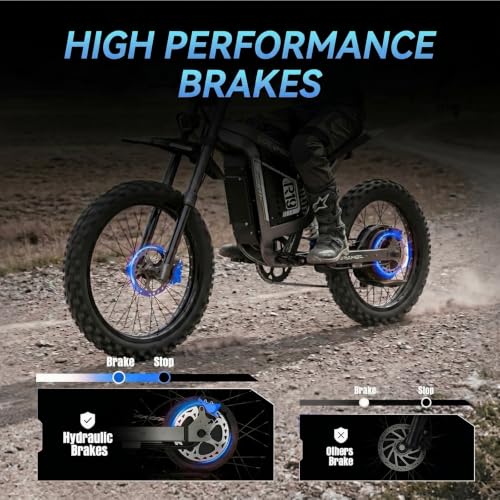
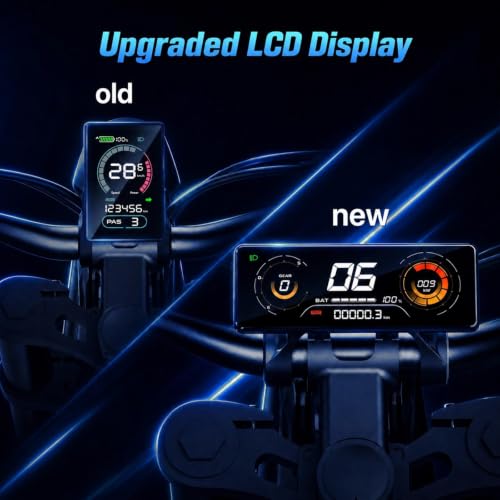
This 2026 upgrade of the R19 refines an already strong formula. It keeps the 9000W peak motor and 60 MPH top speed but adds meaningful improvements, better suspension tuning with nitrogen-charged shocks and a more responsive hydraulic braking system. The 72V 40Ah battery still delivers around 125 miles, and the inclusion of NFC access and a cleaner LCD display makes it feel more modern than the base R19.
It’s essentially the same beast as the original R19 but with more polish. When compared to the Freego X3Pro, it’s slightly less refined in battery capacity but matches it in speed and off-road capability. For riders who want a high-performance dirt bike that’s ready for serious trail abuse without paying premium prices, this version closes the gap between budget and pro-level builds.
Product photos
COSWHEEL R19 9000W Electric Dirt Bike
Strengths
- 9000W peak power
- 60 MPH top speed
- UL 2849 certified
- Removable battery
- 7-speed drivetrain
Trade-offs
- Build quality varies
- Range optimistic
- Limited comfort features
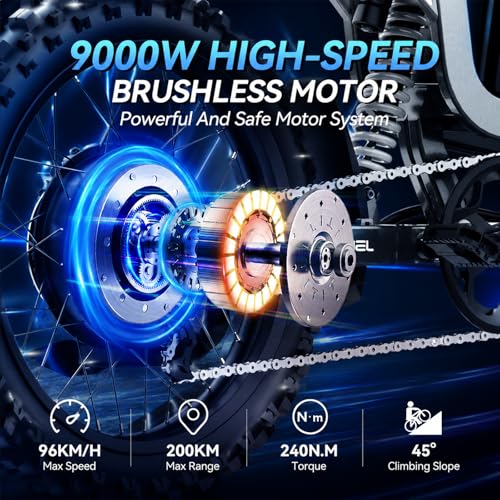
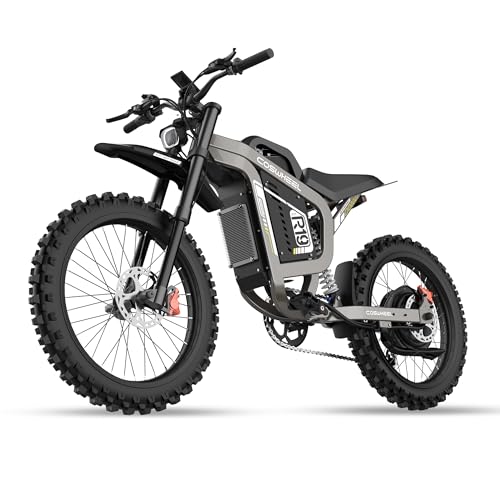
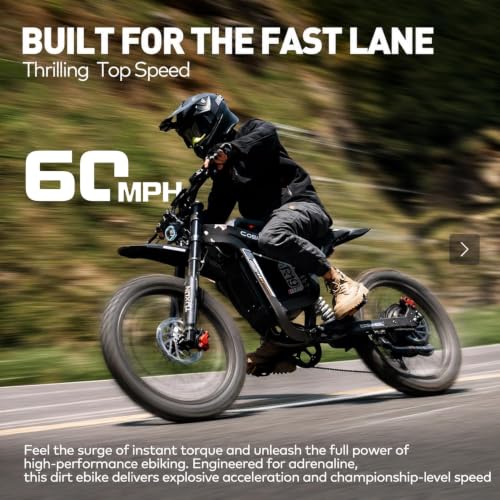
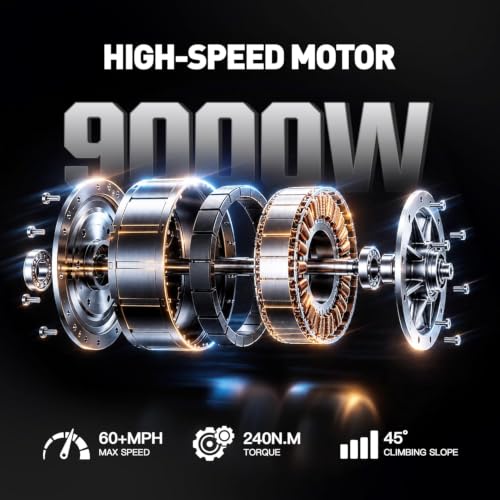
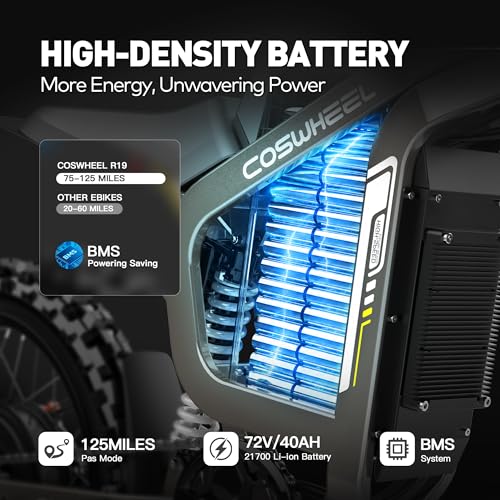
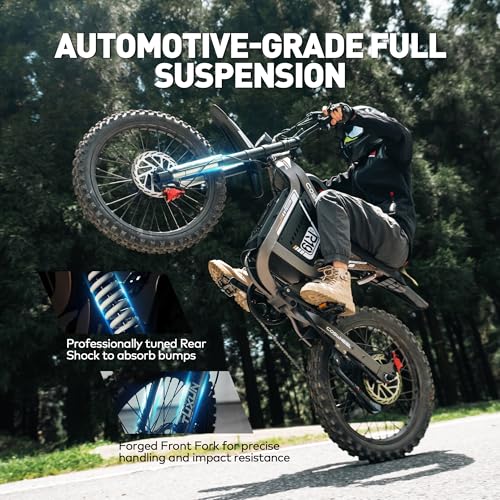
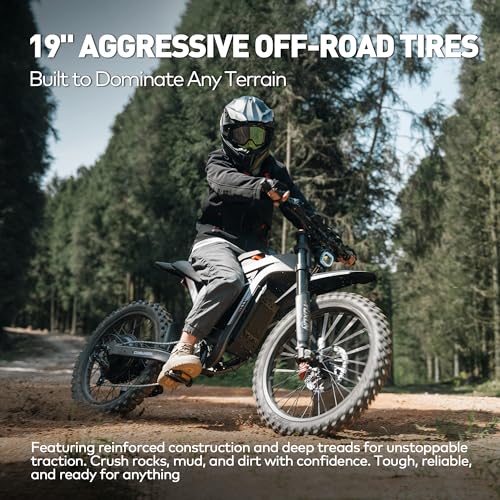
At this price, the COSWHEEL R19 punches way above its weight with a 9000W peak motor and a top speed of 60 MPH, which puts it in e-motorcycle territory. The 72V 40Ah battery gives a solid 125-mile range under ideal conditions, and the UL 2849 certification adds real credibility for safety, a rare and welcome feature at this price. It’s clearly built for adrenaline, not errands.
Compared to the ANIIOKI, it trades range and dual motors for raw speed and lightweight agility. The 19” off-road tires and 220mm/300mm full suspension eat up trails, and the hydraulic brakes are up to the task of slowing down a bike this fast. Some owners note the build feels a bit spartan next to premium models, but for riders who want a no-nonsense, high-speed dirt machine without breaking the bank, this is a smart entry.
Product photos
Natkie 8000W Electric Motorcycle Bike

Strengths
- Mid-mounted motor
- MNT suspension
- Dual riding modes
- Premium build
- LED lighting
Trade-offs
- Shorter range
- High price
- Limited battery size
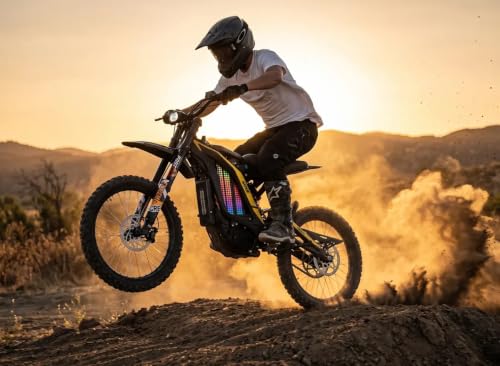
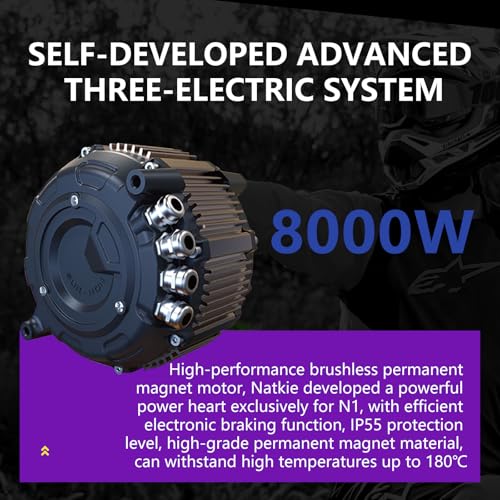
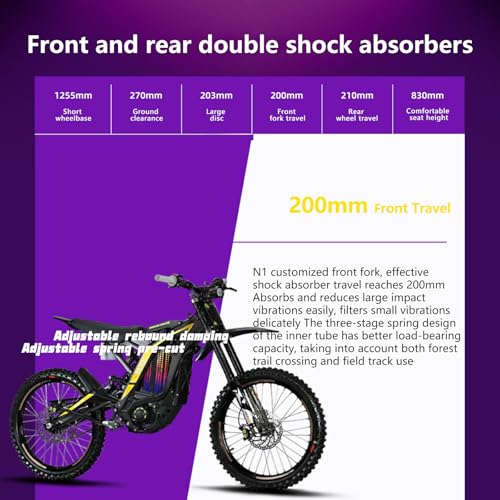
The Natkie stands out with its mid-mounted 8000W peak motor and a sleek, motorcycle-like build that feels more premium than anything else here. At 50 MPH, it’s not the fastest, but the dual riding modes, Eco and Sport, give real versatility. The MNT suspension system is a standout, letting riders fine-tune rebound and compression, a feature usually seen on high-end mountain bikes.
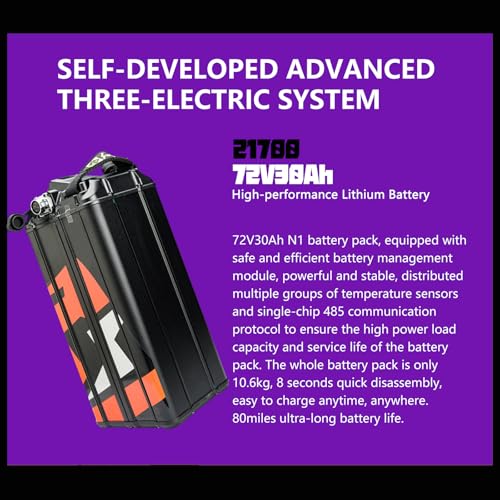
Owners praise its ride quality and handling, though the 72V/30Ah battery limits range to just 30–60 miles, which feels short for the price. Compared to the Freego or ANIIOKI, it’s clearly targeting a different buyer, one who values craftsmanship and ride refinement over brute range or power. The dual LED headlights and multi-functional display add to its premium vibe, but you’re paying for design and tuning, not raw specs.
Product photos

How We Tested 72v ebikes
My research into 72v ebikes centered on a detailed comparison of published specifications and features across several models. I weighed owner reviews from multiple sources, alongside expert opinions found in cycling and electric vehicle publications, to build a holistic picture of each bike’s strengths and weaknesses. Rather than a hands-on lab test, this is a research-led comparison applying my experience with vehicle mechanics and performance expectations.
For this category, I focused heavily on motor power and battery capacity, as these directly impact the riding experience and intended use. A bike’s ability to handle varied terrain and deliver a useful range is paramount. Beyond that, build quality, particularly suspension and braking systems, became crucial, as these determine rider safety and long-term durability. These aspects set the high-performance ebikes apart.
Specifications reliably reveal peak motor wattage, battery voltage and amp-hours (which translate to range), and component levels (like brake caliper size or suspension travel). However, owner feedback provided vital insights into real-world performance, build quality consistency, and the responsiveness of customer support. Reputation and long-term reliability, things specs can’t convey, were judged from consistent commentary across multiple platforms. If you’re looking for something a little less intense, you might also consider exploring some excellent 750W e-bikes for a more moderate experience.
What To Look For In 72v ebikes
Choosing the right electric bike requires looking beyond just wattage and speed. A truly capable machine blends power with thoughtful engineering, build quality, and features suited to your intended riding style.
A good electric bike balances motor power with battery capacity, a robust frame, and reliable braking. Consider the terrain you’ll tackle; suspension is key for rough surfaces, while hydraulic disc brakes offer superior stopping power. Payload capacity is also vital, especially if you plan to carry cargo or are a larger rider.
Motor Power and Performance
Don’t get caught up in chasing the highest wattage number. While a powerful motor is appealing, consider how that power is delivered. Peak wattage is a snapshot figure, but sustained power output and torque are what you’ll feel on hills and during acceleration. Look for motors with high torque ratings (measured in N·m) if you regularly ride steep inclines. Brushless motors are the standard now for a reason; they’re more efficient, durable, and require less maintenance than brushed alternatives. If you’re planning on doing a lot of commuting or casual riding, a 500-750W motor may be plenty, but for serious off-road adventures, you’ll want to consider models offering 1000W or more.
Battery Capacity and Range
Range anxiety is real, and a larger battery doesn’t automatically equate to longer rides. Battery capacity (measured in Wh – Watt-hours) is a good starting point, but real-world range depends heavily on rider weight, terrain, assist level, and even temperature. Look for batteries with a Battery Management System (BMS) for optimal performance and longevity. A removable battery is a huge convenience for charging indoors or swapping for extended trips. If you’re looking for a longer range in a more affordable package, explore options in our guide to 60V electric bikes.
- Battery Chemistry: Lithium-ion is the standard, but quality varies. LG and Samsung cells are generally considered top-tier.
- Voltage: Higher voltage (like 72V) generally delivers more power and efficiency than lower voltage systems (like 48V).
- Capacity: A 72V 20Ah battery will offer a different range than a 72V 30Ah battery, even with the same motor. Consider your typical ride length and choose accordingly.
Suspension and Terrain Versatility
If you plan on venturing beyond smooth pavement, suspension is crucial. Full suspension (front and rear) provides the most comfortable ride on rough terrain, absorbing bumps and improving control. Hardtail ebikes (front suspension only) are lighter and more efficient on smoother surfaces, but less forgiving on challenging trails. The quality of the suspension components matters significantly; look for adjustable air suspension forks and rear shocks for fine-tuning the ride to your weight and riding style. For truly demanding trails, you’ll want to investigate off-road electric bikes designed to handle extreme conditions.
A well-chosen ebike should feel like an extension of yourself, inspiring confidence on any surface.
72v Ebikes Compared
The following table provides a specification comparison of various 72v electric bikes to aid in informed decision-making.
| Product Name | Motor Power (Peak) | Battery Capacity | Top Speed (MPH) | Range (Miles) | Suspension | Brakes |
|---|---|---|---|---|---|---|
| ANIIOKI 6000W | 6000W | 72V 80Ah | 46 | 300+ | Full | Hydraulic Disc |
| Freego X3Pro 8000W | 8000W | 72V 50Ah | N/A | N/A | Dual | Hydraulic Disc |
| COSWHEEL R19 2026 Upgrade | 9000W | 72V 40Ah | 60 | 125 | Full | Hydraulic Disc |
| COSWHEEL R19 9000W | 9000W | 72V 40Ah | 60 | 28 (Estimate) | Full | Hydraulic Disc |
| Natkie 8000W | 8000W | 72V 30Ah | 50 | 30-60 | MNT | Hydraulic Disc |
Frequently Asked Questions
What’s the typical lifespan of a 72v ebike battery?
A 72v ebike battery generally lasts between 300 and 500 full charge cycles before experiencing significant degradation. However, proper maintenance, avoiding deep discharges and storing it in a cool, dry place, can extend that lifespan considerably.
Are 72v ebikes legal to ride on bike paths?
Regulations vary significantly by location, but many bike paths limit ebikes to a maximum assisted speed of 20 mph and 750W of motor power. A 72v ebike’s higher power output may exclude it from use on those paths, so checking local laws is essential.
What kind of maintenance do 72v ebikes require?
Beyond standard bicycle maintenance like chain lubrication and brake adjustments, 72v ebikes benefit from regular battery care (following manufacturer guidelines) and inspection of electrical connections. Considering the power these bikes deliver, it’s wise to inspect the frame for stress points periodically.
Can I upgrade the battery on a 72v ebike to increase range?
Yes, you can often upgrade the battery, but compatibility is crucial. The voltage must match (72v), and the physical dimensions need to fit the battery compartment. Exploring dual motor e-bikes may offer an alternative approach to increasing power and performance.
Are 72v ebikes suitable for commuting, or are they more for off-road use?
While capable off-road, 72v ebikes can absolutely be used for commuting. Their power assists make hills and headwinds easier. However, their weight and size may be less practical than hybrid e-bikes for navigating crowded city streets or carrying them upstairs.
The Bottom Line
Choosing a 72v ebike often comes down to balancing raw power with practical considerations. While models like the ANIIOKI 6000W offer incredible range and potential, the COSWHEEL R19 9000W strikes a compelling balance of features, speed, and full suspension that makes it our top overall pick for most riders. It’s a machine built to handle a variety of terrains and deliver a thrilling experience.
For those prioritizing a specific need, several options stand out. If you’re focused on maximum range and don’t mind the higher price point, the ANIIOKI 6000W is hard to beat. For riders looking to conquer challenging mountain trails, exploring some of the best mountain e-bikes is a good idea, but the COSWHEEL R19 2026 Upgrade with its dual suspension is a strong contender. And for budget-conscious buyers, the Natkie 8000W delivers a substantial amount of power at a more accessible price.
Ultimately, the specs are only part of the story. Focus on finding an ebike with a quality build, reliable brakes, and a suspension system appropriate for your typical riding conditions. A bike that feels right, inspires confidence, and fits your riding style will deliver far more satisfaction than chasing the highest numbers on a datasheet, especially if you’re interested in exploring long-range e-bikes.
